1 May 2015 Opua, New Zealand
After breakfast, I did some running around buying a few more spare parts and doing some errands. Meanwhile, Glenys did a load of washing at the laundrette in-between working on the bimini. In the middle of the morning, while the tide was slack, we went to the fuel dock and filled up with diesel. By waiting until the day before we leave we were able to buy fuel at duty free prices.
Glenys finished the bimini in the middle of the afternoon and it looks great. I lashed the dinghy on the front deck and made us ship-shape on deck.

Our front cabin has become a dumping ground for bags of supplies for Vanuatu, so we emptied it, so that I could get our spinnaker and series storm drogue from under the berth, in case we need them during our passage. We then carefully repacked the space with the supplies for Vanuatu and dumped the spinnaker on top. The storm drogue weighs a ton and has been dumped on the floor.
The saloon still looks like a bomb has hit it, but we called it a day at six o'clock and went for a few drinks with Bob and Sue on "Mawari" - they are planning to go up to Vanuatu in a week's time, so we should bump into them again.
2 May 2015 New Zealand to Vanuatu (Day 1)
We were up early doing the last minute jobs. We cleared out just after nine o'clock; had the duty free booze delivered; paid the marina bill; filled up with water; made some lee cloths to hold supplies under the saloon table; stored all the booze away and checked the engine. By the time we motored out of the marina at eleven o'clock, we were exhausted.
There's a rally of 30 boats sailing to Tonga and they've picked today to leave, so there was a constant stream of yachts motoring out of the marina and out to sea. Many yachts now have AIS transponders, so we could see the rally boats on our chart plotter all heading north-east, while we seem to be the only yacht going north to Vanuatu.
The weather was beautiful with blue skies and sunshine, but as forecast, there was no wind, so we were forced to motor in the mirror-smooth water. The afternoon went quickly (especially for me because I went to bed for three hours) and we had a fabulous sunset, reflected on the calm seas.
By eight o'clock, we had an 8 knot ENE wind, which was a teaser - not quite enough to sail. I pulled out the sails, but we just slowed down to less than 4 knots. An hour later, the wind picked up enough to sail. It was lovely and peaceful for a few minutes, then I heard a strange knocking.
I discovered that the carbon bearing for our PSS stern gland was knocking against the propeller shaft. This was very annoying because I'd gone to the trouble of refitting it and aligning the engine to get rid of this problem. There was nothing that I could do apart from tying a piece of 3mm cord to pull it to port, which has at least stopped the irritating knocking sound.

Unfortunately, the knocking started again while I was in bed during Glenys's 10-1 watch, so by the time I got up at one o'clock, I'd come up with a plan. The PSS gland has a rubber bellow that pushes the carbon bearing against a stainless steel ring, so I reckoned that I needed to increase the pressure by sliding the ring aft and compress the bellows.
We hove-to and I spent 30 minutes lying head-down across the engine to sort it out. It all went well, but it was a bit scary because I had to make sure there was always pressure on the seal otherwise the sea would come rushing in. By the end of the job, I was feeling a little nauseous, so I'm glad that the waves had only built to 2-3 feet.
The rest of the night was lovely, sailing along at 5-6 knots on a close reach under a full moon. It was pretty, but also damn cold. By three o'clock, I was wearing four layers including a down gilet, thermal trousers and a wooly hat. I'm looking forward to getting to the tropics.
3 May 2015 New Zealand to Vanuatu (Day 2)
First thing in the morning, I downloaded a weather GRIB file via our satellite phone and the forecast for the next few days is for 20-30 knot winds continuing from the ENE. Our rhumb line course would be 345 degrees, but we're trying to head directly north in case the wind backs. This course puts the wind at 60-70 degrees off the starboard bow, so we're just knuckling down and accepting that we have to endure going upwind in the building seas.
Most of our day was spent adapting to constant motion and life on three hour watches. After five months without any real sailing, we've lost our sea legs. We're not in any danger of throwing up, but both of us are a bit under the weather and feel the need to stare at the horizon every so often.
During the afternoon, we had 25 knot winds, gusting 30 knots and confused 2-3 metre seas, so the motion was horrible. After nightfall, a mini weather system went through giving us gusts up to 35 knots. I turned downwind for ten minutes and put another reef in the main and the staysail. Once the system had gone through, I turned back onto our northerly course. The rest of the night was very unpleasant and cold, but at least we have a full moon.
4 May 2015 New Zealand to Vanuatu (Day 3)
We had a miserable morning. The clouds built up and we had a few squalls that gave us 35 knot gusts and confused seas.
Every ten minutes or so, we get a huge wave thundering across the deck, smashing into the windscreen and exploding into spray. We zipped a side flap onto our bimini that is supposed to keep water out of the cockpit, but it's not working with this amount of water, so everything in the cockpit is soaking wet through. We now have to wear waterproofs all the time.

The skies cleared a little in the afternoon, but the wind increased to 30 knots and the seas built to a 3 metre swell plus wind waves making it a real roller coaster ride.
After a very grey dull sunset, the full moon came out and it would have been a beautiful night apart from the howling wind and crashing waves.
5 May 2015 New Zealand to Vanuatu (Day 4)
It's all turning into a blur now. The 30 knot winds continued all day with the remorseless waves knocking us around. There seem to be bands of clouds which we pass under for a few hours giving us gusty conditions and then the sun comes out for a few hours.
We've fallen into our normal routine, where Glenys has a nap in the morning and I sleep in the afternoon. The motion of the boat has been so horrible and the cockpit so wet, that neither of us want to spend much time sitting in the cockpit, so we've both been sleeping as much as we can. Consequently, we only see each other for 30 minutes at meal times and for five minutes at the change of our three hour watches at night.
The weather forecast is another three days of 20-25 knot winds from the same direction and then we'll run into a low pressure trough as we approach Vanuatu. It's a bit early to be certain, but I'm hoping that the trough will be weak and we won't be hammered too much.
By the evening, the wind had dropped to 25 knots and the seas looked a little less scary, so I let out a couple of wraps from our heavily reefed staysail. Within an hour, I was rolling it away again as the wind picked up to 30+ knots and off we went again. By one o'clock, it had dropped again, so I let out a bit more staysail.
The wind continued to be frustrating for the rest of the night, dropping as low as 20 knots, then picking up to 30 knots. We only have a small amount of sail out, so this 40% variation in wind speed has been radically altering our boat speed - sometimes we're hammering along at 7 knots and then ten minutes later, we're underpowered and only doing 4 knots or even less when we get stopped by the big waves.

6 May 2015 New Zealand to Vanuatu (Day 5)
We passed the halfway mark this morning and it's getting noticeably warmer - there was even a flying fish on the deck which is a good sign. The wind remained inconsistent for most of the day at 18-28 knots and there were no squalls.
The GRIB file forecasts that the low pressure trough is going to be stronger than I would like and we may be in for a rough ride in a couple of days. This trough is being formed by the SPCZ bubbling southwards and covers a huge area about 500 miles wide, so it's difficult to avoid it. Even if we hove-to where we are, it would come down and get us.
Vanuatu is on a bearing of 335 degrees from our current position, so my current strategy is to keep heading as near to north as we can and then head west when the NE winds hit us. I just hope that it's not too bad and there's no lightning, which always fills me with dread.
I had a bit of a scare in the afternoon. I found about a gallon of water sloshing about in the bilge under the engine and another gallon in the main bilge. At first I thought that the pipe that I'd replaced on the engine sea water strainer was leaking, but eventually traced it to water coming out of another bilge in the back of the boat.
The mattress on my bed on the port side was wet and it looks like we've taken so much water over the decks that the aft lazarette has flooded and the water is slowly draining through to the bilge and also into a cupboard above my bed. I've tightened the hatch for the aft lazarette and will keep an eye on it.
After dark the wind dropped to 18-23 knots, so I unfurled the main sail a little and let out all of the staysail. We mostly had a very nice night because the waves reduced to 2 metres in the relatively light winds, but a couple of squalls came through giving 30 knot winds and forcing us to run downwind for ten minutes. Glenys had a fright when a Flying Fish flew into the cockpit and flapped about - it made a right smelly mess of the cockpit floor.
7 May 2015 New Zealand to Vanuatu (Day 6)
I think that we've finally settled into this passage. It was sunny in the morning and the seas were only a couple of metres high. Despite being 20 degrees heeled to port all the time, we had a very pleasant day. It was totally overcast in the afternoon, but warm enough that it didn't matter.

I checked the engine compartment this afternoon and there was about a litre of water in there, which I'm hoping is just some existing water in the aft bilges filtering through. I'll have to do some more detailed investigations when we get to our destination to sort out this irritating problem. The good news is that the adjustment that I did to the PSS seal a few days ago seems to have worked because it's not making a knocking noise any more.
The latest weather forecast shows the low pressure trough hitting us around dawn tomorrow, so we're continuing to follow a course 50 miles to the east of the rhumb line. This will allow us to head west when the wind backs to the north-east (or even north). We're expecting 12 hours of rain and gusty winds and not looking forward to it.
The weather stayed pleasant up to midnight with steady 20-25 knot winds although it was very dark with the thick covering of cloud. A few rain showers passed over us giving a little more wind, but nothing too bad. The worst thing about the night was waiting to see what the trough will bring.
8 May 2015 New Zealand to Vanuatu (Day 7)
Dawn brought us dark clouds and rain. The wind continued from the ENE at 20-25 knots until midday, when the gusts started to increase in strength and the rain became very heavy.
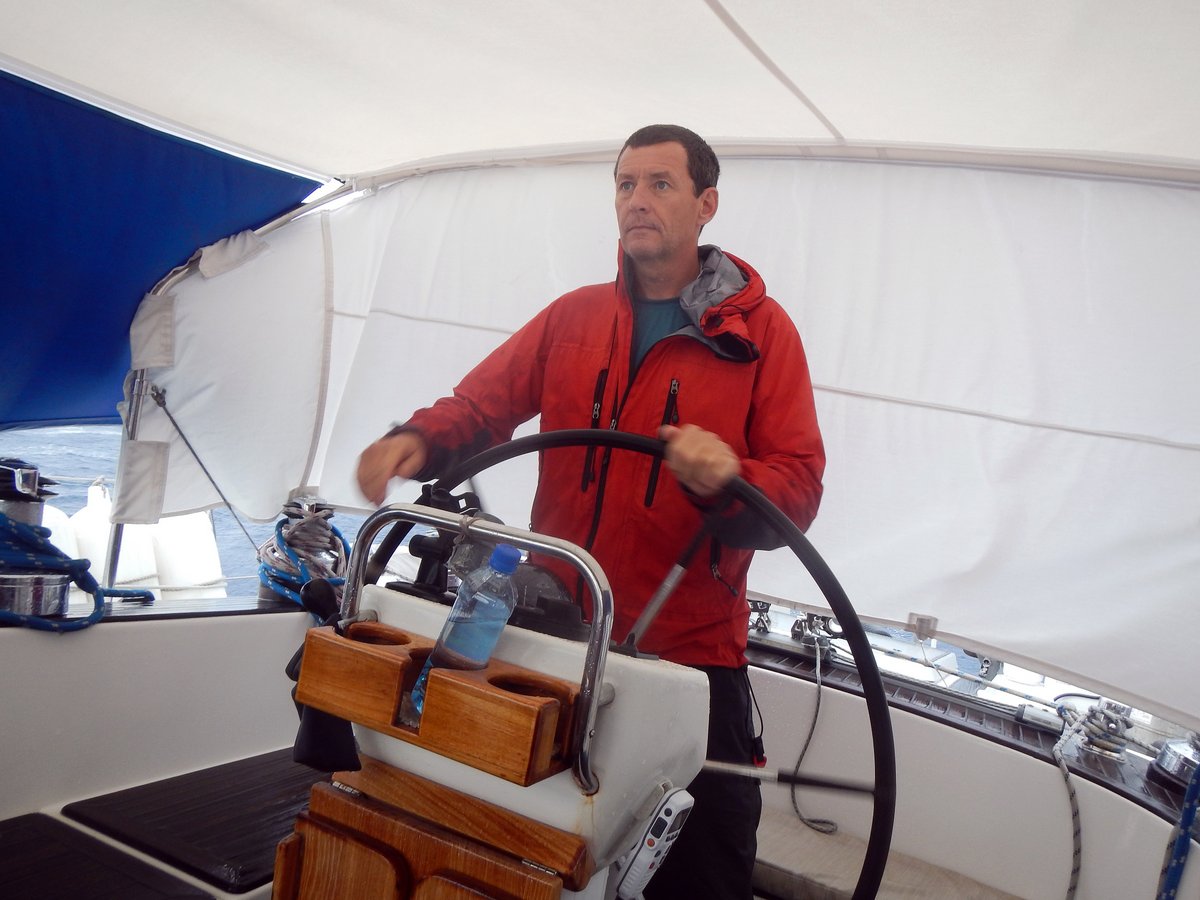
Fifteen minutes later, we had winds gusting to over 40 knots from the NE, so we turned downwind, heading west on a broad reach. It was an exciting sleigh ride down the large waves, at times surfing at 10 knots. The autopilot was struggling with the conditions and nearly broached at one point, so I hand steered for a while until the wind dropped below 35 knots - it's not often that I hand steer.
After fifteen minutes of these gales force winds, we could see brighter clouds ahead and ten minutes later, we were back to 25 knots from the ENE. We were uncertain whether we were going to get more high winds, so we continued on a WNW course. This took us to the south of Ile Matthew, which is a small unlit volcanic island jutting up 200 metres in the middle of nowhere.
In the late afternoon, the wind dropped to less than 10 knots and the barometer started to rise, so we knew that we'd passed through the trough. We started to motor and I had a wander around the deck for the first time in a few days. Our starboard navigation light had been knocked off the pulpit (presumably by a big wave) and was hanging by the electrical cable. It was full of water, so I drained it, dried the bulb and put it back together - surprisingly it still worked. The whole lamp is held in place by a lever and went back onto its bracket - sorted!
Just before dinner, the wind stabilised to 10 knots from the NNE, so were able to turn off the engine and sail close-hauled on a direct course to Aneityum. The wind died off at nine o'clock, so we put the engine on and motor-sailed for the rest of the night.
9 May 2015 New Zealand to Vanuatu (Day 8)
The day started with overcast skies and a light 5 knot wind, so we carried on motoring. By lunchtime, the clouds had cleared and the wind picked up enough for us to sail again. For the rest of the day, we had an idyllic broad reach in 10-15 knot winds, with the sun shining - this is what it's all about.
We took the opportunity of the settled conditions to tidy up the cockpit, which looked like bomb had hit it. Everything was covered in salt and felt sticky - the salt retains water, so nothing was getting dry. I rigged up a hosepipe to the aft deck shower and Glenys gave everything a good clean with fresh water including the underside of the bimini. An hour later everything was dry and the cockpit was habitable again.
I put out a lure on my fishing rod and quickly had two massive strikes as we were sailing over an underwater volcanic region called Monts Gemini. The line screamed out and, when I tightened the clutch on the reel, the 60lb line snapped the first time and a stainless steel 60lb tracer snapped the second time. Having lost two lures, I put out two hand lines with 130lb line. Thirty minutes later, another lure had gone as well. I decided to give up - as Glenys wryly said, fishing is an expensive game when you don't catch anything.
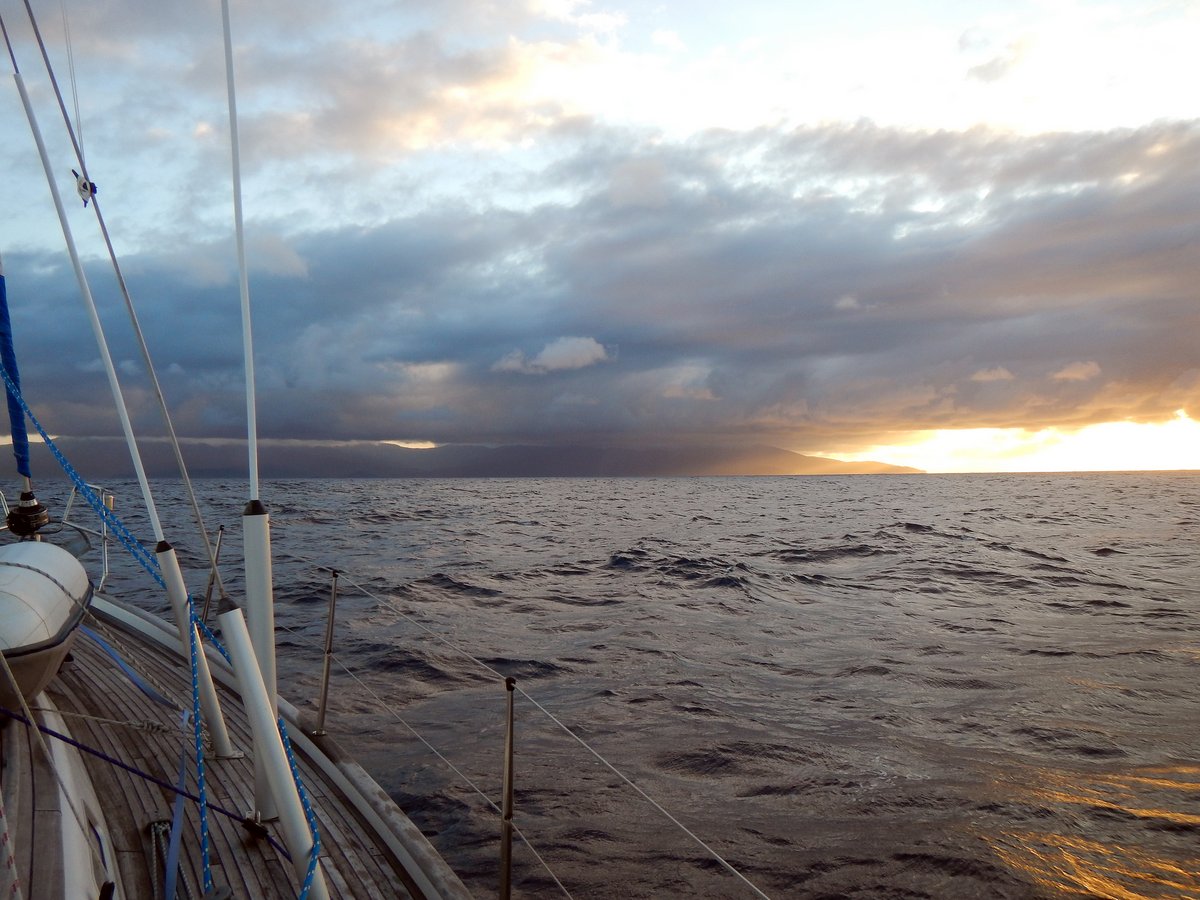
By sunset, we only had 45 miles to go and the wind had backed even further, so we rolled away the main sail and ran downwind with a heavily reefed genoa, trying to go slow to arrive a couple of hours after dawn. The moon came out at midnight and it was beautiful drifting along in the calm seas under clear skies. What a difference to the maelstrom that we had a few days' ago.
10 May 2015 New Zealand to Vanuatu (Day 9)
We weren't able to slow down enough, so we hove-to six miles from the island and waited until dawn before heading towards the entrance to Anelghowhat Bay. It looked very gloomy as we approached the reef entrance and I was concerned about the low level of light, but our Navionics chart was accurate and there’s a good leading beacon on the headland. Just after nine o'clock, we dropped anchor in 10 metres of water, relieved to be here after a tough 8 day passage.
Glenys celebrated our arrival by making a full English breakfast using up the last of the fabulous bacon that she’d bought in New Zealand. We then pottered around for a couple of hours, tidying up and getting the dinghy into the water then collapsed for the afternoon.
There’s only one other boat in the anchorage - our friends Paul and Monique on “Full Circle”. They arrived yesterday, but so far, they haven’t done their customs and immigration clearance. We’re supposed to remain on board until someone comes out to the boat, but we've both decided that if no-one comes out by ten o'clock tomorrow, we’ll go ashore and find them.
We were invited over to “Full Circle” for dinner, where we drank copious amounts of beer and wine, regaling each other with stories about our passages.
11 May 2015 Anelghowhat Bay , Aneityum
We went ashore with “Full Circle” to clear in. Richard, the policeman is supposed to come out to inspect all yachts, but his boat is being repaired, so he met us on the beach and escorted us to the police station. It was all very casual, filling in the various forms and Richard was quite happy chatting away, until he had to fill in the official receipts for the $100 fees, which was obviously a very serious matter.
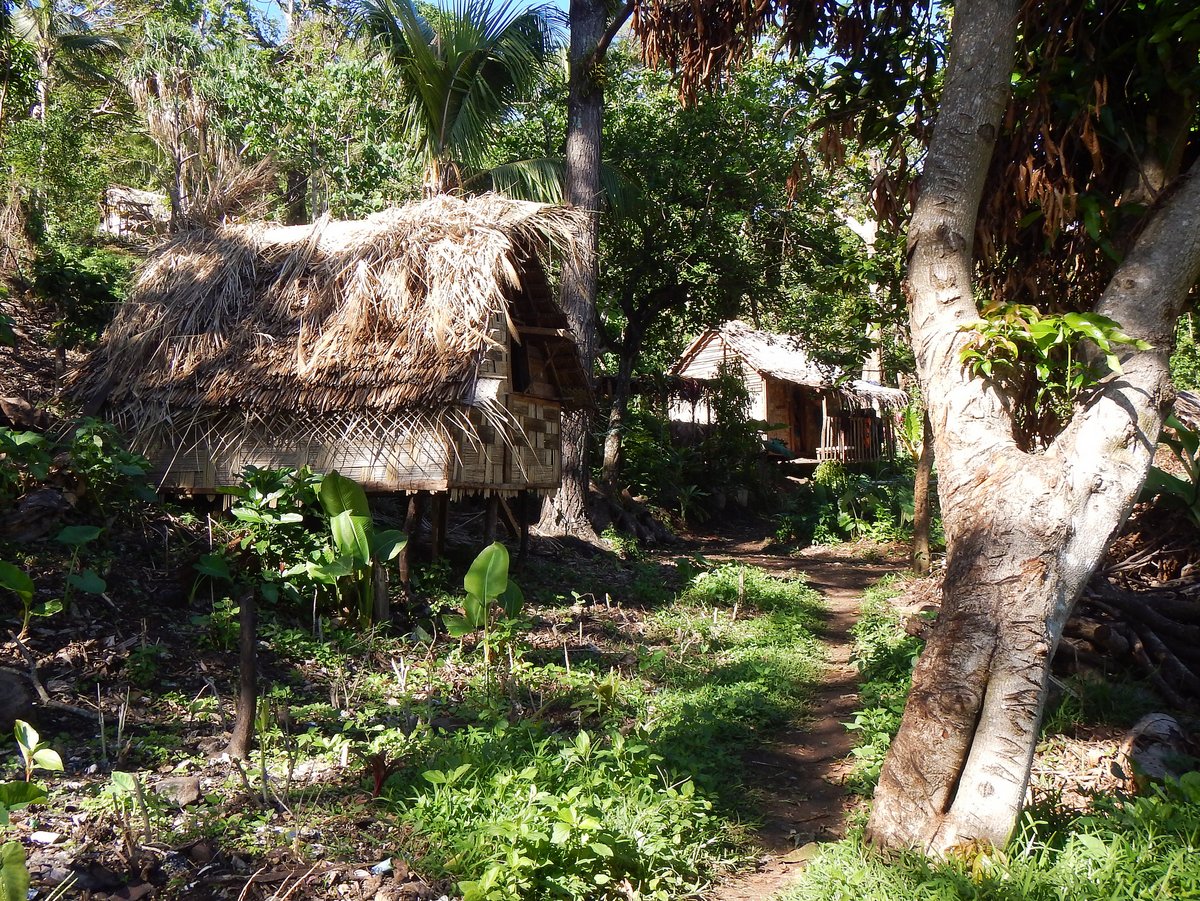
We strolled to the bank to get some small change and then went to look for Roger at the clinic, so that we could give him the nebuliser that we have brought from New Zealand. The clinic was closed, so we asked a guy nearby where Roger was and he got one of the young boys to take us to Roger’s house. It was fascinating walking along the narrow dirt paths through the village past small grass huts closely packed together.
Unfortunately, we were taken to the wrong Roger (who was out anyway), and a lady (who we assume was the wrong Roger’s wife) told us that the Roger that we wanted had gone to Port Vila and she didn't know when he’s be back. However, Roger’s wife, Leah, might be at the clinic later today or maybe tomorrow. We gave up and went back to the boat.
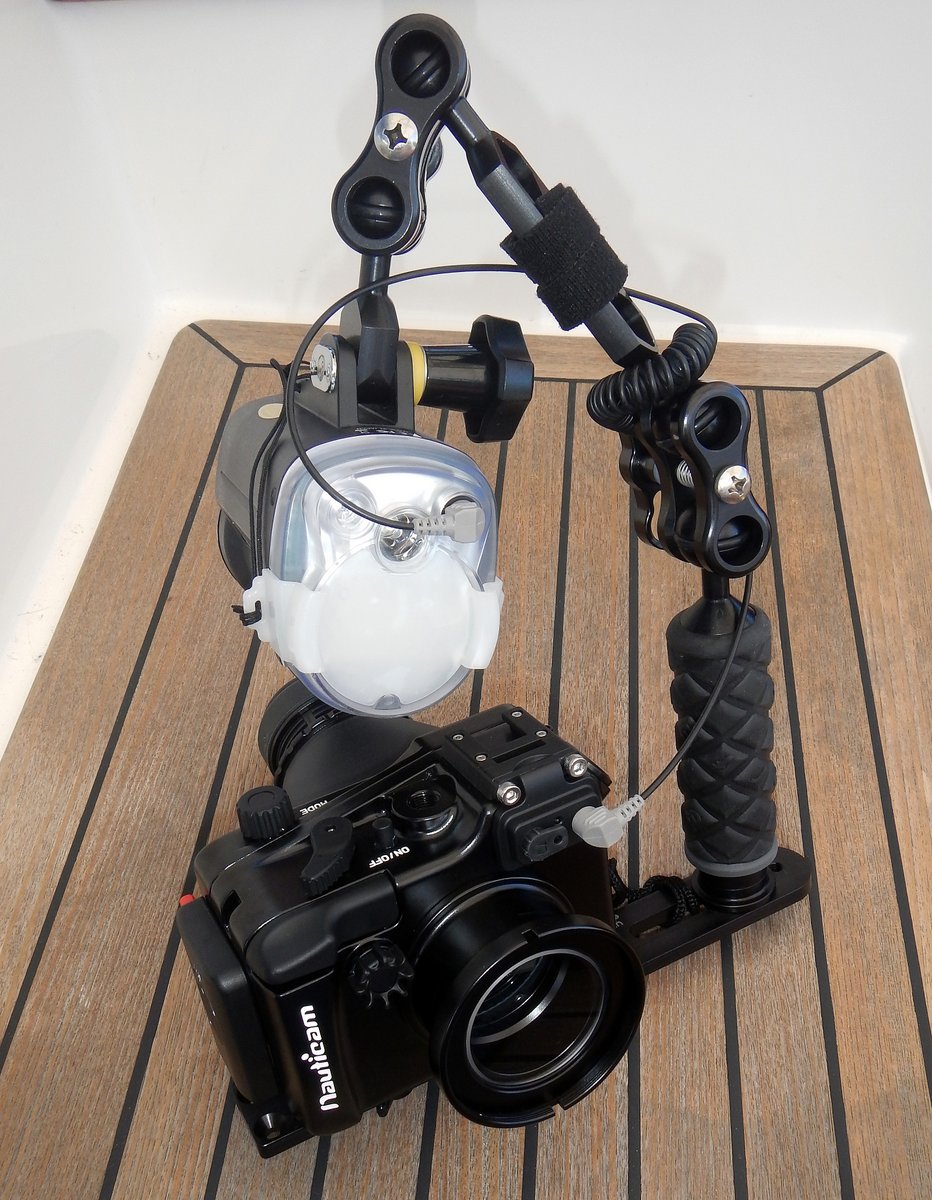
After lunch, we went snorkelling - I've been desperate to try out my new camera and the underwater housing that I bought in Singapore four months ago. We tried by a prominent rock at the entrance to the bay, but it was just a rocky reef and the visibility was poor. We tried a couple of other places, but couldn't find anywhere with clear water, so we ended up on the reef by the anchorage under the leading markers, which was the best of a bad lot. With no real subject matter and cloudy water, my photographs were very disappointing.
Paul and Monique came over and told us that they’d been invited to a lady’s house for part of a funeral and did we want to go? Half an hour later, we were ashore chatting to Joselyn, whose brother had died. They buried the man four days ago and this was the last day of a four day mourning process and she wanted us to come along to her sister in law’s house.
The open plan house was packed with relatives and kids running about. Family members visit to give their condolences over the four day mourning period, bringing baskets of food, which is cooked by the young men of the family. We sat on the floor and were served a plate of pan fried fish, rice, manioc and “lap lap”, which is a grated manioc and coconut milk, wrapped in leaves and baked in an underground oven – very stodgy stuff.
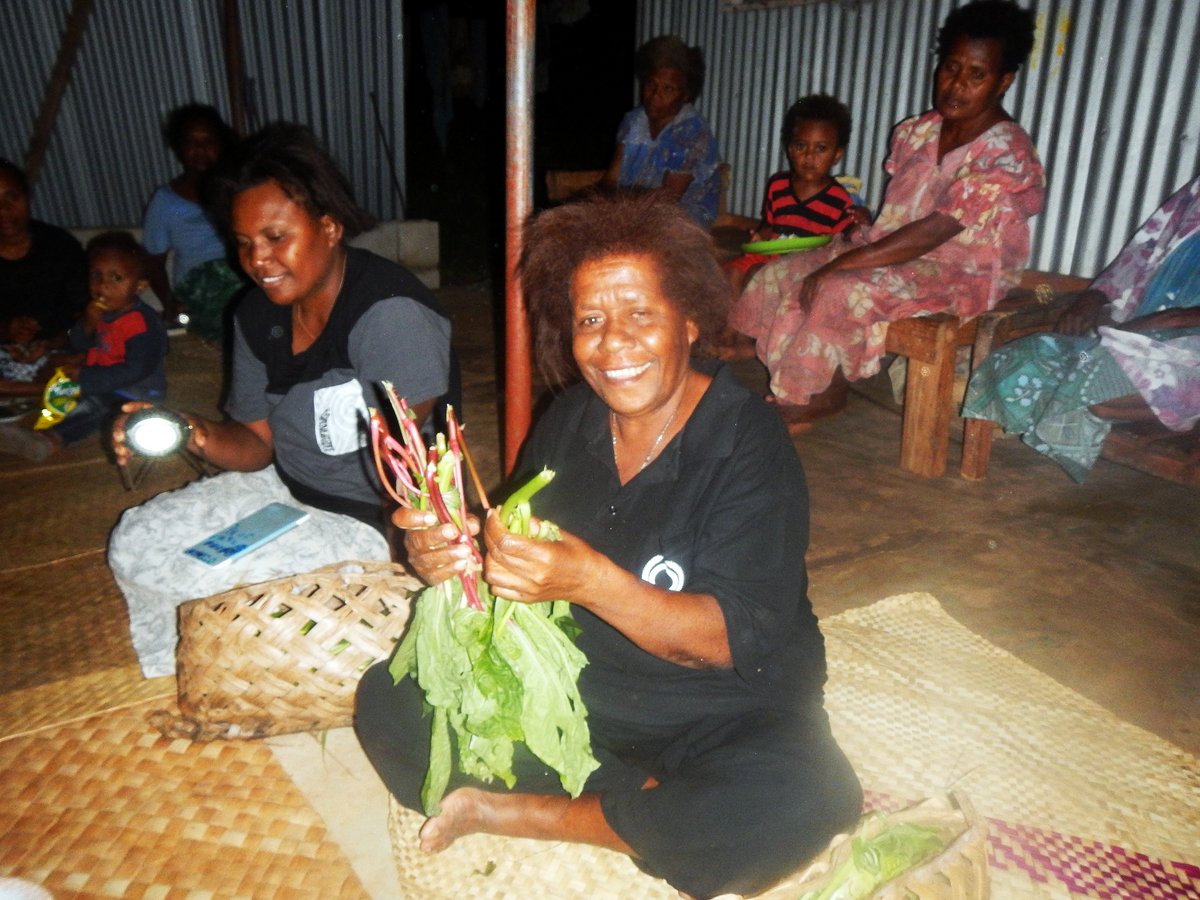
Joselyn turned out to be a right character (I suspect aided by a few cups of kava during the day). She entertained us for a couple of hours with stories of her travels to England on some kind of cultural trip when Vanuatu was made independent. When we asked questions about the food, she disappeared and came back with two baskets of vegetables for us, containing Taro, Manioc and “Island Cabbage”. It was an interesting evening – everyone was very friendly.
12 May 2015 Anelghowhat Bay, Aneityum
We went to the clinic and gave the nebuliser to Nelson, who works with Roger. He was very grateful for the device and the Salbutamol medicine to go with it. We had a long chat about the island and the work that the clinic does. They can only treat minor injuries and illnesses mostly because they have hardly any drugs at the clinic – Roger has gone to Port Vila to try to get some medicines and medical supplies.
There are about 1900 people living on the island. In the 1850's, there were an estimated 12,000 people, but the Europeans brought diseases like malaria & small pox and by the 1930’s the population had plummeted to around 100. Nelson estimated that there will be 30 births in the nearby villages this year and, with a laugh, told us that population will be above 2,000 soon because the local men are very active.
The clinic is very proud that they have totally eradicated malaria on Aneityum. Whenever someone arrives from another island, they have to have to give a blood sample to check for malaria. The clinic has the equipment to do an immediate test and, if anyone is positive as a carrier of the virus, then they are given a three day treatment to cure it.
Nelson told us that a village called Port Patrick on the other side of the island was devastated by the Cyclone. Many houses were flattened by storm surge and the winds. We decided to go around there tomorrow. Nelson told us that there was an aide centre in the village run by a guy called Joshua, so we’ll look him up when we get there.
We wandered off to give a couple of bags of clothes to Joselyn and her family as thanks for entertaining us last night. We were invited in to visit for a while and when we said that we were going for a walk, Joselyn insisted on coming with us. This turned into a three hour epic as she took us to visit some of her many relatives in the village.
Joselyn was brought up on Aneityum, but now lives in Port Vila, so she infrequently visits her home island and was a fabulous guide, telling us of the traditions of the islanders and stories of the old days.
She told us that most of the villagers are related to each other in some way and they each know their place in the family. As we walked around, she would stop small children; ask their names and the names of their parents. She would then tell them who she was and how she was related. The children then knew whether to call her Grandmother or Auntie. Apparently, a cousin is someone related to you, but distant enough to be able to marry them.
We were taken up though winding dirt paths, under coconut, banyan and breadfruit trees, through people’s gardens and everywhere Joselyn would chat and introduce us. The houses are mostly made from wooden frames, with thatches roofs and walls made from bamboo woven into mats. Joselyn pointed out houses that were of a Samoan design, brought in by the early missionaries and also took us up a small hill above the village where there was a traditional "cyclone" house.
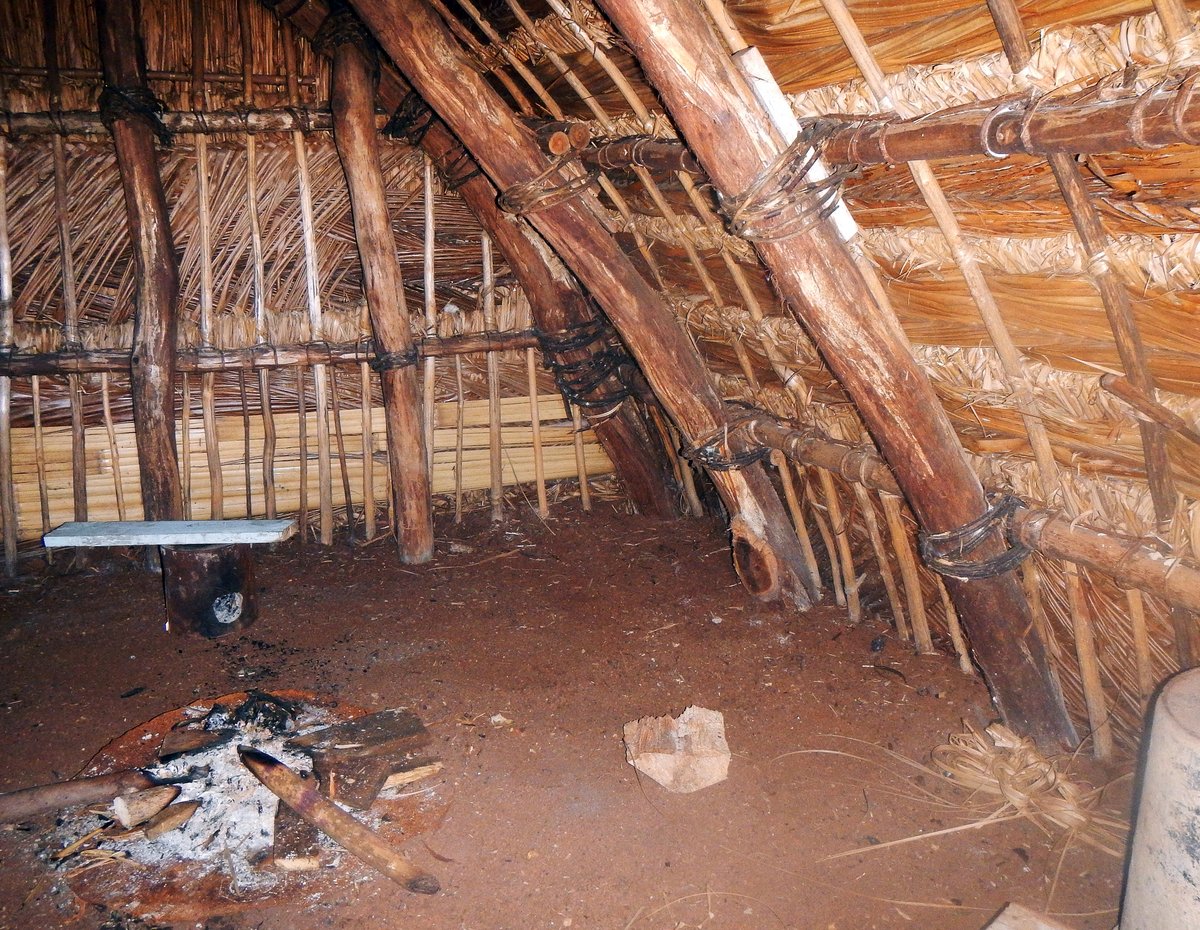
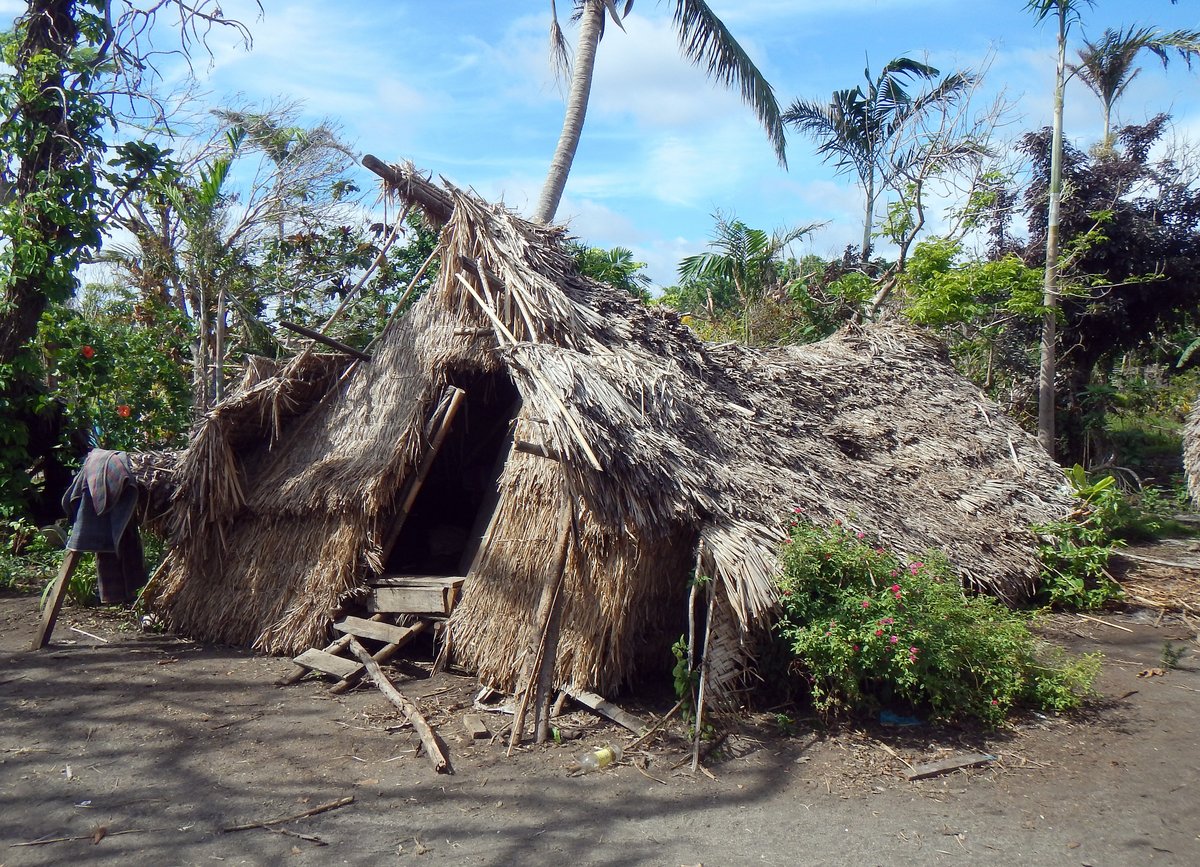
This building has no windows and a single door. The strong wooden frame is sunk six feet into the ground and the thatched roof almost reached the ground. The owner of the house said that he and his family had sheltered in this small house while Cyclone Pam roared over the island. The roof is so thick and the building so strong, that they hardly heard the wind.
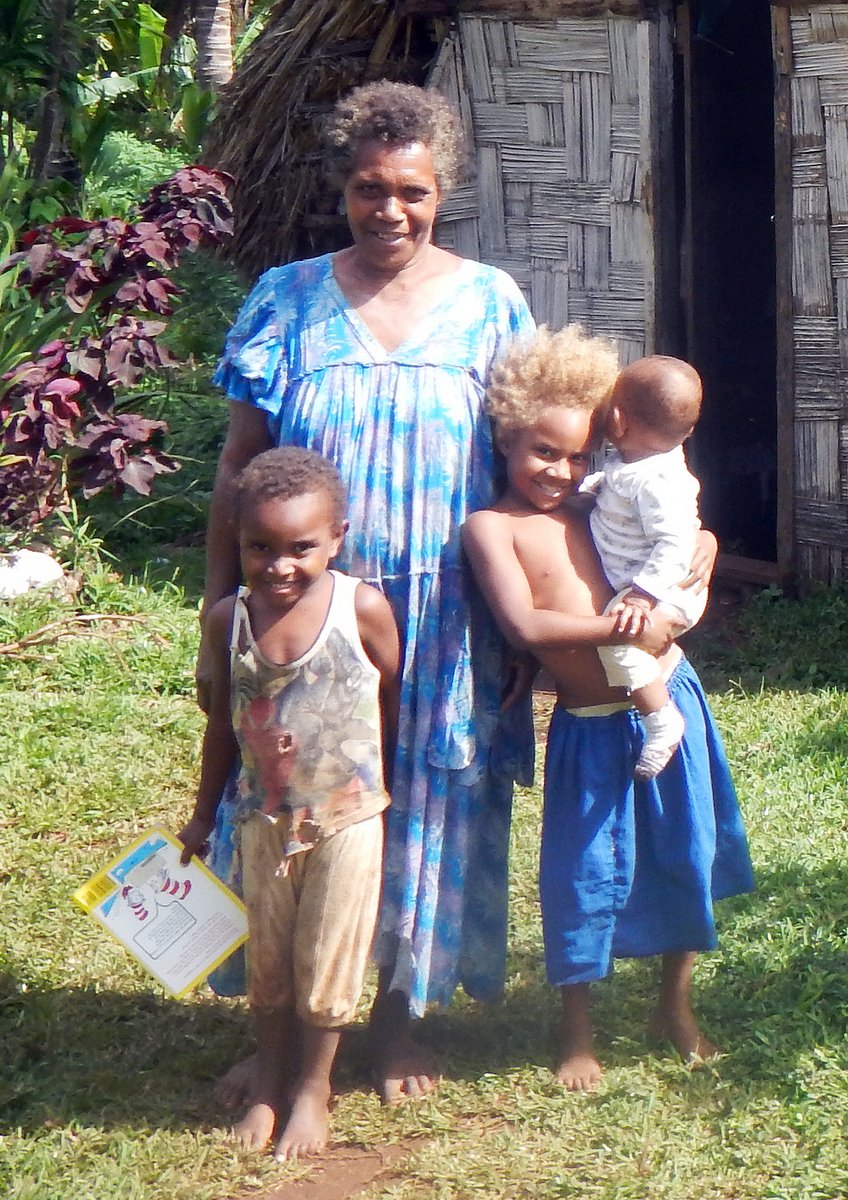
One of the things that fascinate me is the dresses that many of the ladies wear. People refer to them as “Mother Hubbard” dresses and they are blousy, cotton dresses in all sorts of colours. The ladies wear them all the time, even while out digging their land. The one common factor is that they are all threadbare and heavily repaired. We talked to one lady who had a light yellow flowery dress with bright red thread reinforcing the seams.
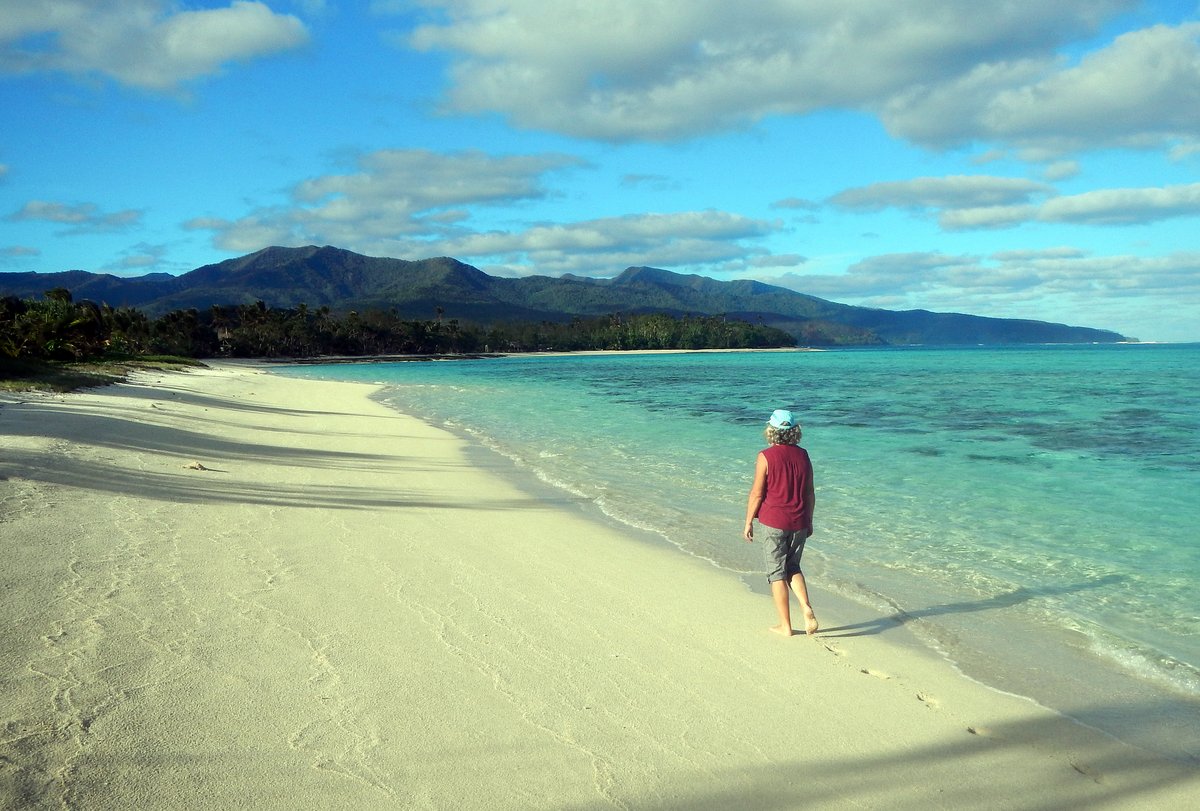
In the afternoon, we visited “Mystery Island”. A cruise ship is coming in tomorrow and will disgorge tourists onto this tiny island, so we wanted to see it without the crowds. It’s a lovely island, with beautiful white beaches, swaying palm trees and stunning water colours. However, once you step off the pristine beach, there’s a network of paths wandering past hundreds of stalls made from rough sawn wood. We've been told that people come from all over the island to sell to the Australian tourists. It will be interesting to go back tomorrow.
We were invited by Karl and Heather onto “Aradonna” for sunset cocktails.
13 May 2015 Anelghowhat Bay to Port Patrick, Aneityum
The cruise ship arrived just after sunrise and by eight o'clock a fleet of small boats was carrying the islanders out to Mystery Island, loaded with things to sell. We went over to have a look. The sleepy island was transformed. 2,600 tourists were wandering around the paths, sat on the beaches and going on snorkelling and paddle board tours run by the locals.
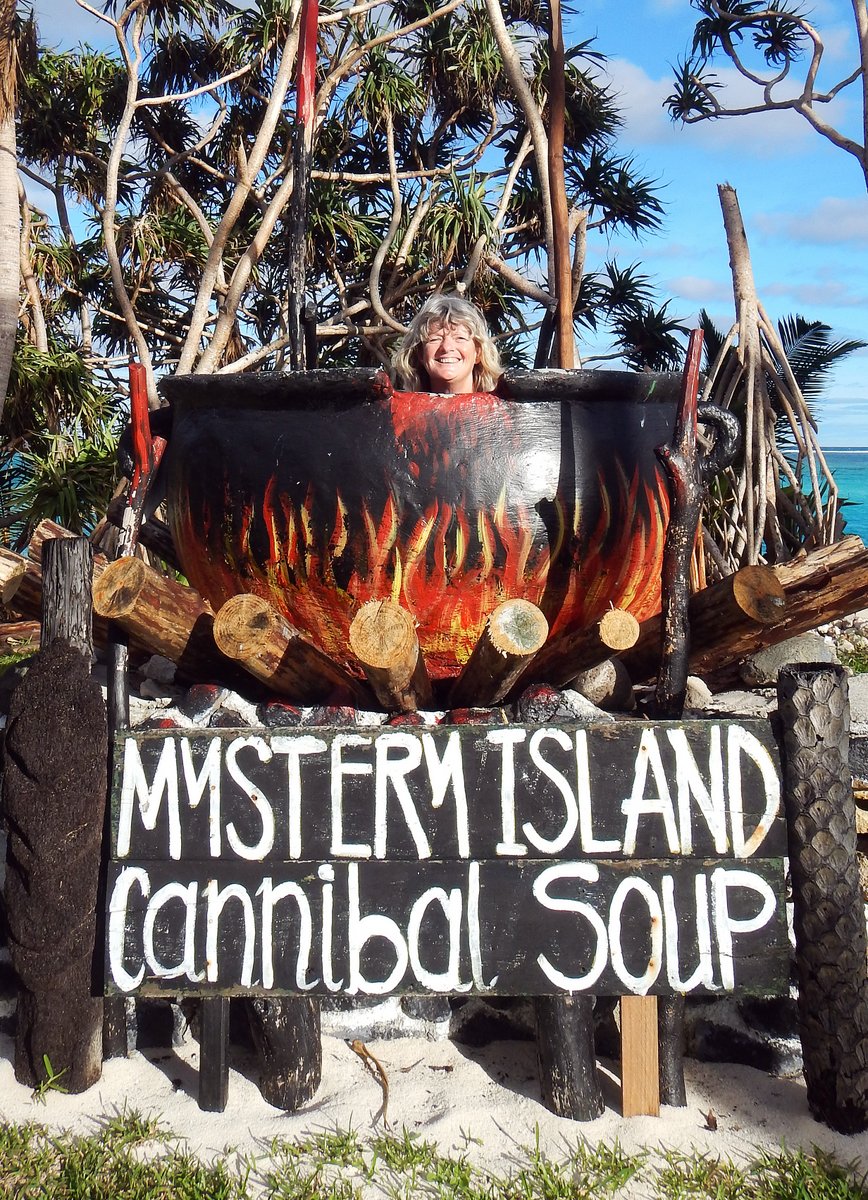
The local school children were raising funds by singing songs and ladies were manning stalls covered in shells and imported Chinese trinkets – we were disappointed in the lack of original craft work. My favourite attraction was a large steel cooking pot, painted with flames and displaying a large sign “Mystery Island Cannibal Soup”. Tourists were paying $5 each to be photographed in the pot with a fierce cannibal warrior. We bumped into Nelson and he told us that they make about $800 from that attraction in a day – not bad.
As we went back to the boat, we discovered that our friends Tomas & Annette on “Anke Sophie” had arrived after a two day sail from New Caledonia. They are heading north up the Vanuatu island chain, so we’ll see them in a couple of days.
We upped anchor and sailed around to Port Patrick, which is on the north side of the island. It was only 12 miles, but the last half was tough - motoring directly into the wind, which curled around the island. The anchorage was less protected that I thought, with swell rolling over the submerged reef, so we decided that we’d only stay one night and leave tomorrow morning.
Port Patrick was hit very hard by three monster waves, which travelled 300 metres inland, destroying all houses along the shoreline. We gathered together a collection of the aid that we’d brought from New Zealand including tools, kitchen ware, bedding, tarpaulins, ropes, etc.
Two scruffy individuals dressed in dirty, threadbare clothes met us at the beach, one wielding a machete. They looked quite sinister, but I shook hands with them and introduced myself - one of them turned out to be Joshua.
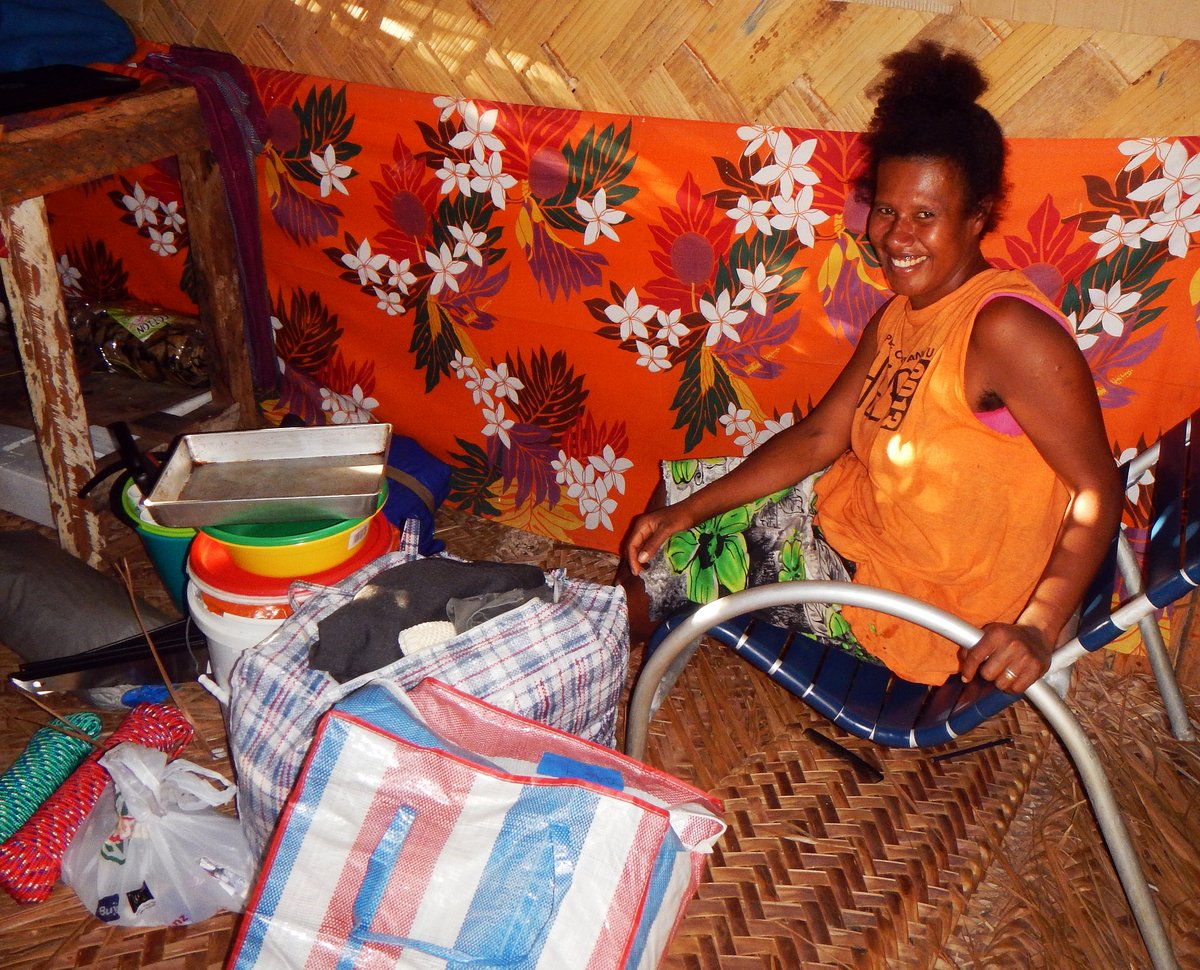
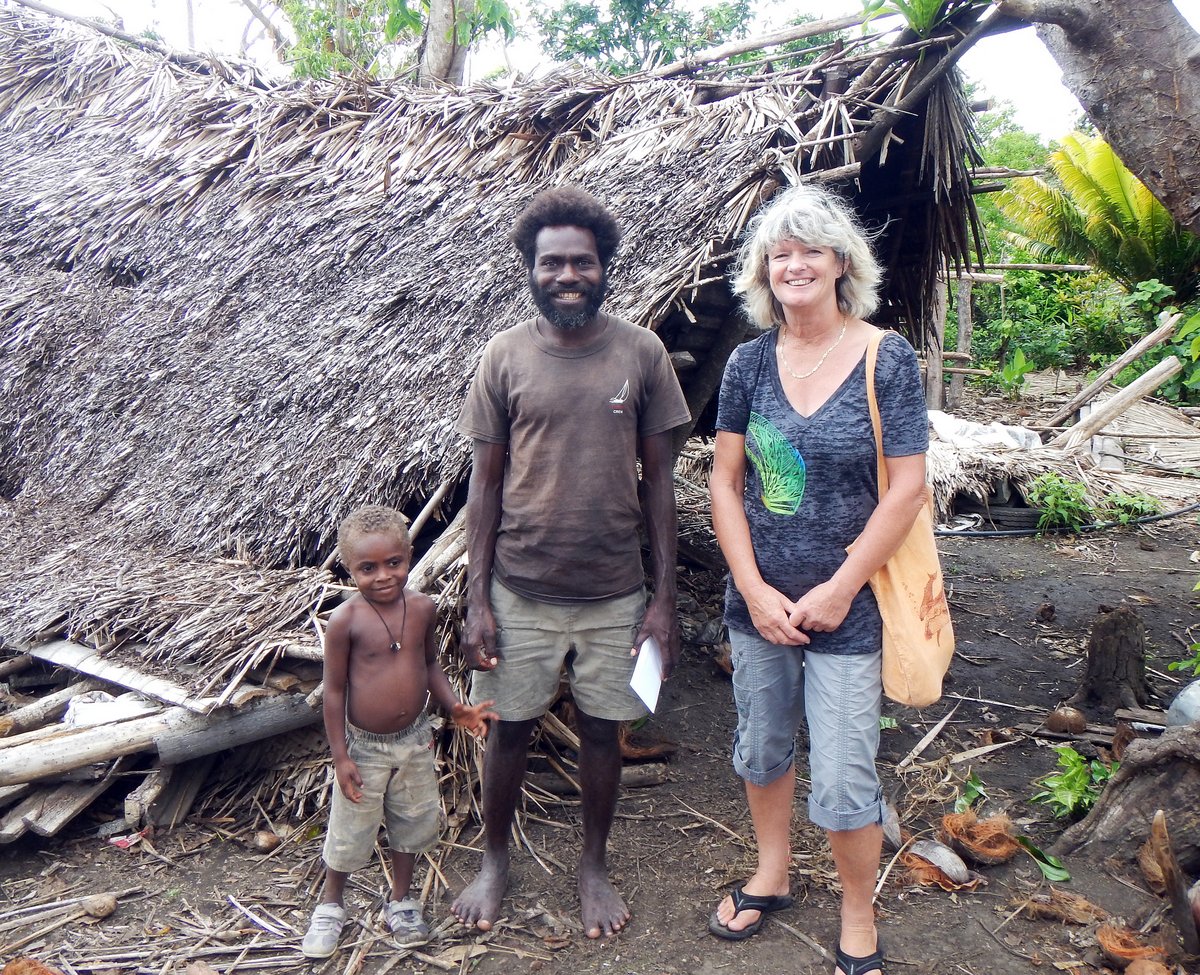
Joshua, Luka and a young lady called Daisy helped us carry the bags and buckets of stuff up to their small aid hut, where we went through what we’d brought. They were happy that we’d called in at Port Patrick and told us that most yachties only call in at Anelghowhat, so nothing ever gets to Port Patrick.
Daisy is a kind of first aider/nurse and was interested in the nebuliser that we'd gave to Nelson because they also have a number of asthmatic people in their village. I nipped back to the boat and brought back one of the inhalers and a spacer to give to her.
We went for a stroll along the shoreline to look at a whale that had beached a few weeks ago – it was now just a stinking pile of rotting blubber. Luka met us back at our dinghy and wanted some movies. It’s a real dichotomy that this guy, dressed up in tattered clothes and bare feet, had a 8 GB USB thumb drive and wanted movies. It was just going dark and I didn't want to be coming back to shore in the dark, so Luka said that he’d paddle out to our boat in his dugout canoe.
Sure enough fifteen minutes later, he was on board, looking at my laptop and choosing films. He didn't know what they all were, so I gave him a selection of 6 or 7 movies. He spotted my guitar, so I let him have a play – he’s not bad. Once Luka had left, we collapsed with a cold beer – it’s hard work, this cruising.
14 May 2015 Port Patrick to Port Resolution, Tanna
We were up at the crack of dawn to sail 45 miles across to the next island, Tanna. The wind was from the ESE at 12-18 knots, so we had a fabulous reach with blue skies and 2 metre swell – lovely.
Our Navionics charts show absolutely no detail of the Port Resolution Bay, so we relied on a couple of old pilot books that we've acquired. The entrance into the wide bay was no problem (Approach: 19:30.916S 169:29.017E; Entrance: 19:31.360S 169:29.831E).
The water is murky, so it’s difficult to see the reef which extends a long way from shore, so we did a few tentative circuits to check the depth before anchoring at 19:31.543S 169:29.794E in 4 metres of water.
Our friends on “Full Circle” were already anchored a little further out and were rolling a lot in the swell that creeps into the anchorage, so we put out a stern anchor to keep our bow pointing into the waves. Once we’d got the anchors sorted out, the motion was okay with a slight rocking and pitching.
By the time that we’d anchored it was four o'clock, so we chilled out on-board and will go to look around tomorrow.
15 May 2015 Port Resolution, Tanna
We nipped over to see “Full Circle” to get the lay of the land and while we were there, Stanley came paddling over in his dug-out canoe. Stanley is the village chief and is organising any aid brought in by cruisers as well as providing transport if needed. He told us that there are five small villages spread around the bay and another one ten miles away that will benefit from our supplies. Stanley is holding onto everything until there is enough to share out.
We went back to the boat and gathered together about a third of our remaining aid, then went ashore. A guy called David met us on the beach and, with a handful of kids, helped us to lug the stuff up the hill to their village. Stanley started to sort through it all before storing it away, so we left him to it and wandered around the village.
There are many trees blown down and a few houses that haven’t been repaired yet, but people seem to be happy enough. Big waves came into the bay during the cyclone and have undercut the soft earth cliffs causing trees to fall over the edge - last night we heard a terrific crash as a huge banyan tree toppled over the edge.
In the afternoon, we went for a snorkel off the beach on the east headland. It was okay, but the water is murky after the cyclone, so my photos were rubbish. “Anke-Sophie” arrived late afternoon, so we had them over for a few beers.
16 May 2015 Port Resolution, Tanna
Overnight, the wind increased to 25 knots and veered from ESE to SSE, so the wind was coming from directly behind us and we were hanging off the stern anchor. The chop caused by the wind was slapping against the sugar scoop on our stern making it difficult to sleep, so I got up at dawn. The swell coming into the bay was almost non-existent, so I dropped the stern anchor and we swung bow into the wind, which was much, much better.
After breakfast, we went ashore to search out some friends of “Tenaya”. Jim and Katie were here in 2011 and 2012 and have sent us some money and photographs to hand out to various people. As soon as we landed on the beach, we found Werry, who runs the Port Resolution Yacht Club – this is a small building on the headland owned by the community, but there’s not much happening there.
Walking through the village, we stopped to give an envelope to Stanley, who showed us that his house and kitchen were damaged by the cyclone. The villagers are in the process of re-building houses - on average, it takes 7 days to build a house from scratch. His house has been cleared away, but as chief, his will be the last house to be rebuilt.
Our next stop was to visit Serah, who used to run a small restaurant for tourists, but it was also flattened by the cyclone. They are half way through rebuilding it – the wooden frame is complete and they are waiting for bamboo to be delivered from another village to make the walls. She hopes to be up and running in a couple of weeks.
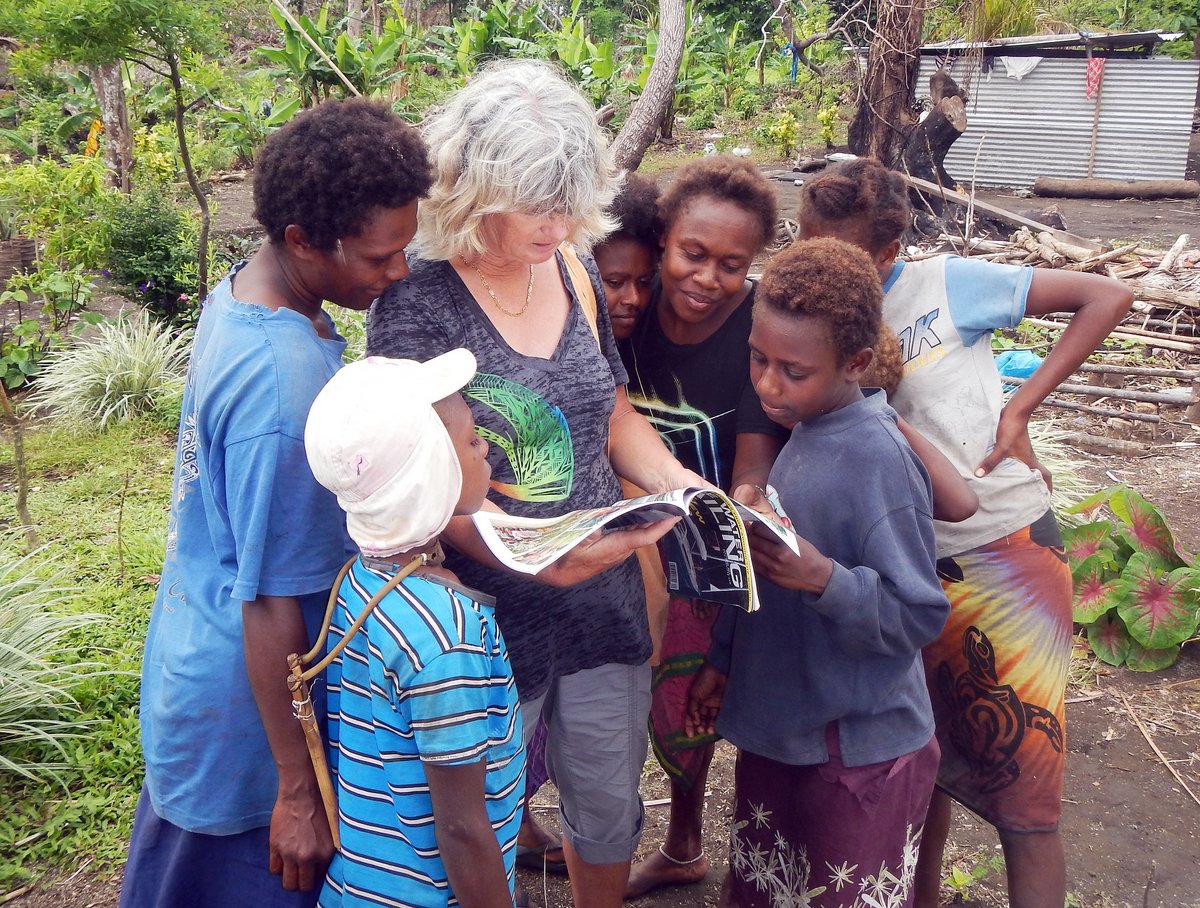
We wandered to the next village along the “main road” which is a rucked, dirt track. By asking around, we finally found the house of Patrick, but his wife told us that he was out helping to rebuild a church in another village. It was only fifteen minutes’ walk, so we decided to go and find him. We were guided there by a gaggle of children and dogs, walking along the main road and then up a steep dirt path to the top of a hill.
Patrick and a couple of guys were taking the wooden frame of the demolished church apart, getting ready to rebuild it. This little village and the church is in a wonderful airy spot overlooking the bay, but terribly exposed to the cyclone and the church just collapsed. We gave Patrick his envelope and chatted a while. He asked me if I was mechanically minded and it turned out that he has a strimmer that doesn’t work, so we said that we’d go to visit tomorrow.
It was a miserable afternoon, with gusty winds and heavy rain showers, so we called off our planned excursion to the nearby volcano and chilled out. “Anke-Sophie” and “Arradonna” came over for a few beers.
17 May 2015 Port Resolution, Tanna
It was Sunday, so we chilled out in morning, catching up with a few chores.
After lunch, we went to see Serah to give her a 20lb propane tank that we’d bought in New Zealand – it’s steel, so it will just rust away on the boat. They don’t have the correct fitting for the regulator, but should be able to sort it out in the main town of Lenakel. We also dropped off a bag full of kitchenware – cups, pans, etc. to replace some of the things that they’d lost when their restaurant blew over.
Serah made us a cup of the coffee that is grown and processed on Tanna. She grows a small amount of coffee herself and is able to take the raw beans over to a large plantation who then process it for her, giving her a percentage of the finished product. She also presented Glenys with a lovely two metre square, woven pandanus mat, which was very nice of her.
When we arrived at Patrick's house, Glenys went to chat with Nellie, while I found Patrick working on his strimmer. It started, but kept cutting out and also the stop switch wasn't working. I decided that the carburettor must be dirty, so I stripped it down and sprayed carburettor cleaner into all the ports that I could see. When I put it all back together, it wouldn't start at all - damn! Unfortunately, it was now late in the afternoon and we had to go, so we said that we'd come back tomorrow.
Back at the "yacht club", we met up with "Anke-Sophie" and "Aradonna" and climbed onto a pickup truck accompanied by Werry and Stanley, to go to see the Mount Yasur volcano. We had an interesting ride, bouncing along a dirt track through dense forest, passing a couple of villages and even some holiday bungalows.
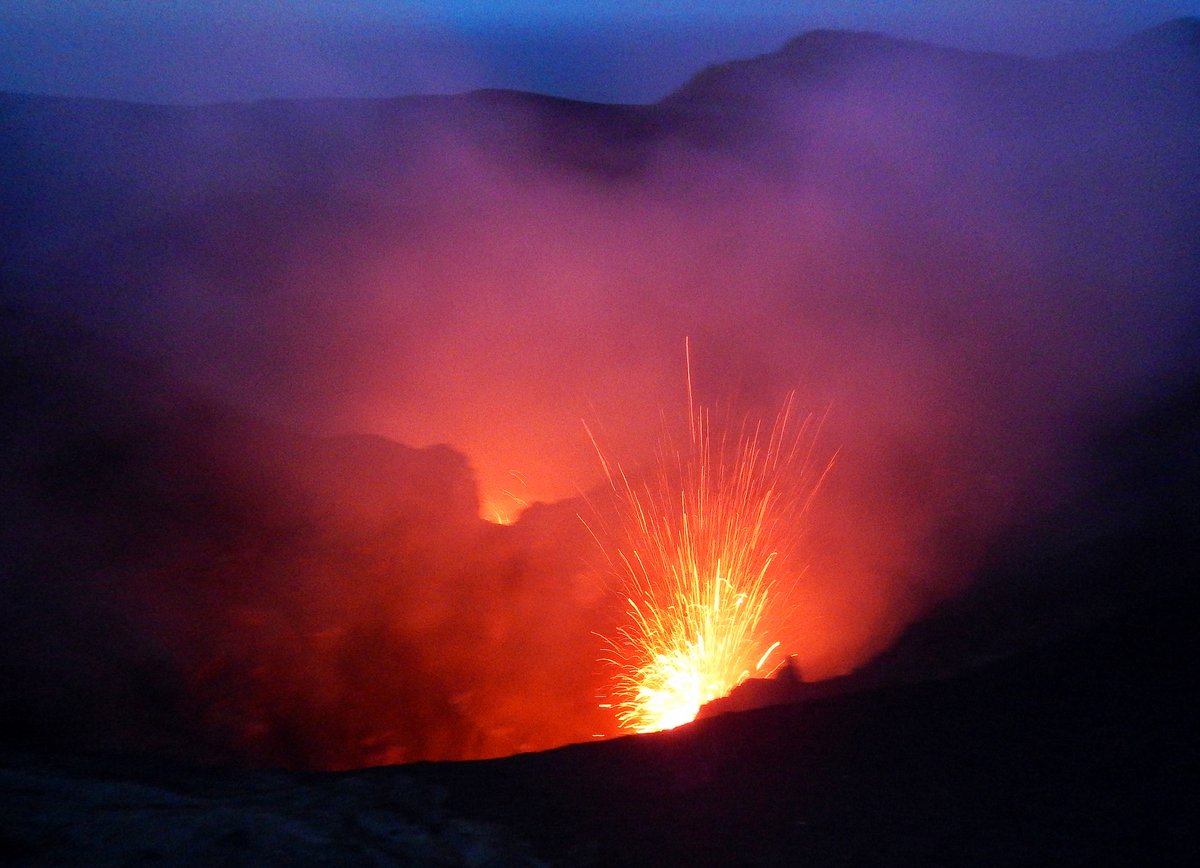
Access to the volcano is controlled by a government organisation and there is a $38US charge. After paying the entry fee, we drove up a very rough track to the foot of the volcano cone. From there it was a steep ten minute walk up to the crater rim.
Mount Yasur has been actively spewing out lava and ash for over 800 years. In 1774, Captain Cook was drawn to Port Resolution after seeing the fiery glow of the volcano. There were a few other groups of tourists and locals, stood on the narrow crater rim, looking down into the caldera a few hundred feet below. Huge fountains of molten lava are blasted skywards by explosions and you can hear the large, cooling rocks ricocheting off the steep slopes. It’s an incredible sight.
We arrived just before sunset and the natural firework show became even better as the sun went down. I walked clockwise around the rim for a few hundred metres, where I had a fabulous view down into the caldera. Below me was a 45 degree slope covered in ash and pumice with no guard rails, so one slip along the narrow rim would see me sliding helplessly down into the bowels of the earth.
The only downside to the trip was the strong winds, which kicked up clouds of sharp volcanic sand. By the end of the evening, we were covered with ash and our eyes were full of painful grit. The walk back down to the pickup truck in the dark was a challenge as the path is unmarked and we were half blinded by the stinging sand.
Back at the village, we had a meal in a tiny little restaurant run by a lady called Leah. She served a mildly curried chicken, with rice and six different dishes of taro, cassava and island cabbage cooked in coconut milk - very nice although the chicken had just been hacked up into one inch chunks (bone and all), so it was a bit of a challenge to our western palates.
18 May 2015 Port Resolution, Tanna
I didn't sleep well last night, worrying about how to fix Patrick's strimmer. So, while Glenys packed a few children's clothes in a bag for Nellie, I dug out some tools to take ashore.
We walked to Patrick's house where Glenys went to see what Nellie was doing and I found the strimmer. After a bit of fiddling, I discovered that I hadn't tightened one of the bolts holding the carburettor in place. With a few turns of a screw and I had the thing running okay - phew! I then replaced the wires leading to the stop switch and soon had that working as well, so Patrick was well pleased.
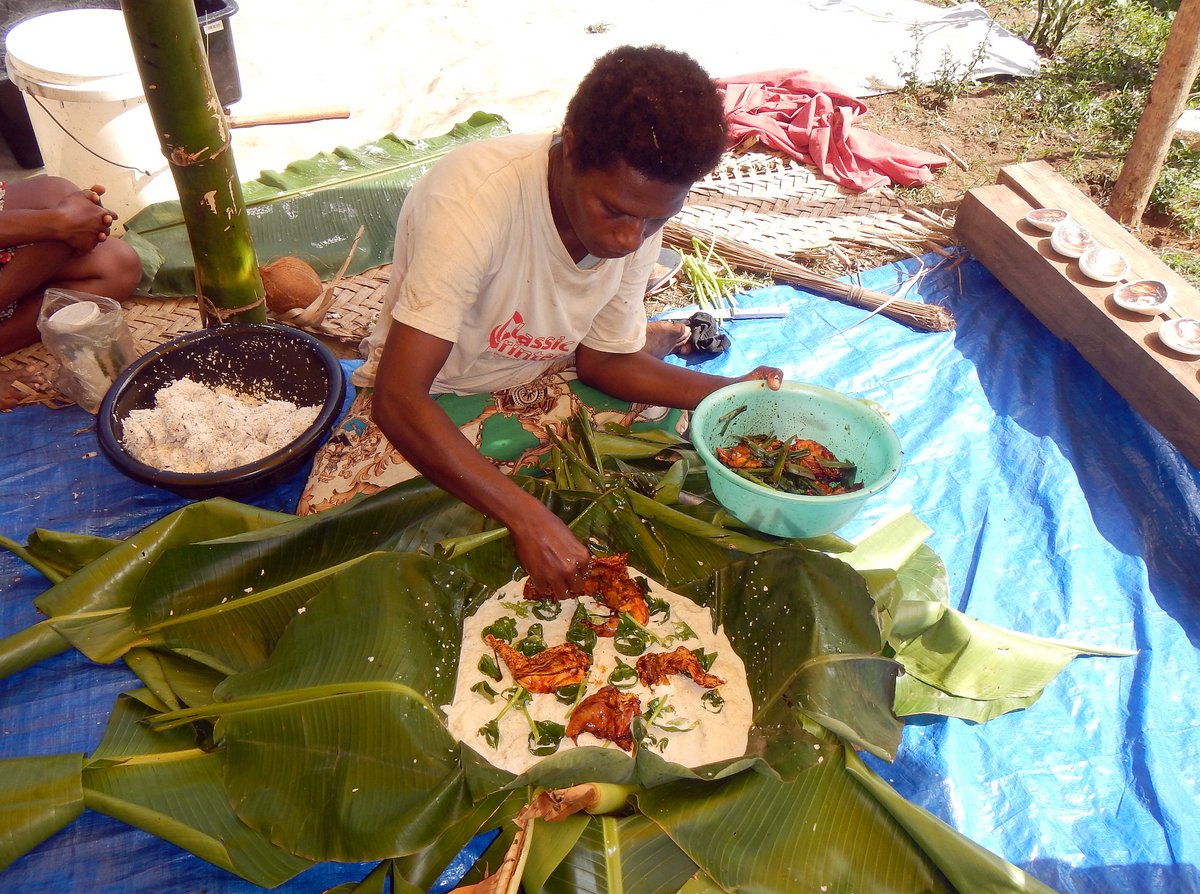
Glenys found Nellie surrounded by family making Laplap, which is a traditional dish made from grated taro or kasava. Nellie used a large 500mm aluminium pan and first lined it with banana leaves. Taro root was then finely grated on top of the banana leaves. Meanwhile, someone was grating coconut and squeezing it to make coconut milk.
Once the pan was full of grated taro, Nellie mixed in some coconut milk to make a creamy dough. She then folded island cabbage leaves into tubes and inserted them into the taro mixture to create pockets. More coconut milk was then squeezed on top. Some children were dispatched to catch a cockerel, but after much laughing and chasing, it fell to Patrick to corner the errant bird. The scrawny chicken was plucked and chopped up into pieces, then laid on top of the Laplap mixture.
More coconut milk was poured over everything and the banana leaves folded over the top to make a kind of lid. The whole pan was placed in the centre of an open fire and hot stones were placed on top. More banana leaves were placed over the stones and another pan used to weight the whole thing down.
By the time the preparation of the Laplap was finished, Steve, Dinky and Henk from "Pikuditu" had arrived. It takes an hour to cook the Laplap, so Patrick offered to take us to look at his gardens. I was interested to see how quickly things grow in the fertile soil on this island - Cyclone Pam hit Tanna only nine weeks ago and Patrick already has crops of taro, beans and peppers ready to harvest.
Back at the village, Patrick presented us with some woven baskets and necklaces made from seeds, then Nellie served the family and us the Laplap. It was very tasty - the grated manioc had solidified to the consistency of cake and the chicken was tender. She doled out huge plates for everyone, but Glenys and I asked to share one plate, which was a good job because it was very filling.
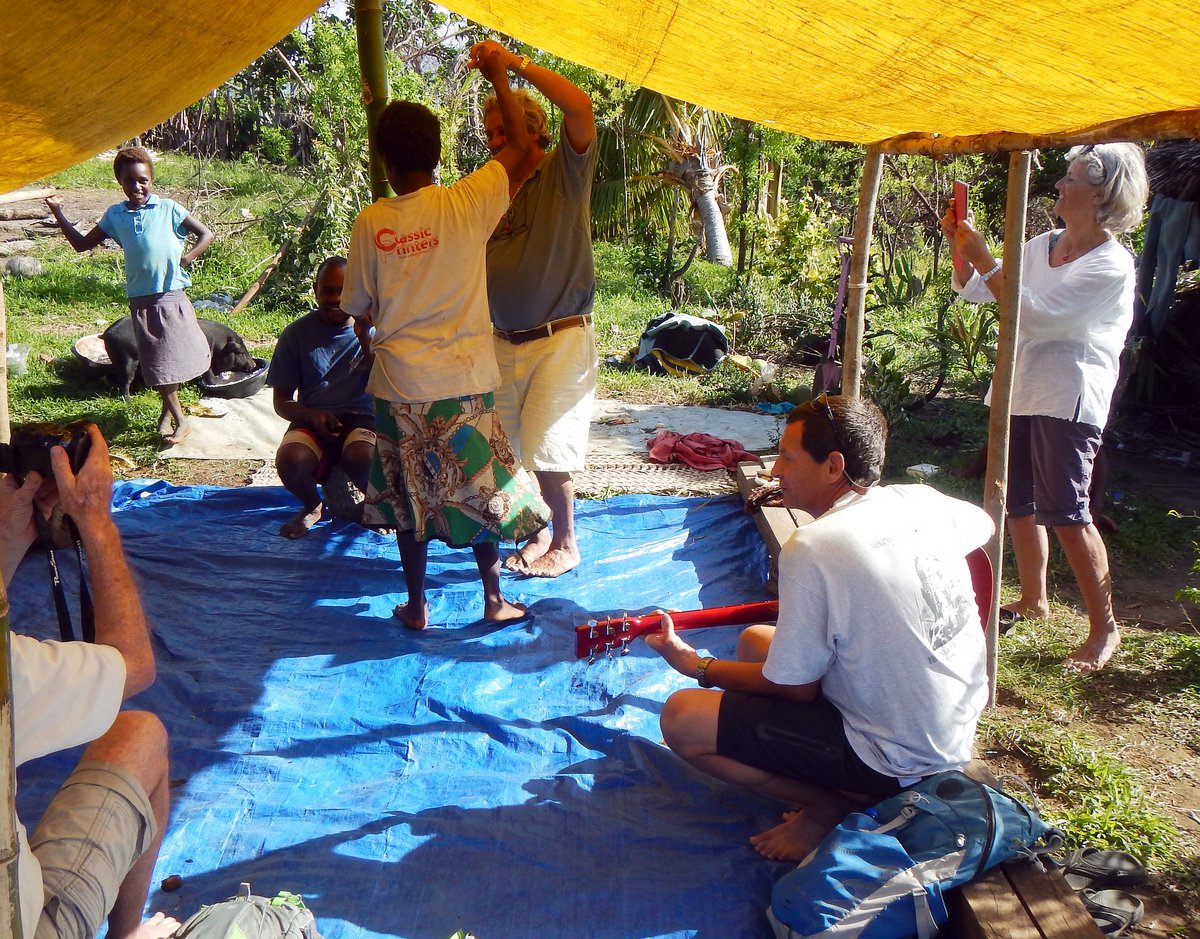
"Pikuditu " were here last year and they had brought a new guitar for Patrick's church. I couldn't resist having a play and the family laughed with delight when Steve asked Nellie to dance while I sang "Jamaica Farewell". Mid-afternoon, we said our farewells and retired back to the boat. The people here are so friendly that it feels like we've been here for more than four days. Unfortunately, it's time to move on and we'll be sailing away tomorrow.
19 May 2015 Port Resolution to Dillon’s Bay, Erromango
We were up at the crack of dawn and sailing by half past six. We had a fabulous broad reach along the edge of Tanna. Once around the headland, our course was 30 degrees more downwind, so I put our spinnaker pole out to starboard and we rolled downwind doing 6 to 7 knots for most of the way. Just off the south-west tip of Erromango, I hooked a fish, but it snapped the hook off before I could get it on board - I despair.
We anchored off the beach off Dillon's Bay in 8 metres of water. “Anke-Sophie” arrive fifteen minutes later. For a change, the water here is very clear despite being next to a river mouth. A guy called David paddled out to chat to us. He is building a “yacht club” and acts as a liaison for the cruisers visiting the village. We arranged to drop off our aid tomorrow morning.
20 May 2015 Dillon’s Bay, Erromango
The people are distributing any aid to their community and we had a little ceremony where we were formally welcomed and I told everyone that these things had been donated by people in New Zealand. There was also a guy who was a representative of the government, so David was keen for me to tell everyone that we’d been told not to bring any food into the country and he then repeated by words in Bislama, so everyone understood why we had no food.
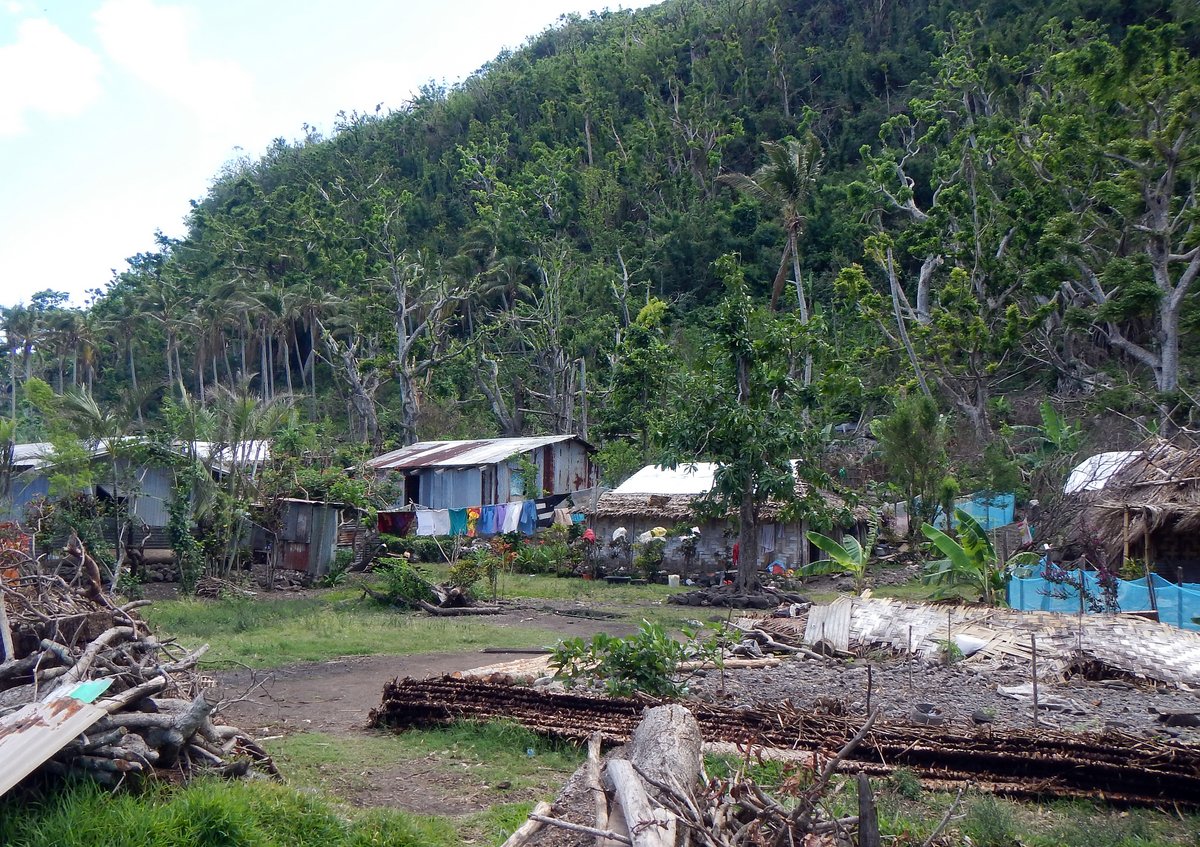
David then took us for a walk around his village, first showing us the clinic where I dropped off an inhaler and spacer. The school was our next stop. They have two separate schools - one French-speaking and one English-speaking, which face each other across a playing field.
Up to 1980, Vanuatu was run jointly by France and Great Britain in a strange administration called The Condominium. The early French and English settlers hated each other and there were separate police forces, courts, jails, health systems and schools. After Vanuatu’s independence, there is still a dual education system and parents decide whether their children will speak French or English. Most decide to have some children learn English and some French.
David then took us along the river and showed us the villagers’ garden. He told us that the river broke its banks during the cyclone and all their crops were swept away. There are not many coconuts on the trees and all bananas and papaya were blown away. He said that the soil is not as rich as the volcanic soil in Tanna, so things take longer to grow, hence their need here for food aid.
It’s lovely up the river, which is wide and there are several large pools, which are great for swimming - Glenys couldn’t resist going into the cool water and then walked back to the village dripping wet. David showed us the “Yacht club” that he’s been building for seven years. It’s a two story concrete building, in a lovely spot overlooking the bay and it will be a restaurant and bar when he’s finished it.
We jumped into our dinghies and motored a mile up the coast to look at some burial caves. The tide was out, so to get to the shore was a challenge. We managed to paddle to within 50 metres of the beach, but then had to walk across the coral, dragging the dinghy with us. Our dinghy has a deep v-hull, so despite putting the wheels down, it was a struggle and our nicely painted aluminium hull now has a few dinks.
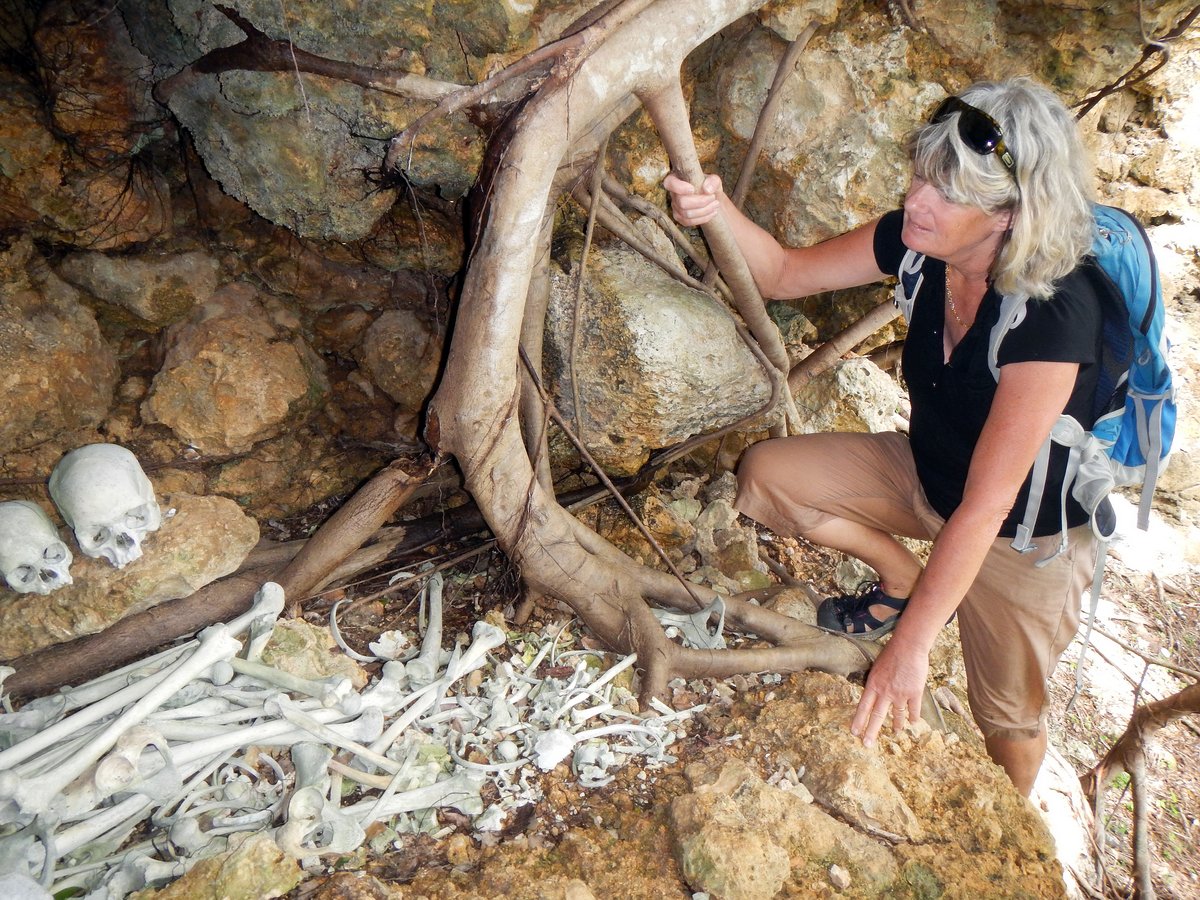
It was only a short walk up a steep hill to the two caves, which until 100 years ago was the main way to bury important elders. One cave has had a rock fall so we couldn’t go in, but the other is a small depression up a cliff, which is a short scramble, hanging onto tree roots. Inside the cave are human skulls and bones. David told us that this practice of burial was abolished by the missionaries and now everyone is buried underground.
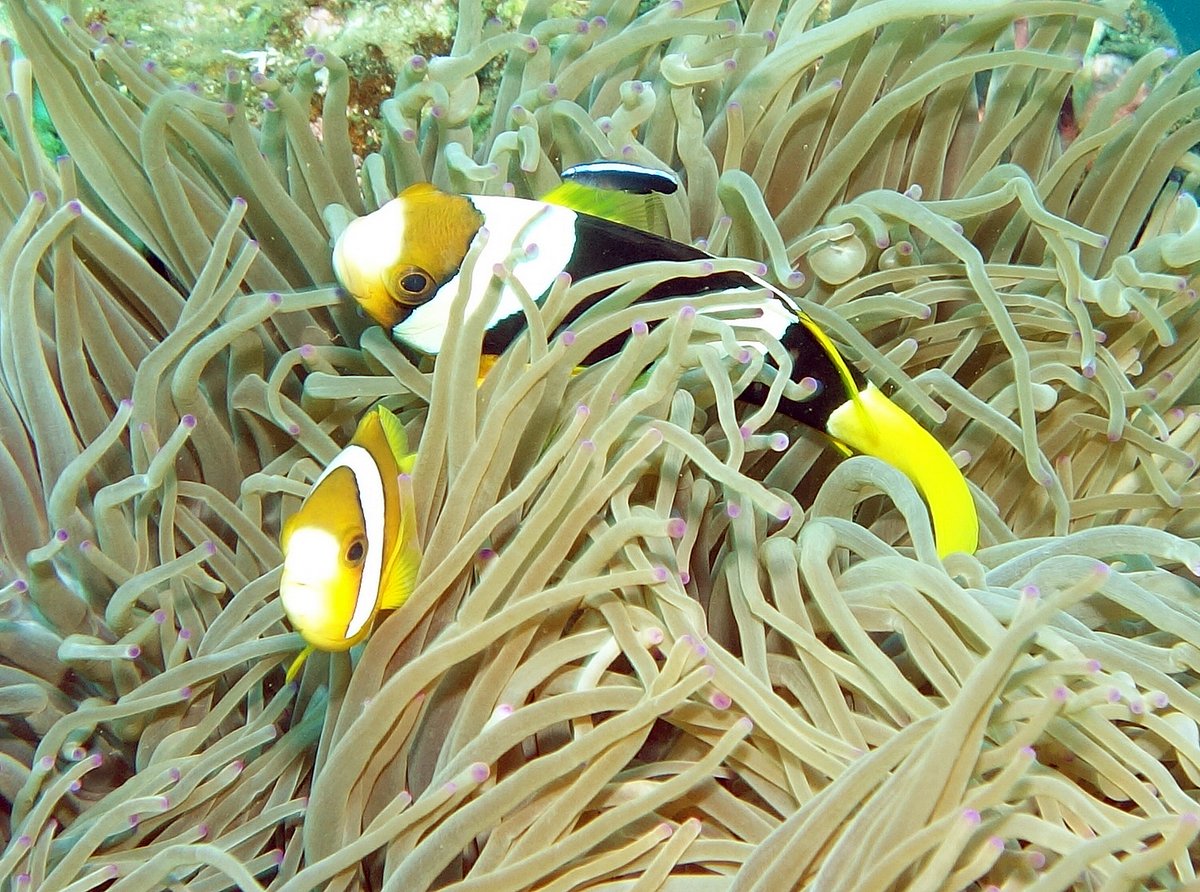
Back at the boat, we had a late lunch and then I went snorkelling off the nearby headland, which was very good - reasonably clear water in depths to 15 metres. The reef is all hard coral on rock with no soft corals yet, but there was plenty to look at. I practised with my new camera and got a reasonable picture of a Clarke's Anenomefish.
21 May 2015 Dillon’s Bay to Port Vila, Efate (Day 1)
In the 1840’s, Erromango was infamous for hostile cannibals and was responsible for most attacks on trading ships. To counteract this, the islanders were required to swim out to the ships to trade their sandalwood.
Glenys’ maiden name is Williams, so we were interested to hear about two missionaries called John Williams and James Harris who arrived here in 1839. A few days before they landed, some traders had murdered five villagers, so the locals were hostile. The chief told the missionaries to stay near their boat, but when they came further ashore, they were killed and eaten.
When we told David that we were interested in this event, he took us along the river where we scrambled up a bank and found a small plaque commemorating John Williams. The cannibals laid the body out on the rock then chipped out the outline before cooking the missionary and eating him.
The missionaries and traders were held responsible for bringing whooping cough, dysentery and measles to the island - these epidemic diseases eventually reduced the population from 10,000 to only 400. The last missionary killed on Erromango was James Gordon in 1857.
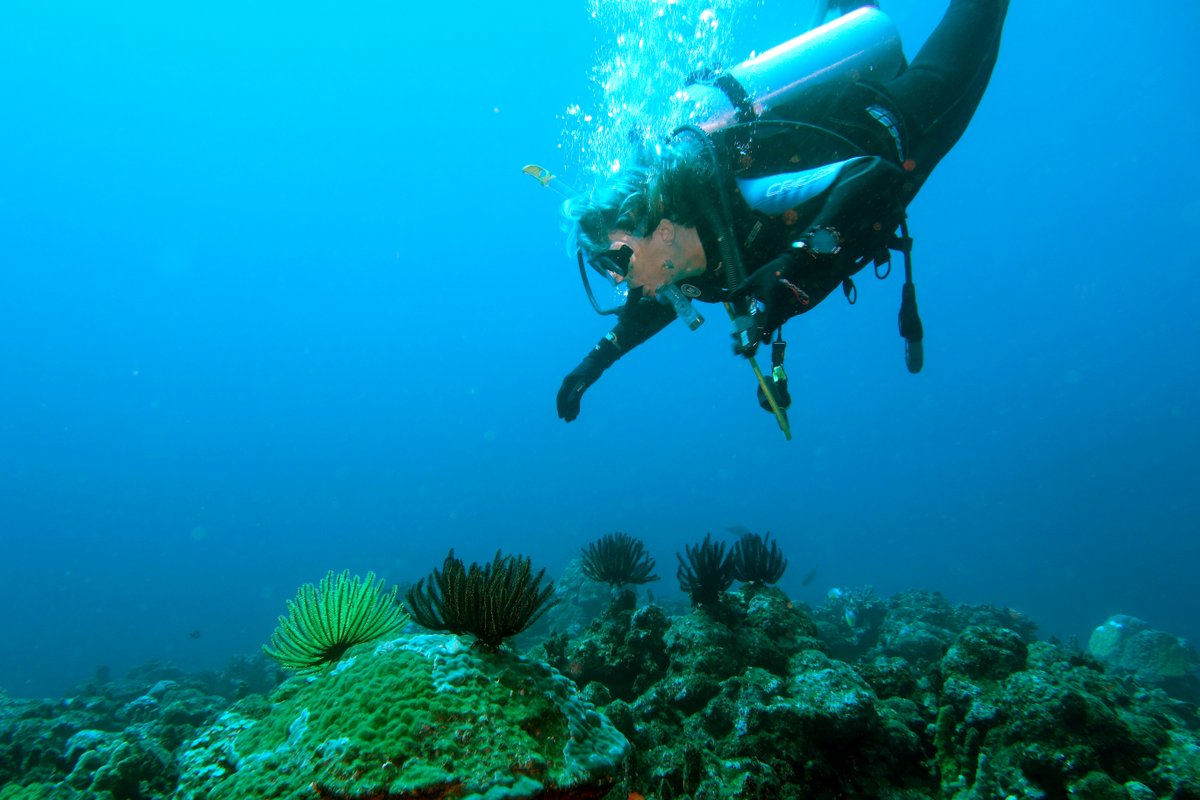
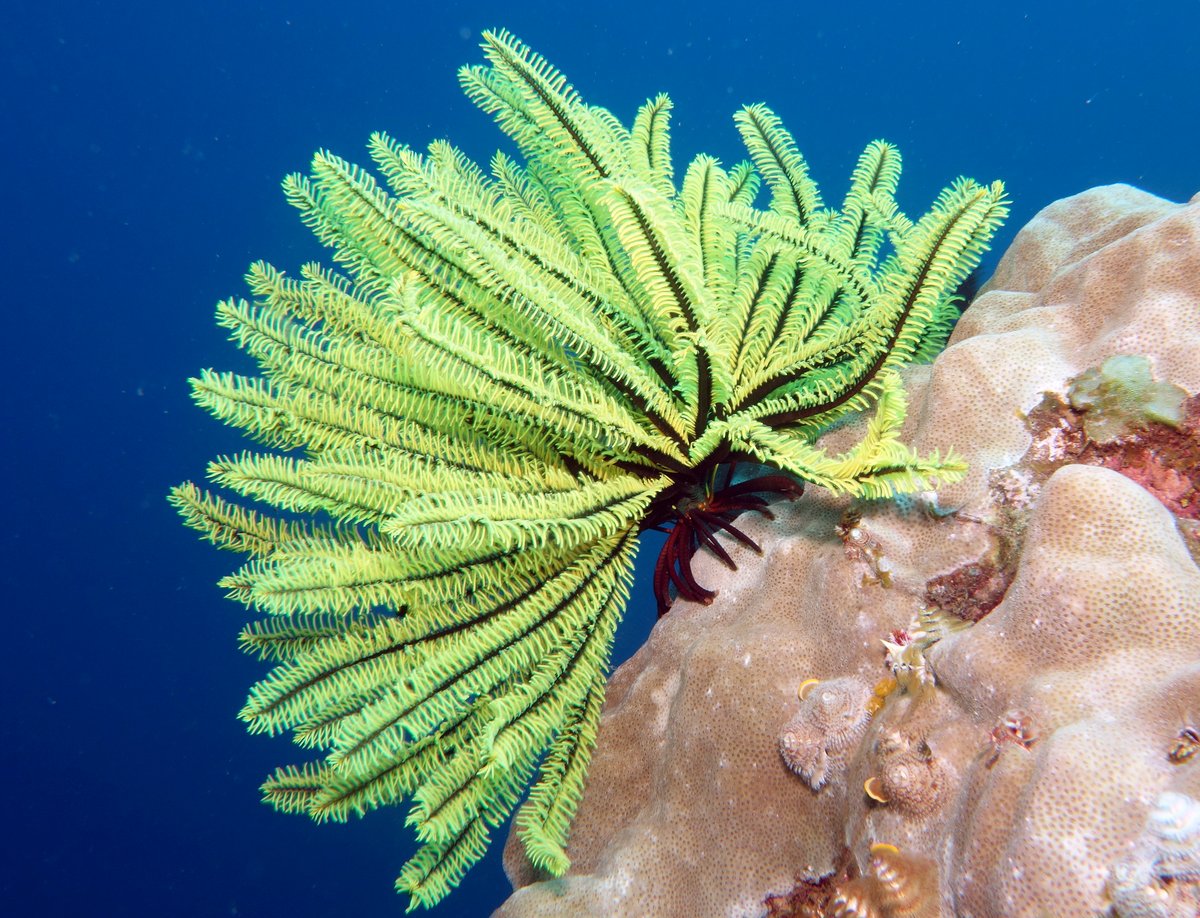
It was a lovely, sunny day, so we dragged out our scuba gear and went for a dive off the headland north of the village. We dropped our anchor in 6 metres of water over rocky reef and then swam away from the shore following deep channels in the reef down to 25 metres where we turned around and retraced our route. The visibility was good and there were lots of hard corals and Bennett's Featherstar, but no soft corals.
Just before four o’clock, I went ashore and picked up Thomasee, who we’d agreed to take to Port Vila with us. He works for the government and is going to Port Vila to report on the current disaster status of Erromango and to plead their case for more aid.
We upped anchor as soon as we’d got the dinghy stowed away and set sail before the sun went down. There wasn’t much wind for the first three hours, so we had to motor. However, the swell soon started to build up and Thomasee began to look a little sick, so I sent him to bed at half past six, where he stayed for most of the trip.
The wind picked up to 20 knots from the east, so we were on a broad reach, but the sea was terribly confused and we rocked and rolled all night, making it almost impossible to sleep. We only had 80 miles to go, so I rolled away the main and we sailed with just a scrap of genoa out, doing 5 knots all night.
22 May 2015 Dillon’s Bay to Port Vila, Efate (Day 2)
By seven o’clock, we were sailing around the headland into the approaches to Port Vila. We motored into the secure harbour and called up Yachting World, which is a small marina that rents out moorings in the inner harbour. On the way we passed Greenpeace’s Rainbow Warrior, which is here to help deliver aid to the islands most affected by Cyclone Pam.
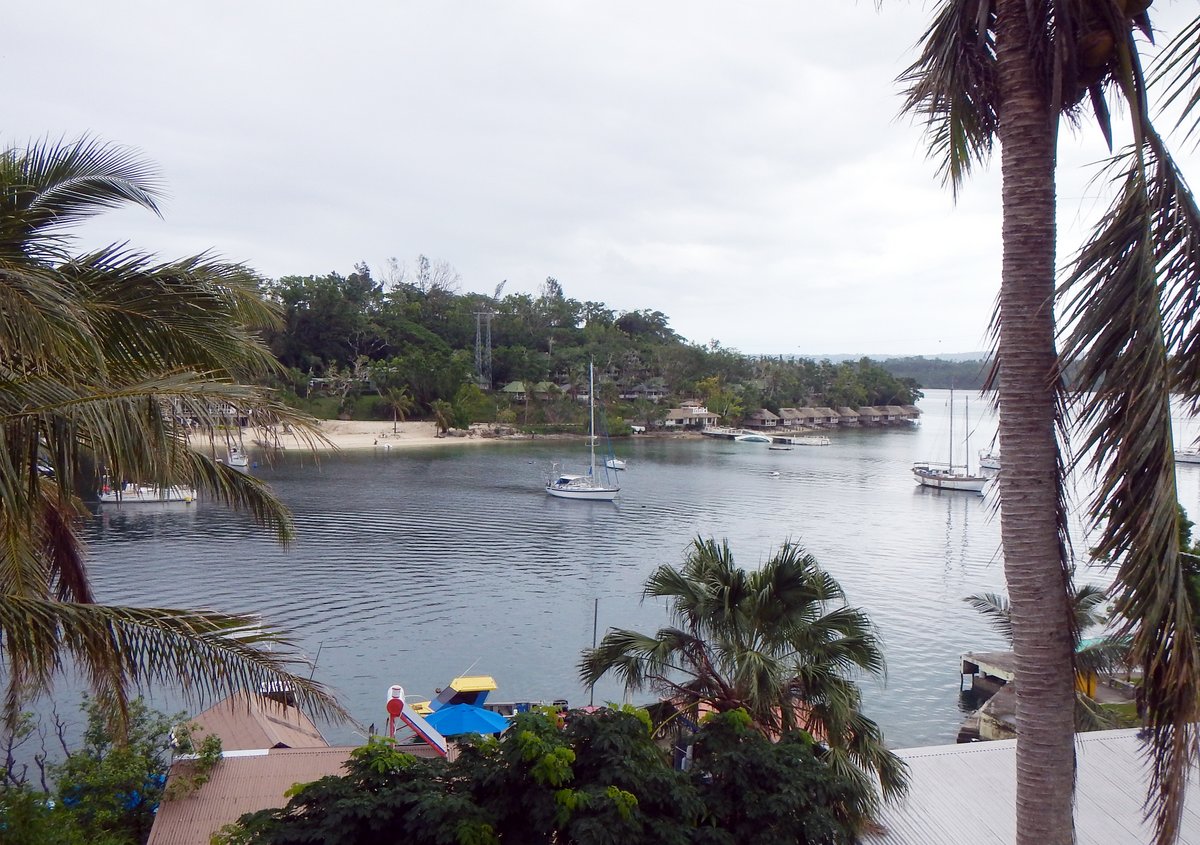
The marina staff directed us onto a mooring next to “Full Circle” and “Anke-Sofie” and we dropped Thomasee off onshore. I think that he was grateful to be on terra firma. After tidying up a little, we went ashore to drop off two huge bags of laundry and our garbage - we were quite pleased that we only had one large bag of rubbish after three weeks of travelling.
We walked into town, which reminds us of other small towns in the Pacific islands and the Caribbean - rundown with crumbling pavements, but bustling with people and mini buses. The town seems to have recovered from the cyclone and it was business as usual.
Our first stop was at the Immigration office to formally clear in. We were given a visa for 1 month and then had to fill in a long form to extend our visa for another couple of months until mid-August. It was a laborious process and we had to give two passport photos and other documentation to get the extension. It also cost us $50US to clear in and $120US for the visa extension, so added to the $100US we paid in Aneityum, it’s cost us $270US to clear in and we still have to pay to clear out - not cheap.
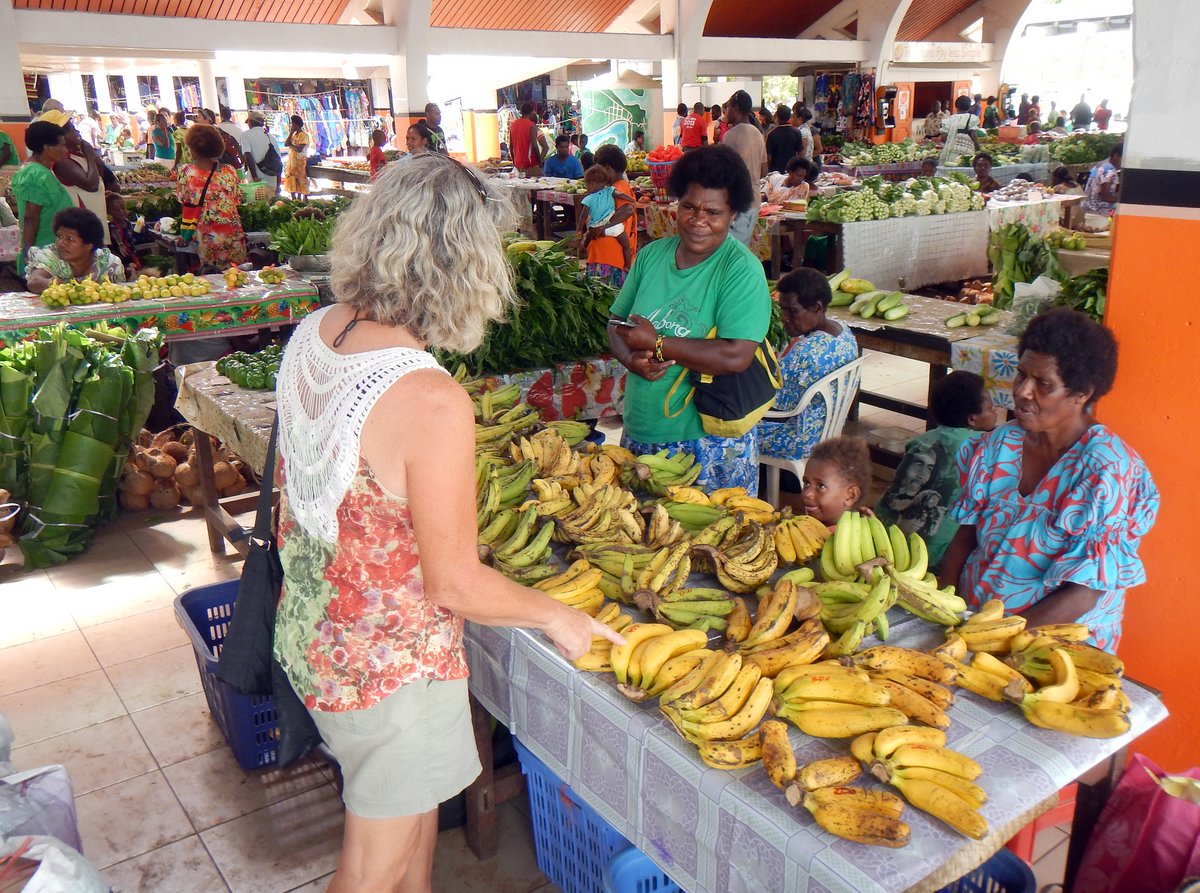
We wandered through town, which was very busy because a big cruise ship docked this morning. There are lots of shops selling tourist souvenirs and Chinese junk, but by this time we were feeling very weary, so we’ll have a better look around tomorrow. We stopped off at the vegetable market, which is very well stocked - a stark contrast to the lack of food in the more southern islands.
After calling at a supermarket for some essentials, we retired back to the boat, had a sandwich and collapsed into bed to sleep the afternoon away. In the evening, we went to the bar and had a couple of beers with “Pikuditu” and “Full Circle”. They are both from Holland, so were having a nice conversation in Dutch until we arrived, at which point they seamlessly switched into English - very nice of them. We had dinner on “Full Circle”, who wanted to thank me for repairing their windlass a few days ago.
23 May 2015 Port Vila, Efate
We walked into town and found out that we can buy duty free alcohol here - bottles of French wine are only $5US, which is remarkably cheap. Customs will apparently come on board Alba and seal the boxes and then the customs in Luganville will check the boxes when we clear out of Vanuatu in six weeks’ time.
Glenys dragged me to a craft market, which is half a mile out of town near the cruise ship dock. It was full of “I survived Cyclone Pam” t-shirts and other tat, so we didn’t buy anything. We then stopped off at a big supermarket and did a mega shop - provisioning for a month while we sail up the islands.
It was very hot and airless in the afternoon, so we packed away the shopping and collapsed. They have excellent beef here in Vanuatu and it’s very cheap, so Glenys made a cracking Beef Vindaloo for dinner.
24 May 2015 Port Vila, Efate
It was a Sunday, so we had a quiet day pottering about on board. There’s a good, free internet connection here, so Glenys did some research on place to visit in Vanuatu.
I did a few small chores and then spent the rest of the day on the internet investigating new songs to play on my guitar. I’ve been looking for songs that everyone will know and are easy to play, so I’m now ready to terrorise the cruising world with my rendition of classics like “King of the Road”, “Day Dream Believer” and even “YMCA” (but I might give the costumes a miss)
We were going to go out for a meal at the bar, but the starter cord on the outboard snapped, so we gave up and had the rest of the Beef Vindaloo on board.
25 May 2015 Port Vila, Efate
Our plan is to leave here tomorrow, so we had a day of running about. I first repaired the starter cord on the outboard. It was a simple job except that I dropped a linkage overboard and then had to spend twenty minutes diving down ten metres to try to find it. I couldn’t see it among the weed, but it’s only a safety interlock to stop the engine being started when it’s in gear, so we can manage without it.
Having got our transport working, I whizzed over to the customs office and they made out the documentation for us to get duty free alcohol and diesel. We have to buy the alcohol, then call customs and they will give us our cruising permit to head north after they’ve sealed up the boxes of wine.
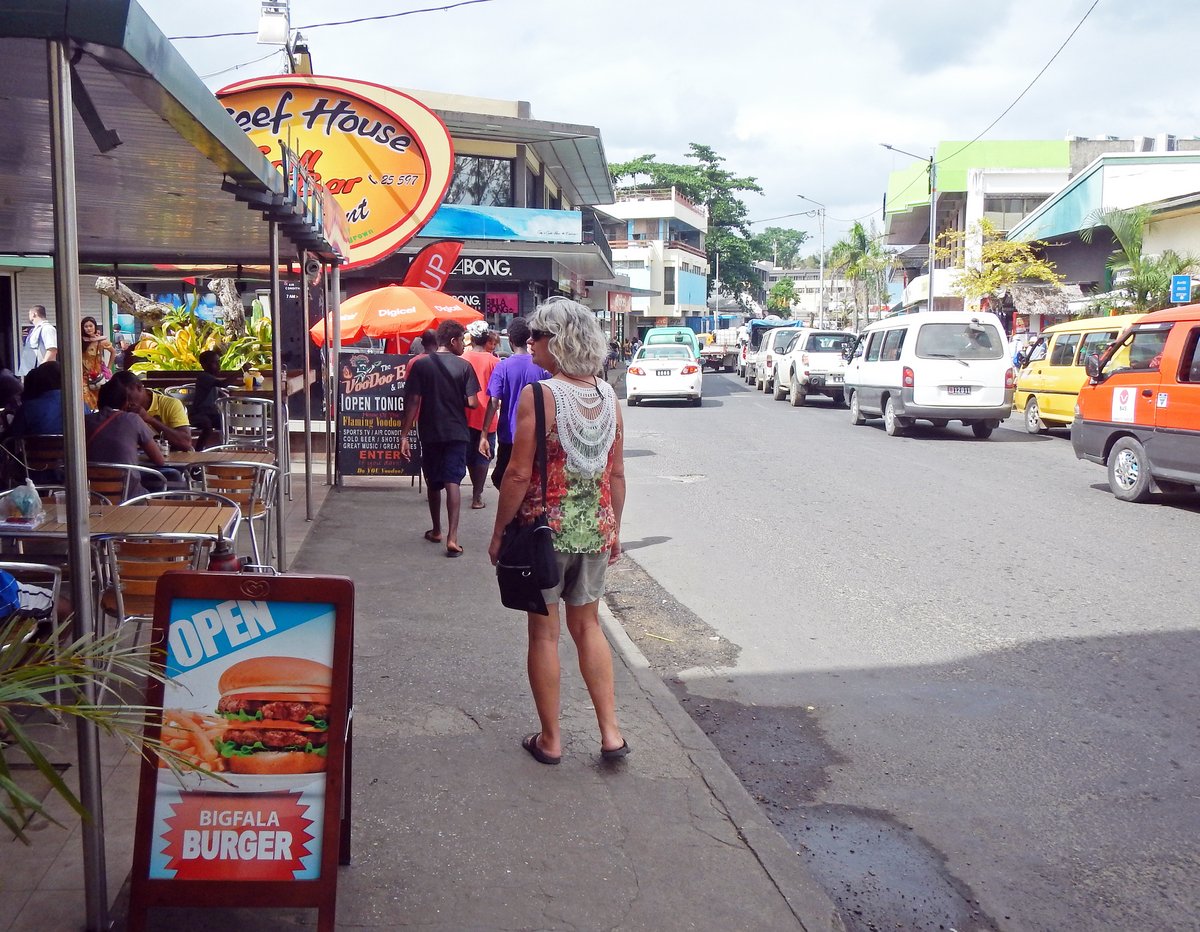
We walked into town mainly to buy the duty free booze and bought 60 bottles of wine. Yesterday, Glenys had picked up a voucher in the tourist office giving us a 20% discount at this shop. When she handed it over, I thought that the lady serving us was going to have a heart attack, but she eventually (ungraciously) accepted it, so our wine only cost $4US per bottle.
After lunch, we walked to a couple of supermarkets and did some more provisioning, tidied up and went to the bar for happy hour and then a meal with “Caduceus”, “Aradonna” and “Chez Nous”
26 May 2015 Port Vila to Esema Bay, Efate
First thing in the morning, Glenys walked into town to buy last minute fresh bread and vegetables, while I waited on board for the customs to arrive. It was a very quick process - the guy didn’t even count the bottles, but just stuck a customs label on each box.
When Glenys got back, we dropped the mooring and went alongside the tiny fuel dock - it’s only four metres long, so it felt a bit precarious with our 14 metre boat. Fortunately, there wasn’t too much wind or tidal current, so no problems and we got back to the mooring safely.
After tidying away the provisions and seven cases of wine, we headed out of the harbour and around Devil’s Point which lived up to its name. The wind was from the south east at 20-25 knots and steep 3-4 metres waves had built up. Fortunately, the wind and waves were behind us, so it wasn’t too bad. I made the mistake of only putting in one reef as we left the harbour and we had to turn into wind to put a deeper reef in, which was tough with waves breaking over the foredeck. I wouldn’t like to go upwind around this point.
After we rounded Devil’s Point, we were protected by the land and the seas calmed down, but we had strong katabatic winds coming down from the hills giving us gusts up to 35 knots, so it was an exciting ride. As we approached Havanna Harbour, I caught and landed a Rainbow Runner - my first fish since leaving New Zealand.

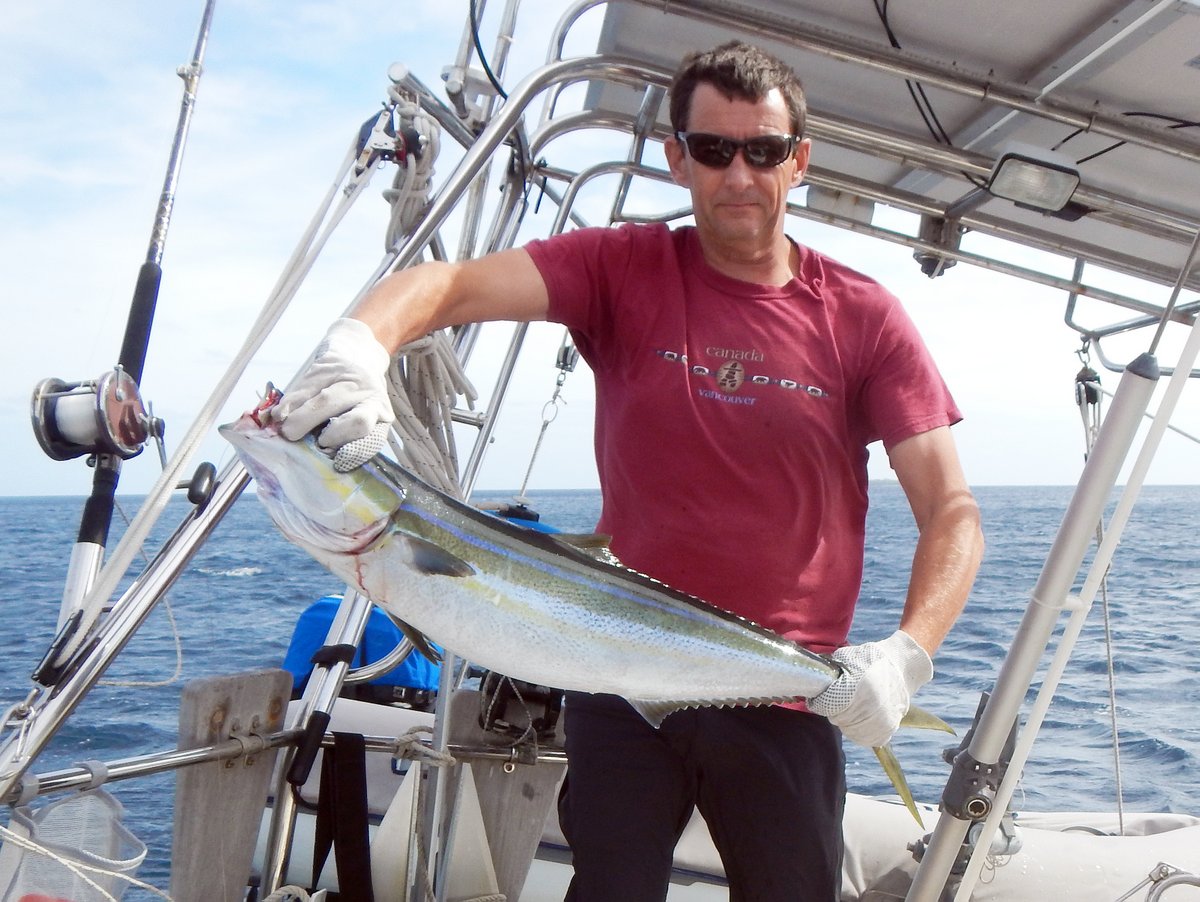
We dropped anchor in Esema Bay, which is a very sheltered anchorage just off a shore covered with mangroves. As I was filleting the fish, a guy paddled up in a dugout canoe and chatted to me.
Eventually, after the normal introductions of “What’s your name” and “Where do you come from”, he asked for the fish bones. I was embarrassed that I’d already thrown away the head, so gave him a big slab of the fish.
In the evening, the wind died completely and it was a little too calm because we had a couple of mosquitos whining about after dark.
27 May 2015 Esema Bay, Efate
After being bitten by mosquitos last night, we spent the morning sewing loops onto the new bimini, so that we can have our mosquito net covering the cockpit. “Lil Explorers” have emailed us to say that Shannon treated a few cases of Malaria in Epi, so we want to be better prepared.
In the afternoon, Glenys read up on Malaysia and Thailand. Our son Craig is planning to come out to see us in November, so we need to give them some idea of where to meet us. It’s a little embarrassing that we’re planning to spend a year in south-east Asia, yet don’t have a clue where we’re going what we’re going to do there.
I went for a snorkel off the headland to the north of the bay. There are a lot of coral heads with depths from 3 metres to 10 metres, which is interesting, but the water was very murky making it difficult for photography. I spotted a Lionfish which was the first one in Vanuatu.

28 May 2015 Esema Bay to Sulua Bay, Emae
We were up early and off by seven o’clock. It took us an hour of motoring in calm conditions to get to the Purumea Channel, which is a narrow pass between two islands. Once out into the open sea, the wind picked up and we had 15-25 knots at 60 degrees off our starboard bow.
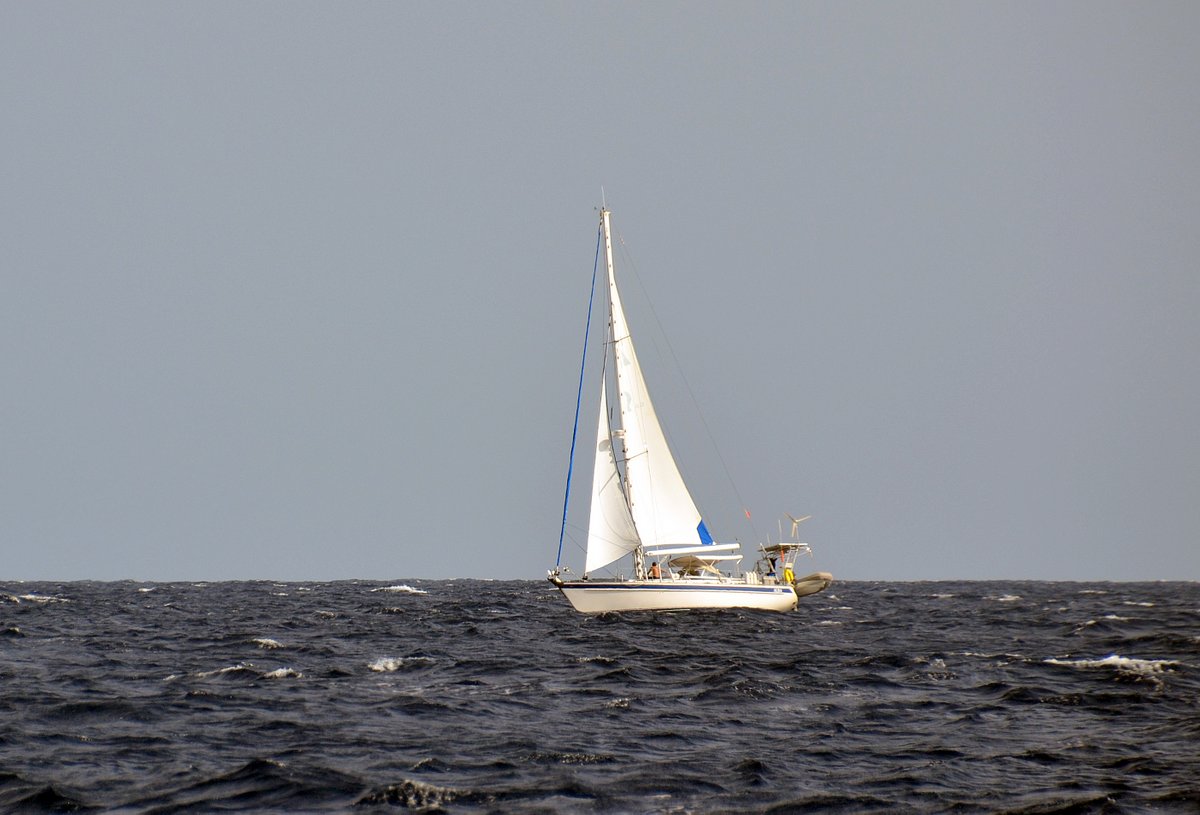
After an hour of bashing to windward, we heard a loud bang and discovered that the ten pop rivets on the foot of our rod kicker had sheared off. This is the second time that this has happened - I have a job on my To Do List to replace the pop rivets with bolts because it’s been a little loose for a while. We hove-to while I removed the rod kicker and rigged up a temporary kicking strap with two blocks. Fifteen minutes later, we were on our way again.
As we approached Emae Island, I hooked a fish on the fishing rod. We hove-to again and I had a go at bringing it in, but the steel trace snapped. I also discovered that the lure on the other line had gone as well. Since leaving New Zealand, the fish are winning by taking five lures while I’ve only caught one of them.
By two o’clock, we were anchoring in Sulua Bay. in 14 metres of water near to “Full Circle”. There’s a lot of coral reef around and we had to search for a sandy spot. It was still windy and overcast, but the water looked clear, so we went snorkelling for an hour. The water temperature is still cold and even with shorty wet suits on, we can only last an hour. It was reasonable visibility and we actually saw some soft corals - perhaps the water is going to get warmer from here.
This is a rolly anchorage, so we’ve decided to move on tomorrow.
29 May 2015 Sulua Bay, Emae
I was up early and decided that we ought to go ashore to see how badly Cyclone Pam has affected the island, so we gathered together a few small things in my rucksack and went ashore with Paul and Monique from “Full Circle”.
After chatting to a lady who lives next to the beach, we walked two kilometres to the main village along a dirt road, where the effects of the cyclone are very apparent. There are hundreds of fallen trees and practically all of the coconut trees are stripped of their leaves.
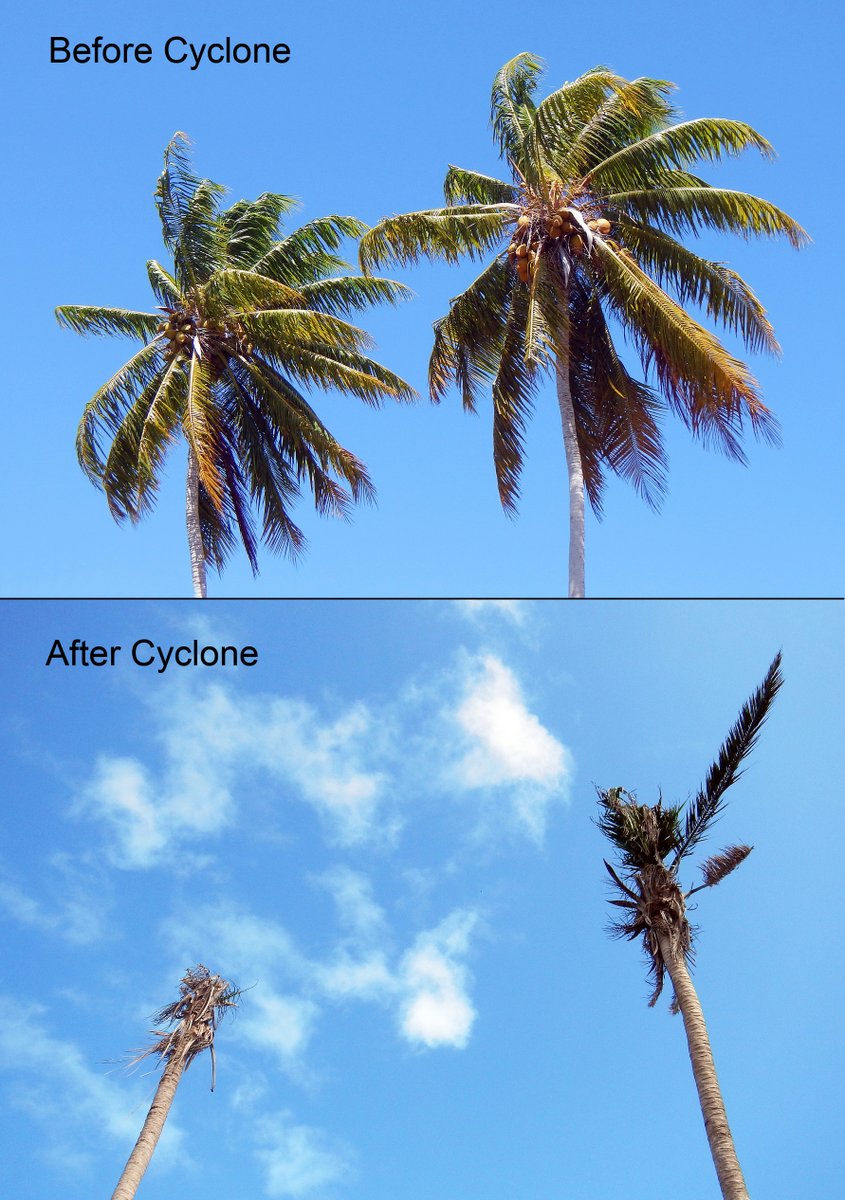
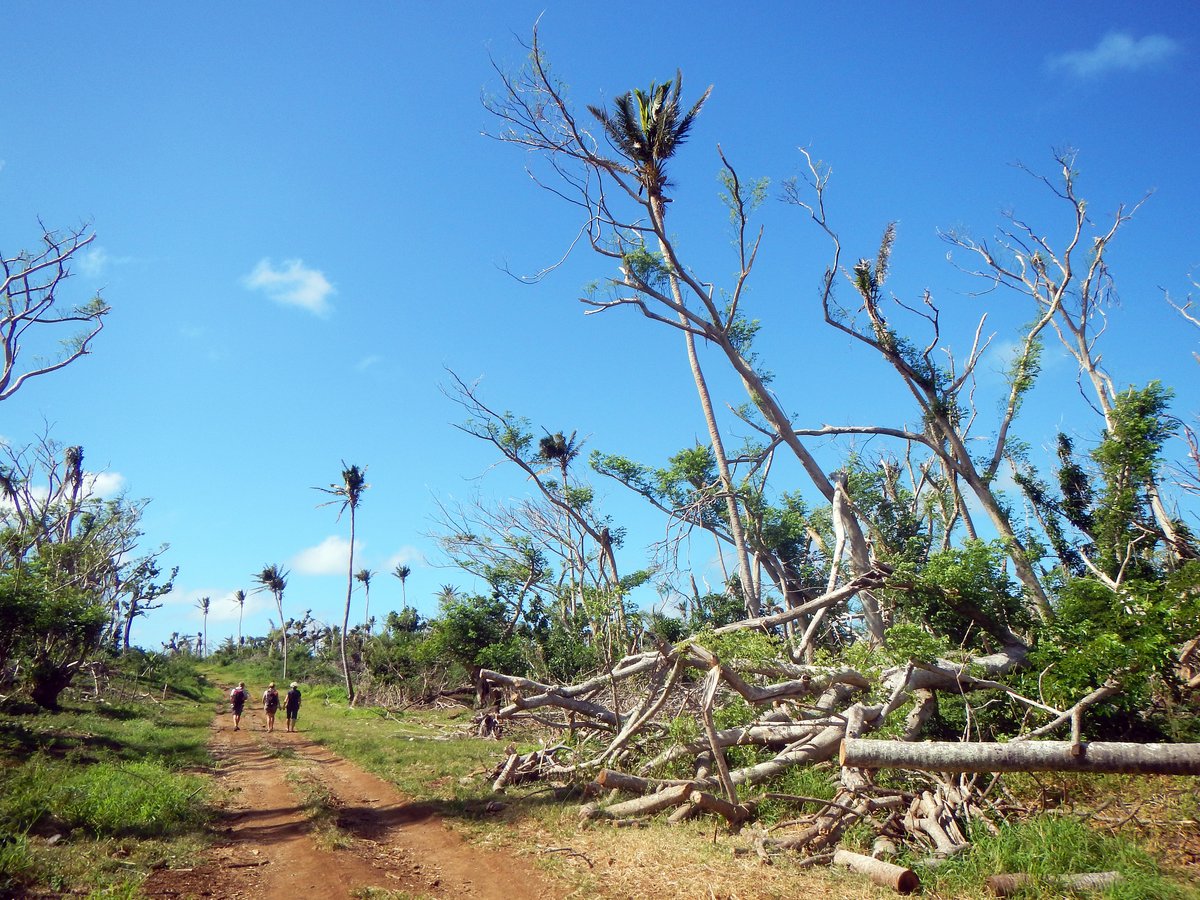
At the village of Tapakoro, we asked for the chief, who took us to a small hut where we laid out the few things that we’d brought. We were introduced to a guy called Usa (Samuel). Usa is his Kastom name and he seems to be a kind of village chief. He spoke good English and showed us around the village and their gardens.
Usa said that there were 42 people in the village when the Cyclone hit and he’d split them into two groups who sheltered in two concrete houses. Their village lies between two hills, away from the shore, but the wind funnelled down the valley. He said that the wind was so strong that it literally ripped all the plants in their gardens out of the ground as well as stripping the coconut and fruit trees.
They immediately started planting, but only the quick growing plants like Island Cabbage and sweet potato are ready to harvest. They’ve been living off stored taro and aid from Port Vila.
After lunch, we took the rest of our aid out to the beach - a mixture of clothing, bedding, tools and most of our rice and flour. Usa walked out to collect it all accompanied by some of the villagers and a gaggle of kids out on an adventure. They tell us that they will be sharing everything with the other three villages on the island.
We went snorkelling again and then retired back to the boat to run the water-maker and do a few chores.
30 May 2015 Sulua Bay to Lammen Bay, Epi
It was a very showery day, but we decided to head downwind to the Island of Epi. We pulled out the genoa and drifted downwind in winds between 10 and 20 knots. The two anchorages on the south-west corner of Epi Island looked unappealing in the overcast weather, so we sailed past and pulled into Lammen Bay. at around half past two. It’s a pleasant anchorage, but there’s quite a swell creeping into the bay causing us to rock and roll.
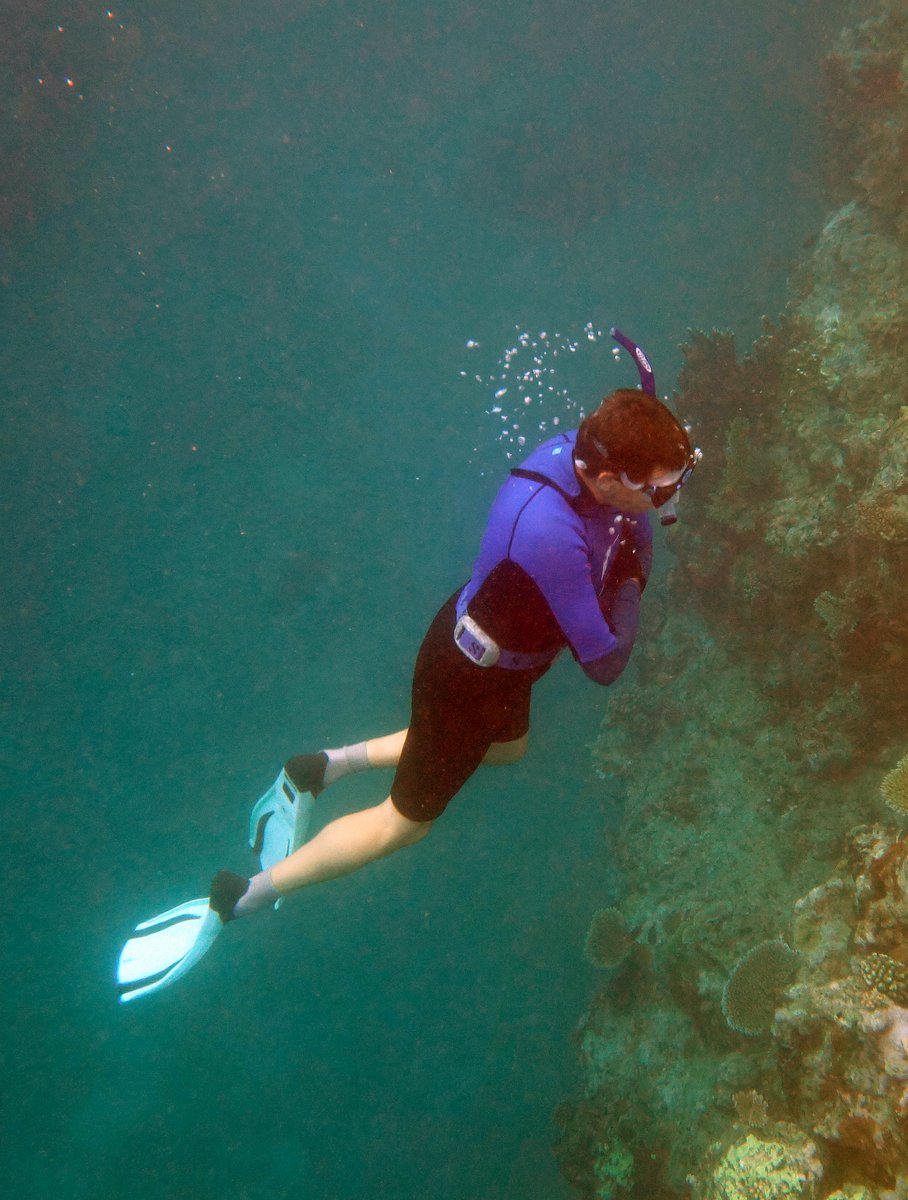
Over the past few days, I’ve been very disappointed with the underwater photographs that I’ve been taking, so I spent most of the six hour trip reading a text book on underwater photography. It’s not that I’m obsessional, but fifteen minutes after we’d dropped anchor, I’d dragged Glenys off to go snorkelling with me.
I spent 90 minutes taking photographs on the reef to the north of the bay and was much more pleased with the results - touchwood, I think that I’m starting to understood how to use my strobe (underwater flash gun).
Lammen Bay is a good place to see Dugongs which are closely related to the Manatees that we saw in Florida. These “seacows” differ from the American ones in that they have a “fluke” tail similar to dolphins and whales. We saw and heard one or two surfacing near us, but I didn’t manage to get a decent photograph of them diving down.
31 May 2015 Lammen Bay, Epi
We did a few jobs first thing in the morning and then went out for a snorkel on the headland to the south of the bay, which had very clear water and an interesting steep wall down to 10-15 metres.
After lunch, we chilled out for a while and then Glenys spotted a Dugong between us and the shore, so I donned my shorty wetsuit and went to see if I could find it. The sea bed is mostly dark grey sand with very spare patches of algae and short grass. I guess that the Dugongs and Turtles love it, but it’s a very boring landscape. I saw a stingray, a fleeting glimpse of a turtle and not much else. After half an hour, I gave up and swam over to the reef on the north side of the anchorage and entertained myself taking photos.
We invited Paul and Monique from “Full Circle” over for dinner. Our paths diverge here and we probably won’t see them again until Indonesia or even Thailand.