1 November 2013 Bahia Honda Town, Panama
We had a leisurely start to the day. An eighteen year old lad called Phillipe came over to say hello and spoke very good English. He's been teaching himself using a dictionary and the odd English books that he manages to acquire because none of the teachers at the local school teach English, so he had to learn on his own.
We went ashore and Phillipe showed us around. He first took us to the village's Internet antenna which is outside someone’s house, so I sat in the slight drizzle with my laptop on my knees, surrounded by chickens and the odd dog, while I connected to our bank and paid off our credit cards.

Phillipe then took us up to the school and introduced us to a couple of his previous teachers - he goes to college in Santiago now. The teachers told us that there's some kind of event at the school starting at eight o'clock on Sunday, which is Panama's Flag Day.
We then went down to look at the two small tiendas, which don't really have anything that we wanted apart from bread. They don't have any fresh vegetables in the village, but the two bars have cases of Balboa beer stacked up to the ceiling – we bought four cases which significantly added to the village’s economy.
The village is very small with a maze of concrete paths weaving between the houses dotted around the hilly island. The only suggestion of a street is along the water front where the two tiendas are located, but that's just hard packed dirt and narrow. However, the people are nice and friendly, with a few stopping to say hello to us.
We chilled out for the rest of the day and chatted to the odd villagers who came alongside in their pangas and dugout canoes to have a look at us. It amazes me how common dugout canoes are – we’ve seen them everywhere in Panama.
2 November 2013 Bahia Honda Town, Panama
Today was the festival of the dead. We could hear drums beating sporadically, but there didn't seem to be much happening ashore. Later in the morning, Glenys noticed that quite a few Pangas had motored across to a small island to the north west of the town. We were wondering what they were doing and finally thought that perhaps the island was a burial ground and they'd all gone out to pay their respects. A little later in the day, when it was quieter, we went to have a look and confirmed that there's a small grave yard on the island.
After lunch, we jumped in the dinghy and went to explore a little. I spotted a waterfall on the mainland to the south of the village, so we went to have a look. We found the mouth of the stream and started to wade up the fast flowing water, but after we'd gone a hundred metres, the jungle became thicker, encroaching on the water and the terrain became steeper. Discretion kicked in and we turned back. There was just the two of us and no one knew where we were, so penetrating dense jungle in a pair of sandals without a machete would have been a little foolish.

Nothing seemed to be happening in the village, so we had a quiet night in.
3 November 2013 Bahia Honda Town, Panama
Today was National Flag Day, when Panamanians celebrate the country's independence from Colombia. Just before eight o'clock, we heard drums playing up at the school. Unfortunately, Glenys had a dodgy tummy, so I walked up to the school by myself to have a look at what was going on.
All of the school children were gathered in their playground and a little flag raising ceremony took place. There were then lots of speeches by officials and school children - extremely boring especially when I didn't understand a word. When everyone went into one of the classrooms for even more speeches, I sloped off and left them to it.
We chilled out for the rest of the day - I managed to get an Internet connection on board, so I did some administration, checked our bank accounts and published my blog. It's been very relaxing being here and the anchorage is wonderfully calm, but we've run out of things to do, so we're planning to head off tomorrow.
4 November 2013 Bahia Honda to Isla Brincanco, Panama
We pulled up the anchor and left before nine o'clock, motoring out into the windless bay and then down the narrow channel to the east of Isla Canalea de Tierra. There are some nasty looking rocks in the middle of the channel and I was thankful that we went through at low tide when we could see the damn reef. Our Navionics electronic charts are 0.2 nautical miles out of position and were useless in the narrow, 30 metre wide channel, but the Bauhaus charts are spot on.
We were planning to go north up the coast to Ensenada Rosario, but the wind was from the north, so we headed out to the Isla Pajaros instead. There wasn't enough wind to sail, but it was only 12 miles.
The bay on the north side of Isla Brincanco is very deep until you get close to shore, when it shelves rapidly. We motored around in circles for fifteen minutes checking the depth until we decided to anchor on an eight metre deep shelf on the west side of the bay. As we were fairly close to the shore, I put out a stern anchor to restrict our swinging circle. Our portable depth sounder came in handy once again, allowing me to measure the depth before I dropped the stern anchor from the dinghy.

The anchorage is well protected from the Pacific swell. It’s a very impressive, isolated bay, but looks a little forbidding because the dense jungle comes right down to the sea and the two small beaches have black sand. We couldn't see anywhere that was worth landing. It would be nice to go for a walk, but the jungle looks to be impenetrable.
In the afternoon, we went for a snorkel. We initially tried by the island at the west headland of the bay, but it was pretty rough with breaking swell and the visibility was very poor. We tried the east headland, which was calmer, but the visibility was still only about 15 feet. Glenys wasn't at all keen to go in the murky water, but after I dove down a couple of times and said it was okay, she came in. I spooked a large, four foot turtle which swam away rapidly, Glenys saw it a little later when it swam directly at her obviously panicking because of the strange aliens in its environment.
5 November 2013 Isla Brincanco to Isla Secas, Panama
A small amount of swell sneaked in during the night and water was slapping against our stern, so we didn’t have a very peaceful night. We pulled up our anchors, which took twenty minutes because I had to drop the dinghy into the water, pull up the stern anchor by hand and stow it all away.
There was no wind again so we motored the fifteen miles to Islas Secas. As we approached, we got very excited because we saw that there was another sailboat in the anchorage – we haven’t seen another cruiser for ten days. It turned out to be “Moon Shadow”, who we met briefly in Shelter Bay marina a couple of months ago.
The anchorage off Isla Cavada looks nice, but again the sea bed drops off steeply, so it took us a while to motor around and find somewhere where we were happy. We dropped the anchor in 7 metres on the edge of a shallow area – the sea bed slopes off, but at least it’s good holding in sand. As we swung around during the day, we were in 4.5 metres close to the shore and 15 metres when the wind blew us off shore.
Having checked the anchor, we spent some time snorkelling around in the shallows behind the boat and found quite a collection of fish. The water is the clearest that we've seen on this side of the Panama Canal, but still only about 8 metres visibility. Later in the afternoon, we went snorkelling on the headland to the north of the anchorage which was okay.

While snorkelling around the boat, I spotted a large number of big conch. They’re different from the Queen Conch that we've been harvesting in the Caribbean, and don’t have any spines sticking up on the top. I picked one up and had a go at trying to extract the creature, but after bashing several holes in the shell, I couldn't find the abductor muscle which needs to be cut to pull the creature out of its shell.
There was a small fishing boat anchored nearby, so I went over and tried to ask them how to open it, but I couldn't make any sense out of what they were telling me – at first, I think that they said to smash it open, but then they seemed to be telling me to boil it. I've given up, which is a pity because I was looking forward to some Conch Salad and a Conch Curry.
John and Debbie invited us over to “Moon Shadow” for cocktails. It turns out that they were up in Maine at about the same time as us last year and we have a number of friends in common who we met on the East Coast of the USA – small world.
“Moon Shadow” visited Isla Coiba a couple of nights ago, which is part of a large Marine National Park. We avoided the place because we’d heard that they Park Authorities were charging large fees to visit the park. “Moon Shadow” is 62 feet long and rangers wanted to charge them $180/night for the boat and $20/night per person – that’s $220 per night. You can stay in a five star hotel for less than that. John and Debbie managed to negotiate them down to $100 for the night and left in a hurry the next day. Apparently, the fee for boats up to 50 foot is $60/night, so it would have cost us $100 to stay for one night – we’re glad that we kept away.
There’s another island called Isla Parida on the way to Golfito, where we were going to stop, but it’s part of another Marine Park which charges similar fees. We’re going to strike that one off the list as well, which is a pity because it looks nice. The park authorities just haven’t got it right, I can understand them charging for commercial tourist boats and the fees make sense if you have a forty foot boat carrying 40 tourists, but it’s a nonsense to charge cruisers $100 per night just to anchor there.
6 November 2013 Isla Secas, Panama
We had a big thunderstorm last night with torrential rain. I was hoping that we were getting to the end of the rainy season now because I’m paranoid about being struck by lightning. Our friends on “Vanupieds” and “Nuwam” had a very close lightning strike a week ago in the San Blas islands and have damaged electronics – both of their autopilots are completely blown. That’s going to delay them for a month or so. I’ll be glad when we’re in Ecuador, south of the Inter Tropical Convergence Zone (ITCZ) and in a drier climate.
This morning, Glenys spotted a group of at least twenty whales passing through the channel to the north of the anchorage – we think that they were some kind of pilot whale, possible False Killer Whales.
There’s a gap between two islands that is flooded at high tide, but exposed at low tide, so we went for a walk around, picking up bits of sea glass and shells. We saw some strange Rockpool Blennies that hang about in the rock pools and crawl out of the water. If you go close to them they make astonishing three foot leaps into the air and scurry off, half jumping and half swimming. I spotted some huge limpets on the rocks and brought one back to the boat intending to cook it and taste it, but my nerve went and I released it back into the sea.

We went snorkelling in the afternoon in the shallows around some coral heads off the beach, which was okay. We saw quite a few fish, especially Butterflyfish which swim around in big shoals around here – in the Caribbean we only ever saw them in pairs.


When we got back to the boat, I dived down and brought up three conch, which Glenys steamed in a big pan for fifteen minutes. It was then quite easy to pull the creature out of its shell. I cleaned them up and we put the conch flesh into the fridge for tomorrow night.
“Moon Shadow” sailed off to Golfito, so we had a quiet night in and watched a movie with a plate of Baccalau a Bras – brilliant.
7 November 2013 Isla Secas, Panama
I woke up remembering that I still have to do my tax return for the last tax year, so I dug around in our records and worked out the figures. It’s all pretty simple because we only have a little bit of income from some investments and savings accounts. As usual, I came to a grinding halt because I don’t have access to the Internet – I have to get some tax certificates from the banks, etc. I’ll finish it off when we get to Golfito in a few days’ time.
Glenys chilled out reading and cleaning the shells that we picked up yesterday, including one of the Conch that we boiled – it came out really nice. That’s yet another artefact to add to our growing collection – I wonder how much stuff we’ll be carrying when we complete our circumnavigation.
I spent most of the rest of the day writing out a guitar music score for a finger style arrangement of Desperado by The Eagles. I’ve got a video lesson and some music for the song, but I needed to pull all the information together into a useable format. I had a go at playing it this evening and there are a lot of slides and hammer-ons which have bruised my fingertips, so I’ll have to go easy on the playing guitar for the next few days.
We had Conch Curry for dinner, which was tasty, but the conch was very chewy. Glenys gave it a good hammering to tenderise it before cooking it for twenty minutes in the pressure cooker. It seems a lot tougher than the Caribbean Queen Conch – perhaps she’ll have to cook it for longer. We’ll have to figure it out because conch is so easy to find here.
8 November 2013 Isla Secas, Panama
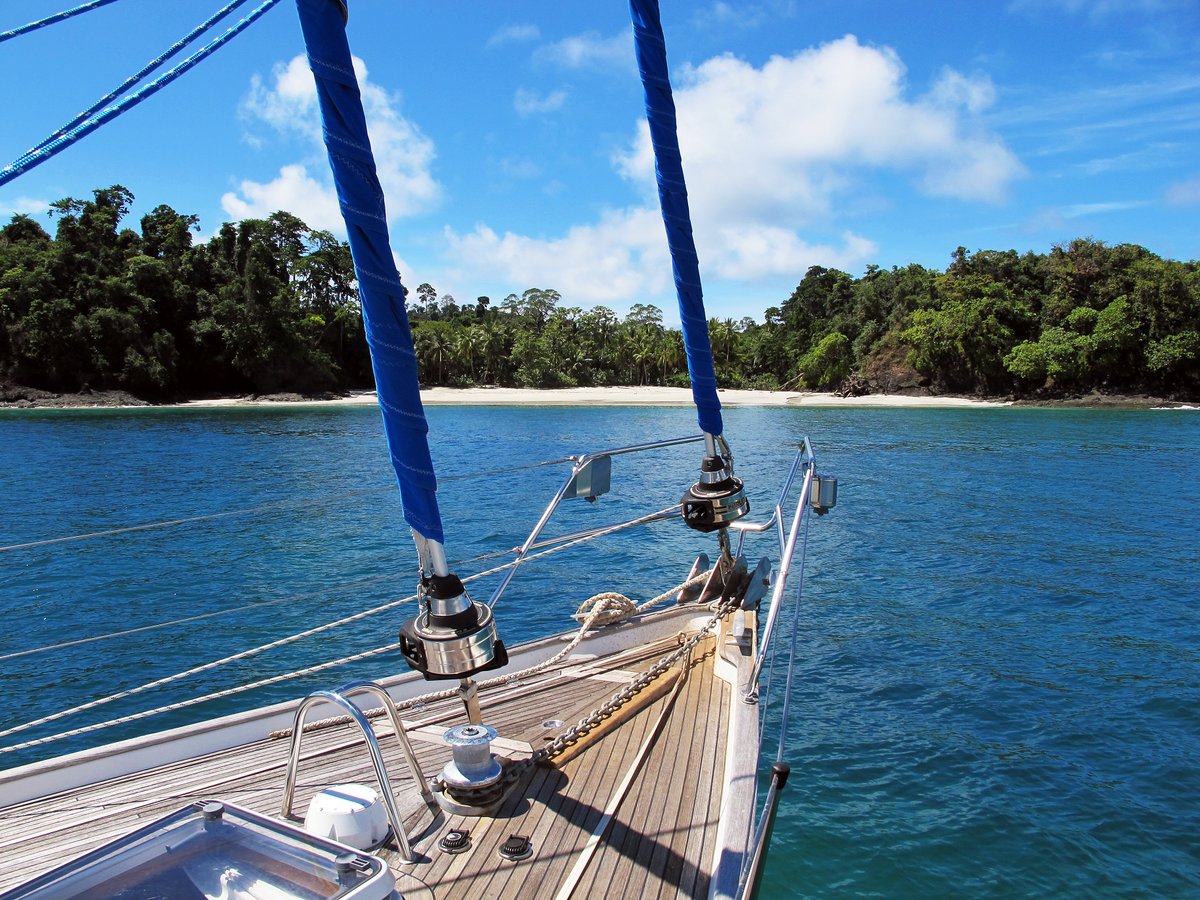
It was a lovely day, so we motored around to another island to the south west of Isla Cavada. There’s a lovely anchorage off a white sandy beach between two smaller islands (07 57.72N 082 02.88W) – it’s the first white sand beach that we’ve seen in the Pacific and is fringed with coconut palms making it stunning. We anchored in 5-6 metres on great holding sand.
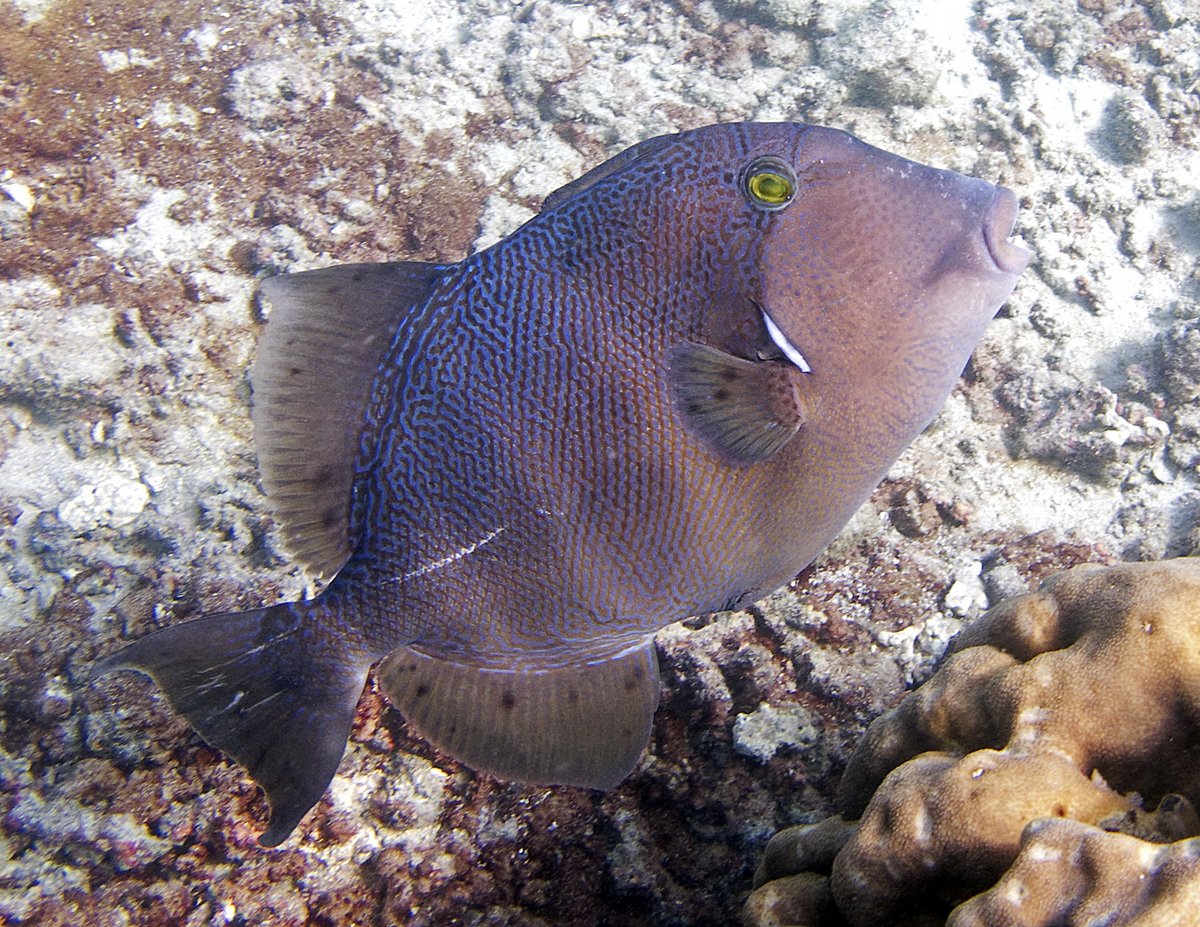
We had a good snorkel around the bay. The visibility was the best that we’ve seen so far and we spotted quite a few more fish that were new to us, including a large Triggerfish. Unfortunately, some swell comes into the anchorage making it rolly, so in the afternoon, we headed back to Isla Cavada, where we knew it would be more settled.
9 November 2013 Isla Secas, Panama
We’re planning to head west tomorrow, aiming to arrive in Golfito in 2 or 3 days’ time – the immigration office is shut on Mondays, so we can only clear in from Tuesday to Friday. The authorities in Costa Rica will want four copies of our ship’s documentation, passports, crew list, exit zarpe from Panama and yellow fever vaccination certificates. It took me a couple of hours to scan and print the documents – what a pain.
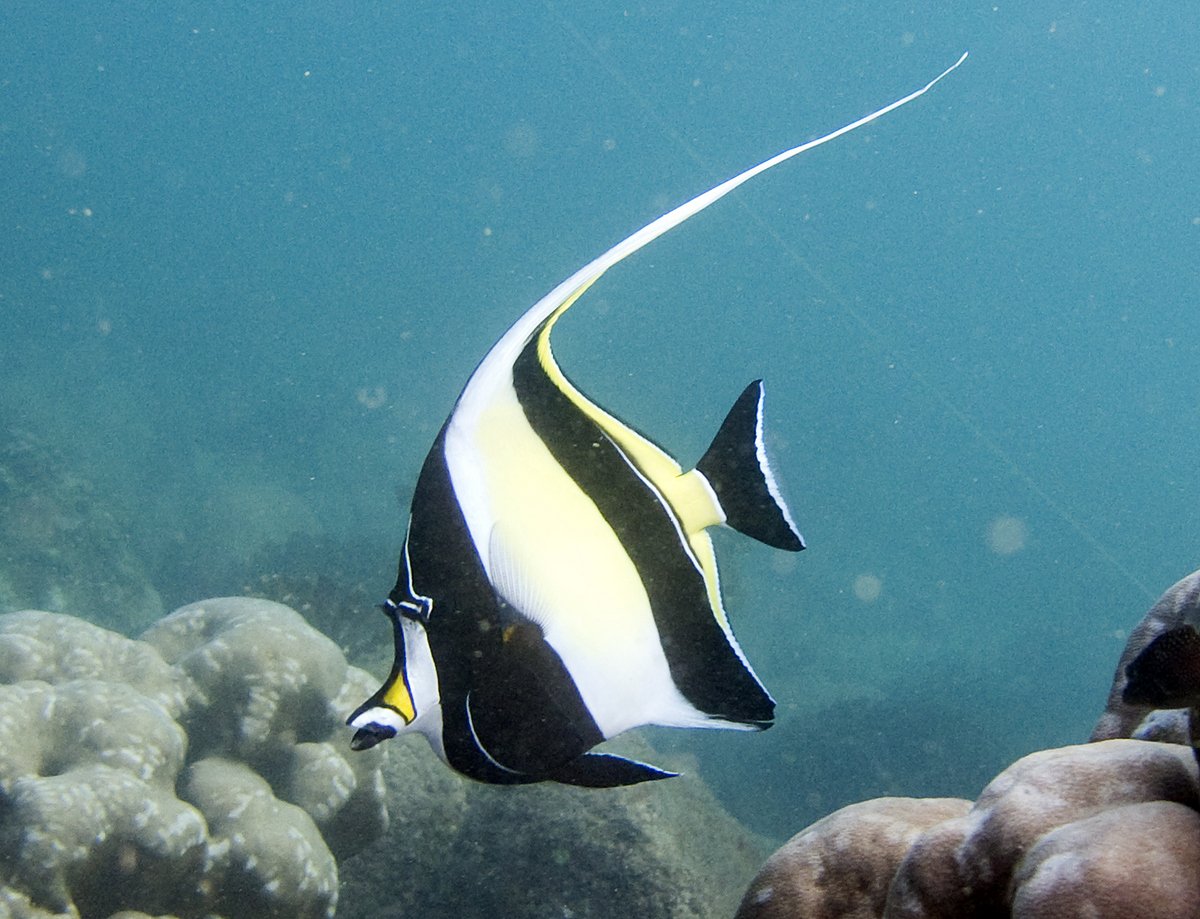
In the afternoon, we went snorkelling off the south point of the small island to the east of the anchorage. It was very good – rocky, but with coral and probably ten metres deep in places. We saw a good collection of fish including a very impressive looking Moorish Idol with a long fin. Unfortunately, Glenys is getting stung by some kind of small jellyfish. It doesn't seem to affect me, but she’s coming out in big itchy lumps. We’ll have to try to get her a full length, thin wetsuit before it puts her off snorkelling.
We tidied up the boat after four days in an anchorage, getting ready to sail first thing in the morning. We’re not going to be using the dinghy much when we get to Golfito and we've heard that the Costa Ricans are a thieving bunch, so we lifted our 15hp outboard on deck and I've chained it to the arch. We’ll use our little 2.5hp outboard to get to shore, which I think will be okay in the sheltered harbour.
10 November 2013 Isla Secas to Punta Balsa, Panama
It was back to travelling again. The alarm went off just before dawn and we were under way twenty minutes later. We were heading west into a light head wind (again), so all we could do was to motor. It was a very uneventful 50 mile trip and more than a little irritating to be passing 3 miles to the south of Isla Parida half way, where we didn’t want to stop because of the exorbitant marine park fees.
I had a successful day’s fishing. I lost a small Dorado, which threw the hook by leaping out of the water as I got it close to the boat, but then I landed a nice 4lb Bonito and a large 12lb Dorado – more than enough to last us a few days.


It was a little bit of a struggle to anchor at Punta Balsa. The sea bed drops of very steeply – one minute you’re in 5 metres and then 30 metres away you’re in 20 metres. We found a shallow bank where the cruising guide says to anchor, but we couldn't get the anchor to hold. We tried a couple of times in 7 metres, but it felt like it was dragging on coral rubble. Eventually, we anchored in 10 metres and the anchor held well – it may be snagged on a rock or in good holding sand, who knows?
11 November 2013 Punta Balsa to Golfito, Costa Rica
We had a rolly, restless night and left at the crack of dawn – the anchor came up cleanly, so I guess that the sea bed was sand. It was a mission to get around Punta Barica – nine miles skirting around the shallows and the island at the end of the headland. The sea bed shelves so quickly along this coast that I was panicking when the depth sounder dropped from over 100 metres to 40 metres. To make matters worse, the wind and waves were against us most of the way.
After an hour and a half of motor-sailing, we were able to turn the engine off and sail for a couple of hours. The skies were overcast for most of the rest of the day and the wind was very fickle, so it was frustrating - sailing for an hour, then motoring for an hour. In the afternoon, we had a great sail across Golfo Dulce on a close reach for a couple of hours, with sunshine for a change, but as we approached our destination, the skies over Golfito looked like the depths of Mordor.
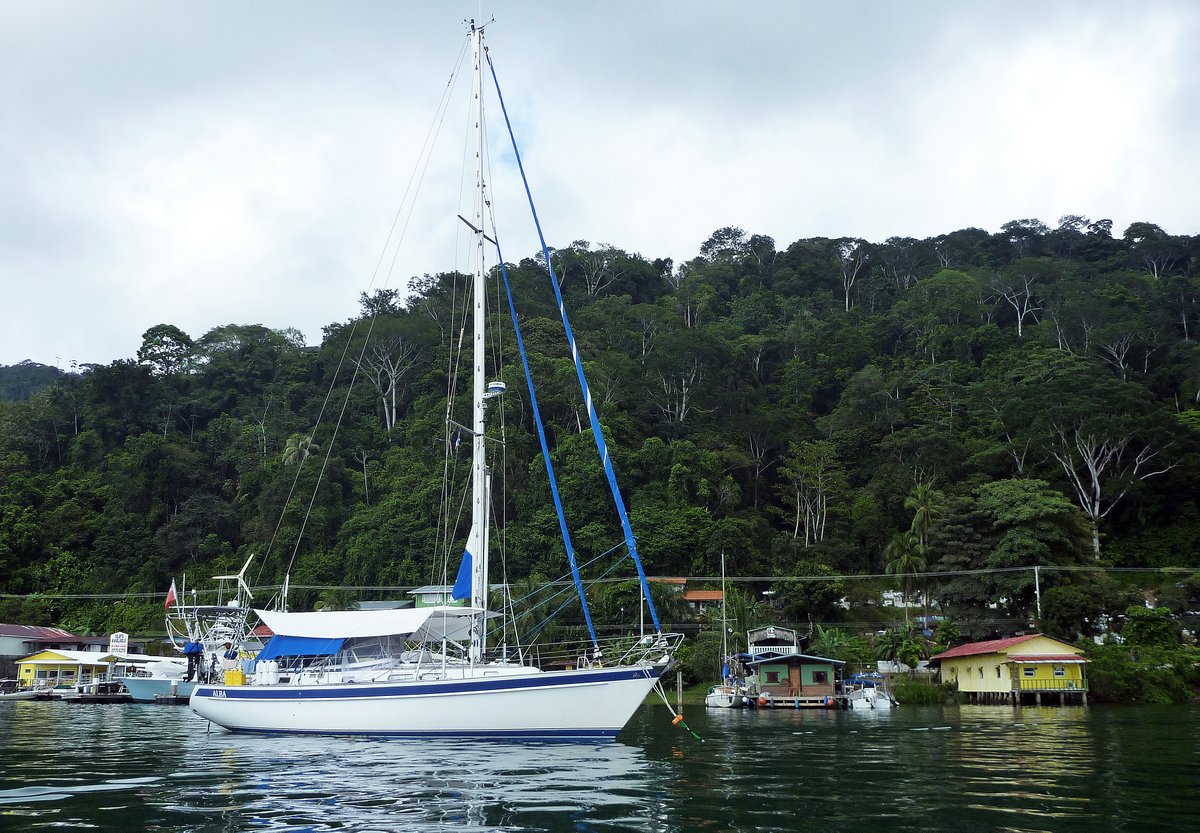
The torrential rain started when we were three miles out of Golfito and continued with a vengeance until we were anchored (with the odd flash of lightning and rumble of thunder.) It dropped down to a fine drizzle for fifteen minutes allowing us to put up our rain protection flaps, before it started to lash it down again. We retired below and watched a movie with a plate of Dorado with Creamy Mushroom Sauce.
The lightning was pretty bad in the evening. All I could do was hope and pray that we wouldn't be hit. We've managed to survived five months in Panama’s rainy season and it would be a bummer to be hit now - a mere week before we head south into a drier climate. (Touch wood and whistle.)
12 November 2013 Golfito, Costa Rica
I woke up at what I thought was quarter to seven, but it turned out to be quarter to six because Costa Rica is in a different time zone. Glenys got up at half past seven – oops that’s half past six.
After a couple of hours hanging about, we went ashore to Land Sea Services, where we met Tim, the owner of this cruiser-friendly facility. I say facility because it’s not a marina or a yacht club. Tim is an ex-cruiser that has settled here and has a number of moorings which he rents out for $8 per day. He provides various services for boats including laundry, water and a cruiser’s lounge area with an internet connection. It’s a nice set-up, but unfortunately, there are no cruisers here apart from one single-hander who’s a bit odd (as most single-handers tend to be.)
We arranged to pick up a mooring later in the day because Tim confirmed that there has been a spate of thefts on anchored boats and we’ll be much safer on a mooring close to shore. Alba is the only boat at anchor at the moment and, being about ½ mile from shore, we stick out like a sore thumb.
Tim changed us $20 worth of the local currency (Colones). The exchange rate is 500 Colones to 1 US dollar, which is going to take some getting used to after using dollars for the past six months.
We went to clear in, starting at the Immigration office, which was a short ten minute walk down the road. When we showed our documents, the immigration officer gave us a hard time because we didn't have a Panamanian exit stamp in our passports. He didn’t speak any English, so it was difficult to explain that our agent in Panama had sorted out the exit paperwork and hadn't got our passports stamped. Having gone through our paperwork, he told us to go back in an hour and a half and pointed vaguely at their computer system. We went to a local supermarket, bought some food and went back to the boat.
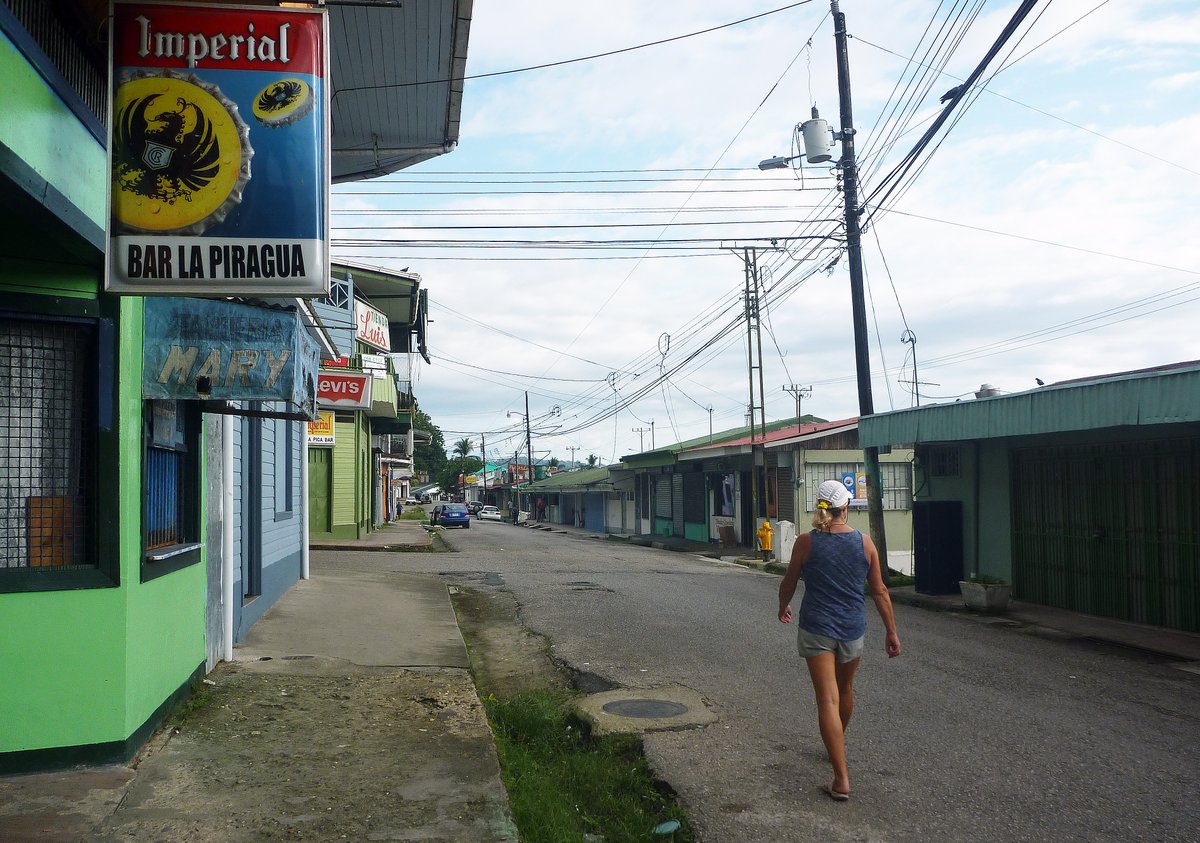
At the appointed hour, we went back to the Immigration office and were kept waiting for another thirty minutes until another Immigration officer turned up and processed our papers. He spoke good English and told us that he’d been checking in a large powerboat and a US Coast Guard ship. It took another twenty minutes to get through the paperwork, explaining why we had no exit stamp in our passports and also why our exit zarpe from Panama was dated the 4th October – where had we been for the last five weeks?
Clutching our stamped sets of documents, we caught a taxi to the Customs arriving just before noon (not a good time to be going to a government office.) To my great surprise, a lady immediately started to process our papers, but then told us to come back in an hour.
The customs office is just outside a duty free zone, where locals can buy expensive items like TVs and domestic appliances without paying any import duty. I believe that every Costa Rican gets an annual allowance to buy duty free goods. Outside the entrance into the duty free zone is a noisy, busy market area full of stands selling clothes, hats, electronic items, etc. Fortunately, there are also some small “Tipico” restaurants – we retired to one for lunch. The food was basic rice and beans with a bit of meat and fairly bland, but a bit of hot pepper sauce soon sorted that out. It was surprisingly expensive costing us $20 for two meals and two soft drinks.
We arrived back at the customs office at one o'clock and were then kept waiting for another ninety minutes. I was getting more and more frustrated because the lady processing our papers just kept saying a little bit longer – she couldn't speak any English and it was hard to communicate. Eventually, another customs officer appeared and sorted out the paperwork. It appears that he was out of the office - I guess that he was probably clearing in the power boat and Coast Guard ship (or out on a long lunch.)
Feeling like the character in Edvard Munch’s painting “The Scream”, we got into a taxi to go and do battle with the Port Captain. We shouldn't have worried, a nice efficient lady had us sorted out in less than two minutes – we were so grateful. The whole process took five and half hours, but on the bright side it didn't cost us anything apart from higher blood pressure.
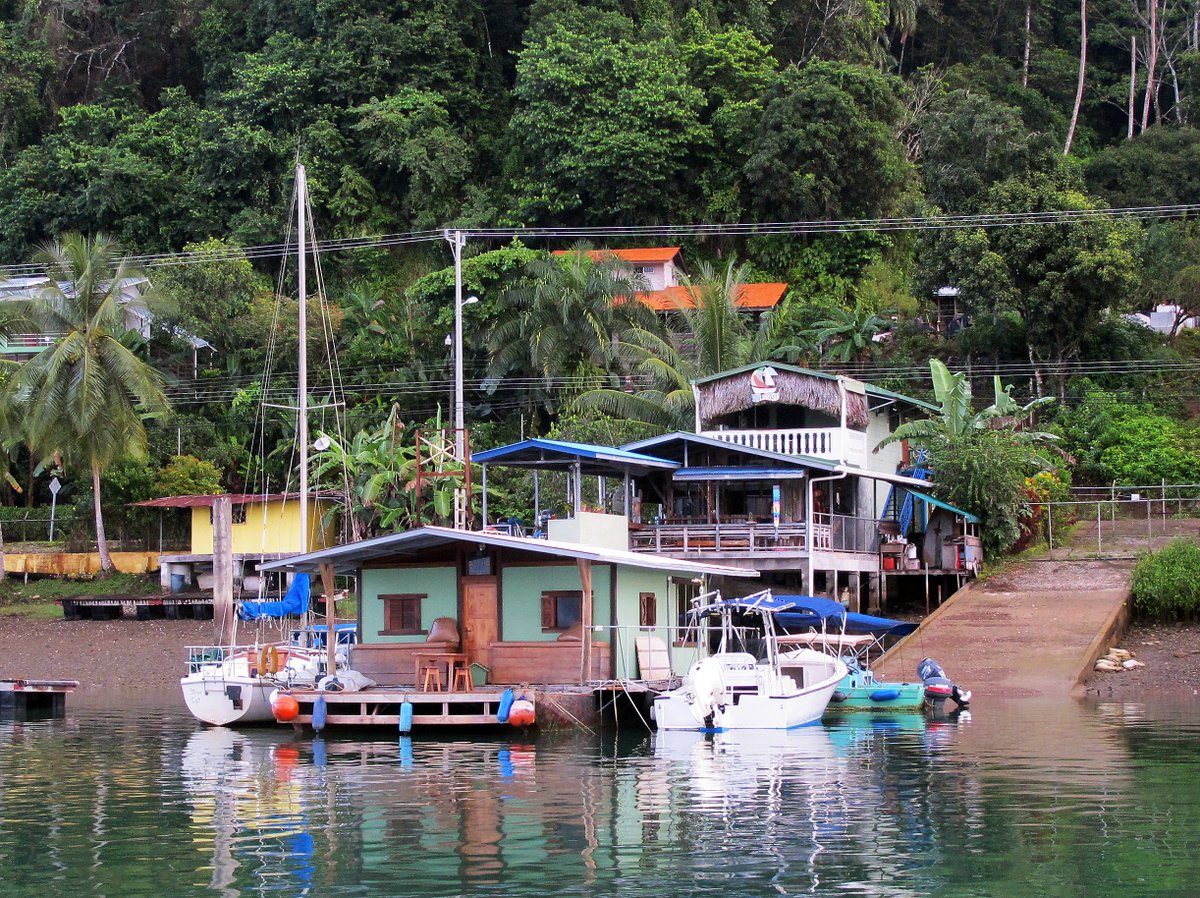
We walked back to the boat, stopping at a few shops on the way. Golfito is a strange place with a road running along the shoreline and steep mountainous jungle towering above it, so there’s not a lot of level land available. Consequently, there’s no real town centre and everything is spread out along the road. The place reminds us of Trinidad – but more run down.
Back at the boat, we pulled up our anchor, picked up the mooring and collapsed.

13 November 2013 Golfito, Costa Rica
We were woken up at one o'clock by the sound of an air-raid siren, followed by the sirens of police cars and a fire engine. A fishing boat in a nearby dock had caught fire and was blazing away with huge flames. This section of the shoreline is packed with small marinas and docks and a fire could easily spread, so it was a little nerve-wracking to have such a big blaze only 400 yards away. Fortunately, they soon had it under control and we could crawl back into bed.
There’s a very good internet connection in the cruiser’s lounge, so we took advantage of it and got on with some serious browsing for most of the day. I finished off our Tax Returns and submitted them on-line. It was tedious, but worth the effort because they’ll be refunding us £400.
We got an email from the marina manager at Shelter Bay, John, saying that two letters have arrived for us. They were sent from the UK in August, so it took nearly three months for the mail to find its way to the correct address in Panama. One of the packages contains a spare pair of contact lenses and glasses that Glenys left behind, so we've asked our friends on “Vanupieds” to pick the mail up for us. They’re going across the Pacific next year, so we should see them somewhere along the way.
Glenys is getting desperate to go horse riding and the best place seems to be on the Peninsula de Ora, which is a short ferry ride away. There’s a national park on the peninsula and it’s supposed to be one of the best places to see wildlife in Costa Rica, so she looked at going over for one or two nights. Unfortunately, the accommodation is either very cheap/rough hostels or luxury “Eco-lodges” which cost over $200 per night. By the time that we add the cost of the ferry, taxis and the horse-riding at $55 each, it all sounds very expensive, so we’ll probably not bother and save our money for travelling in Ecuador.
14 November 2013 Golfito, Costa Rica
Tim told us about a hike that goes up into the rainforest along the ridge above the town, so we put on our boots and set out mid-morning. The hike is along a rough concrete/dirt road that starts next to the football field about ¼ mile south of Land Sea Services. We started off walking past houses, but after ¼ mile they petered out and we were into the jungle. It’s a steep road and slippery in places because of green slime caused by the rain that seems to fall every day here.
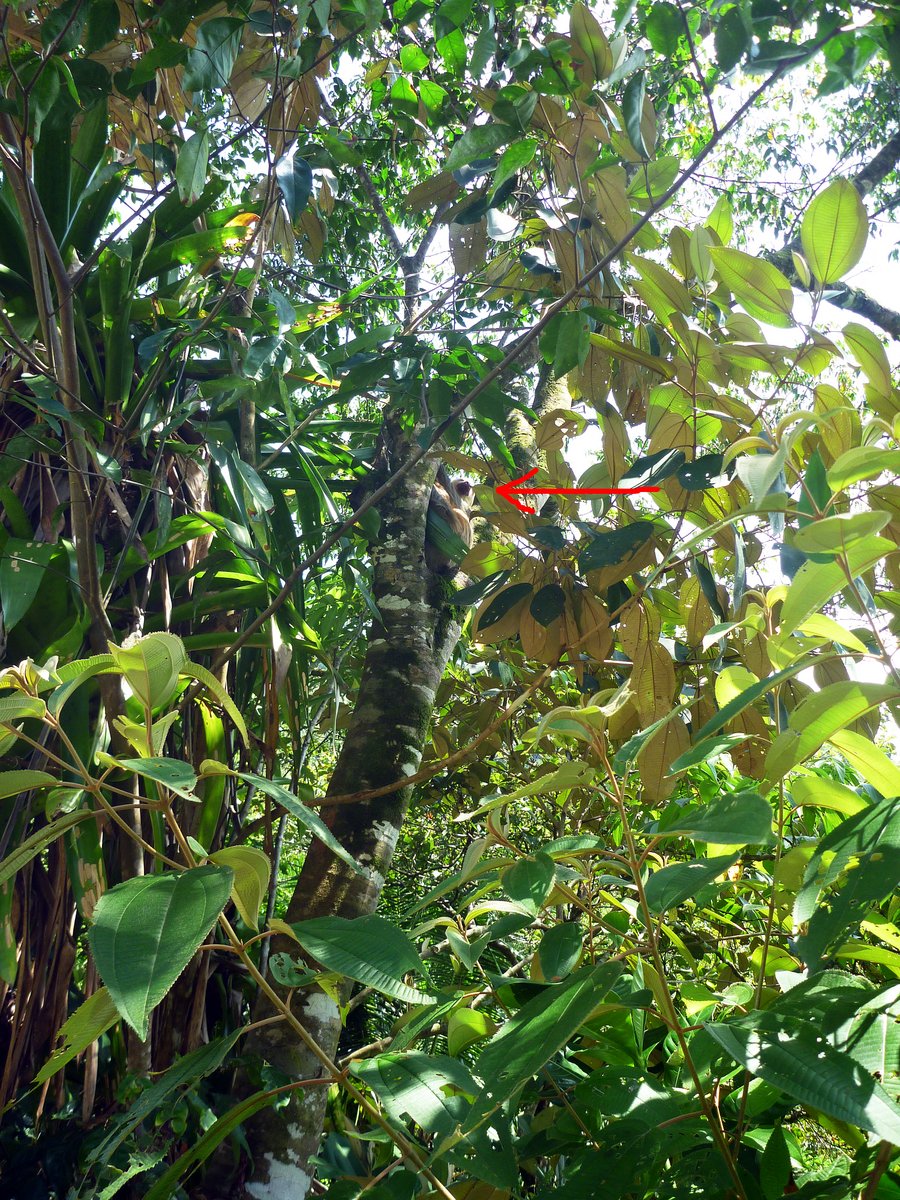
After an hour of climbing, the road levelled out and went along the ridge past a number of Fincas (farms). There are a couple of places where it was clear enough to get a good view of the bay, but mostly we were walking through thick jungle. After 2½ hours, the road started to descend steeply, so we turned around and walked back. (Tim told us later that we should have carried on a little bit further and we’d have come to the end of the road at an antennae station – ah well.)
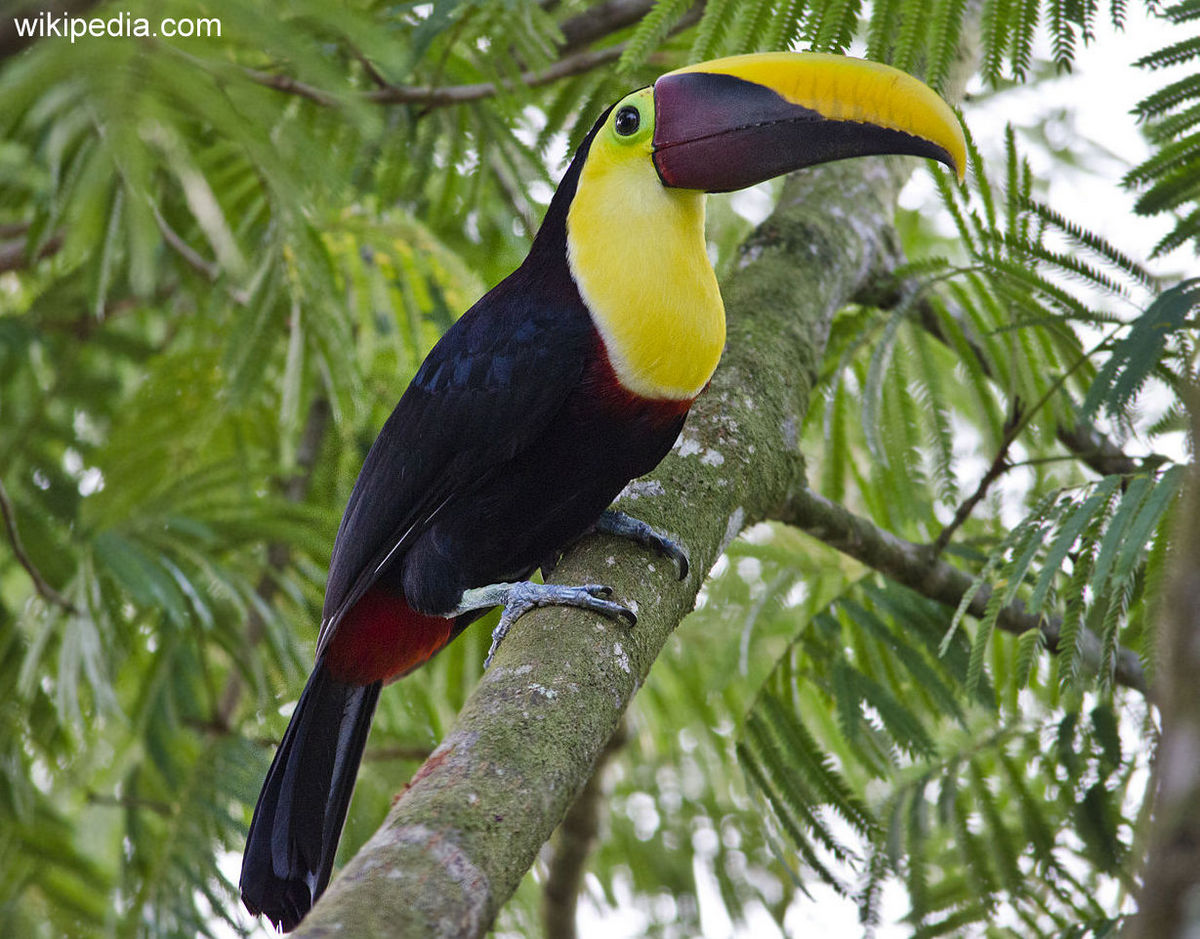
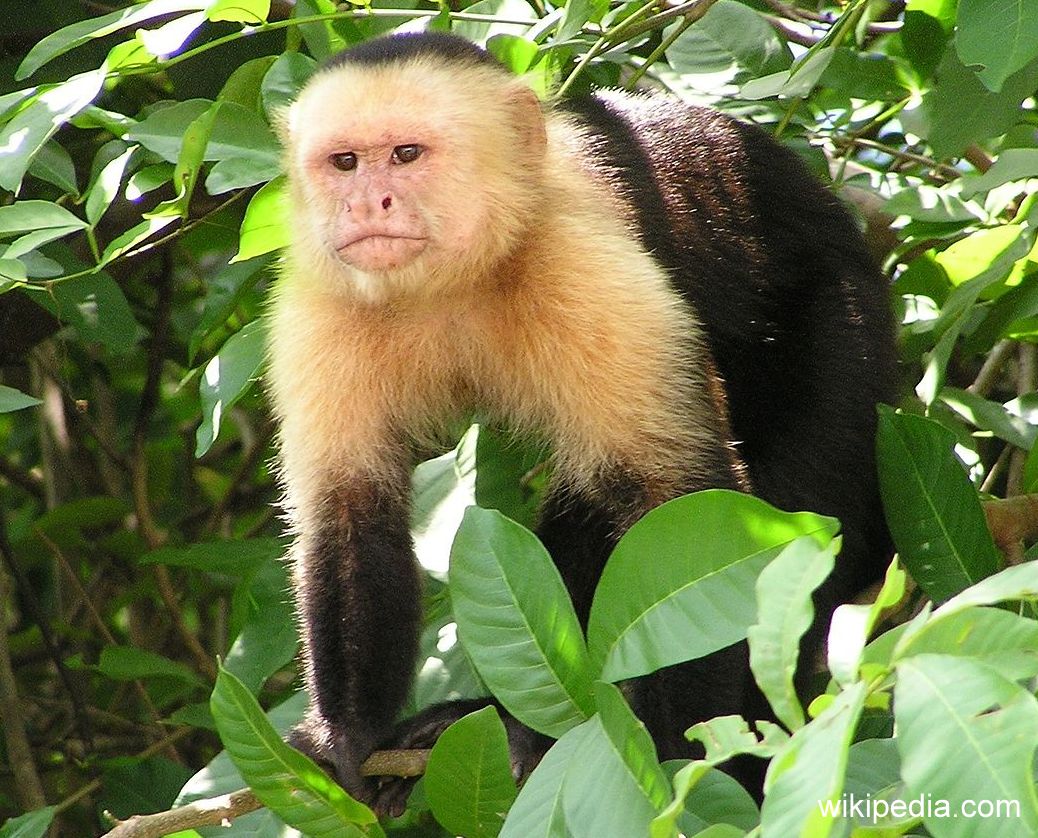
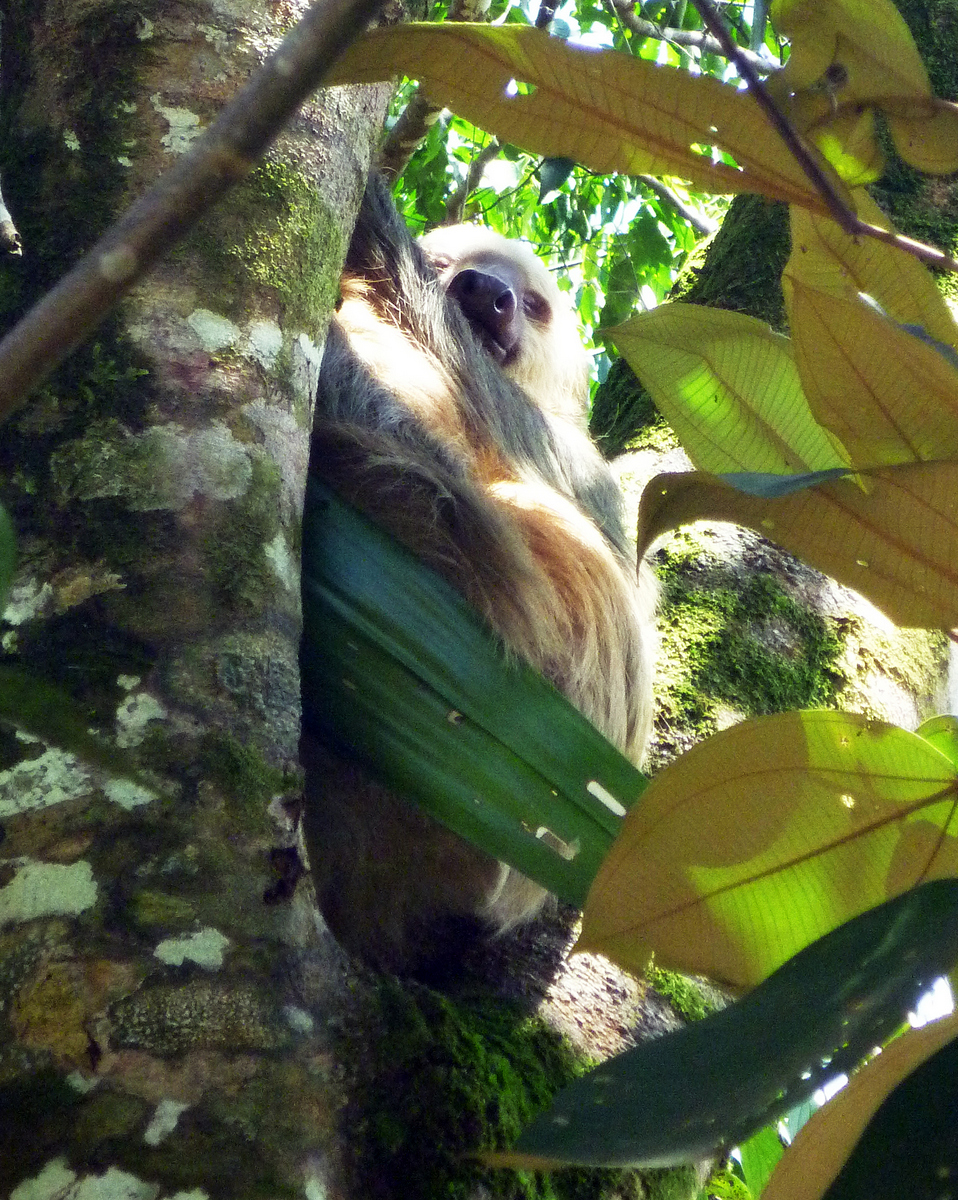
We saw lots of wildlife – a couple of Chestnut Mandibled Toucans, a troop of White Faced Capuchin Monkeys and a White-nosed Capamundi, which was wandering around at the edge of the road, very unconcerned about us being fifteen foot away. The best of all was spotting a Sloth sitting in the crook of a tree dozing with a small baby in it arms. We've been trying to find a sloth for five months, but they're incredibly well camouflaged, so it’s good to finally see one close up – we can leave Central America now.

We arrived back at the boat in the middle of the afternoon and, after a refreshing shower in the Cruiser’s clubhouse, we collapsed onto the boat. Later in the afternoon, I tried to start the generator to charge our batteries, but something blew and the control panel went completely dead. I spent twenty minutes trying to find out what had gone on, but ran out of time – I’ll have to sort it out tomorrow.
We went to the Banana Bay Marina bar for happy hour and dinner with John & Debbie from “Moon Shadow”. It’s first time we've been out for an evening meal for six weeks, so we had burger and chips – bring on the unsaturated fat.
15 November 2013 Golfito, Costa Rica
I had a very restless night worrying about the generator and hoping that it’s something that I can sort out without having to wait here in Golfito for parts to be shipped in. My biggest worry was that I’d blown up the control panel, which based on previous purchases from Fischer Panda, would be very expensive.
It took me most of the morning to investigate and fix the problem. I eventually found a blown fuse hidden away on the control panel circuit board. Further investigation revealed that one of the rubber mountings on the earth isolation relay had broken and I suspect that the "positive" terminal had shorted out on the generator engine casing. So, when I pressed the pre-heat button, the 12V signal from the control panel completed a circuit to earth and the fuse blew. A bit complicated, but it’s nice to know why a fuse blew.
I've replaced the 2A fuse on the control panel circuit board. I've also remounted the earth isolation relay and moved the bridging diode to the other side of the relay terminals to keep it away from the generator engine. Hopefully, that will stop the problem reoccurring.
In the afternoon, we wandered down the road and found a scruffy looking supermarket that has a surprisingly good selection of food. We also found a brilliant vegetable shop with loads of fresh produce – they even had a cauliflower.
16 November 2013 Golfito, Costa Rica
Glenys continued on her Internet campaign to find somewhere to go horse riding and came across a small place about 10 kilometres away. We asked Tim to ring them up and we've arranged to go for a short horse ride tomorrow morning for only $20 each, which seems to be a bargain.
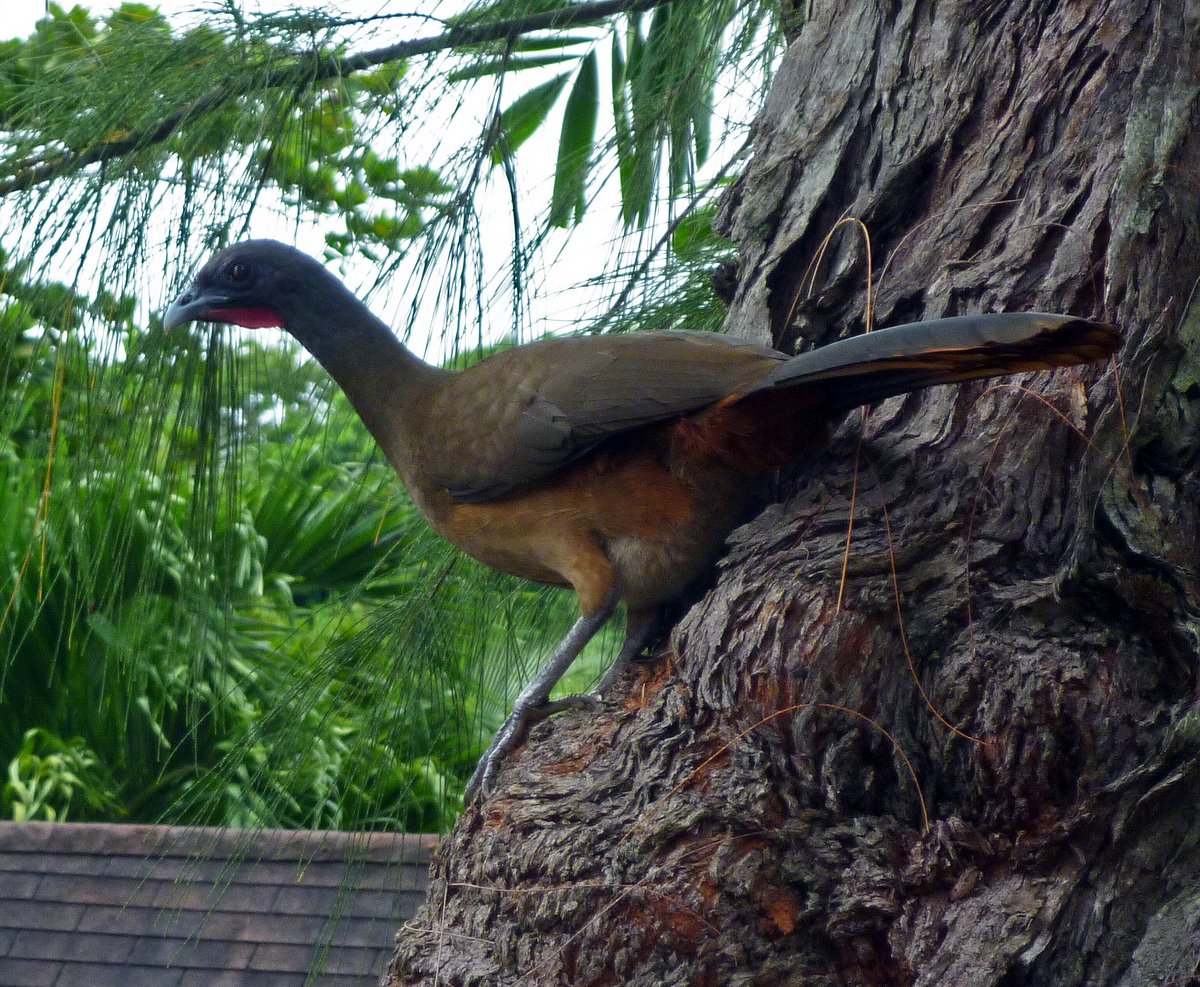
We went for a walk along a road, which is at the other side of the Duty Free Zone. A taxi dropped us off in the small village of Ureña for only $2.50 – taxis are so cheap here as long as you stay on the main routes. Once past the houses, we followed a gravel road which goes through the rainforest towards the town of Gamba. It’s not as pleasant as the walk that we did the other day, but it got us off the boat. After walking for 90 minutes, we had our sandwiches sat on the side of a river under a bridge, with our hot feet cooling off in the water. The only wildlife that we saw was a pair of Crested Guans, which are as big as a chicken and live in the trees. Unfortunately, they were too far away to get a good picture, but they look like the Chacalacas that we saw in Trinidad.
A local bus took us from Ureña back to the boat for 50 cents and we spent the late afternoon trying to get cool. This bay is so airless and unless it rains, the air is heavy with humidity. I wouldn't like to live here.
17 November 2013 Golfito, Costa Ricaa
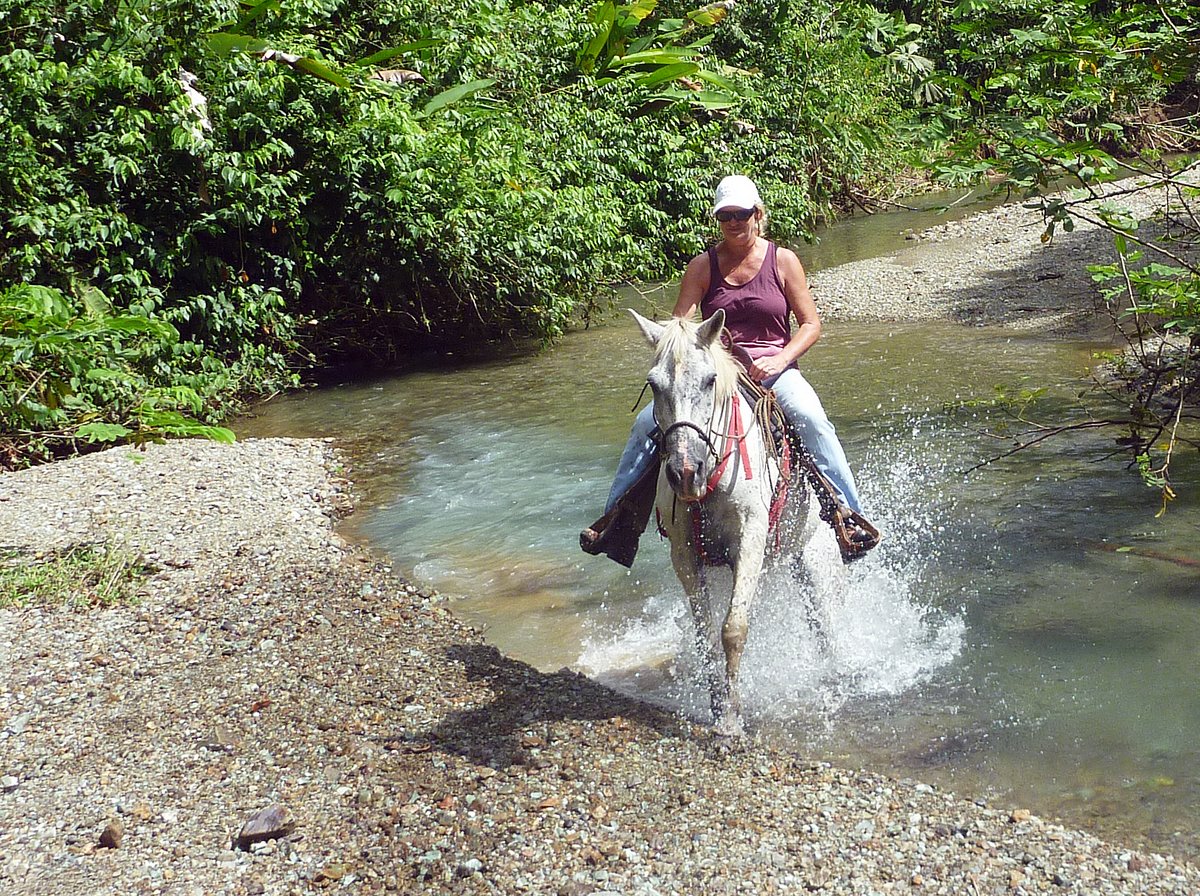
A car picked us up and took us out to “Cataratas y Senderos Avellan”, which is 6 kilometres along the road where we walked yesterday. Our horses were already saddled up and waiting for us. The ride took us along the gravel road for a ½ mile and then down into the river. It was lovely riding along the winding river - the horses were very responsive and coped well with dropping down banks and wading through two feet of water.
At one point, our guide had to chop through a tree that had fallen across the river, but the trunk was only six inches in diameter and he soon had it out of our way with his sharp machete. Our progress up the river was eventually stopped by a huge tree blocking the whole river, so we went back along the river to our starting point. The ride was only just over an hour, but was very enjoyable and interesting. This has whetted Glenys’ appetite and she can’t wait to get to Ecuador to do more riding.
“Cataratas y Senderos Avellan” is owned by a Costa Rican family, and they've made their finca into a bit of a tourist attraction. They have a restaurant, a trail to some waterfalls, zip lines, horse riding and camping. We walked out to the very nice waterfall with Vernesto, who is the owner of the place. He told us that they get very few tourists coming out, which is a pity because they are very friendly people and the place is lovely. Most tourists go out to the Peninsula de Ora and don’t stay in the Golfito area very long.
We had a nice lunch. It was the inevitable chicken, rice and beans, but was very tasty and they had a jar of chilli pickled vegetables – I’ve got to get a jar of those. It cost us $85 in all, including the horse riding, a guide taking us up to the waterfall, lunch and the transport from Golfito - a bargain. If you go to Golfito, drop in to see them - http://www.avellancr.com
Back on the boat, we spent the afternoon surfing the internet - Glenys planning horse riding trips in Ecuador and I discovered that there are some brilliant places to go trekking and mountain climbing in the Ecuadorian Andes - I can't wait to get there.
18 November 2013 Golfito, Costa Rica
We’re planning to head down to Ecuador this week. The rhumb line from here to Puerto Amistad is 580 miles on a course of 165 degrees, but we’ll probably end up sailing nearly 700 miles in a dog leg. The winds for the first part of the trip will be from the west, but will gradually back to the south. So our plan is to set out on starboard tack, lay a south-west course and then gradually let the wind push us onto a more south easterly course as it backs. Hopefully, we’ll be able to stay on starboard tack all the way and not be too hard on the wind. I downloaded a GRIB file and it looks good to leave on the 22nd when the winds are forecast to be 10 knots from the west.
Glenys finished off the deployment bag that she has been making for our series storm drogue. This is a 100m long rope with 132 small cones sewn on to it, which, if we are caught in a really bad storm, we can deploy off of the back of the boat to slow us down.
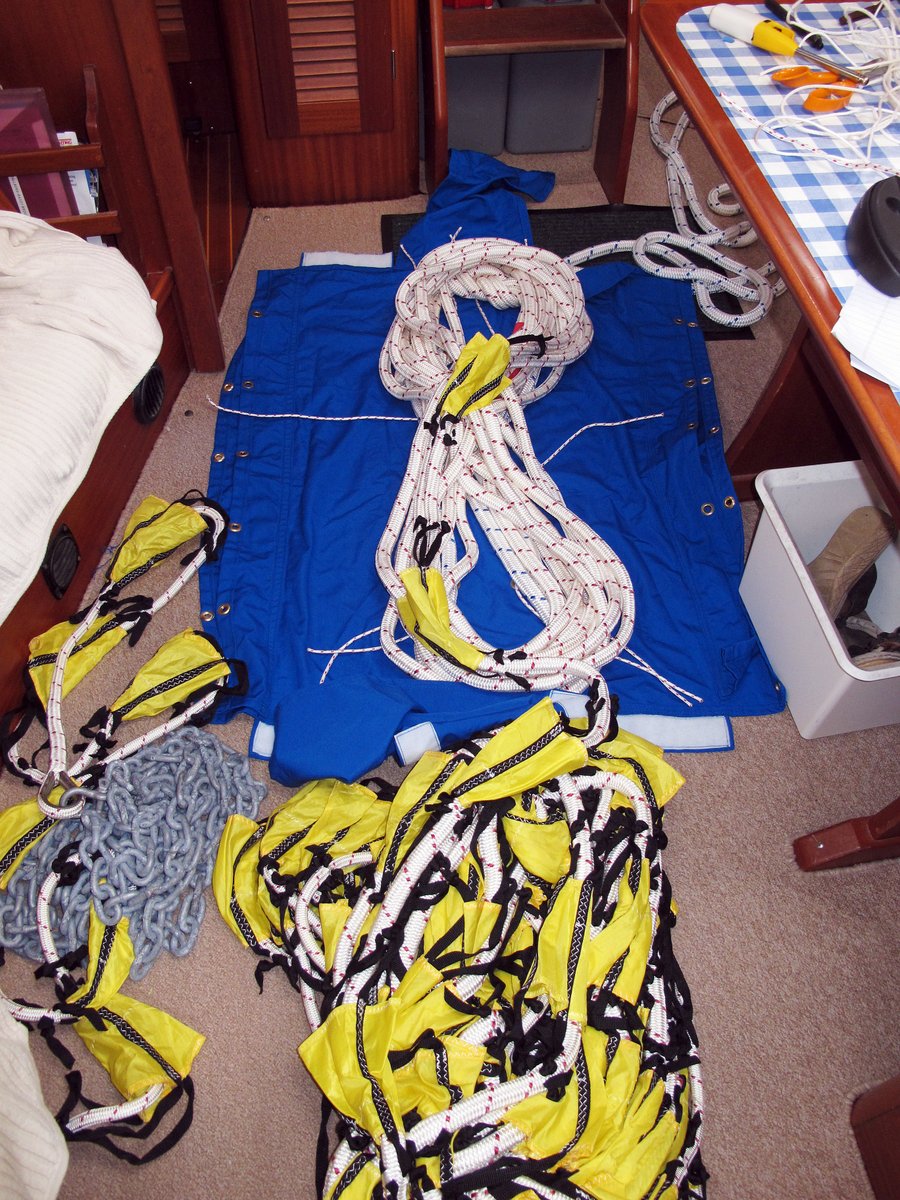
The deployment bag is designed to ensure that the rope doesn't tangle when it’s being deployed. I've based it on the same principals as a parachute container with flaps and I’ll stow the line in a figure of eight to prevent tangles. It all seemed to pack away nicely – I just hope that it works. If we have to use this drogue, it will be a horrible storm and I want it to be as easy to deploy as possible – the nightmare scenario is getting it all tangled up.
It absolutely threw it down in the afternoon, so we hunkered down and did some more internet browsing of activities in Ecuador. Glenys has short-listed a couple of riding places around Quito and I've discovered a volcano called Cotopaxi, which at 5,897m is the third highest volcano in the world and the second highest mountain in Ecuador. The route goes up a permanent glacier through some steep icy terrain - looks like a “must do” trip to me.
19 November 2013 Golfito, Costa Rica
We went for another hike on the ridge above the town. This time we followed a sign to a tree top canopy zip line place. It’s a pleasant 3 kilometre walk along a very rough dirt and gravel track, but I would imagine that it could get very muddy if it rained a lot. We saw some more Crested Guans, a Chestnut Mandibled Toucan and a flock of eight or so Fiery Billed Aracaris. There’s also lots of Razor Grass around on the side of the road, which looks very innocuous, but if you brush against it with bare skin it gives you a nasty cut.


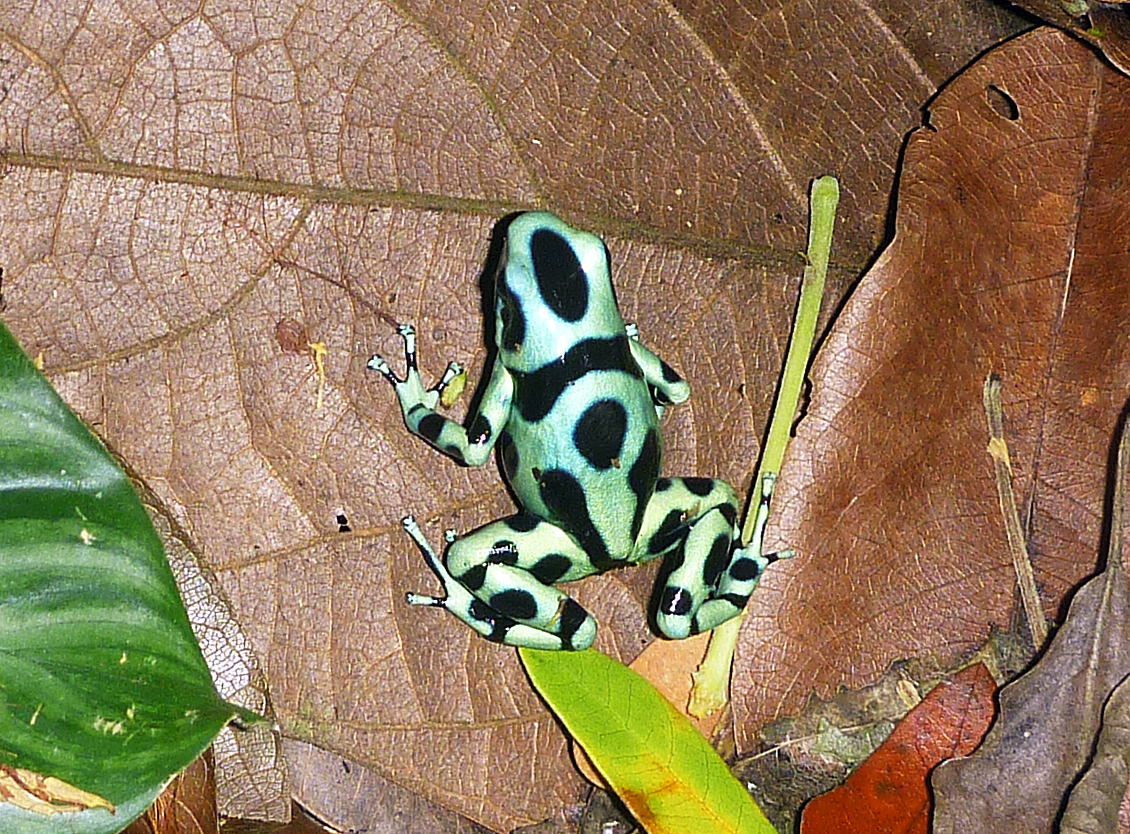
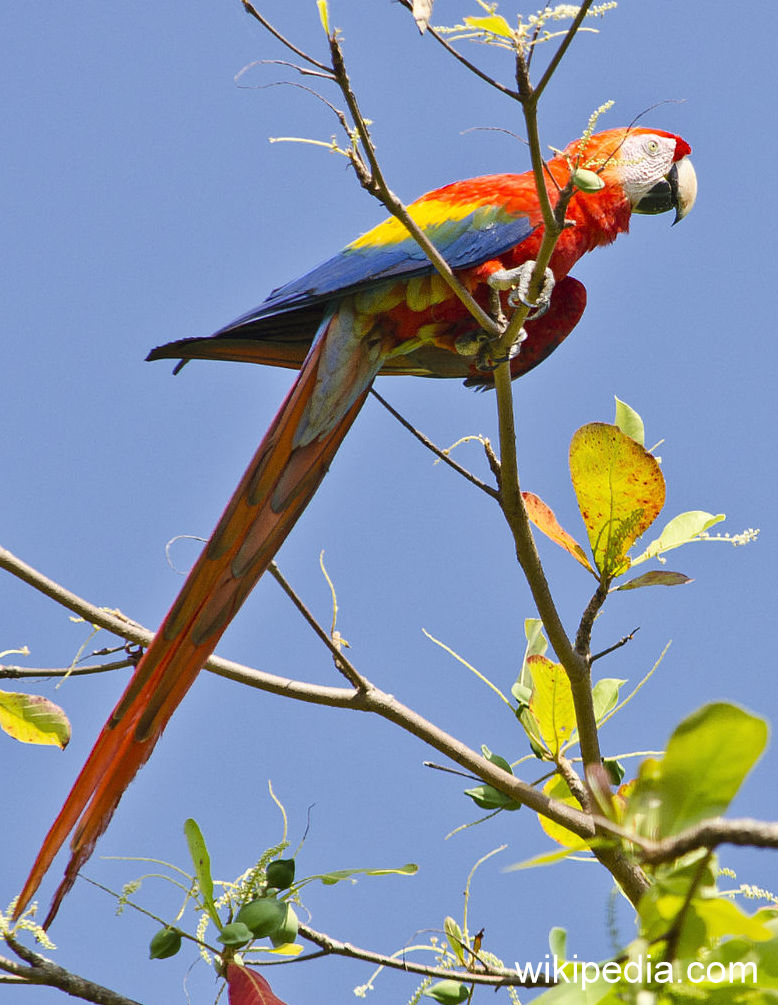
When we stopped for lunch, we saw a green and black Poison Dart Frog similar to the one that we saw on the mainland in Bocas del Torro. There’s a lot of wildlife around here. Back on the boat, as the sun went down, we watched eight Scarlet Macaws flying overhead to roost on a tree on the ridge above us along with a couple of hundred Vultures.
20 November 2013 Golfito, Costa Rica
We’re just waiting for the weather now - we've got another two days to go.
In the middle of the morning, we nipped into Banana Marina and filled up with diesel and fresh water. The marina charges a little bit more than the town fuel dock, but we could get water there and we didn't have to jostle for a place with fishing boats and pangas. In the afternoon, we went for a walk - mostly to get off the boat and check what time the immigration office opens tomorrow – eight o'clock apparently.
I hate waiting around like this, I just want to go.
21 November 2013 Golfito, Costa Rica
We spent today getting ready to leave tomorrow. I downloaded a GRIB file and it still looks good - the winds will be a bit light tomorrow, but will be from the west and are forecast to increase overnight. After a couple of days, we should have 15 knot winds from the SSW. The ITCZ doesn't look to be too active on our route as well - fingers crossed.
I’m still going with our plan of heading south-west for a day before we turn towards Ecuador, but I’ll be keeping a wary eye on the currents as well - I don’t want to be pushed too far west. I'm not sure what currents we’ll encounter because the Humboldt Current swirls around with some reverse eddies in this area.
The first major chore of the day was to get our international exit zarpe. It wasn't as tedious as the clearing in process – Immigration were very helpful and friendly and Customs only took fifteen minutes. The major delay was waiting for half an hour in a bank to pay a $20 fee for the Port Captain to produce the zarpe. Having got our receipt, printing out the zarpe only took ten minutes, so we were done and dusted within 2 hours.
Our next stop was at the supermarket, where we stocked up on the usual stuff – mostly liquids like beer, wine, orange juice, milk and coca cola. On the way back to the boat, we spotted a pair of Scarlet Macaws in a sea almond tree munching away on the nuts, nice to see them up close at last.
After lunch, I paid our bill at Land Sea Services. It was only $130 for nine days on a mooring and three big loads of laundry, which was a bargain. We then lifted the dinghy on deck and tidied up after being in one port for over a week. Glenys cooked a Cassoulet and left it pressurised in the pressure cooker, so that we can eat it for dinner for the first two days at sea. We're ready to go.
It absolutely threw it down in the evening – hopefully it will be nice and dry in the morning.
22 November 2013 Golfito to Bahia de Caraques, Ecuador (Day 1)
I was up early remembering that I needed to send another email to our agent in the Galapagos who is arranging an Autographo (cruising permit) for us. Having sorted out my last bit of admin, I downloaded another GRIB file, which still showed light westerly winds for today, so we were good to go.
I put the clocks forward an hour to Ecuadorian time and we dropped the mooring at eight o'clock. As usual, our boat speed indicator wasn't working, so I had to go down below and clean the impeller - there was a massive barnacle that had built its shell between the paddle wheel and the housing. I dread to think what the growth on the bottom would be like if we'd stayed any longer than 10 days.
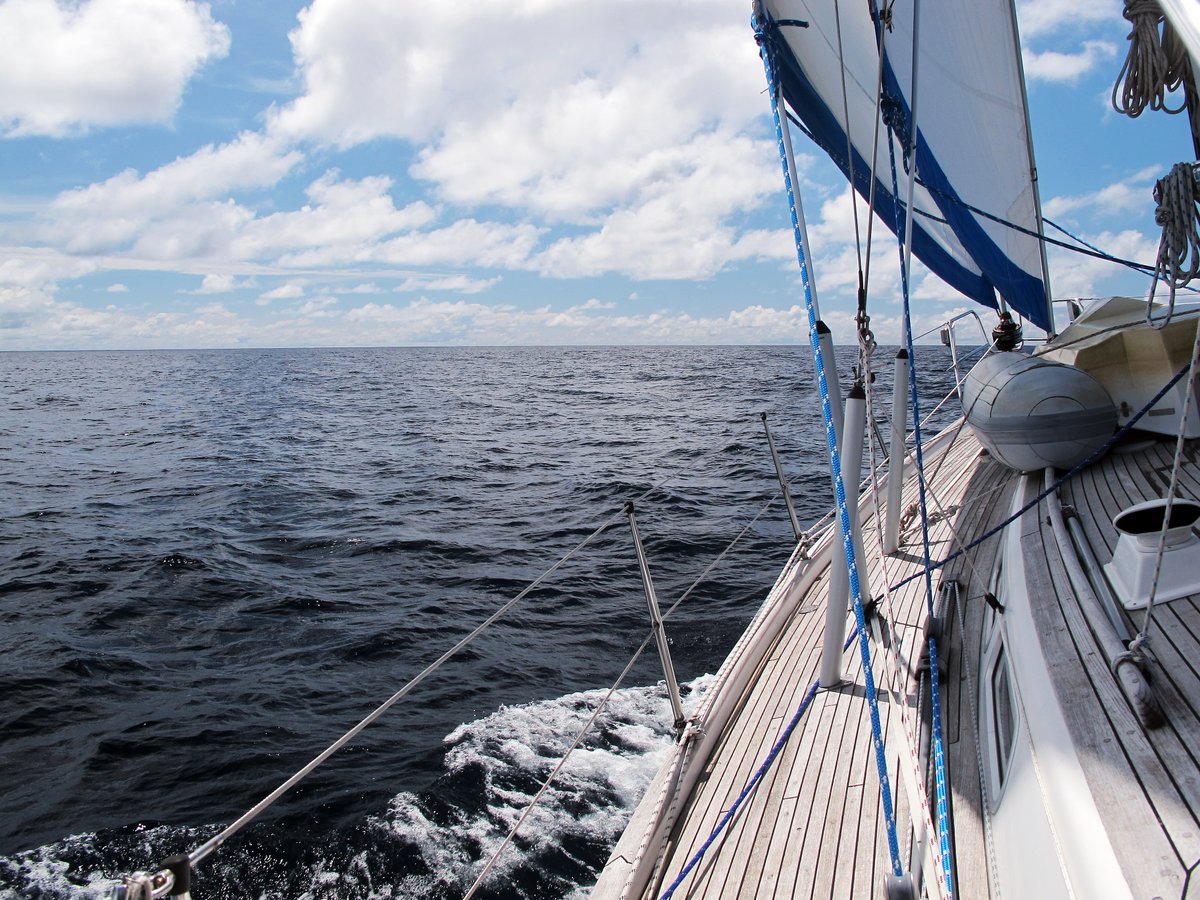
We had to motor the twenty miles across Golfo Dulce because the winds were light and flaky, but once clear of the peninsula, the wind settled to 10-14 knots from the west and we had a cracking sail all day. We were hard on the wind, but the seas were pretty calm, so it was a pleasant enough motion. Also, we were able to maintain a course of south-west, which was perfect - it's nice when a plan comes together.
As usual on the first day of a multi-day passage, I was restless. I'll not be fishing for a couple of days because Glenys has enough food in her fridge and I don't want to spend much time down below until I get my sea legs. So I spent most of the day reading and waiting for the next meal - the Cassoulet that we ate as the sun set was much appreciated.
As it went dark, I put a reef in the main and went to bed at seven o'clock leaving Glenys on the first three hour watch. It was a lovely night sail - the winds stayed consistent and we bowled along at 6 knots using our Hydrovane wind steering. As forecast, the winds started to back to the south-west and dropped a little, so by dawn we were sailing at only 4 knots, on a course of 200 degrees taking us more south, but I'm happy enough with the amount of westing that we've achieved so far.
23 November 2013 Golfito to Bahia de Caraques, Ecuador (Day 2)
I downloaded a GRIB file and there wasn't much change in the wind forecast. It will be around 10 knots from the west until we get far enough south to be clear of the Inter Tropical Convergence Zone (ITCZ), then the prevailing winds will back to the south and increase.
I reckon that we'll be free of the ITCZ when we reach 3 degrees north, probably tomorrow night, so we'll stick to the plan of heading south to south-west for another day, which will leave us with a south-east heading to our destination.
The morning was pleasant, plodding along at five knots in fairly calm seas. The wind direction was good to us and we were able to ease the sheets a little bit.
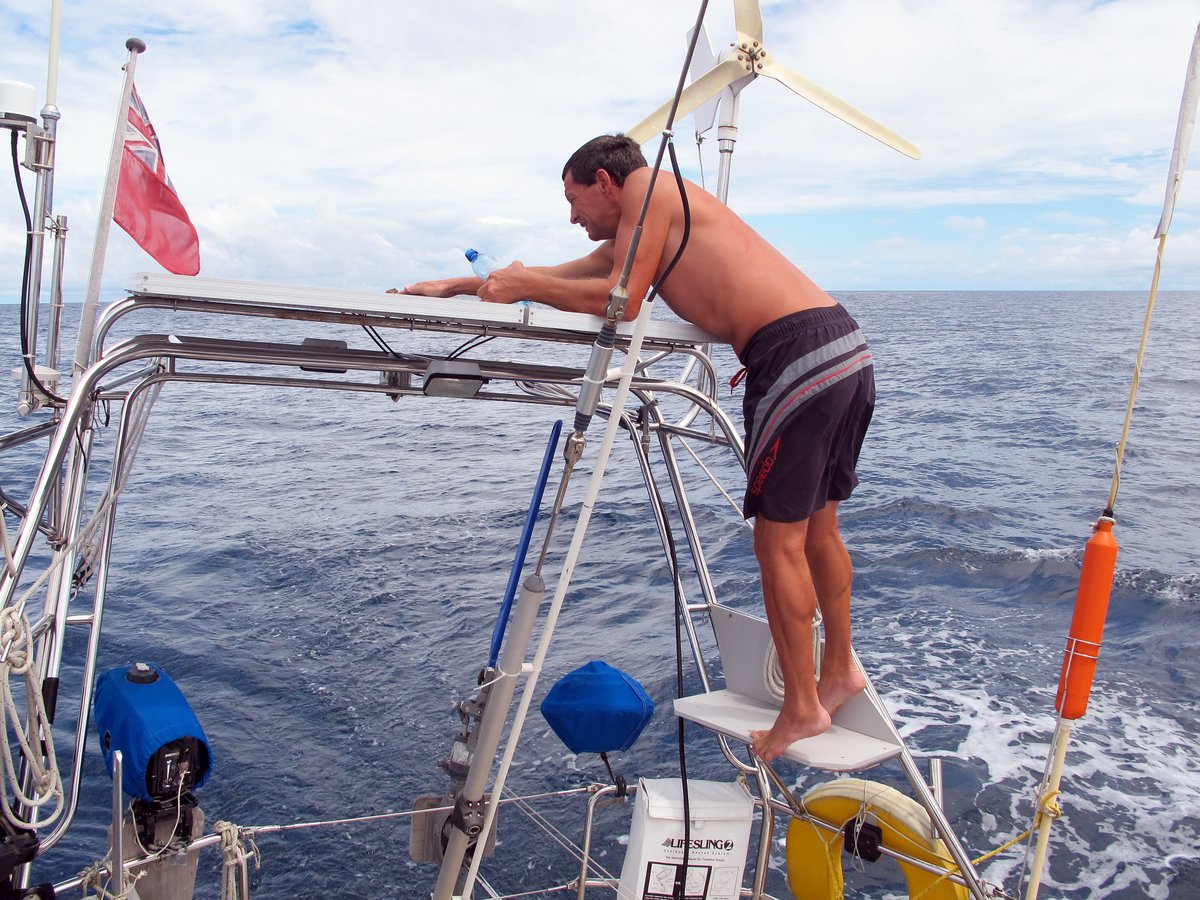
Last night we had a Brown Booby hitch a ride with us. It perched on the pulpit for a while, but sometime during the night it moved and squatted on our solar panels, which make a lovely landing platform. Now I normally like to see nature up close, but do you realise how much guano a huge booby can produce? The bloody thing had covered 25% of my lovely solar panels in thick, dried bird poo. It was a mission to get it off, balanced precariously on the edge of our arch.

In the early afternoon, a nasty looking squall line appeared ahead of us. We rolled away the genoa, turned on the engine, then altered course to try to avoid the worst of it, but we still got some heavy rain for an hour. Fortunately, the system didn't have any strong winds or lightning.
The afternoon remained unsettled and, as darkness fell, another big squall line appeared in front of us - thankfully it dissipated before we got to it. These huge weather cells are an unfortunate (and scary) part of sailing through the ITCZ - I'll be so glad to be south of it all. We've had nearly six months of dealing with these systems and I'm weary of it now.
On my 10 - 1 watch, we approached a brightly lit fishing boat. I turned 30 degrees to port to avoid it, but then saw a couple of white lights ahead of us. I wasn't sure if the lights were other boats in the distance, or if they were fishing buoys at the end of a long net close to us. It's a nightmare trying to figure out what fishing boats are doing.
The International Regulations for the Prevention of Collisions at Sea (COLREGS) specify that fishing vessels should display certain colours of lights to indicate if they're actively fishing with nets or trawling, but I've never been able to figure it out. Fishing boats normally have so many deck lights on that even if they displayed correct lights it would be difficult to see them.
Anyway, we were only doing three knots through the water, so I kept altering course to avoid passing between the lights and the fishing boat in case it was a fishing net. After twenty minutes of stress, I finally worked out that the small white lights must be other boats travelling away from us, a long distance away, so I was able to come back onto our original course.
Half an hour later, I caught up with the small white lights, which turned out to be a huge ship heading in roughly the same direction as us. He must have been embarrassed that a mere sailing boat had caught him up because as I got to within a mile, he increased his speed and disappeared over the horizon. We're 200 miles from land and it's like rush hour.
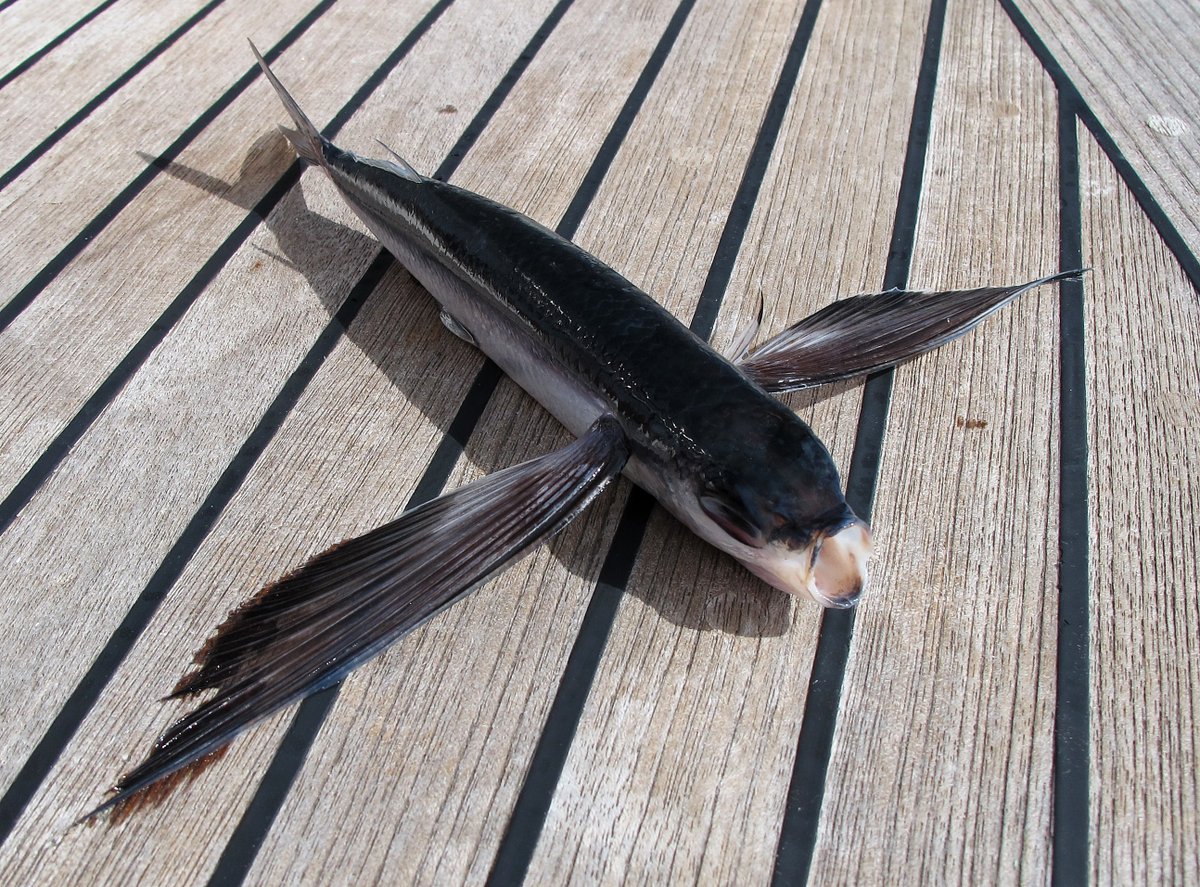
Glenys had a fairly quiet watch apart from when she was hit in the head by a Flying Fish - she popped her head around the spray hood to check for other boats and Wham! Fortunately, it was only a little one. A slightly bigger one landed on the port deck, which I'll be using for bait when I'm allowed to fish.
24 November 2013 Golfito to Bahia de Caraques, Ecuador (Day 3)
By daylight, we were surrounded by rain showers and being forced onto a more southerly course by the backing wind - a little earlier than I expected. The wind had picked up and so had the waves making for a bouncy motion heeled over at 20 degrees.
The morning GRIB showed the winds increasing for the next few days to 15-20 knots, and the effects of the ITCZ staying with us until we get to nearly 2 degrees north. Sure enough, during the morning, we had a pronounced wind shift backing to nearly south and increasing to 15-20 knots. This forced us hard on the wind on a course over the ground of 145 degrees, which is directly towards our destination. I hope that the wind doesn't back any more, otherwise we'll have to throw in a couple of tacks.
We've settled into a routine now and, despite the bouncy conditions, life isn't too bad. We have our three hour watches overnight, then I have a couple of hours' kip in the morning, Glenys has a couple of hours in the afternoon, then it's dinner at six o'clock, showers and I go back to bed at seven o'clock. We hardly see each other apart from at meals.
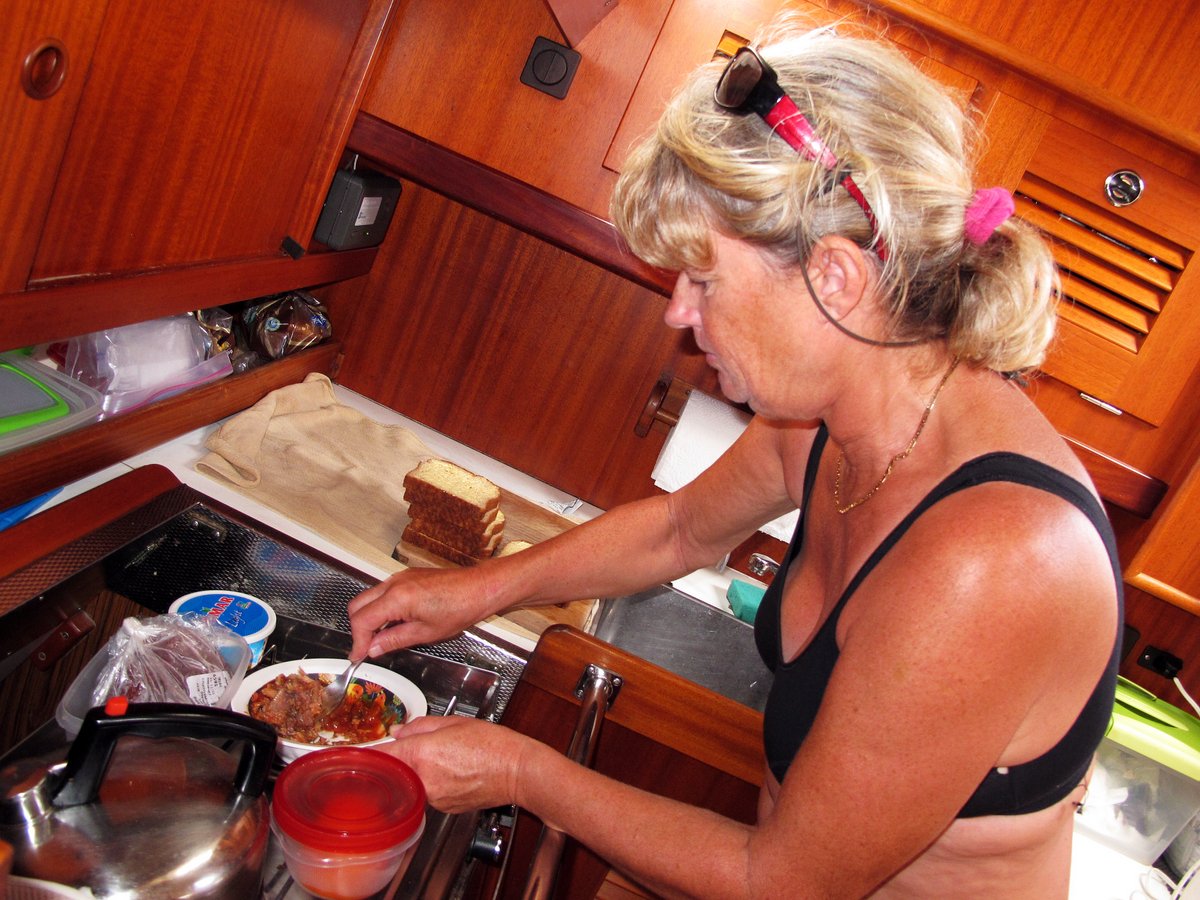
It was a bit rough today, so I didn't do any fishing, mostly because I can't face the thought of cleaning the fish while we're bouncing around so much - maybe tomorrow.
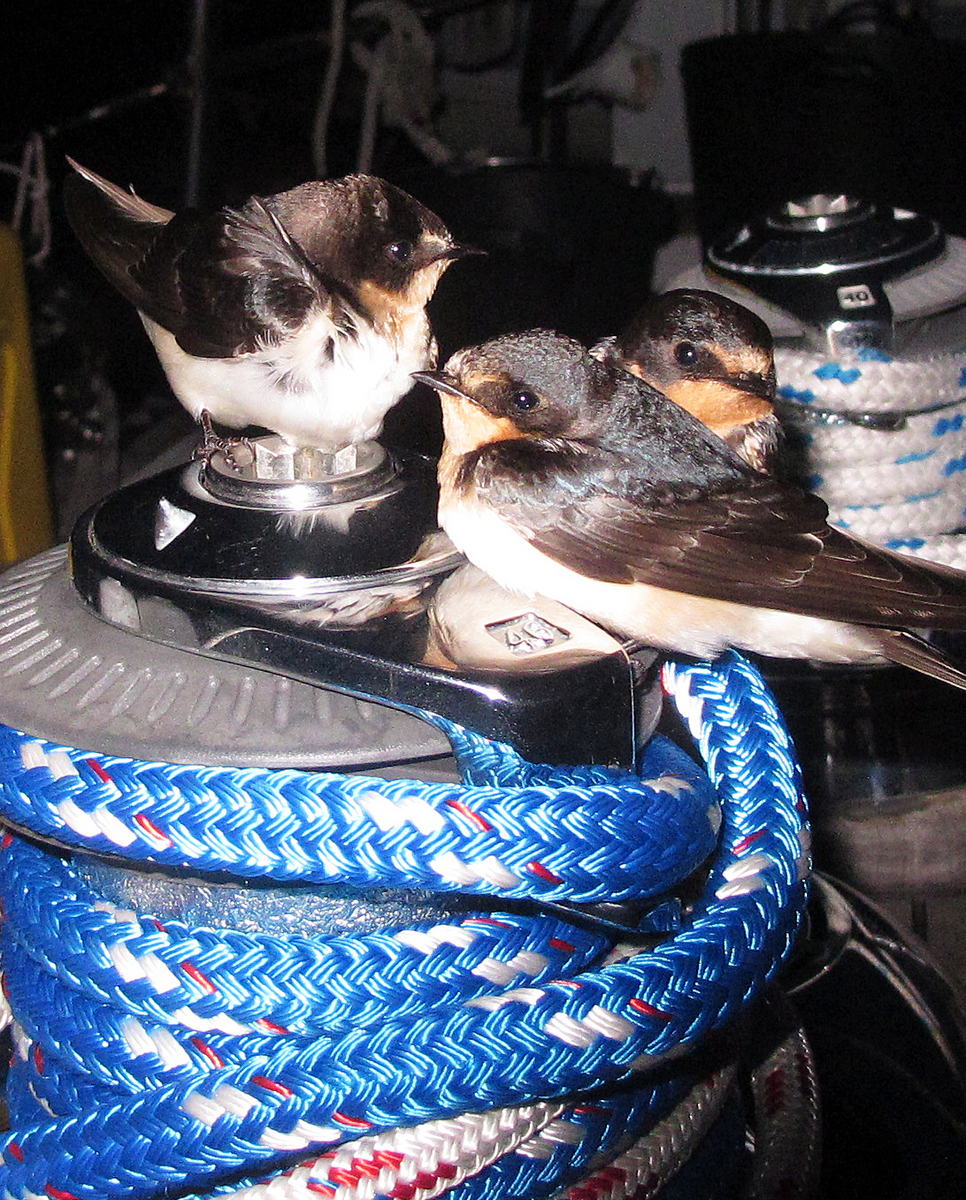
Our main entertainment today was a small Swallow who hitched a ride. It couldn't seem to settle anywhere, trying to perch on winches, ropes, the cockpit sole, the side deck and it totally ignored the small, comfy nest that we made from a tea towel. Eventually, it discovered the companion way down into the saloon and we had to keep chasing it out, sometimes having to physically grab hold of it. It became such a pest that we finally locked it in the front heads with some bread and water - we didn't want swallow poo everywhere down below, thank you.
As the sun went down, we were approaching a huge line of very dark clouds, stretching as far as the eye could see. There was no way to avoid it so we plunged straight in. The wind increased over 20 knots and veered around, but surprisingly there was very little rain. I stayed up for an extra hour to make sure that nothing bad was going to happen, and then crashed out at eight o'clock.
It was still overcast and as black as the ace of spades when I got up at eleven o'clock, but at least the wind was back down to 15-20 knots, we were making good speed and our course over the ground was still 145 degrees.
The only good thing about it being very dark is that as we crash through the waves, the sea illuminates with millions of bright phosphorescent specks of light. At one point, we had a pod of dolphins join us and the streaks of light that they made in the water were spectacular.
When I came back on watch at five o'clock, I noticed that the foot of the genoa was vibrating badly, so I tacked, left the sails backed and hove-to. What a difference! We went from bucking bronco to calmly lying there, gently riding the waves.
The velcro on the thin tensioning line for the foot of the sail has pulled away, so the foot of the sail was loose and flapping. I lashed on a bit of 3 mm line and pulled it tight as a temporary measure - another job to do in Ecuador. I left the sails backed, gybed and we were off again, crashing our way to windward. I seem to have stopped the vibration of the genoa, fingers crossed.
25 November 2013 Golfito to Bahia de Caraques, Ecuador (Day 4)
Dawn revealed grey, overcast skies, but it was nice to see the horizon after such a dark miserable night. Our eight o'clock log showed that we'd done 390 miles in 3 days, with 255 miles still to go. I've emailed Puerto Amistad to tell them that our ETA is dawn on the 27th. They should arrange for a pilot to come on board Alba to guide us across the sand bar at the mouth of the Rio Chone.
Our electronic charts show that the minimum depth on the entrance to Bahia de Caraques is only 0.6 metres, so it's essential that we go in around high tide which will be 2.3 metres at 10:40. We'd like to arrive at the pilot waiting area two hours before high water at half past eight.
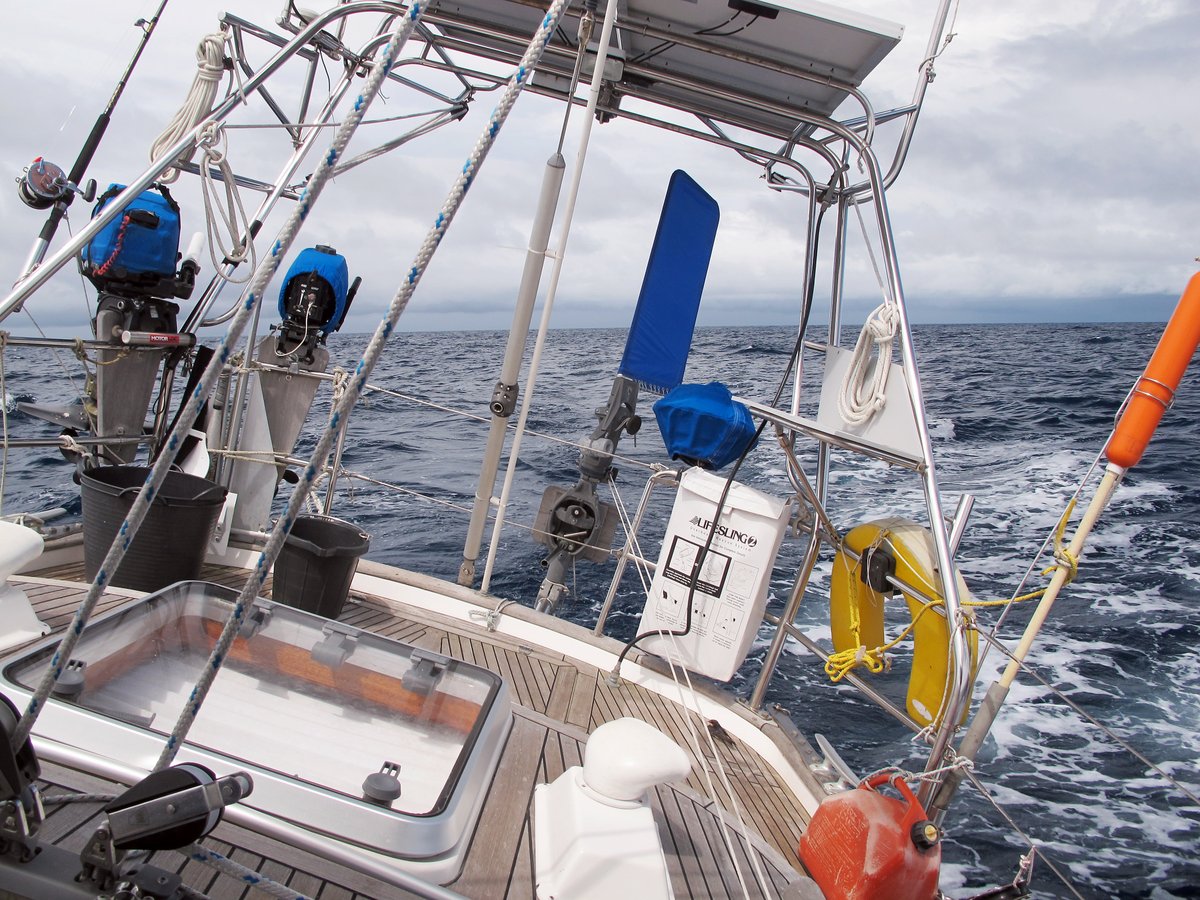
The morning GRIB file showed that the wind was forecast to drop slightly to 15 knots and to veer by 10 degrees during the day. It should drop further to 10 knots tomorrow night. With 260 miles to go, we're going to have to average 5.5 knots if we want to arrive in time, so we need to keep piling on the pressure. If the wind drops then hopefully the seas will calm down and we can motor-sail to make up the time.
Unfortunately, the cute little Swallow that we locked in the front heads was dead this morning. It's no great surprise. We've had quite a few of these birds hitch a ride over the years and they always die overnight. I reckon that they get sucked into thunderstorms, become disorientated and are irrecoverably exhausted by the time that they land on us.
We had a pleasant sunny day - sailing hard on the wind, but the seas weren't too bad. I put out a couple of fishing lines in the afternoon, but no joy. Instead of fish, Glenys rustled up a nice chilli for dinner sprinkled with fresh cilantro and some home-made guacamole on the side - very nice.
At sunset, I put our usual precautionary reef in the main-sail and I was glad that I did because by midnight it was blowing 20-25 knots and I had to put another heavy reef in the genoa. On the positive side, we were hammering along at about 6 knots managing to stay above the rhumb line to our destination.
An hour later, it was gusting to 30 knots, we were heeled over to 30 degrees and taking big walls of water over the bow. Gritting my teeth, I put on my swimming shorts, groped my way forward and put a second reef in the main. After that, the motion was much better and our speed increased - result! It calmed down a little on Glenys's 1 to 4 watch and by dawn we'd shaken out the reef in the genoa.
26 November 2013 Golfito to Bahia de Caraques, Ecuador (Day 5)
At seven o'clock in the morning, we passed through 1 degree North, just 60 miles from the equator. It's grey, overcast and surprisingly cold. I actually had to wear a fleece during my 4 to 7 watch - first time for ages.
Our eight o'clock log showed that we'd done 530 miles in 4 days, with 115 miles still to go. We're still hoping to get to the entrance tomorrow morning, but we seem to have a 0.5 knot current against us now and the wind has backed again, so we're dropping below the rhumb line. I guess that if we miss the tide window, we'll have to go 20 miles north to Cabo Passado, which is a poorly protected anchorage, or go back out to sea overnight. The morning GRIB file showed that the wind was forecast to remain around 15 knots, then back a little in the evening and drop to 10 knots around midnight.
We had a rough day with strong winds and waves big enough to stop us dead every so often. By midday, we had two reefs in the main and 20-25 knots winds, but occasionally the sun peeked out from behind the clouds brightening our spirits. We were making good progress - by three o'clock, we had 80 miles to go and were just managing to hold a course directly to Bahia de Caraques. If we could just maintain 5 knots, we'd be there by seven o'clock in the morning.
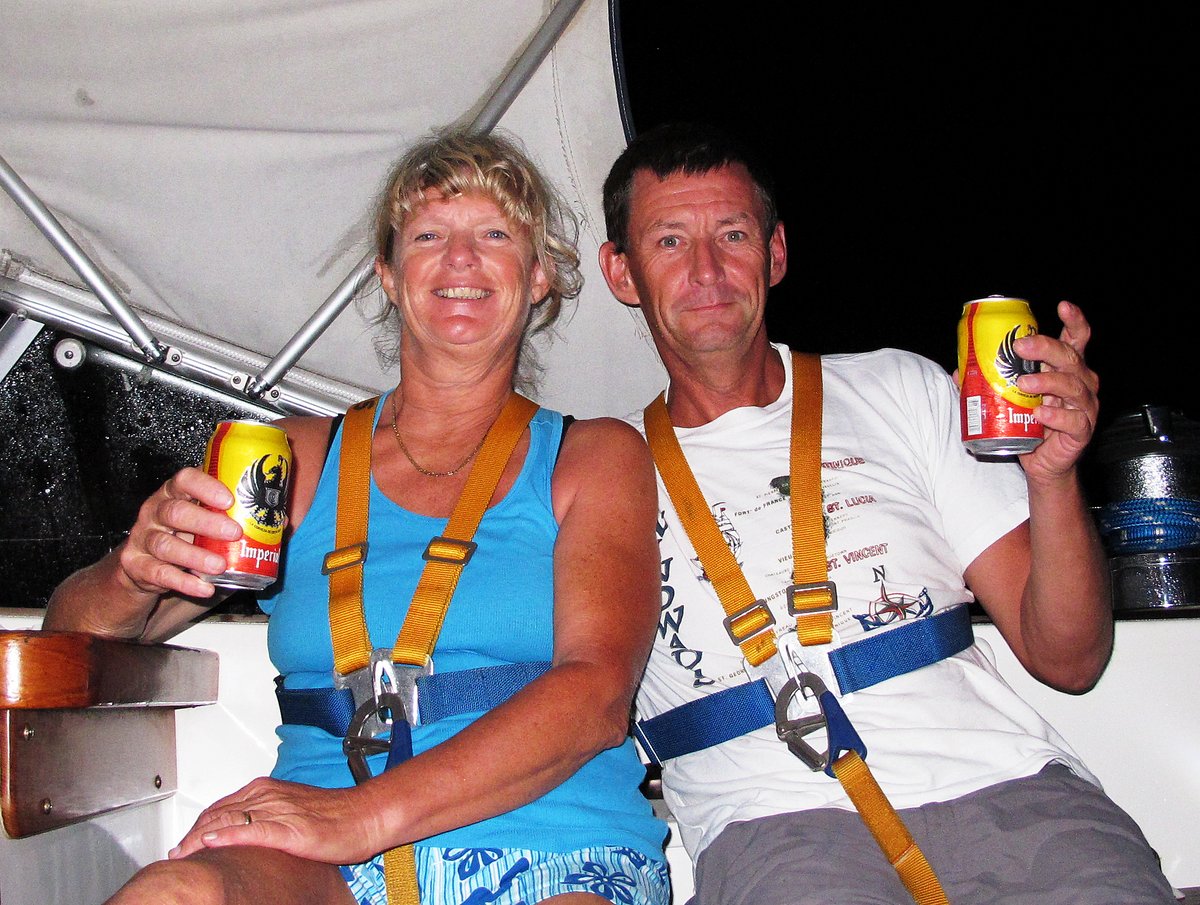
The wind dropped off to 15 knots while we had dinner. I went to bed at seven and got up an hour later to celebrate crossing the Equator with Glenys. The Royal Navy has a very elaborate ceremony to honour Neptune, the god of the sea - ours was a much more subdued affair. We counted down the approach to the equator like you would do at New Year and then popped open a celebratory beer, giving half of it to Neptune as an offering to look after us. We're now in the southern hemisphere!
It was all go at our ten o'clock change of watch. There was a ship on our port side about to cross in front of us and a fishing boat with what looked like a mile long net to starboard. To add to the excitement, the wind picked up gusting to nearly 30 knots, forcing us to reef the genoa - a hectic 20 minutes. We were now 43 miles from our destination, romping along at six knots, feeling confident about making our approach at dawn.
27 November 2013 Golfito to Bahia de Caraques, Ecuador (Day 6)
Just after midnight, we were only 27 miles from the outside anchorage where we should meet the pilot, so I rolled away the genoa to slow down and we bumbled along at 2-1/2 knots with a very heavily reefed mainsail and the stay-sail. By four o'clock, the wind had dropped, so we were motoring. We came across a fishing boat with some bright vertical white lights and a green and red flashing light. There was another boat with the same sort of lights about a mile away. This looked suspiciously like they might have a net strung between them, so we circled around the outside of the nearest one.
We anchored outside the entrance to the estuary just after seven o'clock to wait for the pilot to come out to us. We were about a mile from land, the sun was shining with a nice light breeze and we were relishing not being heeled over.
Looking back, the passage was almost perfect; we did 650 miles in exactly 5 days averaging 130 miles per day (5.4 knots). Our strategy of heading south-west from Golfito worked well and we stayed on starboard tack all the way with no nasty morale-breaking tacking. We were hard on the wind for the whole trip, but it wasn't too unpleasant.
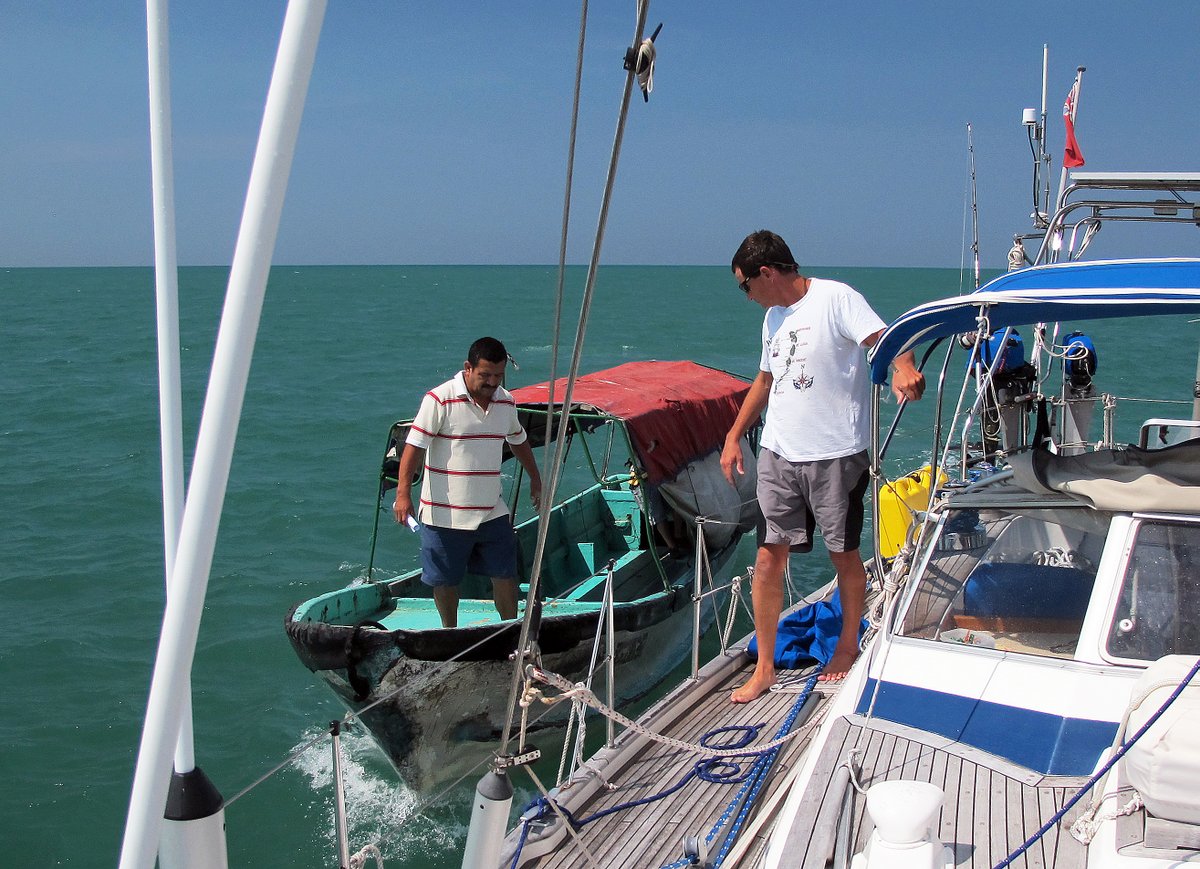
At eight o'clock, I started to call Puerto Amistad marina, but no one answered on channel 69. I tried to call the owner, Tripp, on his mobile phone using our satellite phone, but no answer. I kept trying every fifteen minutes, but no joy. By nine o'clock, I was starting to get worried because high tide was at 10:40. I started to ring Tripp every five minutes and he finally answered at quarter past nine. He said that he’d arrange for the pilot to come out, but it might take 30 minutes because the guy had to get hold of a panga.
Just after ten o'clock, Tripp called us back on the VHF radio told us that pilot on his way, so we upped anchor and motored to meet him. The route into the bay goes very close to shore and the shallowest point that we crossed was 2.3 metres as we were still heading towards the beach – very worrying especially because we were dead on high tide. Once over the bar, the depth increased to 4 or 5 metres and went close around a sandy point between the beach and another shallow bar. After that it was deep water all the way to the bridge which cuts across the estuary.
We anchored just off Puerto Amistad and paid the pilot $30, which was well worth the expense. He took our documents ashore and told us to stay on board until the Health official had come aboard and inspected us.
We had lunch and slept until four o'clock, but still no sign of the Health inspector. There was no answer from VHF 69, so I had to call Tripp on our satellite phone again; he said to go ashore anyway.
The elusive Tripp wasn't at the marina office, but the lady in the office (Veronica) had our documents (apart from the passports which have been sent by taxi to the Immigration office in Manta, 40 miles away.) Veronica is very nice, but only speaks Spanish and doesn't seem to be able to do anything without Tripp – for example, there’s a good internet connection available, but only Tripp can set us up a password. It’s very frustrating.
The health inspector turned up while we were in the office – was it a coincidence or was he waiting for us to go ashore? Anyway, we filled in his form and paid him $5 - he obviously had no intention of making an on-board inspection.
Puerto Amistad is a nice little set-up. It’s not a marina with docks, but is a restaurant with about 20 moorings. They have a good dinghy dock, showers, they do laundry and have Internet, which is about all that we want from a marina. There are about 20 boats here, but not many cruisers around. A lot of people tend to leave their boats and go home or go touring South America.
After being a sea for five days it was great to walk around town, which looks like a nice little place. It’s a bit of a seaside town with blocks of apartments and a nice looking beach. There are loads of small shops and a largish supermarket which looks okay. I think that we’ll be okay here for a few months.
28 November 2013 Bahia de Caraques, Ecuador
It was American Thanksgiving today and there was a pot luck dinner arranged at the marina restaurant.
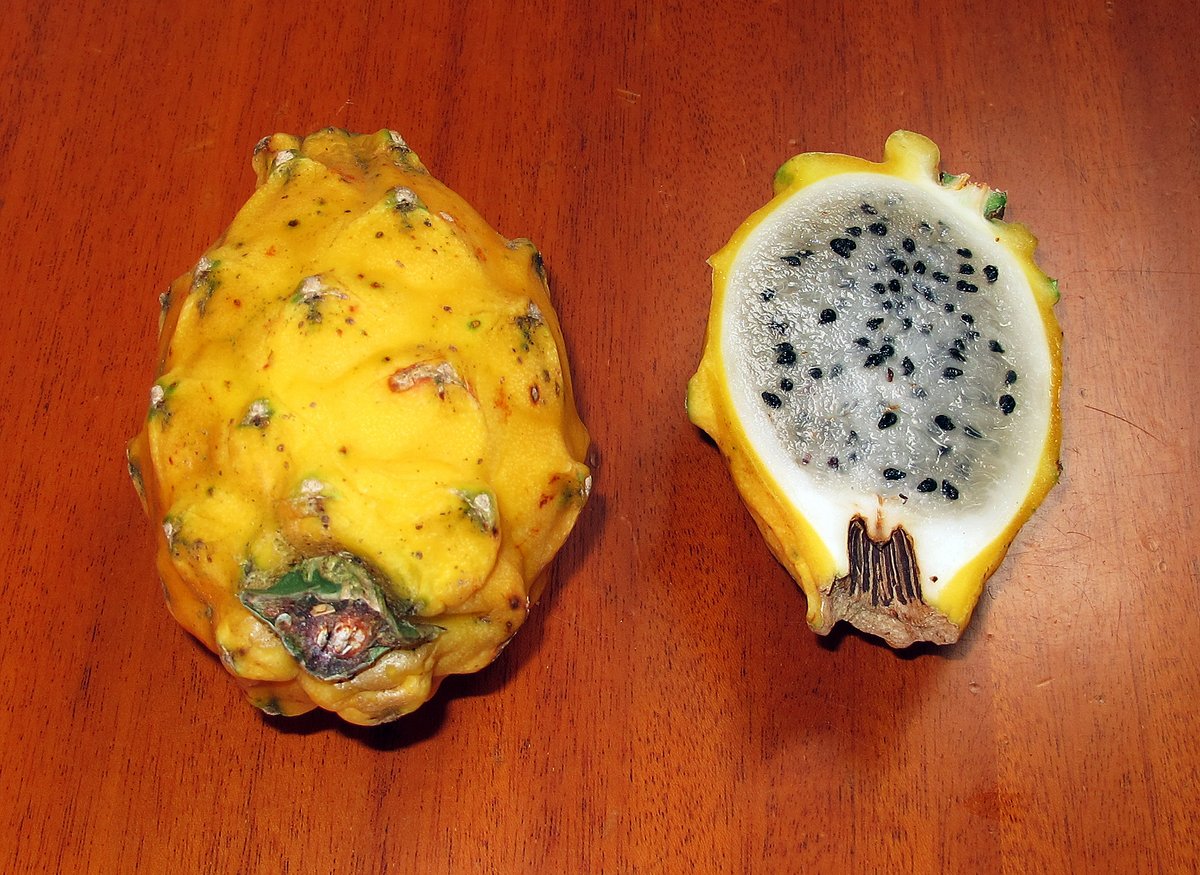
In the morning, we went for walk around town and found the local market, which is very good with lots of vegetables, fish, meat, etc. Glenys bought some fresh strawberries to take to the Thanksgiving dinner and a couple of strange yellow knobbly fruit about the size of a large pear, which turned out to be Yellow Pitaya also called Dragon Fruit. This fruit grows on a cactus and when it’s cut open, there’s pale flesh with lots of seeds, similar to a Kiwi fruit. It’s not too bad, but a little slimy.
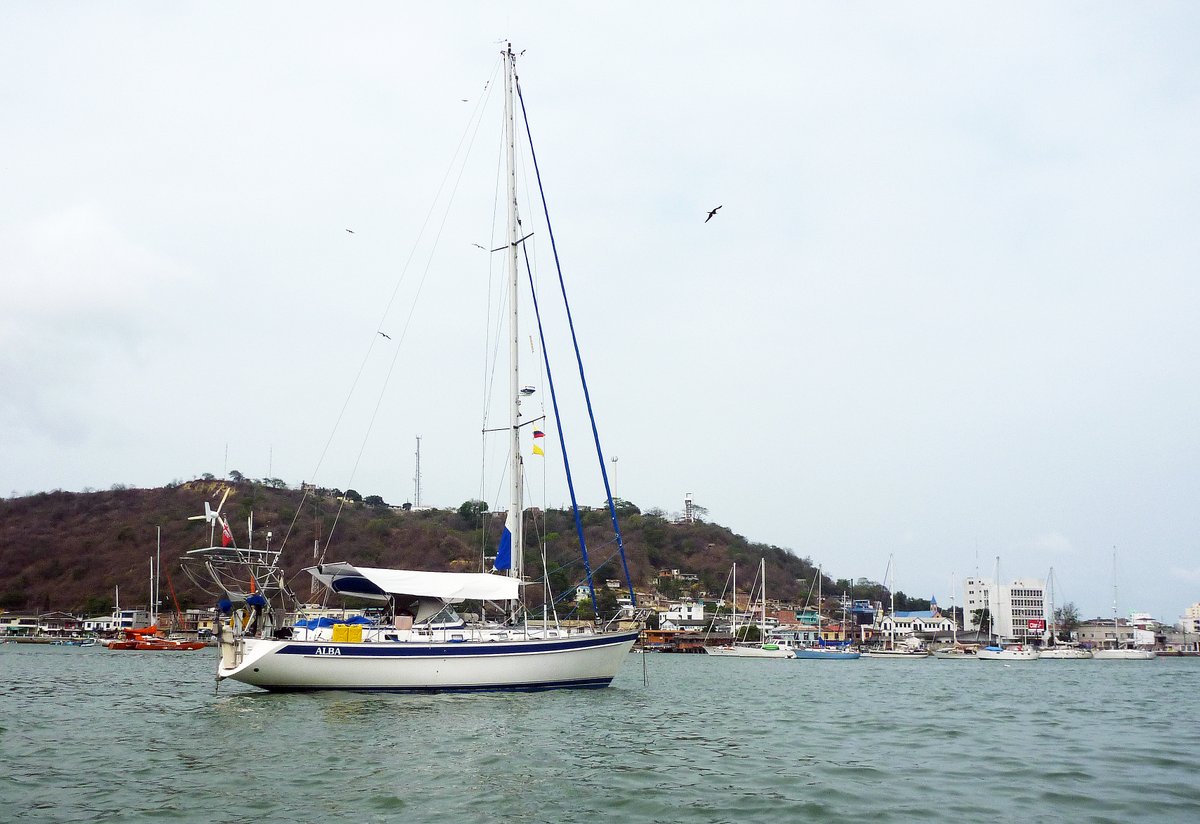
There were over 200 people at the Thanksgiving dinner - a mixture of ex-pats, a handful of cruisers and a large number of locals. Tripp and his wife, Maye, cooked loads of turkey and everyone brought a dish of vegetables or sweets to share. We were told that this is the tenth year that Tripp has organised this and it’s turned into a big annual event in Bahia.
I finally managed to talk to Tripp for a couple of minutes and there should be a mooring available in a few days, when one of the other boats heads north back to Panama.
29 November 2013 Bahia de Caraques, Ecuador
We went ashore to the marina, but there was no sign of Tripp. Veronica in the office had some forms for me to sign for customs and the port captain, but we haven’t got our passports back yet.
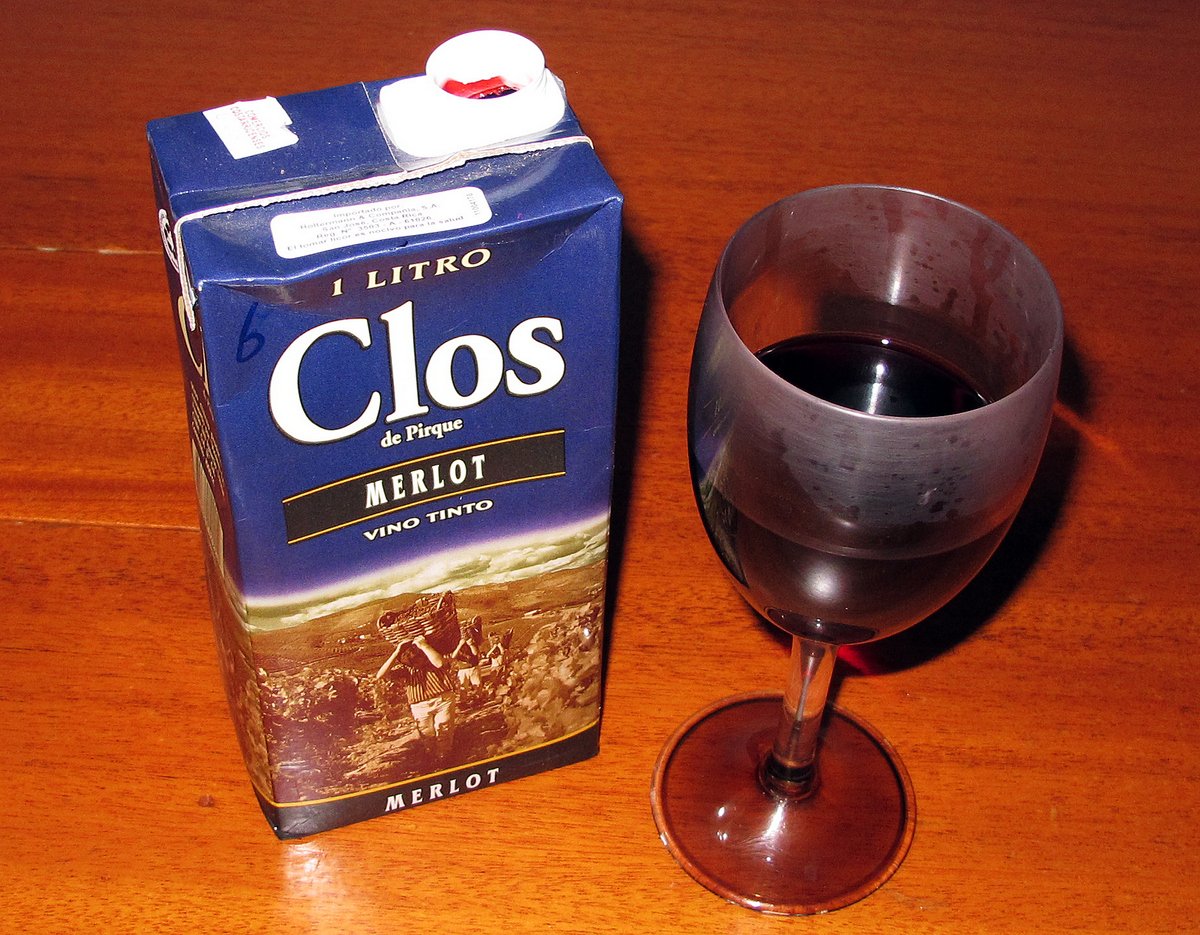
We had a little wander about town checking out what is available in the shops. Imported food seems to be 10-20% more expensive than Panama, but we can get most things that we eat and drink. Beer is only $0.80 per can and they sell “Clos”, which is the boxed Chilean wine that we've been drinking in Panama ("It’s not quite wine, but it’s Clos").
Back at the marina, there was still no sign of Tripp, but Veronica called him and told us that Tripp had sent me an email with the username and password. Errr, if I don’t have an internet connection, how can I get my email? It turns out that they have a free internet connection in the restaurant, so I had to go back to the boat and return to the marina with my laptop to get my emails. We've now got a good Internet connection on the boat, so I'm a happy bunny.
We went out in the evening with Ron and Heather from “Sundancer”, Alan from “Victoria” and Alberto who is an ex-pat living here in Bahia. Alberto took us to a taco bar where we had a burrito and a beer for $3 each. They also sold Pan de Yuca which is a small bread roll made from Yuca (Cassava) flour and cheese – absolutely delicious when warm.
30 November 2013 Bahia de Caraques, Ecuador
I had an administration day. I'm trying to transfer some money between banks and set up a new pension fund. These are all supposed to be on-line accounts, but they want me to fill in paper forms and provided paper evidence that I'm a UK citizen and have a UK address. It’s all so tedious. I spent most of the day finding out information, filling in forms and getting ready to send them to the UK. I'm going to have to send them by DHL to my brother and he’ll then post them in the UK - I can’t trust the mail around here.
Glenys spent a few hours washing down the bimini, cockpit and deck fittings because there’s so much salt after our passage and we’re not going to get any rain to wash it off.
We had a long Skype call with Craig our youngest son, who’s going to move house because one of his neighbours is incredibly noisy – shouting and dogs barking constantly. Craig has tried to talk to the guy, but he’s aggressive - shouting and swearing instead of discussing things. It’s a shame because Craig and his partner Kristen have a lovely little house and have only been there for just over a year. It might work out good in the long run because they can now afford to move into a bigger house (with a little help from Mum and Dad of course.)