1 September 2016 Airabu South to Pulau Bawah, Anambas
It was lovely in the morning, so we headed off to Pulau Ritan which is only 10 miles south. There’s a very shallow fringing reef around the anchorage and the last time that we visited this island, we bottled out because the light wasn’t good enough. This time we had much better light, so we very slowly motored across the reef, dodging coral heads.

Once in the lagoon, we anchored at 02°36.89N 106°16.56E on a sandy patch in 6 metres of water. I put out 25 metres of chain, which put us uncomfortably close to the surrounding reefs, but the anchor was well dug in and the weather was pleasant.
Ignoring my current ban on swimming, we took the dinghy back to the reef and had a look at the entrance and the various coral heads. The main reef is 2.5 to 4 metres deep, but some of the coral heads come up to within 0.5 metres of the surface. We’d had good visibility coming in, but what if the weather deteriorated? With poor light, it would be very dangerous to leave the anchorage. We decided to tie two plastic bottles onto the two biggest coral heads, which would mark a “gateway” out of the lagoon.
Glenys carried on snorkelling next to the boat, while I had a shower, washed out my sore ear and put in some Antibiotic ear drops. I then took the dinghy ashore and climbed up some rocky slabs that come down to the water. It was great fun and I had a nice view of the anchorage from the top.
We both got back to the boat around noon, by which time there were some very nasty looking clouds building around us. Having had a horrible experience with a gale and a lee shore at Pulau Semut South last week, we didn’t like the ideal of weathering a storm in this tight anchorage, especially as there would be no escape over the shallow fringing reef. We decided to run away to Pulau Bawah.
It only took us ten minutes to tidy up to enough to leave, but by then the skies had darkened considerably and we were very grateful that we’d installed the two plastic bottles marking the way out.

Half an hour after we left the anchorage, we were motoring west into a light wind, with black clouds building behind us and ominous rumblings of thunder. Suddenly, the engine slowed down. We both looked at each other and realised that we’d picked something up on the propeller again. Within five minutes, I was under the boat using a bread knife to chop away a rice sack, which was completely enclosing the propeller. Our new rope stripper had not been able to deal with the three foot sack.
We were soon motoring west again, but we were quickly hit by a huge thunderstorm giving torrential rain and violent flashes of lightning with deafening thunder. The wind veered from the south-west to the north and picked up to 30 knots. Thank goodness that we’d not stayed in Ritan because we would have been hard up on a lee shore with reefs very close behind and no escape.
The thunderstorm stayed with us for the remainder of the three hour passage to Pulau Bawah. I was trying to track it using our radar and at one point we turned 120 degrees and headed north because I thought that the five mile diameter system was travelling south. After ten minutes, the thunderstorm had expanded by a further mile and was still centred around us, so we gave up trying to avoid it and headed directly for Bawah again.
Fortunately, when we were a couple of miles from Bawah, the rain decreased and we were able to see enough to get through the small passage over the reef and pick up one of the white moorings. The rain continued for another couple of hours, but gradually the lightning faded away. We’re glad to be safe and secure in Bawah for the night.
2 September 2016 Pulau Bawah, Anambas
The rain cleared away overnight and the morning was fine. At the north end of Bawah, there’s a small island with a rocky pinnacle that I wanted to climb, so we headed around the stunningly blue lagoon. Rather than getting hot and sweaty, Glenys went snorkelling, so I dropped her off and landed the dinghy on a small scruffy beach on a spit of land sticking out from the island. I crossed over to another beach and into the bush below the pinnacle.

It was a great little outing. I scrambled up the hillside in the bush at the side of a rocky slab for a little way. As soon as possible, I gained the slab and then scrambled up the easy slope. At the top of the slab, the route turned left and then left again up a traverse that goes to the left and up to the top. The traverse is exposed enough to get the adrenaline going but the rock is grippy enough that I felt good in my Teva Sandals. The view from the top is fabulous with beautiful water colours.
In afternoon, Glenys went snorkelling around the lagoon. I hate not being able to go snorkelling, so I occupied myself re-editing some of my better underwater photographs - only another two more days before I can go snorkelling.
In the evening, “Wind Hover” came over for a few beers. Patrick, the owner, is a Singaporian and the other two are expats. It was interesting to hear their take on the status of Singapore and the tensions with their neighbours. They are concerned about the political and religious situation in Malaysia. I had realised how much the Islamic faith is becoming more far-reaching - apparently lots of women didn’t wear hijabs fifteen years ago, whereas now it is almost mandatory amongst the Malay people.
3 September 2016 Pulau Bawah, Anambas
We had a quiet morning pottering about. I edited some more underwater pictures and have created a Portfolio of my 50 better photographs, which I’ve published to our web site.
“Amulet” sailed by around lunchtime and are continuing on to Nongsa Point Marina tonight because there are no winds forecast and they would rather motor. We’re planning on leaving on the 5th when I’m hoping that there will be 10 knots from the SSE, which allow us to sail rather than listening to the engine for 24 hours.

It was such a lovely, sunny afternoon that I cracked up and decided that my ear is healed enough to go snorkelling. We checked out a few spots outside the reef at the south end of the island group. A couple of the sites were mediocre, but the third one was good. It was to the east of the rocks on the southern tip of the island at 02°29.88N 106°02.98E. There were lots of big fish swimming around and it was interesting terrain. I spent an hour photographing some very friendly Juvenile Golden Spadefish, which have beautiful long flowing fins.

4 September 2016 Pulau Bawah, Anambas
It was another scorcher of a day, so we went snorkelling in the morning. Initially, we went to the outside of the reef just to the south of the entrance into the lagoon. The water was very clear, but the current was far too strong, so we went back to the southern tip of the island which was much calmer.
There’s no internet available here, but there is a telephone signal, so I sent a text off to “Amulet” and they sent me back a short weather forecast. Looks like South 5-10 knots tomorrow and SSW 10-12 knots tomorrow night. South-West winds are forecast in 2-3 days’ time, so we’re going to leave the Anambas in the morning. I texted North Sails and our new main sail will be delivered on the 7th.
We had another snorkel in the afternoon; lifted the dinghy on deck; and tidied up ready to for the 140 mile trip back to Nongsa Point Marina. There was a lovely sunset - a fitting end to our fabulous two month stay in the Anambas.
5 September 2016 Pulau Bawah to Nongsa Point Marina
It was a lovely morning, but there was only 5 knots of wind from the SSW. The wind was forecast to pick up from the south, so while we were motor-sailing, we set a course 15 degrees further south than rhumb line, hoping to gain some southing and give us a better wind angle later in the day.
The wind played games with us all day. It would pick up to 10 knots and back a little, so we’d pull out the sails, then ten minutes later the wind would drop and head us, forcing us to roll away the sails. To make matters worse, we had a one knot current against us, reducing our speed over the ground to 4.5 knots. The monotony of the day was only broken by a large pod of dolphins who came to play in our bow wave.

As darkness fell, the wind was blowing 10-15 knots, but from the SSW which didn’t help at all, in fact the waves started to build, which forced us to increase the engine speed to 2,200 rpm to maintain 4.5 knots over the ground - very frustrating.
At 02:00 with 55 miles to go, we entered the edge of a huge anchorage where super-tankers wait for to enter Singapore waters. Our route was taking us through the middle, so rather than dodging anchored tankers for the remainder of the night, I diverted us to the north, between the edge of the Singapore shipping lanes and the anchorage.
6 September 2016 Pulau Bawah to Nongsa Point Marina
Dawn found us still weaving our way through huge ships at anchor. It was a pleasant morning, but we still had the wind; waves and current against us, which made it tough going.
We arrived at Nongsa Point Marina at 14:30. It didn’t take us long to get plugged into the electric and set the air-conditioning running. We then relaxed, chilling out for afternoon using the internet and catching up on emails. In the evening, we went out for a meal at the marina’s restaurant, which is very posh, but painfully devoid of guests - the food was disappointingly mediocre.
7 September 2016 Nongsa Point Marina, Indonesia
It was raining quite heavily in the morning. The guys from North Sails turned up at 09:00 to fit our new mainsail, but the rain stopped play and they postponed until tomorrow.
Nongsa Marina is in the middle of nowhere and the sail guys had to drive to the other side of Batam Island, so we bummed a lift from them to a shopping mall with a big Carrefour supermarket. After two hours of shopping, we had lunch in a Chinese restaurant and caught a taxi cab back to the marina. The taxi cost 130,000 Rupiah (£6.50), which was a bargain because it’s a twenty minute drive.
In the afternoon, we stayed on-board, hiding from the rain and doing some internet research and planning. We’re aiming to leave the boat in Admiral Marina in the middle of October, so that we can go on a land trip to Thailand and Cambodia. This means that we’ve only got three weeks to spend on the east coast of Malaysia before we have to start travelling via Singapore to the west coast.

We were hoping to sail to the north-east of Malaysia to the Perhentian Islands, but with only three weeks, we’ve decided to restrict ourselves to the Tioman Island area. It looks like there are loads of good dive sites spread amongst the islands, so we expect to be doing a lot of diving.
8 September 2016 Nongsa Point Marina, Indonesia
The sail was delivered and fitted. It looks really good and I’m pleased with the quality. The material looks to be good quality Dacron and all the stitching is three point zigzag in a dark blue thread, which is very UV resistant.
We spent the rest of the day doing chores. Glenys made extensive use of the laundry room, while I serviced the main sheet winch and tested our domestic batteries. I’ve not been happy with the batteries for a couple of months, with the voltage being down to 12.2V most mornings. I used my digital tester which unfortunately showed that three of the batteries are no good and the other three are weakened.
It’s interesting that the three bad batteries are directly connected to the charging systems - wind generator, solar panels, engine and battery charger. The worst battery is the one where the wind generator is connected. This is an unregulated system and I’m wondering if there is some local overcharging involved. Perhaps I should be swapping the batteries around every 12 months. The batteries are AGMs which I installed in November 2012, so they’ve lasted four years, which I guess is a reasonable performance.
Later in the afternoon, we moved over to the fuel dock to fill up with diesel. The marina staff delivered our clearance papers out of Indonesia to Malaysia and we’re all ready to leave in the morning.
9 September 2016 Nongsa Point Marina to Jason Bay, Malaysia
The alarm went off at 06:00 and we were on our way an hour later. Our first job was to cross the Singapore shipping lanes. I decided to cross directly north of Nongsa Point marina because the lanes are only 2½ miles wide at that point and become wider further east.

This was our third crossing and turned out to be the easiest. We set the autopilot course to north, set the engine at 2,000 rpm, giving us a speed of 6 knots and went for it. It felt a bit like playing Frogger, but we didn’t have to do anything apart from watch the huge ships glide in front of us.
Once across the shipping lane, we turned right and, with no wind, we motored east along the north edge of the shipping lanes. A few hours later, we were heading north up the east coast of Malaysia. The current was with us, so we were making good time and decided to head for Jason Bay, 55 miles from Nongsa Point Marina.
In the afternoon, two thunderstorms stretched out from the coast - one to the north of us and one to the south, bringing 30+ knot winds from the north west for a couple of hours. It was very tedious bashing into 3 foot waves and the strong winds, at times slowing our boat speed down to 3 knots as we were stopped by the large steep waves.
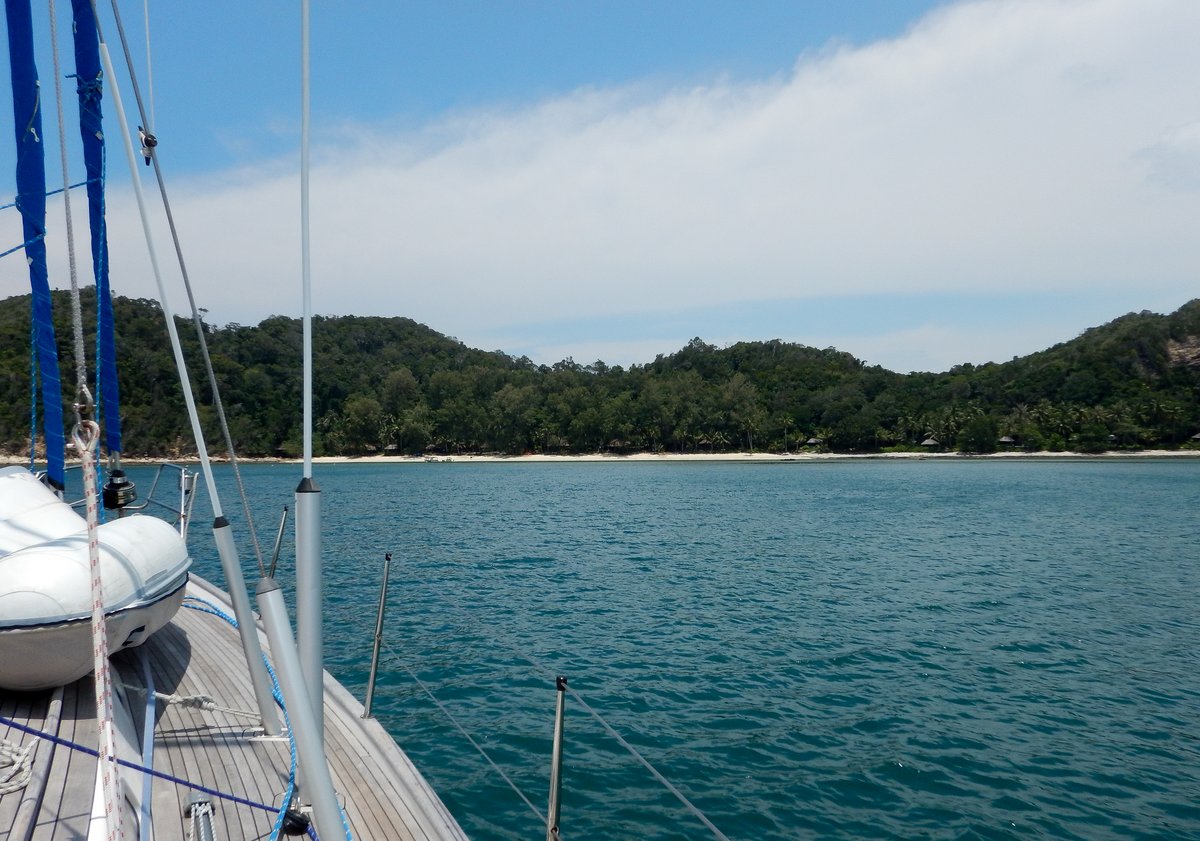
The wind abated, but it was grey, raining and miserable as we entered Jason Bay. This is a huge five-mile long bay, which like the rest of this coast shallows very slowly. There are dozens of fishing nets in the bay, which are strung between two buoys with matching coloured flags. I think that the nets are 5 metres high, held to the sea bed by lead weights and lifted up by small floats. This makes getting into the bay a bit of a challenge, trying to pair up the different coloured flags and not sailing over the nets.
We finally anchored at 01°51.85N 104°08.84E in six metres of water at least a mile from the shore. We could have got further in, but there seemed little point as the swell coming into the bay was fairly mild. Thankfully, the thunderstorms had cooled down the air, leaving us with a pleasant temperature for the evening.
10 September 2016 Jason Bay to Pulau Sibu, Malaysia
It was a surprisingly peaceful night with no rolling. We’re now in a different time zone (+8 GMT) and the clocks have gone forward one hour. This put dawn at 07:00 instead of 06:00, which I don’t like very much - by the time that the sunlight hits our portholes at 07:30, it’s time to get up with no lie in.
After threading our way through the maze of nets, we headed north and to my amazement, the wind picked up from the south-west enabling us to sail for four hours. The weather in this region is very unsettling with huge cumulus cloud systems building up over the land. By midday, we heard the ominous rumbling of thunder, but fortunately, the systems kept heading north along the coast and kept out of our way.
Just after lunch, we arrived at the north end of Pulau Sibu where we anchored in 11 metres of water at 02°14.03N 104°03.54E. It’s a pleasant bay with a small resort hidden in the trees ashore. It’s also very well protected from the prevailing south winds.
After untying the dinghy from the front deck, we went for a snorkel on the reef off the beach, but the visibility was terrible, so we soon gave up. I hope that the visibility is better in Tioman.
11 September 2016 Pulau Sibu to Tioman, Malaysia
We had a very peaceful night - the sign of a good anchorage. By eight o’clock, we were on our way again, motoring north for 35 miles to Tioman Island, with hardly any wind.
Tioman is a major holiday destination for Malaysians, but we had been unable to find much information about good anchorage spots in the main bay - only that it’s good to get into the small marina which is run by the Jabatan Laut (naval department). When we arrived at the big bay, there was only one yacht anchored and they were bouncing around in a place that looked very exposed to the wind and waves.
We headed for the marina, but an ominous black squall line approached from the south and the wind started to pick up, so we decided against going into the small, confined marina. Three minutes later, the wind was a howling 35 knot gale, so with nothing better to do, we motored into the wind and headed for a small island called Renggis a mile upwind.

There was a catamaran on an orange mooring tucked up behind the island and we had a chat to them on the VHF radio. They told us that we could anchor anywhere in the bay off the fringing reef and that there are some places where there are shallower patches of sand. They also thought that there might be some spaces in the marina.
After blowing for thirty minutes, the squall passed by and the wind dropped below 15 knots, so we wombled back to Tioman Marina. It’s pretty tight in the marina, with only about 30 berths, which are packed with yachts and local fishing boats. Some guys on a fishing boat shouted that there was a free berth where a small local boat was just leaving, so I circled around while Glenys put out the fenders.
We approached the berth, but then saw that there was a rope across it, effectively reserving it for someone else. Then we spotted a free berth on the end of a dock, so Glenys swapped the fenders over and we went alongside. A resident couple from “Magnetic” came over and said that this berth was reserved as well and that there was no room in the marina - there may be a couple of boats leaving in the next few days.
Apparently, the Port Captain can’t be bothered to take bookings for the marina, so it’s first come first served and if we want a space we have to be ready to get in there when someone leaves. We were also told that tomorrow (Monday) is a public holiday, so we won’t be able to clear in or buy a SIM card for our tablet, so no internet for a few days.
Despondent, we headed back out into the bay and had a look at a couple of places to anchor, both to the north and the south of the marina, but there were 2-3 foot high waves rolling in from the south west making it all look very uncomfortable and potentially a nasty lee shore. In desperation we motored back to Pulau Renggis, hoping to find a little shelter in the lee of the island.
It wasn’t much better, but at least we had a mile to drag before we ended up ashore. We anchored at 02°48.68N 104°08.29E in 22 metres of water. It felt like sand when the anchor went in and it held well, but I still put out all of our 60 metres of chain and 15 metres of rope. It was horrible. The wind was blowing at 20 knots from the south west and we were getting steep 3 foot waves crashing into our bow making us pitch violently.
We cracked open a beer and sulked all evening.
12 September 2016 Tioman to Pulau Seri Buat, Malaysia
It calmed down a little before we went to bed, but the tide turned at 03:00, putting us side onto the waves, so we didn’t sleep much after that with waves slapping against our hull for the rest of the night. Our karma wasn’t helped by the shrieking katabatic gusts periodically coming down from the steep sided island.
We were up just after dawn to find the wind was starting to pick up again. Being a public holiday, we couldn’t do anything ashore, so we decided to run away to a better protected anchorage. Unfortunately, there were only two choices - an anchorage 15 miles away on the east coast, which might have the same problem with waves from the south; or Pulau Seri Buat, 15 miles to the south-west, which was directly upwind. We decided to head south-west to Pulau Seri Buat.
It was an ugly three hours, motoring directly into 20 knots of wind and steep waves, but we got there before lunchtime. We anchored in Seri Buat North in 11 metres on sand at 02°41.83N 103°53.90E and it’s a lovely sheltered anchorage. The wind continued to blow at 20 knots all afternoon, but we were comfortable, protected by the two islands and the shallow reef between them.

We relaxed in the afternoon - catching up on sleep and reading our books. Glenys felt motivated enough to bake some bread, mostly because we were unable to buy any breakfast cereal in Indonesia and have now run out, so it’s toast for breakfast tomorrow.
13 September 2016 Pulau Seri Buat, Malaysia
It was a lovely peaceful night. The islands in the Tioman group are in a marine park with no fishing allowed, so we weren’t disturbed by local fishermen coming into the anchorage - unlike in Indonesia where the loud pom-pom of single cylinder diesel engines woke us up every morning. This is such a nice anchorage that we decided to stay for another day and go back to Tioman to clear in tomorrow.
I’d spotted a small hill at the edge of the anchorage, so I went to climb it while Glenys declined and stayed on board. It was a bit of a struggle up through bush and lots of ferns, so I kept a wary eye out for snakes… The view from the top was worth the effort.
Back at the boat, we went for a snorkel and picked up a small mooring around 02°41.98N 103°53.31E. The visibility wasn’t very good with lots of particles in the water, but I managed to find a Swollen Phyllidia nudibranch, which allowed me to practise my macro photography.
We had a quiet afternoon, enjoying the steady breeze and calm waters, bracing ourselves for returning to the horrible roadstead anchorage at Tioman tomorrow.
14 September 2016 Pulau Seri Buat, Malaysia
The alarm went off at half past six, but when I popped my head into the cockpit, the weather was looking grim with grey skies and a thunderstorm to the east near Tioman. We decided to stay in Seri Buat for the day - there’s no rush apart from clearing into Malaysia and at worst, I’ll get my wrists slapped by the Port Captain for taking a week to get to Tioman.

We pottered about for a few hours, then the weather cleared and, with a pleasant 10 knot south wind, we changed our minds and headed to Tioman. Of course the wind didn’t play ball and we ended up motoring for two hours out of three, but that’s par for the course around here. We arrived mid-afternoon and anchored to the south of the Marina in 10 metres on what I think is a patch of sand at 02°48.681N 104°08.295E.
A few minutes later, we hopped in the dinghy and zipped ashore to the marina. We were hoping that there would be space in the marina, but it didn’t look good. A yacht is leaving tomorrow, but “El Misti” is taking their place and no one knew of anyone else leaving. We wandered off to try to clear in. There’s a Port Captain’s office in the marina, but it was all closed up, so we walked into town to have a look around.
The town is called Telok Tekek and is a scruffy looking place spread out along a single road that follows the shore line. We found another Port Captain office at the ferry terminal where we managed to clear in. They directed us to the customs office, where they took away our Indonesian clearance documents and didn’t give us anything in return. I managed to persuade them to let me photograph them, so I had at least some record of the documentation.
Our next stop was at the Immigration office where there was some delay because the officer couldn’t log-in to the computer system. We ambled off for 30 minutes found the ATM machine and bought a SIM card for our tablet while he sorted it all out. Back at immigration, we were soon fingerprinted and he gave us 90 day visas into Malaysia. Not bad - we were all cleared in within two hours of anchoring.
We went exploring the town. There’s nothing to the north of the ferry terminal apart from a few very small mini marts and some beachfront hostels for tourists. South of the ferry terminal, there are a few more stores, a big duty free shop next to the marina and further north there are some more small shops and then hotels. It’s not the most attractive place that we’ve been.
Tioman is a duty free island (like Langkawi), so at least we were able to buy alcohol at reasonable prices. It’s not as cheap as Langkawi, but better than the prices in the rest of Malaysia. We bought a bottle of gin for £9, a bottle of wine for £5 and a case of beer for £12 - we’ll be stocking up before we leave here.
Back at the marina, we met a guy on a powerboat who is leaving his berth tomorrow to be hauled out somewhere, so we arranged to take his berth for a week. He’s going to text us when he knows the time that he’ll be leaving.
15 September 2016 Tioman, Malaysia
It was a fairly calm night and we slept okay until five o’clock when a fast ferry roared past and had us bouncing all over the place with his big bow wave. I texted the owner of the powerboat and, unfortunately, he’s had a change of plans and isn’t leaving until the 18th. We went ashore after breakfast and chatted to various people in the marina and it doesn’t look good for finding a place in the marina. We’ve decided that we’ll not bother - it’s too much stress worrying about getting a berth.
After going shopping to buy enough provisions for a week, we upped anchor and motored over to Rengiss Island where we picked up a strong orange mooring installed by the Jabatan Laut (02°48.63N 104°08.23E).
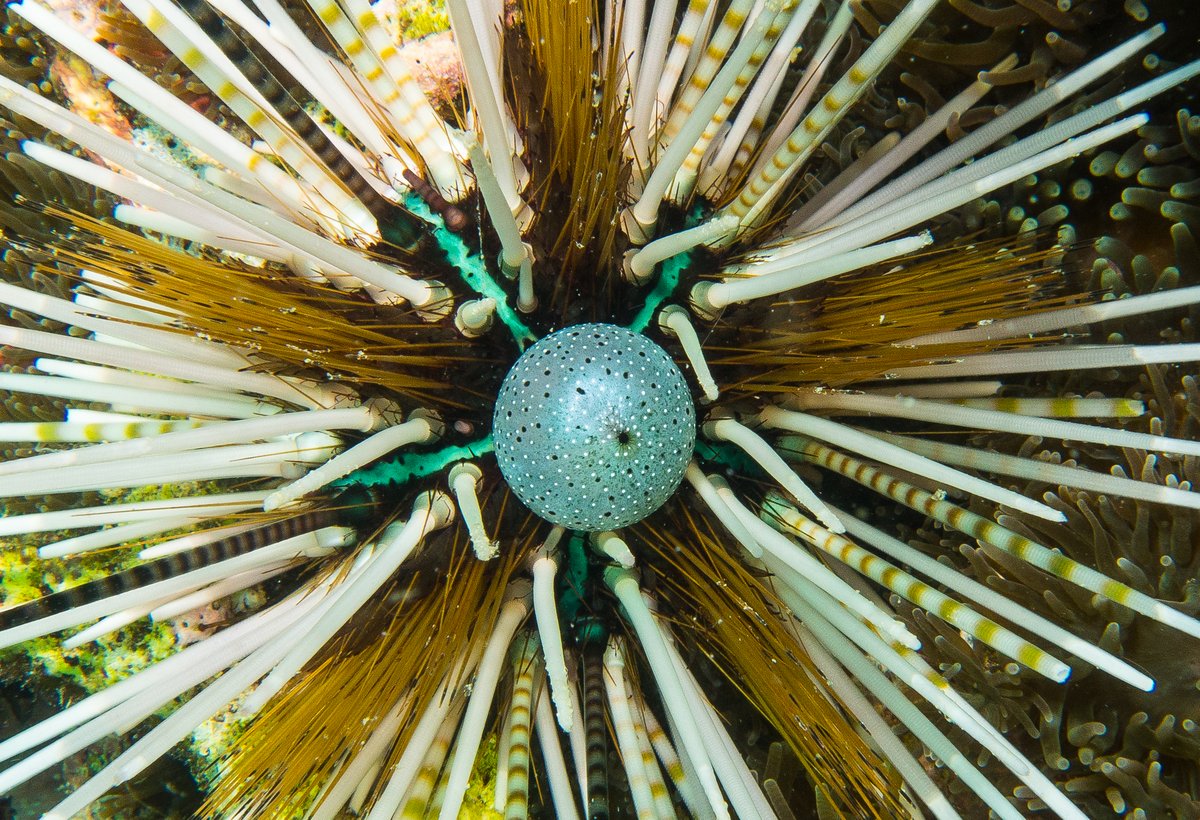
It was a lovely afternoon, so we went for a snorkel around the island joining the scores of divers and snorkelers who flock to this tiny island. Renggis is one of the top dive sites in Tioman, but we weren’t that impressed. The visibility wasn’t very good with large particles in the water, which didn’t help. The coral was okay, but not very colourful and I only found one nudibranch. However, we saw a large Blacktip Reef Shark and I discovered a very pretty Double-spined Urchin. Perhaps our expectations were too high.

I nipped ashore to a resort and I’ve booked us on a 2-tank dive trip on the 17th. It’s only costing 85 Ringgit (£17) each dive and they’ll take us out to Pulua Tulai about 7 miles away, which hopefully will be a better dive site.
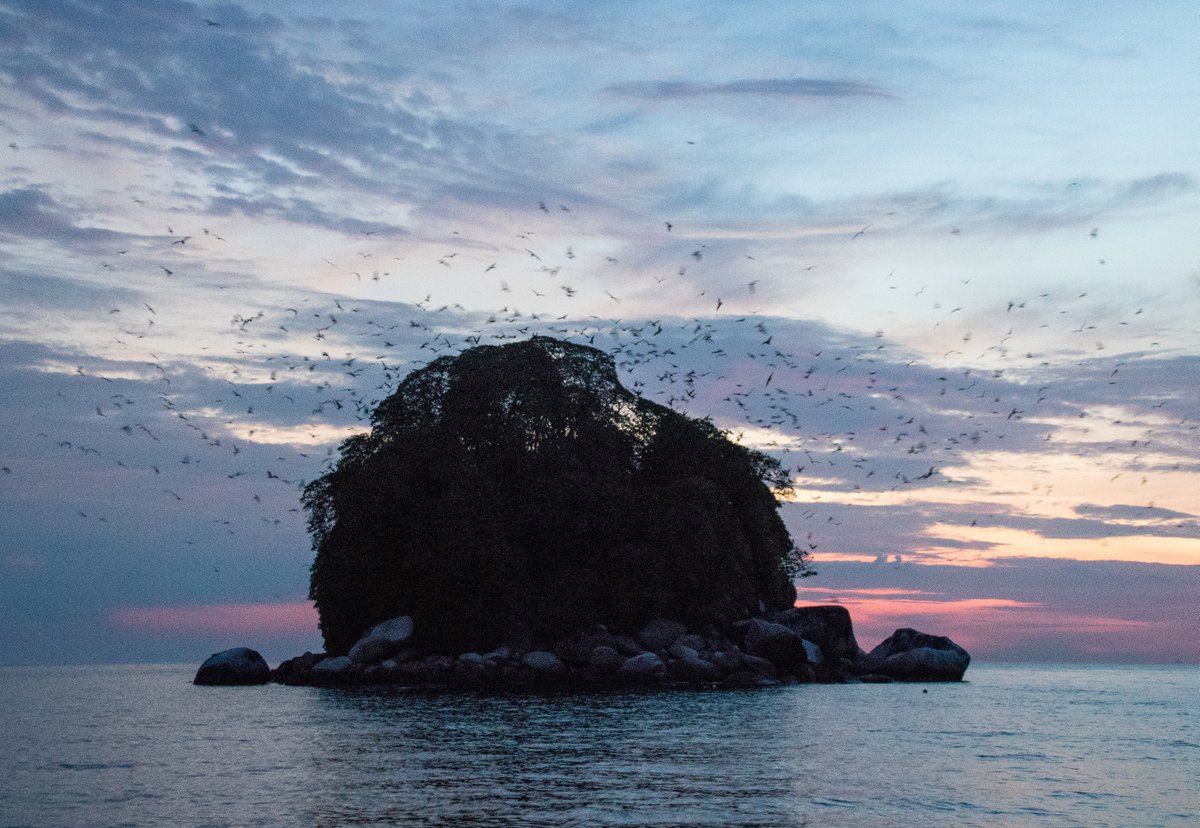
As evening approached, the tourist boats disappeared and left us in peace. Then at sunset, the sky was filled with hundreds of Frigatebirds, circling above Pulau Ringgit. With much squawking, they started to descend and settled in the tall trees for the night - a spectacular sight and a wonderful glimpse of nature.

16 September 2016 Tioman, Malaysia
After a settled night, we were woken at dawn by a thunderstorm going through giving us 30 knots of wind. Fortunately, we were fairly well protected from the waves by the small island ahead of us. It was a very grey morning, so we did some administration. I started long term planning for our trip across the Indian Ocean next year and Glenys booked some flights and accommodation for our land trip to Bangkok and Cambodia in October.
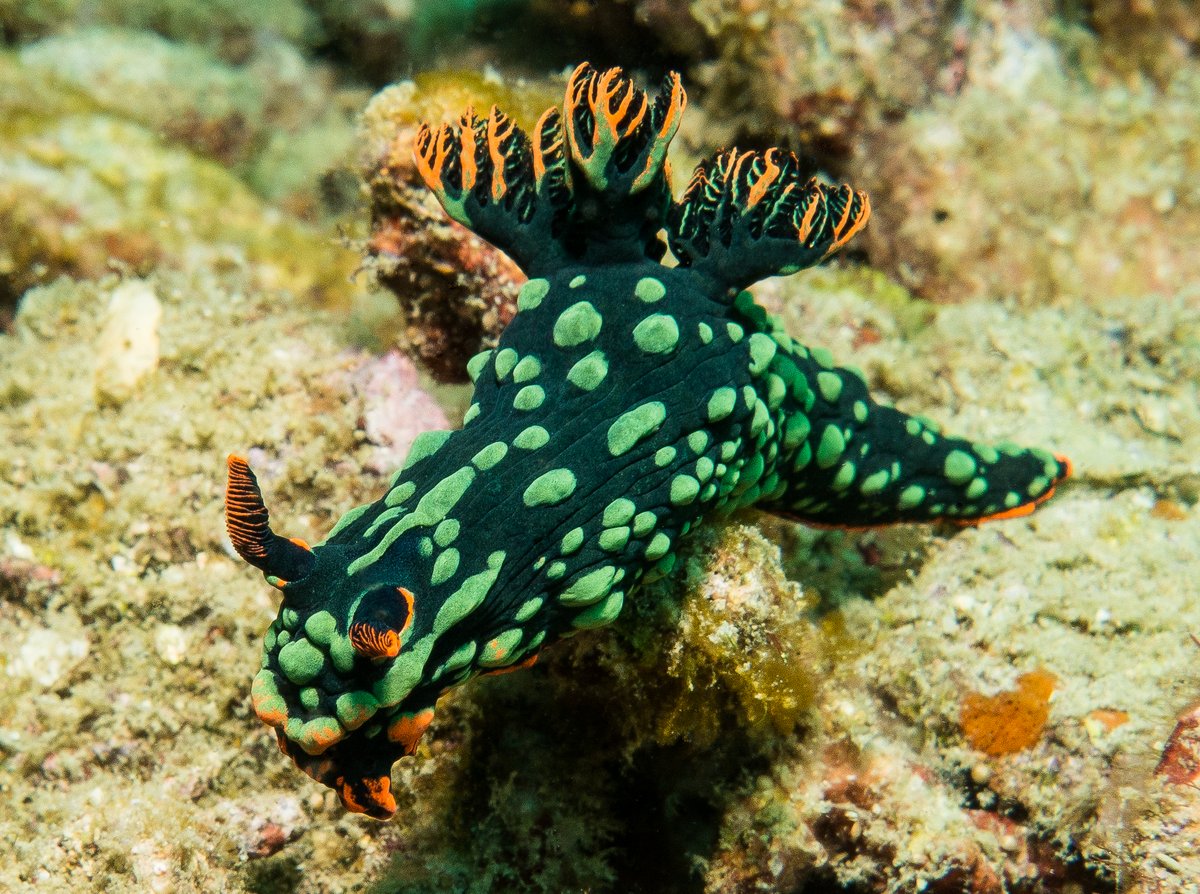
It brightened up in the afternoon, so we went snorkelling around Renggis Island. The visibility was much better and we spent a pleasant couple of hours’ snorkelling around the North-west side which was good, although there were far too many tourist boats passing close to where we were diving.
17 September 2016 Tioman, Malaysia
We were up early and went ashore to the resort to go diving. They took us out to Pulua Tulai about 7 miles away, where we did two dives. The first one was called Genting Bay on the east side of the island. The water visibility was reasonable at 15 metres and the reef was in excellent condition.
Our second dive was called Malang Rocks and is a very popular dive spot with four or five dive boats jostling for position in the buoys. The dive weaves through large boulders with nice soft corals and lots of nudibranchs. I got very excited when I spotted a Kubaryana's Nembrotha. The dive boat was large and comfortable and they provided us with a substantial packed lunch - not bad for a total cost of £36.
We were back on Alba by 14:00 and had a quiet afternoon.
18 September 2016 Tioman to Pulau Aur, Malaysia
The weather forecast said light winds, so we left early to motor 35 miles south-west to Pulau Aur. The south end of Tioman island was covered by heavy cloud and we could see a very large thunderstorm directly on our route, so I flicked on the radar and we headed 40 degrees further south while keeping a beady eye on the squall. Our tactic worked and we managed to skirt around the thunderstorm.
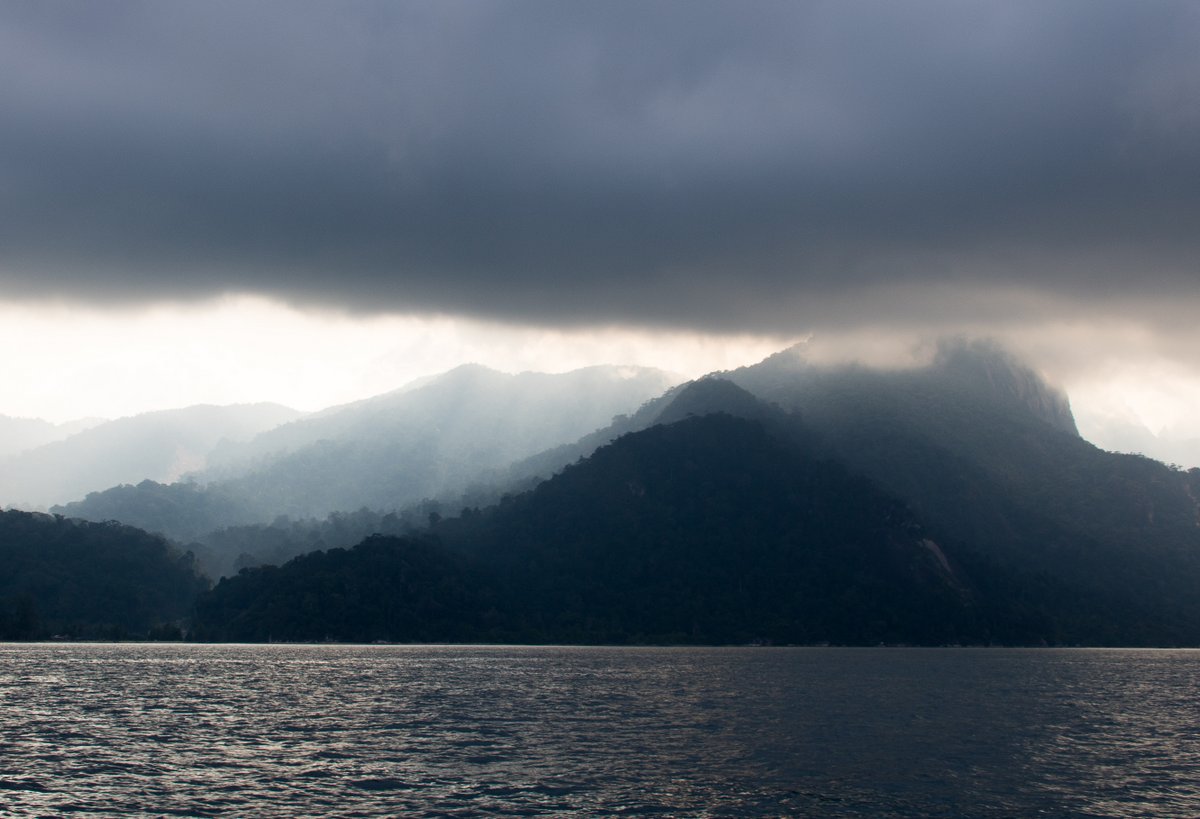
En-route we passed an island called Pemmanggil and had a look at a possible anchorage on the east coast, but it looked rather inhospitable and there was a swell going into the bay, so we kept on going.
Pulau Aur consists of two large islands with a 200 metre wide channel between them. We checked out a few places to anchor, but most places are over 25 metres deep and close to the fringing reef. Eventually, we picked a spot at 02°28.15N 104°30.42E, which was 19 metres deep and a safe distance from the reef - it felt like sand and the anchor held well.
There’s a resort on the northern island and a small town with a ferry dock on the southern island. There are also a number of buildings on the beach next to our anchorage, one of which had a sign saying it was a Diving Lodge. I went ashore to see if we could go diving. Unfortunately, the Diving Lodge was all shut up and after asking at the resort and in town, I found out that there are no longer any dive operations here in Aur.
The current rips through the pass at up to two knots, but we had slack tide later in the afternoon and went for a snorkel at the eastern end of the northern island at about 02°28.58N 104°30.77E. The water was much clearer than in Tioman and the site was around some impressive looking boulders and pinnacles. It’s a pity that we can’t go diving here.
19 September 2016 Pulau Aur, Malaysia
It was a very grey day with rain showers, so we lurked on board and had an internet day.
My left ear has become inflamed again. I’ve been diligently putting a few drops of alcohol and white vinegar in both of my ears after I’ve been swimming, but that hasn’t stopped the problem. I’m starting to put antibiotic ear drops into my ear again, but I’ll not able to go in the water for at least a week. It’s so frustrating.
20 September 2016 Pulau Aur to Pulau Seri Buat, Malaysia
We woke to a strong wind from the west and 2-3 foot waves rolling down the channel, making us pitch badly. After breakfast, we waited an hour, but the conditions were getting worse, so we decided to run away and headed north-west to Pulau Seri Buat. Of course we were hard on the wind, but it was nice to be doing some sailing for a change and the waves weren’t too bad.
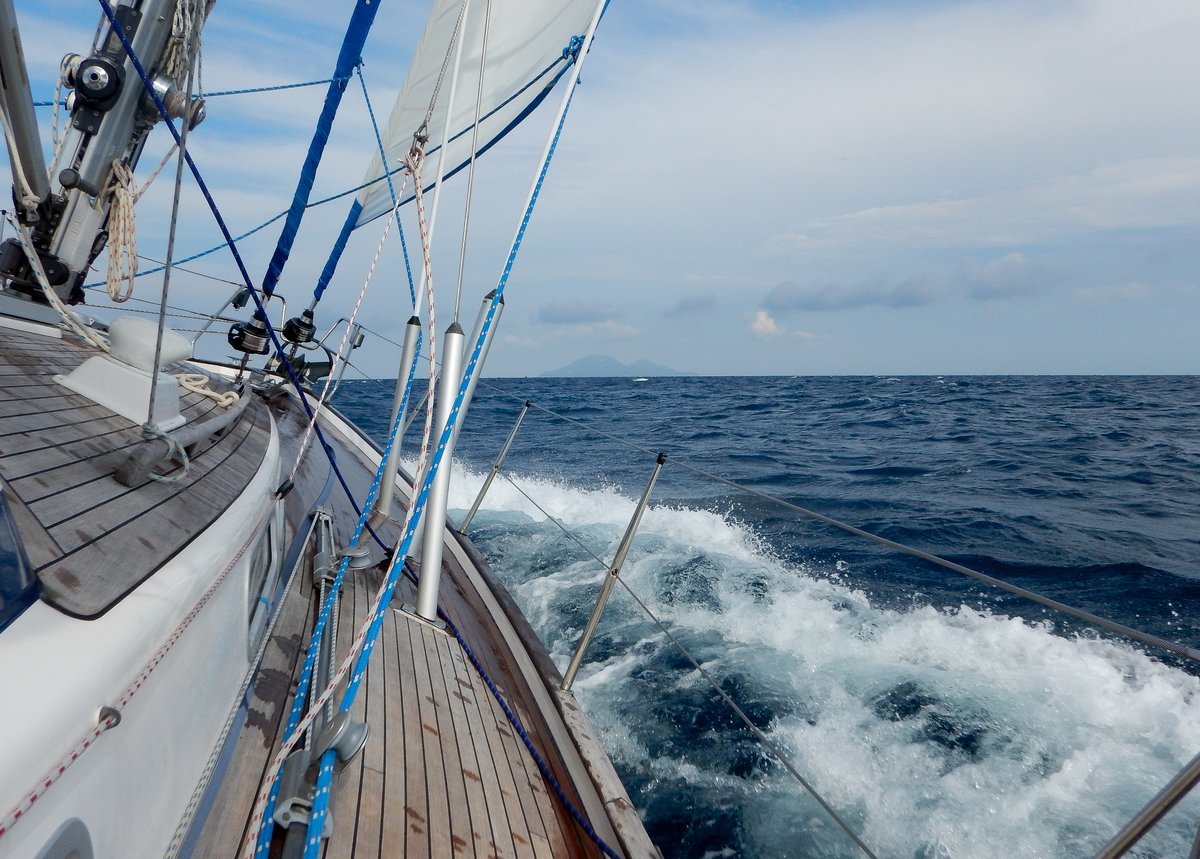
The wind gradually veered and dropped, so after lunch, we were motoring again. We arrived at Pulau Seri Buat North at 16:00 and anchored at 02°41.82N 103°53.90E in 10 metres of water. By this time there was no wind at all and a slight swell from the north, which made us roll. We decided to stay, expecting the wind to pick up later, which would stabilise us. Unfortunately, it didn’t and the rolling was horrible after dark.
21 September 2016 Pulau Seri Buat, Malaysia
With no wind and the swell coming from the north, it was an unpleasant rolly night. During the morning, the wind picked up from the North-east and by 11:00, we had 2-3 foot waves coming into the anchorage. This weather is very weird and unsettled - the prevailing winds should be from the south to south-west. We moved 4 miles around to the island to Pulau Seri Buat South and anchored at 02°40.80N 103°53.84E in 9 metres of water - it was lovely and calm.
We’ve decided that we’ve had enough of the Tioman area. The weather is highly variable and the anchorages are marginal. My ear infection is stopping us snorkelling and diving; there’s nothing of interest ashore, so there’s nothing to keep us here. We’re planning to clear out of Tioman tomorrow and head for Admiral Marina on the west coast of Malaysia - we won’t even bother to stop at Singapore.
This will mean that we have an extra 2½ weeks in Admiral Marina, but I’ve got a long list of jobs to do and we can spend some time doing land travel in Malaysia and maybe some hiking. With this radical change in our plans, I spent most of the afternoon revising my to-do lists .
22 September 2016 Pulau Seri Buat, Malaysia
We had a pleasant, restful night and upped the anchor at dawn, heading to Tioman. For once we had a good sail with a 10 knot wind coming from the north east putting us on a close reach. Unfortunately, this wind also created three foot wind waves that came rolling into the anchorage at Tioman making it a dodgy lee shore.
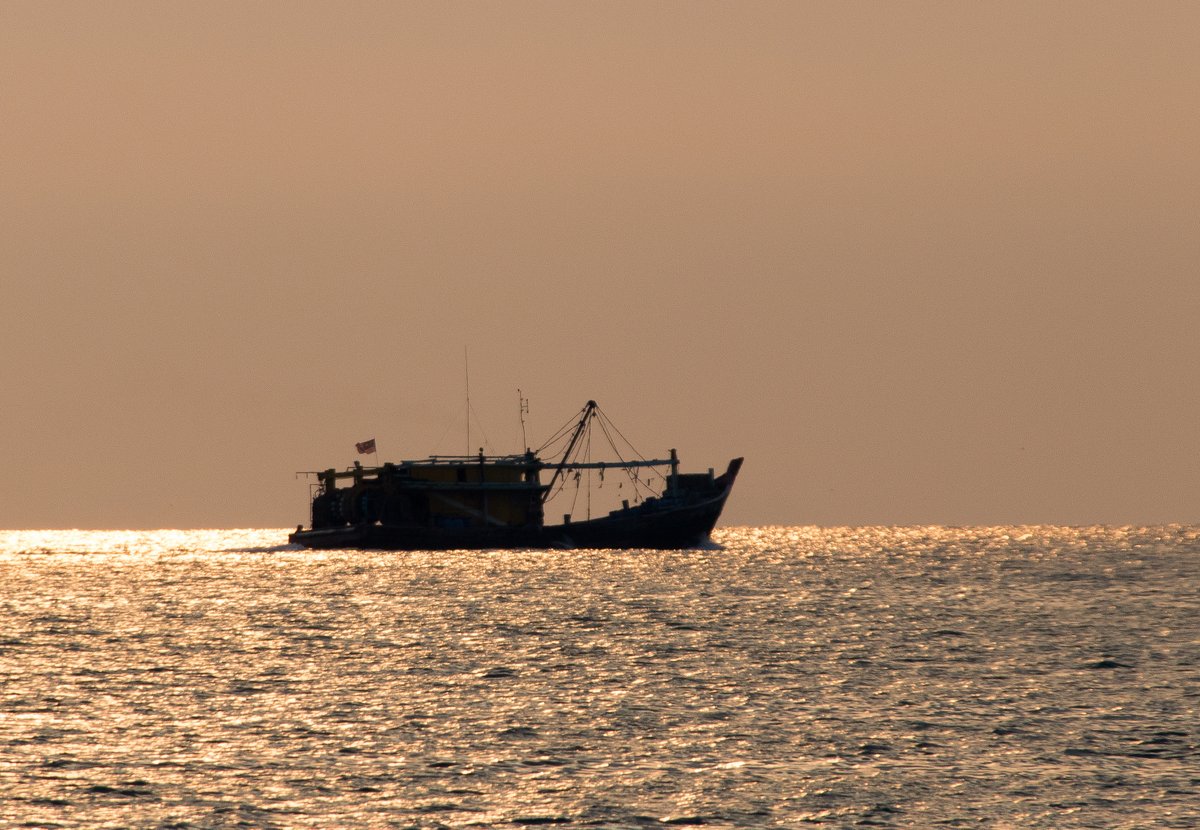
We anchored to the south of the marina dropping our anchor in 10 metres and then settling back to 8 metres with the fringing reef right behind us. The boat was pitching violently in the waves making it a very marginal anchorage. It wasn’t a good place to leave the boat unattended, so Glenys stayed on-board in case our anchor dragged or the weather got worse.
I dropped the dinghy in the water and scooted into the marina to clear out and run some errands. For a change, there was actually someone in the Port Captain’s office in the marina, where I was able to start the clearance process. In my rush to get off Alba, I’d left my reading glasses on the boat and had trouble seeing the forms. Fortunately, the nice lady processing my forms helped me to fill them in - silly old git!
Armed with the Port Captain forms, I walked to the ferry terminal and found the Customs and Immigration. After only an hour ashore, I had the clearance to Langkawi.
I called in at a couple of mini markets to pick up a few provisions and then went to a duty free shop to buy £150 worth of beer, wine and spirits, which will hopefully keep us going until we get to Langkawi in November. Back at the marina, I had a chat to Jacqui and David on “Jackster” for ten minutes - they are crossing the Indian Ocean next year, so we’ll be bumping into them a few times over the next year.
I was back on board Alba just after noon. We stowed the booze away and then left the horribly bouncy anchorage and headed back to Pulau Seri Buat. It took us four hours to sail the 18 miles, with some sailing and some motoring. We anchored in exactly the same spot that we left this morning - lovely and calm.
23 September 2016 Pulau Seri Buat, Malaysia
It was a beautiful morning, with a light southerly wind, so we motored south (into the wind of course) heading for Pulau Sibu, 35 miles away. It was very uneventful and boring. We anchored at the west side of Pulau Sibu because there was some swell from the east and the forecast was for the wind to go to the east tonight. Our anchorage was at 02°12.84N 104°03.78E in 5 metres of water next to some kind of hotel.
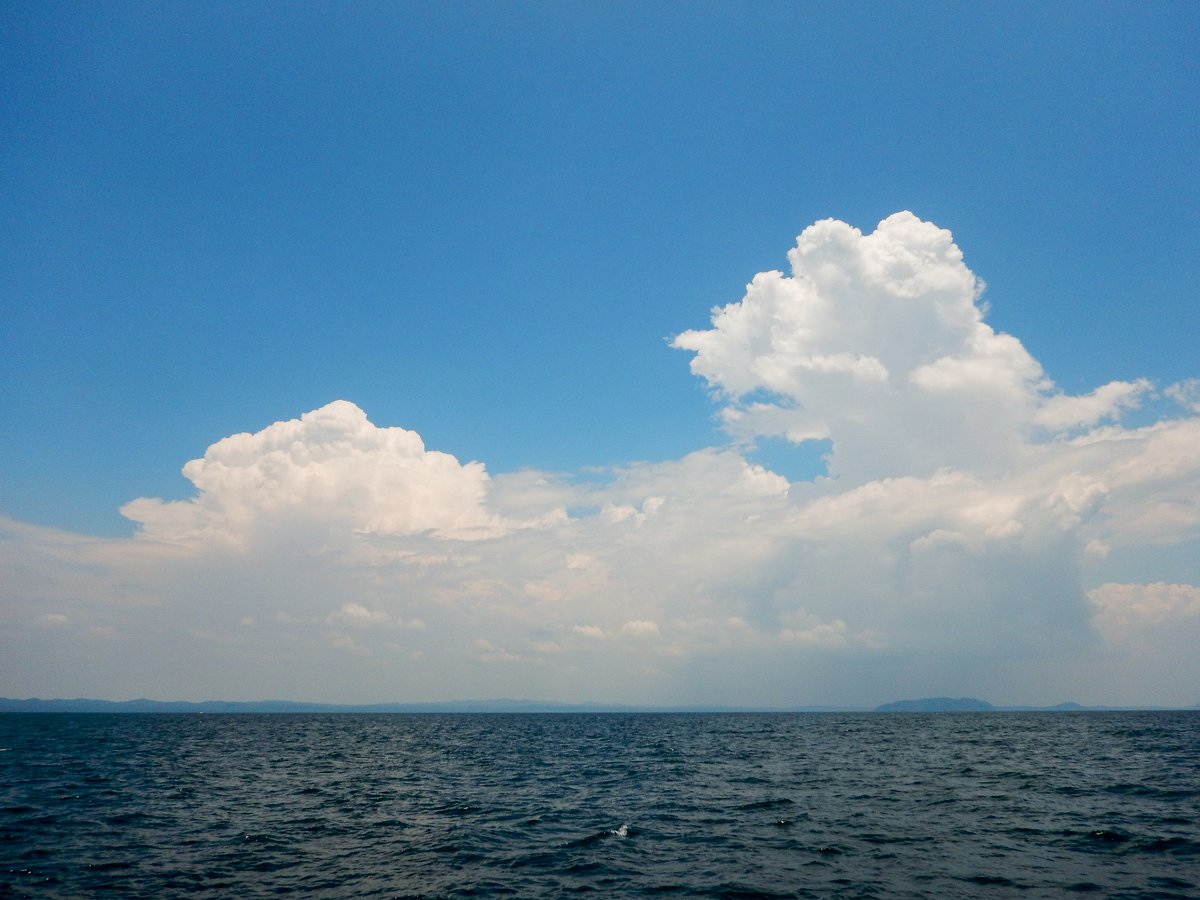
In the late afternoon, a huge thunderstorm streamed off the coast to the south of us and then seemed to head north towards us. The wind picked up from the south-west causing waves to build up and bouncing us around - we just can’t win in this area.
An hour before dark, there was no sign of the wind abating, so we debated whether to dash to towards the mainland, four miles away and anchor next to the coast where there would be more protection from the south-west wind.
We decided to stay put and hoped that the thunderstorm would bugger off. It was a little tense for a couple of hours, then thankfully the wind dropped and the waves started to calm down.
24 September 2016 Pulau Sibu to Tanjung Pengelih Malaysia
After a peaceful night, we were up before dawn and away as soon as we could see. It’s a good job that we waited because there was a fishing net strung right across our route out of the anchorage, which we had to skirt around.
Again we had a south wind, so we were motor-sailing into it with just the main up. It was a long, 70-mile day, but we were fortunate to have at least a knot of current with us for eleven hours, so we were able to get around the corner into the Singapore Straits and anchored at Tanjung Pengelih at 01°23.28N 104°05.84E in 8 metres of water. It’s a popular anchorage with tugs and small ships, but it’s surprisingly pleasant with forested slopes ashore.
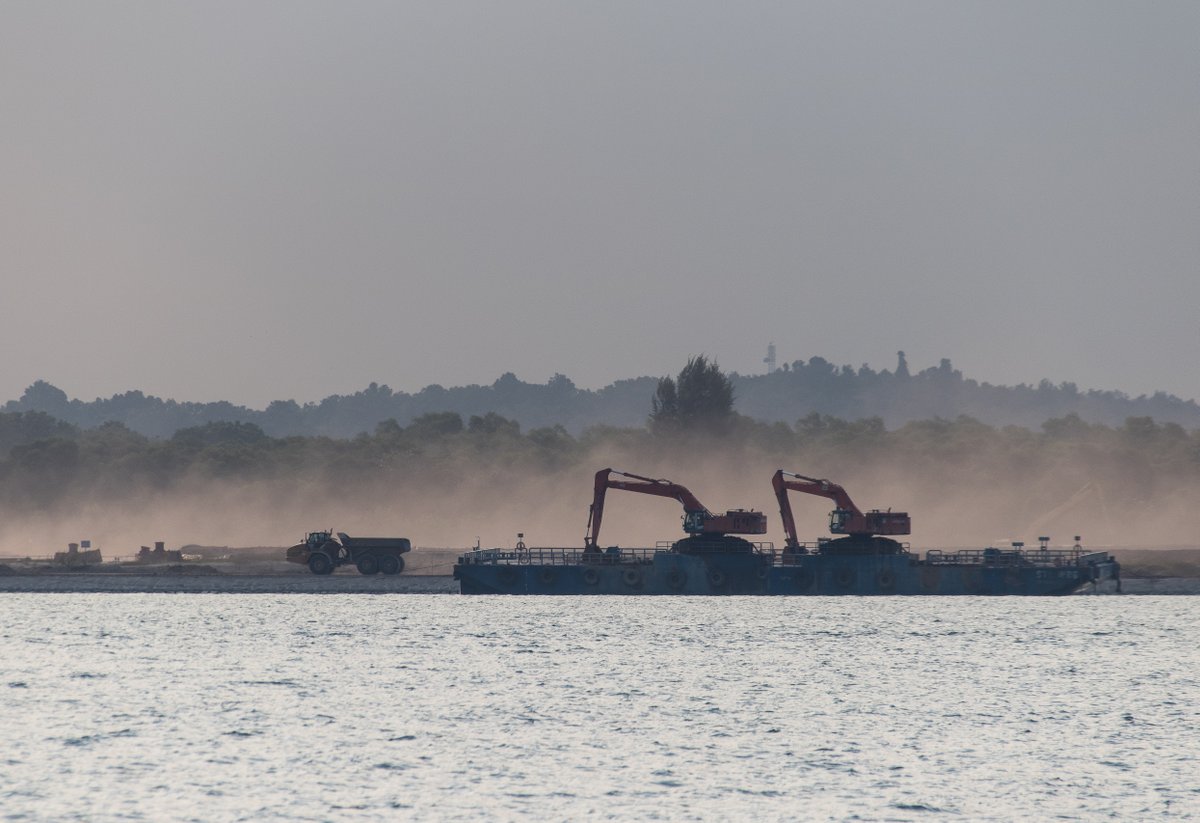
We’re still in Malaysia, but about half a mile to the west of the anchorage, is Singapore’s territorial border and they’ve got immense land reclamation occurring on an island called Pulau Tekong, which is going to double the size of the three mile diameter island. Malaysia has tried to stop the work, which is narrowing the channels around the island and affecting the coast line of Malaysia, but Singapore’s need to expand its land area has prevailed.
25 September 2016 Tanjung Pengelih to Admiral Marina Malaysia (Day 1)
No rest for the wicked, we were up at crack of dawn again. We skirted around the land reclamation project and into Singapore waters. Above us we had lovely clear skies, but to the west we could see a huge, black squall line coming towards us. It was a classic Sumatra - caused by the southwest monsoon. I found this description of the phenomenon:
During the southwest monsoon, south-westerly winds pass over the mountains of Sumatra and create mountain waves on the leeward side of the mountain thus creating an unstable atmosphere. As the atmosphere becomes highly unstable, the thunderstorms begin to merge into each other forming a squall line. This squall line is then steered by the south-westerly winds causing the storm to move north-eastwards and into the Straits of Melaka.
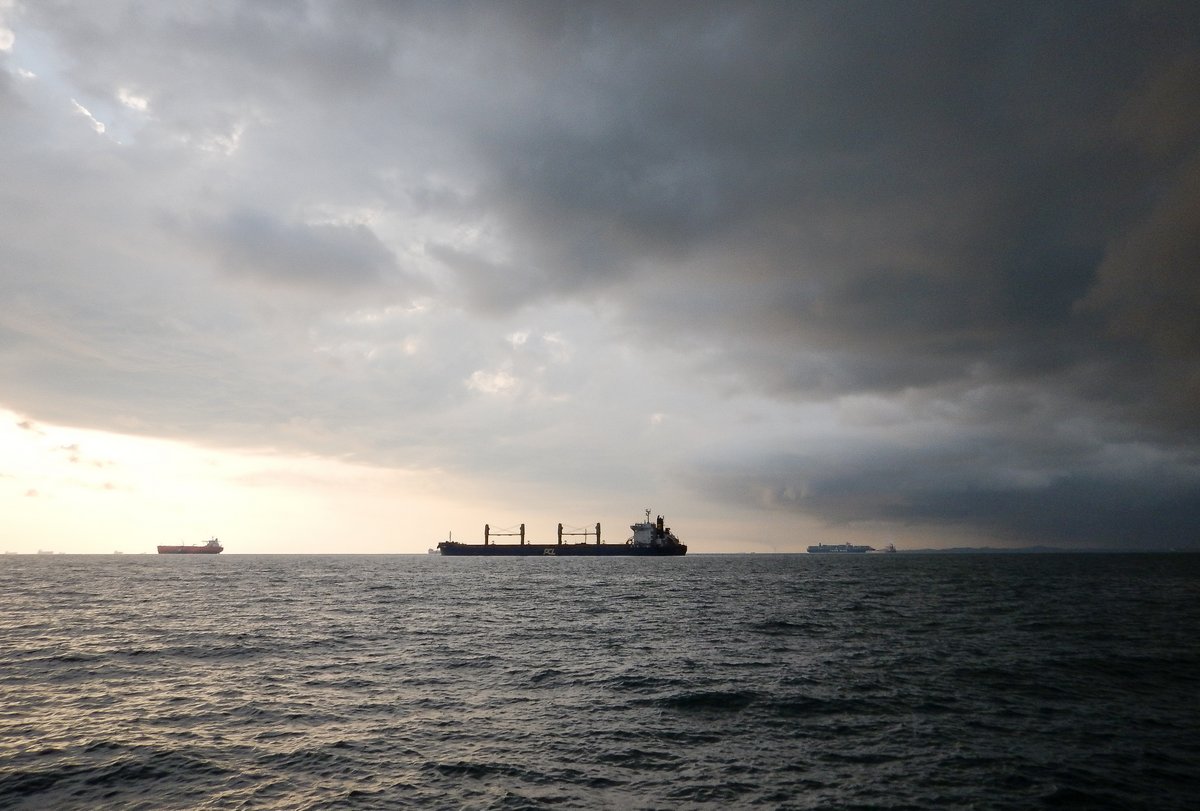
When this squall line moves offshore to the Straits of Melaka, it is usually night and thus, warmer air rising over the Straits of Melaka causes the squall line to intensify. As the abundance of moisture over the Straits of Melaka condenses, it releases huge amounts of latent heat of condensation and this helps the squall line maintain its strength and intensify even more.
This squall line then moves towards the coast of Peninsular Malaysia and usually arrives during the pre-dawn and early morning. As this squall line moves inland, it is deprived of latent heat of condensation and hence, dissipates rapidly.
It was interesting to motor west into the rising wind and watch this classic weather system pass overhead. The maximum wind that we had was 25 knots from the west and we were lucky because most of the rain showers missed us. It was all over within an hour and the skies cleared, but left us with an annoying 15 knot west wind, into which we had to motor for a couple of hours.
We had a favourable tidal current with us all morning, giving us a 3 knot boost at times and allowing us to clear the busy shipping lanes by 13:00. As we headed north up the west coast of Malaysia, the skies were pleasantly sunny, but the wind contoured around the peninsula mainland and constantly headed us - a very boring afternoon of motoring.
The evening was incredibly peaceful with calm seas and light 5 knot winds - we motored along the edge of the shipping lane out of the way of the fishing boats. Our only concern was dodging tugs who were following the same strategy.
26 September 2016 Tanjung Pengelih to Admiral Marina Malaysia (Day 2)
At our change of watch at 04:00, there were flashes of lightning from the west over Sumatra, so I dropped the main sail - it wasn’t doing much and we didn’t want to get caught by a 35 knot squall. Two hours later, Glenys dragged me out of bed before the end of her watch because a huge thunderstorm was approaching us from the west with impressive (and scary) flashes of lighting.
Our tablets and small electronic devices went into the Faraday Cage (oven); my laptop computer was unplugged; and we switched on our rarely used Raymarine plotter to watch the thunderstorm on radar and navigate. Actually it wasn’t too bad, we had 30 knots of wind from the north-west and 30 minutes of rain, and it soon cleared up.
The next four hours were unpleasant. The wind dropped to 15-20 knots from a frustrating 20 degrees off our port bow, so we still couldn’t sail. Then the waves built up giving us a horrid pitching motion.
Fortunately, we didn’t have far to go and we arrived at Admiral Marina at 11:30 - 170 miles in 28 hours giving us an average speed of 5.9 knots, which is not bad for that passage. Admiral Marina is going to be our home for the next six weeks while we catch up on jobs and do some land-travel in Thailand, Malaysia and Cambodia.
After lunch, we went for a walk to the local shops which are about a mile away. We found a place to hire a car for £20 per day and bought groceries from a good supermarket, which is typically Malaysian chaos, but has a great fish counter and a good selection of bread. We actually found Tortilla wraps; a fabulous whole grain loaf and they had Ribena - we’re going to stock up with gallons of Ribena before we sail across the Indian Ocean.
When we got back to Alba, I fancied a nap to catch up on a bit of sleep, but my bed was very hot like there was an electric blanket on the mattress. Further investigation revealed that the batteries under my bed were very hot - too hot to touch. Not good - thank goodness that they are sealed AGM batteries and not conventional “wet batteries” because they would have boiled dry and given off poisonous gases.
I tested my batteries a few weeks ago and knew that the three domestic AGM batteries under my bed are faulty and not holding their charge, so I’ve already ordered three new ones to be delivered in two days’ time. Being continually charged during 28 hours motoring has obviously been the final straw and overheated one or more of the batteries.
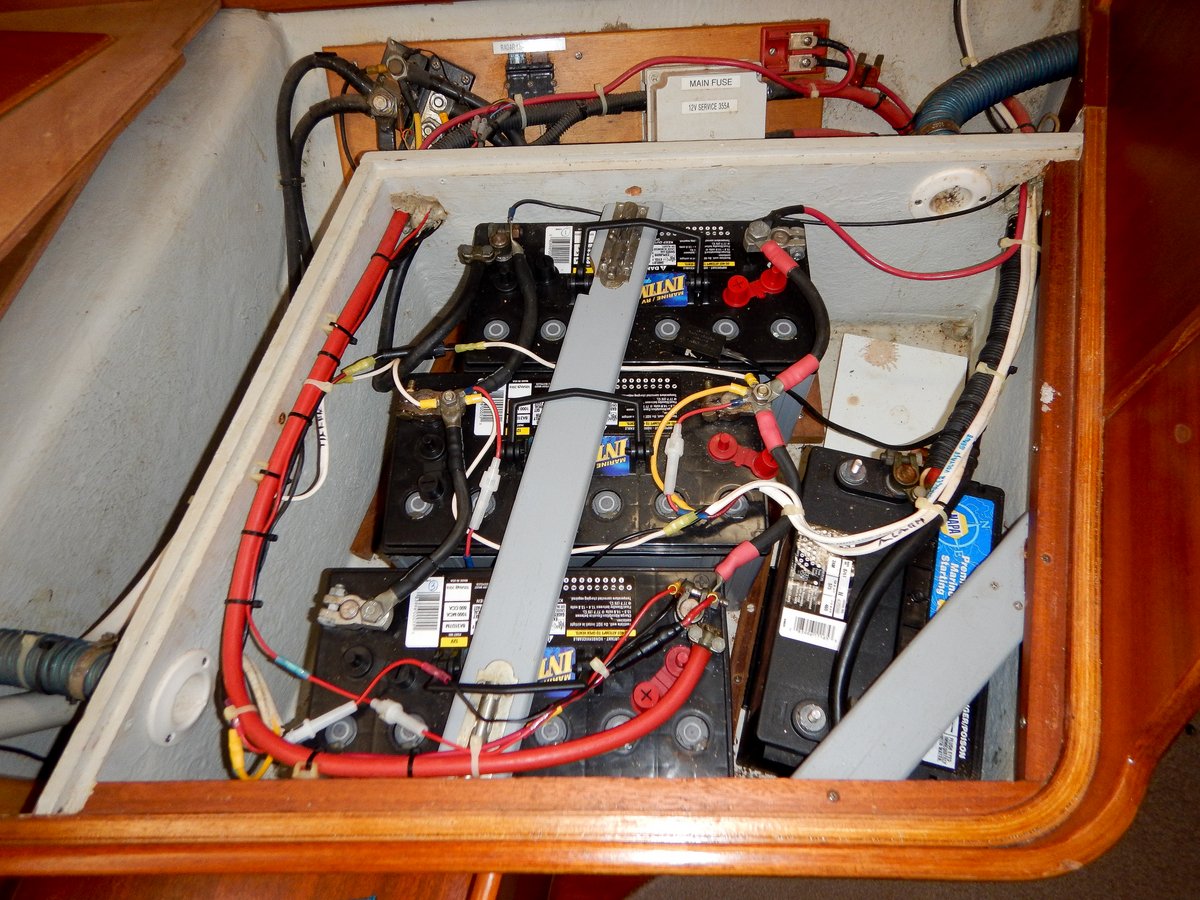
I decided to remove the faulty batteries and dumped them on the pontoon at the side of the boat. I then arranged to have the new batteries delivered tomorrow. It took four hours before the cabin and my bed had cooled down enough to sleep in there - thank goodness for our air conditioner.
27 September 2016 Admiral Marina, Malaysia
Our propeller has had some galvanic corrosion in the past and is not in the best of health. I had it tested in New Zealand and the galvanic corrosion doesn’t seem to have got any worse, but we have about 14,000 miles of sailing (and motoring) to do over the next two years in fairly remote areas, where obtaining a new propeller would be a problem.
I’ve found a company in Malaysia who will manufacture a new 3 blade propeller for £800, so we’ve decided to bite the bullet and get a new one - we’ll then have the old one as a spare in case we hit something nasty. Unfortunately, I don’t know the exact size of the propeller and the only way to make sure that the new propeller is correct is to send the existing propeller off to the manufacturer.
It was with some reluctance that I donned my scuba gear and jumped into the murky marina water. Pushing aside the scary-looking white jelly fish, I managed to remove the zinc anode and the nut holding the propeller on the shaft.
The propeller is located on the shaft by a keyed taper and, of course, it wouldn’t budge. I used a two arm puller and, after a ten minute struggle (including the judicious use of a large hammer) it suddenly popped loose. Fortunately, I managed to hold onto the puller, hammer and the propeller and stopped them plunging to the sea bed.
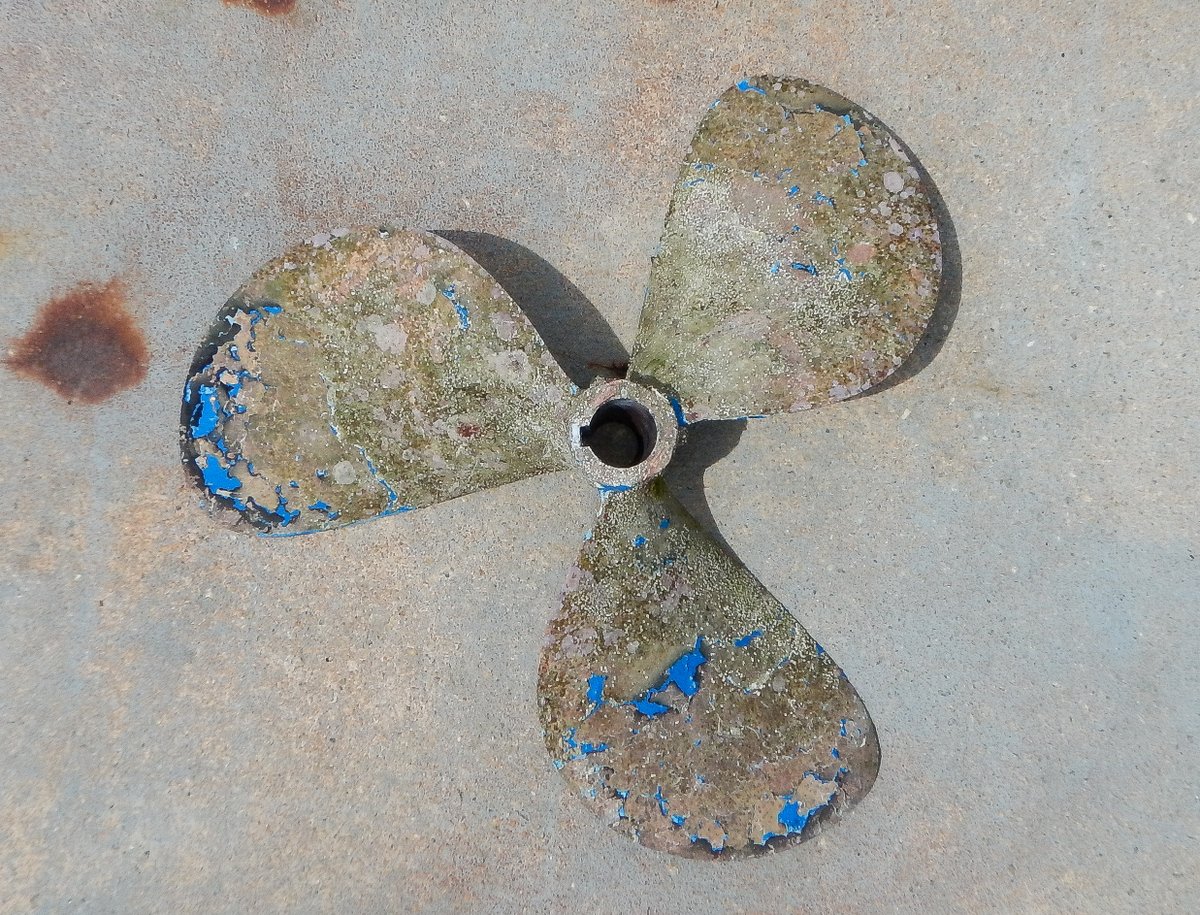
Of course, I hadn’t anticipated the change in my buoyancy caused by the sudden application of 10 kilos of weight, so I started to sink rapidly towards the sea bed. With my hands occupied by the puller, propeller and hammer, I couldn’t operate the inflator on my BCD and even worse, I couldn’t clear my ears as I descended. There was nothing else to do, I filled my lungs to capacity and finned desperately for the surface.
Glenys had been assisting by handing tools to me and was sitting on the pontoon. She was very surprised to see me shoot to the surface screaming “Take it” through my regulator. Fortunately, she understood, grabbed the propeller and all was well.
After lunch, the three batteries arrived. They cost us £300 each, so the bank account is taking a hammering again. It only took me an hour to fit them because I’ve bought exactly the same make and model as before, so they slid into place with no modifications. The guy delivering them had a sophisticated battery tester and tested the old batteries for me, which revealed that one had a failed cell which was probably why it overheated.
28 September 2016 Admiral Marina, Malaysia
We went into Port Dickson to do some errands. Our first stop was the car hire place, where we booked a car for five days in October, so that we can go on a road trip to the Cameron Heights and see a bit of Malaysia.
We stood at the bus stop for ten minutes with no sign of a bus, then a taxi pulled up alongside us and offered to take us into town. The taxis normally pick up paying passengers in Port Dickson, but then return empty, so they make extra money by picking up people from bus stops. I knew that the locals only pay 2-3 Ringgit, but the taxi driver told us 10 Ringgit - white man prices. To be fair to him, he soon caved in and agreed 6 Ringgit which was probably more than he’d get from a local. On the way to town, he still managed to squeeze in another couple with two kids, so he had a good trip.
Despite having official clearance from Tioman to Langkawi, we decided to check in here in Port Dickson because we’ll be staying for six weeks. It didn’t take long - ten minutes at the port captain, five minutes at the customs and fifteen minutes at immigration including the ten minute walk to the ferry port.
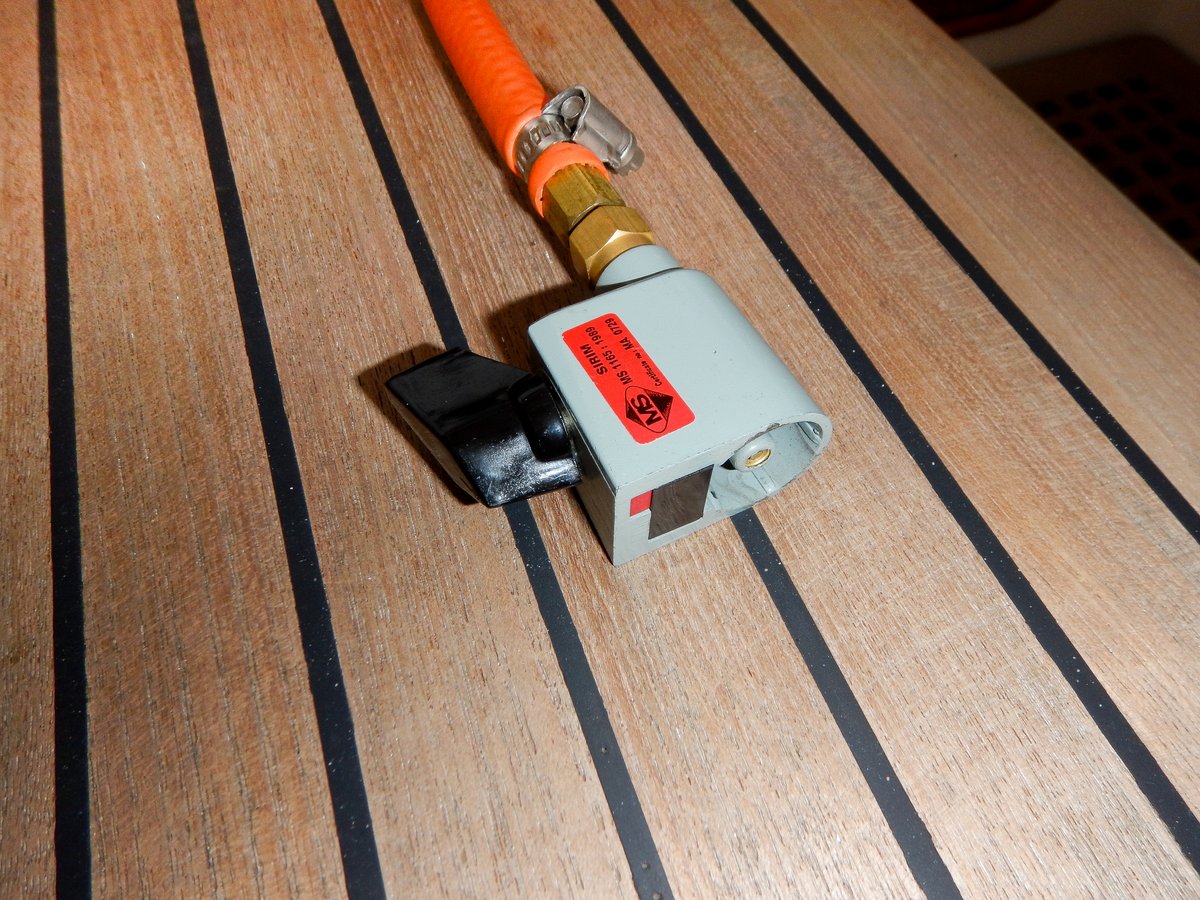
One of our cooking gas tanks is empty and there’s nowhere in Malaysia that I can get it filled because in most towns they only exchange tanks and even if I can find a filling station they won’t be able to handle our POL valve. The only solution is to buy a Malaysian gas tank and to decant the LPG gas into our tank.
Yesterday, I asked in various hardware stores wanting to buy a valve that will fit onto the Malaysian LPG tanks without regulating the pressure. Of course, no one had such a valve, but one guy said that there’s some kind of gas shop “opposite the Petronas petrol station at the traffic lights before you get into Port Dickson”.
Armed with this flaky information, I marched Glenys a mile out of town in the blistering heat. Surprisingly, we soon located the “gas shop” (next door to the 7-11 shop). After showing the guy a picture of decanting LPG tanks and a valve that I’d used in Indonesia, he amazingly produced the valve I wanted and a hose fitting - it was all sorted for 80 ringgit (£16). I like it when a plan works out.
After a long, hot walk back into town, we wandered around a few malls and supermarkets - it’s a surprisingly large town centre, if a little spread out for pedestrians. We had lunch in an Indian-run restaurant. It was self-service, but they did a mean Goat curry - it has to be good if it makes your nose run. After a quick visit to a supermarket, we caught a taxi back to the marina.
I called in at the marina office and asked about getting an LPG gas tank. Within an hour, Sara had organised the delivery of a tank - 100 Ringgit (£20) deposit and 28 ringgit for the gas. The marina staff even brought the tank over to the boat and helped me lift it on board. I’ll be decanting it tomorrow.
29 September 2016 Admiral Marina, Malaysia
I went for a run for the first time in ages. It was only 1½ miles along the beach and back along the main road, but it felt good to be exercising. Glenys went to the marina’s gym and ran on a tread mill rather than exposing her body to the devout Muslim men in the area.
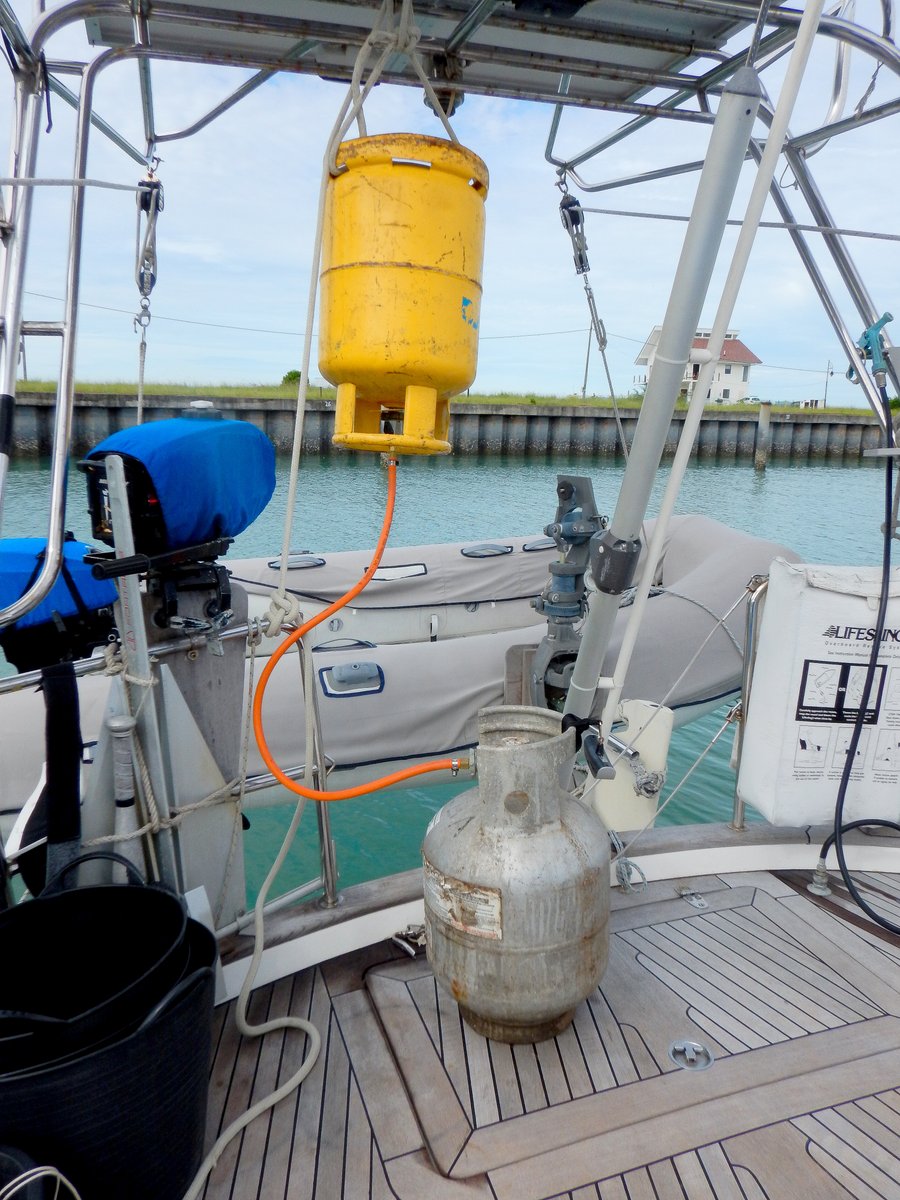
Back on the boat, I rigged up the gas bottles and started to decant the cooking gas. It takes hours for the liquid, low pressure gas to flow into the bottom tank, so I left it running, while I removed the starboard anchor bow roller, which has split in half. Fortunately, I was able to swap out the damaged one and replace it with the roller from the port side.
The port side roller is only used for the rope snubber that I always attach to the anchor chain, so I’ve rigged up a temporary roller using a bit of 1½” plastic water pipe. I now need to get another bow roller made out of nylon.
By the end of the day, I’d managed to decant all of the gas out of the Malaysian bottle and we have one full tank and one 7/8ths full, which is enough gas to last us 6 months.
30 September 2016 Malacca, Malaysia
We travelled to Malacca for a mini holiday. It was all by bus and we were very lucky - having to run for the first bus into Port Dickson, then only having to wait ten minutes for a bus to Seremban.
The bus station at Seremban was very busy with dozens of buses lined up. It seemed like every bus belonged to a different company, each with its own little ticket booth. The local ticket touts were very helpful and we soon found the correct ticket booth to get us to Malacca.
Again, we only had a ten minute wait before we were on-board a comfortable air-conditioned coach albeit with very funky upholstery reminiscent of a 1970s night club. The trip into the central bus station at Malacca was mostly along a motorway and was just over an hour. The bus station at Malacca is huge and it took us ten minutes to find the correct bus, but we were soon dropped off in the centre of Malacca next to the clock tower. The whole trip took about 3½ hours, which was amazing considering that we had to catch four buses.
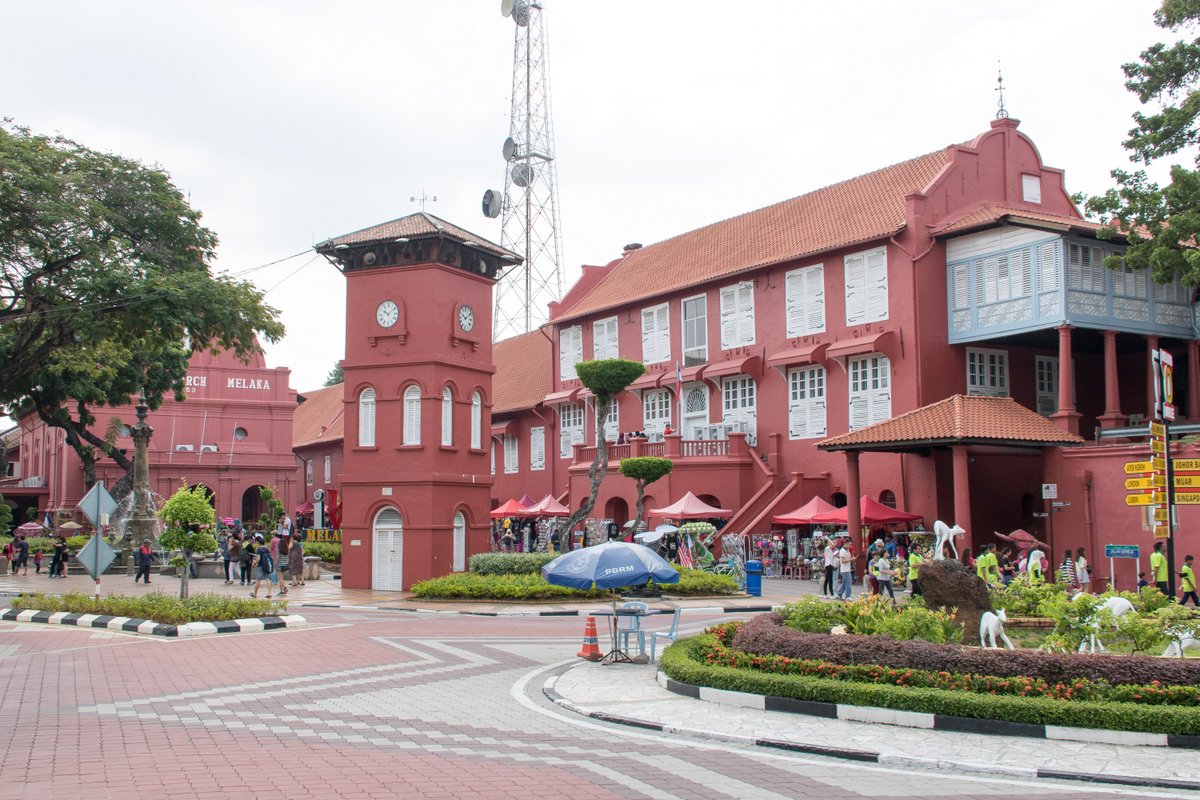
Malacca has a rich history, originally founded by Sultan Parameswara in 1402, who established the town as an international port by compelling passing ships to call there, and establishing fair and reliable facilities for warehousing and trade. It was a major stopping point for huge Chinese trading fleets during the 1400s - which is probably why 30% of Malacca’s population is Chinese.
The Portuguese invaded in 1511, followed by the Dutch who conquered Malacca in 1640. The town was handed over to the British in the Anglo-Dutch Treaty of 1824 and became Malaysian when they gained independence after the Second World War.
By the time that we’d visited the tourist office to pick up a street map, it was lunch time, so we walked a short distance to Kedai Kopi Chung Wah. This odd little restaurant is very popular, with people queuing outside the door at most times of the day - we were lucky and managed get a table immediately. The restaurant is very basic with plastic chairs & Formica tables and only serves Chicken with Rice Balls. A guy by the front door chops up steamed chickens into pieces with a cleaver, while the waiter simply asks how many plates you want. The chicken is very tender and the rice balls have been cooked in chicken stock and are very soft and delicious. It was a fun place to eat.
After lunch, we dropped our bags off at the Hotel Puri, which is a lovely building on the famous Heeren Street. It was the ancestral home of a wealthy Chinese merchant, built in 1822 and has high ceilings and open courtyards to allow air movement through the building. The floors are adorned with 19th century mosaic tiles and the walls have attractive wood carvings. Nice place.
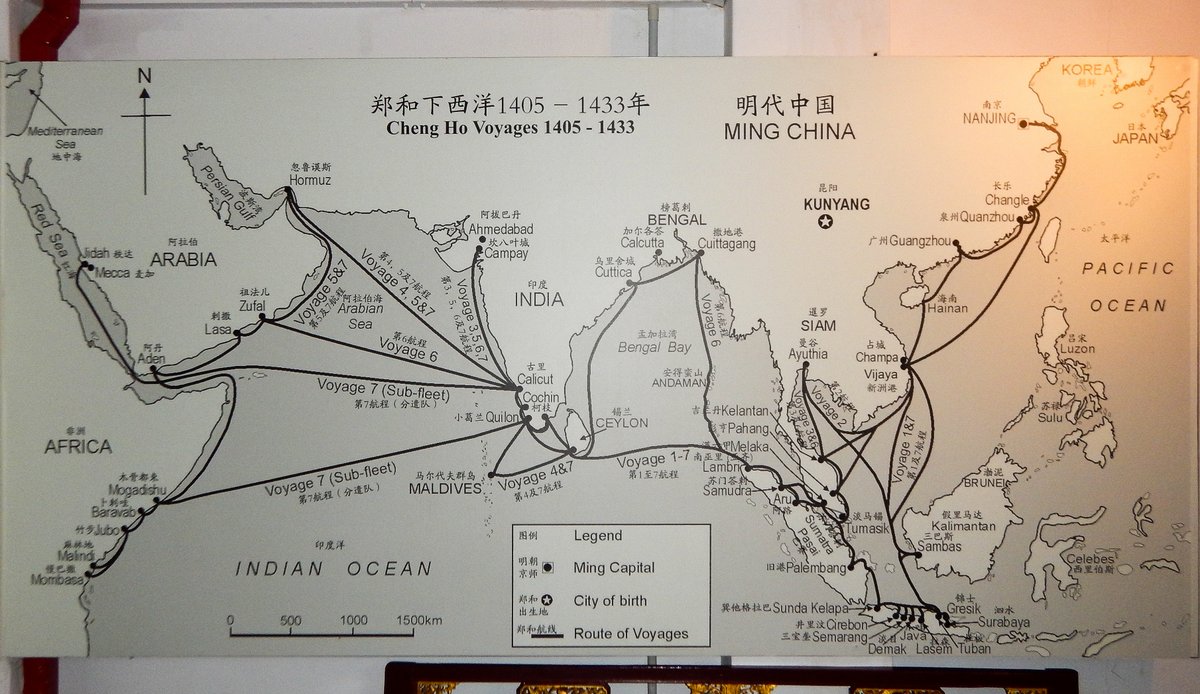
We wandered around town for a while and then visited the Cheng Ho museum. This guy (also called Zheng He) was amazing. He was captured by the Chinese Ming army when he was a small boy in 1380 and promptly castrated. Cheng Ho then became a servant of the Prince of Yan, who later became the Emperor.
After a successful career as a Commander in the Emperor’s army, Chengo Ho was appointed as Admiral of China’s great treasure fleet. From 1405 and 1433, a huge fleet of over 300 ships and 20,000 men sailed on 7 great expeditions to Java in the south, Africa in the west and even visited Mecca in the Red Sea. They traded extensively and produced comprehensive charts of the China Sea and Indian Ocean.
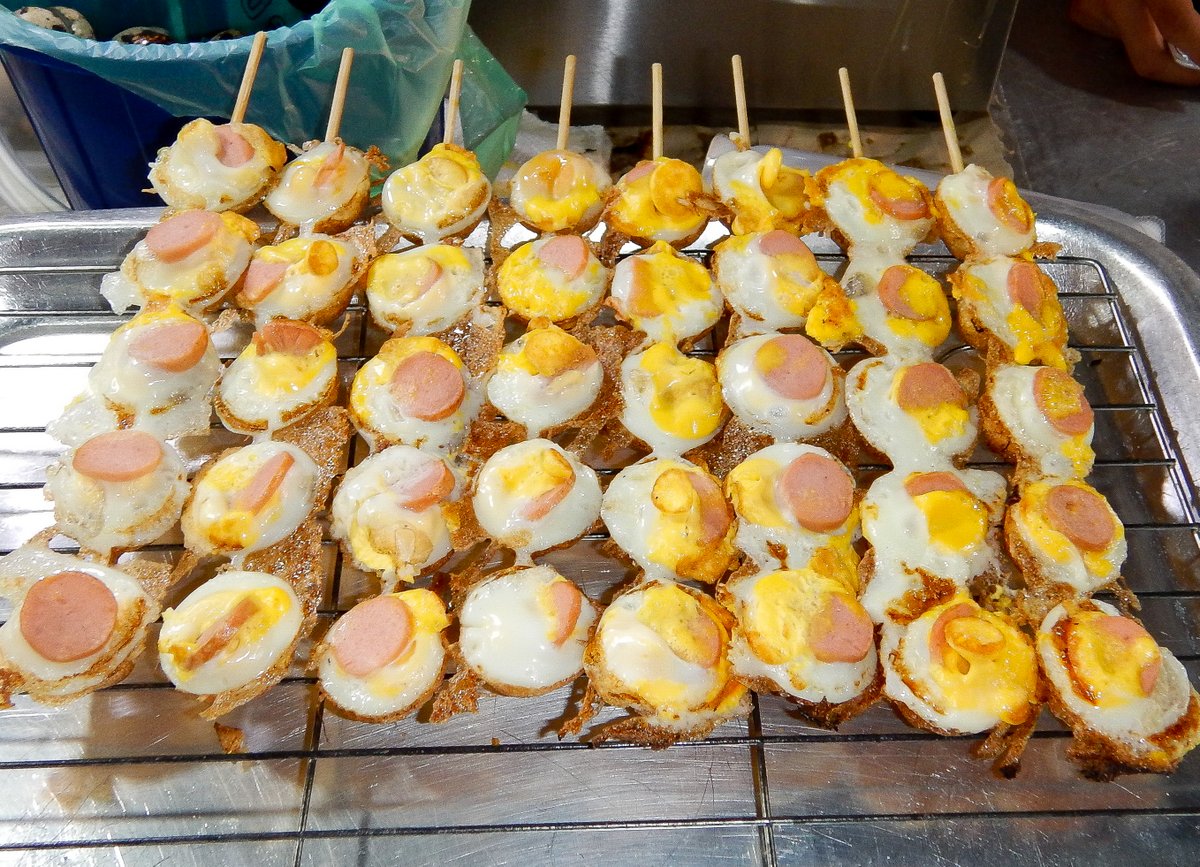
In the evening, we visited the street market which happens every weekend on Jonker Street. There are hundreds of small stalls lining the road, selling Chinese cures, toys, tourist souvenirs and street food. Thousands of people stroll up and down the street making it a fun event. We sampled various street food and my favourite was quails eggs poached on a skewer with slices of chicken sausage.