1 January 2014 Bahia de Caraques, Ecuador
We had a nice long lie in and then lounged around.
After our disappointing meal on Christmas Day, we were determined to have a nice traditional lunch, so Glenys prepared a fabulous chicken dinner with all the trimmings – mashed potatoes, carrots, apricots wrapped in bacon, bread sauce, etc, etc.
We watched a James Bond film and then a BBC documentary on the Galapagos Islands, before collapsing into bed – a fabulous day.
2 January 2014 Bahia de Caraques, Ecuador
I went for a run, but was definitely suffering from my over indulgence yesterday. I only made it 100 metres up the steep hill to the Cross – my “Rocky” moment is getting more and more unlikely.
We motivated ourselves enough to start on some jobs. Glenys did some dashing around in the morning and then started to sand down some of the cockpit woodwork getting ready to varnish.
I pottered around doing small jobs and then pulled our 60 metres of chain out of the anchor locker with the intention to swap it end-for-end. I should be doing this every six months, so that the galvanising on the chain wears evenly. Unfortunately, I’ve been very slack and not done it for eighteen months, with the result that one half of the chain is now going rusty, while the other half is fine. I chatted to Michael from “Salamander” who is trying to organise getting his chain re-galvanised, so I might get ours done at the same time.

A fishing boat pulled alongside us selling some lovely large prawns, so Glenys bought a pound and made Viche De Cameron, which is a soup made from prawns with a hint of peanut sauce. It was absolutely fabulous, although I don’t think that I should have had the fourth helping…
3 January 2014 Bahia de Caraques, Ecuador
I got up early and dropped “Viatrix” off at the dinghy dock – they’re going to Quito for a week and wanted to leave their dinghy safely on their deck.
We had another day of jobs. Glenys continued sanding the cockpit woodwork. We've left it for too long and so she has to sand it back to the bare wood, which is very laborious.
I went up the mast and checked our standing rigging. Everything looks okay and I made sure that I could move all of the bottle screws. While I was up there, I replaced the bulb for the tricolour navigation light with an LED bulb, which will use less power and should last ten years.
Glenys winched me up the backstay where I attached a small pulley so that we can fly our ensign up there out of harm’s way. Our old ensign has definitely seen better days and has been shortened to a third of its original length because it kept catching on the aerials on the stern arch. It was so bad that “Aros Mear” have given us a replacement ensign because they were so embarrassed for us...
4 January 2014 Bahia de Caraques, Ecuador
We had yet another day of jobs. I finished off another 12 teak plugs in the deck and discovered another two loose ones. I’m giving up for now and maybe I’ll do another set before we leave here – I suspect that the deck is drying out because there’s no rain or sea water getting on the deck and the plugs are shrinking.
Glenys did her first coat of varnish on the cockpit shelves. She used up the last of our turpentine, so I went out to buy some more and also some acetone. Sometimes the simplest things defeat me. One of the problems in Ecuador is that you don’t wander around a nice store like Home Base. Instead, you’re faced with a long counter and you have to ask for everything (normally in Spanish). I went out armed with Spanish translations of turpentine, white spirit and acetone, but got the run around being directed from shop to shop. It appears that acetone is now illegal and there’s no turpentine or white spirit anywhere in town. Perhaps I’m asking for the wrong thing?
I arranged for a taxi driver (Geovanny) to take us on the 7th January into Manta, which is a large city about an hour’s drive away. We’ve got a long list of stuff that we need and we’ve looked up Spanish translations of everything, so hopefully Geovanny will be able to take us to the correct shops. I removed the stainless steel holding tank that has been leaking and I’ll get that repaired in Manta.
I’ve decided that I ought to get our chain re-galvanised, but “Salamander” are now planning to leave for the marina in Salinas next week and will get their chain galvanised there. I talked to Tripp and he said that the only place to get chain galvanised is in Guayaquil which is a five hour drive away. The galvanising is cheap and will cost about $1 per foot, so our 200 feet of chain will only cost $200. Unfortunately, it will cost $140 both ways to get the chain there. I wandered around the anchorage, asking if anyone else wants to share the transport cost and Grant from “Viandante” says that he’ll probably get some of his chain done as well. Fingers crossed.

5 January 2014 Bahia de Caraques, Ecuador
We caught a bus to Canoa with Michael and Rachelle from “Salamander”. The bus was packed with a large group of 18 year old locals, who were having a mobile party, singing along to a guitar and bongo drums. It was interesting to see the culture difference between here and the UK – you wouldn’t see young people having such innocent fun in the UK, where it would be uncool to be seen singing in a public place (unless they were drunk, of course…)
We walked onto the beach and found a group of caballeros with six horses. It was total chaos trying to arrange for the four of us to go for a long ride. The horses are each owned by one person and there’s no coordination between the individuals. We wanted to go for a two hour ride and expected that there would be one guide going along with us on a horse. They didn't see it that way, and by the time that we’d tried to explain in our poor Spanish, two of the horses had already been taken by other people.
Unfazed by this, the caballeros got us onto the four remaining horses and we then had the four owners running along behind us. We followed the same route that Glenys and I did a month ago, going along dirt roads up to the top of the cliffs. Unfortunately, the road has been recently recovered with sharp stones, which meant that we couldn't canter much. Also, the road surface hurt our guides’ bare feet, so one of them got up onto Michael’s horse and rode behind him. Michael wasn't too pleased with the close bodily contact, but the guide didn't understand that there was a problem.
After 30 minutes, I volunteered to walk and gave my horse to the guide to give Michael some respite from riding double. We then took turns in riding and walking for the rest of the trip. It was very chaotic, but only cost $20 each for two interesting hours. We had an Almuerzo Tipico lunch and then went for a walk along the busy beach before catching a bus to Bahia.
Back on the boat, I helped Grant from “Viandante” to separate two badly rusted shackles connecting his anchor to his chain, and then arranged to drop our chains ashore at high tide at seven o'clock tomorrow morning. We then retired to the bar for happy hour with some of the other cruisers.
6 January 2014 Bahia de Caraques, Ecuador
We were up at half past six and took the chain ashore. It was a major operation because we had to put the 60 metres of chain into our dinghy and then pull it up a concrete sea wall into the grounds of Puerto Amistad. There was quite a bit of swell and the sea wall was covered in nasty sharp barnacles, so the biggest challenge was keeping our inflatable dinghy from being shredded as the chain was pulled up.
We were back on jobs today. I serviced our small outboard, which has not been worked on for 2½ years. I’m surprised that it ran at all because the carburettor was very badly gummed up – it took me ages to clean it. Glenys pottered about and carried on varnishing the cockpit shelving.

Our generator is fitted with a water separator, which splits the exhaust water from the exhaust gas. The exhaust gas comes out of an outlet above the water line and the water comes of an underwater skin fitting. I noticed the other day that we were getting water coming out of the exhaust gas outlet, which indicated that the water outlet was blocked.
So I dived down to have a look. It took me five minutes to find the skin fitting because the water was so full of sediment that I literally couldn't see any further than one foot. Having eventually found the skin fitting by touch, I discovered that it was blocked by barnacles and soon had it cleared with the aid of a long screwdriver.
In the evening, I spent two hours trying to print out a list of things to do and buy in Manta, but our damn printer just wouldn't work. I’ve discovered that Hewlett Packard have method of stopping the printer using non-HP cartridges and I wonder if it doesn't like the cartridges that I bought in Panama. Eventually, I had to write the four page list out by hand – the bloody printer is definitely going into the bin.
7 January 2014 Bahia de Caraques, Ecuador
Our taxi driver, Geovanny, picked us up at eight o'clock and drove us into Manta. Our first stop was at a metal fabrication shop where I dropped off our leaking holding tank and the vane from our Hydrovane to get it shortened by two inches because it’s been hitting our arch on certain points of sail.
Geovanny then took us to the “best” marine and hardware store in town. It was bedlam. I was expecting a “self-serve” store, but I had to ask for everything. It was so sequential, with the guy running off to try to find one part at a time. Sometimes he was gone for five minutes. They didn’t have a lot of the specialist yacht things that I wanted, but I managed to get a litre of paint thinners (in an old Coca-cola bottle), a 40mm hole drill, some insulation tape and a gallon of degreaser – I actually only wanted a litre of the stuff, but by the end, I’d lost the will to live.

We drove around town and Geovanny did a good job taking us to various places to get plywood, a camera battery, outboard parts and I even bought a laser printer for $85. The printer comes with a small toner cartridge and a new cartridge costs $89 – what’s that about? If you ever wanted proof that printers are sold at a loss so that the manufacturers can make money on the ink then this is it!
We arrived back in Bahia at six o’clock - totally knackered. It only cost us $60 for Geovanny’s time and it was well worth the expense – it would have taken us days to get the same amount of stuff done without a car. Back on the boat, Glenys rustled up Huevos Rancheros and we collapsed with a movie.
8 January 2014 Bahia de Caraques, Ecuador
We had a day pottering around on the boat. I got my new laser printer working, which is wonderful. I now need to buy an $89 replacement toner cartridge next time that we go into Manta. I found out that I can get a kit in the USA to recharge the toner cartridge for only $15. If only I was in the States…
I had a good day finishing off some jobs – I replaced the holding tank and fitted a new shear pin on our 2.5hp outboard, which I found in my spares locker. I also fitted the new toilet seat that I bought yesterday. Amazingly, it fits the toilet bowl, but the hinges aren’t as strong as the old ones, so I’ve kept the hinges in case the new ones break – more junk in my spares collection.
Glenys went into town to get some more cash after our blow out day and try to find a rucksack, but there’s no chance of finding technical hiking gear here – she’ll have to get one in Quito when we go in a few days’ time.
9 January 2014 Bahia de Caraques, Ecuador
I did some administration in the morning, and then got a bee in my bonnet about looking at guitar music. I’ve not been practising on my guitar very much recently because I’ve got into a rut, playing the same things every session. I was very impressed by the guitarist that we saw on the bus to Canoa a few days ago, and I’d like to have a repertoire of well-known songs that I can play when there’s a group of people around.

For the next twelve months, I’m going to concentrate on playing rhythm guitar rather than finger style. It’s a technical challenge to play finger style songs, but it doesn’t work well around a camp fire – people want to sing along to Van Morrison and Buddy Holly, not listen to a classical passage. So it’s out with finger style and in with Rhythm and Blues - I spent most of the day downloading lessons and tabs on how to play new songs.
I popped out on a couple of errands and spotted this guy using a cast net from the shore. To my amazement he was catching large, 5 inch long prawns - perhaps I should buy one of these nets...
Glenys pottered about making some mango chutney and hot pepper jelly then canning it. She’s doing an experiment on canning foods and, if it still tastes okay in a month, then she’ll probably have a big session to preserve food for our trip across the Pacific. She’s struggling to find some things here that are very common elsewhere – for example, tinned tomatoes are like rocking horse droppings in Ecuador and she uses tomatoes a LOT in cooking.
Fri 10 January 2014 Bahia de Caraques, Ecuador
We go to traveling inland in two days, so we decided that it’s too late to do any more big jobs and spent the day just mooching about. I started to make some drawings for a stainless steel bowsprit for our asymmetrical spinnaker. At the moment, we attach the tack of the sail to the bow anchor roller and it keeps catching on the pulpit and a couple of times nearly ripped off one of our navigation lights. The idea is to have a small removable bowsprit that will hold the tack of the sail a couple of feet in front of the pulpit and keep the sail out of the way.
We went for a walk and explored some of the outer area of town that we haven’t seen. There’s another cross high on a hill next to the cliffs, so we went to see if we could walk up to it. Unfortunately, that end of Bahia is a bit of a shanty town with a very run down houses and shacks made from bamboo canes, so we gave up on our exploration as we were the only gringos in sight.

11 January 2014 Bahia de Caraques, Ecuador
We had a quiet day, lurking around, packing and sorting out a bit of admin. I finished off the drawings for the bowsprit and composed an email in Spanish which I sent off to get a quotation. It was very difficult even using internet translation tools – I would have preferred to talk to the engineer face to face, but this is the only way I can ask for a price.
My damn hips have been aching for a few days and I’m worried that it’s getting worse. I used to take cod liver oil tablets to lubricate my joints, but I ran out a few months ago.
Supplementary vitamins like cod liver oil tablets are not very common here. I walked into town and visited a couple of pharmacies, but they don’t seem to have any cod liver oil or don’t understand what I’m asking for. I’ve resorted to taking a couple of Ibuprofen tablets to try to get rid of the inflammation.
12 January 2014 Bahia de Caraques to Quito, Ecuador
The eight hour bus trip to Quito was pleasant, but my hips were hurting by the end of the journey, so I had to take some more ibuprofen – it’s not good to keep taking this stuff. I think that the problem has been caused by going horse riding and running last week, but might be exacerbated by my diet, in particular, the water that we make from our water maker is completely devoid of any minerals and vitamins – perhaps I need to take vitamin tablets to give me more calcium?
Having settled ourselves into the Hotel Antinea in the Mariscal area of Quito, we walked around the corner to Gulliver’s Travels and paid the $900 balance for our climbing & riding trips. We were very glad to pay them because it’s worrying walking around with that much cash in our pockets.
It threw it down in the evening, so we didn’t wander very far and ended up in one of the posh bars on the main square – expensive burgers. They weren’t serving any beer because it’s a Sunday, so in a bit of misplaced banter with the waiter, I said that the president was “loco” for this law, which didn’t seem to go down well – perhaps I should keep my political quips to myself.
13 January 2014 Quito, Ecuador
First thing in the morning, we wandered around the sports shops in the Mariscal area, trying to get a rucksack for Glenys. The only ones that we saw were either the wrong size or very expensive, so we gave up for a while and went into the old town to do some sightseeing.
Every Monday morning there is a formal changing of the guard at the Presidential Palace, so we stood with the crowds of tourists and locals watching the soldiers parade around in their traditional uniforms. There was a big cheer when the President himself walked onto a balcony in the palace and waved to the crowds. I believe that he does this fairly regularly, which must take up valuable time in his busy weekly schedule.
We then wandered around the old city looking at some of the tourist sights. I was particularly impressed by the Ingles de la Compania de Jesus - a beautiful church, which took the Jesuits 160 years to build. It’s fabulously decorated inside - every square inch seems to be covered in gilt. We also walked up a steep hill to the Basilica, which has three tall spires. We were able to climb to the top of two of the spires which was good fun - climbing up very steep steps that certainly wouldn’t be allowed in the UK. The view of the sprawling city of Quito is very impressive from the top of the spires.

Having had our fill of tourism, we caught a cab to the El Jardin Shopping Mall, where we managed to find a small 25 litre rucksack for Glenys for only $60, which was a bargain after looking at ones for up to $150.
Another great success was finding a Pharmacy that was open-plan instead of just a having counter. We wandered around the shelves and found some multi-vitamins; some cod liver oil tablets and some Glucosamine and Chondroitin, which is a dietary supplement that is supposed to help joint pain. So each day, I’m now taking one blood pressure tablet; one multivitamin tablet to counteract the water produced by our water maker; one cod liver oil tablet to lubricate my joints and three Glucosamine and Chondroitin tablets to try to repair the cartilage in my hips – I’m rattling...
Back in the hotel room, we packed our small rucksacks with enough clothes to go walking around the Quilotoa area for a few days and put the rest into our big rucksacks to drop off at Gulliver’s Travels to be delivered to the Papagayo Hostal for us in the next few days.
14 January 2014 Quito to Isinlivi, Ecuador
We were up early, dropped off our big rucksacks at Gulliver’s Travels and caught a taxi to the Terminal Quitumbe. Instead of haggling a fixed price with the taxi driver, we did this trip on the taxi’s meter. Normally this works out cheaper for us, but we got caught this time because the taxi had to do a huge detour around a major traffic jam, so it cost us $15 instead of $10 - I hate watching taxi meters rack up money
It didn’t take long to buy tickets and jump on a bus to Latacunga. As usual, it was cloudy as we went past the supposedly impressive Cotopaxi Volcano – will we ever get to see it? We had a couple of hours to kill in Latacunga before our bus to Isinlivi, so we walked into the town centre, which is a pleasant place with very narrow streets and even narrower pavements, but lots of traffic.
Just after midday, we caught the bus to Isinlivi, which was packed. On the way, about 20 school kids piled aboard, so it was total chaos and very “friendly” with people pushing past all the time. Once again, the scenery along the route was stunning.
We checked into the Llulu Llama hostal, then went for a short one-hour walk to the top of a hill overlooking the village. It was good to stretch our legs, although I had to take a couple of ibuprofen again to ease my aching hips.

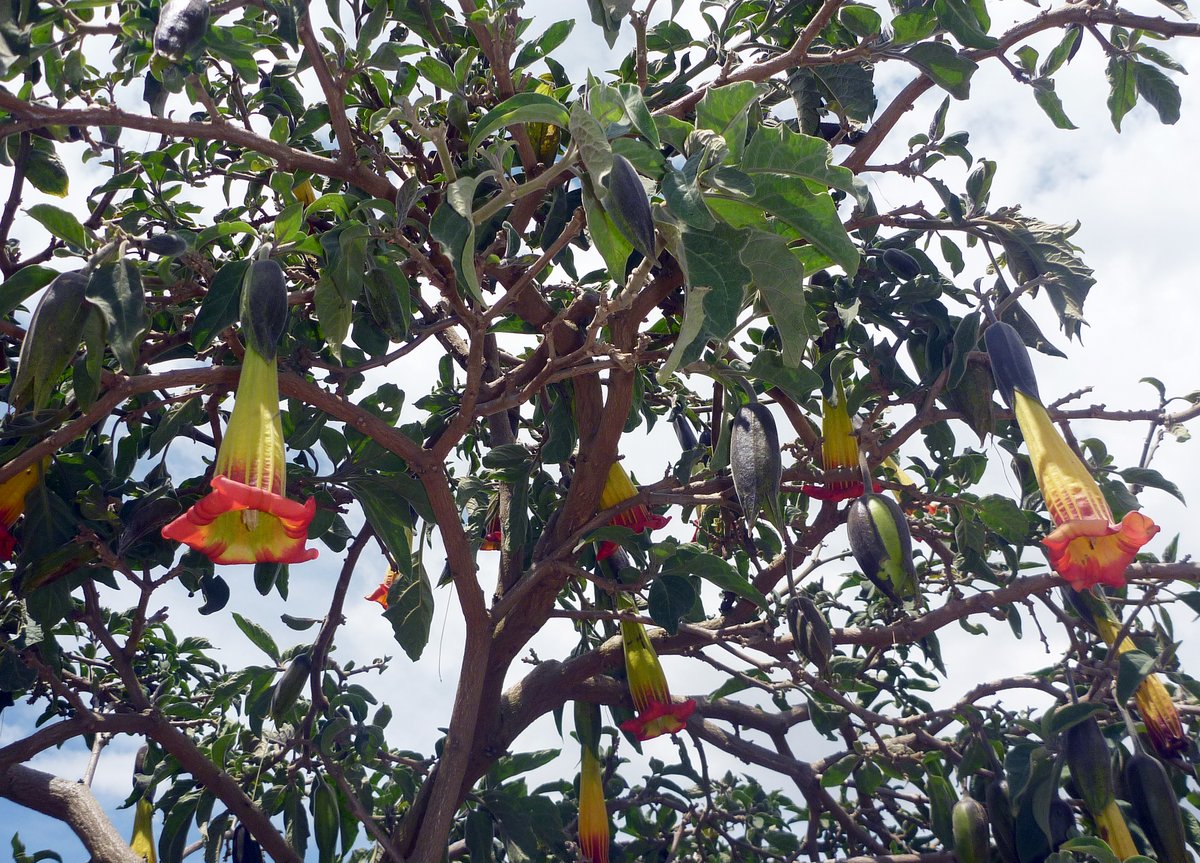
While walking around Ecuador, we often see a shrub with a trumpet shaped flower, which is called Brugmansia. I’ve found out that this plant has narcotic and anaesthetic properties and is used in modern medicine to produce drugs like scopolamine and atropine. It’s been traditionally been used in many South American indigenous cultures as a ritualistic hallucinogen for divination, to communicate with ancestors and as a treatment for unruly children making them more compliant – sort of like a super Calpol... The Incas mixed it with maize beer and tobacco leaves to drug wives and slaves before they were buried alive with their dead lord – nice!
15 January 2014 Isinlivi, Ecuador
After a filling breakfast, we went for a walk to a nearby village called Guantualo. From the hostal, we walked down the hill to a river crossing and then up to the tiny village of Guangumala. Once through the village, I unfortunately missed a path and we ended up at the head of the valley. We could see the track up on the top of the ridge, so there was nothing we could do except take a deep breath and trudge up a very steep meadow – I wasn’t in Glenys’s good books...
We followed the dirt track for a while and eventually, with more luck than planning, came across the village of Guantualo. We’ve been told that there’s a very good market here on a Monday, but being a Wednesday, it was like a ghost town with more dogs than people.
Once through the village, we followed a dirt path down the valley. It’s an old trading route and the path is mostly in a steep sided gully that has been formed by a multitude of feet over hundreds of years. This path led us to a dirt road that brought us back to Guangumala and from there it was a short walk up the steep path to Isinlivi. It was a very pleasant four hour walk and, even better, my hips haven’t been hurting, so one or more of the pills that I’m taking are working.
16 January 2014 Isinlivi to Chugchilan, Ecuador
After breakfast, we packed up and I paid the bill. I got a bit crinkly when they tried to charge me $12 for 6 litres of drinking water – I know that a 10 gallon bottle of water costs less than $2, so after much whinging, they only charged me $2...

It was beautiful weather and the hike to Chugchilan was fabulous. (I’ve created a detailed description of the route in our hiking section.) This area of Ecuador is stunning and our walk took us down to the river then up to a ridge which gave us great of the surrounding hills and valleys.
From there, we walked through farm land, coming across an old lady driving a small herd of cattle. There was a little bit of confusion when we weren’t sure where she wanted to go and we ended up blocking the route for her cattle. One of her cows decided to go along a steep path down the hillside, so we were left controlling the rest of the herd while she collected her errant animal.
While this chaos was occurring, another lady walked up to us and wanted to know what my camera was. I showed her by taking her picture – she seemed pleased by the result. It never ceases to amaze me how these indigenous farmers are so detached from technology.
We continued our hike, going down a steep path, then walking past several small subsistence farms, which are perched in a kind of hidden valley, high above the Rio Toachi Gorge - what a beautiful place to live. After descending a steep path down to the Rio Toachi, we crossed a wobbly suspension bridge and walked to the village of Itualo. Then we had to climb a long series of zigzags which was hard work, but both of us managed without stopping. I’m on a training crusade, so I left Glenys behind and she caught me up at the top ten minutes later.
From top of zigzags, we had an hour long, remorseless walk going gradually uphill to Chugchilan. We made good time and arrived at one o’clock. After a well-deserved lunch, we had a shower and crashed out for a couple of hours.
17 January 2014 Chugchilan to Quilotoa, Ecuador
We checked out at eight o’clock and started our hike to Quilotoa. It was an enjoyable walk down to the Rio Toachi, but there are a couple of places where it’s easy to miss a turning. (I’ve created a detailed description of the route in our hiking section.)
The river is the lowest point in the hike at 2,800 metres after which we faced a long ascent up to the crater rim at 3,800 metres. To start with we had to negotiate zig-zags climbing 400 metres up to the plateau on the other side of the Rio Toachi canyon. It didn’t seem to be as bad as the zigzags yesterday, but I guess that we were still fresh at the start of the hike. After the zigzags, it was an easy walk to the small village of Guayama, passing locals farming their fields of maize and chocho. It’s interesting to see the ladies hoeing fields dressed in their pleated skirts, cardigans and felt hats.
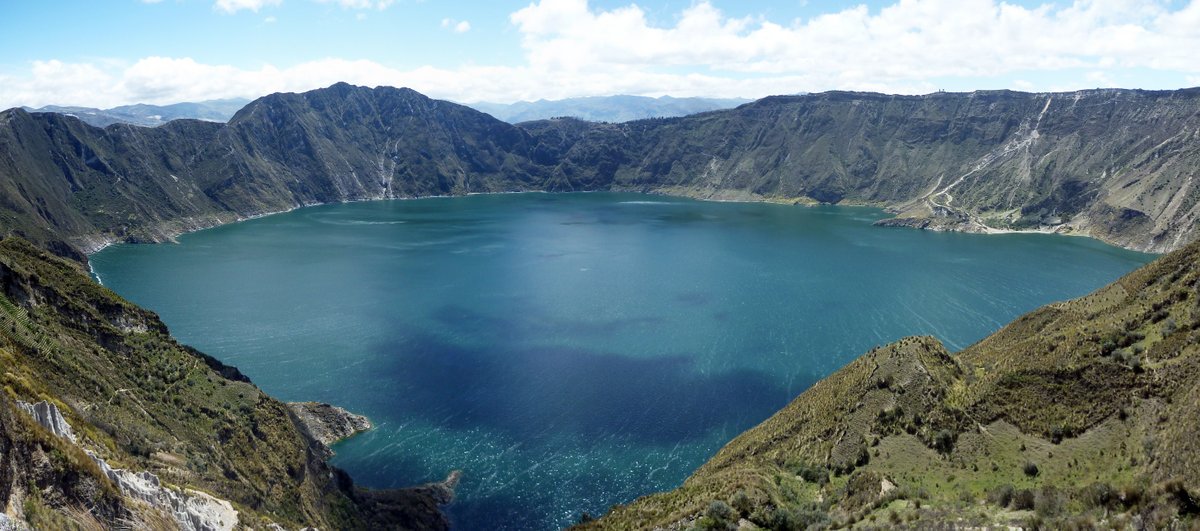
From Guayama, we had a long gradual ascent to the crater rim. The first half was along interesting footpaths, but the second half was a hard grind up a wide sandy track that zigzagged all over the place. I tried to get Glenys to take a few steep shortcuts between the zigzags, but she had a sense of humour failure.
The view from the Quilotoa crater rim was stunning. Once again we were lucky with the weather and the bright sunshine made the crater lake appear deep blue. It took us about an hour to walk along the crater rim and there are quite a few ups and downs, so by the time that we were approaching the small village of Quilotoa, we were both feeling a little worse for wear.
We checked into the Chukirawa Hostal around one o’clock, had a shower and then had yet another Almuerzo Tipico, which we shared. It was very cold in the hostal and there was a biting wind outside, so we wandered around for an hour trying to find somewhere out of the wind to sit and read, but eventually gave up and retired to bed for a couple of hours to keep warm.
The owners of the hostal are indigineous locals and appear to be totally unconcerned by the cold. We wandered into the restaurant at six o’clock hoping that it would be nice and warm, but the family were sitting around the unlit stove dressed in thick clothes (including the ubiquitous felt hats.) Having nowhere else to go apart from our freezing room, we ordered a couple of beers and were amused to see that they didn’t bother to keep beer in the fridge – there’s no point because it was well chilled anyway.

Eventually, half an hour later, they lit the stove, but it made little impact for an hour. Dinner was unimpressive – a fried egg, rice and beans, but we had a good chat with a couple of Americans who have been living in Ecuador for over a year, teaching English. At eight o’clock, we persuaded the owners to light the stoves in each of our rooms, but it took another half an hour to get the chill off the room – at least we had an hour of warmth before we climbed wearily into bed.
18 January 2014 Quilotoa to Machachi, Ecuador
The fire only lasted a couple of hours, so it was bloody freezing for most of the night - we used all of our five blankets to keep us warm despite the danger of having a crushed chest with the weight. There was no hot water in the morning, so our face wash was a very quick affair. Before breakfast, we walked across to have a look at the Quilotoa Crater Lake, but were quickly driven back by the biting wind – this little community is certainly in a desolate place.
We arranged to be dropped off in the small town of Zumbahua, which is a short 15 minute drive from Quilotoa. It was market day and we spent a pleasant hour wandering around both the animal market and the local produce market. There were sheep, pigs, chickens and llamas for sale. The going price for a llama was $100 and a sheep was $150. It’s really interesting to see the locals casually dragging screaming pigs and stoic sheep around on a bit of rope.
After a couple of hours, we caught a bus into Latacunga and went for a stroll around town because we had loads of time to kill. The place was very busy because it was a weekend and the narrow streets were almost gridlocked with cars. For lunch, after four days of eating soup, rice and meat, we opted for chicken and chips in a small place near the bus station, which only cost $1.50 and was very tasty.
It was only a short 30 minute bus ride to get to the Papagayo Hostel, near Machachi, where we’ll be based for the next five days. After all my complaining the last time we were here, we’ve been given the best room in the place at a reduced price - it’s very nice.
19 January 2014 Machachi, Ecuador
Glenys was up several times during the night running to the toilet and my stomach was gurgling, so I took a couple of anti-bacterial diahorrea tablets. These were added to my already impressive pile of pills – I took eight tablets today...
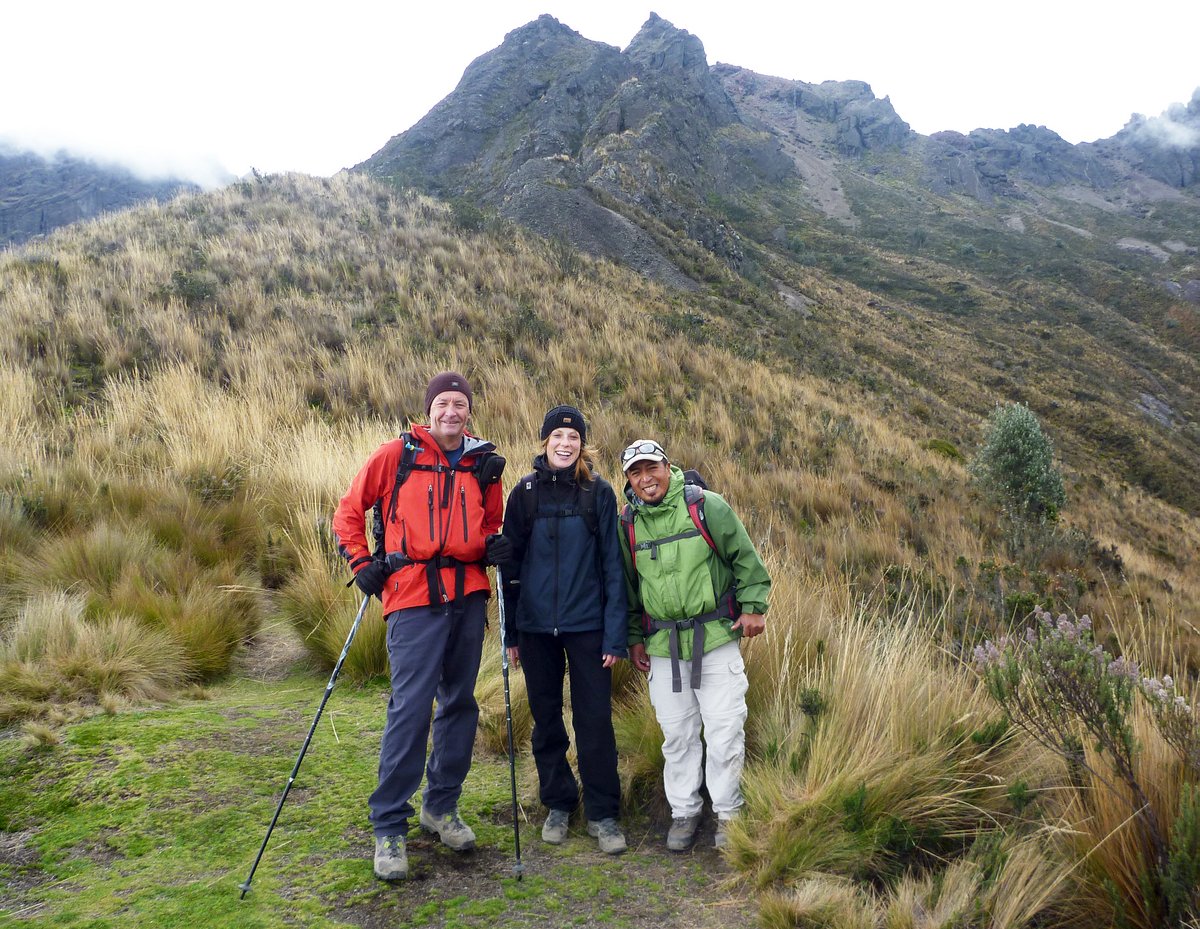
Glenys went off for a horse ride and I went to climb Rhuminahui (4,634m) - my first acclimatisation climb. There were two other people on the climb, in addition to the guide (Marco) - a German girl and a young fit Ecuadorian who both live in Quito, so they were well acclimatised.
The climb started at 3,800 metres in the car park at Lago Limpiopungo, a small lake with (supposedly) fabulous views of Cotopaxi. Once again the elusive mountain was covered in cloud when we arrived.
The ascent began with a gentle walk along a path and up the crest of a ridge – it would have been pleasant if we hadn’t had strong winds with rain and hail. When the ridge started to steepen and became rocky, the route zigzagged up a scree slope to the right of the ridge. This was very steep and quite brutal being above 4,000 metres. By this time, I was feeling the effects of the altitude and my legs turned to jelly several times causing me to be the wimp of the party by keep having to stop.
The last 50 metres of ascent was a scramble up steep rock to the small summit – we arrived 2½ hours after leaving the car park, which apparently is a good time. We didn’t hang around at top because it was bloody freezing and very windy - just enough time to take a few photos.
It’s interesting that the locals from Quito and the surrounding towns regard this peak in the same way that we regard Snowdon – a short walk and a bit of a scramble. However, it’s nearly as high as Mont Blanc, which is the highest peak in the Alps.
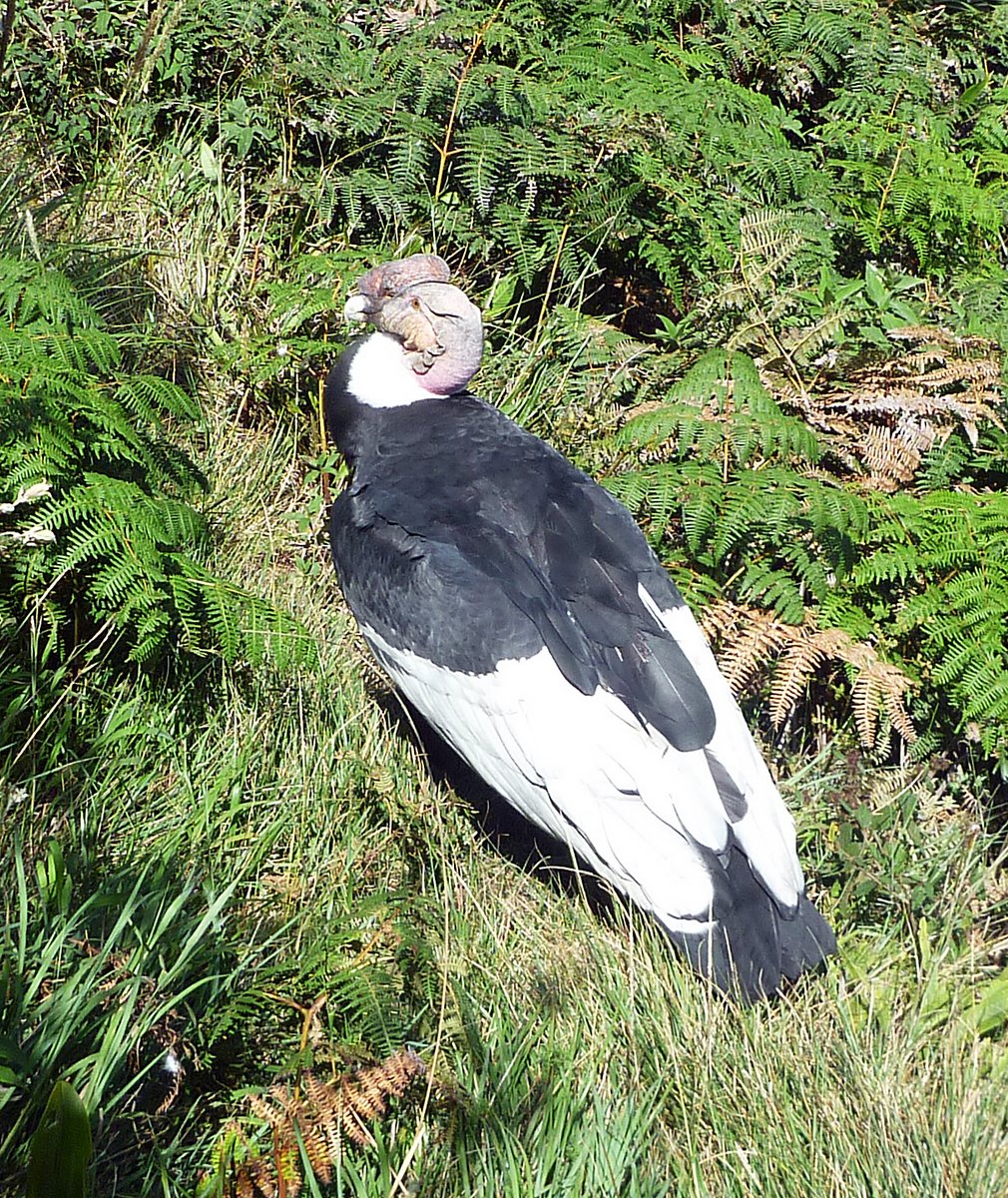
As we walked back down, we spotted a couple of condors flying in the area – it was exciting to see the largest bird in the world. Our guide told me that they are a kind of large vulture and eat carrion. The walk back down was much easier than the grind up and only took us 1½ hours.
As walked back towards the car park, the cloud started to lift over Cotopaxi and I finally got my postcard pictures of the mountain, which I'm due to climb in three days’ time – looks fabulous, if a little scary.
When I got back to the hostel, Glenys was already back from her horse ride and looked absolutely exhausted – four hours of fast riding with a lot of cantering had taken it out of her. We had thunder and rain in the evening, so I went to bed a little worried about the weather for tomorrow’s ascent of Illinizas Norte.
20 January 2014 Machachi, Ecuador
We woke up to good weather, which was a relief. Glenys went off for a three day horse ride around the Cotopaxi National park, while I went with my guide (Pablo) to climb Illinizas Norte. I was pretty exhausted climbing Rumiñahui yesterday, so I was dreading climbing this mountain which at 5,126 metres is 500 metres higher.
Pablo and I started our ascent at a car park at 3,900 metres and initially walked up a pleasant path climbing up to a ridge, with some fabulous views of the two peaks of the Illinizas ahead of us. Once at the ridge, the going got tough for an hour as we trudged up to the Refugio de Nuevos Horizontes at 4,700 metres. It took us 2½ hours to get to this small hut perched between the two peaks of Illinizas Sud and Illinizas Norte.

We stopped at the hut for a 30 minute rest and a cup of tea made by the hut guardian. The hut is very basic with bunk beds for about ten people and a bucket-flushed toilet, but it looks like the guardian has a decent little kitchen to cook meals. A couple of climbers came in having done an ascent of Illinizas Sud and looked grateful for the bowl of soup that the guardian produced.
From the hut, we walked a short distance to the start of a long, steep, rocky ridge with some sustained scrambling in places. Again I found the going hard with the high altitude draining the strength from my lungs and legs. It took us 1½ hours to climb the 420 metres from the hut – the last 50 metres were a sustained scramble and particularly tough.
We sat on the summit of Ilinizas Norte (5,126 metres) for ten minutes, but unfortunately the cloud had finally come in, so we didn't have any panoramic views. I wasn’t too bothered – I was just glad to have made it up there.
Instead of going back down the ridge, Pablo took us down the east face which is a 30-40 degree slope with soft deep scree allowing us to giant-step and slide our way straight down. We then cut across to the right passing below a ridge and to the bottom of the ridge that leads to the hut. The lower part of this route passes through some lovely patches of high altitude plants such as Culcitium and Chuquiraga (Flower of the Andes).


We were back at the car park by half past two making our round trip less than six hours, which I’m told is a good time. I’m pleased that I’m making good time overall, but worried that I feel so exhausted while climbing.
I was back at the hostel by mid-afternoon and, surprisingly, I wasn't too tired, so I just chilled out reading. Glenys came back in the late afternoon, which was a nice surprise. She was supposed to be staying at another hostel, but another lady had joined her on the ride and she wanted to return to Papagayo. Glenys wasn't complaining because the other hostel was going to be very basic and they were soaked to the skin.
There was a lot of confusion among the climbers staying at the hostel because the usual Cotopaxi Refuge has been shut for maintenance. Normally, we’d be spending the evening in the Refugio José Ribas at 4,800 metres and leaving at midnight to make the 1,100 metre ascent, but now that the refuge is shut, no one seems to know what is happening. It sounds like we’ll have to start from the car park, which is at 4,600 metres, so we’ll have another hour added onto both the ascent and descent, which at that altitude is a real bummer.
21 January 2014 Machachi, Ecuador
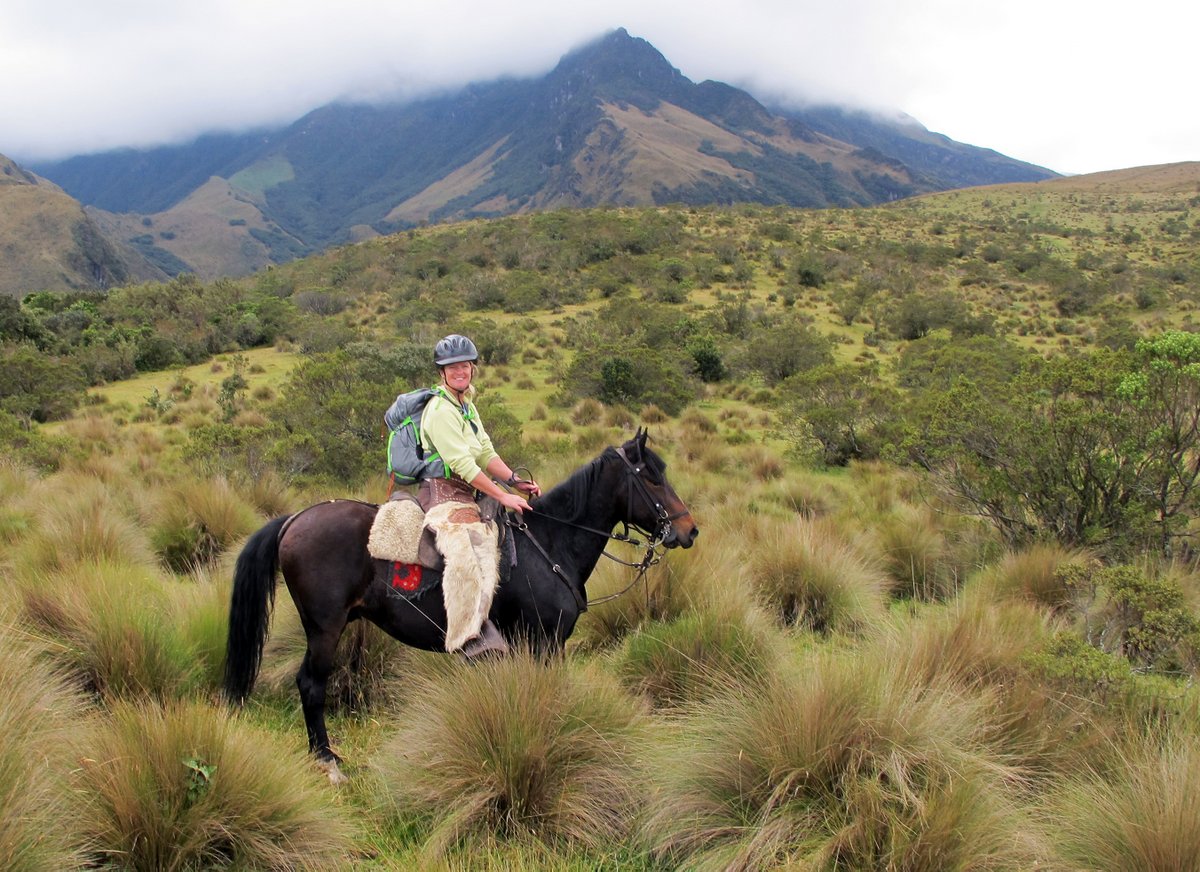
Glenys was issued with Chagras style chaps (made from Llama skin) to keep her dry and disappeared off on a two day horse ride. I had a rest day in preparation for climbing Cotopaxi tomorrow. There were three guys doing Cotopaxi today and confusion continued to reign about the closure of the refuge until their three guides turned up at eleven o'clock. It turns out that we’ll be staying at another refuge within the Cotopaxi National park, which is at a lower altitude than the Cotopaxi Refuge. Our guides will drive us up to the car park at ten o’clock at night and start the ascent from there.
I pulled out all my climbing clothing and worked out what to wear for the ascent of Cotopaxi. I should be okay with the various layers of clothing that I have as long as I keep moving – it’s good to be a little cold when ascending. The only problem that I have is that I don’t have a nice warm duvet jacket for the summit or if we have to stop moving for any reason.
I had a look at the equipment which Gulliver’s Travels provides and it’s adequate. They have plastic boots and seem to have enough that I should find a pair that will fit me. The crampons and ice axes are pretty standard; they have some nice warm mittens for my hands, but they don’t have any really warm jackets, so I’m not sure what I’m going to do. They do have some sturdy waterproof jackets, so I might just take one of those to give me a little more warmth in case I need it.
I spent the rest of the day reading, using the internet and lounging about - I even had a two hour kip in the afternoon.
Glenys had a great day, riding up to a col next to Rhuminahui and then down to the plateau next to Lago Limpiopungo. They rode with some wild horses, which were getting very excited about these three new horses cantering along. They spent the night at the Tambopaxi Lodge, which was very comfortable and did great food.
22 January 2014 Machachi, Ecuador
Glenys had a good day riding from the Cotopaxi National Park, through the town of Machachi, back to the hostal. In the morning, they spotted a herd of fighting bulls, but the guide wanted to keep away from these potentially dangerous animals, which are released up in the Paramo and then rounded up twice a year for the bull fights.
I had a restless night thinking about the ascent of Cotopaxi. Pablo, my guide wasn’t due to turn up until eleven o’clock, but I got up at seven because I couldn’t sleep. After breakfast, I checked all my gear, packed it into my rucksack, then just sat in my room, reading, waiting and trying not to worry...
Pablo turned up on time and we went to the store room to get my specialist climbing equipment – plastic mountain boots, crampons, ice axe, gaiters, warm mittens and a spare rain jacket in case it was really cold. All the gear was included in the cost of the Cotopaxi climb and was of acceptable quality although most of it was well used and abused. My boots were a size too big, but I’d rather that than having them too tight.
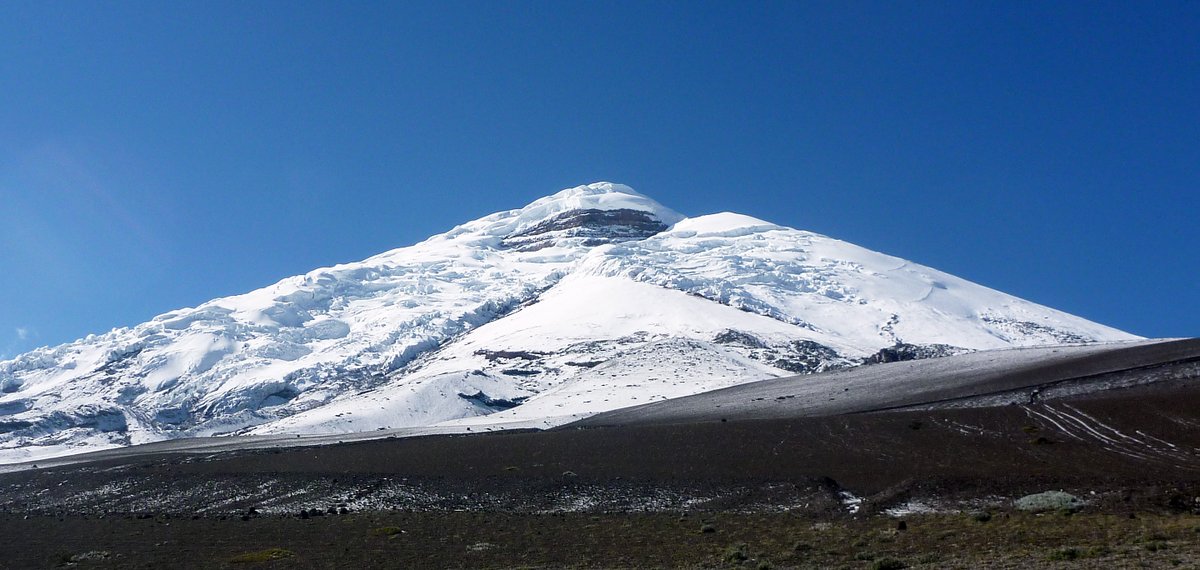
Having packed everything into a four wheel drive car, we drove to the refuge in the Cotopaxi National Park, stopping for lunch and to buy some snacks to eat during the ascent. The Refugio La Rinconada is in the Cotopaxi campsite and is pleasant enough with a dining room and a bunk room with three storey bunk beds – enough room to fit 15 people. I tried to sleep in the afternoon, but it was chaos, with people constantly arriving, so I didn’t get much rest.
An excellent and filling dinner was served at six o'clock and we were very lucky because the clouds lifted giving us a good view of Cotopaxi from the dining room as the sun went down. After dinner, I went straight to bed, knowing that we’d have to be up in four hours.
23 January 2014 Machachi, Ecuador
I didn’t get much sleep - maybe a couple of hours. An hour before midnight, the hut guardian served a basic breakfast of jam & bread with hot water to make tea. Pablo and I left the refuge at half past eleven and drove for fifty minutes up to the car park, which is at 4,600 metres altitude. It was half past midnight when we finally walked out of the car park and started our ascent.

The path up to the Refugio José Ribas is loose scree and dirt, but we went nice and slow, so it wasn’t too bad. It took us 50 minutes to get up to the refuge at 4,800 metres, where we stopped for ten minutes to put on our harnesses and gaiters. From there, we walked for 30 minutes up to the edge of the glacier, where we put on our crampons & helmets and tied into a rope.
It was a fairly bright half-moon, so we were able to walk for some of the time without head torches, which was very nice. There were also lots of stars in sight and we had an impressive view of the lights of Quito in the far distance. It was a fairly warm night with hardly any wind, so I was just wearing a technical t-shirt, a thin fleece and a thin rain jacket for the first half of the ascent. On my legs, I had some merino wool long johns, a thin pair of stretchy walking trousers and waterproof trousers.
The ascent was a long trudge up on snow which was mostly soft and sugary, making it tough on the old legs. After about an hour, we met a group coming down. Pablo talked to the guide and found out that they’d turned around because the guide thought that there was too much snow and that the conditions were dangerous. Pablo decided that we would carry on and he would have a have at the snow pack himself.
We continued to climb up, mostly on uphill transverses of 35-50 degree slopes. We were now the leading group of the four parties that were making the ascent and I was feeling very nervous about the possible avalanche conditions. My mind kept going back to the series of avalanches that I survived in Cogne, a few years ago. (See the trip report in our mountaineering section). Fortunately, Pablo knew what he was doing and made several stops to dig down into the snow with his ice axe to check the state of the snow crystals in the various layers of snow. (I also dug down a couple of times to satisfy myself that the snow pack was stable.)
After a couple of hours, we stopped at a level, sheltered area and had something to eat and drink and to put on another layer of clothes because it was getting colder. By this time I was pretty tired and feeling the effects of the altitude. The rest of the climb was very monotonous, trudging up snow slopes, with very few features. It turned into a mental battle, trying to keep my legs moving while near exhaustion – all I seemed to see for hours was snow and the back of Pablo’s boots.
Finally, the peak was in sight and, at half past six, six hours after we left the car park, we walked onto the summit of Cotopaxi at 5,897 metres. I was knackered. I threw my rucksack onto the snow and dropped to my knees, resting for a couple of minutes, before wandering around to look at the impressive volcanic crater and the mountains in the distance. We were lucky with the weather because we had blue skies and could see many of the nearby peaks sticking up out of the lower level clouds – fabulous.

After the obligatory summit photographs, started our descent, passing the other groups on our way down – we’d had the summit to ourselves for fifteen minutes. The descent was a brutal two hours of walking and sliding down the snow path that we’d made on our ascent. We didn’t stop many times because I wanted to keep going to get it over with. My knees were killing me by the time that we walked onto the car park at quarter to nine – a tough 8¼ hours of mountaineering.
We drove back to the Papagayo Hostel and I went straight to bed after a nice hot shower. Glenys woke me at one o’clock and we had a pleasant lunch in the garden with another Brit called Jim, who had climbed Cotopaxi the previous day. Jim agreed with me that Cotopaxi is a very, very hard mountain.
I had another kip in the afternoon and, after dinner, I was back in bed at eight o’clock – eight hours of tough climbing above 5,000 metres has taken it out of me.
24 January 2014 Machachi to Banos, Ecuador
Jim had arranged for a car and guide to take him to Banos, so we hitched a lift with him - this avoided us having to catch two buses. On the way, we stopped off in the small town of Salcedo, which is famous for ice creams. The main road through the town is lined with small shops all selling ice cream lollipops – it’s tasty but nothing very special.
The guide dropped us off at the Hotel La Floresta in Banos before noon. It’s very posh costing $75 per night for a double room, but it’s well worth it - some of the hostels in town have a bad reputation for having things stolen out of rooms. After settling into our hotel room, we went for a stroll around town.
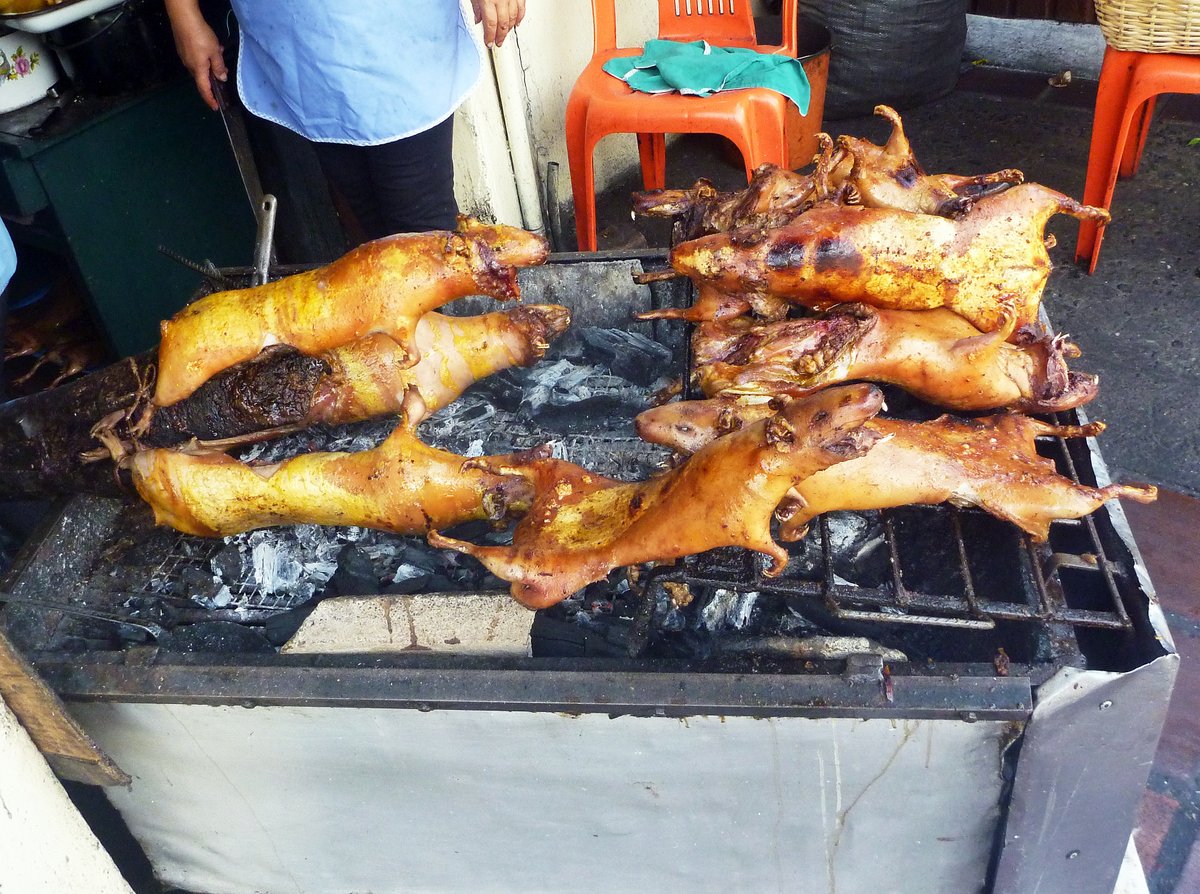
Banos is a holiday destination for both Ecuadorians and foreigners, so it’s packed with hostels, restaurants and small shops selling souvenirs. We came across the local market where there are a lot of eating places. One of them specialises in guinea pig, which they cook on a barbeque. It’s pretty expensive ($20 for a large one) and we’ve been told that it’s incredibly fiddly and difficult to get a decent amount of meat from the skinny little things. We didn’t bother and had a more filling Almuerzo Tipico for $2.50.
There’s an active volcano which towers above the town and Banos is famous for natural hot springs – “Banos” literally means “Bath”. We wandered over to the hot baths that are at the edge of town beneath a very impressive waterfall. The hot springs are in a very old fashioned looking set of pools and the water is a horrible mud brown colour – not particularly appealing.
We had dinner in a small cafe in town, which actually serves lamb, which we haven’t seen since we left the states last year. I had a lamb chop with mashed potatoes, which was bliss.
25 January 2014 Banos, Ecuador
We rented two bikes and rode 15 kilometres down the “Rutas de Cascades”, which is a road following the Rio Pastaza past numerous waterfalls. The river valley is very steep sided and deep, so the locals have set up lots of small cable cars and zip lines across the valley.
As well as the many tourists riding bikes down the route, there are a plethora of “Chivas” driving down the route. These are open sided trucks with bench seats that carry up to twenty tourists. With their bright colours and loud party music, these Chivas stop at many places turning most of the route into a kind of Disneyworld.
Glenys and I went on one of the small cable cars (which was little more than a steel cage) giving us a great view of the Cascada de Agoyan, hundreds of feet below us. We then stopped off to watch someone do a bridge swing. This looked horrible. They loop a couple of climbing ropes under the bridge and the punter dives off one side of the bridge with the ropes attached to the other side of the bridge. The result is that when the rope tightens, the unfortunate victim is flipped violently vertical before they swing – I don’t think that my 57 year old back would like that.

We did indulge in a zip line at Tarabita which was great. The zip line goes ½ kilometre across the river canyon, hundreds of feet above the river. They suspend your knees so that you are horizontal, so it feels like you are flying. For $7.50 each, we got a ride across to the other side and back. Good fun – we even bought the video which was an extra $3.
The bike ride finishes at the small village of Rio verde where we parked the bikes and walked for a kilometre down a good path and steps to the Diablo waterfalls, which are very spectacular. After trudging back up the steps, we put the bikes onto a truck and then sat on rough wooden benches in the back, while they delivered up back to Banos – a great day out.
In the evening, we went out for a beer and dinner with Jim. Unfortunately, we got terribly drunk, swigging back strong cocktails in the Leprechaun Bar – will we ever learn?
26 January 2014 Banos, Ecuador
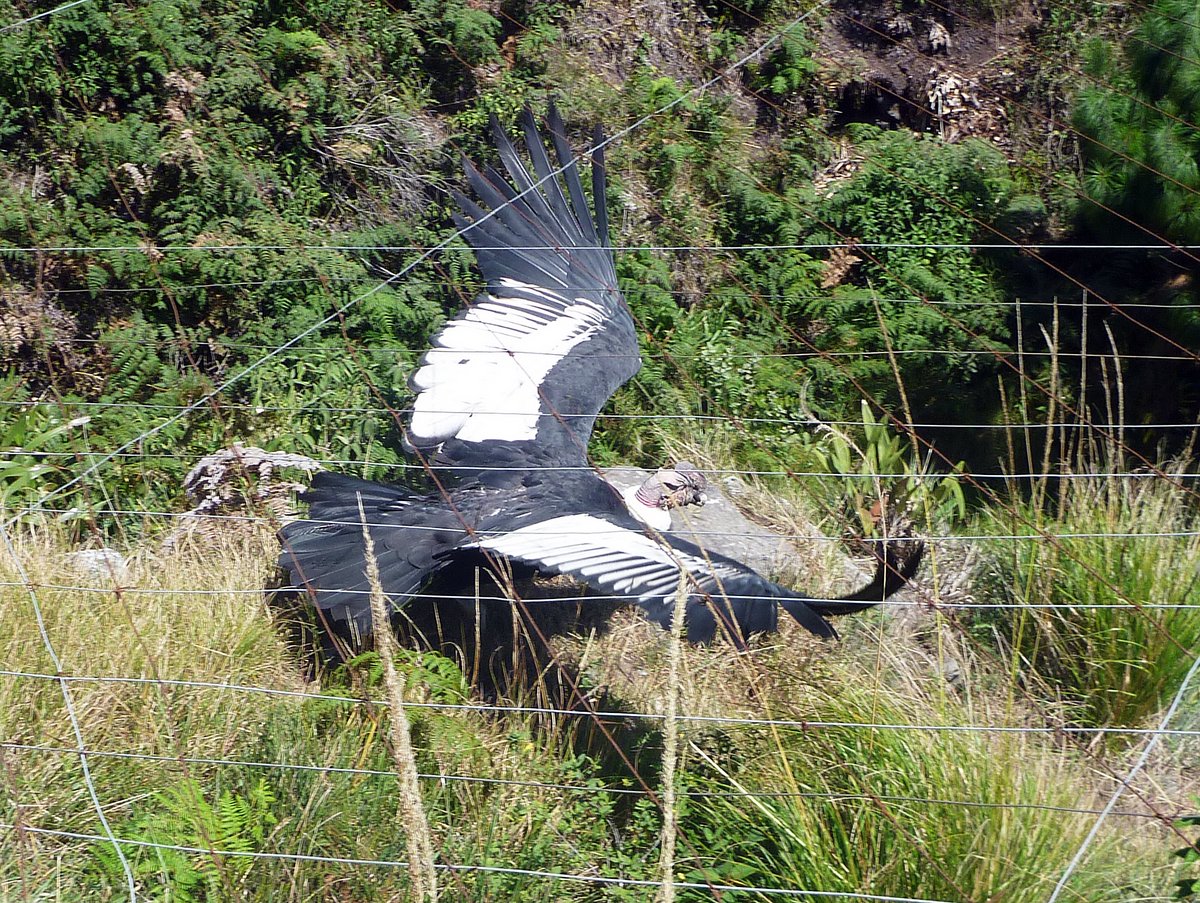
We had hangovers this morning, so we abandoned our plans of going for a hike up the steep sided hills above town and instead, we went to the zoo. It’s only a small place, but it’s nicely done and is in a stunning location high above the river valley with some great views. Most of the animals are natives of Ecuador, so there are a lot of birds, with just a few monkeys and a few big cats. The Condor with its 4 metre wing span, was the most impressive creature that we saw, but it was a shame to see these huge birds penned in when they should be out soaring.
One of the strange things about Ecuador is that the small tiendas (shops) seem to herd together and sell the same things – so we often see a long line of small stalls selling exactly the same thing. Here in Banos, they sell sugar cane along the road and there’s literally hundreds of small shops selling exactly the same thing – why? And how on earth do they make a living if everyone is competing against each other?
We had a quiet afternoon, Glenys walking around the shops while I lurked around in the hotel, swinging in a hammock, reading a book.
27 January 2014 Banos, Ecuador
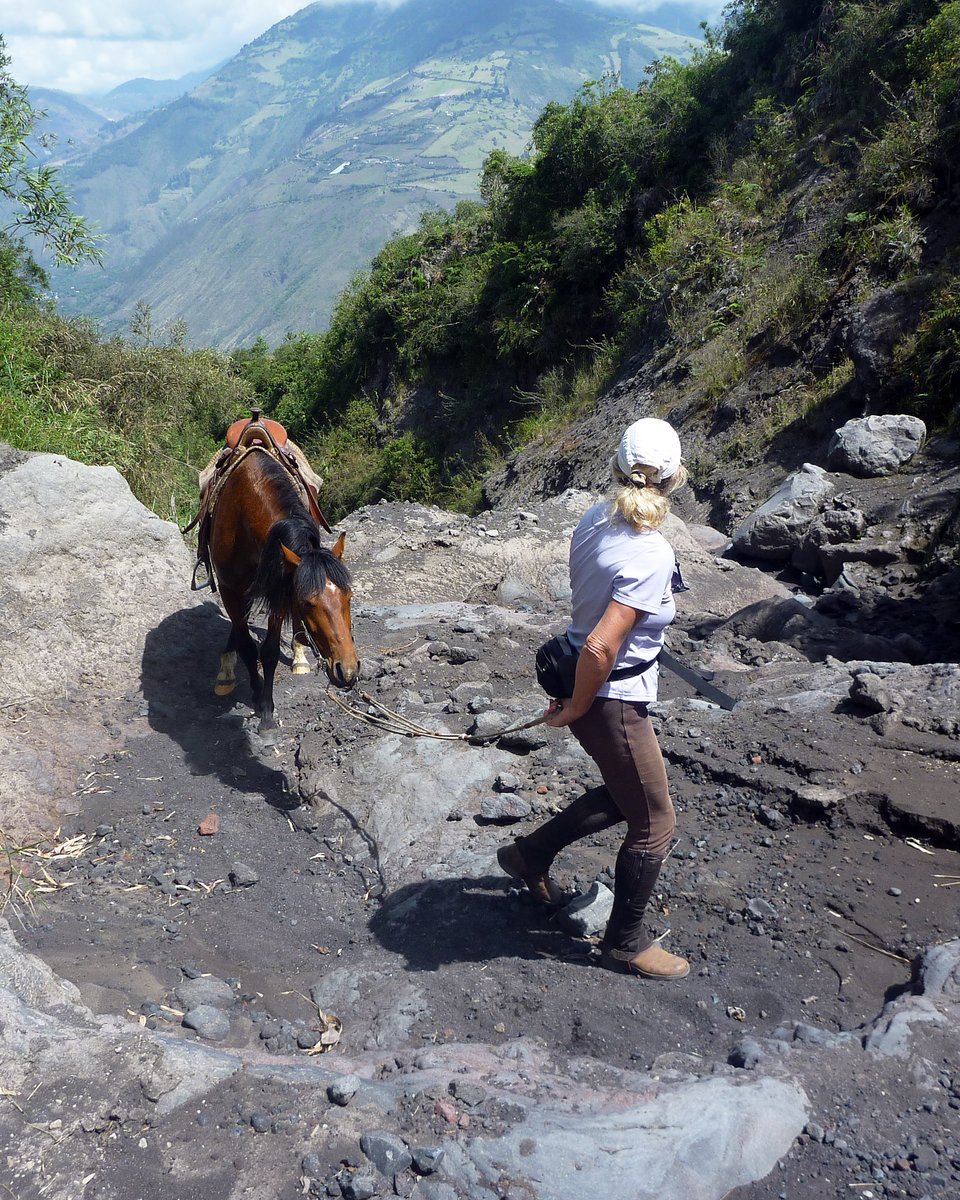
We went for a four-hour horse ride on horses belonging to Christian, who owns the Isla de Banos hostel. He dropped us off at a small farm on the slopes of the Tungurahua volcano, where we met our guide Pablo. Our route took us up dirt roads and paths past fertile fields of maize and tree tomatoes, cantering whenever we could on the very responsive horses.
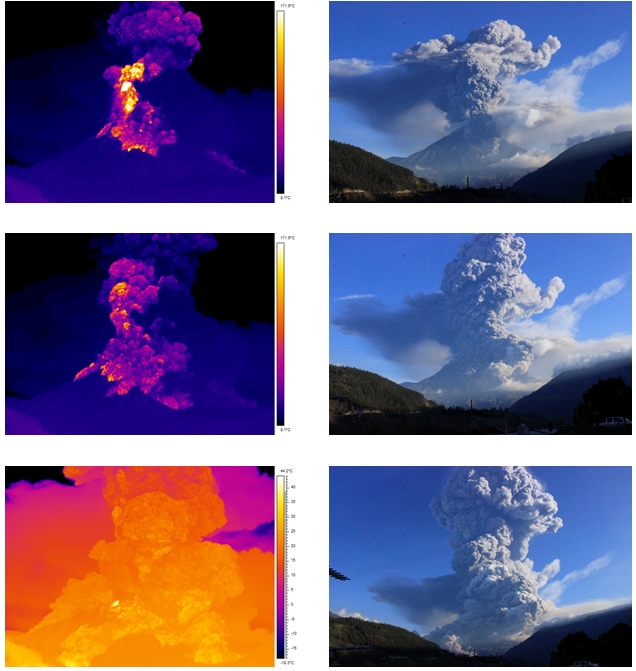
After about 90 minutes, we stopped in a meadow high above the valley and had a bite to eat. Pablo was a mine of information about the volcano, which became active in 1999 after a long period of quiet. The last serious eruption of Tungurahua was in 2006 when a pyroclastic cloud swept down the slopes (where we were riding), wiping out all the animals and vegetation in its path. It took only five minutes for the cloud of hot ash to reach the river valley below. Molten lava flowed out of the volcano crater and took an hour to flow down several canyons. Five people died and hundreds of people had to be relocated - Christian lost all of his 12 horses.
(Update. Tungurahua erupted five days after we left, sending clouds of ash five miles into the air and pyroclastic flows went down the north facing slopes above where we were riding - scary...)
Our ride back down followed a similar route and we arrived back at the farm very satisfied with the horses and the four hour ride – not bad value for $30 each. In the evening, we met up with Monica, Ellen and Don, who had been at the Papagayo hostel. We had a pleasant dinner in a cafe reminiscing about climbing Cotopaxi.
28 January 2014 Banos to Cuenca, Ecuador
We caught a bus to Rio Bamba; a taxi across town and then a bus to Cuenca. It was a long six hour bus journey stopping at every village and town on the way. The only highlight was when two small children held up the bus for a couple of minutes while they drove their sow and five recalcitrant piglets across the road.
A taxi dropped us off at Casa Ordonez, which is a lovely colonial hostel, with two covered courtyards and lots of original woodwork – beautiful. They even gave us a nice bottle of wine, which we accepted gratefully (after checking that it was a gift and not some kind of “mini-bar”.)
We sorted out our luggage and stepped out for something to eat. After strolling around the old Spanish colonial city for a while, we came across an Indian restaurant. There was no argument, we’ve not had a curry since we went back to the UK in July last year - we went straight in. It was acceptable; a sort of fusion of Pakistani and Ecuadorian food – it’s a curry, Jim, but not as we know it.
Back at the hotel, we enquired about visiting the Inca ruins at Ingapirca and the guy on the reception desk told us that it was $12 for the four hour trip, which seemed really cheap, so we asked him to arrange it for tomorrow morning.
29 January 2014 Cuenca, Ecuador
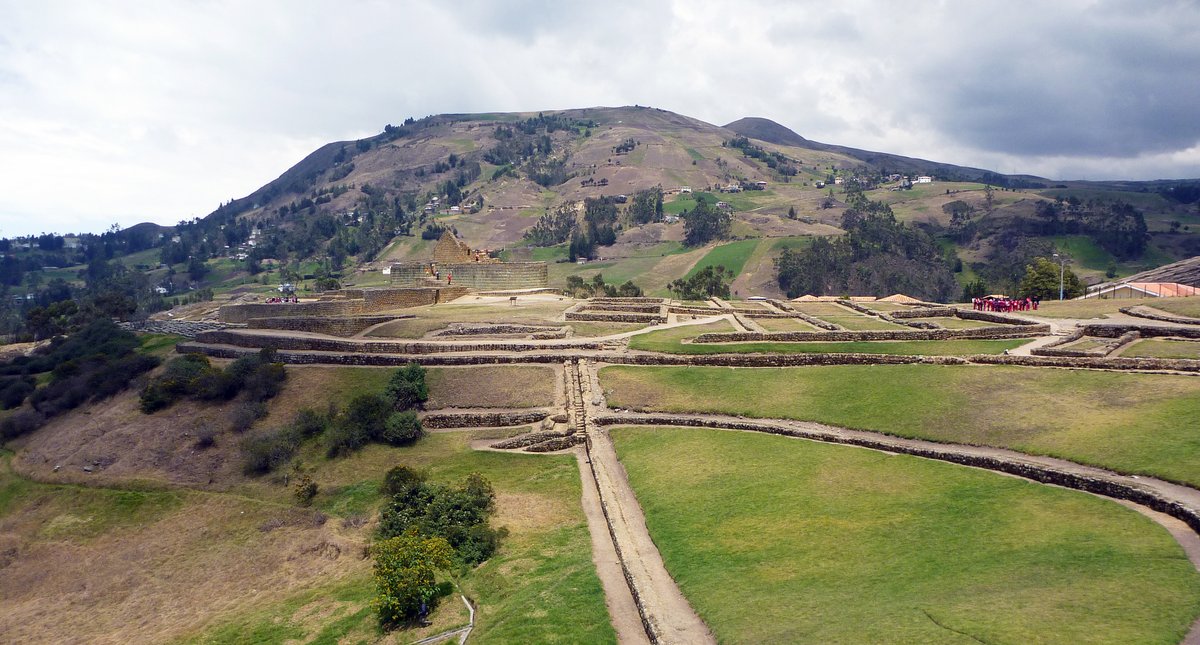
A driver (Johnny) turned up at nine o’clock and took us to Ingapirca. It took over two hours to get there, which was much longer than we expected. Once there, we paid $6 each for the entrance fee and joined a guided group walking around this ancient Canari and Inca settlement.
There’s not a lot to see, just lots of low stone walls that used to be buildings and one temple to the Sun God. The guide did a reasonable job and we learned that the place was originally settled by the Canari people in 500BC and then the Incas arrived in 15th Century. The Incas had difficulty in conquering the Canari and, after a couple of attempts, took the easy route, inter-married and lived together in peace. Ingapirca has examples of both the Canari and Inca architecture. It was alright, but $12 was a lot of money to pay to look at a few low stone walls – not quite Machu Picu.
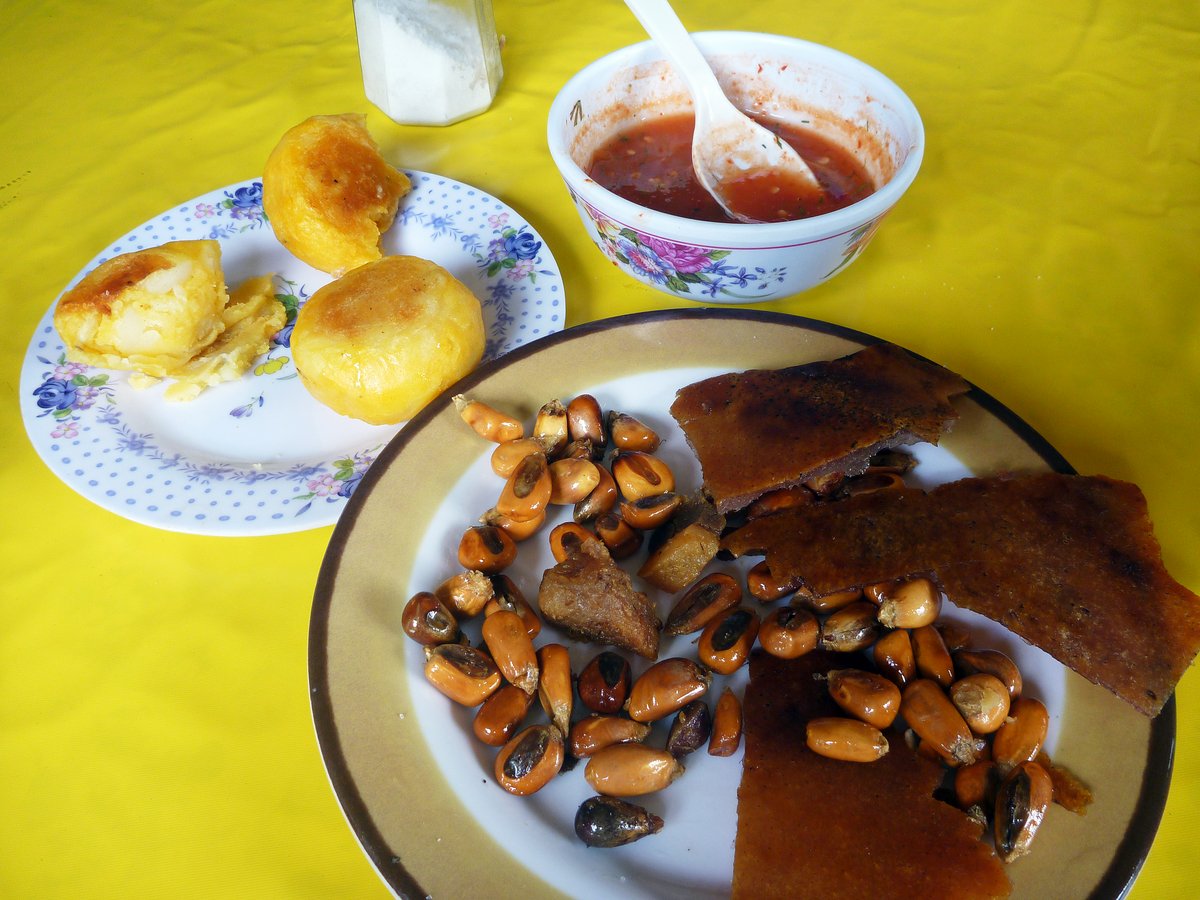
By the time that we’d got back to the car it was lunch time, so we got Johnny to stop at a road side eating place on the way back to Cuenca. While travelling on the bus yesterday, we’d seen quite a few of these places, which display a whole roasted pig by the roadside – they looked intriguing. It turned out that they sell a local speciality called Plato de Cascara which is deep fried pork, roasted corn kernels, topped by thin pieces of roasted pig skin. Thankfully, we only ordered one plate of the stuff because it was pretty grim. The roasted corn is very dry, the deep fried pork pieces were rock hard and the skin was (errr) crunchy, fat-soaked skin.
We’ve been in Central and South America for over a year now and consider ourselves pretty street-wise, but we got caught today. When we got back to the hotel, Johnny told us that we owed him $75, which was 5 hours at $15 per hour - a little bit more than the $12 that we were expecting to pay for the whole trip! After a few choice words, we all walked to the reception desk, who said that the deal was $12 per hour. There had obviously been a huge misunderstanding, so with great reluctance, we handed over $60. In retrospect, the original quote of $12 for the trip was way too cheap, but if we’d realised that it was $12 per hour, we’d never have gone. It was an expensive way to look at a few stone walls.
Still smarting, we went for a walk around Cuenca, which is a typical Spanish colonial town – not much to commend it. It started to rain so, to keep dry, we went to the Museum, which was very good. They had some good archaeological exhibits about the very early history of Ecuador and had a great section of exhibits showing the different cultures in the various regions of Ecuador.
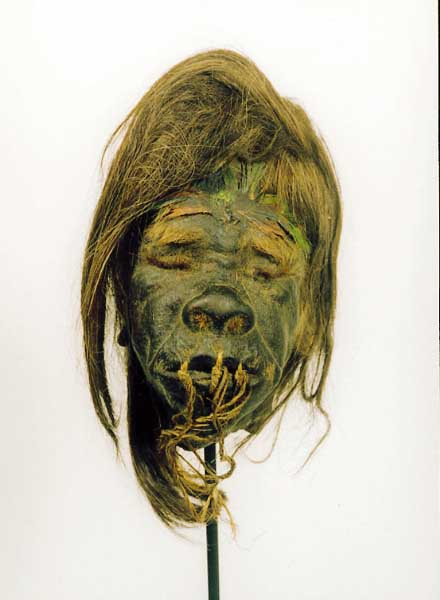
I was particularly fascinated by the Shrunken Human Heads on display, which were created by the Shaur tribe in the Amazonian jungle. As part of the manhood rites, the young men would first hunt a sloth and shrink the head as kind of a trial run. Thereafter, if an enemy was killed then the young man could shrink the head to gain the dead person’s power. Pretty gross, but fortunately, the Ecuadorian law now forbids the shrinking of human heads, although the practice of shrinking sloths heads is still allowed.
30 January 2014 Cuenca to Bahia de Caraques, Ecuador
We caught a bus to Guayaquil, which took 4 hours. The route passed through the Cajas National Park which is a stunningly beautiful and rugged place – it would have been great to do some hiking in the area, although it was covered in cloud for most of the time that we travelled through it.
I was very impressed with the bus station at Guayaquil, which is more like an airport than a bus station. The building has three floor and buses arrive and depart from all three levels. There’s a large supermarket on site, lots of very smart shops and a huge eating area including McDonalds and KFC. I was interested to see that KFC did a plate of rice, beans and a drumstick for only $1.80 – very Ecuadorian.
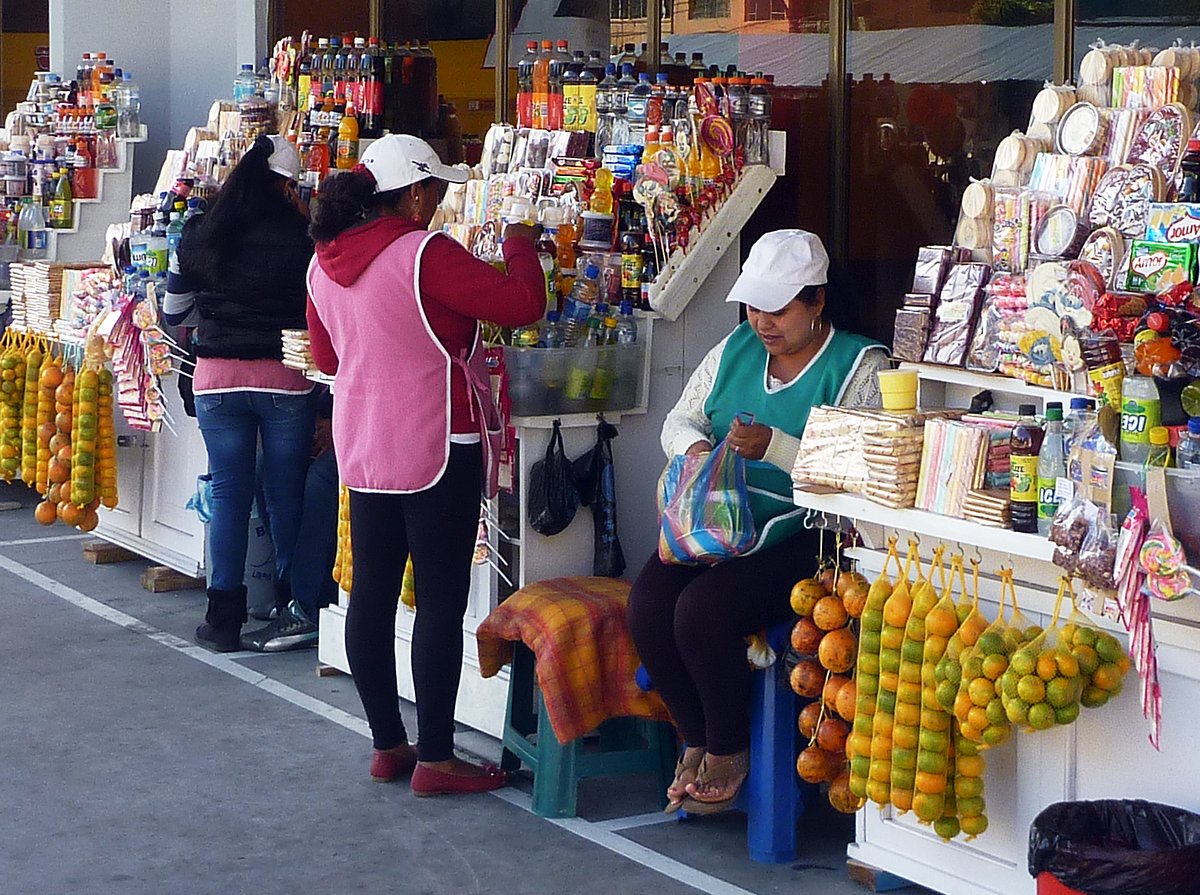
After our Big Mac, we caught a bus to Bahia. I love all the vendors that get on board the buses, selling a variety of drinks and snacks. Some only get on at bus stations and make sure that they get off before the bus pulls out, but others get on board at a bus stop then sell their wares while the bus is driving along. This seems to be a risky proposition to me because it takes a variable amount of time for them to complete their business and they get dropped off with their baskets and trays of food in the most unlikely places. I guess that they then catch the next bus back and repeat the process all day.
We arrived back at Puerto Amistad around five o'clock in the evening and scrounged a lift from one of the other cruisers. It’d good to be back on board and to find out that we haven’t sunk.
31 January 2014 Bahia de Caraques, Ecuador
We had a quiet day, unpacking and tidying up. After getting the dinghy back into the water, we dropped two bags of laundry off and walked into town to restock our cupboards.
I spent the afternoon trying to sort out the 500 photographs that we've accumulated over the past couple of weeks. I’ve also got nearly three weeks’ worth of notes to write up for the web site – not a pleasant prospect. I should have kept on top of it while we were away…
I was pleased to see that our anchor chain has arrived back from the galvaniser and it looks like they've done a good job. We now need to get it back on board, but at high tide this evening there was a lot of swell coming into the estuary with big waves crashing against the sea wall. We’ll leave it for a few days and hopefully the conditions will improve.