
Diving for Cruisers

Diving for Cruisers

The result of a Rum Hangover combined with Nitrogen Narcosis

In 1992, we anchored in the Ria de Barquero on the North coast of Spain.  I put out two anchors because the wind had been veering around and was blowing 30 knots.  The next morning, we had problems pulling up the anchors because we'd swirled around and swept up at least three lobster pots.  I had to snorkel down in 12 metres of very cold water to free the resulting tangle. It took half an hour to sort it all out and I was exhausted.  I decided that I should learn to scuba dive and buy a set of gear in case this sort of thing happened in deeper water.

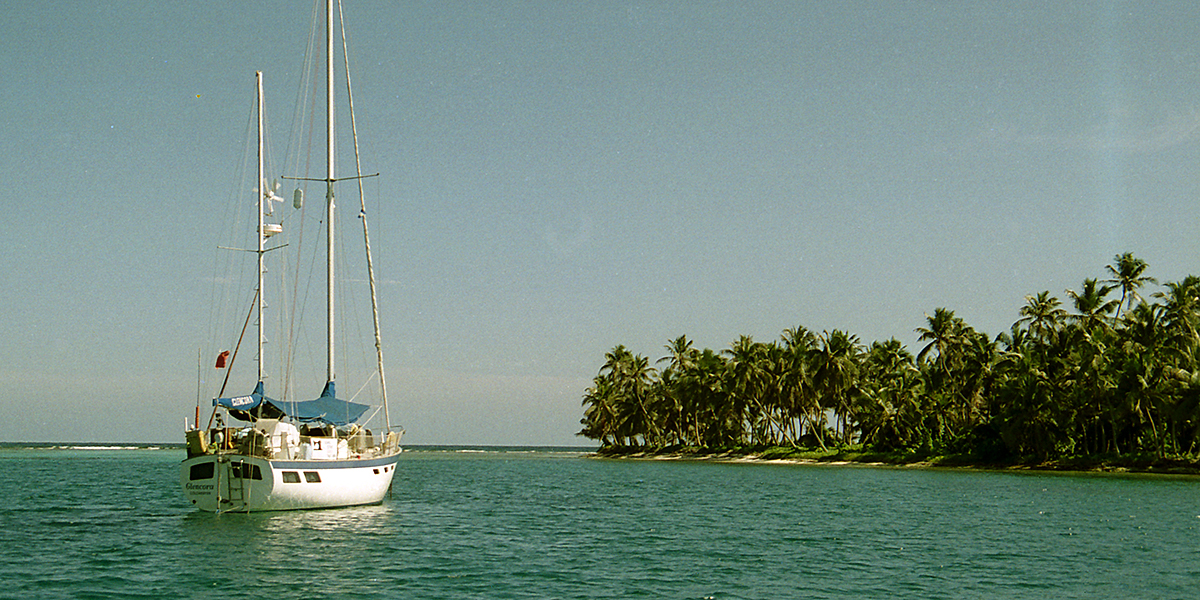
This small incident led to a love of scuba diving.  I did a basic course in Menorca and then an Advanced Open Water course in Malta.  When we arrived in Grenada after our Atlantic crossing, I worked in a dive centre for a month and became a Padi Divemaster.  Later that year, I qualified as a Padi Open Water Instructor and we bought a small dive compressor enabling me to run small dive courses from our yacht, Glencora.

Glenys and I have dived from our dinghy as we have been cruising and one of the frustrations is the lack of information about the diving that one can do near an anchorage.  I'm hoping that our descriptions of the various dives that we have done will be useful to other cruisers who want to dive by themselves.

West Indies

British Virgin Islands

Subcategories

The British Virgin Islands is probably the easiest place to go diving from a cruising yacht.  The water is normally very clear and the country has worked hard to preserve it's reefs.

There's a Marine Park mooring system in place, which places moorings at all of the dive and snorkelling sites around the BVI.  In 2012, there were 66 locations with moorings which are all strong enough to take a 50 foot yacht - in some locations, there are multiple moorings available. There are three colours of moorings - red for general use, yellow for commercial use only and blue for dinghies.  You can pick up any red mooring with your yacht. In 2012, it cost $50US per week for the mooring permit.  

That's the good news.  The annoying thing about the mooring system is that the majority of the good dive sites have yellow commercial moorings and, in most locations, the red moorings are only of use for snorkelling.  This means that apart from the more popular places (like The Rhone and The Indians), you have to make use of yellow moorings.  We adopted the strategy of picking up a red mooring with our yacht and then tying our dinghy with a long painter to a yellow commercial mooring to make the dive.  At least this way, a commercial dive boat can pick up the same mooring.

I think that the commercial moorings in the more remote dive sites should be changed to be "Diving-only" moorings and allow yachts to pick them up for 90 minutes. I don't think that this will inconvenience the dive operators - we did a dive on Ginger Island and didn't see a single commercial dive boat on any of the six commercial moorings during our two hour stay. We complained to the Parks Trust at This email address is being protected from spambots. You need JavaScript enabled to view it. - perhaps if more people complain they may change this unfair system.

These are the dives that we've done in the West Indies, including the Windward Islands, Leeward Islands, Trinidad & Tobago and Bonaire.

I find it very frustrating that some countries notably St Lucia, Dominica and the Grenadines in St Vincent require all scuba diving to be done with a commercial dive centre or a local dive guide.  This in my mind is blatantly trying to line the pockets of the commercial dive centres. I see no need to put this kind of restriction on cruising yachts.  I think that they ought to follow the lead of world class diving areas such as Bonaire and the BVI, who charge a modest fee for a permit, but allow divers autonomy.