1 October 2014 Neiafu, Vava'u, Tonga
It’s the start of another month, so we did a bit of planning. The cyclone season officially starts here in November, so we need to be leaving the Tropics and sailing down to New Zealand. This could be a very nasty passage if we get the weather wrong.
The passage from Tongatapu (at the southern end of Tonga) to New Zealand is 1150 miles, which will take us 7-9 days. At the moment, there’s a steady procession of highs and lows passing between Tonga and New Zealand giving unsettled weather up here and south west gales down there every five days, so there’s not a big enough weather window to avoid getting clobbered somewhere. Our current thought is to sail to Minerva Reef, which is an isolated atoll 380 miles south west of Tongatapu where we can hunker down and wait for a good 5-6 day weather window to sail the remaining 750 miles New Zealand.

We’re planning to get to Tongatapu by the end of October, and then be ready to go to Minerva Reef when there’s a good weather window. This gives us a month to explore the rest of Tonga. It’s only 160 miles from here to Tongatapu, so we can take our time and we’re planning to spend some time in the remote Ha’apai group of islands on the way.
With our deliberations over, we emptied three cupboards to give me access to the pipe work for our two fridges and I spent a couple of hours trying to find the damn leaks. I made sure that both systems were overcharged with refrigerant and then turned them off, which increases the pressure in the pipework. I then tried to find the leak using the old fashioned method of brushing on soapy water, but I couldn't find a single little bubble, which was very frustrating. The leaks may be in the evaporators or even in the condenser coils that are in two sea cocks and permanently immersed in water - it’s another job for New Zealand.
In the afternoon, we went into town to pick up the laundry & some groceries and then went over to “Laragh” to catch up with David and Katrina who we last saw in Penrhyn. They've done a lot of sailing around the Vava'u island group, so they gave us some good information on places to visit.
In the evening, we went over to “Flow” to do some more reminiscing.
2 October 2014 Neiafu to Port Morell (No.7), Vava’u
It was a lovely day, so we decided to leave the harbour and go out to the outlying islands to recover from three nights of partying. We went into town to stock up on the essentials - beer, wine, bread, coke and a few vegetables. I left Glenys in town and took the groceries back to the boat, recharged the damn fridge and did some tidying up.
Glenys came back just before midday with a nice basket woven from Pandanus to add to her collection of local crafts. She’d also bought a bag and scarf, which has been dyed with clay from the soil in the area. It’s an orangey-brown colour and the locals sell a range of t-shirts called “Dirt Shirts”, so Glenys has just bought a “Dirt Bag”.

After lunch, we dropped the mooring and motor-sailed to Anchorage 7, which is very nice. There’s a big charter boat fleet here and the charter companies have produced a map of the many small islands in the group, which shows all the anchorages as numbers, so everyone uses numbers not names - it’s not the most romantic way of naming anchorages, but practical.
We picked up a mooring and dinghied a mile to Swallow Cave, which is a lovely cave on the point of a headland. As we were the only people there, we took our dinghy inside and jumped in the water. In the late afternoon, the sun shines in through a hole in the roof and the cave mouth, producing lovely shafts of light in the crystal clear waters. The water is 10-15 metres deep inside the cave and there was a huge shoal of fish inside the cave giving me a good underwater photo opportunity - if only I had a decent camera.

We had a quiet night in for a change. Glenys fried up some snapper that she bought earlier and we had it with Breadfruit Chips and Palusami (Taro leaves cooked with Coconut Cream) - delicious, but I don’t think that she cooked the taro for long enough because we both had tingling lips and tongues afterwards.
Just before bed, Glenys found a huge Cockroach in our back heads. I asked her to lock me in with the monster and it took me five attempts to kill the damn thing with the flat of my hand - I hit it so hard that I've bruised the palm of my hand. This is the third cockroach that we’ve killed in the last two months, but the others were in Penrhyn, so we’re hoping that we haven’t got a nest.

3 October 2014 Port Morell to Lape (No.17), Vava’u
We dropped the mooring at 10 o'clock and slowly meandered to Anchorage 17 just off Lape Island stopping off at a couple of places to check out the anchorages. Most of the anchorages that we've seen so far have very steep drop offs and are heavily covered with coral heads. Lape is similar, so we picked up a mooring.
There’s been some advertising on the local cruiser’s net for a Tongan feast here on Saturday night, so we went ashore to find out about it. We were met by a nice lady called Catie who was chilling out under a mango tree. She took the $10 pa'anga mooring fee off us, but told us that they didn't have enough people to do a Tongan feast at the moment.
Catie took us for a walk around the small village, where only 32 people live. The wooden houses are scattered around this steeply sided island and joined together by narrow foot paths. The villagers have small plantations of papaya and banana and there are dozens of huge mango trees laden with green fruit, but unfortunately, they won’t be ready for a month yet.
After lunch, we went for a snorkel between Langito'o and Vakaeitu islands. The reef is very shallow, but we continued swimming through breaking waves to the outside edge of the reef, which is very spectacular. It dropped off to about 20 metres and had very healthy coral. There are even small sponges and we spotted some Crinoids - the first time that we've seen these creatures since we were in the Caribbean Sea.

We tried another snorkel on the reef extending out from Lape Island between Langito'o and Lape. The coral is beat up and mostly dead, but I found a nice Murex Shell for Glenys and we saw a Zebra Shark. This large 10 foot long shark looks like a big nurse shark and is covered with dark spots - it’s called a Zebra Shark because the juvenile is striped. It’s the first time that I've seen on of these, so I swam down and tried to get close, but it just remorselessly carried on its way.


After two hours snorkelling, we were pretty tired, so we had a quiet night and watched a movie.
4 October 2014 Lape to Tapana Island (No.11), Vava’u
We went across to look at Euakafa Island (No. 32), but the anchorage to the north of the island was packed with coral heads and the one to the west was open to the strong trade winds, so after looking around for fifteen minutes and trying three places, we gave up and ran away. The anchorages might be rubbish around here, but the sailing in these sheltered waters is great and we had a cracking four mile sail to Tapana Island (No. 11).
We managed to find a bit of sand and anchored in the pass between the two islands in 8 metres of water. We’re surrounded by reef and hanging off a shelf over deeper water, but the trade wind seem to be consistent here and it’s blowing us off the reef, so fingers crossed we look okay and the water colours are very pretty.
After lunch, we went ashore to book a Tongan feast at the Three Little Birds bar, but it was all closed up, so Glenys called Vava'u Adventures and the lady there booked a couple of places for us at lunch time tomorrow. We chilled out for the rest of the afternoon, Glenys went for a snorkel, but I couldn't motivate myself to put on my wet suit - the water seems really cold to us now.
5 October 2014 Tapana Island, Vava’u
It was low tide during the morning, so we went for a walk on the windward side of the island to look for shells. We picked up lots of small shells, which looked interesting, but nothing spectacular.
At half past twelve, we went to the Three Little Birds bar for our Tongan feast, but it was all closed up. We hung around for half an hour, but nothing seemed to be happening. Back at the boat, we tried to call the Three Little Birds and Vava'u Adventures, but being a Sunday, we heard nothing back. We were really disappointed because we’d been looking forward to our Sunday lunch, so we cracked open a couple of cold beers and drank the day away.
6 October 2014 Tapana Island to Port Morell (No.7), Vava’u
It was a miserable night with some squalls going through, giving strong winds and rain. I was a bit worried because we were hanging off a reef and, if the wind swung around, we could end up on the reef, so I got up a couple of times to check the wind direction and was very restless for the remainder of the night.

By nine o’clock, the weather had cleared up, so we pulled up the anchor and sailed across to Taunga Island hoping to anchor in Anchorage No.22. This is a narrow channel between drying reefs and again the sea bed had lots of coral heads. We tried to anchor on a shelf, but dragged and it was blowing a hooley, so we gave up. We tried in a couple of more places to the south east, but again the holding was crap, so we ran away.
We sailed back to Port Morell (No.7) and managed to find a sandy patch for our anchor on the south side of the bay. It’s a lovely anchorage, with a white sandy beach and rocky side to the bay and gives great protection from the north, east and south winds. So far, this is our favourite anchorage in Vava’u.
We went snorkelling on the east side of A’A Island, which was okay but nothing spectacular although there were a lot of small Networked Pipefish around which kept my interest. On the way back, I saw some Fruit Bats in the trees and we spent ten minutes watching them flap around as our presence disturbed them. It’s interesting how they make an approach to a tree like a bird, but then let themselves turn upside down as they grab the branch - looks weird.
7 October 2014 Port Morell to Neiafu, Vava’u
We sailed back around to the main town of Neiafu. There a small yacht race tomorrow and everyone else had come into town, so it was hard to find a mooring. We ended up picking up on e pf the last moorings which was a long way out of town.
After sorting ourselves out, we went into town to do some shopping and found out that “Flow” was taking part in a small local rally race tomorrow, so Glenys volunteered to go along as crew. The race is going to Tapana Island where we’ve just come from, so I couldn’t be bothered - I don’t particularly like sailing.
In the evening, we went to a presentation given by a team of people from Opua and Whangerei in Northern New Zealand, which was very good. One presentation was on weather routing and the guy confirmed my thoughts that we should be stopping in Minerva Reef and then head south west, so that we approach New Zealand from the north, in case we are unfortunate to hit south west gales. A good tip was to leave Minerva Reef after a trough has passed through.
There was a lady from the quarantine department, who ran through a long list of things that are not allowed into New Zealand, including plants, honey, chicken, eggs, popcorn, vegetables, etc. Dried foods such as rice and pasta will be inspected and removed if there are any signs of infestation with weevils, etc. We knew about most of it and Glenys has been reducing her stocks of food planning to arrive with nearly bare cupboards.
Glenys took along a load of native artefacts that we’ve collected along the way, including woven baskets from the Manamo and Darien regions; various necklaces; and some large shells. We’d heard rumours that the NZ authorities take these things away, but the lady reassured Glenys that they would be okay. At worst, the authorities will put them in a big bin liner and spray them with insecticide, which we’ve already done.
8 October 2014 Neiafu, Vava’u
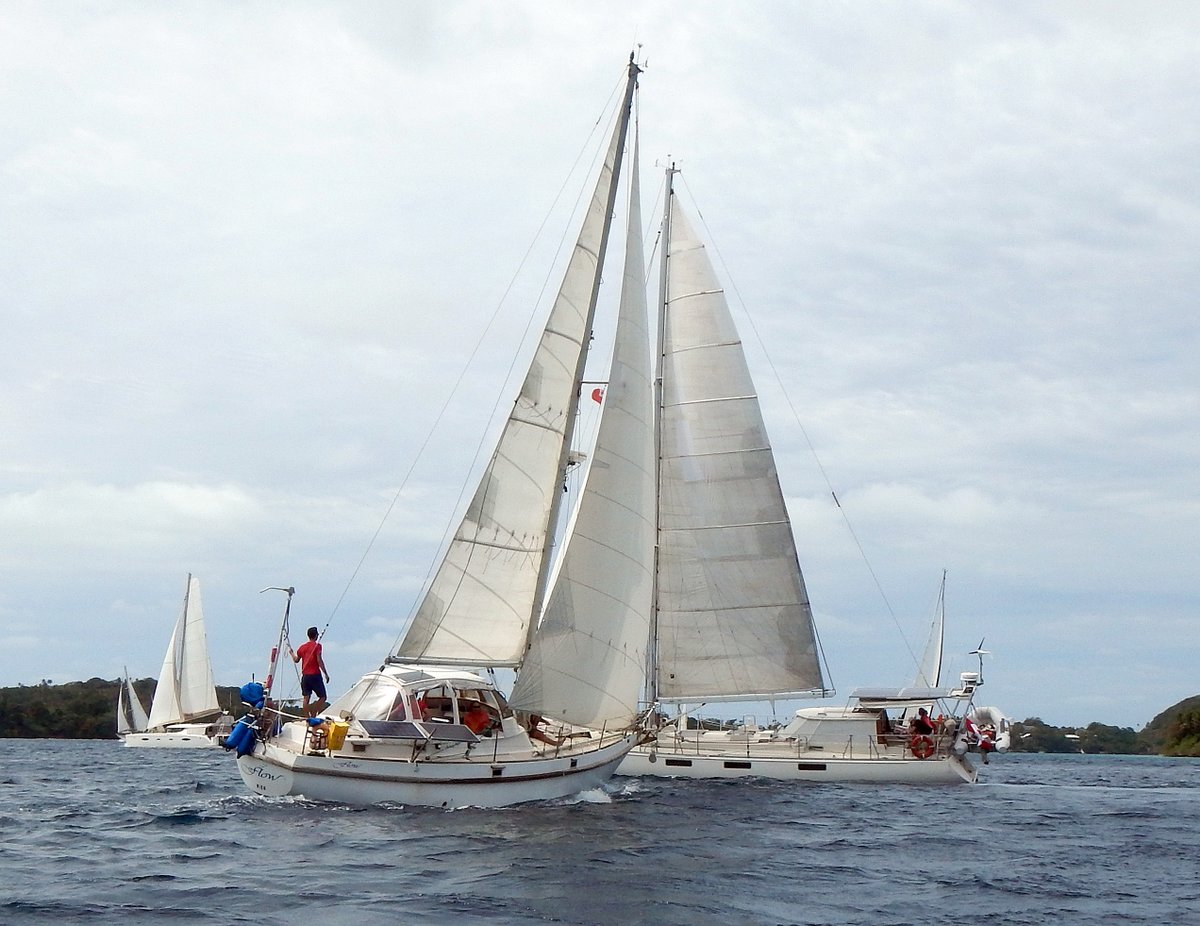
It was race day, so I dropped Glenys off at “Flow”. They had eight crew on board their 38 foot boat, so there were bodies everywhere. There were about fifteen cruising boats taking part in the race and I zipped around in the dinghy just after the start and took some nice photos of Flow beating to windward. Once the fleet had departed, I had a nice relaxed day on board pottering about.
Glenys had a good time. Being only 38 foot long “Flow” had no chance of winning, so they had a good sail and at least didn’t come in last. Once anchored at Tapana Island, they went ashore to a bar and listened to a jam session where “Laragh” and “Pamela” were both taking part.
Most of the fleet stayed overnight at Tapana Island, but “Flow sailed back” arriving in Neiafu just after dark. Glenys was tired, so we went out for a meal in a local restaurant - fish and chips washed down by a few beers/

9 October 2014 Neiafu, Vava’u
We had a quiet day. I went ashore and spent three hours sitting in the Aquarium bar accessing the internet and publishing four weeks of our web site. In the afternoon, we did a few jobs on board.
There was a big party in the evening to present prizes for the yacht race. One of the highlights was a group of transvestites who put on a show, dancing to recorded both disco and traditional. These “fakaleiti” are a fairly common site around Tonga and often start to wear women’s clothing at an early age. Normally, they are tolerated by their families and the community, but some get tormented when they are children and teenagers. While most of them are gay, I believe that some of them are actually married to women.
The “he-she’s” put on a good show with the locals running out onto the stage to push bank notes down their bras and up their skirts. The performers wandered among the audience and danced on the tables to attract more gifts. It was a lot of fun.
Horst from “Flow” won a case of beer because at 75, he was the oldest participant in the race. The beer was shared among the crew and we had a late, drunken night.
10 October 2014 Neiafu, Vava’u
We were both feeling very dull, so we had a lazy day. In the morning we went for a stroll around town to buy a few groceries and then chilled out in the afternoon.
11 October 2014 Neiafu, Vava’u
There’s a low passing to the south of us, so the wind has backed to the north and dropped to less than 10 knots, so it was very hot today. It’s time to move on, but I’m waiting for East winds again before we head down to the Ha’api group of islands.
We did a few jobs in the morning and then after lunch went ashore to do some internet, but it was very hot and airless in the bar, so we didn’t stick it out for long. Glenys has booked us in for a Tongan feast at the Botanical Gardens tomorrow (second time lucky.)
12 October 2014 Neiafu, Vava’u
The mini bus from the Botanical Gardens turned up on time and we were driven out to a bay on the far eastern side of the island. The feast was more like a buffet of Tongan specialities, such as fish and suckling pig roasted in an Umu (an underground pit). There was also Taro, chicken curry, fish cakes and my favourite, Palusami. It all tasted great and we were well stuffed after three helpings.
Before the minibus took us back to town, we had time to strolled along the beach for a while to settle our huge meal - unfortunately, the Botanical Gardens were closed on Sunday.
We met Garth and Monique from “Heartbeat” at the feast and they came over to Alba to have a chat. I gave them loads of cruising information for the Cook Islands, French Polynesia, and the Marquesas. They are in a small 34 foot boat and have just come up from NZ heading for Mexico, which is against the wind and current - they are young and slightly crazy, but a nice couple.
13 October 2014 Neiafu to Vakaeitu Island (No.16), Vava’u
We woke up with a huge 55 foot catamaran called “Atlantide” bumping up against us. They picked up a mooring close to us about four days ago and have been swinging ever closer to us as the wind dropped. I thought about moving yesterday and should have listened to the little voice in my head, but couldn’t be bothered. The guy didn’t apologise or offer to move, which proves that he’s an A***hole, so to make a point we moved instead.
After breakfast, we walked into town and went to the Immigration office to extend our visas and to get a local clearance to go south. The visa extension was easy, but we had to pay $35US each to extend for a month - a bit of a rip off. I managed to get permission to go to Tongatapu including stopping at the Ha’api group of islands, so I don’t need to check in there.
Armed with our Immigration clearance, we then had to walk to the port master office, which bizarrely is about a mile out of town. We got a bit lost and asked a few locals who looked at us blankly and then pointed us vaguely further on. A lady in a grocery shop eventually gave us the correct directions - back towards town. The sign outside the scruffy wooden building says “Ministry of Infrastructure.” (To get there; go up the road by the West Pac bank until you reach a main road, turn right and its 50 metres on the right on a bend in the road.)
There was no one around except a miserable lady who looked like something out of a Far Side cartoon sat behind a window marked Cashier. I asked her about clearance and she monosyllabicly demanded passports and ships papers and then calculated that we owed $6.35 pa’anga. Naturally, being a Cashier, she had no change, but we managed to find $6.50 between us. We then walked back to the Customs office and obtained their clearance - what a faff for simply moving within the country.
We rushed around town doing last minute provisioning for three weeks out in the boonies, bought some petrol from a small petrol station, paid for the mooring and escaped the harbour.
Our first stop was at Mariner’s Cave, which has two entrances - one of them is 3 metres underwater and the other is 10 metres underwater. We eventually found the cave, which is at 18°41.45S 174°04.48W. The pilot book says that there’s a distinctive palm tree above it, but that’s now gone. There was quite a lot of swell beating against the cliff, so Glenys decided not to go. She circled Alba while I jumped in and had a look.
The entrance to the cave is very wide and is only 2-3 metres under the surface. It’s more like a huge arch than a hole, so I was easily able to dive down to 4 metres and swim the short distance into the cave. Once inside the only light comes from the underwater cave entrance so it’s a subdued, weird light. There’s a lot of surge that enters the cave making the water level rise by a couple of feet. There’s nowhere for the air to escape, so the raising of the water increases the air pressure and I had to keep clearing my ears.
The changing air pressure also causes an interesting effect. When the pressure drops as the water level falls, moisture in the air is liquefied and an eerie mist forms and then disappears when the water level rises -very bizarre. After five minutes, I’d had enough of clearing my ears, so I took big breathe and just HAD to swim out of the deeper ten metre cave entrance. It’s a little bit scarier being a 20 foot long tunnel, but I made it without any problems.
After my little adventure, we motored around to Vakaeitu Island (No. 16) and anchored just to the west of Kulo Island in a sandy patch amongst coral. There were lots of coral heads around, so I put some fenders on the chain to prevent wraps. We chilled out for the rest of the afternoon
14 October 2014 Vakaeitu Island, Vava’u
I ran our dive compressor and filled up our two scuba tanks. At half past ten, which was two hours before high tide, we loaded all kit into dinghy and motored across the shallow reef towards the waves breaking on the outside of the reef. The plan was to wait until there was a gap in the waves and then go for it, but the waves were big where we tried and we got swamped by two breaking waves and touched the bottom with the outboard propeller, which isn’t good. With a dinghy full of water, we turned tail.
We went back to the boat to get a bailer to remove the water and also to get our reef shoes in case we had to get out of the dinghy and pull it and went to do battle again. This time, we went to a spot nearer to the middle of the reef where the breaking waves seemed smaller. With baited breath, we had another go and managed to time it okay, but it’s really scary because the water is so shallow with coral head sticking up all over the place.
Once outside, we motored along the west coast of Vakaeitu, looking for a dive site called “Coral Gardens South”, but the swell and surge bouncing back off the cliffs on the island looked too big for us to safely anchor the dinghy. We returned to the point where we’d crossed the reef and dropped the anchor in 8 metres of water.
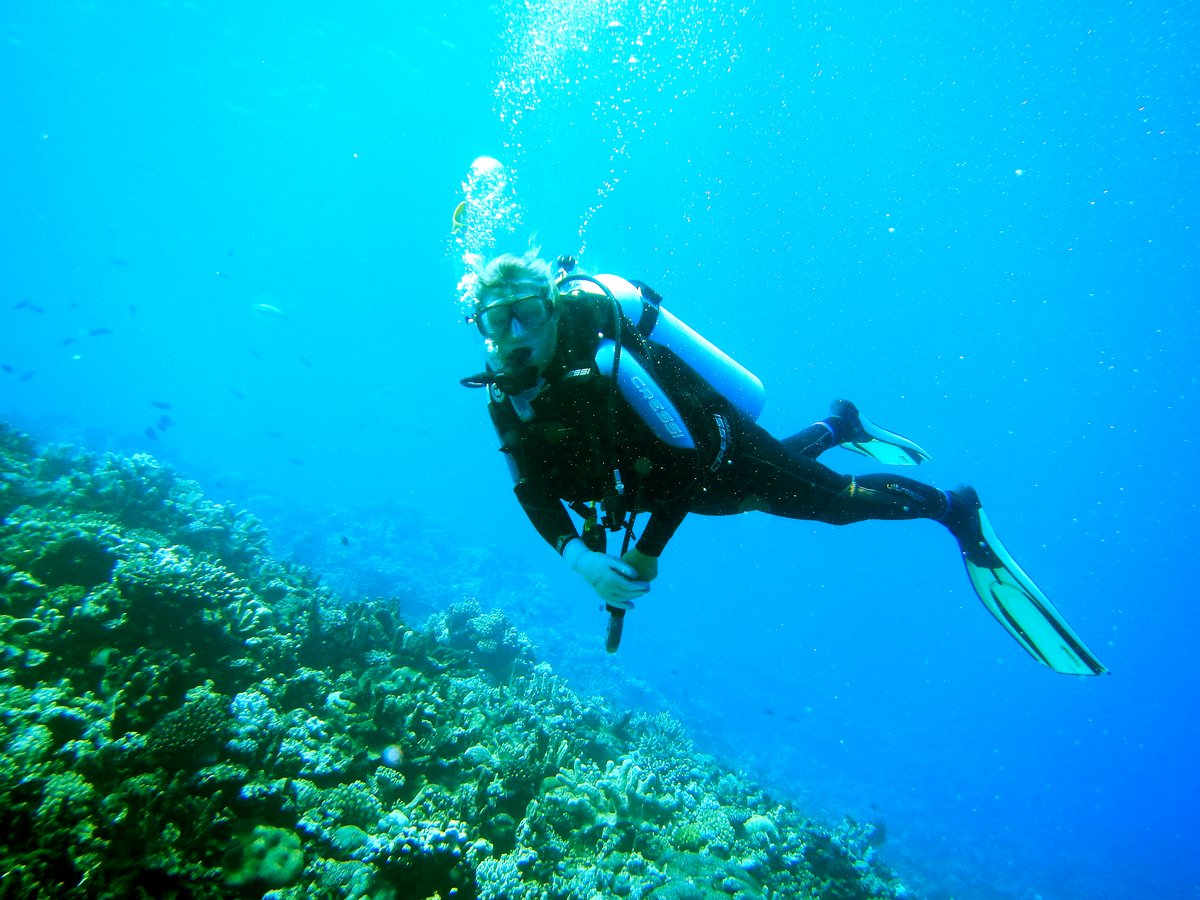
We had a very nice scuba dive. The reef slopes off at 60 degrees and has very healthy coral and lots of small reef fish. I took our Nikon tough camera, which has a rating of 18 metres, so we made sure that we went no deeper than that. I took loads of snaps, but the camera isn’t as good as my old camera and the best I could do was a picture of a Latticed Butterflyfish. When we get to New Zealand, I’m going to spend loads of dosh on a decent camera and housing because it’s so frustrating to have poor quality photographs.

15 October 2014 Vakaeitu Island to Tapana Island (No.11), Vava’u
The forecast was for strong SE winds for a few days and the anchorage was a little exposed from that wind direction, so we sailed over to TapanaIsland. It was nice reach in 20 knot winds and it’s great to have hardly any waves in these sheltered waters. We anchored in 12 metres of water on sand and then chilled out for the afternoon.
We had Horst & Karen from “Flow” and David and Bella from “Admetus” over for sun downers.
16 October 2014 Tapana Island to Ofu Island (No.28), Vava’u
We’ve been struggling with finding anchorages in this area because there doesn’t seem to be a good up-to-date cruising guide. “Flow” has “Ken’s Guide to Tonga” which is eight years old, but looked very informative, especially on the Ha’api group where we’re going next. They kindly lent us the book to have a look through, so I took pictures of some of the pages, cropped them and converted it to a PDF file. It took me less than an hour and I’ve now got a good cruising guide for the Ha’api group, which we can read on the iPad.
It was such a lovely sunny day that we decided to go to Ofu Island, which is on the eastern side of the Vava’u group of islands, separated from the rest of the cruising area by a shallow reef barrier. There’s a channel through the reef, which is marked by two small buoys, but it was still a little bit exciting because the wind was blowing hard and the 2 foot chop was made it hard to see the 18 inch diameter balls. I never trust charts in these regions but thankfully, the Navionics chart on the iPad was accurate for once.
Once safely at Ofu Island, we tried to anchor on a shallow patch, which looked to be sand, but we couldn't get the anchor to hold. We eventually anchored in 10-12 metres at 18°41.39S 173°57.45W, which was good holding.
After lunch, we went ashore and pulled the dinghy up on the beach near to the church where there were a few other small fishing boats moored. There was a group of locals on the beach, so we went over to have a chat. They were gathering sea urchins and roasting them on a fire. One guy gave us a taste of the insides which was salty, oily and rather unpleasant.
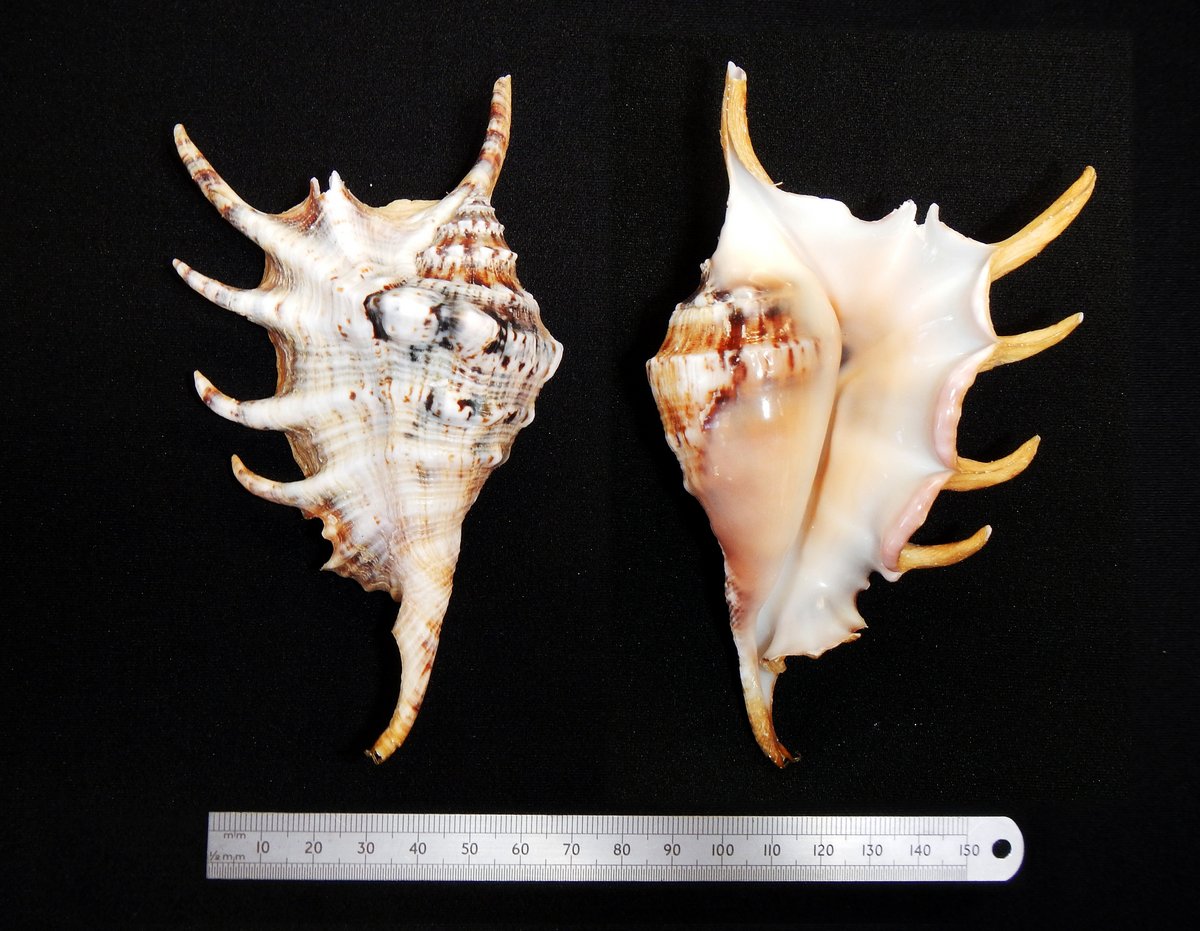
The village is spread out along the shoreline with a well-kept dirt road running alongside the beach. There’s no grocery store, just private houses, a school and a church - it’s a pretty place. The cruising guide said that there was good shelling on the beach and they were right. Glenys found a lovely small murex shell (Lambi Lambi) as well as a few other interesting shells.
17 October 2014 Ofu Island, Vava’u
The wind was howling most of the night and it was very cold in bed. I had three sheets on me and still felt a bit cold - I might have to break out a thin duvet.

We were woken up at five o’clock by a bell ringing very loud for five minutes on the island. At first I thought they were calling people to church, but it went on for so long that I became worried that the bell was some kind of alarm signal - perhaps a Tsunami? I just HAD to get up and turn on the VHF radio just in case, but heard nothing and fell asleep dreaming of being swamped by huge tidal waves.
We did a few jobs in the morning and then went over to a small island to the north of Ofu, even though all of the cruising guides say that it’s owned by a private individual who hates yachties. It’s actually a small resort run by the people who established the Aquarium bar in Neiafu. Ben met us at the beach and was very friendly, showing us around his small 100 metre diameter island. Over the past ten years they've built three chalet rooms, one being a tree house. It’s a very pretty, exclusive little place in a lovely setting.
We went snorkelling off the beach of Ofu island just level with the church. It’s a nice bit of reef, but the water was very cloudy after the strong winds. Glenys found lots of the small murex shells, but they all had creatures in them, so she put them back.
The cold south wind howled all day and, despite wearing full length 3mm wet suits, we were cold when we got back to the boat, so Glenys made us a nice cup of hot chocolate - it’s been a long time since we last had that.
18 October 2014 Ofu Island to Kenutu Island (No.30) Vava’u
The wind abated a little bit overnight and it’s forecast to drop steadily over the next few days down to below 10 knots by the 21st when another high sweeps by to the south of us. It looks like the best time to sail the 65 miles south to the Ha’api group of islands is tomorrow night when hopefully the seas will have abated a little bit.
We motored around to Kenutu Island and anchored just off the southern tip in 10 metres of water on sand. There’s a small island at the south end of Kenutu and the surf breaks in the narrow channel between them with huge walls of water shooting up twenty or more feet. It’s very impressive (and a little scary), but the waves all dissipate before getting into the anchorage.
After lunch, we walked to the other side of Kenutu to look at the relentless ocean pounding against the cliffs. There’s a trail which leads north back to the beach which is interesting. Previous cruisers have tied bits of material and coloured string to trees to mark the trail, which is a good job as the trail is very faint and overgrown in places. I took along my machete which was handy at times.
It was high tide by the time that we got back to the boat and some of the surge from the waves was creeping into the anchorage, so we moved a little further north to 18°41.92S 173°55.75W. It was only 100 metres or so, but made a big difference.
19 October 2014 Kenutu Island to Tapana Island, Vava’u
We went for walk on Umuna Island. We landed the dinghy at the southern end of a long beach where a well-worn trail goes to a deep cave with a fresh water pool at the bottom. There was a small owl roosted on the wall of the cave, which was disturbed by us and kept flying around. It’s not often that I’ve seen a wild owl in such close proximity. After climbing back out of the cave, we then continued along a path through Pandanus woods to the east side where there was another great view of the Pacific Ocean crashing onto cliffs.
Back on boat, we pulled dinghy on deck and got ready to sail to Ha’api in the evening. By two o'clock, thick clouds had started to build and there were showers around us, so we upped anchor and hurried to get through the two tricky channels back to Tapana Island before we lost the sunlight.
Once out of the shadow of Kenutu Island, it was apparent that the wind was well over 20 knots and from the south-east. With the odious prospect of beating into a strong wind all night, we decided to delay another day and anchored by Tapana Island for the night.
20 October 2014 Tapana Island to Uoleva Island, Ha’api, Tonga (Day 1)
It rained on and off last night and the wind seemed gusty, so I think that we made the right decision by staying for another day. The morning was overcast and the GRIB forecast showed 10-12 knots from the east today and tomorrow. With the dinghy on deck, we had a very quiet day on board.
It cleared up in the afternoon, so I spent an hour snorkelling down cleaning the propeller and a little bit of the hull. We have some impressive three inch long strands of fine green weed on huge patches of the hull now, which I need to clean off before we set off for New Zealand. I need a really calm anchorage and will have to spend a couple of hours with a scuba tank to get it clean enough for the New Zealand Quarantine inspectors.

We left at five o’clock and only had to motor for ten minutes until we were clear of the anchorage and had clean 15 knot wind. It was a pleasant sail for an hour or so through the southern islands of the Vava’u group, but then the waves built up as we cleared the reefs. Despite the ideal 15-20 knot east winds, the seas for the next six hours were horribly confused. At six foot, the waves weren’t very big, but they seemed to be coming from all directions.
Thirty miles to the east, the ocean floor is 4000 metres deep and quickly rises to 500 metres only 10 miles from our route. On our route, the depth ranged from 300 metres to 30 metres, so we were effectively sailing along the top of an underwater mountain ridge as impressive as the Arête de Rochefort in the Alps. I’m guessing that the massive volume of water called the Pacific Ocean has to go somewhere, so it comes up and churns up the surface of the sea giving us these horrible conditions.
After we passed a final shallow spot called Disney Reef, the sea bed dropped away and the conditions improved, so our last two watches were very pleasant and we finally got a bit of sleep.
21 October 2014 Tapana Island to Uoleva Island, Ha’api, Tonga (Day 2)
Glenys hove-to at about six o’clock, three miles off the northern end of the Ha’api chain of islands and dragged me out of bed at seven o’clock. We set sail again heading for the anchorage at Haano Island, but when a mile off, we could see that there were already five boats in the anchorage, so decided to carry on to the main town of Pangai.
There were another ten boats anchored in the big bay, most of which have sailed down from Vava’u over the past three days. Everyone is heading for Tongatapu and then New Zealand, so all the anchorages are going to be crowded from here on. It will be interesting to see how many boats gather in the main anchorage in Tongatapu.
We anchored next to “Flow” and gave Karen a lift into the small town. A cyclone ripped across the Ha’api islands in February and devastated Pangai. There still many destroyed buildings waiting to be cleared. One of the islanders’ biggest problems is that the low lying island was flooded with sea water, which has contaminated the soil with salt and makes growing vegetables a big problem.
There are a few small grocery stores in town and we were able to buy a case of beer and some essentials. Glenys found some cabbages, onions and potatoes, so we aren’t going to starve. With nothing else to do, we went back to the boat. The anchorage at Pangai is a little open, so with some stronger winds forecast over the next few days, we decided to go to Uoleva Island, which on the charts looked to be a nice anchorage.
It appears that everyone else had the same idea because by nightfall there were twelve boats in the bay. It’s a nice bay with a long white sand beach, but a swell somehow hooks around from the north making it rolly. We didn’t care. We had lunch and went to sleep for a few hours to catch up after last night’s sail.
In the evening, we were invited over to “Laragh” along with “Flow”. David and Katrina had caught two big fish on the way down and wanted to share them. Everyone brought a side dish and David barbequed the fish - we had a good night.
22 October 2014 Uoleva Island to Uiha Island, Ha’api
It was a miserable morning with rain and there was a large swell hooking into the bay from the north making it uncomfortable. Fortunately, by ten o’clock it had started to brighten up, so we picked up the anchor and motored over to Uiha Island passing through a narrow passage in the reef, which was a bit scary because the skies were so overcast and it was hard to see the shallows.
We anchored at 19 54.19S 174 24.78W just to the north of a village in 6 metres over sand and weed and the holding is great. The protection from the north east and south east looks to be good and there’s none of the horrible rolling that we had in Uoleva. It was also nice to be alone and away from the maddening crowds, although that didn’t last too long because “Laragh” came over the horizon a couple of hours later. They anchored a hundred metres away, which was good.
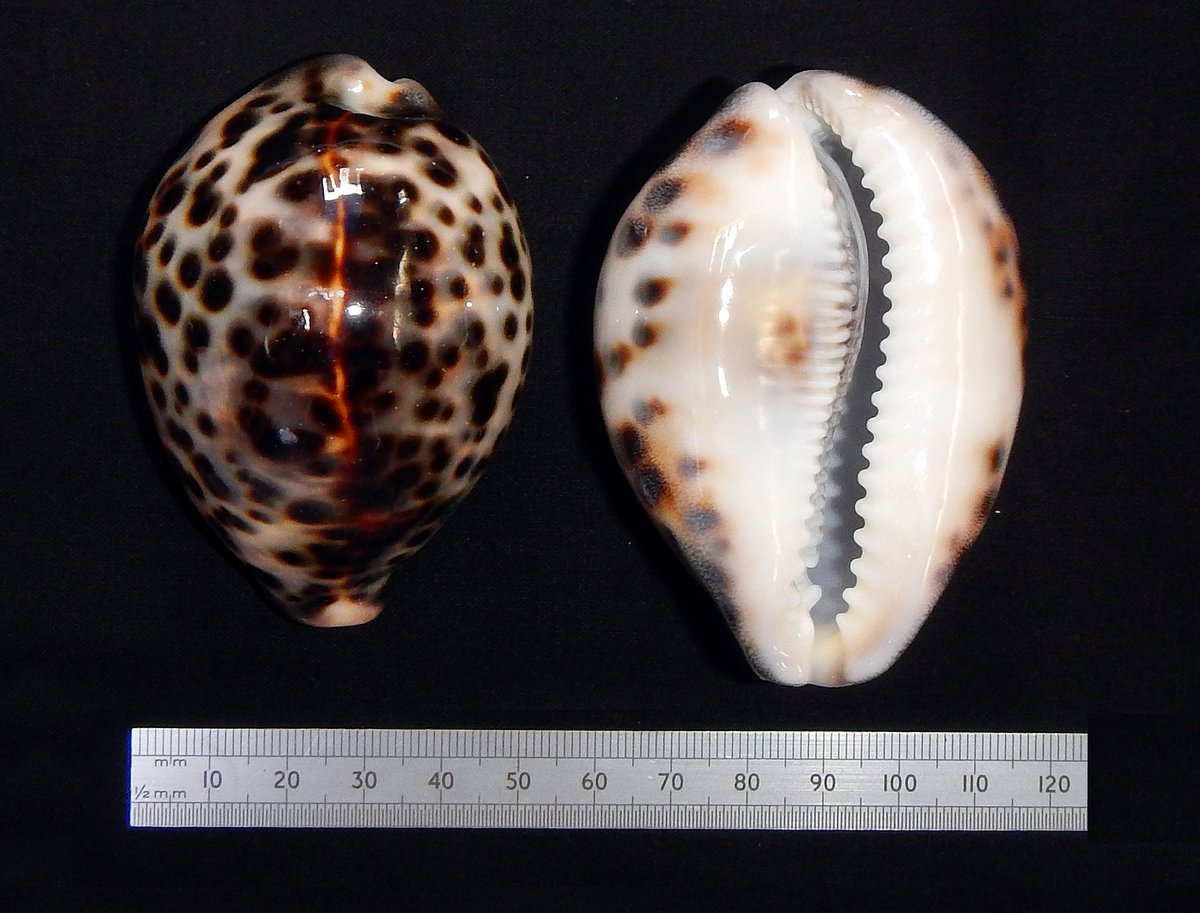
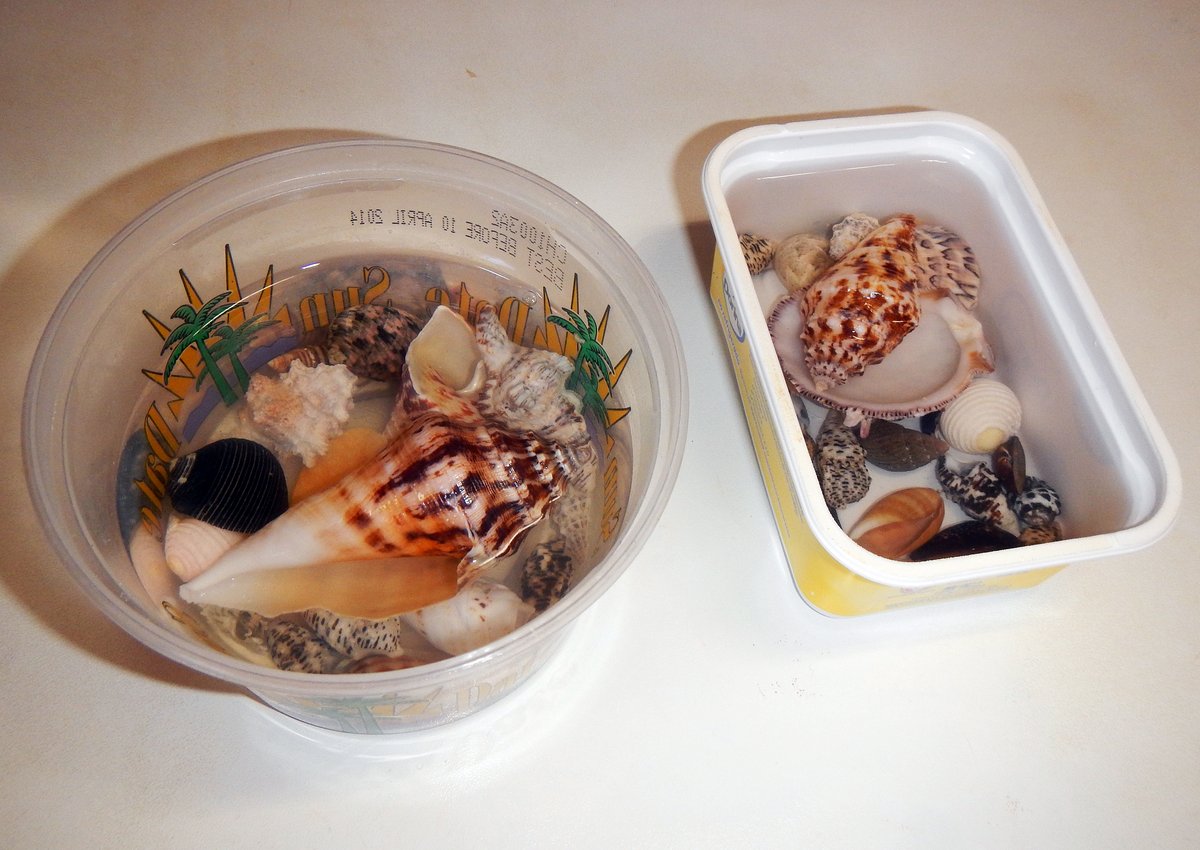
After lunch, we jumped into the dinghy and motored a mile to Tatafa Island. It took us a few hours to circumnavigate the mile long deserted island, walking along the sandy beaches looking for sea shells. It’s becoming very addictive trying to find the next perfect, unusual shell. To Glenys’s dismay, I’ve also started to treat it like a bit of a competition - who’s going to find the best one? Today, Glenys definitely won when she found a beautiful Tiger Cowrie
23 October 2014 Uiha Island, Ha’api
It was a lovely morning, so we went for a walk on the island. We landed the dinghy on the beach and walked along looking for somewhere to walk through to the village, eventually cutting through someone’s land after asking permission. We chatted to the lady of the house, who was chilling out in a hammock with her two small kids - she seemed pleased to talk to us about her family in her halting English.
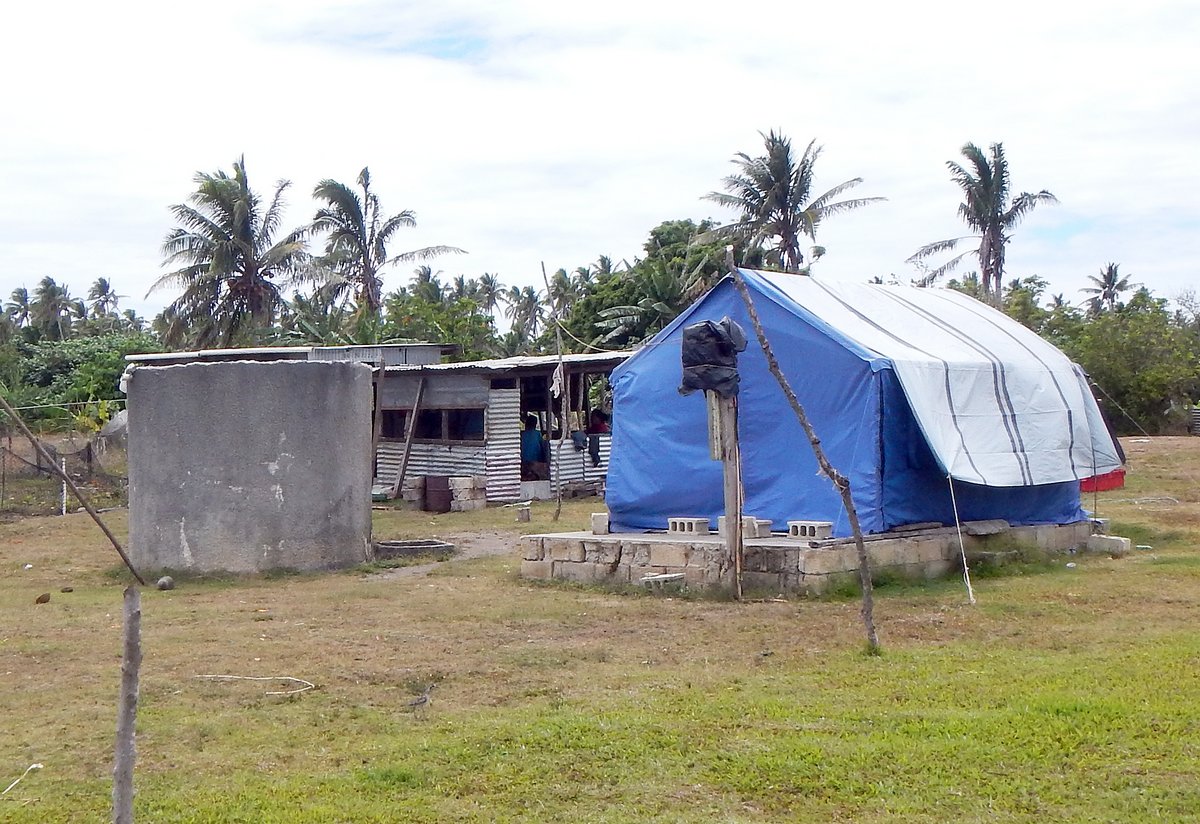
We walked through the two villages on the island and the poverty of these small islands really struck me. The effects of the Cyclone only eight months ago can be seen everywhere with UNICEF tents still set up next to the small, rough wooden houses that the locals have built. The villagers live on food from the sea, coconuts and whatever else they can grow on these small low-lying islands. However, most of the people we met seemed happy.
We met a young man called Bedu, while walking along the dirt road between the villages and he walked along with us for ten minutes. His brother (Vee) plays rugby in an English team called the Lions and Bedu has family who live in Australia and New Zealand. As in the Cook Islands, people move off the island to get work and send money back to the islanders. Bedu however loves it here and doesn’t want to leave.
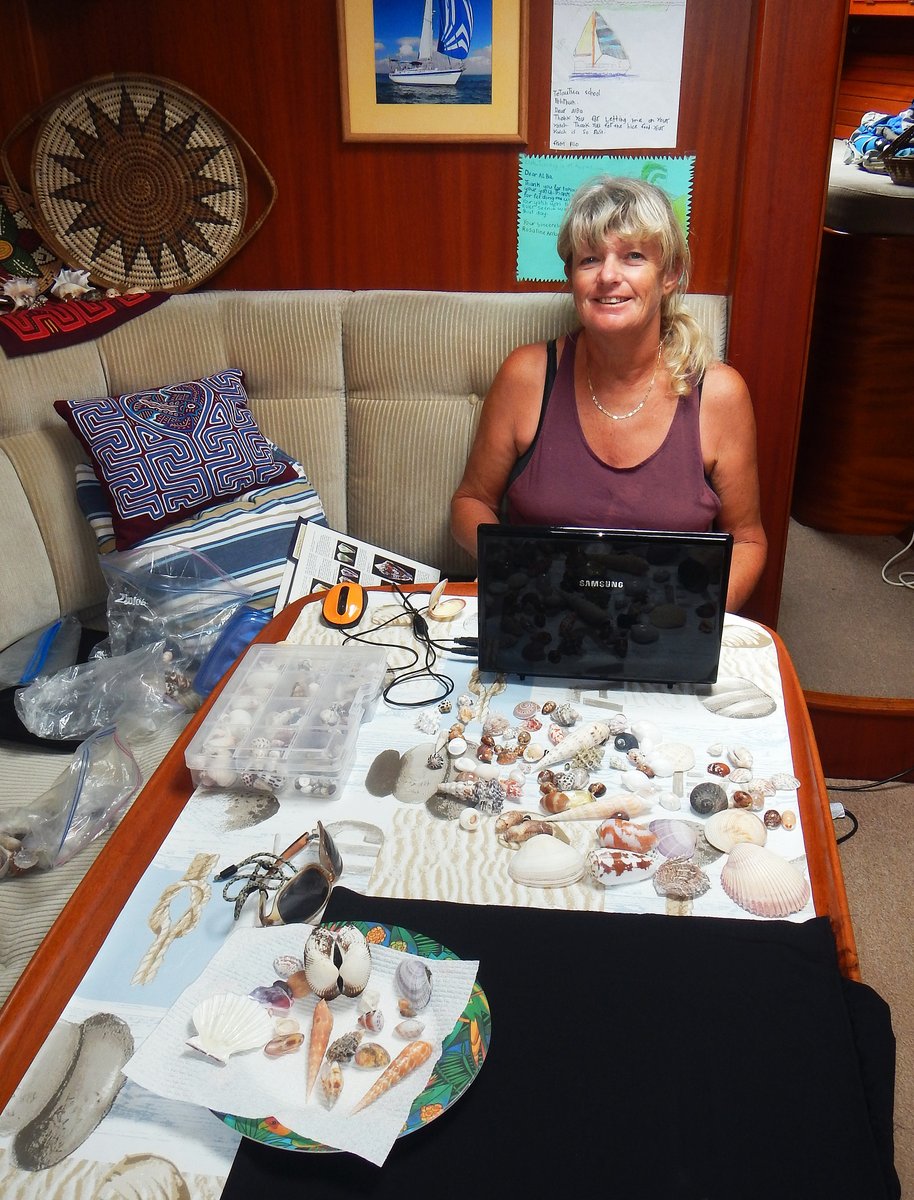
Having walked a mile or so to the north end of the island, we sauntered back along the beach looking for shells again, which was very productive - I’ve never seen such a quantity of shells before. Glenys now has quite a few to be sorted and classified.
After lunch, I filled a scuba tank and went off by myself under the boat to take some pictures of a small reef shallow that I’d spotted near our anchor yesterday. Unfortunately, the water was very murky, so I gave up and started to clean the bottom of the hull. I slaved away for 90 minutes and have only done 1/3 of the hull, but that includes all of the fiddly bits around the rudder and propeller. I’ll have another session tomorrow.
24 October 2014 Uiha Island, Ha’api
The weather forecast is for another trough to arrive today bringing rain. The trough is expected to deepen and looks to be dragging the SPCZ down over us with the worst weather being tomorrow night when an intense low will pass directly over us. The GRIB files show strong 20-25 knot winds which could be from any direction, but by the next morning will settled down to 20-25 knots from the south.
The anchorage that we’re in has good holding, but it’s exposed to the north, south and west, so if we get sustained winds from those directions it could get a little bouncy. We looked at the chart and “Ken’s Guide to Tonga”, where we read about an anchorage called Luangahu Island, which was only 4 miles away and looked good, so we upped anchor and motored over to have a gander.
It turned out to be a tiny little island surrounded by reef. Ken’s guide said that it’s an “excellently protected lagoon” and “the bottom is all sand”. We found it to be choppy as the slight 12 knot north wind brought waves over the surrounding reef and the sea bed is 70% coral with small patches of sand. At a pinch, we could have anchored between the numerous coral heads, but we’d have destroyed swathes of coral with our chain and would almost certainly wrap our chain around a few coral heads as the wind clocks around. We ran away, back to Uiha Island.
After our little jaunt, I ran the dive compressor and filled another tank, then spent ninety minutes under the boat scraping away again. I cleaned another third of the hull including the keel, so I’m hoping that another session tomorrow finish the job.
The trough arrived around sunset and brought torrential rain and 25 knots north winds, but we were snug down below, sipping our Cuba Libres and watching a movie.
25 October 2014 Uiha Island, Ha’api
There were a couple of heavy squalls last night, but we had a light east wind and some sunshine in the morning. I downloaded another GRIB file and the low pressure area was still forecast for tonight and expected to give us 25 knot winds and heavy rain.
I spent two hours scrubbing the bottom of the hull again and managed to get it all done. It took ages to clean the area around the bow thruster - there were huge barnacles and clams clinging onto the back of the propeller shaft, which have probably been lurking there since we were in Ecuador.
As predicted, the wind picked up in the late afternoon. By sunset, we were getting gusts over 35 knots and the sea had built up to a 2-3 foot chop which was making us pitch and roll quite a bit. Before it went dark, I let out a bit more chain, so that we had 40 metres out, which in 6 metres of water gave us a healthy 7:1 scope. I also rigged up our Fortress anchor on a second anchor warp and got it ready to toss overboard in case we started dragging on the weedy bottom.
Glenys made us a nice Thai Chicken curry and we watched a movie with a few cold beers.
26 October 2014 Uiha Island, Ha’api
It threw it down most of last night, but by morning, we had a light 10 knot breeze from the south and overcast skies. We were planning to go to another anchorage, but showers kept rolling through, so we delayed and delayed and by two o’clock in the afternoon, we decided to stay put.
There’s a high to the south of us which is giving us south-south-east winds and sucking cold air up from the southern latitudes, so it was damn cold today. I had to wear a t-shirt all day and dragged out a thin duvet for the night.
27 October 2014 Uiha Island to Haafeva Island, Ha’api
It was another overcast day, but at least it wasn't raining in the morning, so we upped anchor unfurled the genoa and sailed 12 miles to Haafeva Island. On the way we hooked two fish. The first one wasn't taking too much line, so I left the fish trailing behind the boat while we reefed the genoa. Just as we’d finished, the line suddenly started screaming out of the reel.
I started to haul the fish in against very strong pressure as it dived down. Suddenly all the fight went out of it and I could see a tuna on the surface of the water. I reeled it and found to my dismay, that 2/3rds of the fish had been bitten off by something very big, presumably a shark.
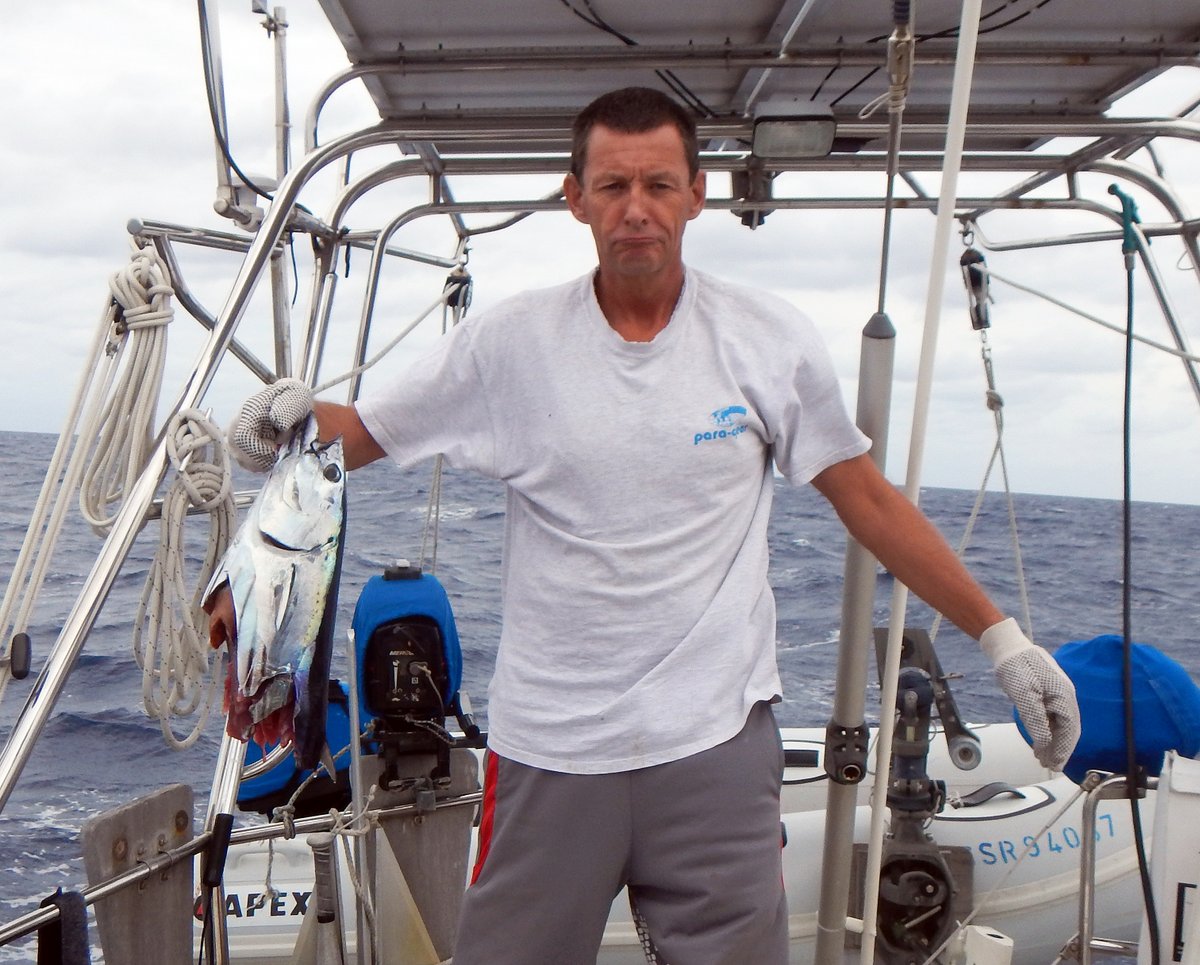
The second fish hit ten minutes later and again it didn't take too much line at first. I quickly started to haul it in then the line started to pay out fast again and, bang, the lure was taken off - are we being followed by Jaws?
The anchorage at Haafeva Island is very nice and is surrounded by reef although some swell is getting into the bay making us roll a little. Interestingly, the village is on the windward side of the island, so the shore has a very isolate feel about it. After lunch, we went ashore, leaving the dinghy tied to the dilapidated dock with an anchor to hold it off the jagged concrete edges.
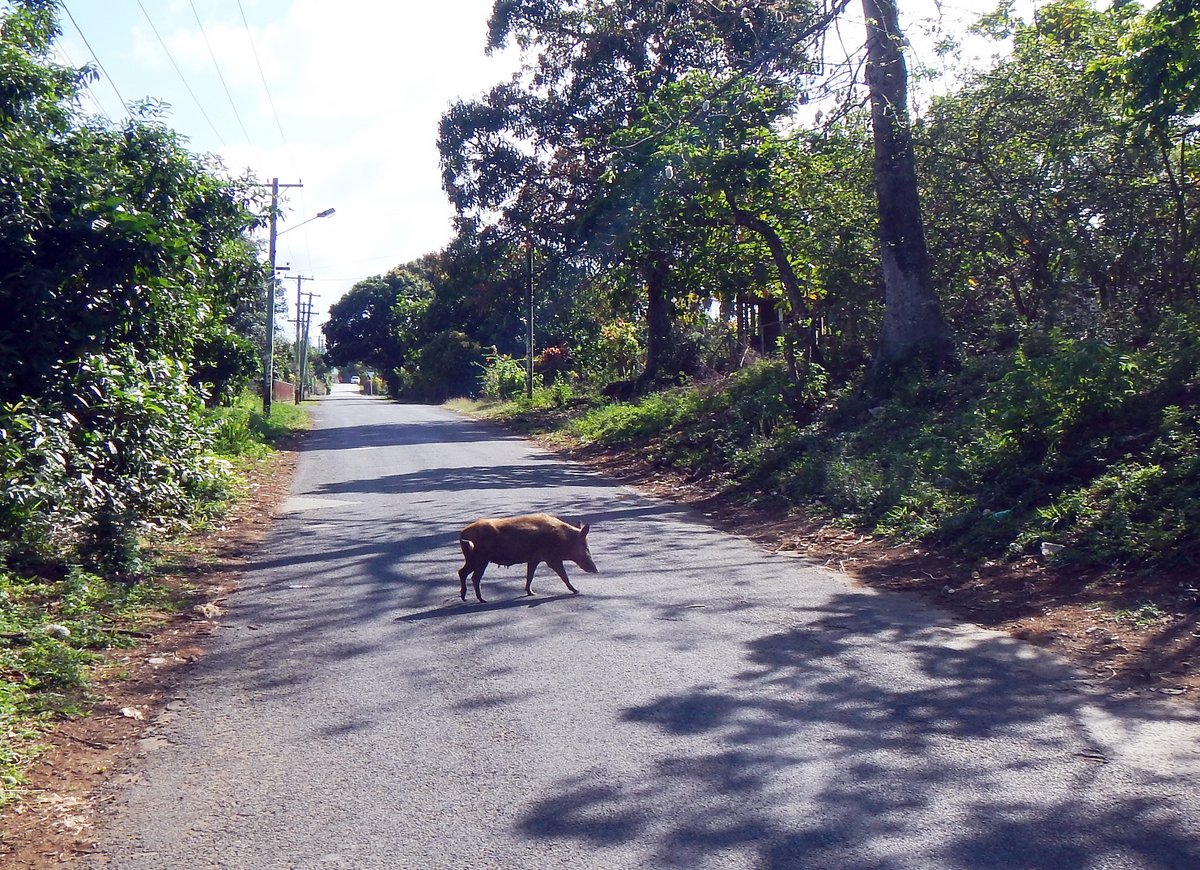
We found a single track dirt road at the end of the dock, which took us through some lush vegetation to the village. The main street is a dirt road running parallel to the shore line with the wooden houses spread out along its length. There was a mixture of shacks and reasonable houses, with the ubiquitous pigs wandering around everywhere.
We found a small grocery store, but the doors were firmly barred. Instead of being able to wander around and browse the shelves, a Chinese man sat behind a small window guarded by wire mesh, waiting to be asked for things. I always find these kind of stores a strange concept. We never know what they have in stock and have to peer past the shop keeper looking for familiar item. With their lack of English, the conversations often go like:
“Do you have Orange Juice?”
“Yes…. errr … No.”
“OK… do you have bread?”
Blank look…
“Ma?” (Tongan for bread)
“No.”
“Is there a bakery in the village?”
“No.”
We didn't buy anything. A few yards up a small side road, we found another small store, this time with a counter. They didn't have anything that we needed, but Glenys asked if they had any breadfruit. The shopkeeper asked how many, then wandered off and returned with a breadfruit that he’d obviously just plucked from a tree. When we asked how much, he gave it to us as a gift, which was extremely generous of him.
With nothing else to see in the village we walked back along the beach walking in a counter-clockwise direction looking for shells, but there weren't as many as we've seen on the eastern islands. It started to rain just as we arrived back at the dock, so we scurried back to the boat and hunkered down while it rained for the rest of the day. This weather is just like April back in the UK.
28 October 2014 Haafeva Island, Ha’api
It rained on and off all night and the morning was overcast and grey. The Ha’api area is very nice and would be fabulous if it was warm and sunny because there are lots of anchorages to explore and some good snorkelling. However, this overcast weather makes navigation around reefs hazardous and the rain and cold wind aren't conducive to snorkelling, so we've decided to head down to Tongatapu.
Time is now pressing on and thoughts of the passage to New Zealand are constantly in our minds. I did some serious research into the current weather patterns and downloaded GRIB files giving me a two week forecast of the large area stretching from here to the east coast of Australia. For the next two weeks, it looks like there’s a constant 10-20 knot east or south east wind between Tongatapu and Minerva Reef, so we could leave Tongatapu at any time during that period.
The tricky part is when to leave MinervaReef. There’s a steady procession of highs and lows marching eastward across New Zealand and to the south of us. The highs give settled weather, but light winds and the lows can give south-westerly gales at the northern tip of New Zealand, which need to be avoided. In addition, storms in the south can build the seas to seven metres or more and push big swells up into the area that we want to cross.
So, there’s three parts to the puzzle - having enough wind to sail away from Minerva Reef; avoiding big seas during the passage; and avoiding south-westerly gales near New Zealand. Unfortunately, the period between lows is about five days and the passage will take us six days, so the timing is critical.
I stared at GRIB files for over an hour and tried to work out a strategy, but the uncertainty of forecasts over seven days in the future seem to make planning a farce at this point. My conclusion is that we keep an eye on trends in the highs and lows and hopefully a pattern will emerge. We’re planning to spend a few days in Tongatapu to re-provision and refuel, then head down to Minerva Reef on the 2nd or 3rd November, where we’ll wait until there’s a good weather window - very scary.

We were hoping to leave this evening and sail overnight, but the weather remained miserable with a 20 knot south-east wind which would mean a bash to windward, so after lunch, we abandoned that plan and lurked around. It was cold enough for Glenys to put in a light cardigan this afternoon and I ran our Webasto hot air heater for fifteen minutes to make sure that it still works. The last time that we used it was in the USA two years ago and, amazingly, it fired up.
The skies started to clear in the evening and we had a stunning sunset.
29 October 2014 Haafeva Island to Big Mama’s, Tongatapu (Day 1)
It was a much nicer day - blue skies with white fluffy clouds. The wind had backed to the east, but was still cold. We decided to sail later in the afternoon, so our morning was spent doing a few jobs - running the watermaker, topping up the damn fridges with refrigerant again, putting the dinghy on deck, etc.
It was such a nice day that we even managed to motivate ourselves to go snorkelling and found that the reef in the anchorage is very good. I spent most of my time trying to photograph some Fiji Anemonefish, but there was quite a bit of sediment in the water and the fish were getting spooked every time that I free-dived down to them.

We hate the all-day wait to go sailing overnight and cracked up at four o’clock.
It was a very pleasant sail for the first three hours until sunset, on a beam reach in settled seas. The wind picked up to 20-25 knots a little after dark and the ocean swell kicked in as we cleared the Ha’api island group, but the motion was fine.
This passage was only 85 miles, so we were planning to bob along at 5 knots to arrive after dawn. We put three reefs in the main and had a reefed staysail, but with our nicely scrubbed bottom, we were still doing 6-7 knots. So, at four o’clock in the morning, we had to heave to just outside the approaches to the main shipping lane into the huge Nuku'alofa Bay.
30 October 2014 Haafeva Island to Big Mama’s, Tongatapu (Day 2)
Glenys got us sailing again at dawn and we had a great sail along the shipping channel. We anchored off Pangaimotu, which is a small island about a mile away from the main city of Nuku'alofa. On the island is a restaurant/bar called Big Mama's, which is very yachty friendly. There are 15 other boats already here - all waiting to go to New Zealand.
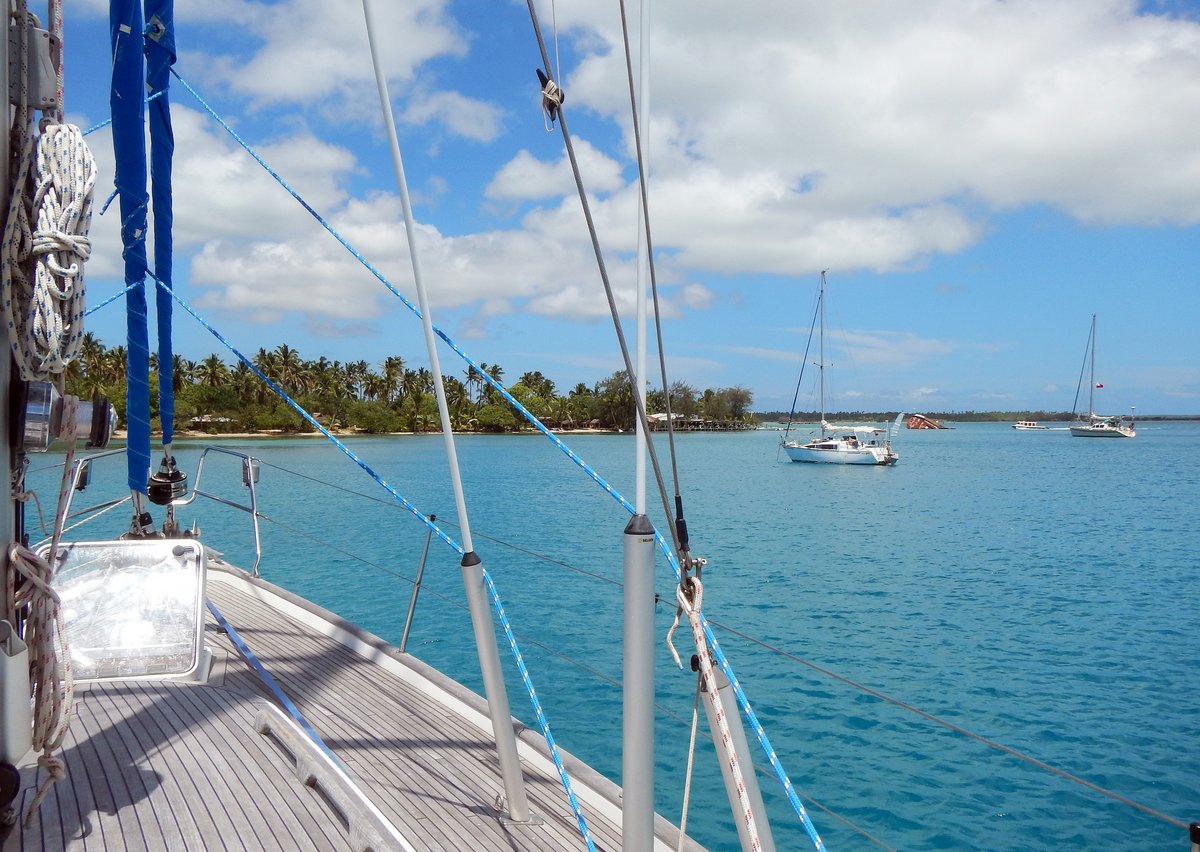
After dropping the dinghy in the water, I went across to chat to Horst on "Flow"and he confirmed that there's a good weather window to get to New Zealand and most people are planning to leave on the 1st or 2nd. Horst is going to get duty free fuel tomorrow and he told me how to organise that. By this time, it was half past ten - just enough time to dinghy over to town and clear out before lunchtime.
We had a wild ride downwind and left the dinghy in the small boat harbour in the fishing port. Our first stop was at the Port Authority where we had to pay $25US in port fees even though we were only staying 2 nights. We then got our International Clearance to New Zealand - I had to tell them that we are leaving tomorrow (Friday) because if I'd said Saturday or Sunday then they would have charged me overtime...
Armed with a customs form giving permission to buy duty free fuel, we walked to the nearby Texaco depot and paid for 200 litres of diesel, which will be delivered tomorrow. The dockside fuel station is out of commission at the moment, so Texaco deliver either 200 litre barrels or if you want more than 1000 litres then they will send a delivery truck.
Normally, boats get together so that they need more than 1000 litres between them and get the fuel truck. Unfortunately, I hadn't had time to organise that if I want fuel tomorrow, so a barrel it is. I'm not sure exactly how much we need to fill our tank, but 200 litres should be near enough.
We caught a bus into town, but the Immigration office had just closed, so we had lunch in a cafe and wandered around town. Nuku'alofa is the capital of Tonga, but is more like a small town. There's a huge vegetable market, but no big supermarkets. We walked to the Tongan Royal Palace, which is a nice old wooden building surrounded by high fencing and serious looking soldiers.
After finishing our paperwork with Immigration, we bumped into Carl and Gwyneth from "A-Train", who had brought their yacht over to town to get fuel. Glenys and I weren't looking forward to bashing up wind for a mile in our dinghy, so we bummed a lift back on their yacht. Having arranged a lift, we did some serious provisioning, buying enough food to last us three weeks.
We didn't get back to the boat until half past four by which time we were really feeling the effects of our night passage, so we packed away the groceries and went out to Big Mama’s bar, where we downloaded two weeks' worth of email, had fish and chips and too much beer.
31 October 2014 Big Mama’s, Tongatapu
We pulled up our anchor and motored over to the fishing harbour following "Flow". There were another two boats in the harbour - one already tied up on the dock and another circling around waiting to clear in. Horst managed to squeeze on to the dock between the yacht and a big fishing boat. I then went in and turned Alba around in the narrow inner harbour and rafted up on Flow, then the fourth boat came in on the other yacht. It was quite a crowd on the small fuel dock.
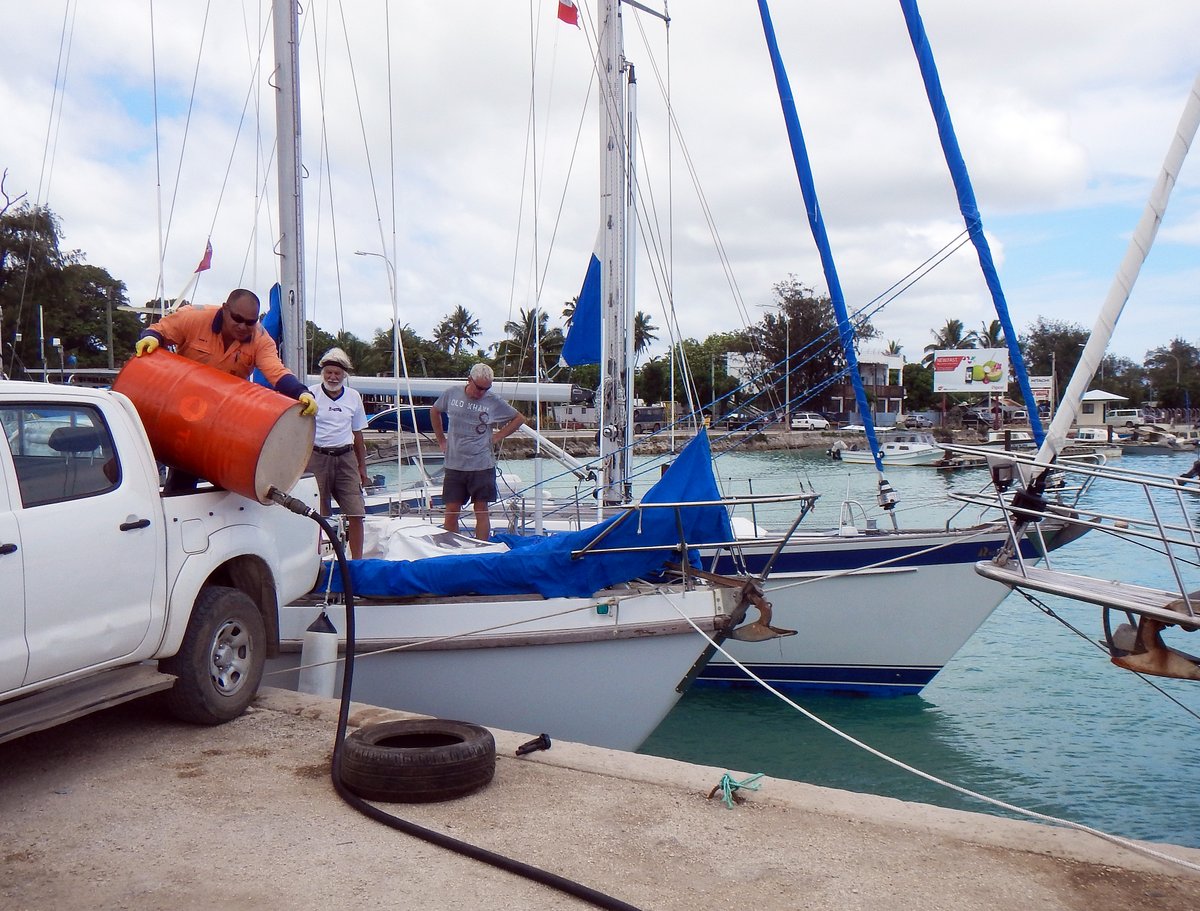
We were worried that Texaco were going to just deliver the barrels and we'd have to siphon the fuel out, so Glenys and Karen walked up to the Texaco depot where they were told that they'd bring along a fuel pipe. The ladies then grabbed a taxi into town to do some last minute provisioning, while us blokes waited for the fuel to arrive.
When the pick up truck arrived, the two guys were very professional and to our relief had a long fuel hose with a proper nozzle. Being gravity fed, it was a bit of a palaver and took about an hour to fill both boats with diesel. I could only fit 175 litres into our tank, so I gave the remainder to one of the other boats on the dock. Glenys arrived back ten minutes after we'd finished fuelling, so we headed back to the anchorage at Big Mama's.
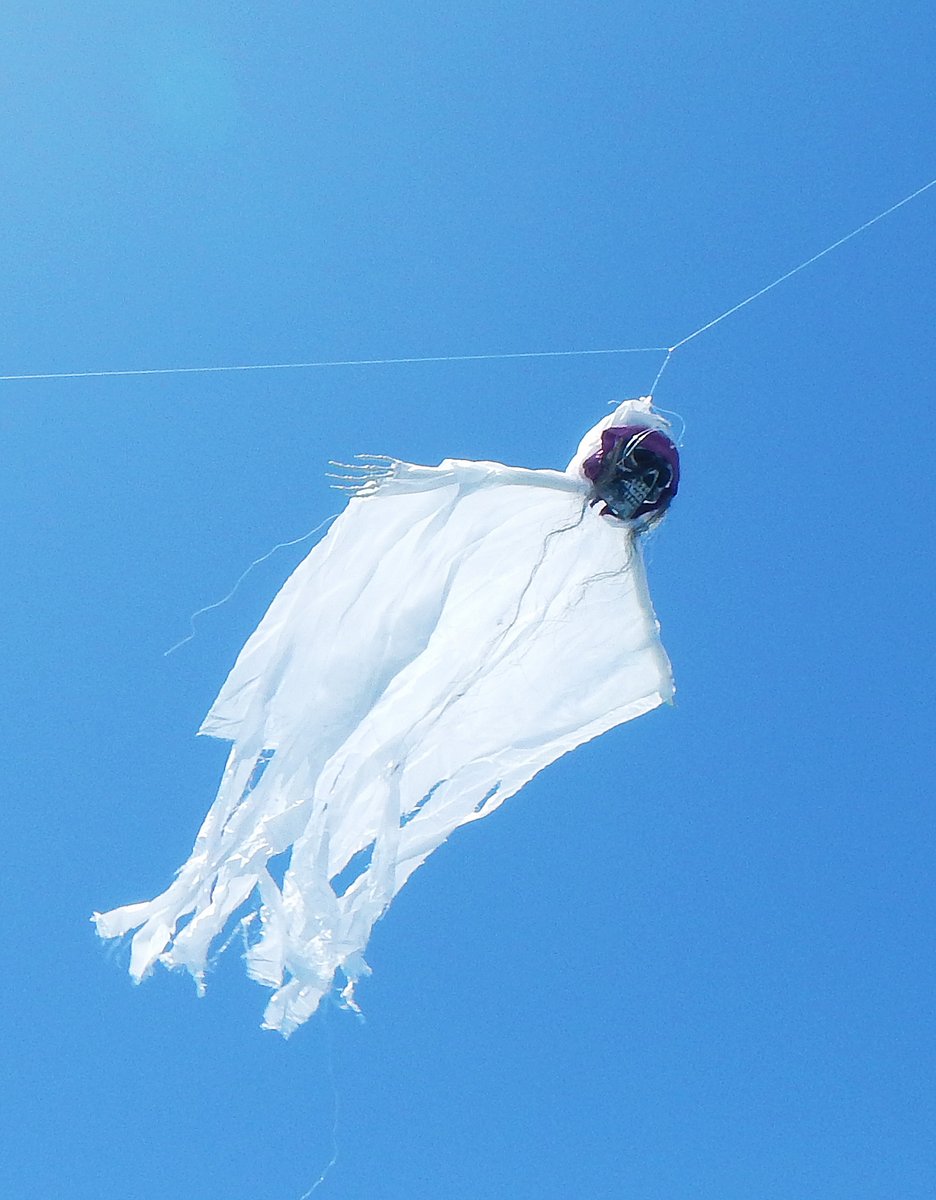
We chilled out for the afternoon. It was Halloween, so I dug out the Ghoul that we bought in the USA and rigged it up flying about Alba. In the evening we went to a party ashore. It was the 13th anniversary of Big Mama's bar, so there was a Tongan feast laid on as well as a good band. With over 20 cruising boats in the anchorage it was a good party, although we sloped off a little early, knowing that we were sailing to New Zealand the next day.