
7 October 2014 Port Morell to Neiafu, Vava’u
We sailed back around to the main town of Neiafu. There a small yacht race tomorrow and everyone else had come into town, so it was hard to find a mooring. We ended up picking up on e pf the last moorings which was a long way out of town.
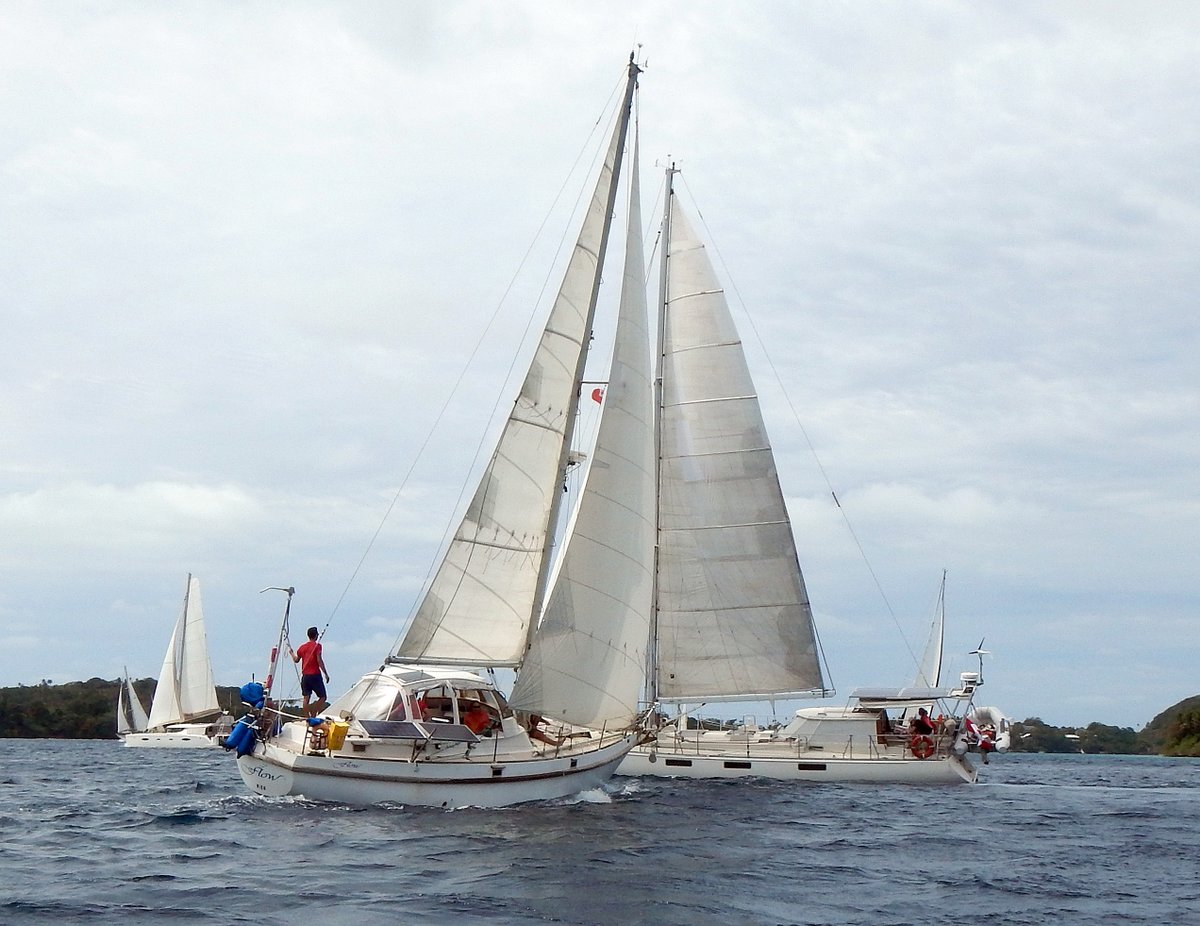
After sorting ourselves out, we went into town to do some shopping and found out that “Flow” was taking part in a small local rally race tomorrow, so Glenys volunteered to go along as crew. The race is going to Tapana Island where we’ve just come from, so I couldn’t be bothered - I don’t particularly like sailing.
In the evening, we went to a presentation given by a team of people from Opua and Whangerei in Northern New Zealand, which was very good. One presentation was on weather routing and the guy confirmed my thoughts that we should be stopping in Minerva Reef and then head south west, so that we approach New Zealand from the north, in case we are unfortunate to hit south west gales. A good tip was to leave Minerva Reef after a trough has passed through.
There was a lady from the quarantine department, who ran through a long list of things that are not allowed into New Zealand, including plants, honey, chicken, eggs, popcorn, vegetables, etc. Dried foods such as rice and pasta will be inspected and removed if there are any signs of infestation with weevils, etc. We knew about most of it and Glenys has been reducing her stocks of food planning to arrive with nearly bare cupboards.
Glenys took along a load of native artefacts that we’ve collected along the way, including woven baskets from the Manamo and Darien regions; various necklaces; and some large shells. We’d heard rumours that the NZ authorities take these things away, but the lady reassured Glenys that they would be okay. At worst, the authorities will put them in a big bin liner and spray them with insecticide, which we’ve already done.
8 October 2014 Neiafu, Vava’u
It was race day, so I dropped Glenys off at “Flow”. They had eight crew on board their 38 foot boat, so there were bodies everywhere. There were about fifteen cruising boats taking part in the race and I zipped around in the dinghy just after the start and took some nice photos of Flow beating to windward. Once the fleet had departed, I had a nice relaxed day on board pottering about.
Glenys had a good time. Being only 38 foot long “Flow” had no chance of winning, so they had a good sail and at least didn’t come in last. Once anchored at Tapana Island, they went ashore to a bar and listened to a jam session where “Laragh” and “Pamela” were both taking part.
Most of the fleet stayed overnight at Tapana Island, but “Flow sailed back” arriving in Neiafu just after dark. Glenys was tired, so we went out for a meal in a local restaurant - fish and chips washed down by a few beers/

9 October 2014 Neiafu, Vava’u
We had a quiet day. I went ashore and spent three hours sitting in the Aquarium bar accessing the internet and publishing four weeks of our web site. In the afternoon, we did a few jobs on board.
There was a big party in the evening to present prizes for the yacht race. One of the highlights was a group of transvestites who put on a show, dancing to recorded both disco and traditional. These “fakaleiti” are a fairly common site around Tonga and often start to wear women’s clothing at an early age. Normally, they are tolerated by their families and the community, but some get tormented when they are children and teenagers. While most of them are gay, I believe that some of them are actually married to women.
The “he-she’s” put on a good show with the locals running out onto the stage to push bank notes down their bras and up their skirts. The performers wandered among the audience and danced on the tables to attract more gifts. It was a lot of fun.
Horst from “Flow” won a case of beer because at 75, he was the oldest participant in the race. The beer was shared among the crew and we had a late, drunken night.
10 October 2014 Neiafu, Vava’u
We were both feeling very dull, so we had a lazy day. In the morning we went for a stroll around town to buy a few groceries and then chilled out in the afternoon.
11 October 2014 Neiafu, Vava’u
There’s a low passing to the south of us, so the wind has backed to the north and dropped to less than 10 knots, so it was very hot today. It’s time to move on, but I’m waiting for East winds again before we head down to the Ha’api group of islands.
We did a few jobs in the morning and then after lunch went ashore to do some internet, but it was very hot and airless in the bar, so we didn’t stick it out for long. Glenys has booked us in for a Tongan feast at the Botanical Gardens tomorrow (second time lucky.)
12 October 2014 Neiafu, Vava’u
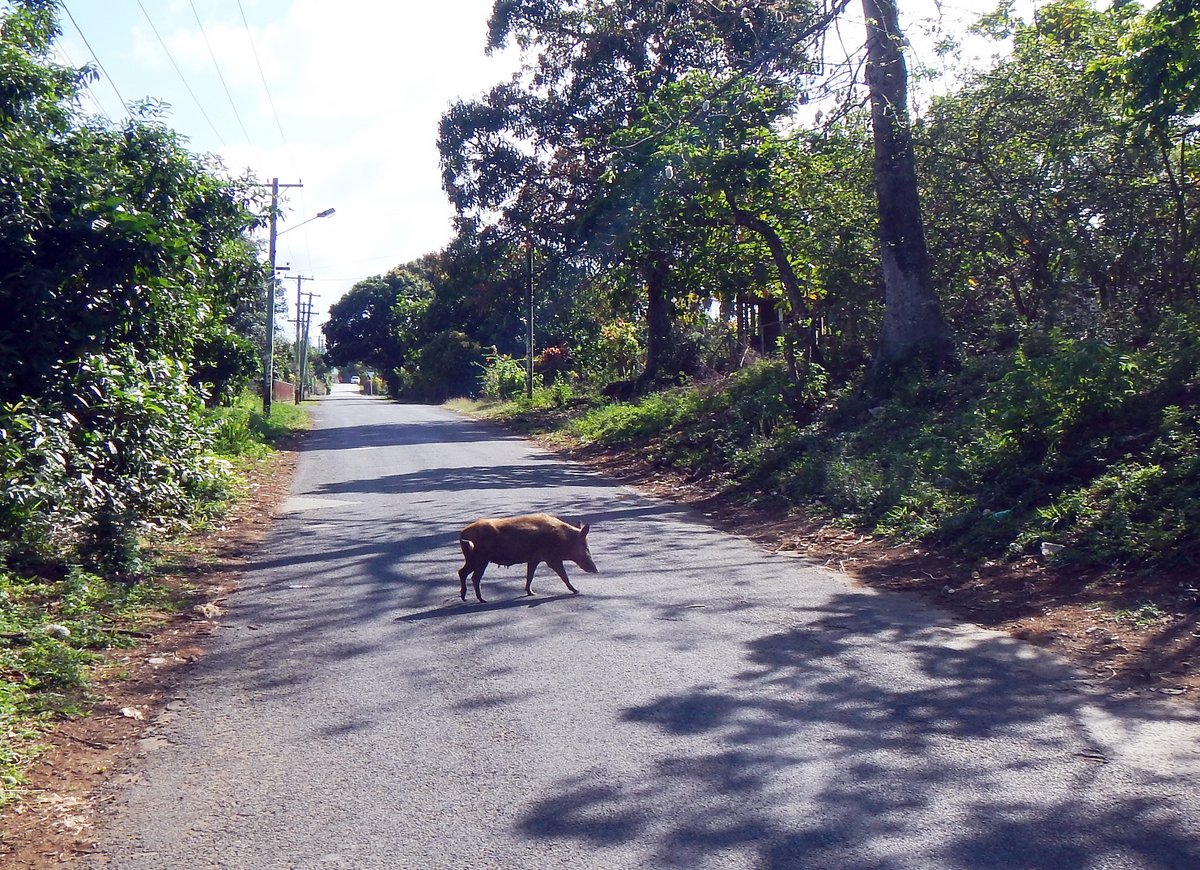
The mini bus from the Botanical Gardens turned up on time and we were driven out to a bay on the far eastern side of the island. The feast was more like a buffet of Tongan specialities, such as fish and suckling pig roasted in an Umu (an underground pit). There was also Taro, chicken curry, fish cakes and my favourite, Palusami. It all tasted great and we were well stuffed after three helpings.
Before the minibus took us back to town, we had time to strolled along the beach for a while to settle our huge meal - unfortunately, the Botanical Gardens were closed on Sunday.
We met Garth and Monique from “Heartbeat” at the feast and they came over to Alba to have a chat. I gave them loads of cruising information for the Cook Islands, French Polynesia, and the Marquesas. They are in a small 34 foot boat and have just come up from NZ heading for Mexico, which is against the wind and current - they are young and slightly crazy, but a nice couple.
13 October 2014 Neiafu to Vakaeitu Island (No.16), Vava’u
We woke up with a huge 55 foot catamaran called “Atlantide” bumping up against us. They picked up a mooring close to us about four days ago and have been swinging ever closer to us as the wind dropped. I thought about moving yesterday and should have listened to the little voice in my head, but couldn’t be bothered. The guy didn’t apologise or offer to move, which proves that he’s an A***hole, so to make a point we moved instead.
After breakfast, we walked into town and went to the Immigration office to extend our visas and to get a local clearance to go south. The visa extension was easy, but we had to pay $35US each to extend for a month - a bit of a rip off. I managed to get permission to go to Tongatapu including stopping at the Ha’api group of islands, so I don’t need to check in there.
Armed with our Immigration clearance, we then had to walk to the port master office, which bizarrely is about a mile out of town. We got a bit lost and asked a few locals who looked at us blankly and then pointed us vaguely further on. A lady in a grocery shop eventually gave us the correct directions - back towards town. The sign outside the scruffy wooden building says “Ministry of Infrastructure.” (To get there; go up the road by the West Pac bank until you reach a main road, turn right and its 50 metres on the right on a bend in the road.)
There was no one around except a miserable lady who looked like something out of a Far Side cartoon sat behind a window marked Cashier. I asked her about clearance and she monosyllabicly demanded passports and ships papers and then calculated that we owed $6.35 pa’anga. Naturally, being a Cashier, she had no change, but we managed to find $6.50 between us. We then walked back to the Customs office and obtained their clearance - what a faff for simply moving within the country.
We rushed around town doing last minute provisioning for three weeks out in the boonies, bought some petrol from a small petrol station, paid for the mooring and escaped the harbour.
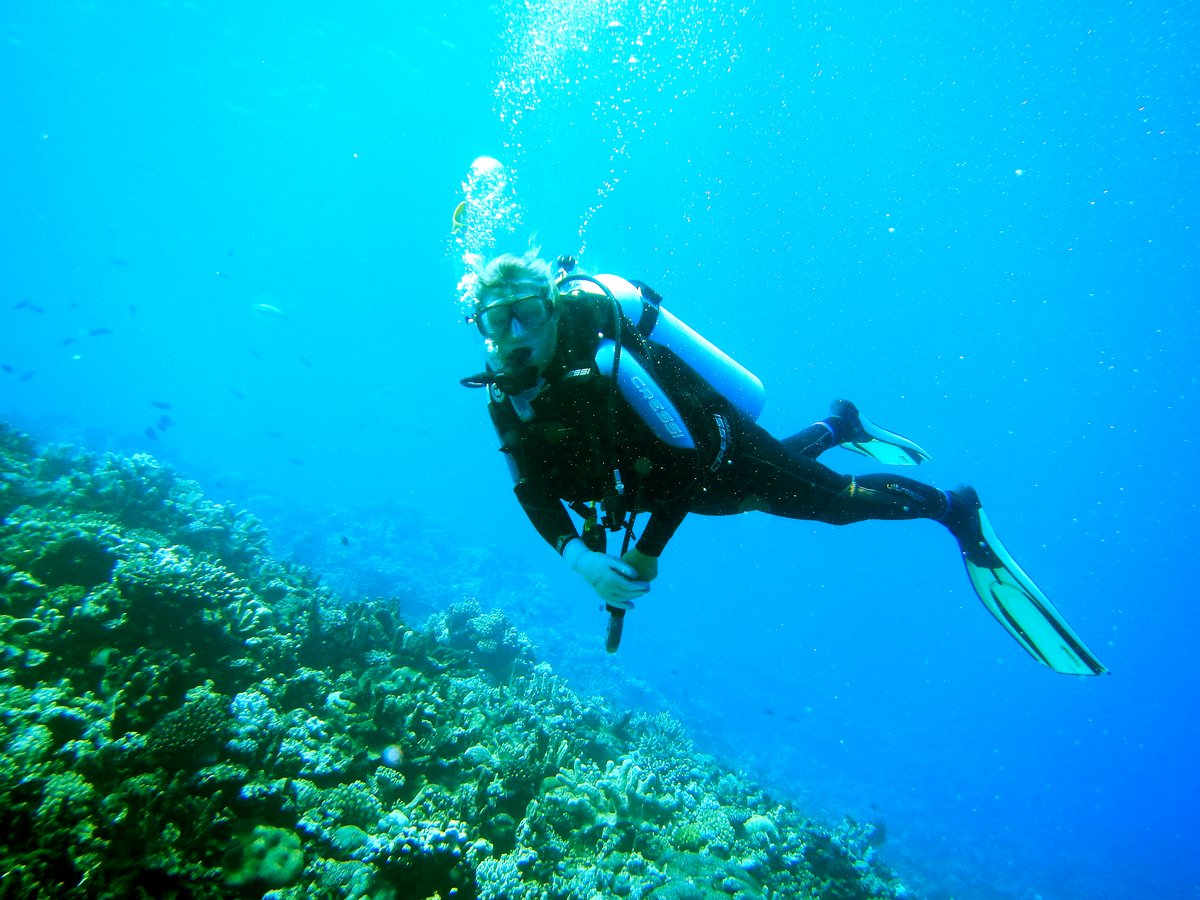
Our first stop was at Mariner’s Cave, which has two entrances - one of them is 3 metres underwater and the other is 10 metres underwater. We eventually found the cave, which is at 18°41.45S 174°04.48W. The pilot book says that there’s a distinctive palm tree above it, but that’s now gone. There was quite a lot of swell beating against the cliff, so Glenys decided not to go. She circled Alba while I jumped in and had a look.
The entrance to the cave is very wide and is only 2-3 metres under the surface. It’s more like a huge arch than a hole, so I was easily able to dive down to 4 metres and swim the short distance into the cave. Once inside the only light comes from the underwater cave entrance so it’s a subdued, weird light. There’s a lot of surge that enters the cave making the water level rise by a couple of feet. There’s nowhere for the air to escape, so the raising of the water increases the air pressure and I had to keep clearing my ears.
The changing air pressure also causes an interesting effect. When the pressure drops as the water level falls, moisture in the air is liquefied and an eerie mist forms and then disappears when the water level rises -very bizarre. After five minutes, I’d had enough of clearing my ears, so I took big breathe and just HAD to swim out of the deeper ten metre cave entrance. It’s a little bit scarier being a 20 foot long tunnel, but I made it without any problems.
After my little adventure, we motored around to Vakaeitu Island (No. 16) and anchored just to the west of Kulo Island in a sandy patch amongst coral. There were lots of coral heads around, so I put some fenders on the chain to prevent wraps. We chilled out for the rest of the afternoon