
7 July 2014 Opunohu Bay, Moorea
It was another beautiful day in a beautiful anchorage. We jumped in the dinghy and motored three miles along the sheltered channel inside the reef to Stingray City (near 17°29.24S 149°54.08W). This is a shallow sand bar just past the Intercontinental Hotel, where the local tour guides have been feeding stingrays and sharks for years.
The Tahitian Stingrays are extremely friendly, climbing up you if you feed fish to them and all the time there are Blacktip Reef Sharks swimming around the edge of the action. At times, there are fifty or so tourists milling about in the chest deep water with sharks and stingrays swimming about between them all - it sounds like a circus, but is really good fun.
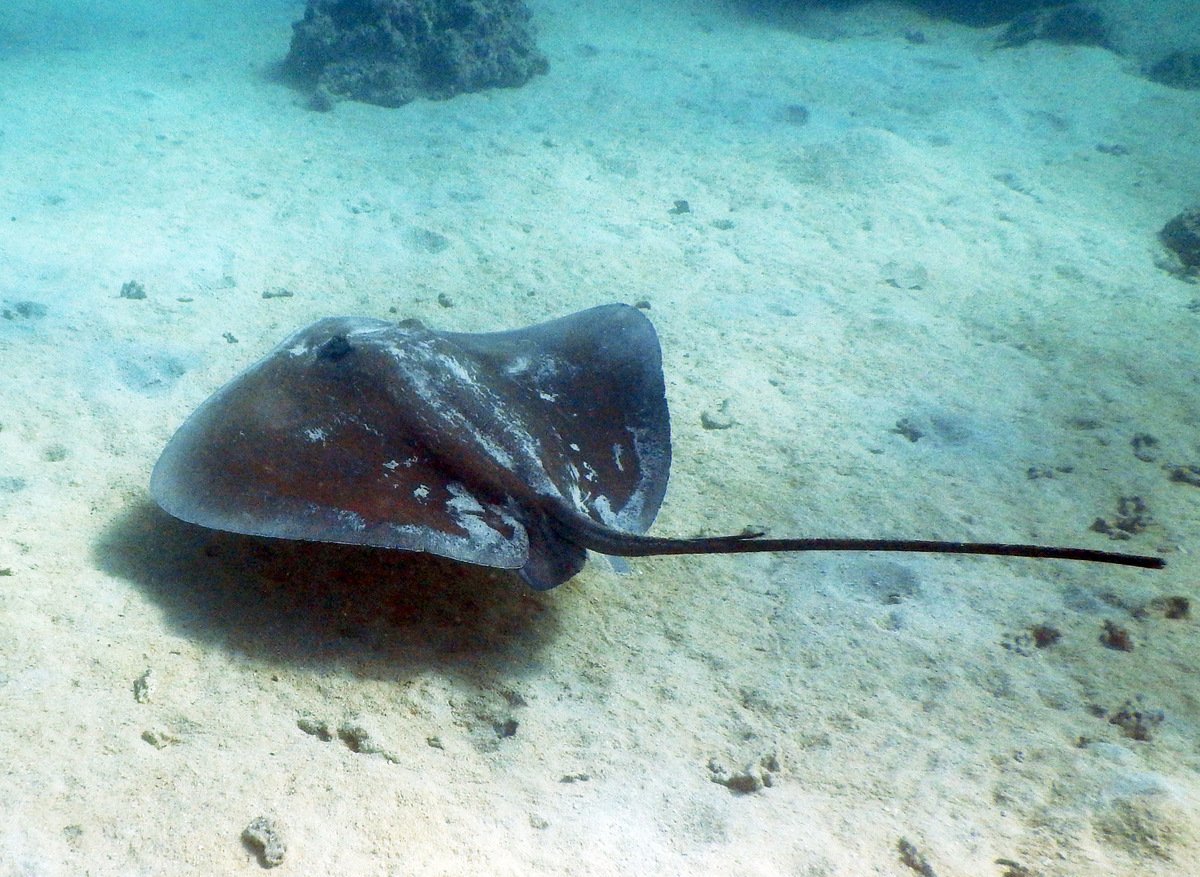
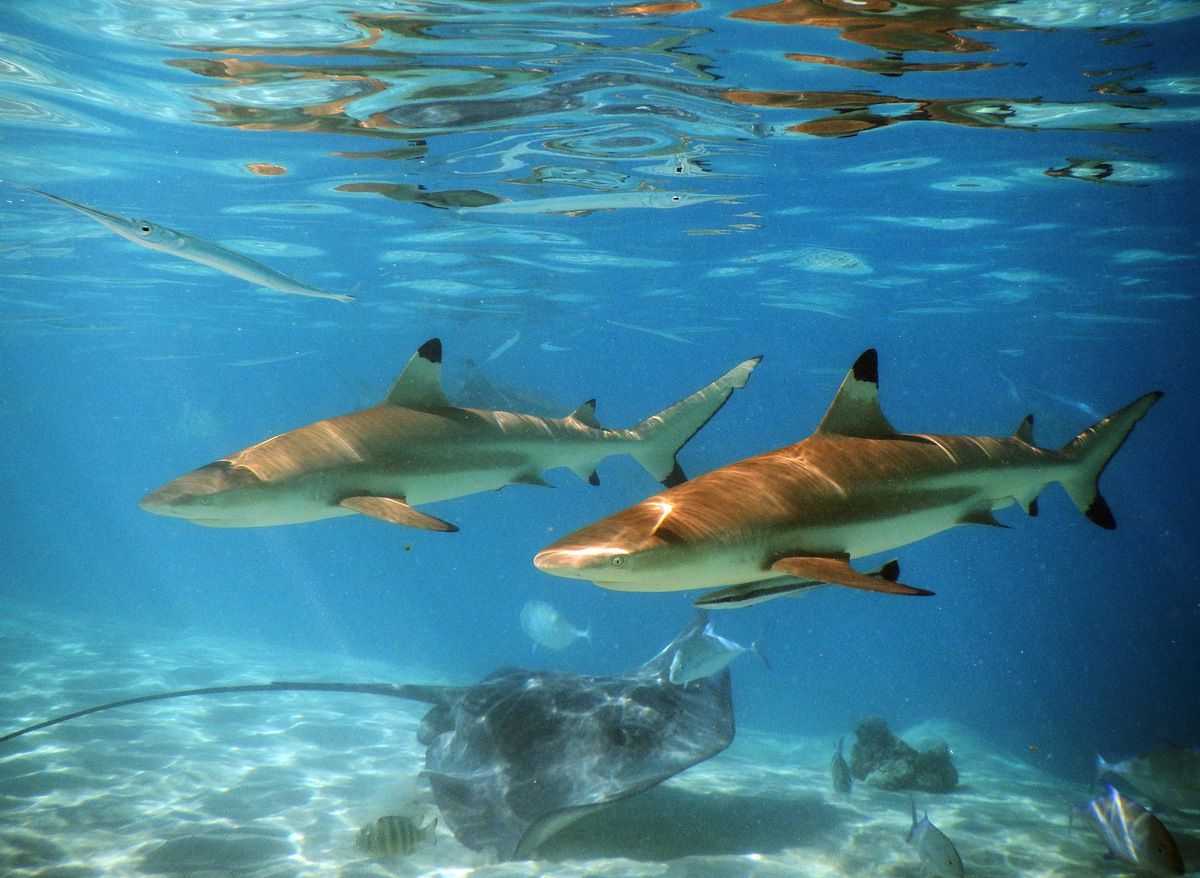
On the way back, we stopped off at some mooring balls that we’d seen next to some channel markers (near 17°28.87S 149°50.75W.) The snorkelling was very good with nice coral formations and lots of fish. Unfortunately I'd taken so many photos at Stingray City that my camera battery had run flat.
After lunch, I chilled out editing the hundreds of photos. Not surprisingly, I’ve got some nice shots of the Blacktip Reef Sharks. In the evening, we invited "Nuwam" and Paul & Monicke from "Full Circle" over for sun-downers.

8 July 2014 Opunohu Bay to Motu Murimahora, Huahine (Day 1)
We woke up to yet another lovely blue sky day, but there's a low pressure ridge coming in from the west, which will bring strong north winds and squally weather in a couple of days. Our next stop is the island of Huahine, 80 miles north-west, so we either leave today or stay here for another week. We love this anchorage, but time is passing and we have to be moving on.
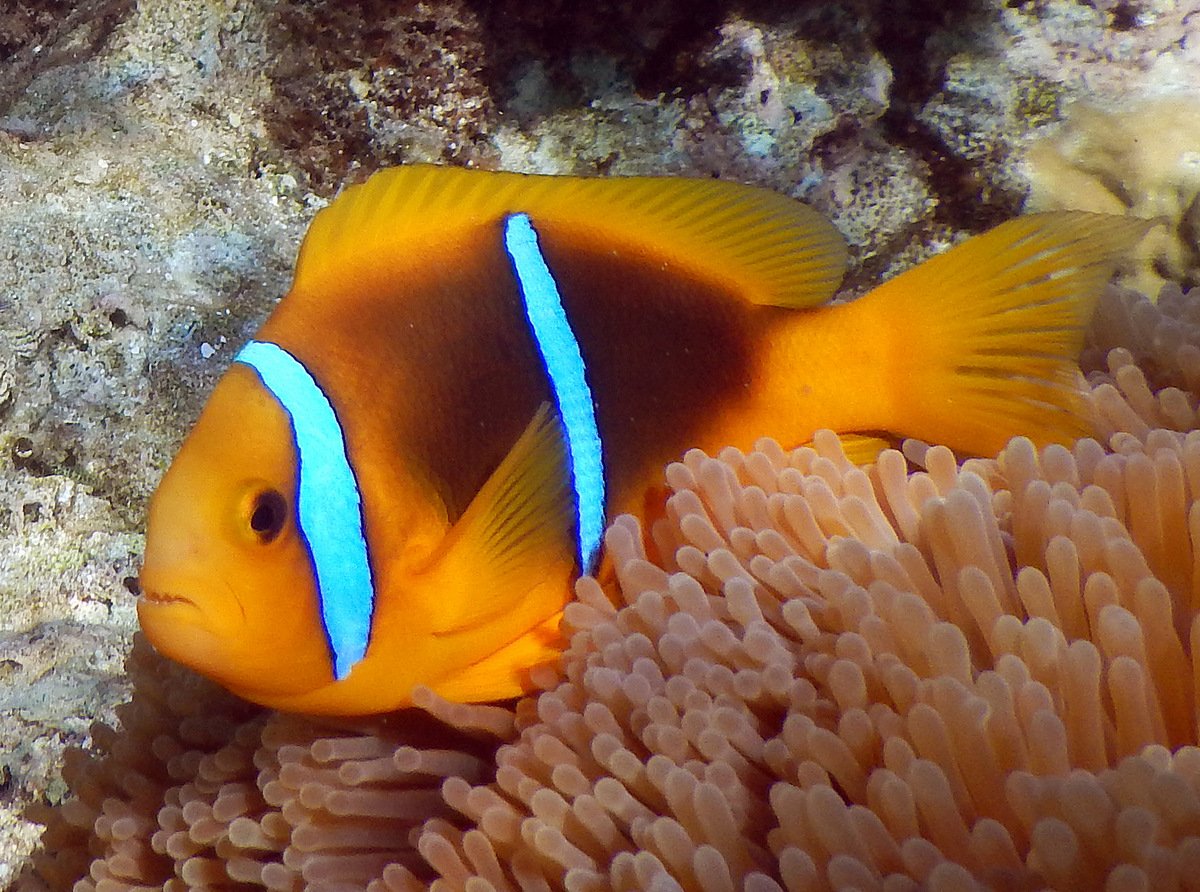
After a quick trip ashore to buy baguettes from the little grocery store next to beach, we went snorkelling. We'd been told that there was good snorkelling at the "Rose Gardens" just off the Hilton hotel. We found a mooring rope just by the marker post just past the Hilton, but the snorkelling wasn't that good. However, I found an Orange-finned Anemonefish lurking in a nice anemone and spent most of my time photographing the timid fish. (Glenys has become a "camera widow" because I'm so in love with my new camera.)
After lunch, we put the dinghy on deck, tidied up and prepared for the overnight passage to Huahine. We left at four o'clock, motoring out in to a very calm sea. I was hoping that the wind would pick up when we cleared the shadow of Moorea, but it didn't appear. Still, it was lovely motoring along at 5 knots with a bright moon and clear skies.
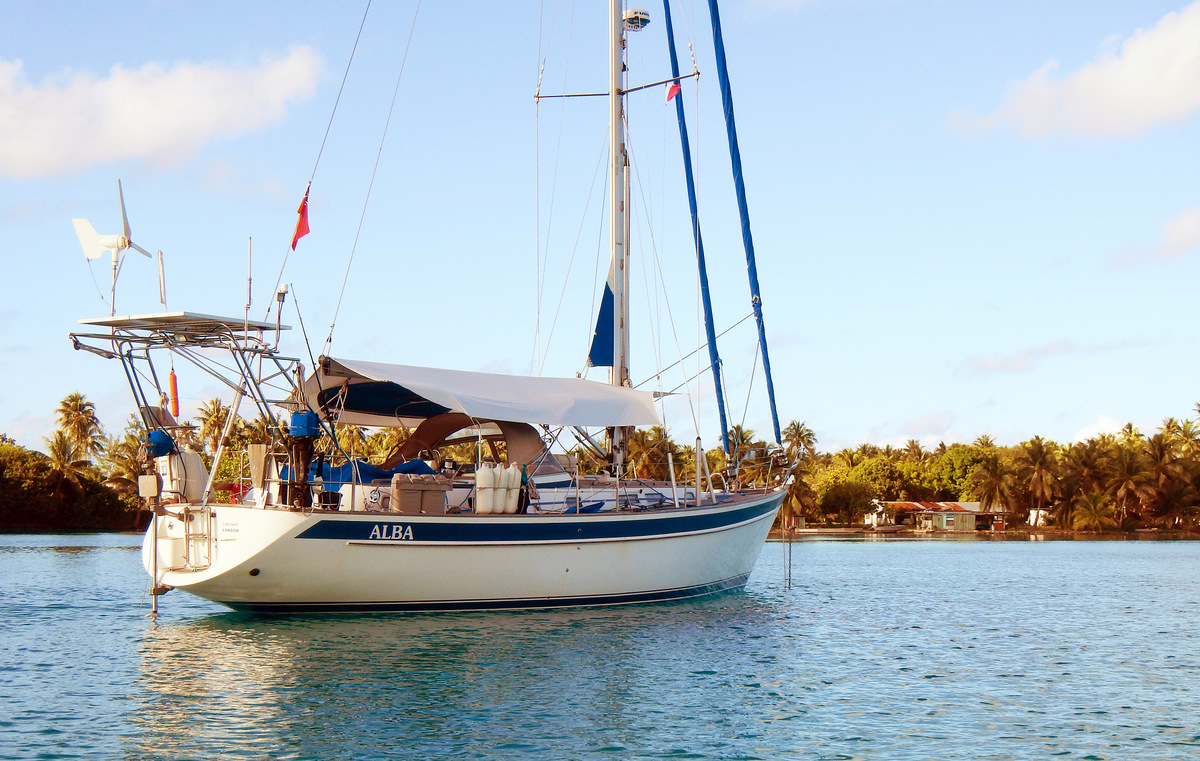
Unfortunately, it didn't last and, just after midnight, Glenys got soaked when a short, but heavy shower sneaked up on her. After that, we had a series of showers, some bringing 20 knots of wind, but the wind came from all sorts of directions and was short-lived, so it wasn't much use to us and we had to carry on motoring.
9 July 2014 Opunohu Bay to Motu Murimahora, Huahine (Day 2)
Just after dawn, the wind picked up enough for Glenys to unfurl the genoa and turn off the engine. We motored in through Passe Farerea and down a small channel to an anchorage off Motu Murimahora in 3.7 metres of water over sand (at 16-45.80S 150-57.60W). What a fabulous place, the water colour is stunning and the palm fringed motu looks lovely. I snorkelled around the anchorage and there’s room for at least ten boats here.
We chilled out in the morning, napping, reading and recovering from the night passage. Just before lunch, a local guy paddled up on a kayak. Glenys started to chat to him and then realised that he didn't understand her French and was talking very strangely. After a couple of minutes, we grasped that he was deaf and dumb.
He told us that his name was Paul by “writing” it on the deck with his finger, then pointed that he lived in a house ashore and insisted on giving us four coconuts that he’d prepared for us. After a lot of confusion, he told us that we were anchored in a good place and we said that we’d go ashore to visit him later. As he paddled off, we pondered the difficulty of talking to a deaf and dumb person in a foreign language.
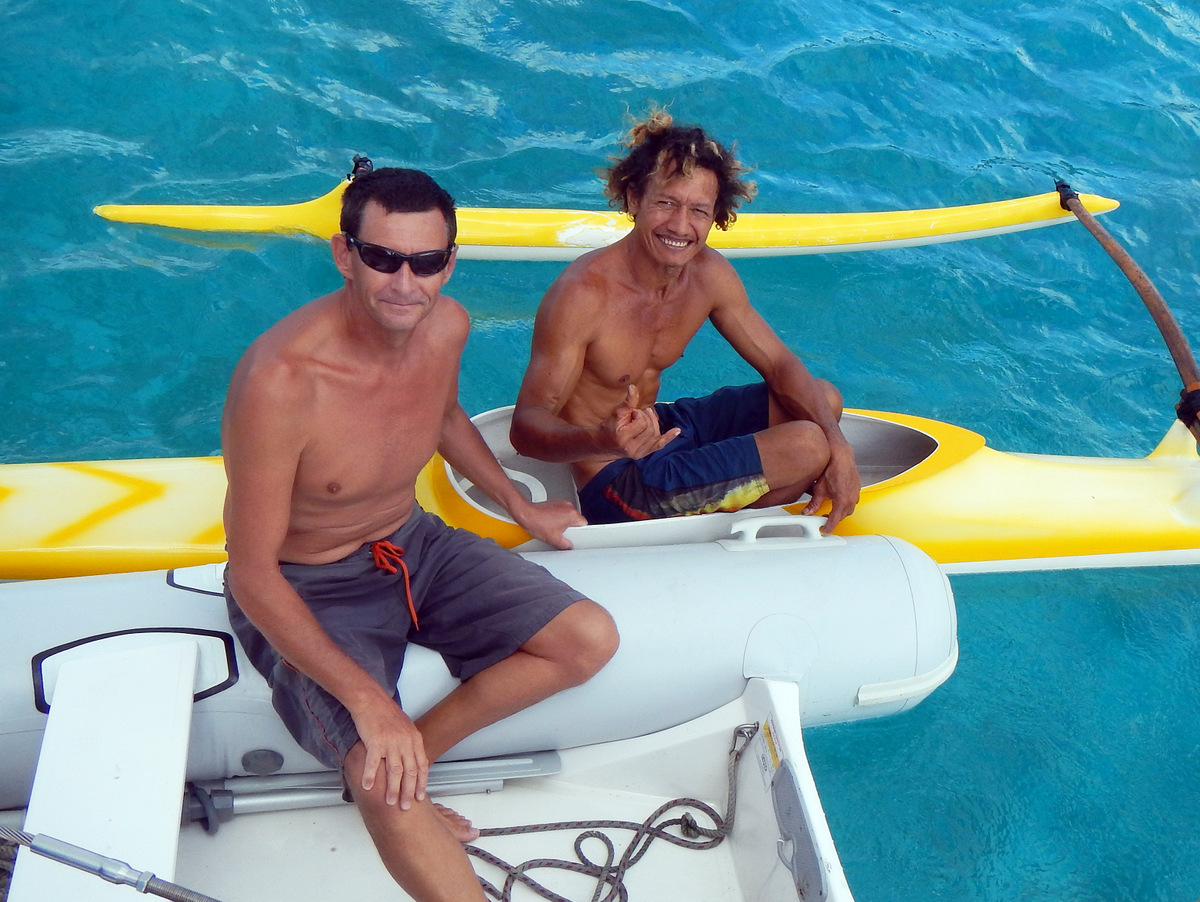
After lunch, we opened the coconuts that Paul had given us and harvested two litres of coconut water and a couple of bags of coconut flesh, which went into the fridge. We then went ashore and were met by the very enthusiastic and happy Paul, who showed us around his land. He’s been working hard to construct some docks on the edge of his land and we assume that he’s trying to attract more yachts to the anchorage. He has a strip of land that stretches across the motu to the windward side, which is very well maintained with mown grass under the coconut trees.
As he showed us around, I expressed interest in his copra production and he explained (in sign language) how he stacks the coconut halves on end to dry them. He then cut open a coconut that was starting to sprout leaves and to our surprise the inside was semi-solid - no water or coconut milk. Paul insisted that we have some and it was very good - slightly fibrous like a kind of candy floss.
He led us to the windward side of the motu and we went for a walk along the sandy beach, looking for shells of course. When we arrived back at Paul’s, he was trimming grass under the coconuts trees, but insisted on booting up a laptop and showing us some photographs taken by other boats that have stopped here. He pointed out where there was a hike up a hill on the mainland and I think that we’ve arranged to have a go in his outrigger canoe tomorrow. What a lovely bloke.
We were boiling hot by the time that we got back to the boat, so we went for a snorkel on the reef close to where we are anchored and it was very good - a bit of a current, but lots of fish.
10 July 2014 Motu Murimahora, Huahine
The trough has arrived, bringing strongish winds from the north, but weather is not too bad - a little overcast but hardly any rain. The anchorage is quite calm, but there’s a constant, strong current from the south, which makes the boat do odd things. Normally, we lie bow into the wind, but now the boat is trying to point into the current. The wind is from the totally opposite direction, so we’ve ended up lying side onto the wind. This is making us heel over to starboard about 5 degrees, which is unsettling, also the wind is blowing from the port side and is just plain weird…
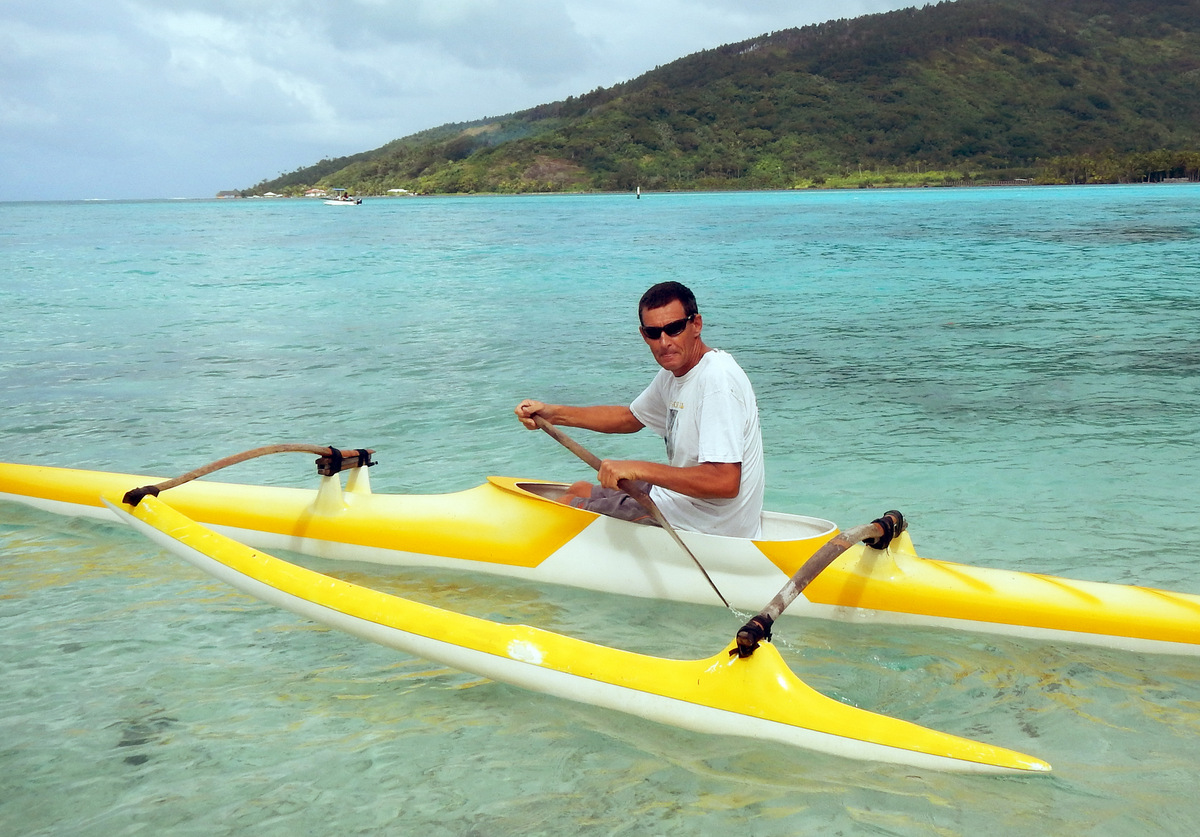
We went ashore and were met by Paul who immediately gave us a gift of six fish and then even cleaned them for us. With our fish tucked up in the dinghy, we then asked Paul if we could go paddling. Sure! He ran off and got is very sleek, light outrigger canoe from behind his house and launched it for us.
I had a go first and the thing is very fast in a straight line, but is a real pig to turn. The seat is above the water line and the whole canoe feels very tippy, especially when turning and the outrigger lifts off the water. I quickly learned to turn to port (towards the outrigger), which feels much more stable. Great fun, but it’s hard work paddling fast.
Glenys had a go next and look very unsteady as she paddled away. I had a problem with the outboard and was fiddling with it, so I missed exactly how she tipped it over, but it didn't take long before she was swimming… Paul and I rescued her, then Paul zoomed off south for some paddling exercise. There was no way that we could keep up with him with our small outboard, so we went back to the boat.
Paul called by an hour later and joined us for lunch of Pan-fried Fish - very nice. We found out that small snappers and groupers are okay to eat here, but the larger ones are not good. Most of our "chatting" with him was done with a pad of paper and the iPad to show photos and charts.
Paul went back ashore and we headed south down the boat channel to go snorkelling, but the current was incredibly strong, so we hung onto the dinghy and drifted back to the anchorage at 3 knots - good fun.
11 July 2014 Motu Murimahora, Huahine
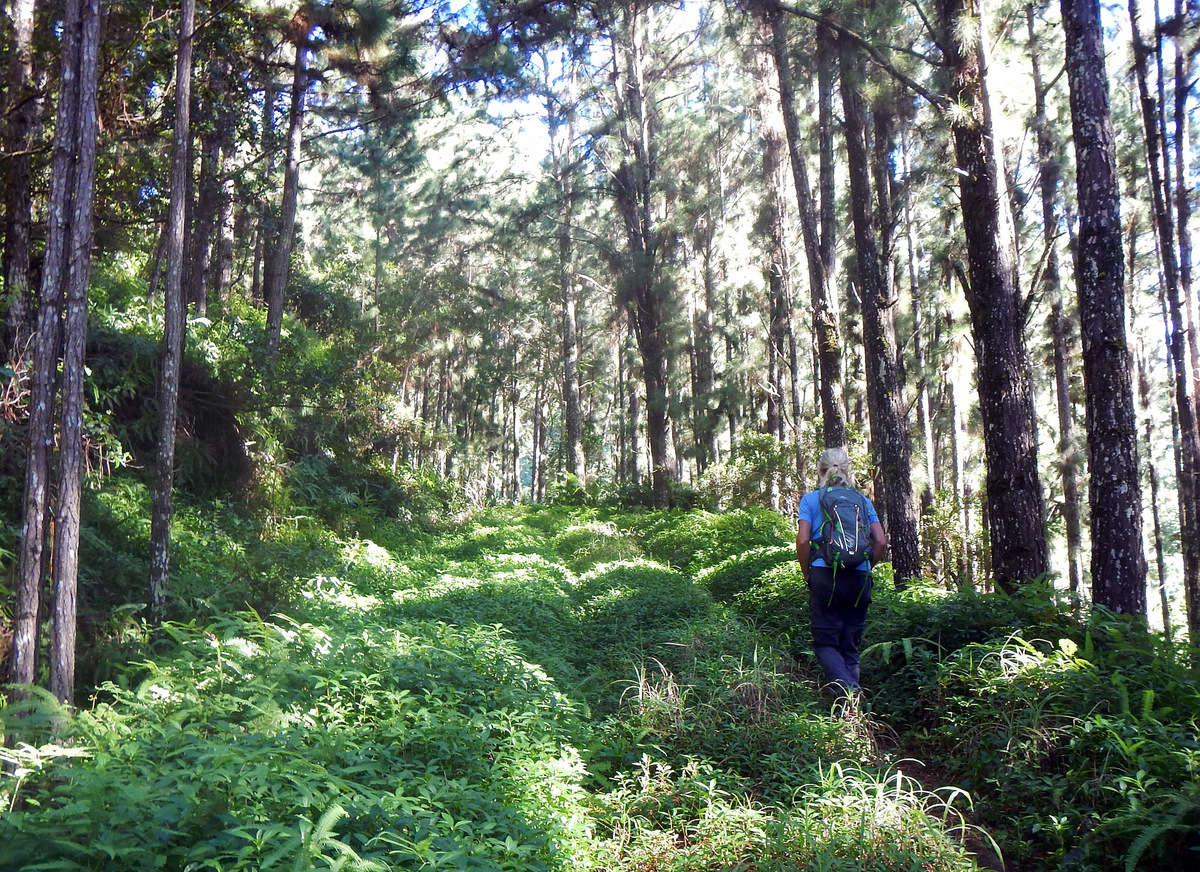
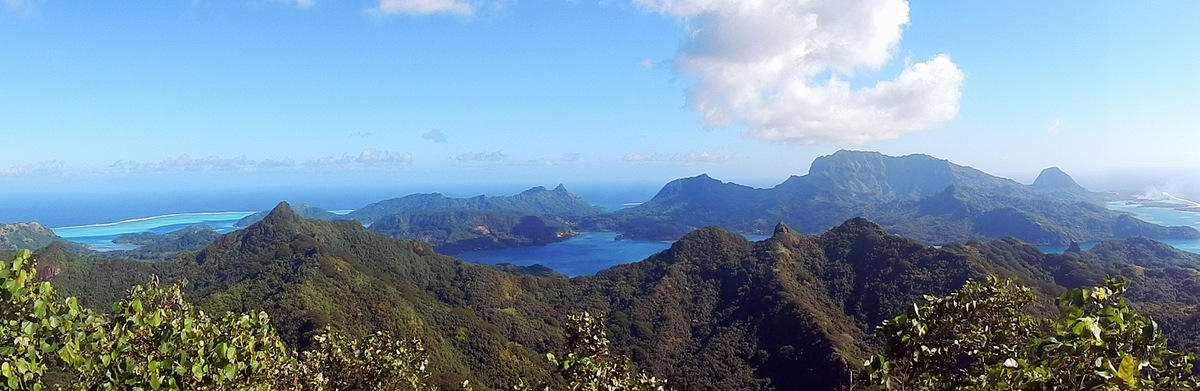
The strong 20 knot wind continued from the north, but it was a beautiful blue sky day. We managed to drag ourselves out early and went for a hike up the nearby Mount Pohue Rahi which is a pleasant walk to the top of the 460 metres high peak. We took our dinghy to the Tefarerii village dock and hiked up a track through some beautiful conifer woods. It took us 90 minutes to get up to the peak, where we had some stunning views of the island. (See our hiking article for more details.)
We were back on Alba by lunchtime and then I went snorkelling next to the boat while Glenys stayed on board chilling out after our exertions this morning. I got some more reasonable photos of Butterflyfish.
12 July 2014 Motu Murimahora, Huahine
It was another day with strong winds from the north and overcast with showers, so we chilled out in the morning. Paul came by later in the morning and stayed chatting for an hour. He brought us some more coconuts and a huge bag of shells for Glenys. We’d put together some small bits of fishing tackle as a gift and gave him a filleting knife that we had to spare.
After lunch we went snorkelling to the north end of the motu where Paul said that it was good. It was okay, but a bit too shallow for us.
Went ashore to give Paul the photographs that we’ve taken while here and met Paul’s cousin who lives on the small motu next to the entrance channel. He could speak reasonable English and we gleaned a bit more information about Paul.
Paul was brought up on the motu and has lived there all of his life, but his parents and the rest of the family have moved onto the main island for work and left Paul behind to look after the land. It must be a lonely existence for him living here by himself, so it was nice to see that his relations are popping in to see him in this remote place.
We went for a walk along the beach then walked back to the dinghy through Paul’s land. He met us and we had another "signing" chat, then he walked with us to the dinghy, where he gave Glenys three beautiful Cowrie shells and had already put another four coconuts and some papaya in the dinghy for us. We've only been here three days, but feel like family - Paul gave us hugs before we stepped into the dinghy. A lovely person.
13 July 2014 Motu Murimahora to Fare, Huahine
The trough has passed over us now and we have an overcast sky with hardly any wind. We upped anchor at around nine o’clock and motored around to Fare, the main town on this small island arriving just before noon.
The town anchorage is just to the north of the entrance channel, but there was still some swell from the north and the boats at anchor there were rolling, so we carried on into the bay and anchored on the reef at 16°43.18S 151°02.36W, which is on a shallow shelf about 1/3 mile from the town quay. There are some scattered rocks and coral heads, but we found a clear patch in 3.5 metres of water. The bottom looks to be broken coral and sand, but our anchor dug in nicely next to a rock. A strong current whips through the anchorage, keeping us pointing south.
After lunch, we jumped in the dinghy and went into town. Being a Sunday afternoon, everything was closed up, but we found out that there will be some sort of parade tomorrow morning because it’s Bastille Day and we’ve there’s dance competitions every night for the rest of the week because we’ve arrived right in the middle of the Heiva festival.
We walked around the small town and then a mile towards the airport to check out the small sports stadium where the dance competition will be held tomorrow night - there are small eating places there and the event starts at seven o’clock, so it looks like we’ll be eating out as well. On the way we stopped by a horse riding stables, but they charge $70 per person for a short two hour ride that sounds very touristy, riding along the beach and wading through water, etc, so we won’t bother…
14 July 2014 Fare, Huahine
After breakfast, I felt that we were a little too close to some very shallow water, so we pulled up the anchor to move out a little. We tried to re-anchor in a couple of places, but we just kept dragging, presumably on coral rubble, so we gave up and went over to the town anchorage, which now looked much calmer. I dropped the anchor in a nice big patch of sand, but when I snorkelled down to the anchor, I found lots of big coral heads under us, so I put a fender on the chain to try to lift it above the heads.
It was Bastille Day, so we went ashore to watch the festivities. The streets were lined with hundreds of locals and the first event was a long parade led by the police and firemen. Following them were groups of local associations and churches, mostly dressed in bright outfits and wearing beautiful leis.
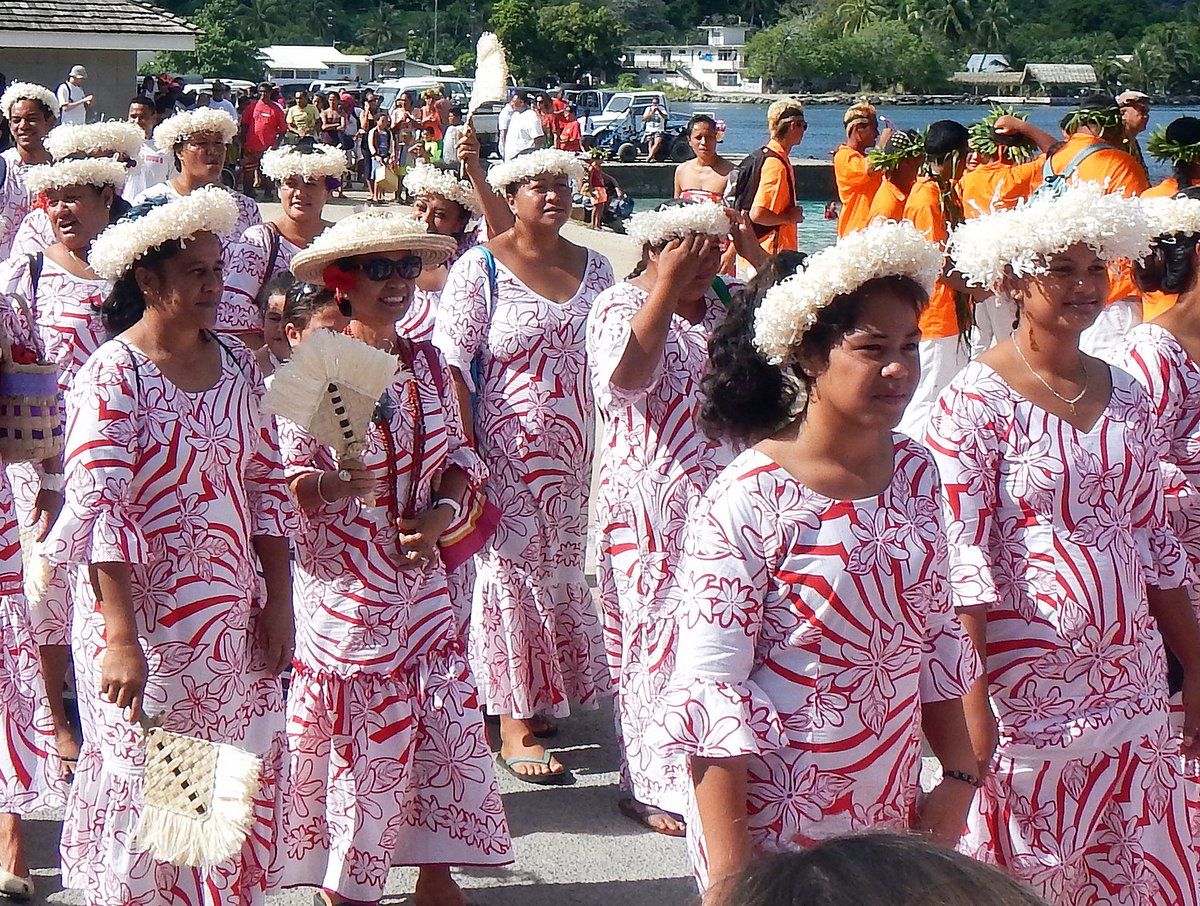
The groups gathered in the main square for a flag raising ceremony. Three flags were raised and three anthems were played - France, French Polynesia and Huahine. Interestingly, the Huahine flag was in the middle and the guys raising the flags were very careful to keep the Huahine flag the highest. The Huahine anthem was absolutely beautiful with every one singing the haunting polynesian tune. We were then treated to some traditional dancing accompanied by drums and ukuleles - very energetic with lots of hip wiggling.
The final event was the Courses de Porteurs de Fruit (Race of the Fruit Porters). The race consists of each barefoot runner carrying a 3 inch diameter pole upon which is fixed bunches of bananas. The ladies carry a 40lb load and the men carry an 80lb load. As part of the Heiva festival, each of the six villages had entered competitors. It was great fun, with the crowd cheering on their village. The race lasted about ten minutes, so I guess that they ran a mile or so and were very tired when they return back to the square, heaving the heavy load off their shoulders into the hands of waiting assistants.
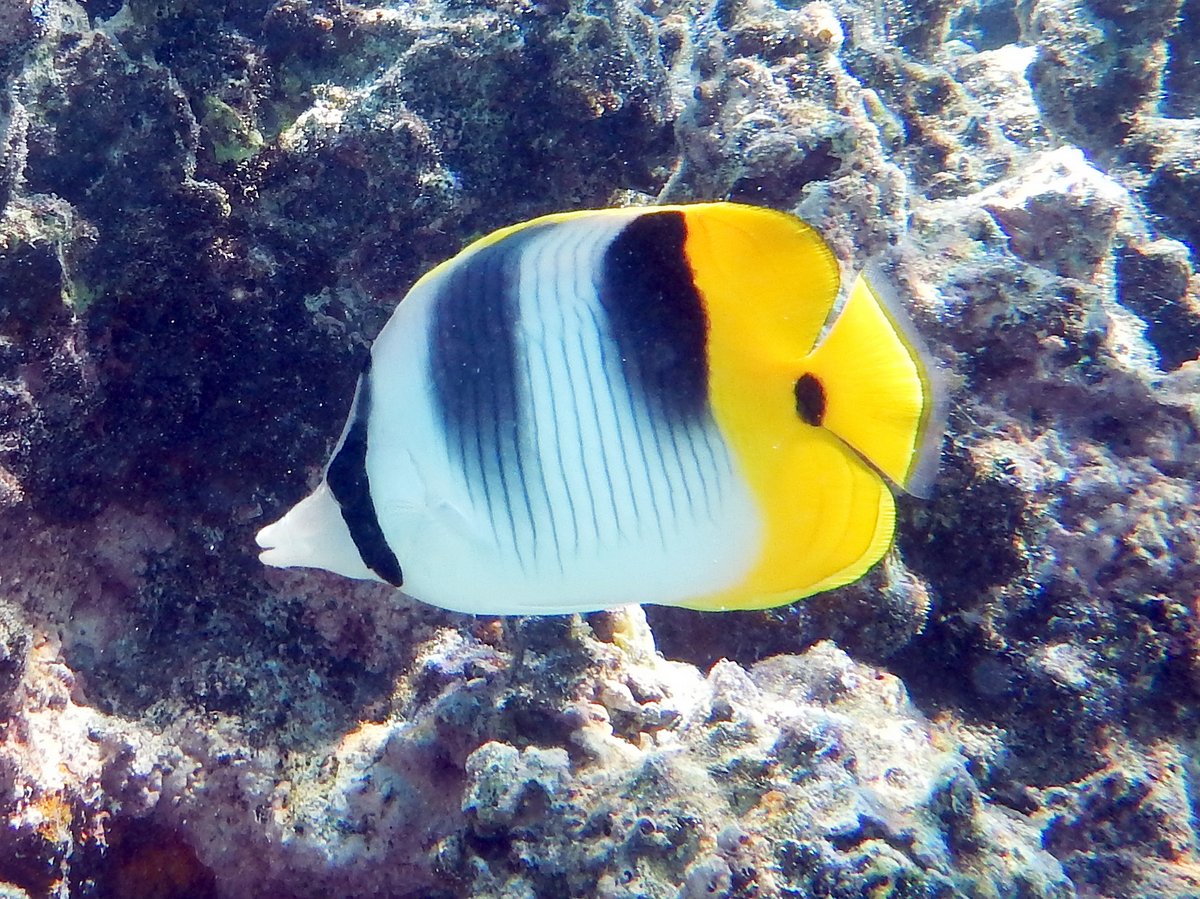
In afternoon, we went snorkelling next to a permanently moored tourist boat out on the reef between the two passes, where they feed sharks. We went to the east cardinal mark on the edge of the reef and then followed a series of sticks through the shallow water out to the moored boat. There was no one around when we got there, and close to the boat, we saw a dozen or so Blacktip Reef Sharks, who came to check us out, but kept their distance. There were also lots of Pacific Double-saddled Butterflyfish, which seem to be the most common type of fish in places where fish feeding is done. Even without food, they were swarming around us.
In the evening, Steve and Lili from “Liward” invited us over for sunset drinks .