
21 February 2014 Bahia de Caraques to Galapagos, Ecuador (Day 1)
I had a very restless night and woke up worrying about the turbo on our engine. Last week, I checked the waste gate lever on the engine and found that it was stiff. Since then I've not investigated any further and my subconscious was obviously reminding me. So, I was up at six o'clock googling away finding out how the turbo works and whether I had a major problem.
Thankfully, it appears that this waste gate is only there to relieve high pressure in the turbo and that should only happen at very high rpm, which we never do. However, I'll see if I can free it up when we get to the Galapagos and I'll make note to remove and de-coke the turbo when we get to New Zealand - this list is getting longer.
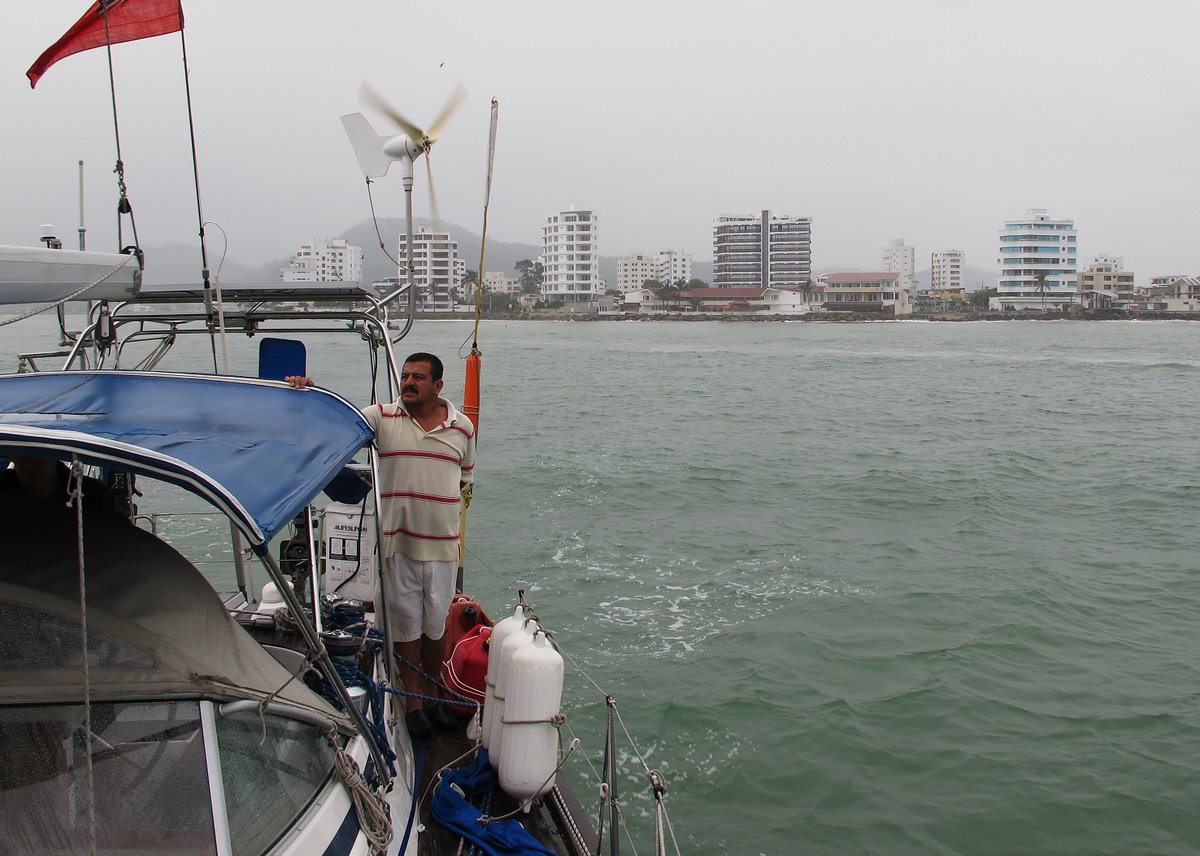
The pilot, Pedro, arrived well before half past seven and we had an uneventful, but nail-biting trip out through the shallows at the estuary mouth - the minimum depth that we saw was 2.7 metres, giving us loads of room under our 2.0 metre keel. It was raining quite heavily, with poor visibility and not a very nice start to our journey.
Pedro was expecting another yacht to be waiting to come in, but there was no sign of it, so he went back into the estuary. Ten minutes later, we heard the boat calling Puerto Amistad on the VHF radio, but no one was replying. Knowing the trouble that we had coming in, I gave the guy a call on the radio and volunteered to ring Tripp on my mobile phone.
Unfortunately, Tripp told me that it was too late now because it was just after high tide, so the yacht would have to wait outside until tomorrow morning. No surprise, but the skipper of the incoming boat was not at all happy when I relayed Tripp's message to him. The poor guy was single-handed and had busted a gut to get here in time for high tide, to be told that he had a 24 hour wait because he was 10 minutes late. I felt sorry for him, but there was nothing that I could do.
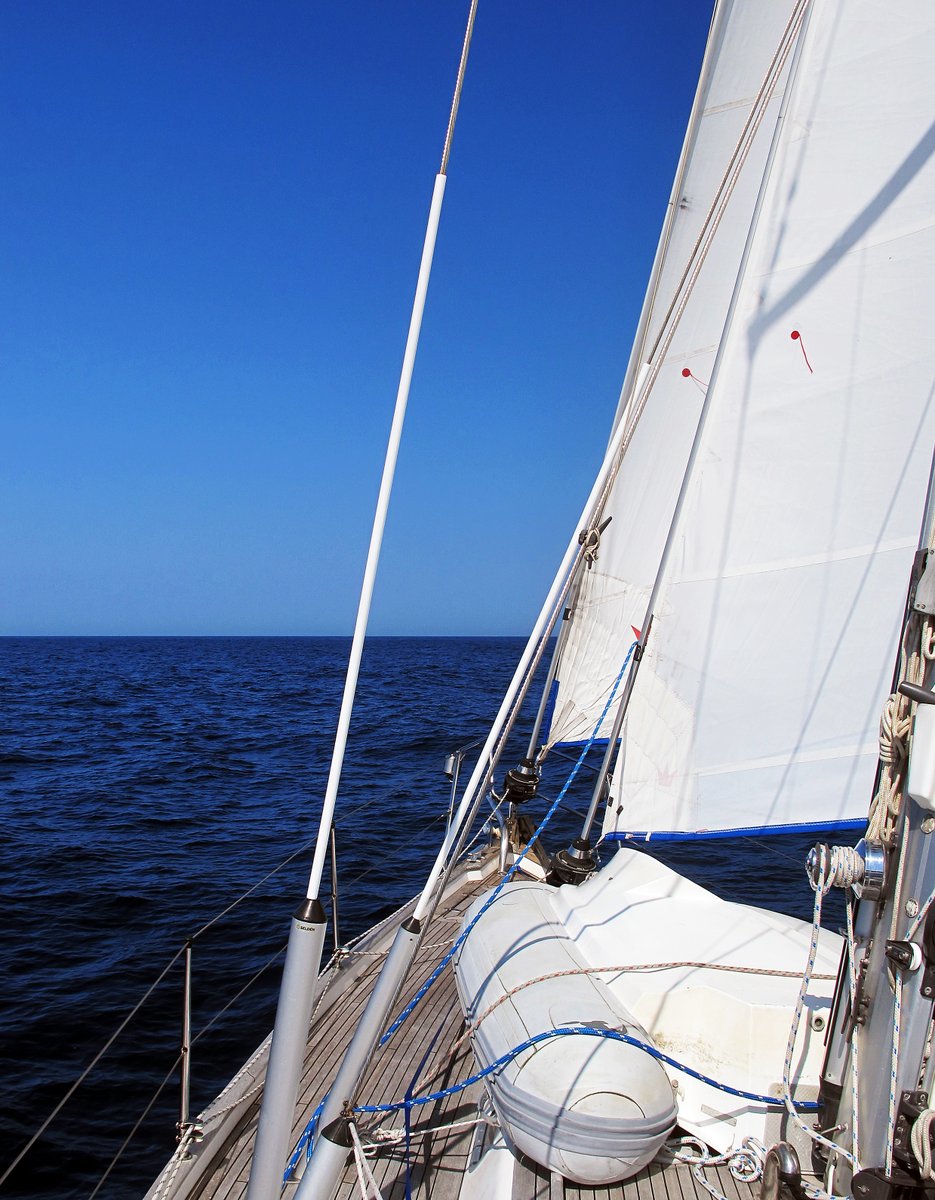
We had a lovely sail in the morning. The sun came out and we had a nice 15 knot wind from our port aft quarter, which pushed us the fifteen miles to Cabo Posada, where we anchored in the lee of the headland. There was quite a swell coming into the anchorage making us roll badly, but we were only there to clean the bottom and check the propeller.
I put on my scuba gear and spent 90 minutes scraping away with a small metal scraper. The propeller was pretty clean after my efforts the other day, but the hull was coated in a thick green-brown algae and had large barnacles every foot or so. I decided to scrape off all of the barnacles, but only scrape off some of the algae, hoping that by uncovering some of the anti-foul paint, the algae will be killed off while we're sailing for five days.
It was hard work, especially because the boat was rolling up to 20 degrees as I was doing the grotty job. After an hour of swimming sideways, upside-down and bouncing of the constantly moving hull, I was feeling decidedly nauseous. By the time I climbed back on board, I was in great danger of throwing up, so I sat and stared at the horizon while Glenys stowed the diving gear.
We were under way by two o'clock, but by this time, an on-shore sea breeze had started, switching the wind from the south-east to the west; directly where we wanted to go - bummer. We tried to beat upwind, but after trying both tacks, we decided that we'd be better to motor away from the shore to get back into the prevailing south winds.
I was still feeling seasick, so I went to bed for a couple of hours and left Glenys to it. By late afternoon, we were finally able to sail hard on the wind on port tack.
After dinner, we settled down to our normal three hour watches starting with me going to bed at seven o'clock. We had a fabulous night's sail with calm seas and 5-12 knot winds from the south, bumbling along at 3-5 knots on a reach.
We had a few anxious times with shipping. I had to call up a big freighter, who looked to be on a collision course with us - thankfully they changed course after my call and went astern of us. Glenys was dodging fishing boats on one of her watches. She spotted the flashing lights of a long fishing net, but disconcertingly, the fishing boat didn't put on any lights until she got close and then turned them off after she went past.
22 February 2014 Bahia de Caraques to Galapagos, Ecuador (Day 2)
Dawn saw us on a pleasant reach at five knots with overcast skies and thankfully no rain. At eight o'clock, we'd only done 70 miles with 470 miles to go.
The wind gradually dropped during the morning, so I dragged out our spinnaker. It took us 30 minutes to rig it up, roll away the two head sails, remove the running backstay and get it flying. Our new bowsprit worked well and kept the tack of the sail well away from the pulpit. We were still on a close reach and ripped along at 5-6 knots in 7-10 knot winds in glorious sunshine.
By three o'clock in the afternoon, the wind had picked up a few knots, so I went up front to drop the spinnaker. Glenys steered us downwind and I released the tack of the sail, so the spinnaker flew like a flag behind the mainsail. I then pulled the sock down to douse the spinnaker, but as I was lowering the socked sail, the damn spinnaker halyard slipped off the winch and slid through my hand for a few metres until I grabbed it.
Fortunately, I stopped the sleeved spinnaker from falling into the sea, but I picked up a rope burn in the palm of my right hand. I shoved the spinnaker into its sail bag and left it clipped to the guard rail. Back in the cockpit, Glenys gave me some "Burn Free" gel to put on the rope burn, which did a good job. Twelve hours later, there weren't any bad blisters or pain - good stuff.
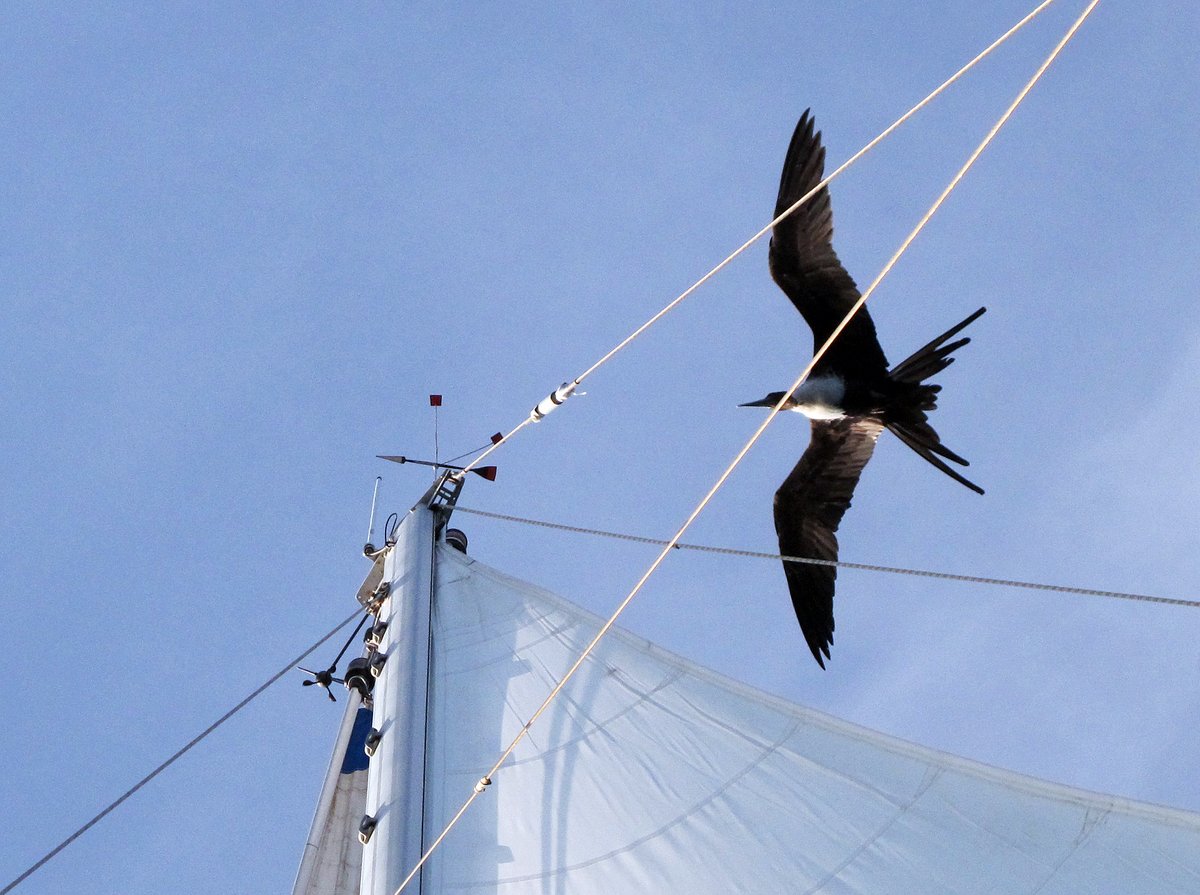
Our major entertainment of the day was trying to scare away a frigate bird that wanted to land on the top of our mast. It gave up after ten minutes of circling around - probably because I've got an anti-bird spike on my Windex, rather than our enthusiastic efforts to shoo it away.
We decided to swap watches, so Glenys served up a nice Cassoulet for dinner, then went to bed leaving me on the 7-10 watch. The wind picked up to 15 knots in the evening and veered 30 degrees putting us fairly hard on the wind, so I put a reef in the main and we flew along at 6.5 knots. We continued to get stronger gusts and by one o'clock, we had a reef in the genoa as well to cope with 20 knot gusts over the deck. Despite being hard on the wind, the motion was okay because the seas weren't very big and even with the reefs we were doing seven knots.
It was a lovely clear night, with bright stars and a quarter moon that came up just after midnight. Now that we're on the equator, the "cut out" in the moon is horizontal, which looks very strange to me, having lived in the northern hemisphere all my life (where the cut-out is on the top, right hand side of the moon.)
23 February 2014 Bahia de Caraques to Galapagos, Ecuador (Day 3)
The wind dropped to around 10 knots after daylight, so Glenys shook out the reef on the genoa and we bobbed along at 5.5 knots on a close reach. I took advantage of the early 4-7 watch and had an extra hour in bed - luxury!
While Glenys went to bed for a couple of hours, I downloaded a GRIB file which showed that the wind will drop over the next few days - we'll probably end up motoring, but at least there's nothing nasty ahead.
I checked in on the Pacific Cruisers Net and had a very good signal on our SSB radio, so changing the antenna cable seems to have sorted out my problem. This is the first time that we've checked into this radio net and it was lovely to have friends from various places around Central America call up and say hello.
I dug out my fishing gear, but despite trolling two lines all day, we didn't get a single bite. We had great weather during the day - blue skies, 10-14 knot winds and calm seas, so we sailed along at about six knots on a close reach, which was very pleasant.
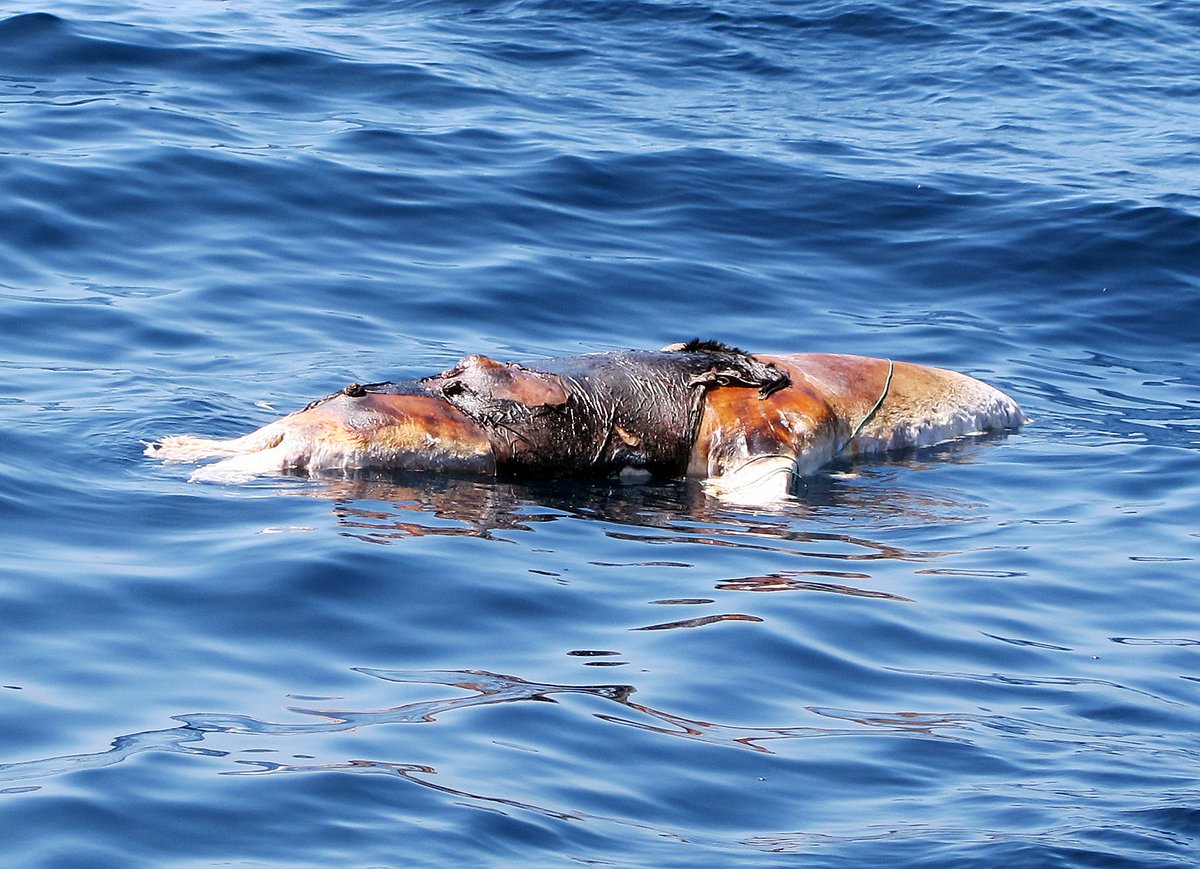
During the morning, I spotted a strange floating object and sailed over to investigate. It was the remains of a large mammal (a small whale, I think) that had been caught up in rope. It was bloated; had already lost its tail to predators and stunk to high heaven. I didn't get too close.
Glenys and I both seem to like the changes in watches - I'm now on 7-10 and 1-4, while Glenys does 10-1 and 4-7. She loves seeing the sun rise, and I like the fact that I'm only being woken up once during the night and can wake up naturally at the end of the 4-7 watch. We were thinking of alternating the watches every day, but it was a big disruption to our sleeping patterns to change over. Perhaps when we sail to the Marquesas we'll change every five days or so.
The good weather continued all day, but the wind started to drop after dark and Glenys had to turn on the engine at one o'clock in the morning. After that we motored along in very calm seas with fabulous stars. We have a star gazing app on our iPad, which is great for identifying stars & planets and helps to keep us occupied on long, dark night watches.
At four o’clock, we just had enough wind to sail again, so we turned off the engine and drifted along at 3-4 knots for a few hours.
24 February 2014 Bahia de Caraques to San Cristobal, Galapagos (Day 4)
Unfortunately, the wind disappeared altogether just after dawn, so Glenys motored for a while until I got out of bed and we could put up the spinnaker. There was only 3-5 knots of breeze, so, even with the spinnaker, the best that we could manage was a couple of knots of boat speed, but at least the sea was very calm and the sun was shining.
We persevered with bobbing along until noon, when it was decision time. The GRIB file that I downloaded in the morning showed these light winds would continue for at least two days.
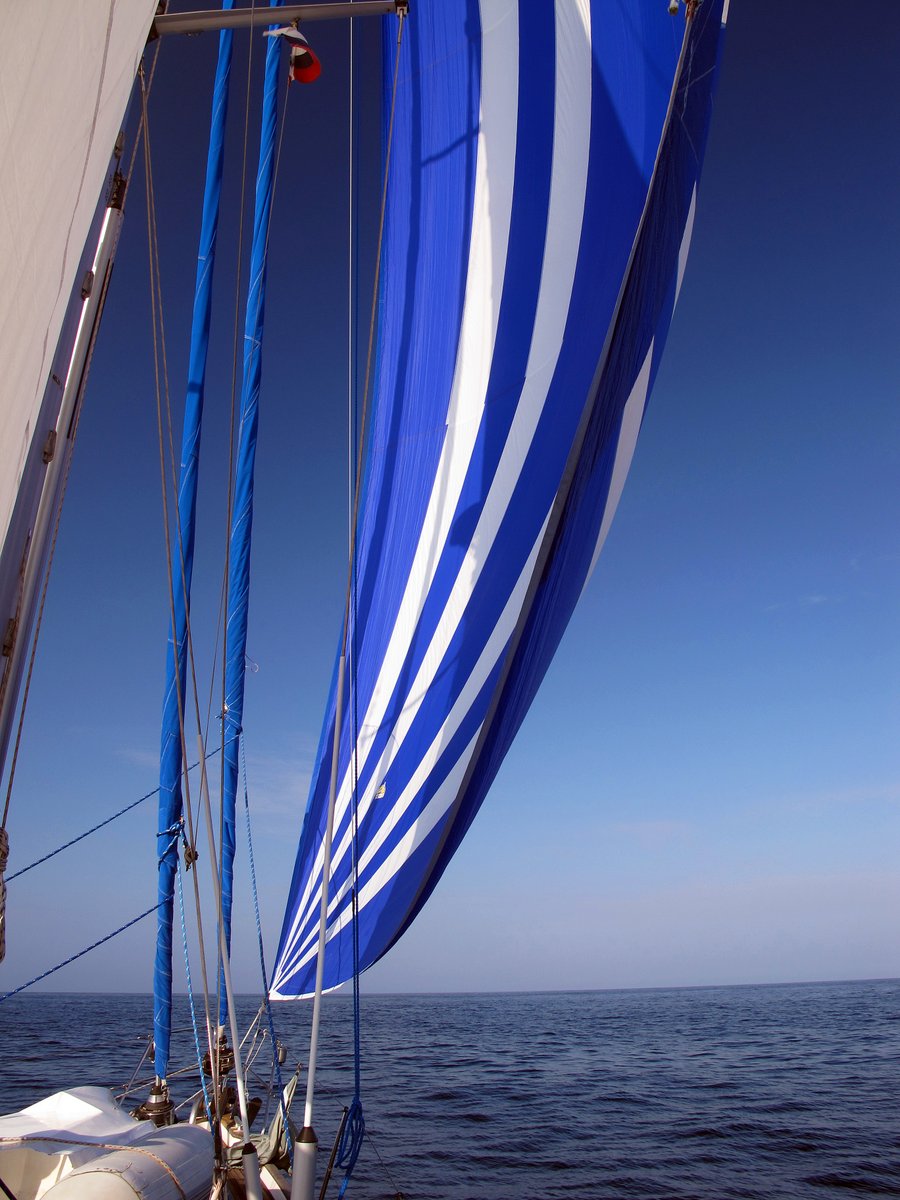
We were 180 miles from our destination - we either started motoring to arrive tomorrow afternoon, or we took another two or three days to get there. We'd probably have to motor each night anyway, because I don't want to fly the spinnaker in the dark, so we decided that we'd might as well go for it and turned on the engine.
The rest of the day and night was uneventful - motoring along at 6-7 knots in the calm seas. Once again, we didn't have a single bite on our two fishing lines even though I deployed our normally lethal Cedar Plug.
Before we moved onto Alba, I ran a computer business that was based around Microsoft products, so for the last 30 years, I've been very anti-Apple products. That was until we bought an iPad. We initially bought it as a backup chart plotter because it has a built-in GPS receiver and we were able to buy Navionics charts that cover our route around the world for only $200.
The iPad is now a permanent feature in our cockpit when underway. As well as using it for navigation, we have a star-gazing app which is useful for identifying stars and planets; an app for identifying fish and I use it to make notes for the web site. I've even started to watch movies on those long night watches - what would we do without it?
Another major use for the iPad is for reading PDF files. When we find interesting information on a website, we print the web page as a PDF for reading later when we don't have internet access.
I spent most of the day and night on our beloved iPad reading information that we've gathered on French Polynesia. Once we get to the Marquesas, we'll be sailing 2,500 miles to New Zealand, sailing through seas with thousands of islands. With only six months to spend in the area, it's a complex logistical exercise to work out which places we want to visit. After 10 hours of research, I have a rough plan for the Marquesas and the Tuamotus - only another 1,800 miles to research.
25 February 2014 Bahia de Caraques to San Cristobal, Galapagos (Day 5)
At dawn, we were still motoring along in calm seas and 4-5 knot winds - Ho Hum...
By ten o’clock, I could see land and it was starting to get exciting. My day was made even better when I finally hooked a fish - a nice fat Tuna. It didn’t take long to get it aboard and I gutted it immediately, just to get it out of the way.

It always takes longer than you think to approach land and this was no exception. At midday, we were motoring around the south side of the island with 10 miles still to go and a current against us. At least there was some wildlife to look at. We’d not seen anything for four days apart from a few Boobies, one Frigate Bird and a dead whale, but now we were surrounded by pods of dolphins, a plethora of seabirds and we even spotted a sea lion.


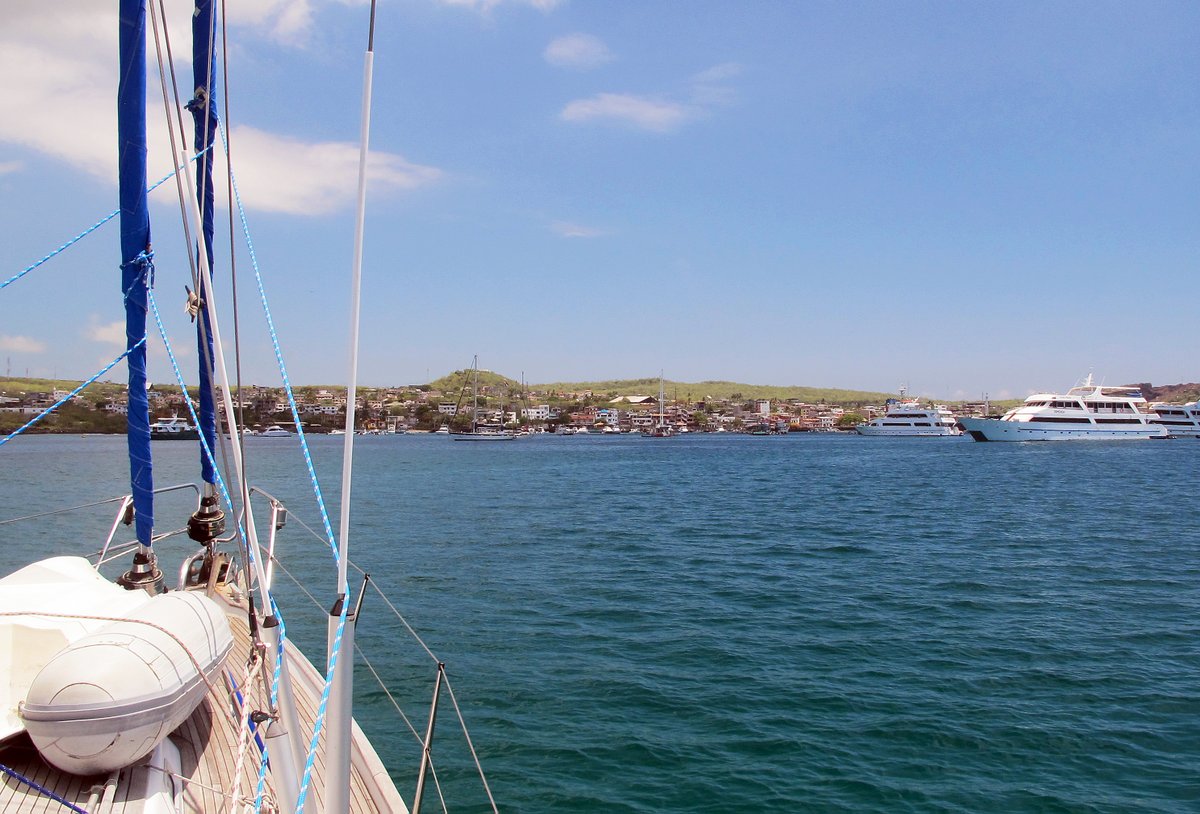
We finally motored into Puerto Baquerizo Moreno on Isla San Cristobal at half past two in the afternoon and it looked lovely in the sunshine with sparkling blue water. There were only 4 or 5 other sail boats in the anchorage amongst the hundred local pleasure and commercial boats. Unfortunately, the sail boats were all facing in totally different directions making it a real challenge to anchor. We eventually took a gamble on where everyone’s anchor was lying and dropped our anchor in a large space next to some yellow commercial moorings – at least we know that they are on a fairly short scope.
Glenys got on with tidying up, while I lashed some big fenders onto our sugar scoop as a deterrent to the sea lions, which allegedly try to climb on board any unprotected boat at night. They might look cute, but I'm told that the mess that they leave behind if they get on board stinks to high heaven and is a bugger to clean up. Let’s hope that my defences are effective.
It only took an hour for our agent, Bolivar Pesantes to come on board. He doesn't speak any English, so we had a difficult conversation, but he took away our passports, a copy of our boat papers and the two zarpe documents that we’d been given in Bahia. I asked him if he’d received the Temporary Importation document that had caused so much stress back in Puerto Amistad – but his reply was simply "It’s not necessary". He left us with a crumpled copy of our expensive autographo and a hefty bill for $1,054!!!
Bolivar was back within an hour with a boat load of people from the national park authority. One asked me questions about disposal of garbage, holding tanks, our anti-foul paint and do we use biodegradable cleaners – of course. He asked me if we had a fumigation certificate to which I truthfully replied “No” and went on to say that I’d been told that we didn't need one if we came from mainland Ecuador – he said that I needed to talk to Bolivar. I just shrugged and thought that I’ll just keep my mouth shut and see what happens.
The guy then wrote out a couple of notices on A4 paper in Spanish and English that warned “No Garbage in the Sea” and taped them up above our fridge. Meanwhile two girls and another bloke were wandering around the boat taking photographs of things like the holding tank, some oil absorbent pads that I have stored away and lastly my spear gun which (of course) I'm not allowed to use here.
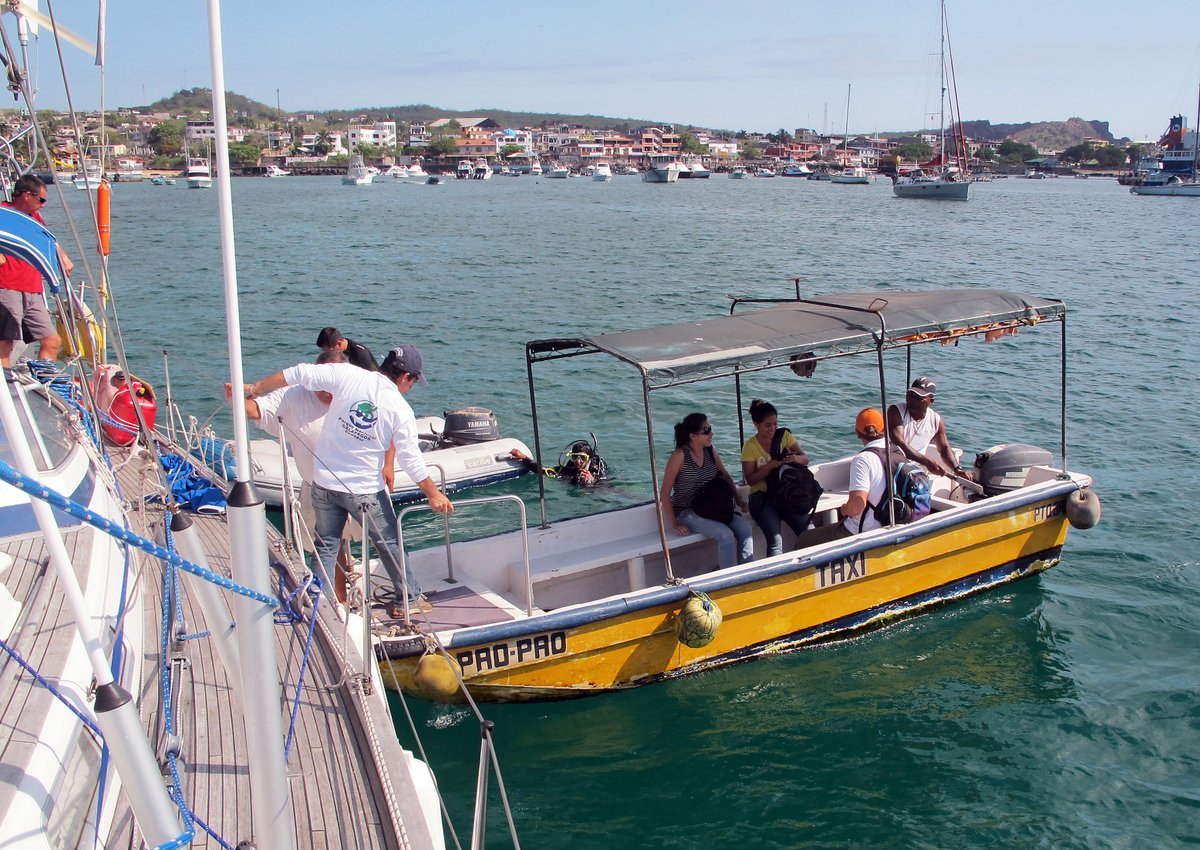
More worryingly, two guys turned up with scuba gear and proceeded to inspect the hull of the boat. I gave it a fair cleaning before we left mainland Ecuador, but there's still a large amount of green slime on the hull and I'm pretty sure that I missed some barnacles. I don’t know what they’ll do if they think that our hull is too dirty because they just went away.
Bolivar came back a couple of hours later with the Port Captain and the Agriculture Inspector. The port captain diligently filled in his form and I signed it. The Agriculture Inspector asked us if we had any animals, plants or fruit. We said no and were surprised when he didn’t go below to have a look himself – not very good pest control. I’m sure that it will be a lot tougher in New Zealand. He also knew that we didn’t have a fumigation certificate because a box was crossed on his form, but he didn’t say anything about having the boat fumigated, thank God.
I went down below with Bolivar and paid his bill in cash. While I had him alone, I asked about the hull inspection and was it a problem, he just shrugged and said it was the Park Authority and there was “No Problema”. I guess that the Parks Authority have no powers at the moment - fingers crossed.
When we had the last of the officials off the boat, we collapsed and ripped open a cold beer. Glenys made some Seared Tuna for evening nibbles, which was delicious.
We were in bed early, looking forward to going ashore tomorrow. A group of sea lions have taken over a powerboat moored nearby and it was strange to hear the sound of them arguing amongst themselves as we fell asleep.