
26 February 2014 San Cristobal, Galapagos
Even though we were still very tired, we got up at quarter past seven because Bolivar said that he’d be coming at eight o'clock to drop off some tourist information. He hadn't turned up by nine o’clock, so I put the dinghy into the water and we went to say hello to a couple of our neighbours – Glen and Erin on “Sundance” and Paul and Monique on “Full Circle”. “Sundance” invited us all over for sunset drinks.
While we were chatting to Erin, she told us that nearly twenty of the” Round the World ARC Rally” boats had failed their hull inspections, then been told to leave Galapagos waters and not come back until their hulls were clean. They apparently had to sail 70 miles away from the islands and then heave-to waiting for divers to come out and clean their hulls in the middle of the ocean (they weren’t allowed to do it themselves for some reason.) Some of them were out there for THREE days. We returned to Alba hoping that our hull would pass the inspection.
Bolivar turned up at half past nine, at which point we realised that we hadn't turned the clocks back and were an hour ahead of the local time. We’d got up an hour too early – bummer. I again asked Bolivar about the hull inspection and he again shrugged it off and told us that the Parks Authority was having a political battle with the port captain and the other authorities.
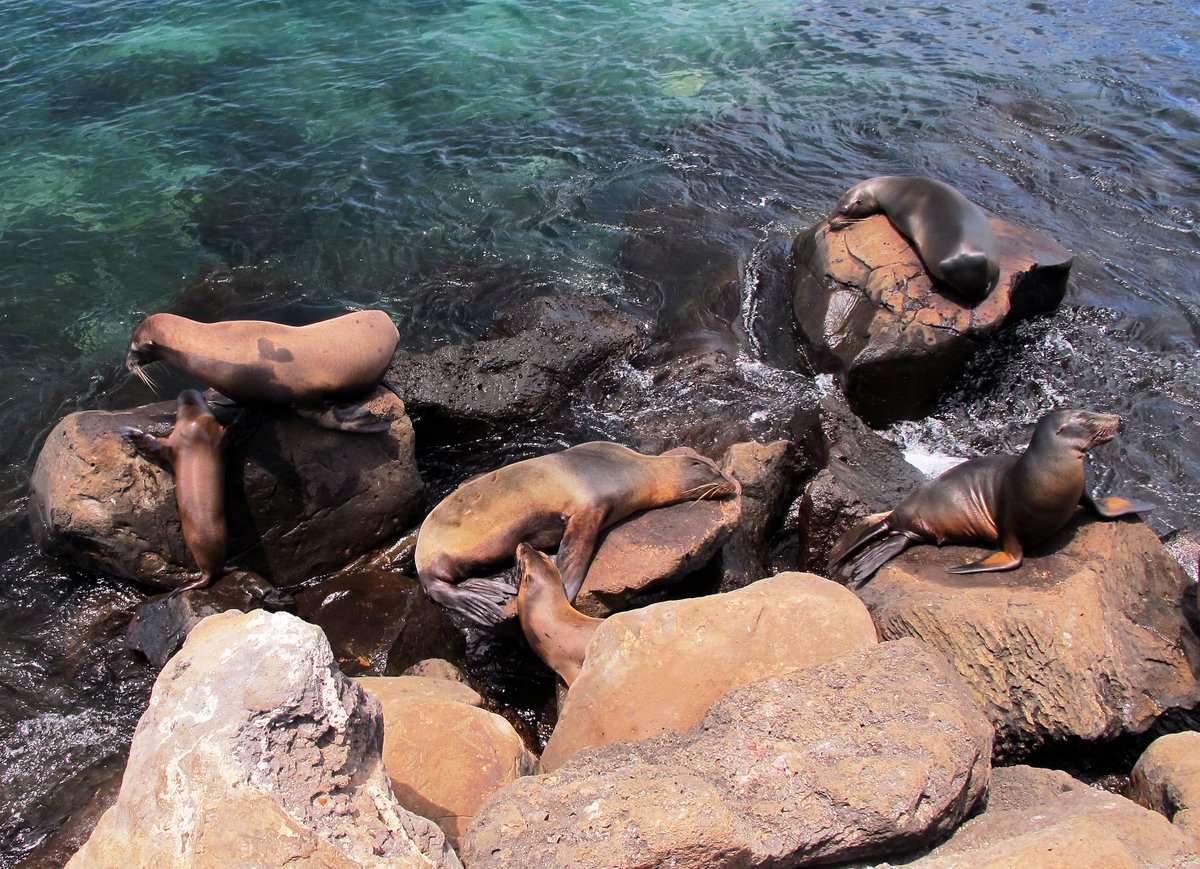
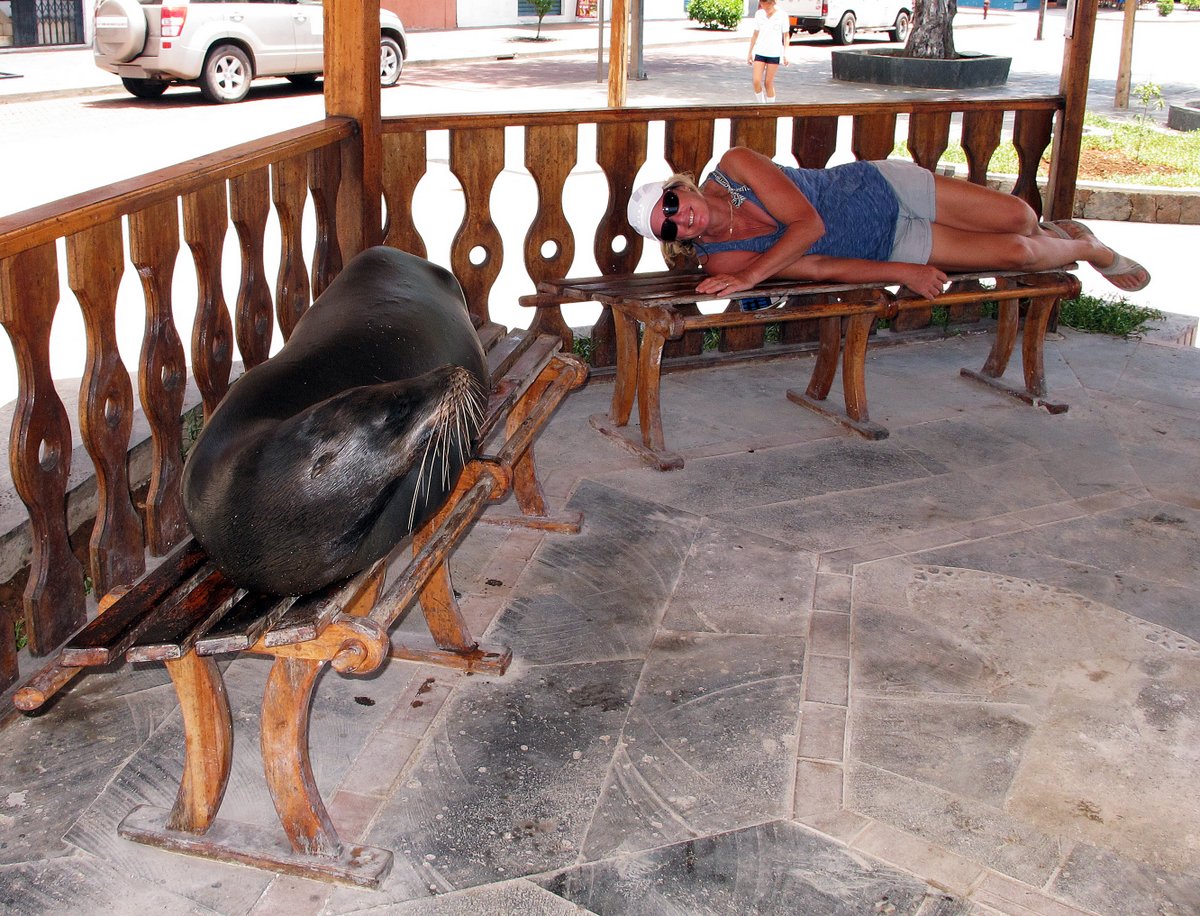
We went ashore and walked around the small town. The first thing that struck us was the number of Sea Lions that are hanging around the Malecon – there are hundreds. They’re all along the rocky shore line, on the small beach and can be even be found occupying the bench seats along the Malecon. There’s a walled-off area with water slides that is obviously intended to be a sea-water pool for humans, but the Sea Lions have taken it over. There are lots of young Sea Lions swimming about, so they seem to be using it as a kind of nursery.

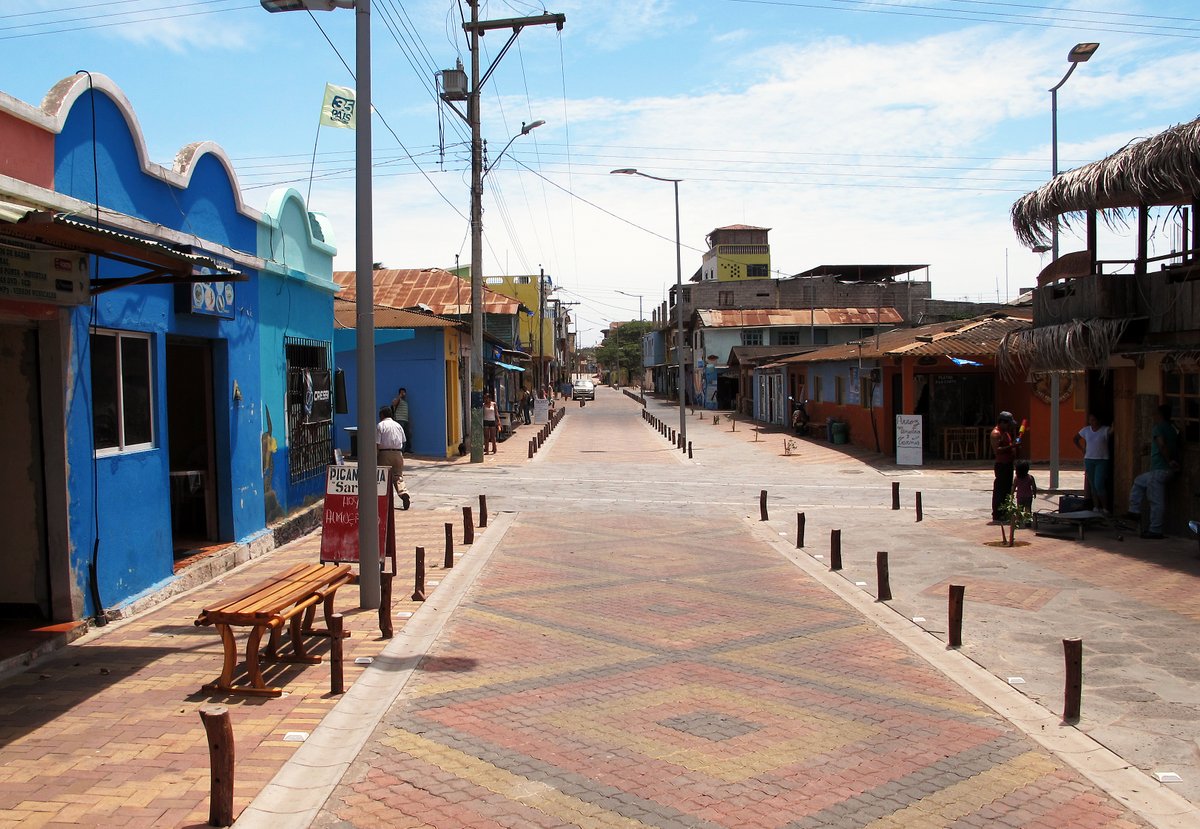
Having taken lots of photographs, we wandered around the small town, checking out the market and shops. They’re typical small Ecuadorian tiendas, but have all the basics, so Glenys is still satisfied that she’ll be able to buy what she’ll need over the next month without diminishing her stock of provisions.
We had lunch in one of the small restaurants on the Malecon, then I went to an Internet café to sort out some things. We've been really privileged to have a good wireless connection on the boat for the past three months, so going back to an Internet café was a bit of a shock to my system. I ended up balancing my laptop on a tall stool while sitting on an office chair. The speed of the Internet wasn't too bad, but I’d forgotten to take the power supply for my laptop and also the memory stick that contains my passwords, so my visit was cut short and I was unable to do the administration jobs that I’d intended - very frustrating.
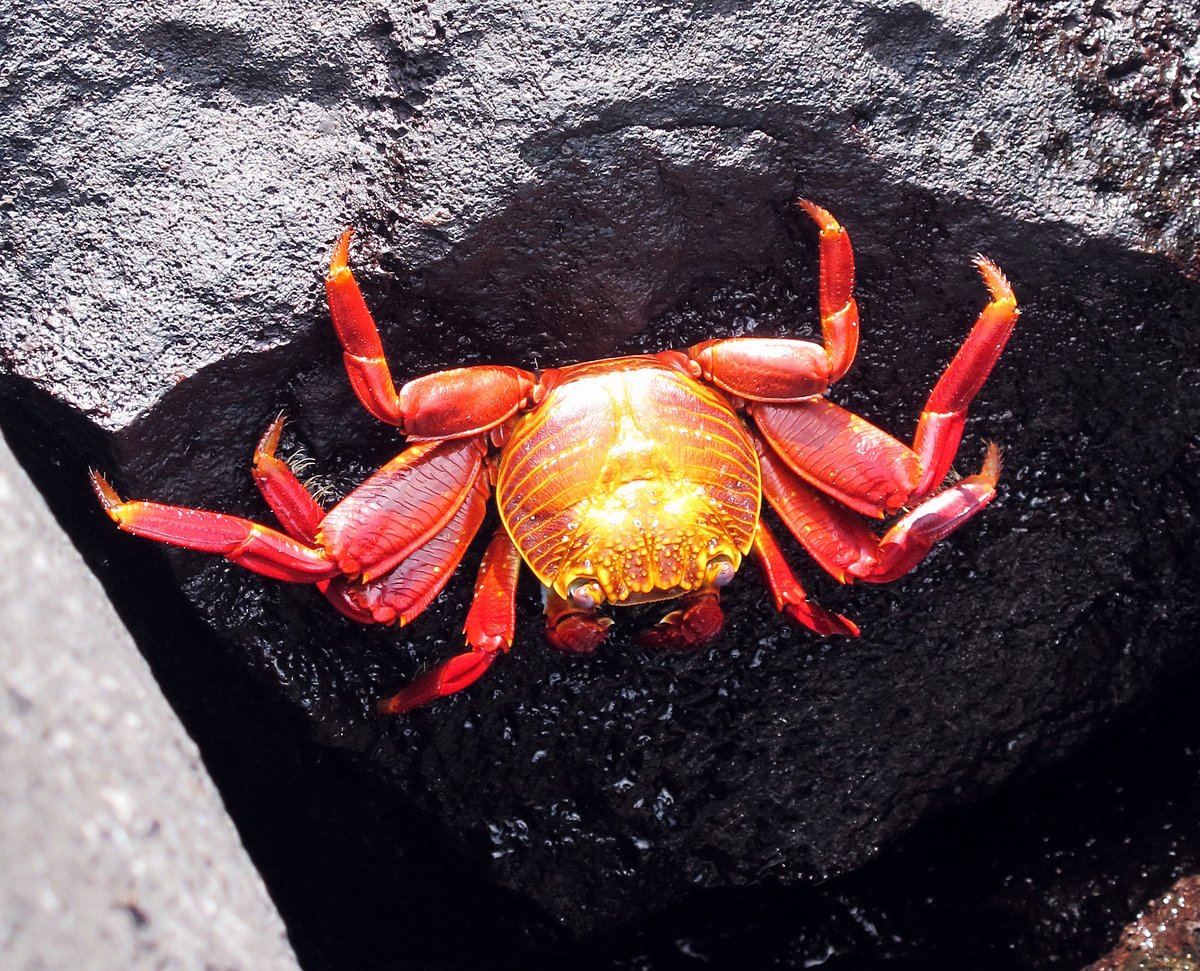
We walked to Playa Mann, which is a small, pretty beach just outside town. Not only did we see more Sea Lions, but I saw my first Marine Iguana and took a couple of nice photographs of the brightly coloured Sally Lightfoot Crabs – there were hundreds of them scuttling around on the rocks. We then walked to the Interpretation Centre, which has some interesting information on how the islands were formed and the environmental problems facing the land and its people. However, it was disappointing that there wasn't more information on the unique species of animals for which the Galapagos are famous.

Back at the boat, we went for a swim to cool down and then chilled out for a couple of hours.
Just before we were going out in the evening, Bolivar turned up and told us that there was a problem. The Parks Authority had issued him with a formal notice that the organisms on our hull were a bio-hazard to the Galapagos environment. We were ordered to leave the boundaries of the National Park (which extends out for 40 miles) and not to return until our hull was free of said bio-hazards. The Parks Authority was expecting us to leave immediately, sail out for more than 40 miles and then to have our hull cleaned in the middle of the Pacific Ocean, before returning.
Bolivar had arranged for divers to clean our hull (at a further cost of course). The plan was to leave at dawn, sail out to International waters, and then return to port with a clean hull before dark. The Park Authority would then inspect our hull again the following day. We didn't have much option – the alternative was to leave the Galapagos and start the 25 day sail to the Marquesas tomorrow.
We agreed to Bolivar’s plan and went over to “Sundance” to drown our sorrows. We met Selim and Nadire from “Keyif”, who had also been caught by the same regulations and had agreed to the same scheme. Interestingly, “Sundance” and “Full Circle” hadn't had any divers inspecting their hulls when they arrived and so had escaped the wrath of the Park Authority.
27 February 2014 San Cristobal, Galapagos
We didn't sleep well at all, worrying about the whole plan and things that could go wrong. Both of us were awake at quarter to five and got up before the alarm went off. We were pulling the anchor up at quarter past five as the sky started to brighten in the pre-dawn. The wind was very light and, as usual when heading around an island, the wind blew directly from the direction we were heading, so we had to motor – more damn expense...
We motor-sailed all morning, arriving in international waters at eleven o'clock and, two hours later, were heading back to Puerto Moreno with our clean hull.
There was still no wind when we were coming back, so we motored most of the time, using the sails whenever the breeze picked up enough and we had a cracking sail for 20 minutes as we approached the anchorage. We anchored in the same place as before just as the sun went down and cracked open a beer – a very strange day.
I've not had a chance to dive down and look at how well they've cleaned the hull – all I can hope is that we’ll pass the inspection and they haven’t scrubbed off too much of our expensive anti-foul paint.
While travelling out and back, we came up with a list of things to discuss with Bolivar. We’re mostly concerned about Bolivar’s gung-ho attitude to the paperwork and regulations. Our passport visas expire tomorrow; we don’t have a signed and stamped copy of our “Temporary Importation” document and the documents we received from the Environmental Ministry have an observation that we haven’t got a Fumigation certificate. We’re planning to give Bolivar the Spanish Inquisition tomorrow about procedures and the paperwork that we should have.
28 February 2014 San Cristobal, Galapagos
We decided to have a chill-out day, but fate didn't let us. I played on my laptop for a couple of hours and then went for a snorkel around the boat to see how well the hull had been cleaned. They've done a good job - probably too good because we seem to have lost a lot of anti-foul paint. Nevertheless, I spotted some barnacles remaining, so I scraped them off – I didn't want the parks authority moaning about a few barnacles. Also, the sea cocks were still a bit clogged up with barnacles, but a bit of scraping with a long screwdriver soon sorted that out.
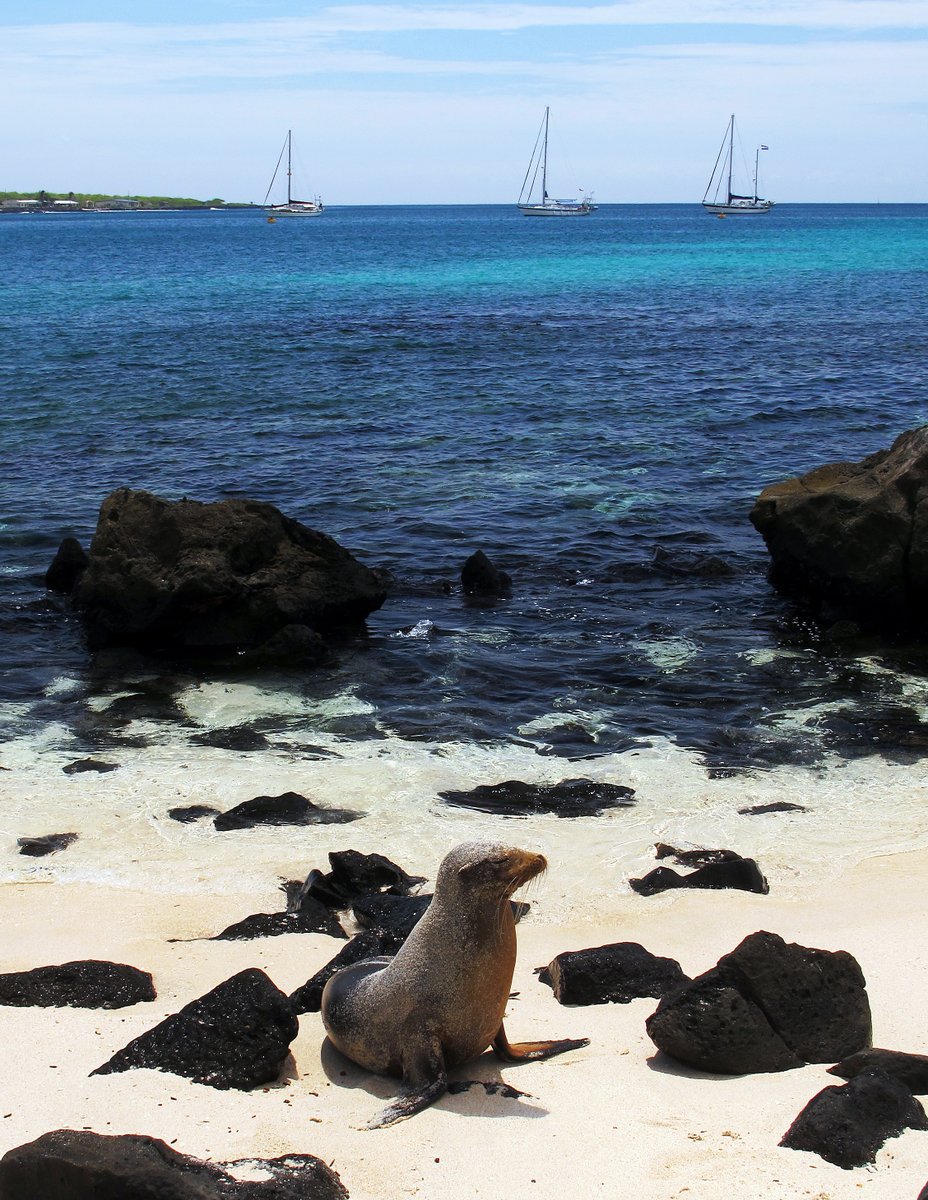
While snorkelling around, a couple of sea lions come over to check me out, but they disappeared before I could get my camera. I've no doubt that I’ll get some good pictures of sea lions over the next few days – I'm looking forward to snorkelling with them at a beach where youngsters like to play.
Meanwhile, Glenys was using up the last of the town water that we’d put into our tanks in Bahia by doing some cleaning jobs. She then ran the taps and drained the tanks completely. We started the generator and the water maker, which was okay for about ten minutes and then I heard the generator running very erratically, slowing down then speeding up. Don’t Panic Mr Mannering! I turned off the water maker and stopped the generator.
I had a look at the generator and couldn't see anything obvious. I tried to restart it, but it wouldn't start. Bloody great timing – it would go wrong when we have no water in our tanks.
I decided that it must be a fuel problem – diesel engines just need fuel and air. I bled the fuel system – no joy. I changed the fuel pump relay that has caused me problems in the past – no joy. There’s a bypass switch which allows me to turn on the fuel system when the generator isn't running. I spent an hour using this switch to test the electric fuel pump, fuel filters and fuel cut-off relay - I had lots of fuel going all the way to the injector pump.
I then checked the air filter and tried to start the generator without the air filter in place – no joy. I bled the fuel injectors again by trying to start the generator; there was some fuel and air bubbles, but not a lot of fuel. I was now scared that the injector pump was broken.
I read through the manual for the generator and also a book on diesel engine maintenance. One possibility was that the exhaust system was blocked and causing problems. This tied up with the fact that we’d been getting some black deposits coming out of the underwater exhaust. I spent over an hour removing the exhaust elbow and replacing it – it’s a bugger to get at... There was nothing blocking it. After five hours, I was now in despair – everything pointed to the injection system.
I re-read the manual and decided that it had to be a lack of fuel. I took off the fuel cut-off valve going into the injector pump and tried to start the generator. Bingo! No fuel going into the injection pump! I had fuel when I used the bypass switch, but no fuel when the starter button was pressed. I had Glenys try to start the generator while I pressed the bypass switch and miraculously it started.
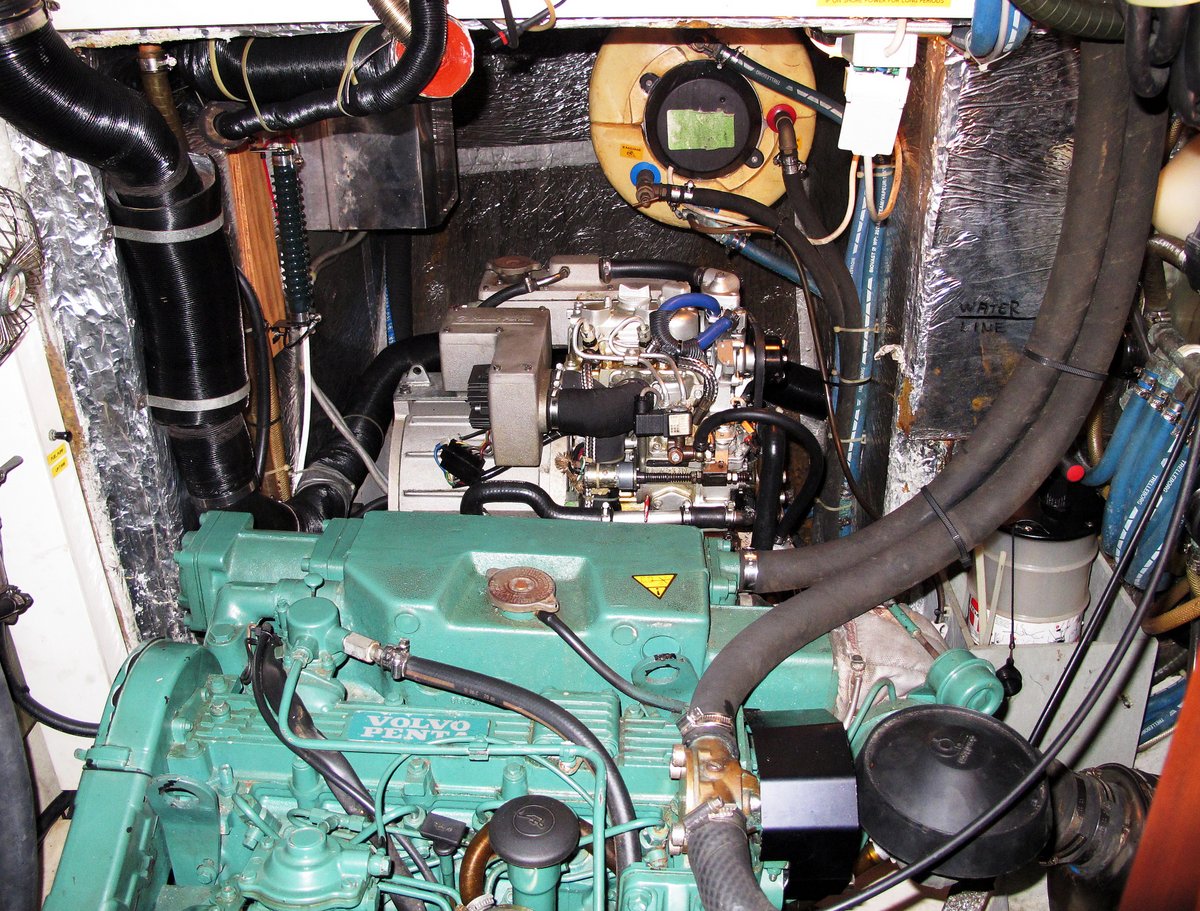
I looked at the circuit diagram for the generator and after 30 minutes of testing, isolated the problem down to some loose connectors on the oil temperature switch. The bypass switch also bypasses some of the safety sensors as well… Ten minutes later, I had a working generator and was producing water. After six hours of graft, we’re able to have a shower tonight.
By the time that I’d cleaned up, it was Miller Time. The divers from the Parks Authority hadn't bothered to turn up – obviously our bio-hazard is not that important to them.
Bolivar came by and dropped off our passports which have exit stamps – as far as immigration is concerned we have left the country… He tells us that this is okay because there are no immigration officers in Isabella where we will leave for the Marquesas. I asked about all the other paperwork and he tells us that we'll be fine - we don't need a Fumigation Certificate and the Temporary Import document is not important. I hope so after the hassle that we've had so far.
Bolivar told us that there’s a four day holiday from tomorrow – Mardi Gras. He’s going to Isabella and returning on the 5th, so we can’t go to Santa Cruz until then – not such a bad place to be trapped.
- << Prev
- Next