
16 January 2014 Isinlivi to Chugchilan, Ecuador
After breakfast, we packed up and I paid the bill. I got a bit crinkly when they tried to charge me $12 for 6 litres of drinking water – I know that a 10 gallon bottle of water costs less than $2, so after much whinging, they only charged me $2...

It was beautiful weather and the hike to Chugchilan was fabulous. (I’ve created a detailed description of the route in our hiking section.) This area of Ecuador is stunning and our walk took us down to the river then up to a ridge which gave us great of the surrounding hills and valleys.
From there, we walked through farm land, coming across an old lady driving a small herd of cattle. There was a little bit of confusion when we weren’t sure where she wanted to go and we ended up blocking the route for her cattle. One of her cows decided to go along a steep path down the hillside, so we were left controlling the rest of the herd while she collected her errant animal.
While this chaos was occurring, another lady walked up to us and wanted to know what my camera was. I showed her by taking her picture – she seemed pleased by the result. It never ceases to amaze me how these indigenous farmers are so detached from technology.
We continued our hike, going down a steep path, then walking past several small subsistence farms, which are perched in a kind of hidden valley, high above the Rio Toachi Gorge - what a beautiful place to live. After descending a steep path down to the Rio Toachi, we crossed a wobbly suspension bridge and walked to the village of Itualo. Then we had to climb a long series of zigzags which was hard work, but both of us managed without stopping. I’m on a training crusade, so I left Glenys behind and she caught me up at the top ten minutes later.
From top of zigzags, we had an hour long, remorseless walk going gradually uphill to Chugchilan. We made good time and arrived at one o’clock. After a well-deserved lunch, we had a shower and crashed out for a couple of hours.
17 January 2014 Chugchilan to Quilotoa, Ecuador
We checked out at eight o’clock and started our hike to Quilotoa. It was an enjoyable walk down to the Rio Toachi, but there are a couple of places where it’s easy to miss a turning. (I’ve created a detailed description of the route in our hiking section.)
The river is the lowest point in the hike at 2,800 metres after which we faced a long ascent up to the crater rim at 3,800 metres. To start with we had to negotiate zig-zags climbing 400 metres up to the plateau on the other side of the Rio Toachi canyon. It didn’t seem to be as bad as the zigzags yesterday, but I guess that we were still fresh at the start of the hike. After the zigzags, it was an easy walk to the small village of Guayama, passing locals farming their fields of maize and chocho. It’s interesting to see the ladies hoeing fields dressed in their pleated skirts, cardigans and felt hats.
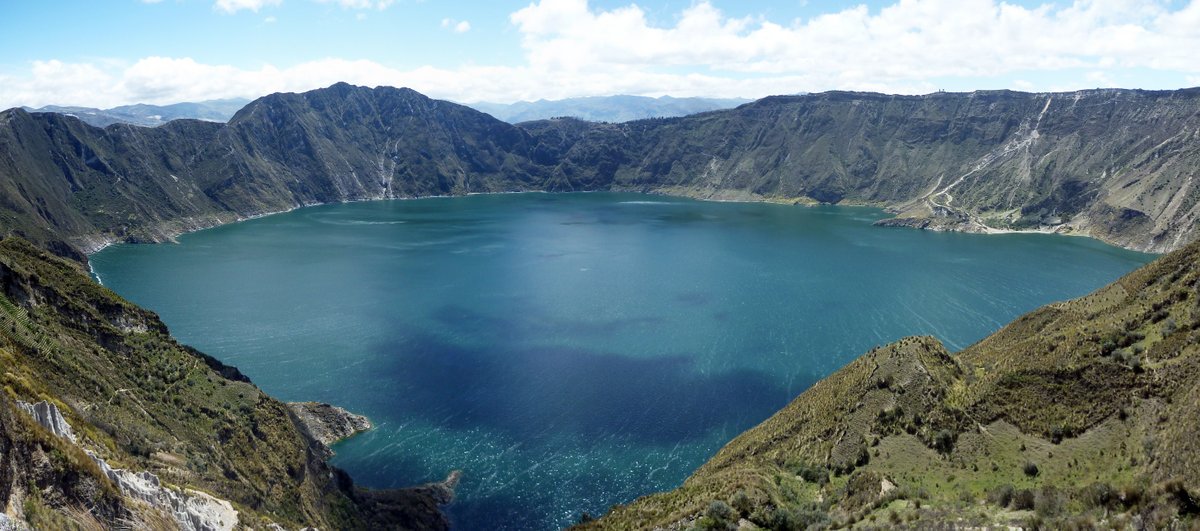
From Guayama, we had a long gradual ascent to the crater rim. The first half was along interesting footpaths, but the second half was a hard grind up a wide sandy track that zigzagged all over the place. I tried to get Glenys to take a few steep shortcuts between the zigzags, but she had a sense of humour failure.
The view from the Quilotoa crater rim was stunning. Once again we were lucky with the weather and the bright sunshine made the crater lake appear deep blue. It took us about an hour to walk along the crater rim and there are quite a few ups and downs, so by the time that we were approaching the small village of Quilotoa, we were both feeling a little worse for wear.
We checked into the Chukirawa Hostal around one o’clock, had a shower and then had yet another Almuerzo Tipico, which we shared. It was very cold in the hostal and there was a biting wind outside, so we wandered around for an hour trying to find somewhere out of the wind to sit and read, but eventually gave up and retired to bed for a couple of hours to keep warm.
The owners of the hostal are indigineous locals and appear to be totally unconcerned by the cold. We wandered into the restaurant at six o’clock hoping that it would be nice and warm, but the family were sitting around the unlit stove dressed in thick clothes (including the ubiquitous felt hats.) Having nowhere else to go apart from our freezing room, we ordered a couple of beers and were amused to see that they didn’t bother to keep beer in the fridge – there’s no point because it was well chilled anyway.

Eventually, half an hour later, they lit the stove, but it made little impact for an hour. Dinner was unimpressive – a fried egg, rice and beans, but we had a good chat with a couple of Americans who have been living in Ecuador for over a year, teaching English. At eight o’clock, we persuaded the owners to light the stoves in each of our rooms, but it took another half an hour to get the chill off the room – at least we had an hour of warmth before we climbed wearily into bed.
18 January 2014 Quilotoa to Machachi, Ecuador
The fire only lasted a couple of hours, so it was bloody freezing for most of the night - we used all of our five blankets to keep us warm despite the danger of having a crushed chest with the weight. There was no hot water in the morning, so our face wash was a very quick affair. Before breakfast, we walked across to have a look at the Quilotoa Crater Lake, but were quickly driven back by the biting wind – this little community is certainly in a desolate place.
We arranged to be dropped off in the small town of Zumbahua, which is a short 15 minute drive from Quilotoa. It was market day and we spent a pleasant hour wandering around both the animal market and the local produce market. There were sheep, pigs, chickens and llamas for sale. The going price for a llama was $100 and a sheep was $150. It’s really interesting to see the locals casually dragging screaming pigs and stoic sheep around on a bit of rope.
After a couple of hours, we caught a bus into Latacunga and went for a stroll around town because we had loads of time to kill. The place was very busy because it was a weekend and the narrow streets were almost gridlocked with cars. For lunch, after four days of eating soup, rice and meat, we opted for chicken and chips in a small place near the bus station, which only cost $1.50 and was very tasty.
It was only a short 30 minute bus ride to get to the Papagayo Hostel, near Machachi, where we’ll be based for the next five days. After all my complaining the last time we were here, we’ve been given the best room in the place at a reduced price - it’s very nice.
19 January 2014 Machachi, Ecuador
Glenys was up several times during the night running to the toilet and my stomach was gurgling, so I took a couple of anti-bacterial diahorrea tablets. These were added to my already impressive pile of pills – I took eight tablets today...
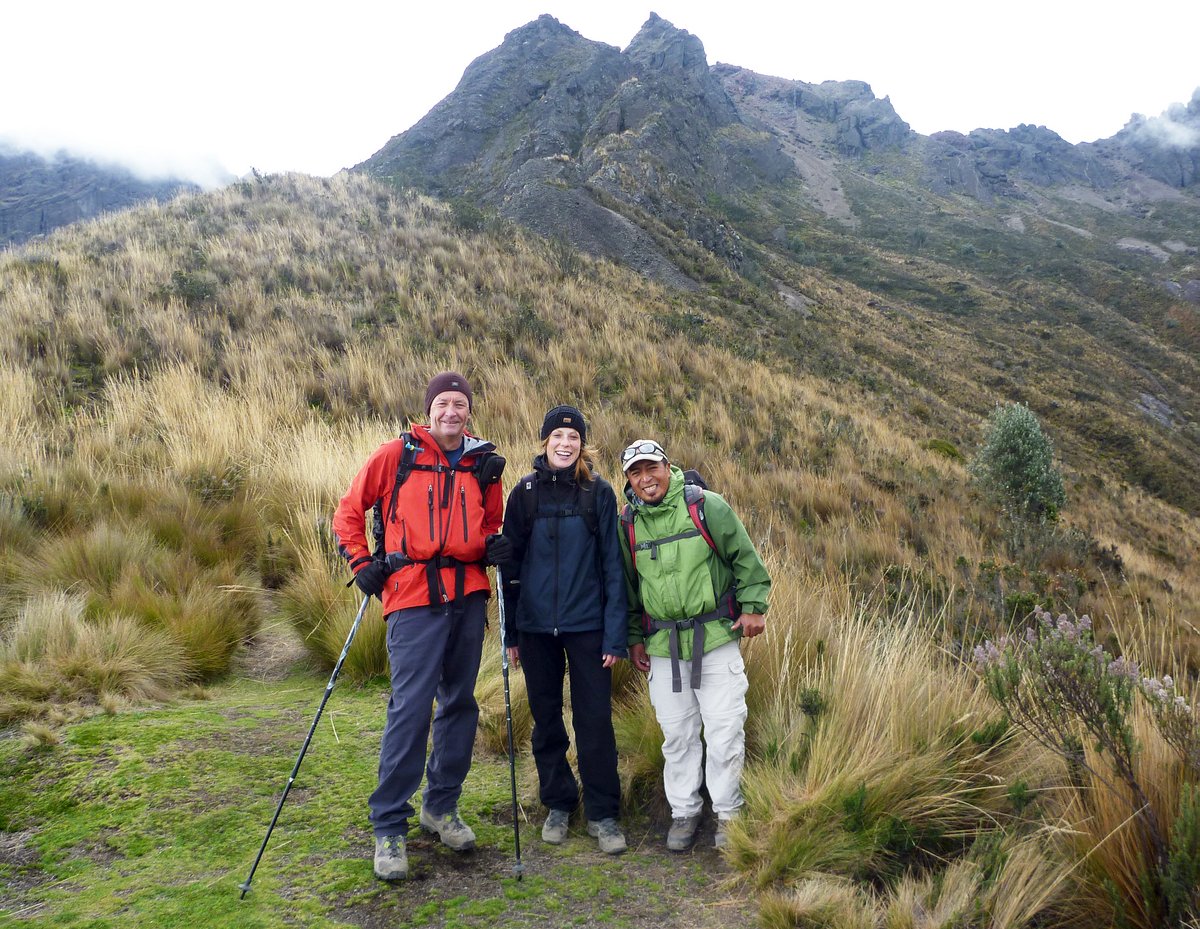
Glenys went off for a horse ride and I went to climb Rhuminahui (4,634m) - my first acclimatisation climb. There were two other people on the climb, in addition to the guide (Marco) - a German girl and a young fit Ecuadorian who both live in Quito, so they were well acclimatised.
The climb started at 3,800 metres in the car park at Lago Limpiopungo, a small lake with (supposedly) fabulous views of Cotopaxi. Once again the elusive mountain was covered in cloud when we arrived.
The ascent began with a gentle walk along a path and up the crest of a ridge – it would have been pleasant if we hadn’t had strong winds with rain and hail. When the ridge started to steepen and became rocky, the route zigzagged up a scree slope to the right of the ridge. This was very steep and quite brutal being above 4,000 metres. By this time, I was feeling the effects of the altitude and my legs turned to jelly several times causing me to be the wimp of the party by keep having to stop.
The last 50 metres of ascent was a scramble up steep rock to the small summit – we arrived 2½ hours after leaving the car park, which apparently is a good time. We didn’t hang around at top because it was bloody freezing and very windy - just enough time to take a few photos.
It’s interesting that the locals from Quito and the surrounding towns regard this peak in the same way that we regard Snowdon – a short walk and a bit of a scramble. However, it’s nearly as high as Mont Blanc, which is the highest peak in the Alps.
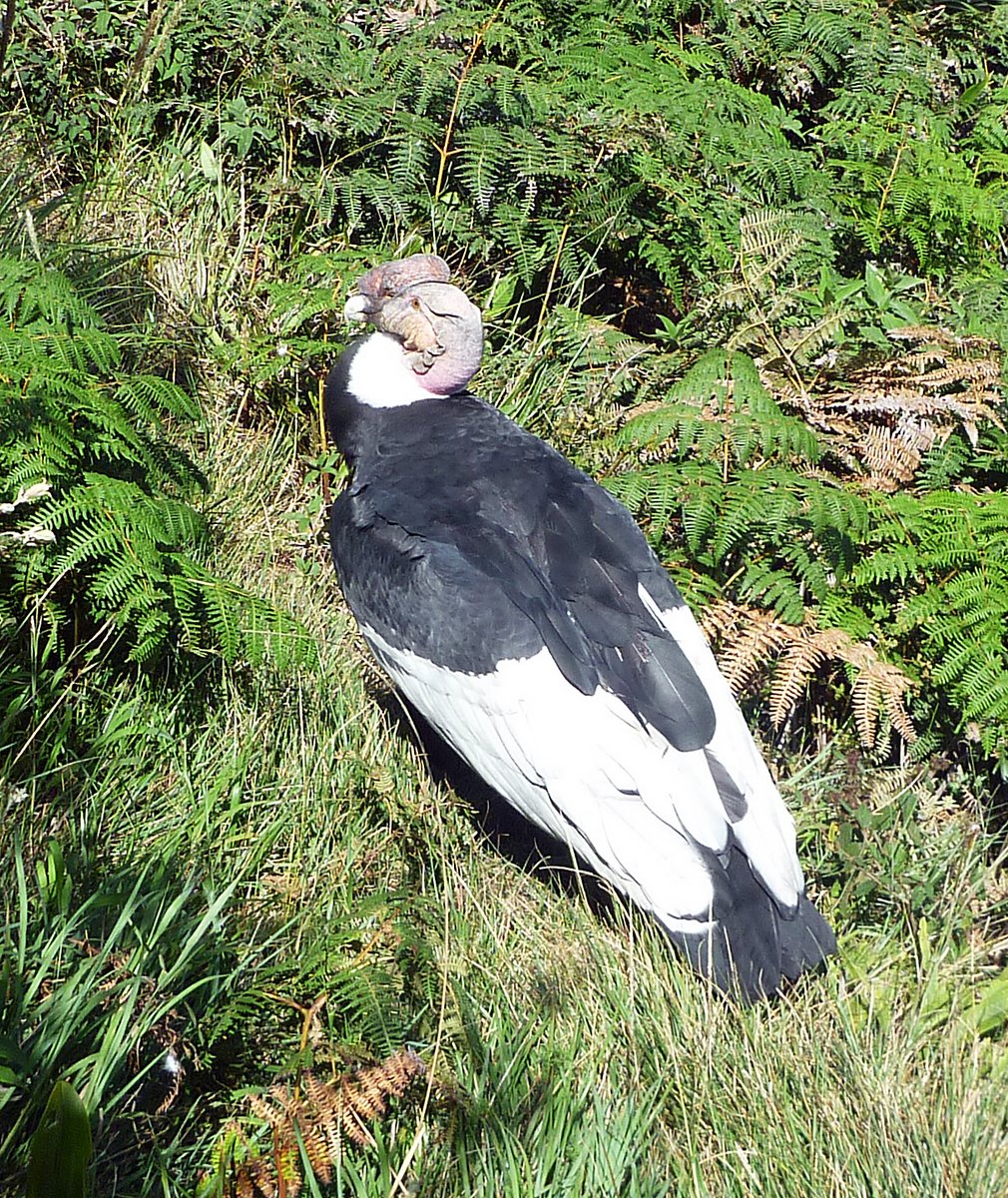
As we walked back down, we spotted a couple of condors flying in the area – it was exciting to see the largest bird in the world. Our guide told me that they are a kind of large vulture and eat carrion. The walk back down was much easier than the grind up and only took us 1½ hours.
As walked back towards the car park, the cloud started to lift over Cotopaxi and I finally got my postcard pictures of the mountain, which I'm due to climb in three days’ time – looks fabulous, if a little scary.
When I got back to the hostel, Glenys was already back from her horse ride and looked absolutely exhausted – four hours of fast riding with a lot of cantering had taken it out of her. We had thunder and rain in the evening, so I went to bed a little worried about the weather for tomorrow’s ascent of Illinizas Norte.
20 January 2014 Machachi, Ecuador
We woke up to good weather, which was a relief. Glenys went off for a three day horse ride around the Cotopaxi National park, while I went with my guide (Pablo) to climb Illinizas Norte. I was pretty exhausted climbing Rumiñahui yesterday, so I was dreading climbing this mountain which at 5,126 metres is 500 metres higher.
Pablo and I started our ascent at a car park at 3,900 metres and initially walked up a pleasant path climbing up to a ridge, with some fabulous views of the two peaks of the Illinizas ahead of us. Once at the ridge, the going got tough for an hour as we trudged up to the Refugio de Nuevos Horizontes at 4,700 metres. It took us 2½ hours to get to this small hut perched between the two peaks of Illinizas Sud and Illinizas Norte.

We stopped at the hut for a 30 minute rest and a cup of tea made by the hut guardian. The hut is very basic with bunk beds for about ten people and a bucket-flushed toilet, but it looks like the guardian has a decent little kitchen to cook meals. A couple of climbers came in having done an ascent of Illinizas Sud and looked grateful for the bowl of soup that the guardian produced.
From the hut, we walked a short distance to the start of a long, steep, rocky ridge with some sustained scrambling in places. Again I found the going hard with the high altitude draining the strength from my lungs and legs. It took us 1½ hours to climb the 420 metres from the hut – the last 50 metres were a sustained scramble and particularly tough.
We sat on the summit of Ilinizas Norte (5,126 metres) for ten minutes, but unfortunately the cloud had finally come in, so we didn't have any panoramic views. I wasn’t too bothered – I was just glad to have made it up there.
Instead of going back down the ridge, Pablo took us down the east face which is a 30-40 degree slope with soft deep scree allowing us to giant-step and slide our way straight down. We then cut across to the right passing below a ridge and to the bottom of the ridge that leads to the hut. The lower part of this route passes through some lovely patches of high altitude plants such as Culcitium and Chuquiraga (Flower of the Andes).


We were back at the car park by half past two making our round trip less than six hours, which I’m told is a good time. I’m pleased that I’m making good time overall, but worried that I feel so exhausted while climbing.
I was back at the hostel by mid-afternoon and, surprisingly, I wasn't too tired, so I just chilled out reading. Glenys came back in the late afternoon, which was a nice surprise. She was supposed to be staying at another hostel, but another lady had joined her on the ride and she wanted to return to Papagayo. Glenys wasn't complaining because the other hostel was going to be very basic and they were soaked to the skin.
There was a lot of confusion among the climbers staying at the hostel because the usual Cotopaxi Refuge has been shut for maintenance. Normally, we’d be spending the evening in the Refugio José Ribas at 4,800 metres and leaving at midnight to make the 1,100 metre ascent, but now that the refuge is shut, no one seems to know what is happening. It sounds like we’ll have to start from the car park, which is at 4,600 metres, so we’ll have another hour added onto both the ascent and descent, which at that altitude is a real bummer.
21 January 2014 Machachi, Ecuador
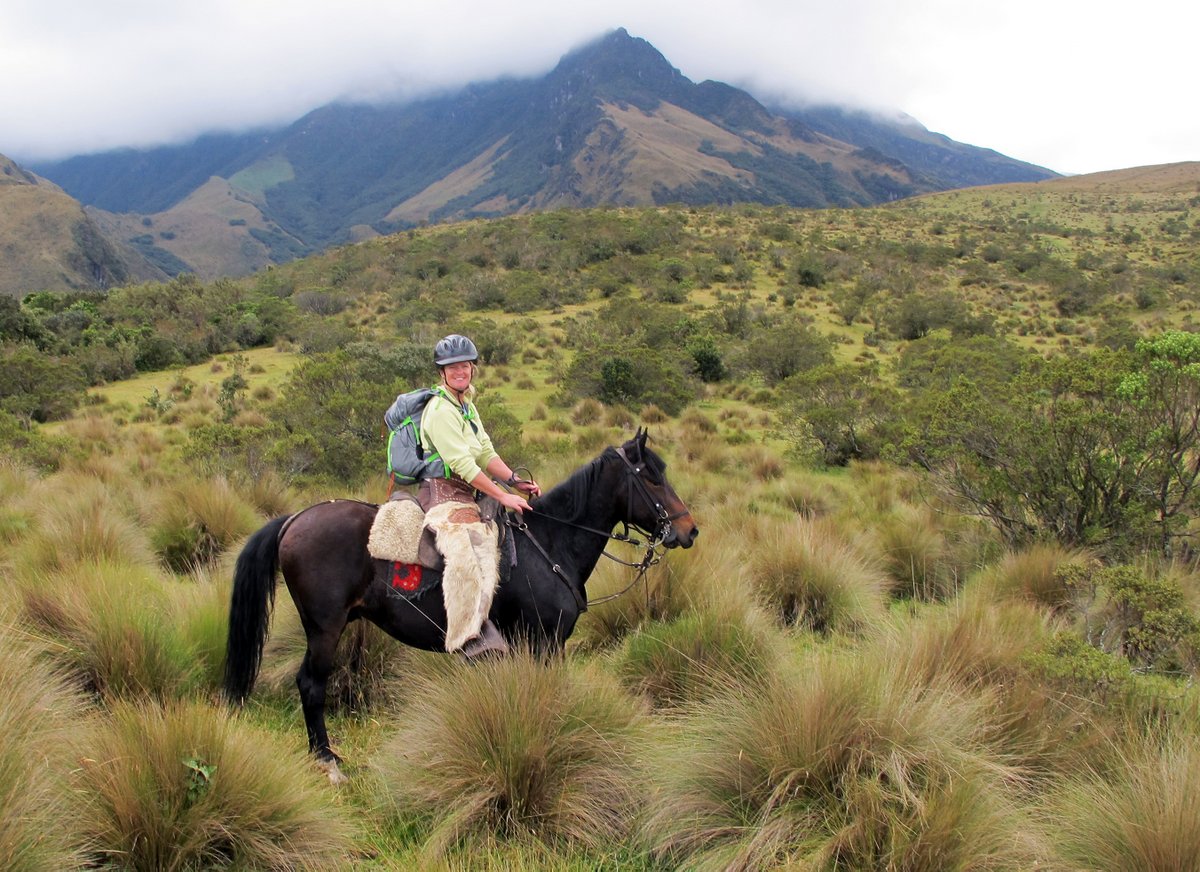
Glenys was issued with Chagras style chaps (made from Llama skin) to keep her dry and disappeared off on a two day horse ride. I had a rest day in preparation for climbing Cotopaxi tomorrow. There were three guys doing Cotopaxi today and confusion continued to reign about the closure of the refuge until their three guides turned up at eleven o'clock. It turns out that we’ll be staying at another refuge within the Cotopaxi National park, which is at a lower altitude than the Cotopaxi Refuge. Our guides will drive us up to the car park at ten o’clock at night and start the ascent from there.
I pulled out all my climbing clothing and worked out what to wear for the ascent of Cotopaxi. I should be okay with the various layers of clothing that I have as long as I keep moving – it’s good to be a little cold when ascending. The only problem that I have is that I don’t have a nice warm duvet jacket for the summit or if we have to stop moving for any reason.
I had a look at the equipment which Gulliver’s Travels provides and it’s adequate. They have plastic boots and seem to have enough that I should find a pair that will fit me. The crampons and ice axes are pretty standard; they have some nice warm mittens for my hands, but they don’t have any really warm jackets, so I’m not sure what I’m going to do. They do have some sturdy waterproof jackets, so I might just take one of those to give me a little more warmth in case I need it.
I spent the rest of the day reading, using the internet and lounging about - I even had a two hour kip in the afternoon.
Glenys had a great day, riding up to a col next to Rhuminahui and then down to the plateau next to Lago Limpiopungo. They rode with some wild horses, which were getting very excited about these three new horses cantering along. They spent the night at the Tambopaxi Lodge, which was very comfortable and did great food.