
22 January 2014 Machachi, Ecuador
Glenys had a good day riding from the Cotopaxi National Park, through the town of Machachi, back to the hostal. In the morning, they spotted a herd of fighting bulls, but the guide wanted to keep away from these potentially dangerous animals, which are released up in the Paramo and then rounded up twice a year for the bull fights.
I had a restless night thinking about the ascent of Cotopaxi. Pablo, my guide wasn’t due to turn up until eleven o’clock, but I got up at seven because I couldn’t sleep. After breakfast, I checked all my gear, packed it into my rucksack, then just sat in my room, reading, waiting and trying not to worry...
Pablo turned up on time and we went to the store room to get my specialist climbing equipment – plastic mountain boots, crampons, ice axe, gaiters, warm mittens and a spare rain jacket in case it was really cold. All the gear was included in the cost of the Cotopaxi climb and was of acceptable quality although most of it was well used and abused. My boots were a size too big, but I’d rather that than having them too tight.
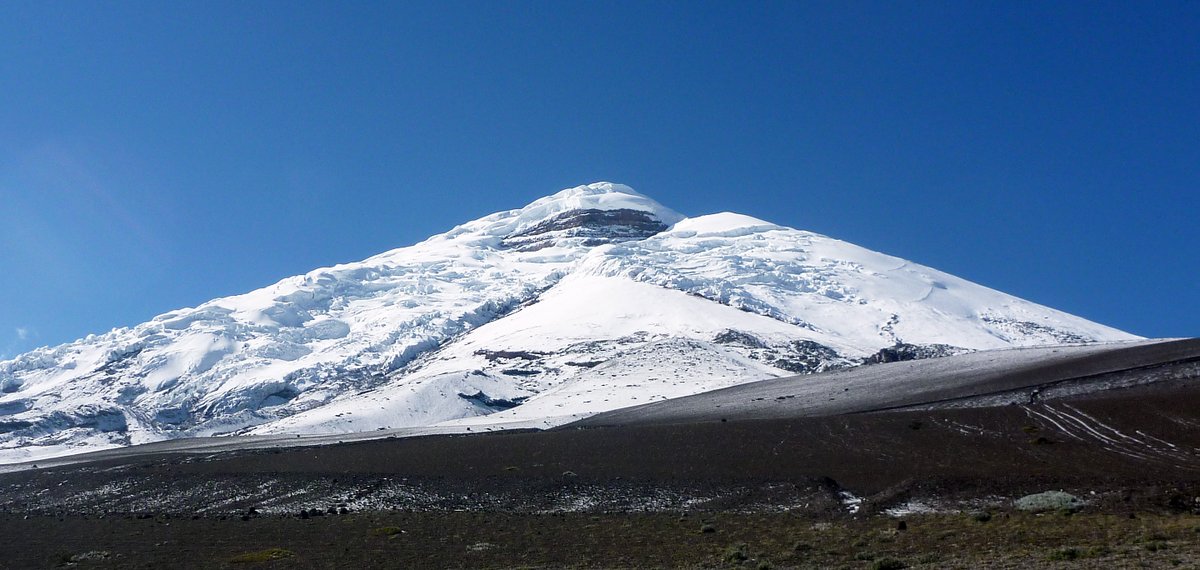
Having packed everything into a four wheel drive car, we drove to the refuge in the Cotopaxi National Park, stopping for lunch and to buy some snacks to eat during the ascent. The Refugio La Rinconada is in the Cotopaxi campsite and is pleasant enough with a dining room and a bunk room with three storey bunk beds – enough room to fit 15 people. I tried to sleep in the afternoon, but it was chaos, with people constantly arriving, so I didn’t get much rest.
An excellent and filling dinner was served at six o'clock and we were very lucky because the clouds lifted giving us a good view of Cotopaxi from the dining room as the sun went down. After dinner, I went straight to bed, knowing that we’d have to be up in four hours.
23 January 2014 Machachi, Ecuador
I didn’t get much sleep - maybe a couple of hours. An hour before midnight, the hut guardian served a basic breakfast of jam & bread with hot water to make tea. Pablo and I left the refuge at half past eleven and drove for fifty minutes up to the car park, which is at 4,600 metres altitude. It was half past midnight when we finally walked out of the car park and started our ascent.

The path up to the Refugio José Ribas is loose scree and dirt, but we went nice and slow, so it wasn’t too bad. It took us 50 minutes to get up to the refuge at 4,800 metres, where we stopped for ten minutes to put on our harnesses and gaiters. From there, we walked for 30 minutes up to the edge of the glacier, where we put on our crampons & helmets and tied into a rope.
It was a fairly bright half-moon, so we were able to walk for some of the time without head torches, which was very nice. There were also lots of stars in sight and we had an impressive view of the lights of Quito in the far distance. It was a fairly warm night with hardly any wind, so I was just wearing a technical t-shirt, a thin fleece and a thin rain jacket for the first half of the ascent. On my legs, I had some merino wool long johns, a thin pair of stretchy walking trousers and waterproof trousers.
The ascent was a long trudge up on snow which was mostly soft and sugary, making it tough on the old legs. After about an hour, we met a group coming down. Pablo talked to the guide and found out that they’d turned around because the guide thought that there was too much snow and that the conditions were dangerous. Pablo decided that we would carry on and he would have a have at the snow pack himself.
We continued to climb up, mostly on uphill transverses of 35-50 degree slopes. We were now the leading group of the four parties that were making the ascent and I was feeling very nervous about the possible avalanche conditions. My mind kept going back to the series of avalanches that I survived in Cogne, a few years ago. (See the trip report in our mountaineering section). Fortunately, Pablo knew what he was doing and made several stops to dig down into the snow with his ice axe to check the state of the snow crystals in the various layers of snow. (I also dug down a couple of times to satisfy myself that the snow pack was stable.)
After a couple of hours, we stopped at a level, sheltered area and had something to eat and drink and to put on another layer of clothes because it was getting colder. By this time I was pretty tired and feeling the effects of the altitude. The rest of the climb was very monotonous, trudging up snow slopes, with very few features. It turned into a mental battle, trying to keep my legs moving while near exhaustion – all I seemed to see for hours was snow and the back of Pablo’s boots.
Finally, the peak was in sight and, at half past six, six hours after we left the car park, we walked onto the summit of Cotopaxi at 5,897 metres. I was knackered. I threw my rucksack onto the snow and dropped to my knees, resting for a couple of minutes, before wandering around to look at the impressive volcanic crater and the mountains in the distance. We were lucky with the weather because we had blue skies and could see many of the nearby peaks sticking up out of the lower level clouds – fabulous.

After the obligatory summit photographs, started our descent, passing the other groups on our way down – we’d had the summit to ourselves for fifteen minutes. The descent was a brutal two hours of walking and sliding down the snow path that we’d made on our ascent. We didn’t stop many times because I wanted to keep going to get it over with. My knees were killing me by the time that we walked onto the car park at quarter to nine – a tough 8¼ hours of mountaineering.
We drove back to the Papagayo Hostel and I went straight to bed after a nice hot shower. Glenys woke me at one o’clock and we had a pleasant lunch in the garden with another Brit called Jim, who had climbed Cotopaxi the previous day. Jim agreed with me that Cotopaxi is a very, very hard mountain.
I had another kip in the afternoon and, after dinner, I was back in bed at eight o’clock – eight hours of tough climbing above 5,000 metres has taken it out of me.
24 January 2014 Machachi to Banos, Ecuador
Jim had arranged for a car and guide to take him to Banos, so we hitched a lift with him - this avoided us having to catch two buses. On the way, we stopped off in the small town of Salcedo, which is famous for ice creams. The main road through the town is lined with small shops all selling ice cream lollipops – it’s tasty but nothing very special.
The guide dropped us off at the Hotel La Floresta in Banos before noon. It’s very posh costing $75 per night for a double room, but it’s well worth it - some of the hostels in town have a bad reputation for having things stolen out of rooms. After settling into our hotel room, we went for a stroll around town.
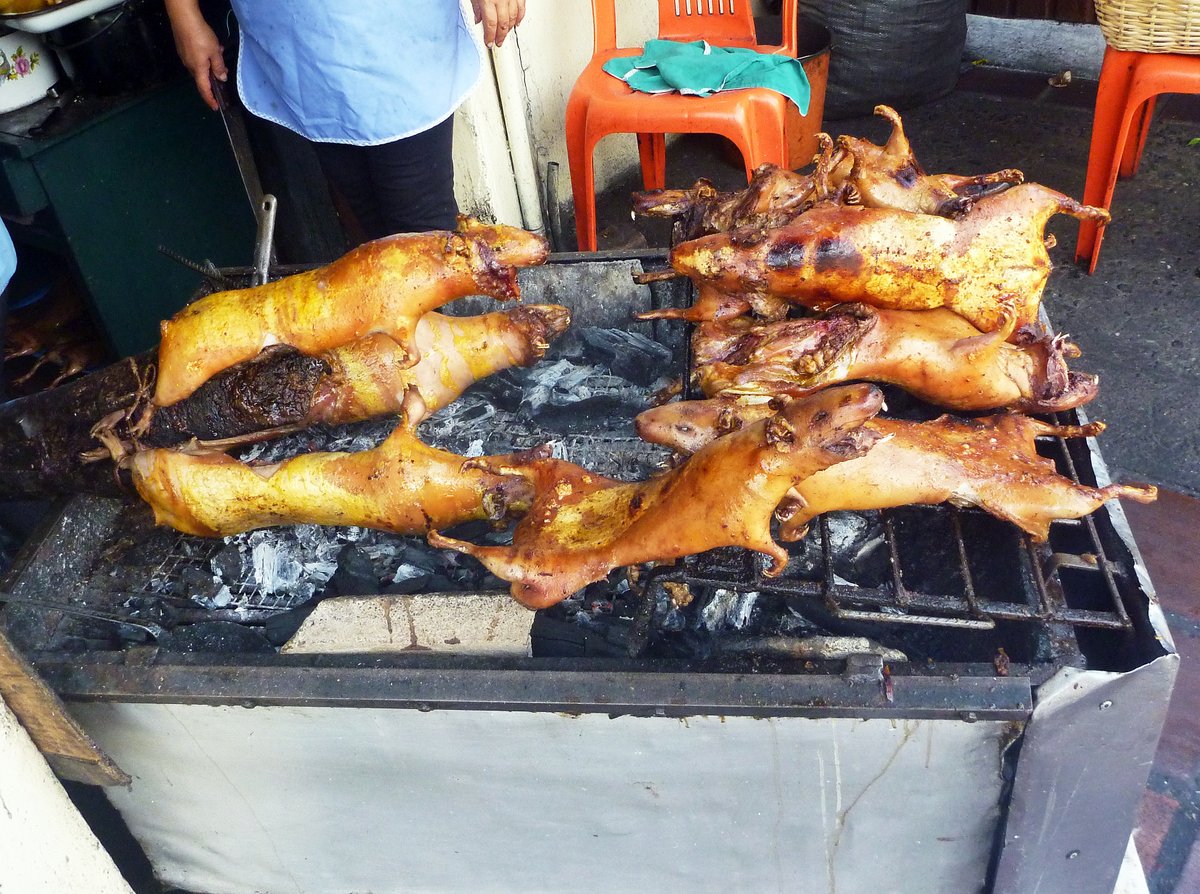
Banos is a holiday destination for both Ecuadorians and foreigners, so it’s packed with hostels, restaurants and small shops selling souvenirs. We came across the local market where there are a lot of eating places. One of them specialises in guinea pig, which they cook on a barbeque. It’s pretty expensive ($20 for a large one) and we’ve been told that it’s incredibly fiddly and difficult to get a decent amount of meat from the skinny little things. We didn’t bother and had a more filling Almuerzo Tipico for $2.50.
There’s an active volcano which towers above the town and Banos is famous for natural hot springs – “Banos” literally means “Bath”. We wandered over to the hot baths that are at the edge of town beneath a very impressive waterfall. The hot springs are in a very old fashioned looking set of pools and the water is a horrible mud brown colour – not particularly appealing.
We had dinner in a small cafe in town, which actually serves lamb, which we haven’t seen since we left the states last year. I had a lamb chop with mashed potatoes, which was bliss.
25 January 2014 Banos, Ecuador
We rented two bikes and rode 15 kilometres down the “Rutas de Cascades”, which is a road following the Rio Pastaza past numerous waterfalls. The river valley is very steep sided and deep, so the locals have set up lots of small cable cars and zip lines across the valley.
As well as the many tourists riding bikes down the route, there are a plethora of “Chivas” driving down the route. These are open sided trucks with bench seats that carry up to twenty tourists. With their bright colours and loud party music, these Chivas stop at many places turning most of the route into a kind of Disneyworld.
Glenys and I went on one of the small cable cars (which was little more than a steel cage) giving us a great view of the Cascada de Agoyan, hundreds of feet below us. We then stopped off to watch someone do a bridge swing. This looked horrible. They loop a couple of climbing ropes under the bridge and the punter dives off one side of the bridge with the ropes attached to the other side of the bridge. The result is that when the rope tightens, the unfortunate victim is flipped violently vertical before they swing – I don’t think that my 57 year old back would like that.

We did indulge in a zip line at Tarabita which was great. The zip line goes ½ kilometre across the river canyon, hundreds of feet above the river. They suspend your knees so that you are horizontal, so it feels like you are flying. For $7.50 each, we got a ride across to the other side and back. Good fun – we even bought the video which was an extra $3.
The bike ride finishes at the small village of Rio verde where we parked the bikes and walked for a kilometre down a good path and steps to the Diablo waterfalls, which are very spectacular. After trudging back up the steps, we put the bikes onto a truck and then sat on rough wooden benches in the back, while they delivered up back to Banos – a great day out.
In the evening, we went out for a beer and dinner with Jim. Unfortunately, we got terribly drunk, swigging back strong cocktails in the Leprechaun Bar – will we ever learn?
26 January 2014 Banos, Ecuador
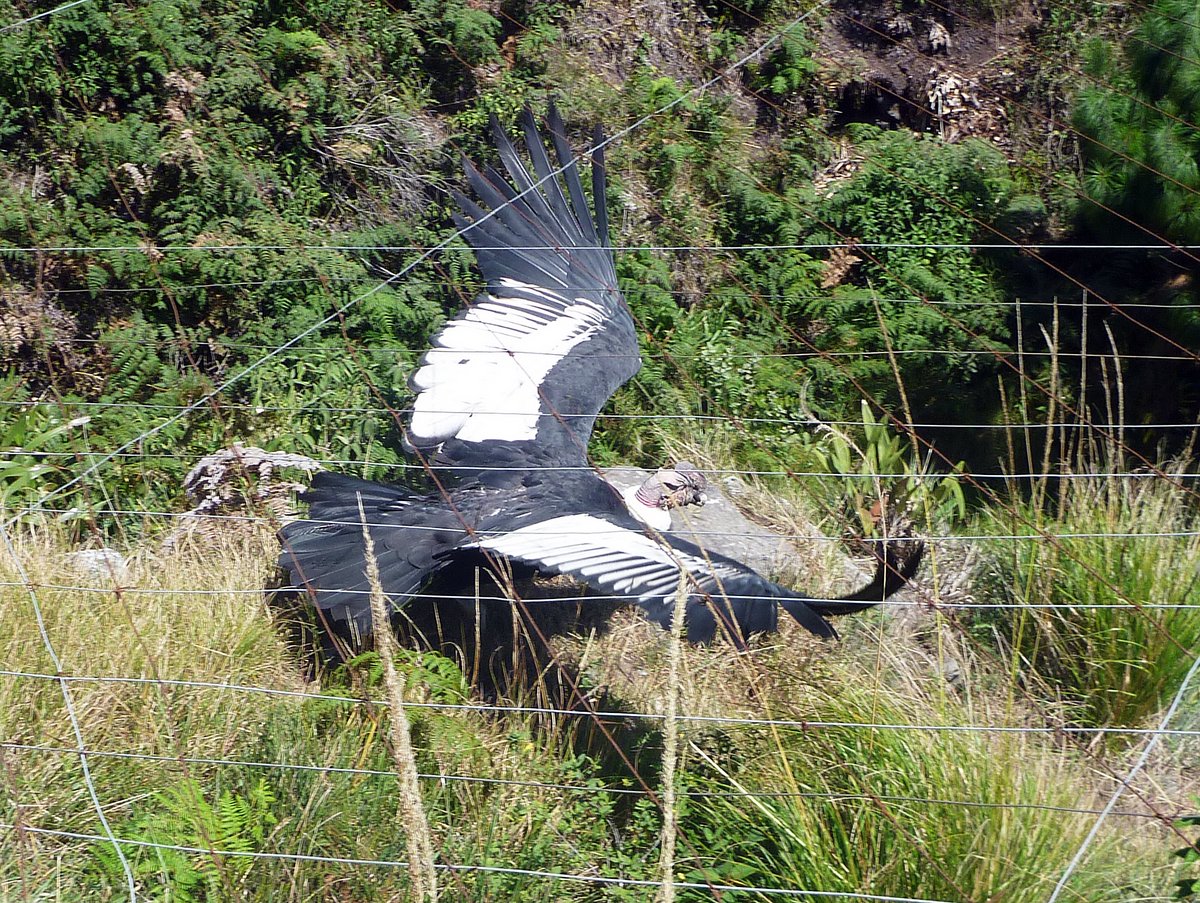
We had hangovers this morning, so we abandoned our plans of going for a hike up the steep sided hills above town and instead, we went to the zoo. It’s only a small place, but it’s nicely done and is in a stunning location high above the river valley with some great views. Most of the animals are natives of Ecuador, so there are a lot of birds, with just a few monkeys and a few big cats. The Condor with its 4 metre wing span, was the most impressive creature that we saw, but it was a shame to see these huge birds penned in when they should be out soaring.
One of the strange things about Ecuador is that the small tiendas (shops) seem to herd together and sell the same things – so we often see a long line of small stalls selling exactly the same thing. Here in Banos, they sell sugar cane along the road and there’s literally hundreds of small shops selling exactly the same thing – why? And how on earth do they make a living if everyone is competing against each other?
We had a quiet afternoon, Glenys walking around the shops while I lurked around in the hotel, swinging in a hammock, reading a book.
27 January 2014 Banos, Ecuador
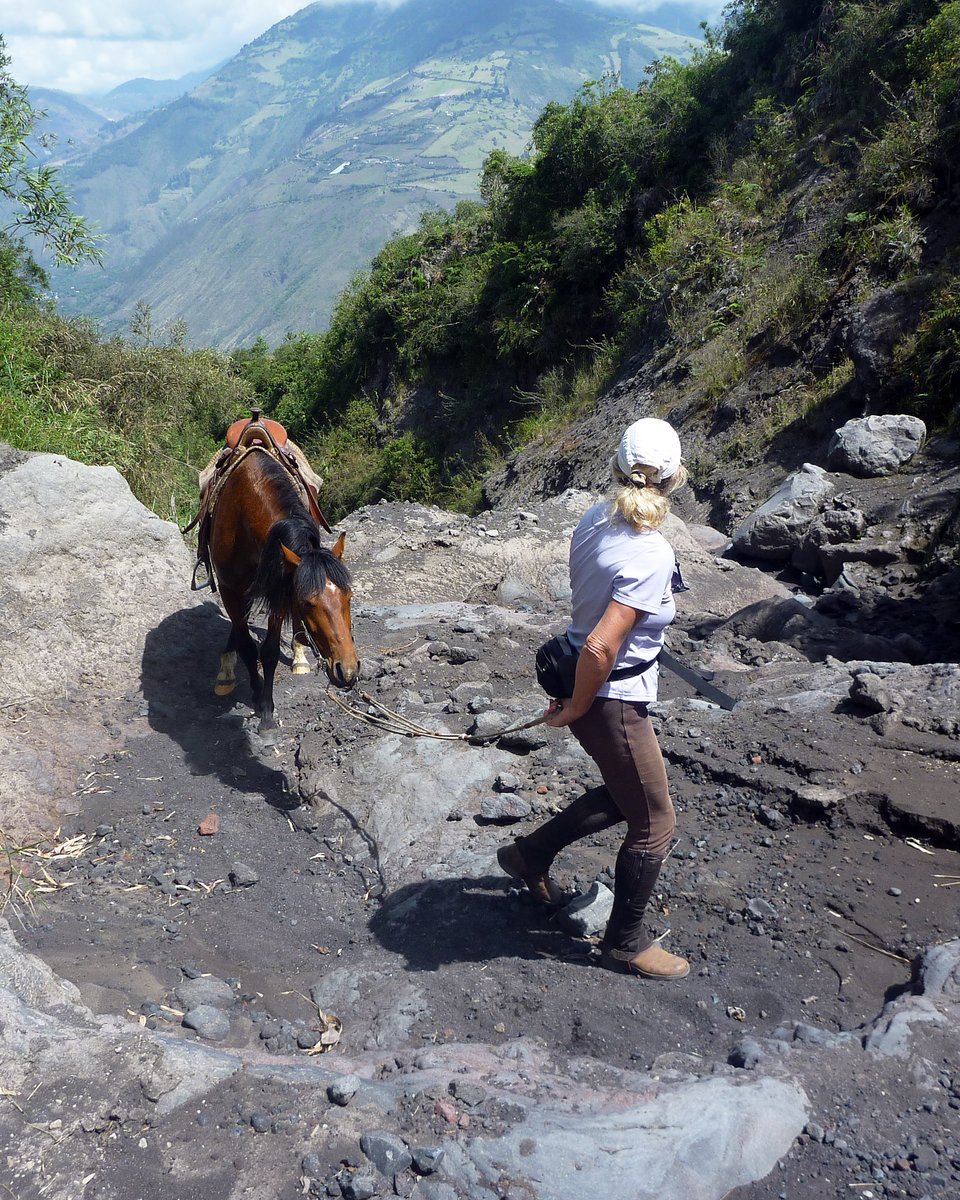
We went for a four-hour horse ride on horses belonging to Christian, who owns the Isla de Banos hostel. He dropped us off at a small farm on the slopes of the Tungurahua volcano, where we met our guide Pablo. Our route took us up dirt roads and paths past fertile fields of maize and tree tomatoes, cantering whenever we could on the very responsive horses.
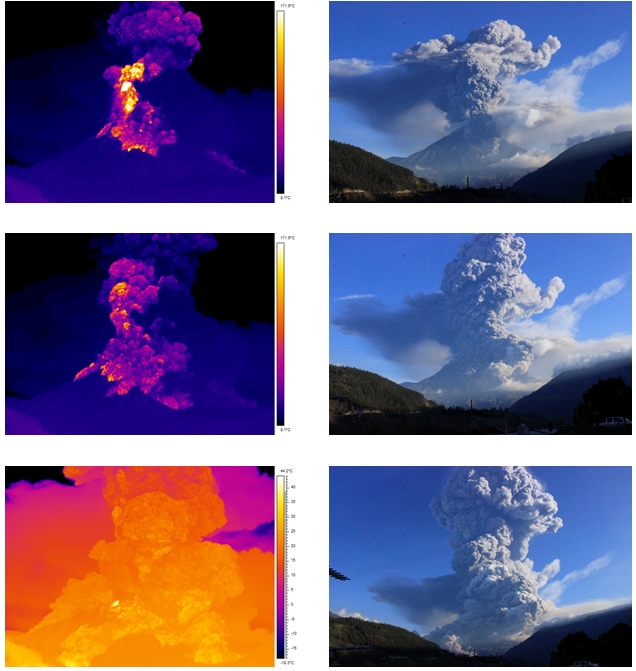
After about 90 minutes, we stopped in a meadow high above the valley and had a bite to eat. Pablo was a mine of information about the volcano, which became active in 1999 after a long period of quiet. The last serious eruption of Tungurahua was in 2006 when a pyroclastic cloud swept down the slopes (where we were riding), wiping out all the animals and vegetation in its path. It took only five minutes for the cloud of hot ash to reach the river valley below. Molten lava flowed out of the volcano crater and took an hour to flow down several canyons. Five people died and hundreds of people had to be relocated - Christian lost all of his 12 horses.
(Update. Tungurahua erupted five days after we left, sending clouds of ash five miles into the air and pyroclastic flows went down the north facing slopes above where we were riding - scary...)
Our ride back down followed a similar route and we arrived back at the farm very satisfied with the horses and the four hour ride – not bad value for $30 each. In the evening, we met up with Monica, Ellen and Don, who had been at the Papagayo hostel. We had a pleasant dinner in a cafe reminiscing about climbing Cotopaxi.
28 January 2014 Banos to Cuenca, Ecuador
We caught a bus to Rio Bamba; a taxi across town and then a bus to Cuenca. It was a long six hour bus journey stopping at every village and town on the way. The only highlight was when two small children held up the bus for a couple of minutes while they drove their sow and five recalcitrant piglets across the road.
A taxi dropped us off at Casa Ordonez, which is a lovely colonial hostel, with two covered courtyards and lots of original woodwork – beautiful. They even gave us a nice bottle of wine, which we accepted gratefully (after checking that it was a gift and not some kind of “mini-bar”.)
We sorted out our luggage and stepped out for something to eat. After strolling around the old Spanish colonial city for a while, we came across an Indian restaurant. There was no argument, we’ve not had a curry since we went back to the UK in July last year - we went straight in. It was acceptable; a sort of fusion of Pakistani and Ecuadorian food – it’s a curry, Jim, but not as we know it.
Back at the hotel, we enquired about visiting the Inca ruins at Ingapirca and the guy on the reception desk told us that it was $12 for the four hour trip, which seemed really cheap, so we asked him to arrange it for tomorrow morning.
29 January 2014 Cuenca, Ecuador
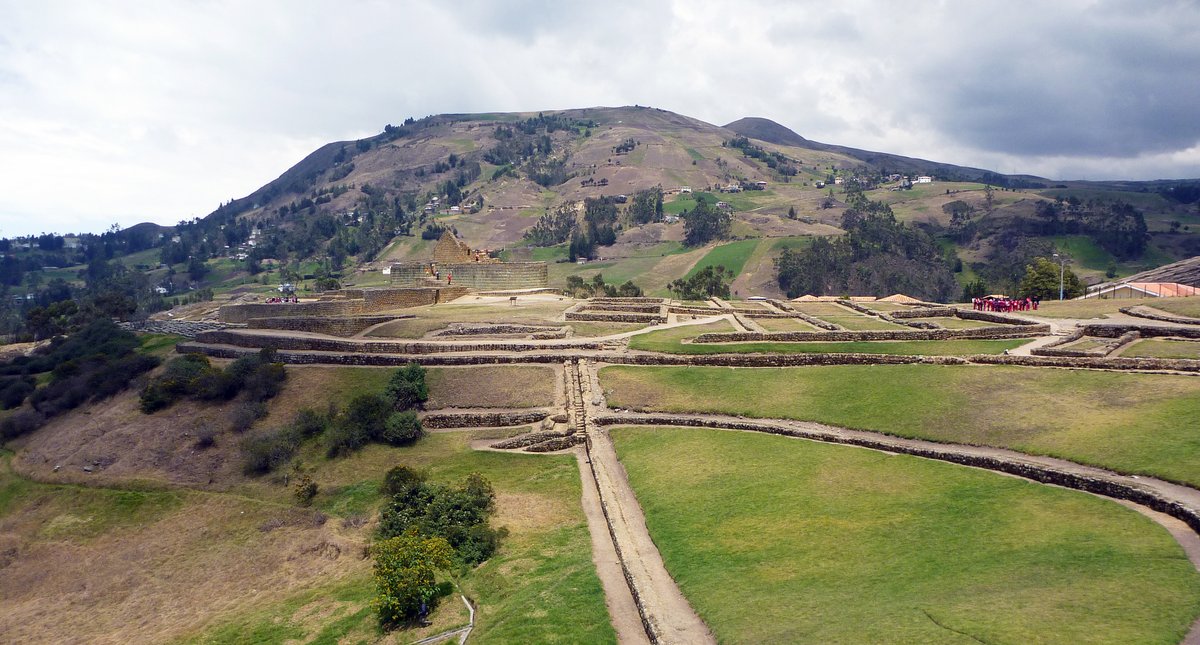
A driver (Johnny) turned up at nine o’clock and took us to Ingapirca. It took over two hours to get there, which was much longer than we expected. Once there, we paid $6 each for the entrance fee and joined a guided group walking around this ancient Canari and Inca settlement.
There’s not a lot to see, just lots of low stone walls that used to be buildings and one temple to the Sun God. The guide did a reasonable job and we learned that the place was originally settled by the Canari people in 500BC and then the Incas arrived in 15th Century. The Incas had difficulty in conquering the Canari and, after a couple of attempts, took the easy route, inter-married and lived together in peace. Ingapirca has examples of both the Canari and Inca architecture. It was alright, but $12 was a lot of money to pay to look at a few low stone walls – not quite Machu Picu.
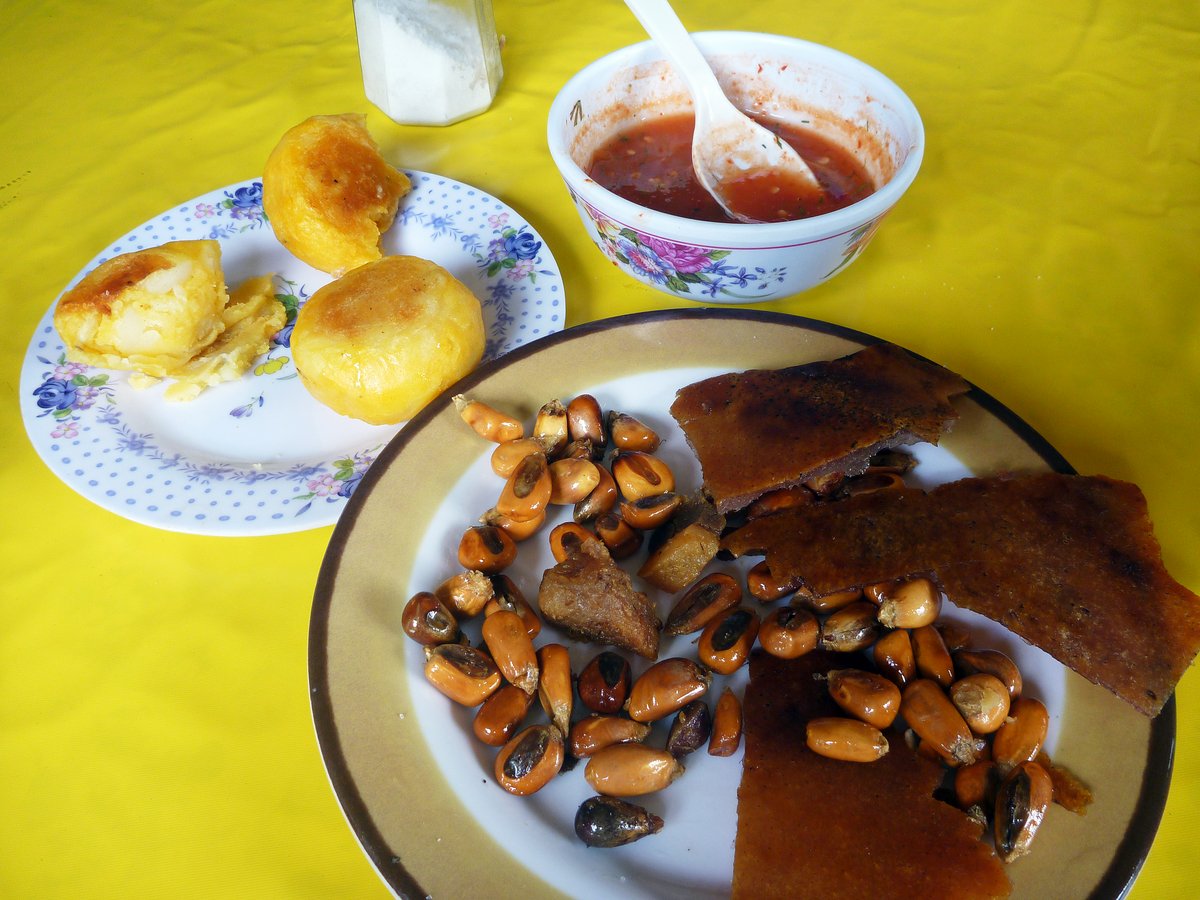
By the time that we’d got back to the car it was lunch time, so we got Johnny to stop at a road side eating place on the way back to Cuenca. While travelling on the bus yesterday, we’d seen quite a few of these places, which display a whole roasted pig by the roadside – they looked intriguing. It turned out that they sell a local speciality called Plato de Cascara which is deep fried pork, roasted corn kernels, topped by thin pieces of roasted pig skin. Thankfully, we only ordered one plate of the stuff because it was pretty grim. The roasted corn is very dry, the deep fried pork pieces were rock hard and the skin was (errr) crunchy, fat-soaked skin.
We’ve been in Central and South America for over a year now and consider ourselves pretty street-wise, but we got caught today. When we got back to the hotel, Johnny told us that we owed him $75, which was 5 hours at $15 per hour - a little bit more than the $12 that we were expecting to pay for the whole trip! After a few choice words, we all walked to the reception desk, who said that the deal was $12 per hour. There had obviously been a huge misunderstanding, so with great reluctance, we handed over $60. In retrospect, the original quote of $12 for the trip was way too cheap, but if we’d realised that it was $12 per hour, we’d never have gone. It was an expensive way to look at a few stone walls.
Still smarting, we went for a walk around Cuenca, which is a typical Spanish colonial town – not much to commend it. It started to rain so, to keep dry, we went to the Museum, which was very good. They had some good archaeological exhibits about the very early history of Ecuador and had a great section of exhibits showing the different cultures in the various regions of Ecuador.
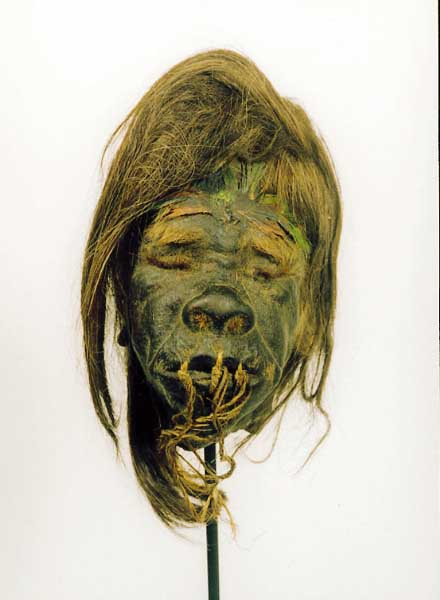
I was particularly fascinated by the Shrunken Human Heads on display, which were created by the Shaur tribe in the Amazonian jungle. As part of the manhood rites, the young men would first hunt a sloth and shrink the head as kind of a trial run. Thereafter, if an enemy was killed then the young man could shrink the head to gain the dead person’s power. Pretty gross, but fortunately, the Ecuadorian law now forbids the shrinking of human heads, although the practice of shrinking sloths heads is still allowed.
30 January 2014 Cuenca to Bahia de Caraques, Ecuador
We caught a bus to Guayaquil, which took 4 hours. The route passed through the Cajas National Park which is a stunningly beautiful and rugged place – it would have been great to do some hiking in the area, although it was covered in cloud for most of the time that we travelled through it.
I was very impressed with the bus station at Guayaquil, which is more like an airport than a bus station. The building has three floor and buses arrive and depart from all three levels. There’s a large supermarket on site, lots of very smart shops and a huge eating area including McDonalds and KFC. I was interested to see that KFC did a plate of rice, beans and a drumstick for only $1.80 – very Ecuadorian.
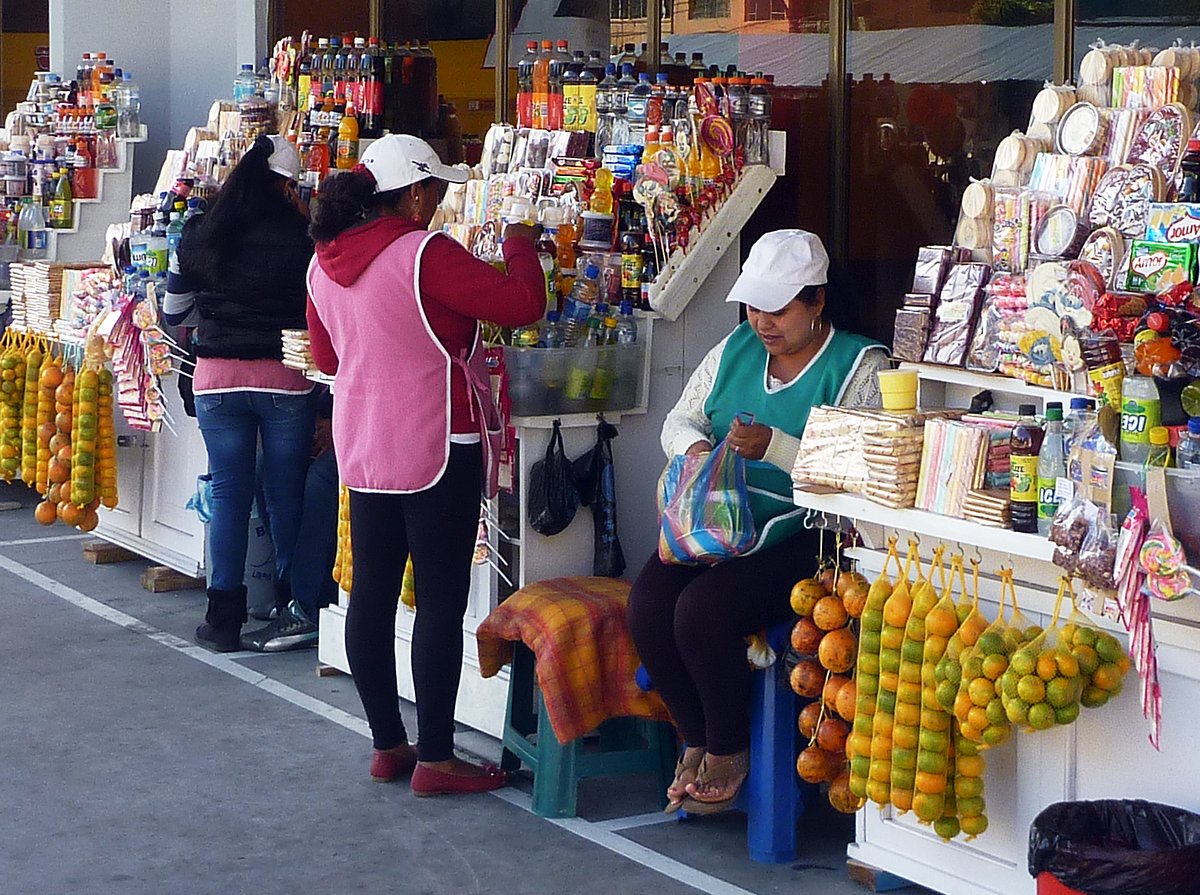
After our Big Mac, we caught a bus to Bahia. I love all the vendors that get on board the buses, selling a variety of drinks and snacks. Some only get on at bus stations and make sure that they get off before the bus pulls out, but others get on board at a bus stop then sell their wares while the bus is driving along. This seems to be a risky proposition to me because it takes a variable amount of time for them to complete their business and they get dropped off with their baskets and trays of food in the most unlikely places. I guess that they then catch the next bus back and repeat the process all day.
We arrived back at Puerto Amistad around five o'clock in the evening and scrounged a lift from one of the other cruisers. It’d good to be back on board and to find out that we haven’t sunk.
31 January 2014 Bahia de Caraques, Ecuador
We had a quiet day, unpacking and tidying up. After getting the dinghy back into the water, we dropped two bags of laundry off and walked into town to restock our cupboards.
I spent the afternoon trying to sort out the 500 photographs that we've accumulated over the past couple of weeks. I’ve also got nearly three weeks’ worth of notes to write up for the web site – not a pleasant prospect. I should have kept on top of it while we were away…
I was pleased to see that our anchor chain has arrived back from the galvaniser and it looks like they've done a good job. We now need to get it back on board, but at high tide this evening there was a lot of swell coming into the estuary with big waves crashing against the sea wall. We’ll leave it for a few days and hopefully the conditions will improve.
- << Prev
- Next