
7 September 2015 Takabonerate Atoll
Takabonerate is the third largest coral atoll in the world covering an area of 1,000 square miles, with around fifty distinct reef systems. We entered at the north-eastern corner and were keen to explore further. Unfortunately, we only had a few days to do so. We upped anchor at nine o’clock (as soon as the sun was high enough to give us decent light) and motored west through a pass in the seven mile diameter reef system encircling us.
There’s a park ranger station at an island called Tinabo (06°34.12S 121°05.62E), but the anchorage is in 30 metres on the edge of a steep drop off and we’ve been told by “Per Ardua” that the park rangers will try to charge us a park fee of $10US for the boat and $15US per person PER DAY, so we’re avoiding that island and exploring other areas.
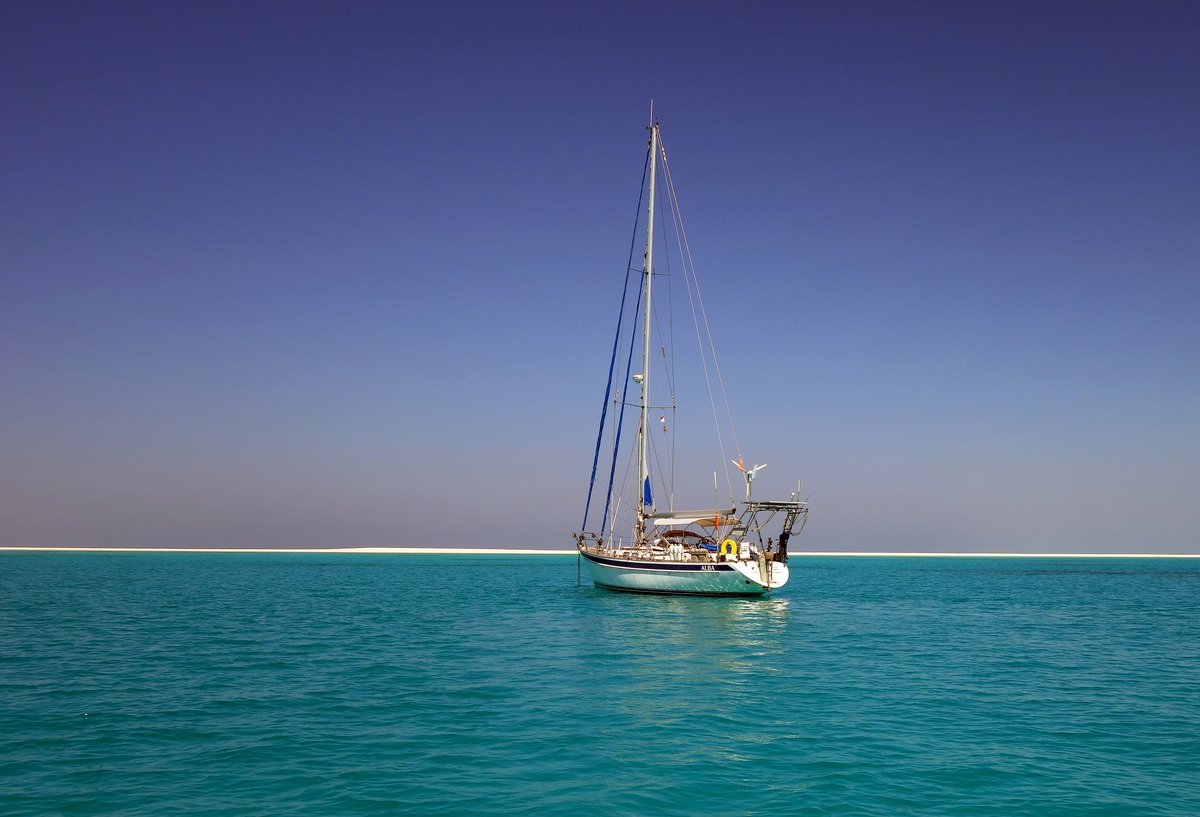
The weather in this region of Indonesia is perfect. For the past month, we’ve had blue skies and consistent 15-20 knot winds from the south-east to east. Today was no different and to make it even better, we were sailing in flat calm water in the lee of the reefs surrounding us.
From another cruiser’s blog, we’d made a note of a possible anchorage at 06°39.28S 121°12.03E and we had a lovely sail to get there. Unfortunately, when we arrived, there was only one small spot that was shallow enough to anchor in and that was littered with coral heads. We thought that it wasn’t even good enough for a lunch stop, so we headed west for another anchorage.
An hour later, we anchored at 06°43.25S 121°08.76E in 6 metres of water over white sand amongst scattered coral heads. To get to the anchorage, we had to weave our way through coral heads that appeared to be several metres underwater, but in good light it was simple enough. This is another beautiful spot with a large sand bar at low tide. “Red Herring” followed us in and anchored behind us.
Glenys and I jumped into the dinghy and went off to explore a shallow reef that we’d spotted on the way in, but the reef was again mostly rubble. This should be pristine reef and it’s very depressing to see it in this state - perhaps the marine park status will help it recover, but later, as night fell, we could see twenty fishing boats within view, so I don’t hold up much hope.
Karen and Graham went for a walk on the sand bar at low tide and came back with some nice shells, so there’s good shelling here. Unfortunately, by the time they stopped by, the tide was coming in fast, so Glenys missed out, but at least Karen gave her a lovely, big Cassis shell.

I’m very frustrated here, the anchorages and water colours are stunning, but the snorkelling close to the anchorages is very poor. There are plenty of very steep drop-offs going down to 40-60 metres, which I suspect would be good scuba diving, but there’s nowhere to anchor close by. From the protected anchorages, we would have to travel a few miles in our dinghy to go diving and we don’t want to do it alone - “Red Herring” don’t dive and they don’t have a big outboard on their dinghy, so we’re very restricted here in the middle of nowhere. In retrospect, we should have travelled in company with other keen divers.
8 September 2015 Takabonerate to Labuan Bajo, Flores (Day 1)
After a leisurely breakfast (waiting for the sun again), we left the anchorage and weaved our way through the maze of sand bars and reefs, heading south. Once again, I was very grateful for the KAP charts that I’d previously made from Google Earth because they were spot on and showed every channel, whereas the commercial Navionics charts gave us very little detail. At one point, the Navionics charts showed a reef blocking our way whereas in reality we had a 100 metre wide, 20 metre deep channel.
Just before lunch, we caught and landed a nice 10lb tuna as we approached Tambuna Lompo Island (07°00.27S 121°12.9679E). Our plan was to stop overnight at this idyllic-looking, deserted island, but we couldn't find anywhere to anchor. Very shallow coral stretches 350 metres from the shore and then plunges down to 40 metres. We tried to anchor in 10 metres depth about 15 metres from the reef edge in a sandy valley, but the anchor just dragged - probably rubble. After fifteen minutes, we gave up and set off on 130 mile passage down to Labua Bajo. It was very frustrating because it looked like there would be good diving around the island.
There wasn't much wind (and what we had was behind us), so we motor-sailed all afternoon, until we rounded the western end of Pulua Kaloa when we finally had enough wind to sail. We had a lovely overnight sail doing 4-6 knots over the ground.

En-route, we did some planning - we need to be in Bali by the 22nd September to meet up with the rally again, so we've only got ten days to get there. This is a tad frustrating because Bali is 300 miles away and we’ll spend 3 or 4 days sailing, leaving us with only 6 days to do some diving and exploring.
After much agonising, we've decided to stay in Komodo for a week, then sail to Kili Air island on the west coast of Lombok, where we should be able to spend two or three days chilling out before sailing overnight to Bali. It’s all a rush, so we’ve just got to cherry pick the best places.
9 September 2015 Takabonerate to Labuan Bajo, Flores (Day 2)
Dawn found us thirty miles from Labuan Bajo and we managed to carry on sailing until just before nine o’clock, when the wind died as we approached land. We arrived at the anchorage off the ECO Lodge (08°31.13S 119°52.04E) at noon.
We had a quick lunch on board, then dinghied 1½ miles into town. Labuan Bajo is a very busy tourist town with all the dock space taken up with local fishing boats, tourist boats and cargo ships. We eventually found a place at the floating dock just outside the fish market. There were lots of local boats coming and going, so we locked the dinghy up and prayed that everything would still be there when we got back.
The market is a horrible, stinking place. The main product on sale seems to be dried fish, which stinks to high heaven. Added to this, there are open drains running through the place, loaded with festering rubbish. Vegetable vendors sit on the ground next to the drains, selling their wares, which look surprisingly colourful and fresh. It’s an overload of colours and (mostly bad) smells.
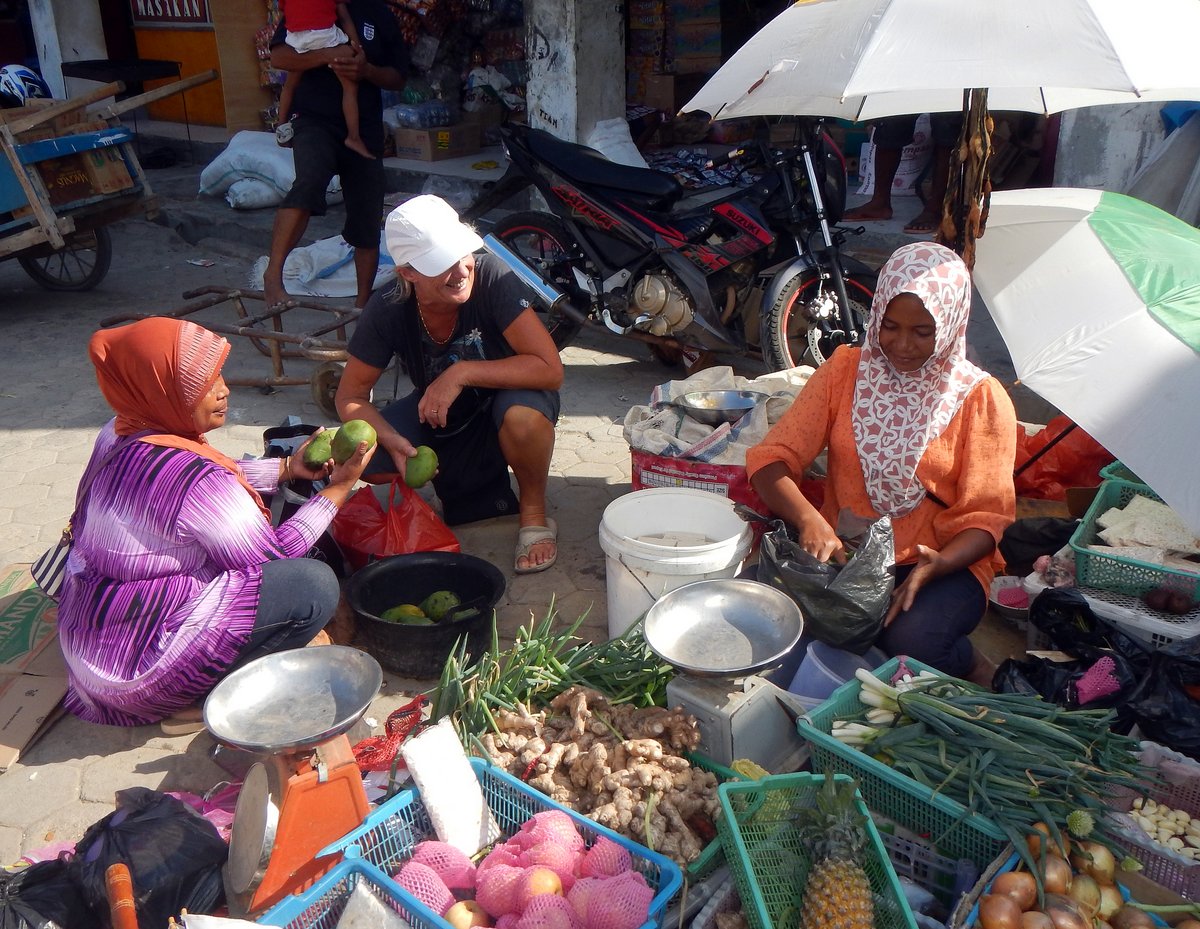
The main street is a dusty, rutted road that follows the contours of the shore, lined with small stores and tourist shops. Rubbish is strewn everywhere and the place has a run-down, scruffy appearance.
Our plan is to go diving tomorrow with a commercial operator, so we called in a few dive shops. There are dozens of dive centres advertising diving trips, so it was difficult to know where to go.
We tried a posh shop called Blue Marlin, but they wanted $150 US to do a three-dive trip. We tried some of the local operators, who were a lot cheaper, but didn’t have a plan for the next day and seemed very chaotic. We then chatted to an Austrian guy in Diver’s Paradise Komodo, who had a planned itinerary for tomorrow, was only $90US for three dives (including $15US daily park fee) and seemed very professional, so we handed over our money.
After buying a few provisions, we wandered back to the market, where Glenys bought some vegetables. Thankfully our dinghy was still there and undamaged. We zipped back to the boat and reappraised the anchorage at Eco Lodge. It’s an open roadstead, with a long shallow sandbar/reef protecting the beach. We were hoping to be able to have dinner at the Eco Lodge, but the logistics of getting over the sand bar in the dark didn’t seem to be worth the effort.
We upped anchor and moved closer to Labuan Bajo town, anchoring in 20 metres at 08°30.13S 119°52.51E. The anchorage is in the middle of a fleet of large tourist boats that look like Greek gulets. These wooden boats are used to take guests out on luxury, multi-day cruises around the Komodo, we’re told that some of the more luxurious 80 foot boats only take 2 guests and cost over $5,000USD per day.
10 September 2015 Labuan Bajo, Flores
The alarm went off early, so that we could go diving. We jumped in the dinghy just before seven o’clock and zipped to the dock where the diving boats are berthed. I left Glenys in the dinghy and walked to the dive shop to pay and join the group. After they’d walked us to the dive boat, I zipped back to Alba and the dive boat came and picked me up. It was all a bit complicated, but I felt much happier not leaving our dinghy in town.
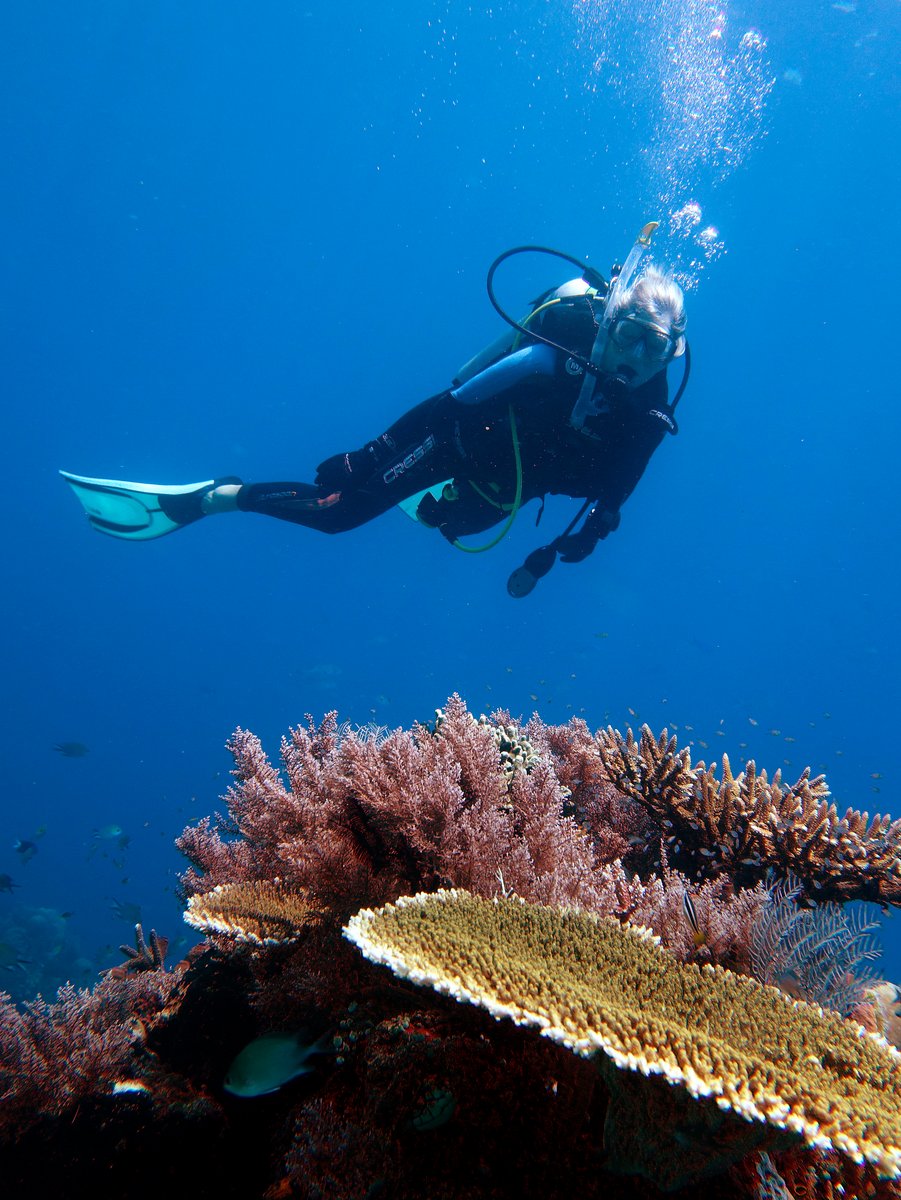
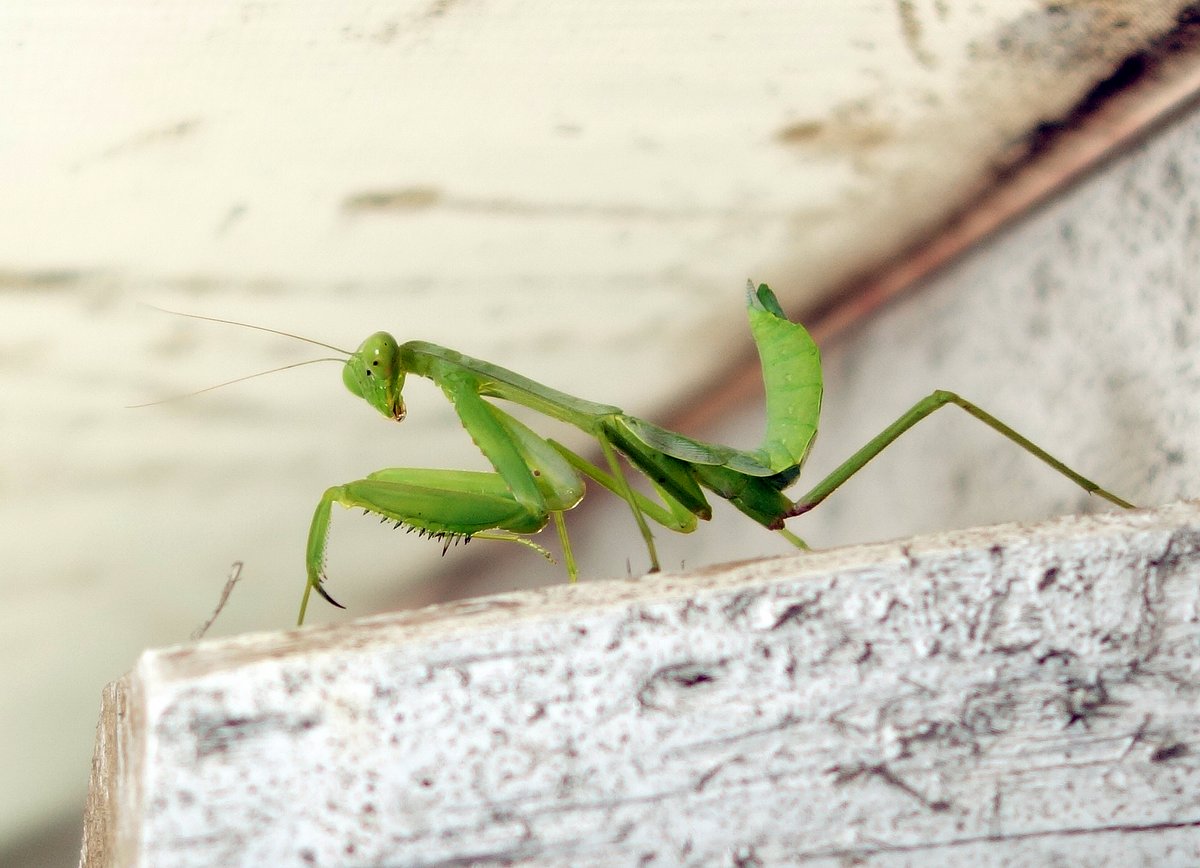
It was a brilliant day’s diving. The boat was very basic and a little bit slow (it took over two hours to get to the first dive site), but comfortable enough. They even had a resident Praying Mantis wandering around on the upper deck, which amused us for a while.
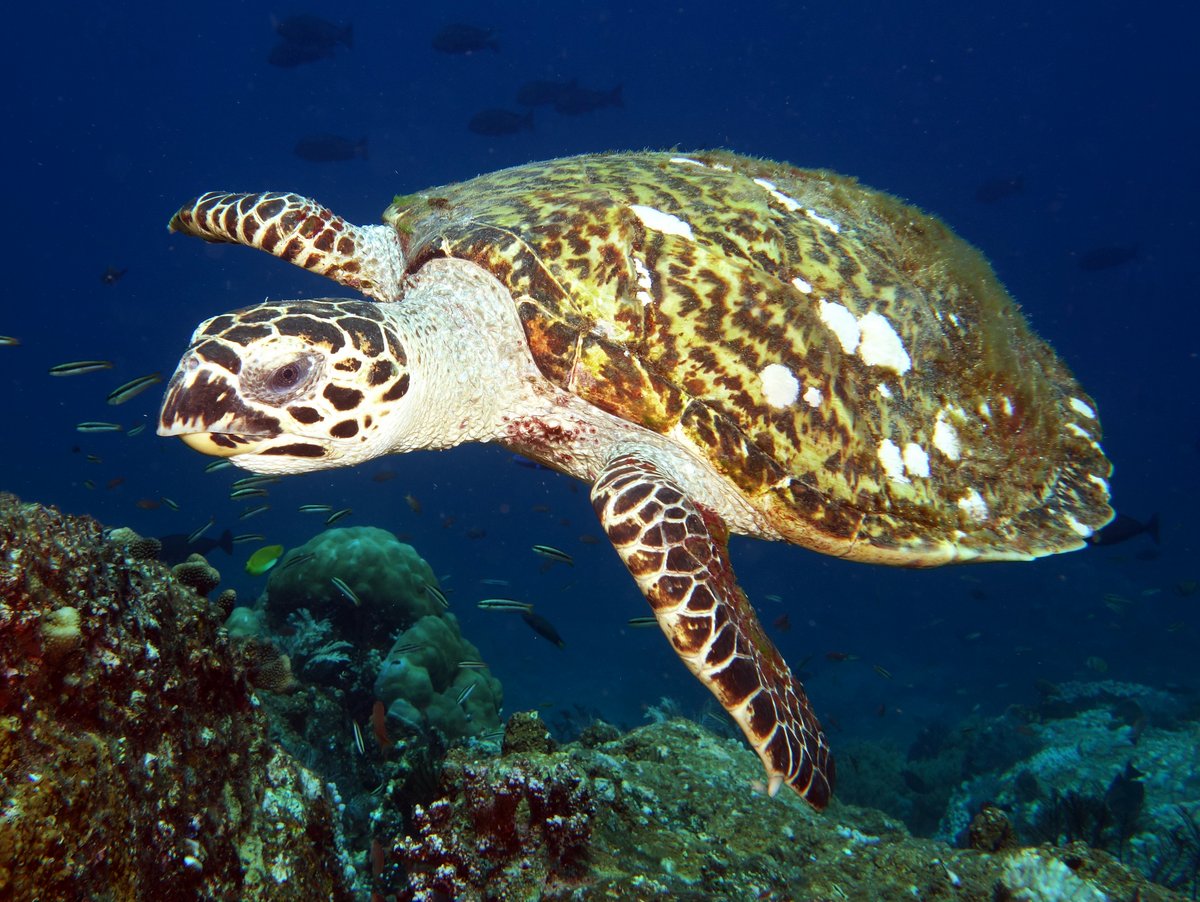
Our first two dives were in the world-famous Gili Lawa Laut area, which is on the northern tip of Komodo Island. We dived Crystal Rock and Shotgun in the morning - both drift dives. Crystal Rock is an isolated pinnacle with good pelagic fish and Shotgun is a drift dive in a channel between two islands. We dived in a group of five divers and the pace set by the dive master was a little too fast for my liking making taking photographs difficult. Having said that, the fish were extremely unafraid, so I took some good photographs of a very friendly Hawksbill Turtle and a Titan Triggerfish.

After a reasonable lunch of tuna and rice, we did a drift dive called Tatawa Besar. Sometimes whizzing along at five knots, this was a very fast drift dive - not good for photography as the subjects were whizzing past, but great fun. The coral was in fantastic condition and it was nice to just look at it passing by. We spent the last fifteen minutes of the dive in a sheltered spot out of the current, hunting small creatures such as the colourful Kubaryana's Nembrotha and a 4 cm diameter Upsidedown Jellyfish.
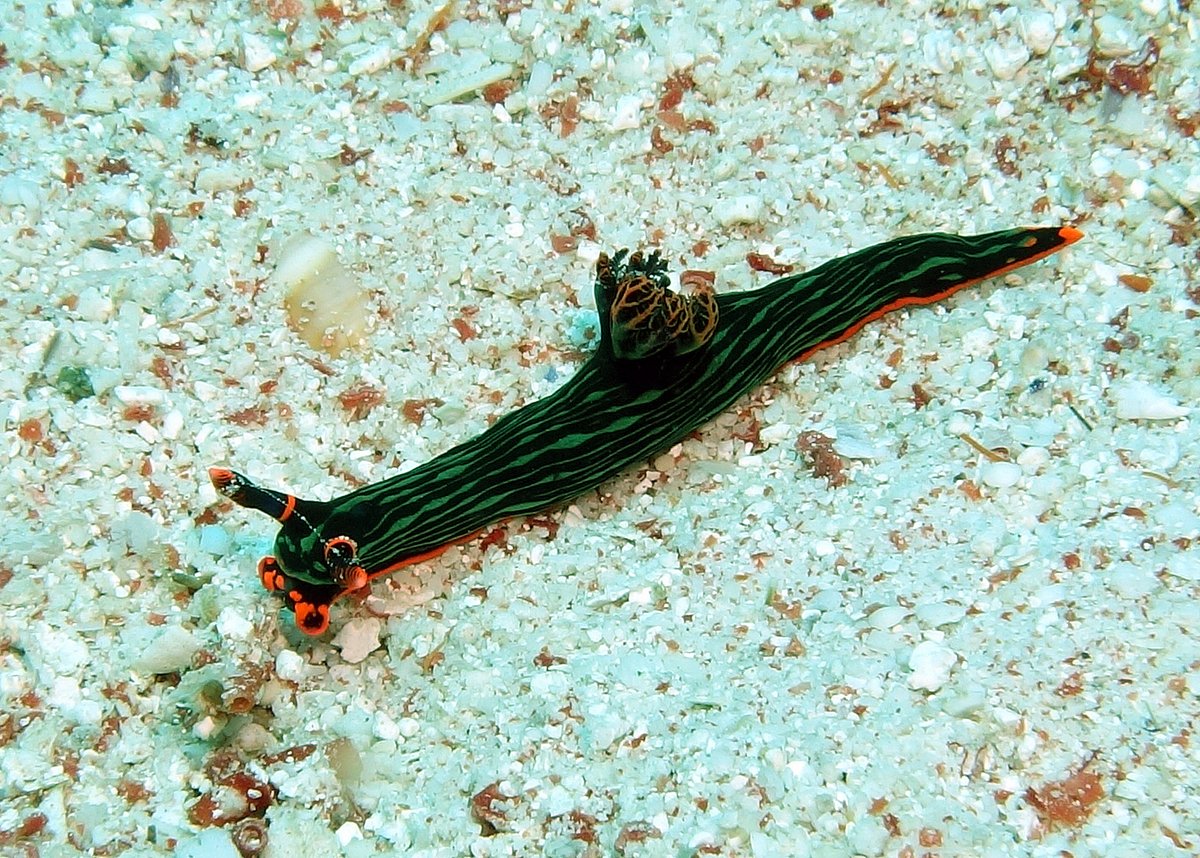

Great day out and world class diving - we found the staff of Diver’s Paradise Komodo to be very friendly and professional.
11 September 2015 Labuan Bajo, Flores
Yesterday’s dives were so good that we decided to hang around for a few more days and do some more diving, so we went into town to arrange another day out tomorrow.
Again we tried a few dive shops. Diver’s Paradise were going to the same area, so we eventually opted for Uber-Scuba, which is run by an English and German couple. They are a little more expensive at $105US for three dives (including the park fees), but it sounds like their boat is much more comfortable and they’re going to a different area. They couldn’t handle a credit card, so Glenys had to put her credit card through the ATM four times to get out 4,000,000 rupiah to pay for it all and give us some spare cash.
We did a bit of food shopping and went back to the boat. The anchorage was getting hot and stuffy, so we motored out to the nearby island of Tebolon, so that we could run the water maker in clean water and go snorkelling. We anchored at 08°28.79S 119°50.11E in 15 metres of water. It seemed to be sand, but the wind was blowing us onto the shore - okay for a day stop, but it would be uncomfortable overnight.

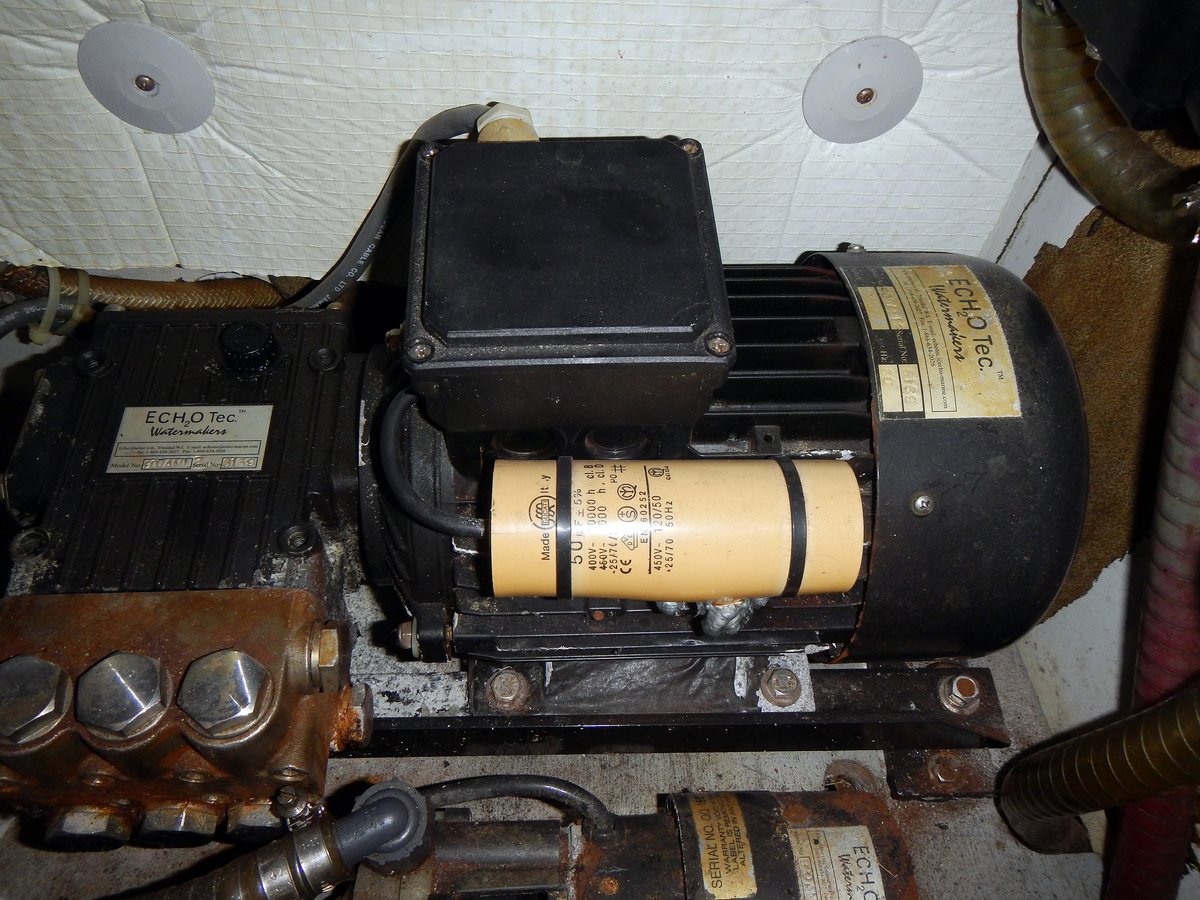
I ran the water maker, but it stopped all by itself after one hour and I couldn’t get it to run again. The high pressure pump just wouldn’t start and made a horrible humming sound. I did a little bit of investigation and narrowed it down to one of three faults - the generator is not producing enough power; the electric motor is damaged; or the high pressure pump is damaged. None of these are good news. I gave up and decided to let it cool down while we went snorkelling.
The snorkelling was okay, mostly rocky reef with the odd bits of coral. Mid-afternoon, we motored back to the anchorage and I had another go at the water-maker. I kept trying to start it, ignoring the horrible humming noise and after five or six attempts, there was a big bang and the motor started.
This was worrying to say the least… I ran the pump for a minute then increased the working pressure of the pump. All seemed to be okay apart from a foul acidic smell coming from the electric motor. I traced this to a large capacitor, which was venting smoke through a big crack in its plastic case.
My conclusions are that the starter capacitor is damaged and needs replacing - this has happened before and I’m annoyed that I don’t have a spare one. However, it’s good news that the pump is not damaged and the generator works. Hopefully I’ll be able to find a start capacitor here in town - it should be a common enough item.
12 September 2015 Labuan Bajo, Flores
It was another early start to go diving. This time we’d arranged for Uber-scuba to come directly to Alba to pick us up, which worked well. Their boat was a bit more comfortable than the previous day and the food was excellent, being cooked on board.
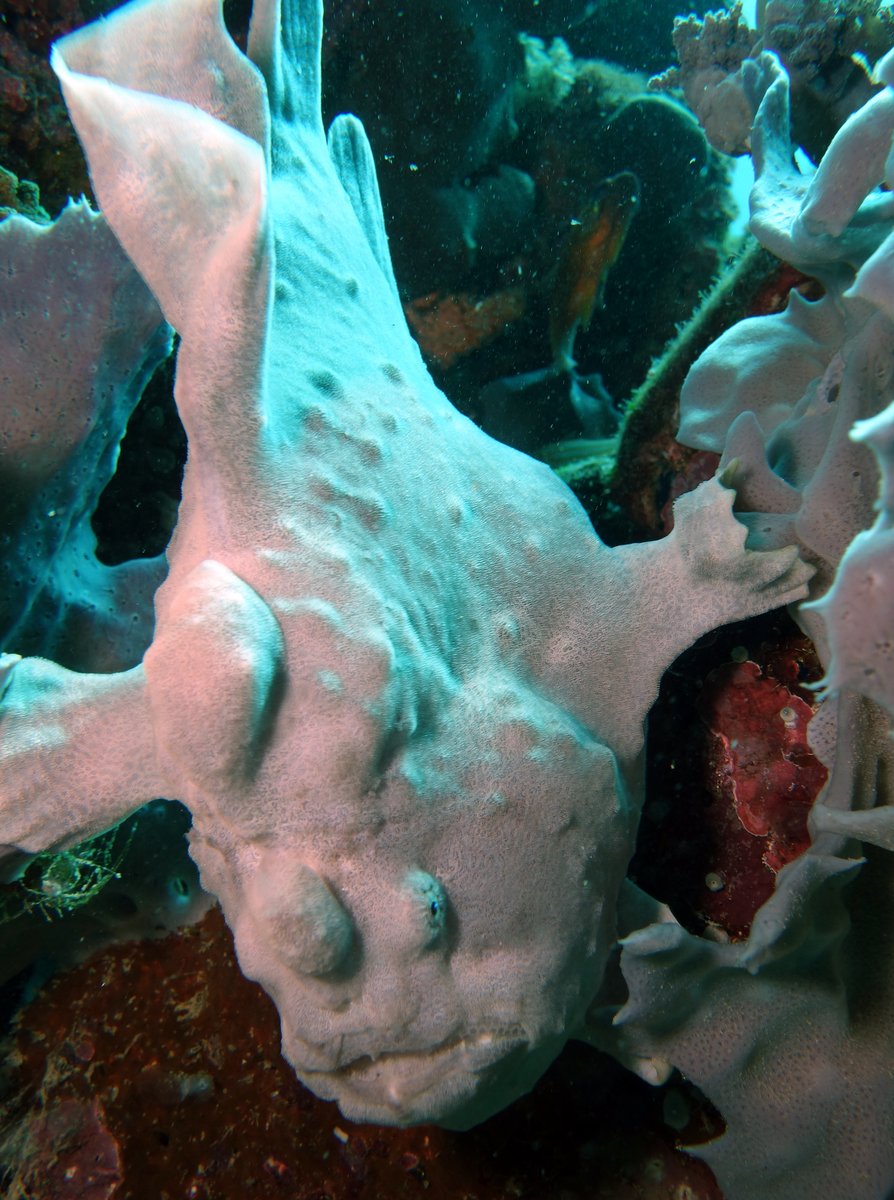
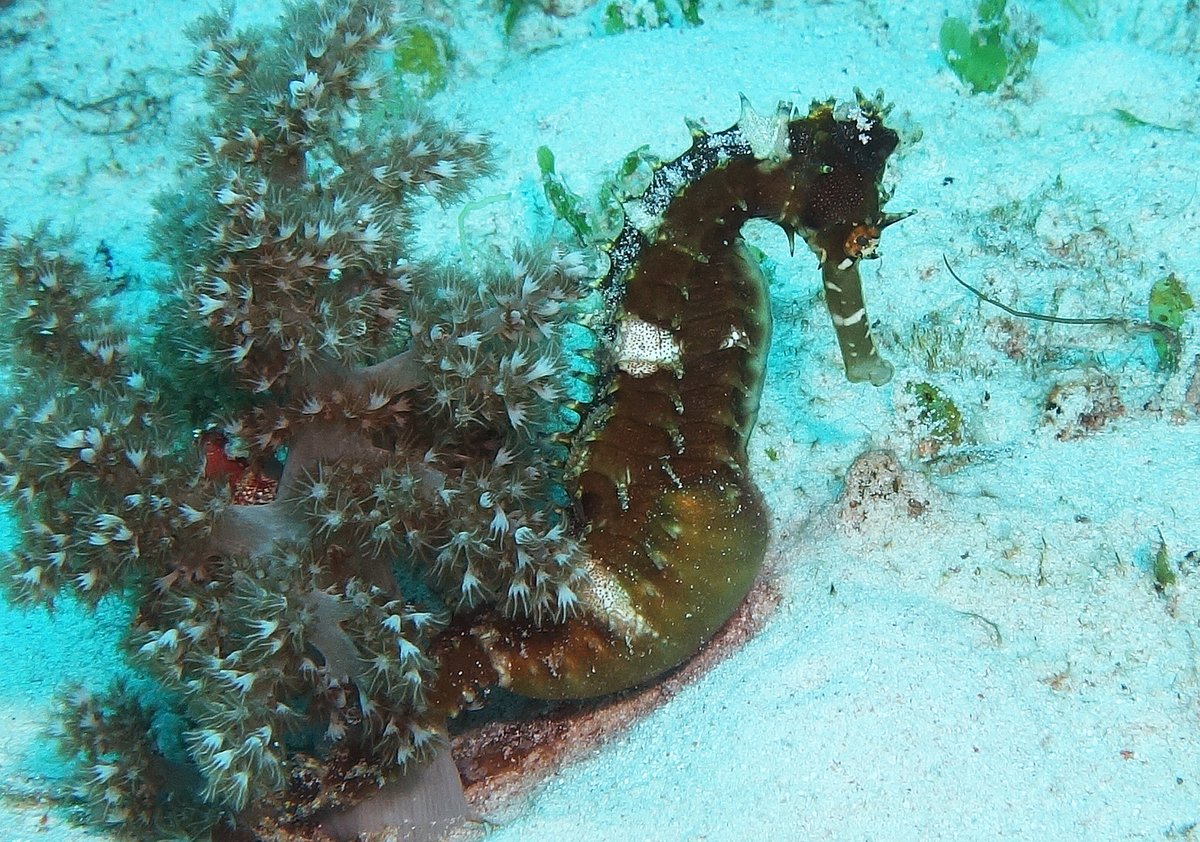
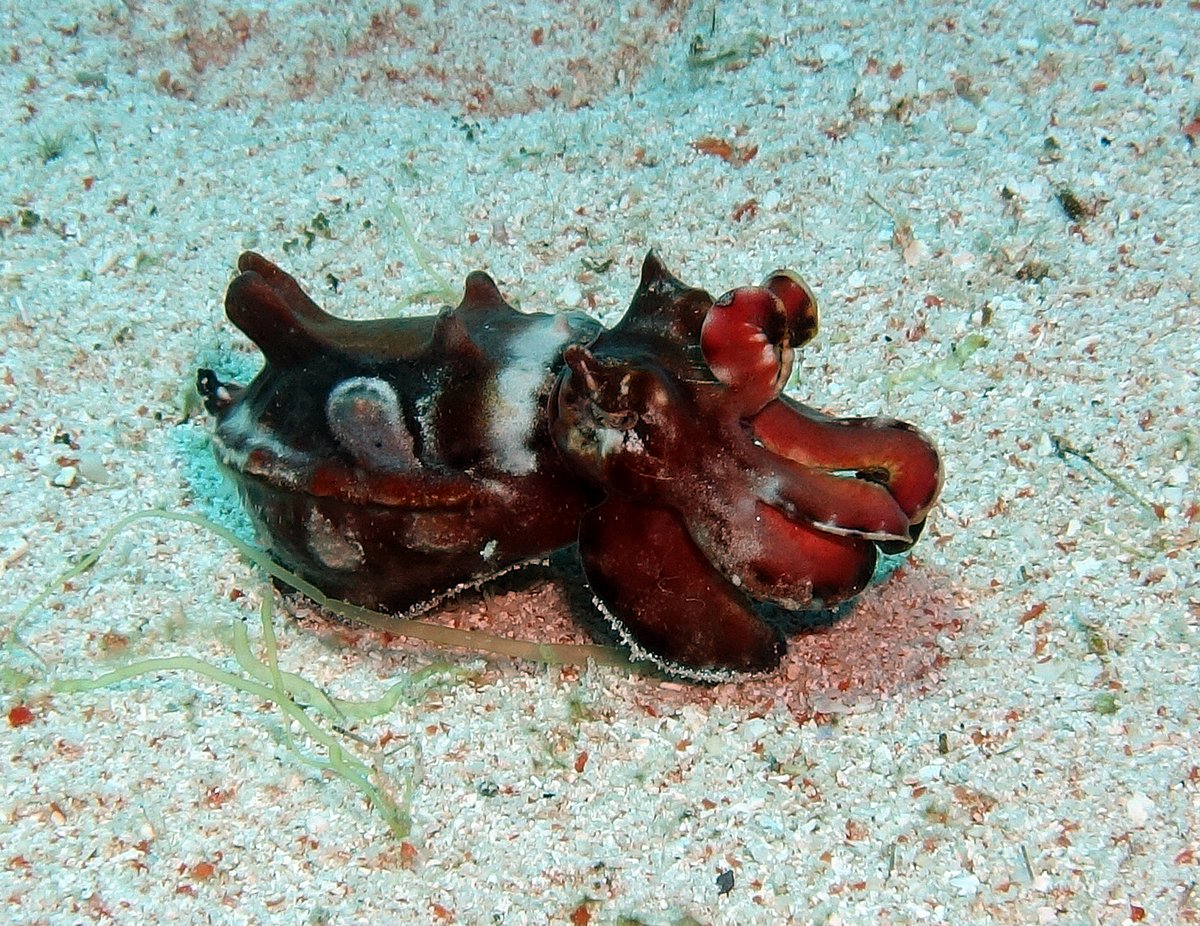
They took us to the central region of Komodo National Park. Our first dive was at Siabar Besar, which was fabulous. We dived as a pair with our own dive guide, so we could go as slow as we wanted. The guide was great at spotting unusual creatures and found us a Giant Frogfish, an Ornate Ghost Pipefish, a pregnant Thorny Seahorse and, best of all, a Flambouyant Cuttlefish, which hardly ever swim, but instead walk along the seabed using their tentacles. It was interesting that 50% of the dive was on a flat sandy area and that was where we found the unusual creatures.

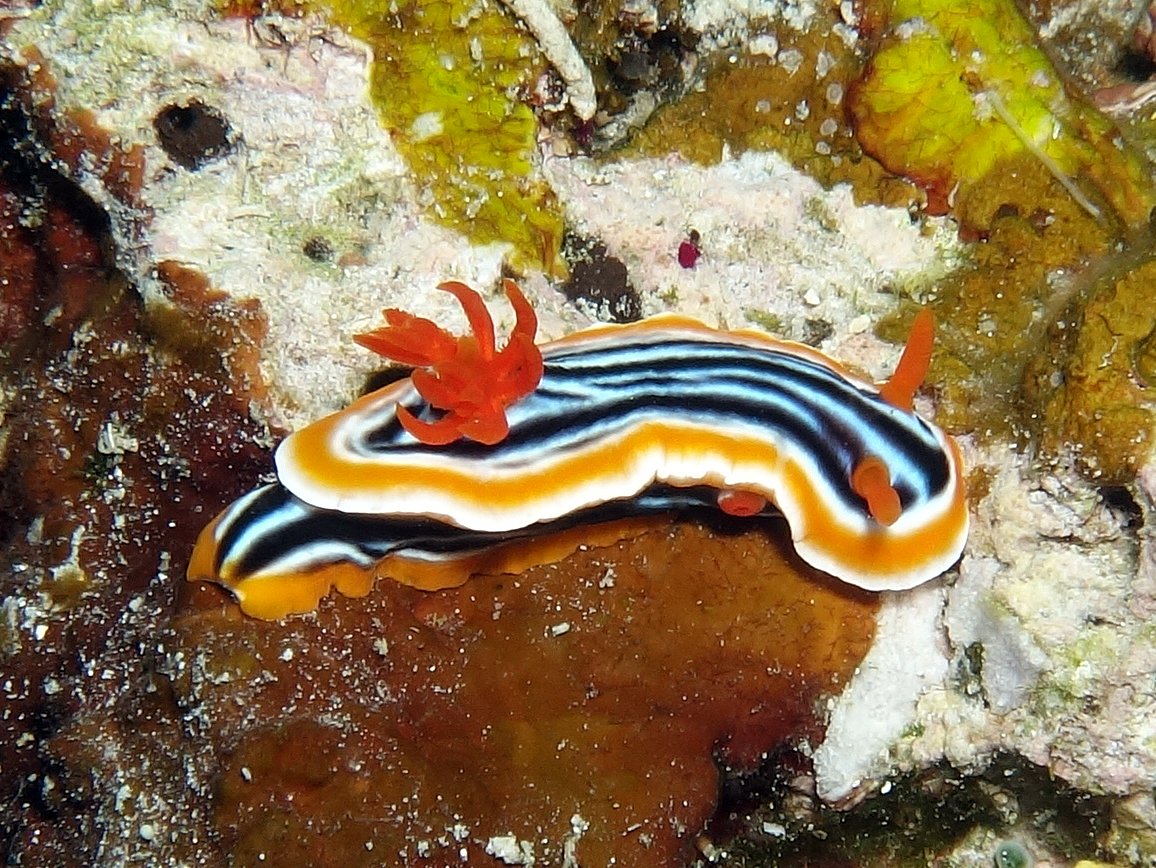
Our second dive was at Manta Point, which is (obviously) a favourite place to spot Mantas. Most of the dive site is a very bleak, lunar landscape of coral rubble and sand patches. We saw a couple of Manta, but they kept their distance and the visibility was poor. The last part of the dive was on lovely coral where we hunted out more small creatures including the colourful Magnificent Chromodoris.

The third dive was at Tatawa Besar, which we had already done, but that was okay because it’s a fun dive whizzing along. I snapped a nice picture of a Yellowmask Angelfish at the end of the dive once we were out of the current.

The dive boat dropped us off at Alba and we had an early night, after another great day of diving.
13 September 2015 Labuan Bajo to Loh Buaya, Rinca
Michael from Uber-scuba had suggested that I might find a starting capacitor at a shop next door to them, but the guy didn’t have one and couldn’t suggest anywhere in town. This was not good news, as we only had enough water left for five days - we may have to get to Medana Bay Marina early to get water and try to find a capacitor.
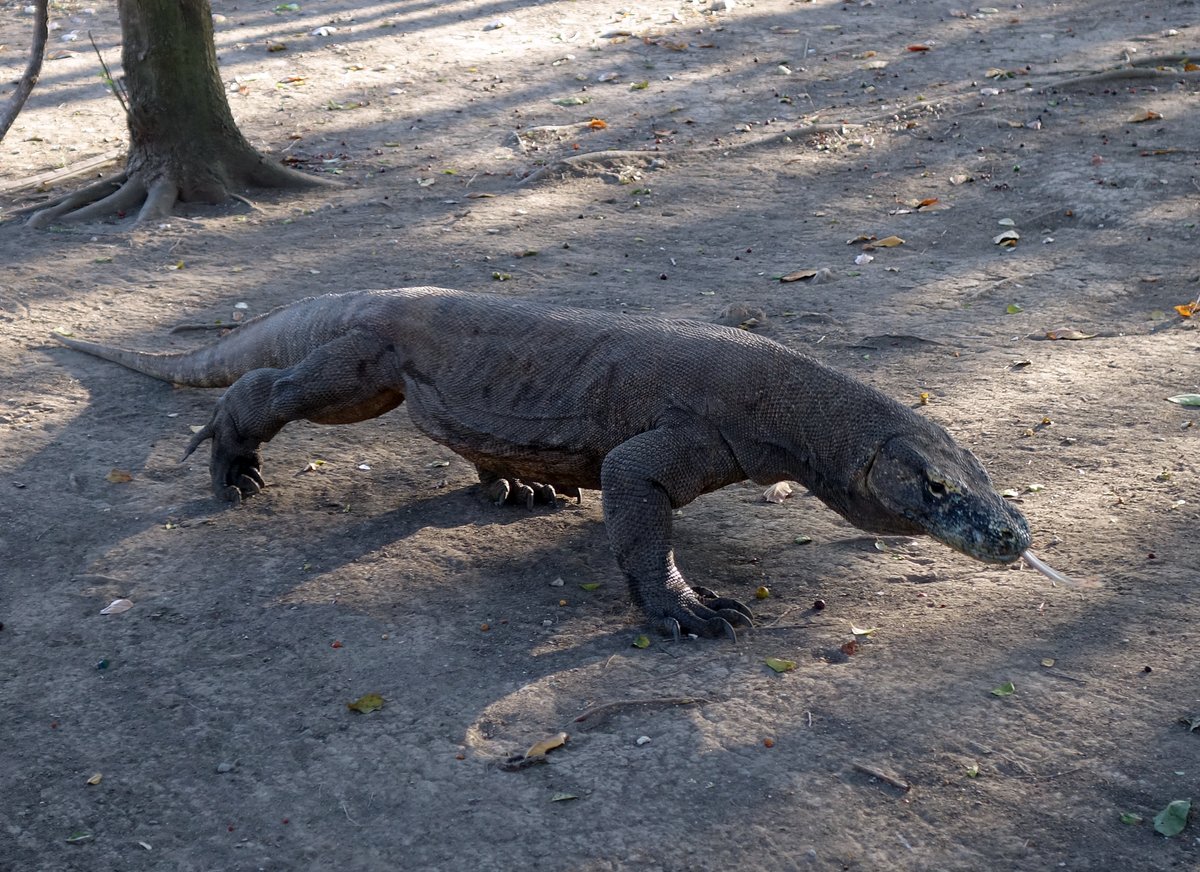
We upped anchor and motored through the reefs to Rinca Island, with the intention of doing a hike tomorrow to search out Komodo Dragons. Loh Buaya is a long and narrow bay, with mangroves and very shallow water at the end. There are lots of local boats moving in and out of the anchorage, delivering tourists to the Park Ranger station ashore. We anchored close to the end of the bay in 12 metres of water, but as the wind swirled around we ended up too close to a French catamaran.
I went up to the bow and started to pull up the anchor, but when I took my foot off the “Up” switch, the windlass kept pulling up the chain. I stomped on the foot-switch a few times, but it wouldn’t switch off, so I had to run down below to turn off the trip switch to isolate the windlass. Despite fiddling for a minute or two, I couldn’t sort out the fault, so we pulled up the anchor with Glenys operating the trip switch below and me shouting instructions when to turn it off.
We anchored again using the manual clutch on the windlass, which didn’t run smoothly, so we didn’t anchor where we planned and finished up too close to the shallows at the end of the bay. We started to pull up the anchor again (with Glenys down below), but halfway through, a local boat was having problems near us having gone aground, so we had to wait for ten minutes with Glenys motoring around to keep clear of the other boat. Finally, we were able to lift the anchor and re-anchor in a reasonable place - very stressful.
At first I thought that the switch had jammed, but traced the problem to the relay controller. I removed the control box and stripped it down to find that one of the relay contacts had welded itself shut together. I managed to pull it apart and then cleaned up all of the contacts and got the windlass working again within an hour. Phew!
While I was on a roll, I had another look at the water maker. On the way here, I had a brainwave and checked the starting capacitor on the electric motor on our dive compressor - it was the same, 50uF!! I removed the capacitor and fitted it to the water maker. Success, it all started up, but I didn’t run it for long because the water in this bay is very silty - I’ll run it tomorrow when get we get to a cleaner anchorage.
While I was doing the repairs, Glenys went ashore and arranged for us to go on a hike to search for Komodo Dragons tomorrow at 0700 - no rest for me. While she was ashore she spotted a KomodoDragon, so I think that there are plenty about.
By five o’clock, the tourist boats had left and it was a lovely peaceful anchorage with only two other yachts anchored nearby. We’re surrounded by mangroves, with fish eagles hunting and Long-tailed Macaques monkeys foraging on the shoreline. It was all very nice, but to my mind Mangroves + Monkeys = Mosquitos, so we went to MOSCON 5 and put up the mosquito net in the cockpit.
