
4 June 2015 Milipe Bay to Southwest Bay, Malekula
We had a slow start to the day, waiting for the sun to be high in the sky so that we could navigate out of the north channel which is uncharted. Hollen, who seems to be the local water taxi, passed by and I gave him some photographs of our boat to take over to Angela in Tomman. He told me that there was plenty of depth through the channel.
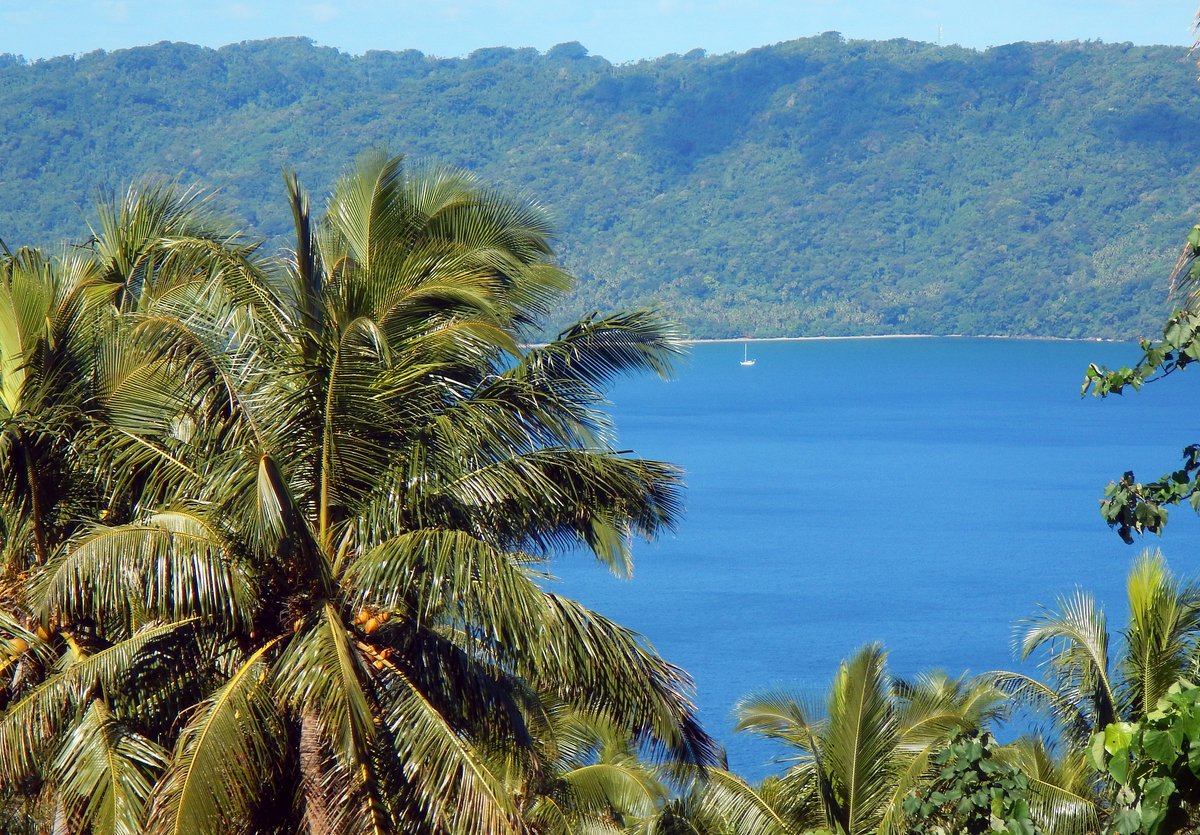
I hate waiting to leave an anchorage and cracked up before nine o’clock. We motored out of Milipe Bay , then went on a heading of 290 degrees through the channel which is ½ mile wide. The minimum depth that we saw was 9 metres, although we skirted a couple of slightly shallower spots. (Our track was 16:34.70S 167:28.60E, 16:34.60S 167:28.03E, 16:34.22S 167:27.05E).
The sail along the sheltered west coast was fabulous, sailing on a broad reach in flat seas past spectacular cliffs and even a waterfall. We enjoyed it so much that we even tacked upwind into Southwest Bay before anchoring off Lembinwen village in 5 metres of water over dark sand. An added bonus was catching a small Bonito.

After our fish sandwich lunch, we went ashore and found Patti and Tim Malon, the brothers of Angela’s husband. After chatting for fifteen minutes about cyclones and the places that we’ve visited, we asked if anyone could take us for a hike. This seemed to be a difficult concept for them.
“Where did we want to go?”
“Well, perhaps to a village in the mountains? Or a waterfall? Or a nice viewpoint?
“Why?”
Eventually, they grasped that the mad English people wanted to go for a walk for exercise and after ten minutes of discussion, we agreed that they will take us to a village in the hills. It should take three or four hours to get there and we’re going to meet them on the beach at seven o’clock tomorrow morning. I told them that it was my birthday tomorrow and they want us to go and drink some kava with them after the hike.
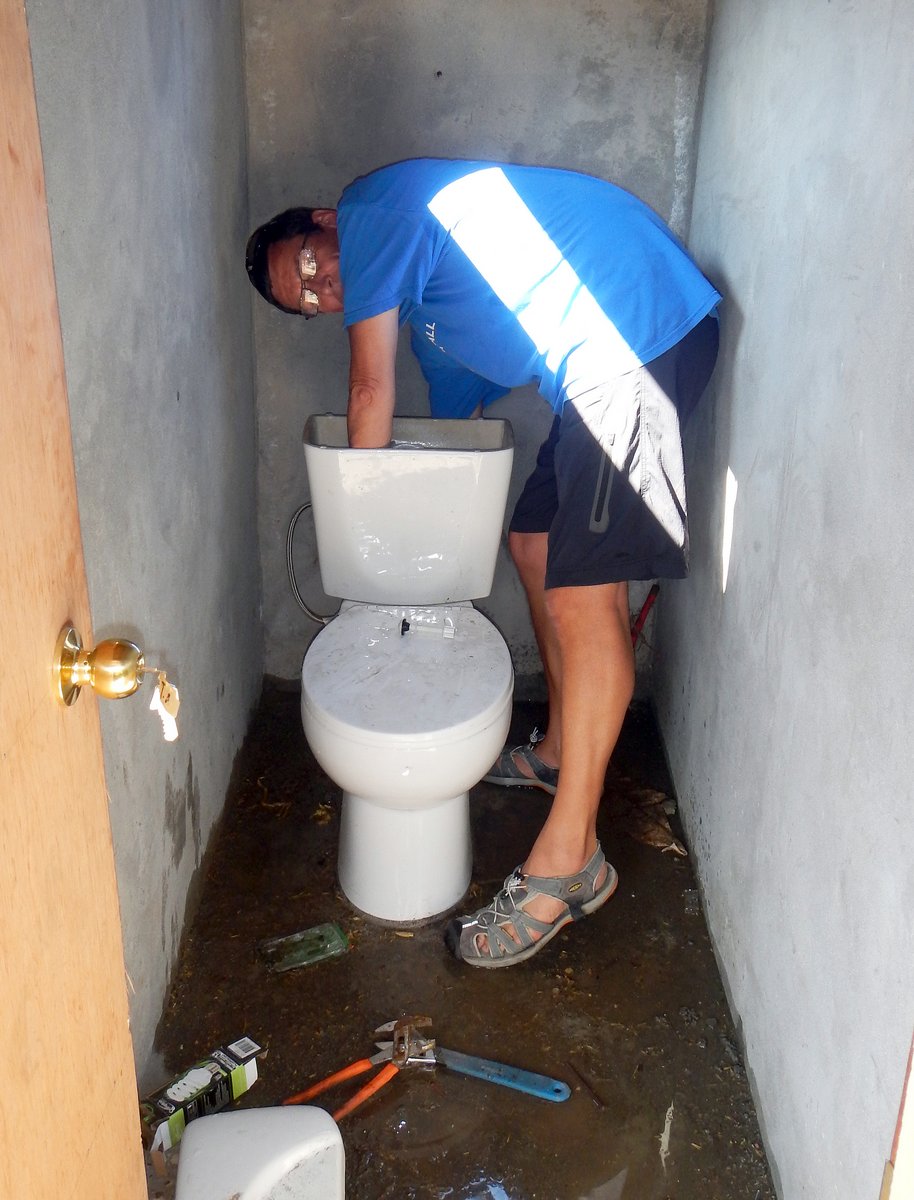
In a brief lull in the conversation, Tim suddenly asked me if I knew anything about toilets. “Errr, a little”, I said cautiously. He took us for a walk through the village where some guys were working on a new toilet block for the village. They’ve bought six flushing toilets from Port Vila, but there are no instructions and the first toilet that they’re installing was leaking. I had a fiddle with it and after removing and replacing the cistern three times, placing the seals in different places, I finally managed to get it sorted.
It was only mid-afternoon when we got back to the boat, so we decided to go for a snorkel at a nearby island. Tim had told us that we would need to get permission from another village, so we duly went along, but the village was completely deserted. We spotted a couple of small kids, but they disappeared very quickly. It was very eerie walking around the huts shouting “hello” - were they all hiding in their huts?
After five minutes of fruitless searching, we gave up and went to have a look at the reef, but the water was very murky and there was a fast current, so we gave up and went back to the boat.
5 June 2015 Southwest Bay, Malekula
It was my 59th birthday today and, following our tradition, Glenys had bought me nothing apart from a small camera case that she picked up in a cheap Chinese shop in Port Vila. (I’m going to buy myself an iPod when we get to Singapore.)
We made it to the beach by seven o’clock and went for a hike with Patti and Tim. We took the dinghy to a beach next to the small grass air strip at the village of Wintua From there we walked up a dirt road to the village of Lamlo. It was a pleasant walk, but not as adventurous as I would have liked - I was hoping to be hacking our way up an animal track into the mountainous jungle to see a remote village of the Small Nambas (a tribe that wear a small penis pouch and ate their last human being in 1969).
However, our guides had a different idea and after an hour of trudging up the sometimes steep road, Tim was starting to sweat a lot and suggesting that we take it slowly and turn back soon. Patti seemed to be fitter and more enthusiastic to carry on. I managed to keep us going for 2½ hours and then agreed that it was time to return. By the time that we arrived back at the dinghy, we’d had a pleasant four hour walk.
We invited Tim and Patti on-board Alba to have a drink, then dropped them on the beach, promising to meet them at five o’clock at their Nakamal to drink some Kava for my birthday. We then chilled out for the afternoon.
Kava is made from the root of the Pepper Tree (Piper methysticum) and the name says it all, “Piper” meaning pepper and “methysticum” meaning intoxicating. The bushes grow to two metres tall and are normally harvested at 4-5 years.
There are two species of Piper that have gained notoriety for their “medicinal” uses - the Betel Nut (Piper betel) which is chewed and is more common in Asia; and Kava which is widespread in Vanuatu. Kava is a drug and not an alcoholic drink. It’s supposed to be non-addictive, but most Ne-van men drink it every evening. It doesn't produce the drunken behaviour of alcohol, but is more of a sedative or relaxant, that first numbs the mouth and tongue and slowly relaxes the rest of the body.
Kava is a peaceful drug which is said to lead to amusing and intellectual conversations that would not normally be considered between strangers or even enemies. It has been used throughout Polynesia, Micronesia and Melanesia at meetings and ceremonies for a long time to promote peaceful conversations especially at tense situations.
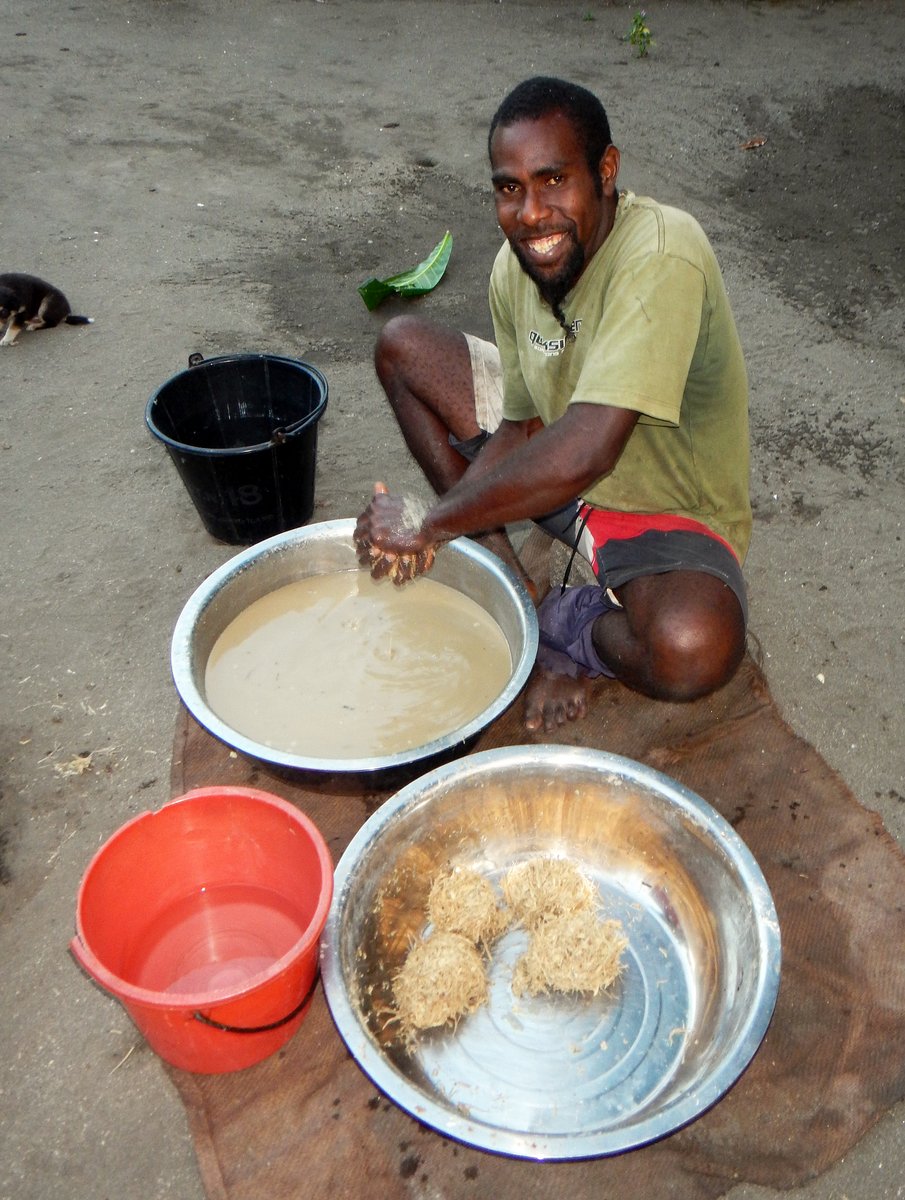
When we went ashore, Tim met us at the beach and took us to see the kava being produced. Basically, the root is pounded to a pulp, added to water and then sieved through cloth. It’s not a very hygienic process and the resulting liquid looks like grey, dirty dish water. There are photos of the process in the “Galley Slave”.
The drinking of Kava is traditionally carried out in a special building called a Nakamal, which historically was the domain of men - no woman being allowed into the building or even allowed to look into the Nakamal when men were present. Men were then free to carry on their drug-induced pontificating without any disturbance. In modern times, this has been relaxed and in the cities of Port Vila and Luganville, there are now Kava bars where women are allowed.
In the village of Lembinwem in Southwest Bay on Malekula, there are five Nakamals where women are allowed to purchase Kava, but normally the women will take it home leaving the men to discuss their weighty matters.
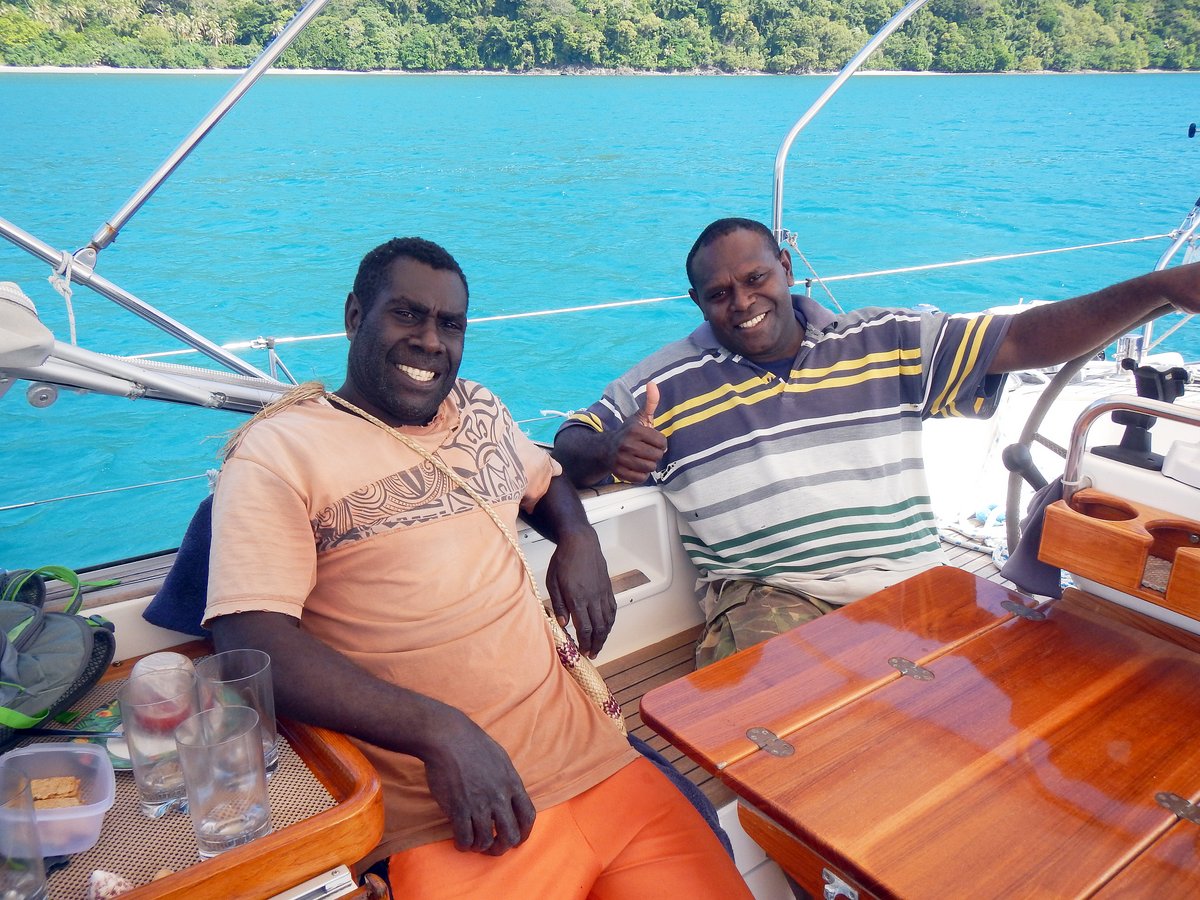
We were invited to the Nakamal that is owned by Tim, Patti and three other men. It’s a small traditional house next to the beach, with seating inside and outside and a hatch where you buy the kava. They treated us as honoured guests and Glenys was allowed to enter and stay. I bought three cups of kava - a full helping for Tim and two half cups for Glenys and me, which cost $0.80US.
The kava is supposed to be drunk down in one go, which is definitely the best way of drinking the dirty grey mixture. It doesn’t taste too bad, but you wouldn’t sip it for pleasure like a fine red wine. We slugged our cupfuls back and immediately felt tingling in the lips and mouth. Then slowly we felt more relaxed, but the effect is not very pronounced. After sitting outside and chatting a while with some of the villagers, we bought another small cup, but there were no further effects.
One of the habits that accompany drinking kava is spitting. I suppose that the drink loosens the phlegm in the throat and the men are constantly spitting on the ground. It’s very frequent, and unpleasant to hear them hawking and spitting every other sentence. I’m glad that we sat outside the Nakamal hut.
We met James, the chief of the village, who was a nice guy. He has a small business where he collects the “Nam Bangura” nut and produces his own Tamanu oil. This is mixed with 30% coconut oil to make the natural healing oil, which he sells to the locals for 250 vatu for a 200ml bottle. His oil is used to treat skin complaints, sores and is used as massage oil.
Tim seemed to be assigned to us as our “protector” and was very good to us, but he quickly began making hints that it was getting late and perhaps we would be leaving soon? I think that the pressure of being responsible for us was affecting his peaceful, Kava state of mind. We left at about seven o’clock and safely made it back to the boat. With our dinner, we had we had a couple of glasses of wine - we've heard dire warnings about mixing alcohol and kava, but we felt no side effects.
6 June 2015 Southwest Bay, Malekula
I had a restless night and kept waking up with the taste of kava in my mouth - not very pleasant and it took most of the day to get rid of the taste. I’ve decided that kava is not my drink of choice.
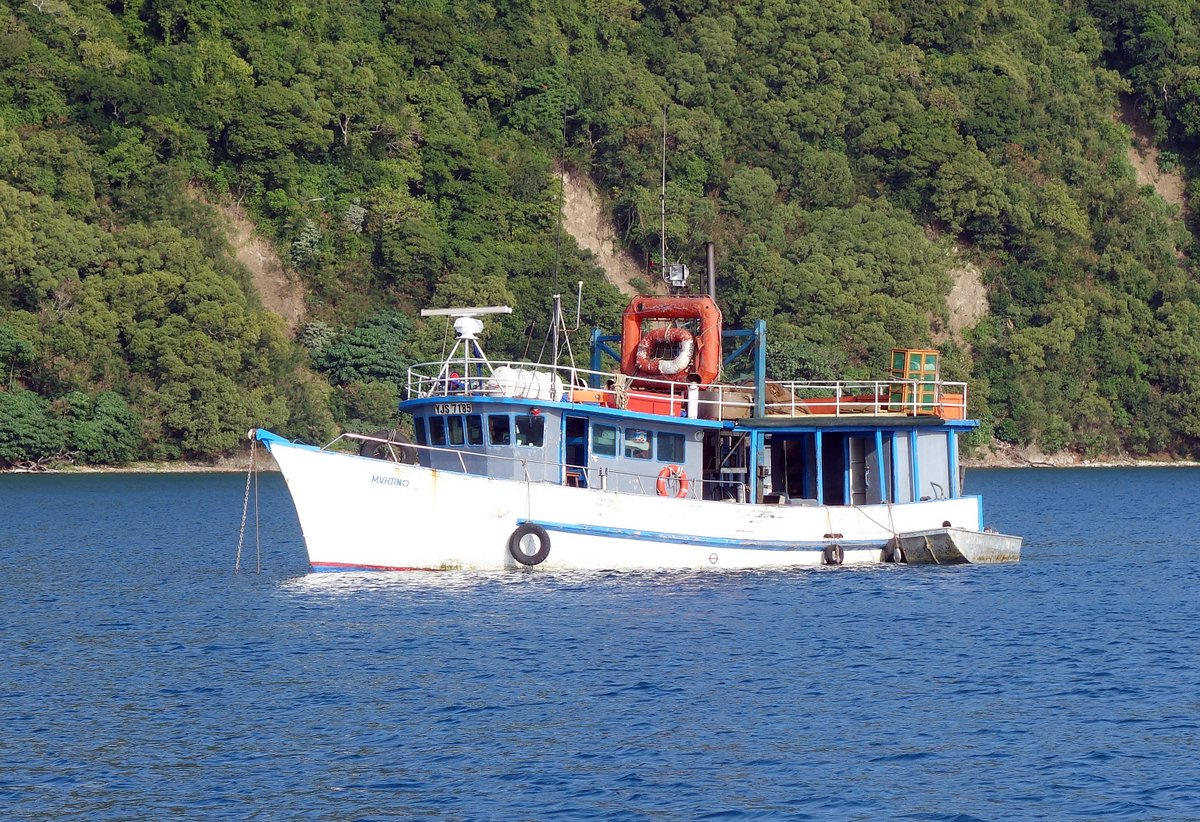
It was a very hot day with a light wind, so we stayed on board and got on with a few chores. There was quite a bit of excitement because a small cargo boat arrived from Santo with some passengers. Everything was taken ashore on small boats, so there were lots of trips backwards and forward.
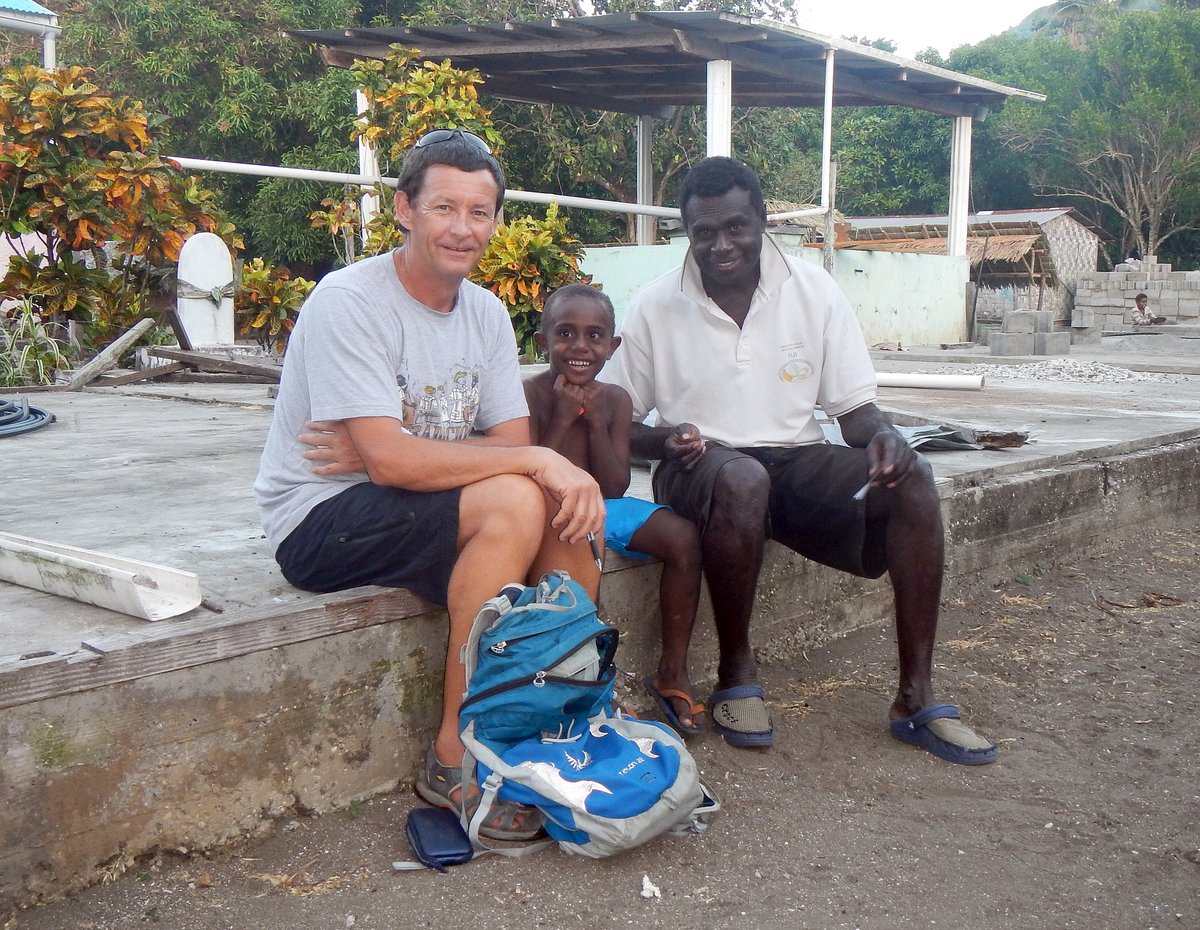
We went ashore in the afternoon to find Tim or Patti, but it seemed that most of the village was taking advantage of the fine weather and were out at their gardens. We managed to find James, the chief, and he walked around the village with us for a while.
He’s keen to build a guest house in the village and wanted to know how he should attract people to come here. I told him that the internet was the way that people find out about these sorts of places, but he doesn’t have access to the internet and doesn’t know how to progress his ideas.
Back at the boat, I began to think about how they could handle tourists. It’s quite a problem for them; they are off the beaten track for both tourists and yachts, so they need to find some unique selling points for their village. I started to jot notes down and then put together a document of suggestions - I got so involved with it, that I stayed up until well past one o’clock.
7 June 2015 Southwest Bay to Awei Island, Maskelyne Islands
I was up early and went into see James. I gave him some printouts of tourist guides, so that he understood what the other islands are doing and then went through my six pages of suggestions. Basically, I think that they should concentrate on “adventurous” type travellers that want to stay in a traditional village and to see village life up close.
They should set up a small guest house that would accommodate four people in clean, but basic rooms - two double rooms and a central living/dining room is all that is needed. Guests would typically stay three or four days based on the twice weekly flights to the nearby airport. Local food would be prepared for the guests and the whole thing should have a B&B feeling - like living in someone’s house. The village community should own and profit from the guest house.
The villagers should suggest and then run small activities/tours lasting one to four hours, so that guests can pick a mixture of things that they want to do. These activities/tours could be anything, but should be aimed at showing the guests the village life and the surrounding nature. I came up with a list of about 40 different tours, including snorkelling, weaving, hiking, history, pig hunting, trips in dug-out canoes, fishing, cooking, kastom dancing, how to build a dug-out canoe, etc.
They could offer a price list of these activities/tours to both guests and yachts when they arrive. I suggested to James that the villagers get paid to run each activity/tour, so that they make money directly from the tourists. If their tour is good then they will make more money. I suggested that the cost of the tours should be fixed and enough that the villagers get paid a reasonable hourly rate for their time, but cheap enough for tight-fisted yachties - perhaps $3US per hour.
On marketing, I told him that he must have access to the internet and email, but perhaps he has a relation in Luganville or Port Vila that could handle the administration for the village. By the time that I had finished, he was reeling with information overload, but hopefully, I’ve given him lots to think about and a way of getting started without spending too much money. If he aims the tours at the yachties who visit, then it won’t cost the villagers anything upfront.
After I’d finished, I said goodbye and zoomed off back to the boat. Thirty minutes later, we’d upped anchor and were motoring out of the bay. There was a low pressure trough going through and it was raining, but the forecast said that the winds would be light and the seas calm, so we’d decided to take the opportunity to head back up-wind to the Maskelyne Islands.
It was a tough bash, motoring into the swell and waves first couple of hours. We hit a 15 knot head wind and the waves were steeper than I expected, so we were being stopped dead occasionally because we were motoring. We dodged through the gap between the mainland and Tomman Island and after that the conditions got better. The waves were on our beam and we actually had enough wind to sail for an hour, before the wind died.
We motored into the anchorage at Awei Island. in overcast skies with drizzle. The anchorage is very nice and very sheltered being completely land locked.
8 June 2015 Awei Island, Maskelyne Islands
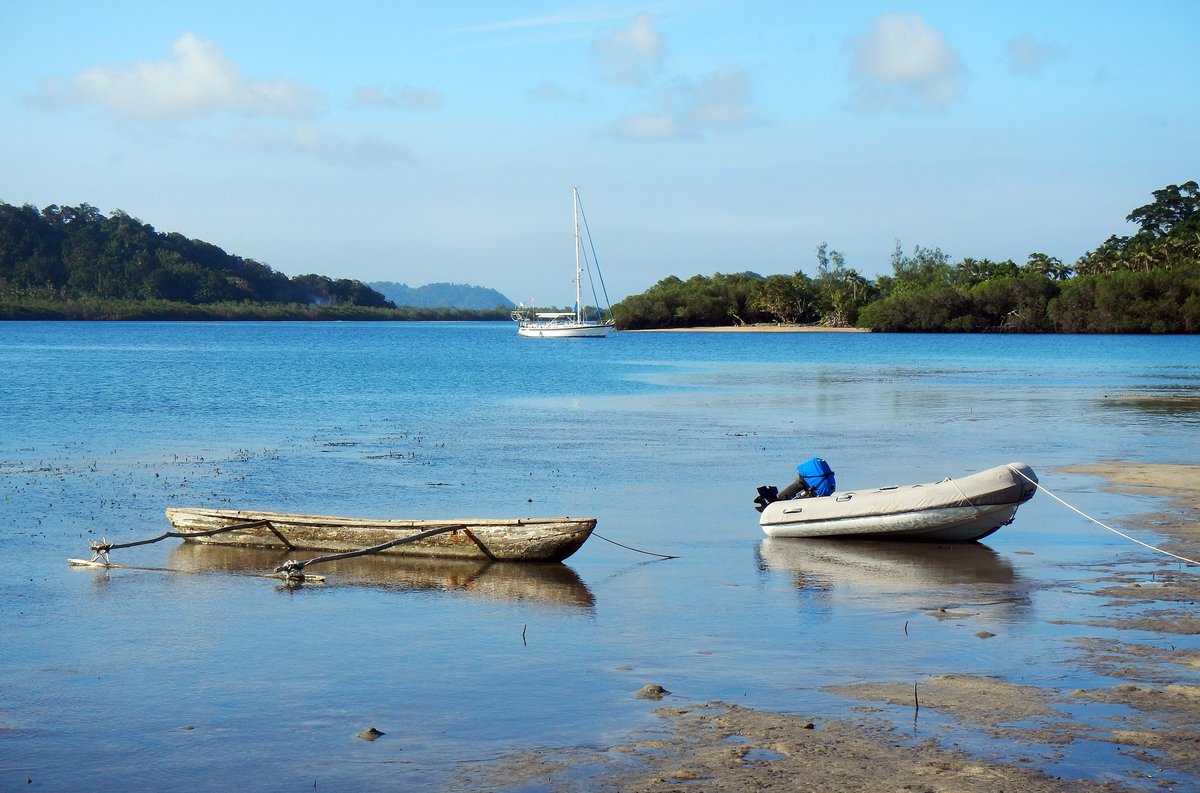
This is a lovely anchorage. There’s a small village on the other side of the island that has fifteen people living there. Sofren (the chief) came over and had a chat with us then scammed a bag of sugar. The villagers’ gardens are over on the main land and we’re anchored directly in their path, so we had a constant stream of people passing close by in their dug-outs. We had another of those contradictory events when an old lady dressed in her tatty Mother Hubbard dress paddled over in an ancient dug-out canoe and asked if we would charge her mobile phone.
We’re planning to go into an anchorage at Uliveo tomorrow, which apparently has a very shallow bar of 1.2 metres at low tide. There’s about a metre of tide here, so we will just be able to scrape over at high tide with 10 or 20 cm of water under our keel. Normally we go through shallow spots on a rising tide, so that we’ll float free if we go aground, but this is so tight that we will have to go in at high tide. If we go aground then we’ll be in trouble.
Our friends on “Caduceus” are already there and have given us some waypoints, but I’m still a little worried about it. So, I did some calculations to see how much our draft is reduced if we heel over (I knew my school boy trigonometry would come in useful one day). I calculate that if we heel over at 10 degrees our draft is reduced by 3 cm; 15 degrees gives 7 cm; and 20 degrees gives 12cm.
Therefore if we go aground, a solution would be to heel our boat over by 15 degrees and we should be able to float free. As an experiment, I pulled our boom out to port and using a block on the end of the boom and the spinnaker halyard, I lifted our dinghy up at the end of the boom, but disappointingly we only heeled over by 5 degrees, which only reduces our draft by 1 cm. Good idea, but I would need to put a lot more weight into the dinghy - perhaps flooding it with water would work.
We tried to go for a walk on the mainland in the afternoon, aiming to get to a beach on the south shore, but the mangroves on the shore and the impenetrable vegetation inland forced us to give up. We should have asked one of the kids in the village to take us.
9 June 2015 Awei Island to Uliveo Island, Maskelyne Islands
At half past eight, we picked up the anchor and motored around to Uliveo Island, a mere five miles away. We had to weave our way though some reefs and encountered big standing waves just off the island where the 20 knot wind was against a two knot current, but that was only short lived.
The approach into the anchorage was a little tense, but the minimum depth of water that we saw was four metres, so no problem at all. (Our track was bang on the recommended waypoints of 16:32.180S 167:49.777E, 16:31.965S 167:49.802E.) Once past the sand bar, we anchored next to “Caduceus” in 15 metres of water. We’re in a deep lagoon that has a maximum of 20 metres and shallows very fast at the edges.
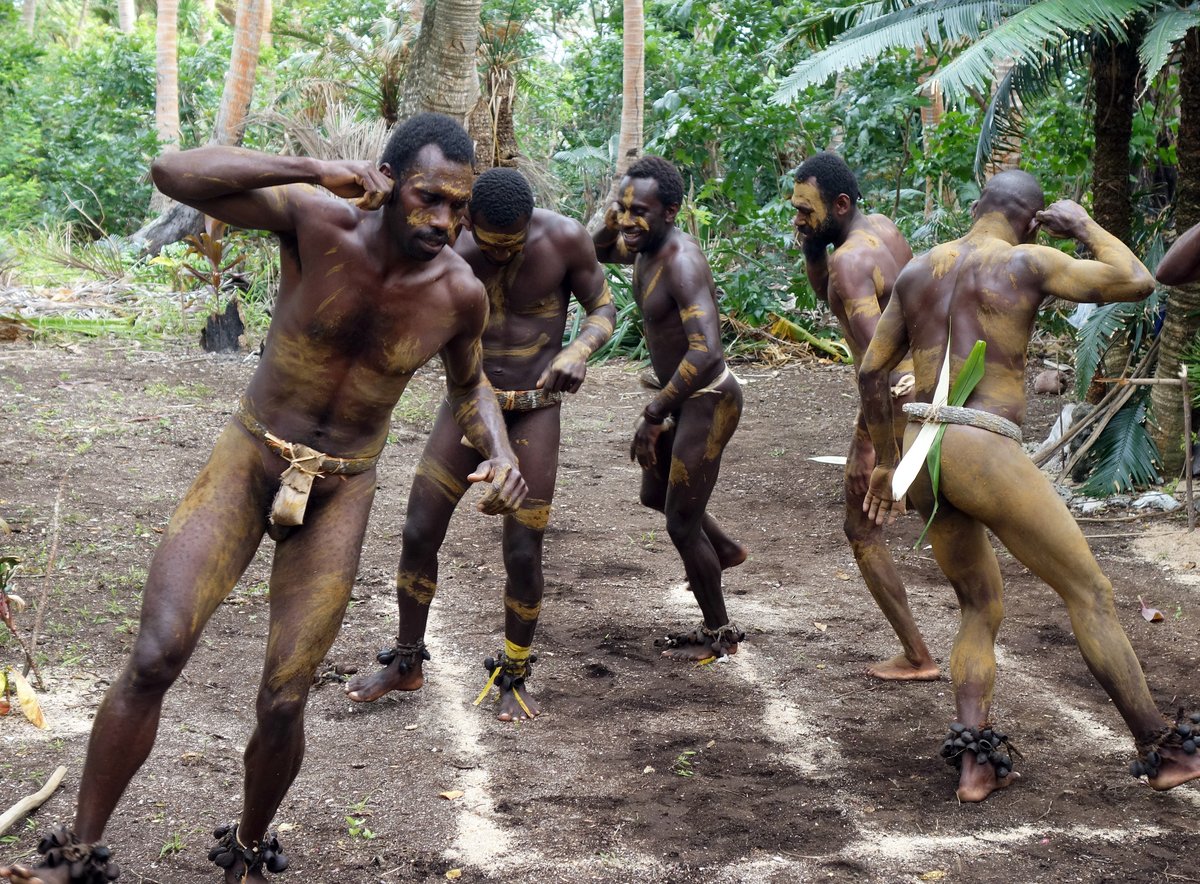
After lunch, we went ashore to watch some Kastom dancing that “Caduceus” had arranged with the village’s yacht liaison, Stewart. The men were dressed in their traditional Nambas, which are penis pouches made from banana leaves. In this area, the men are known as Smol Nambas (which means small penis pouch). In the north of Malekula, live the Big Nambas who (errrr) have big penis pouches - I’m not sure if the men from the north are better endowed…
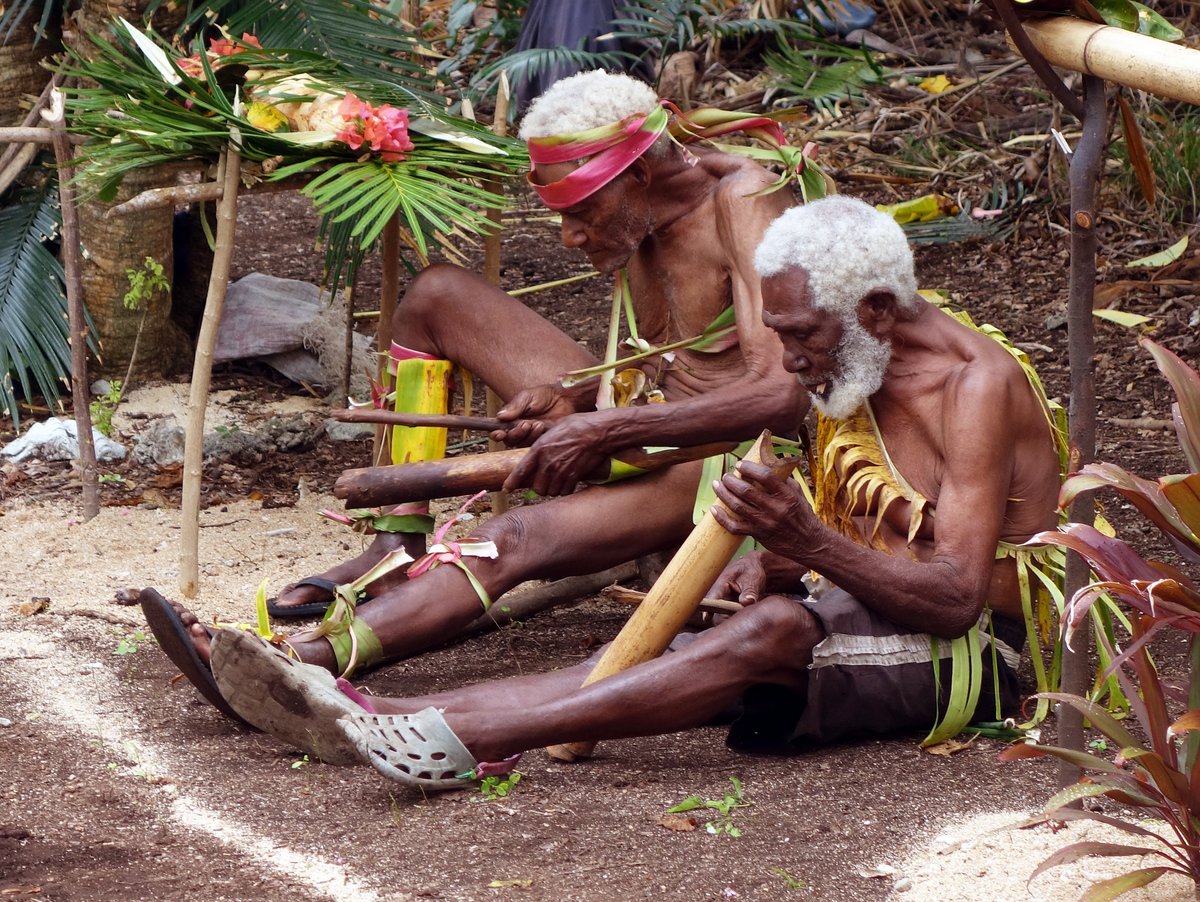
The dance is performed only by men and the local ladies are not allowed to even see the performance (female tourists are exempt from this restriction). In addition to their smol nambas, the men wear ankle bracelets made from nuts called Navake, which rattle as they dance. The dances all enact traditional stories including pig hunting, the flight of a hornet and even child birth. Along with the rhythmical drumming on traditional bamboo instruments, it was interesting and enjoyable.
The guys obviously enjoyed the whole thing and were keen to know if we enjoyed it. It seems like they’ve only recently started to re-perform these kastom dances and there were three old guys who played the drums and I guess are teaching them the traditions. It was a fun half an hour for only $20US each.
After the dancing, we went for a walk with “Caduceus” to one of the other villages called “Pescara”. While we were there, Liz, who’s a doctor, was asked to look at an old man’s foot which had a horrible looking infection. While Liz was in the hut, I had chance to stand and look around without anyone talking to me (for once) and I was struck by the simple and primitive life in these islands.
Most people were walking around in bare feet and all were dressed in worn out clothes - the men in tattered shorts and t-shirts and ladies in their Mother Hubbard dresses. Women were carrying buckets to the well to lift water using a hooked pole; men were repairing the thatched roof of a traditional hut and two ladies were sat on the earth next to their open fire making laplap. It’s all quite humbling.
Liz and Martin invited us over to Caduceus for sunset cocktails.
10 June 2015 Uliveo Island, Maskelyne Islands
We had horrible weather with rain showers passing through, so we lurked around on board. I caught up with editing photographs and the website, while Glenys read up on places to visit over the next month.
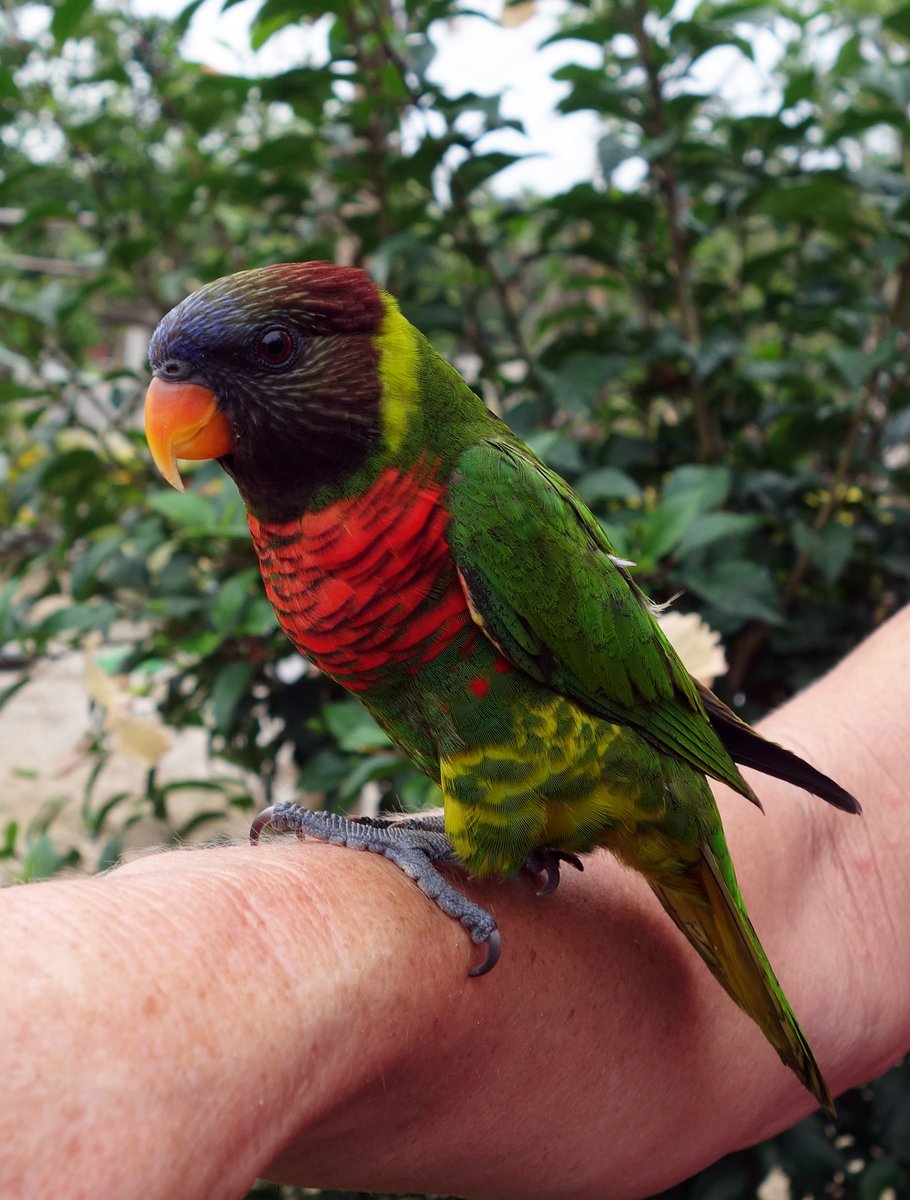
In the afternoon, we went for a walk. Glenys bought some local beans which were a strange shape like a star fruit in cross-section. We came across a Parakeet which one of the villagers has tamed, we've caught glimpses of them flying noisily overhead, so it was great to see one up close - such stunning colours. I gave some printed photographs to the two old guys who were the band at the Kastom dancing. They loved them. One guy disappeared into his wooden hut and brought out a beaten up photo album containing twenty or so photos of his family and insisted on telling me about every photograph - all of his three sons now live abroad. The other guy turned out to be the oldest guy on the island - a mere 93 years old.
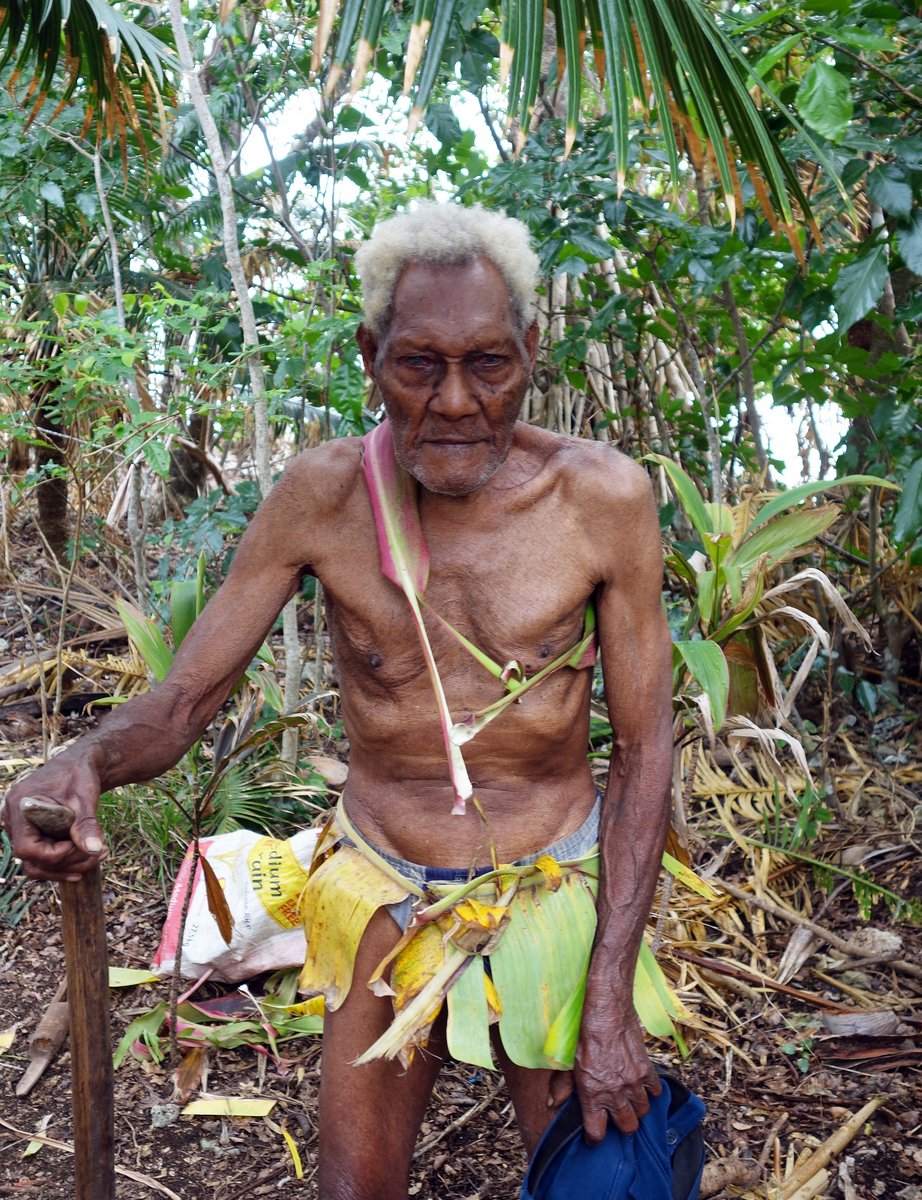
There are three villages on the island each with 500 people, so there’s quite a population here. In between the villages is extensive bush containing coconut trees and the villager’s gardens, with pleasant dirt footpaths joining everything. We spent an enjoyable two hours walking around and chatting to people.
We invited “Caduceus” over for a beer or two.
11 June 2015 Uliveo Island to Port Sandwich, Malekula
It was a miserable overcast day with rain showers, but we decided to head off towards Banam Bay on the east coast of Malekula. High tide was at midday, so we hung around until eleven o’clock before tackling the sand bar out of the anchorage. The minimum depth that we saw was 3.8 metres.
There wasn’t much wind so we motor sailed out of the Maskelyns and then tried to sail for a couple of hours, but with an average speed of 2.8 knots and horribly sloppy seas, we grew tired of the crashing and banging of the sails and went back to motoring.
The swell was coming from the east and I became worried that the anchorage at Banam Bay might be rolly, so we cut our passage short and went into Port Sandwich, which is a long deep bay. We went three miles up the bay and anchored in an isolated anchorage near a wrecked ship on the west side of the bay. It was so peaceful, being surrounded by jungle and coconut trees, with one small hut just visible on the shore.
We managed to catch three small bonito on the way, so Glenys made Poisson Cru for dinner - fabulous.