
20 October 2016 Kanchanaburi, Thailand
We were picked up after breakfast and taken to Elephants World for a two day stay. This is a sanctuary for old, disabled, and abused elephants. The refuge started with 3 elephants eight years ago and now has 25. The non-profit organisation has a tourist program that doesn’t impact on the elephants having no rides or shows, just an opportunity to observe and interact with the animals. It’s a nice place.

Each elephant has a Mahout , who traditionally comes from a village on the Burmese-Thai border. The Mahout looks after one elephant, driving it as required and looking after its health & well-being. Historically, Mahouts bonded with elephants for tens of years, but now-a-days they tend to be young men who move on for better job prospects.

For our first day, we were put in a group with 40 other visitors. After a safety briefing, “Elephants are huge and unpredictable”, we were given big baskets of watermelons and bananas and allowed to feed about 15 elephants, who were all lined up and eagerly waiting. It’s amazing how dextrous and strong their trunks are.
We then watched a group of elephants bathing in the river and being cleaned by their Mahouts, which looked like fun. After half an hour, the staff marched us off in smaller groups to help prepare food for the elephants. Our group was tasked with making a huge pot of sticky rice for three very old elephants, who have lost their teeth and are unable to eat normal food.
After lunch, we watched a couple of short documentary films, watched the elephants bathing in a watering hole and helped with some more food preparation. The highlight of the day was going down to the river and helping to wash a handful of elephants. It was great fun getting wet, splashing about and scrubbing the elephants with a long brush – they seemed to enjoy it too. One elephant was reluctant to join the mass of tourists and sprayed Glenys with water when she tried to approach it.


The day was well organised. All 40 people had time to watch elephant behaviour and get close enough to interact with the huge gentle animals.
The Mahouts are interesting to watch. They carry a Bull Hook , which they use to guide the elephant. It’s a vicious-looking metal curved hook on the end of a short stick, but is actually quite blunt. I found an interesting online “Elephant Care Manual” produced by the United Nations in 2005, which has a very colonial manner: (http://www.fao.org/docrep/008/ae943e/ae943e00.htm)

The bull hook is the mahout’s most important tool. It should be with him at all times when he is with the elephant, and he should know how to use it in such a way as to not injure the elephant. Beginning mahouts should be repeatedly told that the real purpose of the hook is not to cause pain but rather to apply strong, clear pressure to very particular control points that the elephant has been trained to react to (stop, turn left, turn right, kneel, stand still, etc.). The hook also extends the mahout’s reach - like doubling the length of his arm.
When the day-tourists departed, Glenys and I walked with one of the mahouts to take an elephant up into the hillside near the sanctuary, where the elephant was to spend the night.

Before we left the sanctuary, the mahout attached a very strong chain to the elephant’s foot with a shackle, signalling the elephant to carefully lift her foot to make this easier. The mahout draped the 25 metre chain over the elephant's neck and off we wombled up a steep narrow path. The elephant seemed quite pleased with her night resting spot, chained to a strong tree, but surrounded by tasty young bamboo for that essential night time snack.
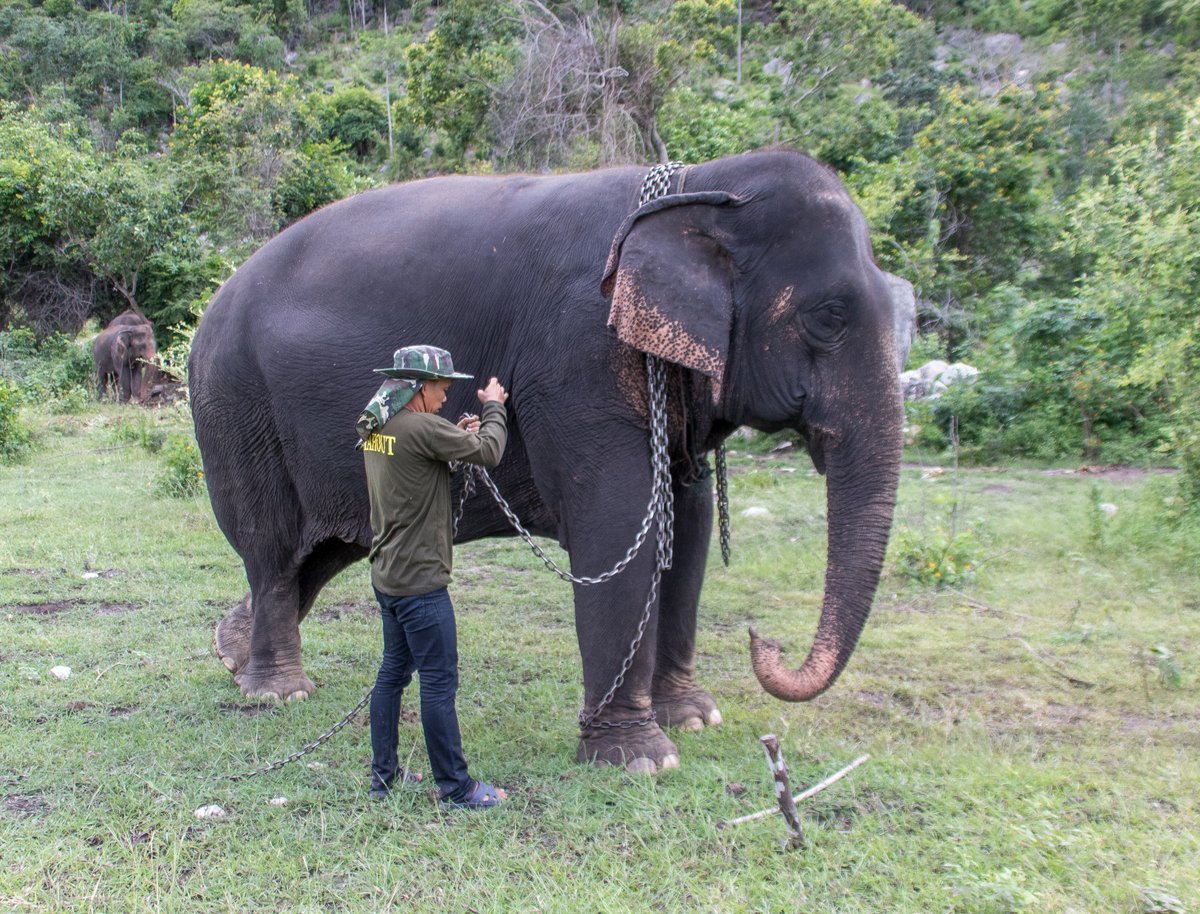
Back at the centre, we had dinner at 18:00, a couple of cold beers, watched a documentary on elephants and were in bed by 20:30.
21 October 2016 Kanchanaburi, Thailand
After breakfast, we walked out with some of the mahouts to fetch two elephants from their night resting place. A group of ten elephants were brought near to the sanctuary buildings, where piles of pineapple plant leaves had been set out. The elephants soon split themselves into smaller groups to eat breakfast with their friends. Glenys and I were able to walk among the elephants for half an hour, chatting to the mahouts and the volunteer assigned to us.
Two of the mahouts led two elephants and us through some bush to the river. We then had a magical hour feeding the elephants and washing them in the river. It was a lovely spot, isolated from the rest of the activity in the sanctuary and we could imagine that we were alone in the jungle with our own elephants – amazing.
We walked back to our cabin, had a shower and then two ladies turned up to give us a one hour Thai massage, which was excruciating at times, but we felt very relaxed after the torture was over.

After lunch, we jumped into a songthaew and, donning buoyancy aids, we jumped into the River Quai. There’s a dam up stream and every afternoon they release a load of water, which raises the level of the river and creates a strong current. We had a very peaceful hour floating several miles down the river.
Back at the sanctuary, we spent the remainder of the afternoon joining the other tourist observing the elephants being washed in the river and then fed. It was a fabulous two days and very thoughtfully organised.
Late in the afternoon, a mini bus dropped up off at the Good Times Resort in Kanchanaburi, where we collapsed and had dinner at the hotel, sitting by the river.
22 October 2016 Kanchanaburi to Bangkok, Thailand
After another big, egg & bacon breakfast, we loaded our rapidly expanding stomachs onto a tuk-tuk, which dropped us off at the Kanchanaburi bus station. We bought tickets for one of the First Class air-conditioned coaches and then had to walk 400 metres to where the bus was parked outside the bus station – confused? So were we.
The bus trip was okay with reasonably functioning air conditioning, ripped false leather seats and a grumpy driver. We were a little more confused when the bus went past the southern Bangkok Bus Station and headed towards the city centre, but that was okay because our taxi fare to the hotel would be less. After sitting in a traffic jam for 20 minutes, 95% of the people on the bus got off on the side of the road, but we were told (in Thai) to stay on the bus.

The bus then did a u-turn and took us back to the bus station five miles further out of town. Confused? No problem, this is Southeast Asia. At the bus station, we grabbed a taxi, which all went swimmingly well until a couple of miles from the hotel, the driver wanted to know (in Thai) where the hotel was – not a good sign. Fortunately, we had bought a SIM card for our tablet and we were able to guide him using Google Maps.
After dropping our bags in the hotel room, we stepped out for a look around the area. We shared a deep fried omelette-thing for lunch, which we bought from a street stall – it was okay, but contained a week’s allowance of saturated fat. By this time it was too late to go very far, so we walked to the Bangkok Shell Museum, which was very good with a fabulous collection of shells. All of the exhibits are beautifully laid out with good descriptions of all the various families of sea shells.
In the evening, we went to a nearby restaurant called Queen of Curries, which specialises in Thai curries. It’s a small restaurant catering for tourists asking how hot you want the curry. It was very good.
23 October 2016 Bangkok, Thailand
Glenys wanted to go to Ko Kret, which is an island in an oxbow bend in the Chao Phraya River. It has one of Thailand’s oldest settlements of Mon people, who were a dominant tribe in central Thailand and Myanmar between the 6th and 10th centuries AD. It’s supposed to be a peaceful place to spend a day, but the river boat people told us that the river is flooded to such an extent that we can’t go there.
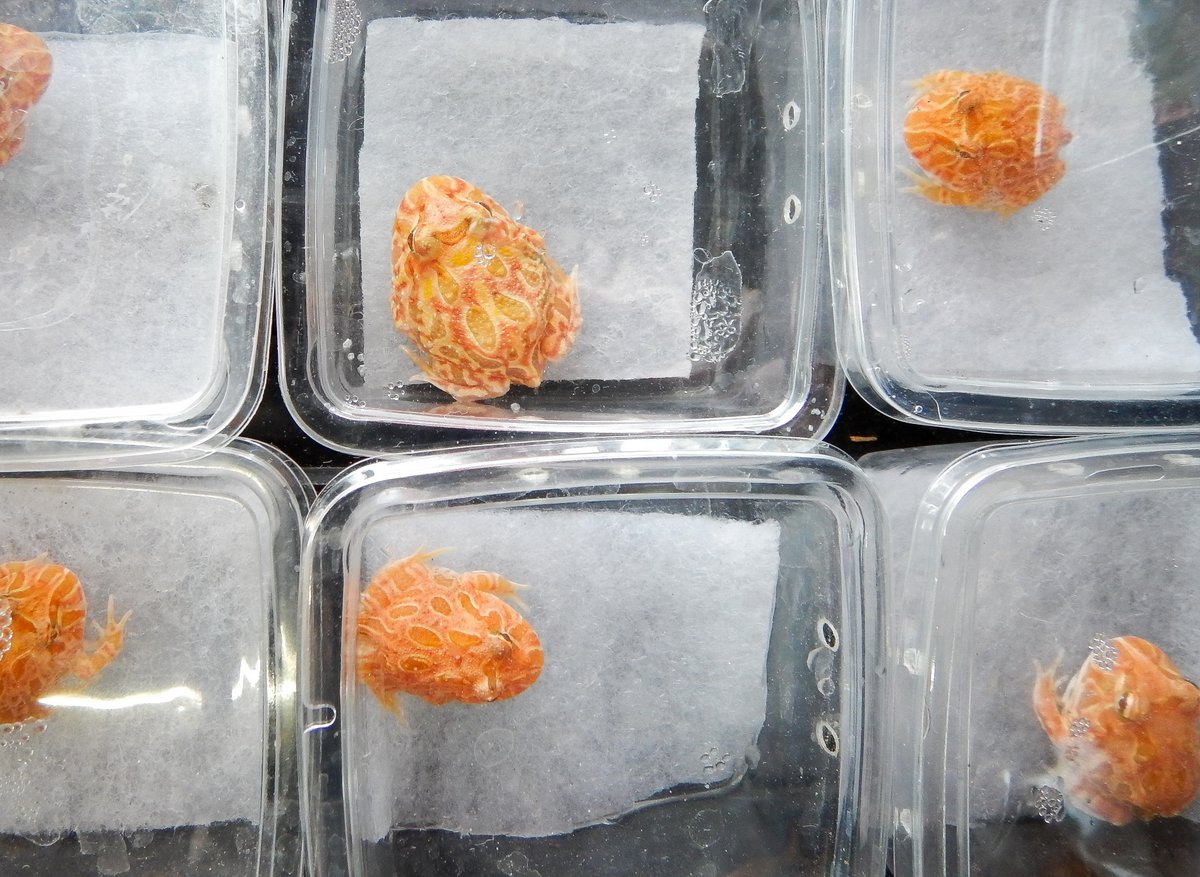
Instead, we took the sky-train to the Chatuchak Weekend Market, which is one of the largest markets in the world. It’s so big that they have a map of the market, which is organised in sections selling various types of goods. We headed for the animal section first where you can buy a huge range of animals from Mongoose to Chameleons and Stingrays to Cobras. The tropical fish section is incredible with some fabulous sea water tanks containing soft corals and a plethora of fish.
The rest of the market consists of thousands of small stalls selling clothes, carvings, musical instruments, shoes, etc, etc. After an hour, I’d lost the will to live, so we walked to the food market, which is across a major road, where we had a great roast duck and rice meal in their food court.
One of the major TV stations in Bangkok hosts a Thai Boxing program every Sunday afternoon and it’s free to go to the stadium where they film the program. It’s about a mile from the Chatuchak Market, so we grabbed a taxi, but when we arrived, we found that they weren’t running the event out of respect for the King’s death – I was gutted!
Glenys left me sulking in the park next to the Chatuchak Market, where I sat under a tree reading my book, while she rushed back for a hour’s shopping without me slowing her down. Back at the hotel, we chilled out for a while before going out for a meal in a nearby restaurant.