
1 October 2013 Shelter Bay Marina, Panama
Only two days to go now. I walked to the marina office and paid for 120 gallons of diesel – it costs $4.75 per gallon here and they make you pay upfront. I wanted to completely fill the tank, so I had to pay for more than I need and they’ll give me a credit for the unused balance when I've filled up – very strange.
Before going over to the fuel dock, I topped up my tank with some diesel that has been standing around in a jerry jug on deck for over a year. It looked a bit dark as I was pouring it into my filtered funnel, so I left a litre or so in the bottom of the jerry can. I shook it up and the remainder turned very black – I obviously have some serious sludge in the bottom and need to wash out the container before I refill it. Fortunately, I’ve recently bought two new yellow containers, which I filled up at the fuel barge.
I did a few jobs in the afternoon and continued to load software onto my laptop and letting it upgrade itself and reboot endless times. Glenys did another two loads of laundry including the tedious job of removing all of our curtains. Later, while she was finishing sewing the back panel for the bimini, I helped her by replacing the 14 curtains – hundreds of little plastic clips had to be inserted - what a tedious job, perhaps we should buy some blinds.
We ran the generator and water maker for an hour to test the generator and to make more water ready for the Canal Transit. Even though we can have as much free water as we want here in the marina, it doesn't taste very nice and we don’t want to pollute our tanks.
2 October 2013 Shelter Bay Marina, Panama
Final day before we transit. Glenys went into the shopping mall to do final provisioning, buying mostly fresh food, while I lurked down below in the cool cabin, backing up my website and finishing the chore of installing software on my new hard disk – it’s taken me five days so far, but I think that I’ve now finally got everything working.

Erick, our Canal Agent, delivered the four long shore lines and fenders. He also brought our international clearance (zarpe) to Costa Rica and told me that he’d double checked that we wouldn't be going against the side wall. We need to be at the Flats anchorage at one o'clock tomorrow and the Canal Authority Advisor should be on board at two o'clock.
In the afternoon, I spent a couple of hours tidying up the deck, sorting out the ropes and putting the fenders in place. The fenders are big 2 foot diameter balls which look much, much better than the old tyres that the other agents usually provide. However, I still have to “tip” the launch driver with $12 at Balboa Yacht Club when we drop them off when we've gone through the Canal.
Glenys spent the afternoon stowing even more provisions and getting ready to have three extra people on board overnight. Every bit of spare locker space is packed with food, and there are cases of beer and drinks in the aft heads shower.
We went to the bar for happy hour and stayed for dinner. I think that we’re ready.
3 October 2013 Shelter Bay Marina to Las Brisas, Panama
A big thunder storm went through during the night, so I had to get up twice - once to put our small electronics into the oven and again to put up the bimini side flaps when we had torrential rain. It was still raining in the morning, which was disappointing after the two nice sunny days that we’d had.
First thing in the morning, we received another email from our agent, Erick saying that the advisor wouldn't be coming on board until four o'clock, which meant that we wouldn't be going through the Gatun Lock until around six o'clock and would be mooring on the buoy in Gatun Lakes around eight o'clock, which was a pity.
Glenys cooked a big pan of Cassoulet ready for dinner and I did some last minute jobs. Thankfully, it stopped raining around half past nine enabling me to do some things on deck. I was extremely paranoid about getting my solar panels damaged by the heavy monkey fists on the end of the thin heaving lines used in the locks. The panels are a nice attractive 5 foot by 5 foot flat target for the shore based line handlers and at $800 each, I don’t want them smashed. I covered them with our 2 inch thick cockpit cushions and lashed them in place. After stowing the air conditioning unit and paying the bill, we were ready to go.

Our three line handlers (Walter & Jacqui from “Jean Marie” and Joachim from “Vela”) arrived at midday and we were soon motoring out of the marina, with other cruisers shouting “Good Luck” as we went past, which was a nice send off. On the way, I called “Cristobal Signal Station” to tell them that we were heading to the The Flats anchorage ready to pick up an Advisor for a Canal Transit – exciting or what?
We anchored on time, just before one o’clock, but when I called “Cristobal Signal Station” to tell them that we’d arrived, they informed us that our Advisor would now be coming aboard at half past five. Bummer – we’d be doing the whole transit in the dark.
I ran through the canal transit procedures with my crew and showed them how to set up and handle the 150 foot long shore lines. In order to go through the canal, each yacht must have four of these one inch thick shore-lines, adequate fenders and four crew to act as line-handlers – hence having our three friends on board.
The sky grew darker and darker as the afternoon progressed and it absolutely threw it down with huge flashes of lightning and loud rolling thunder. All we could do was to cower under the bimini with the side flaps up - chatting and drinking cups of tea, waiting and hoping that the rain would stop.
Our Advisor, William arrived on a Canal Authority launch and stepped on board. The launches are large powerful craft, but they handle them beautifully, charging up and stopping with their bow about one foot from your topsides, then backing off as soon as the advisor is aboard.
William told us that we’d be transiting in an hour or so and would be rafting up with a large 80 foot catamaran called “Cat Bird”, which was also anchored in the Flats next to us. Being much larger than us and having professional line handlers on board meant that we’d simply tie alongside them and they would handle the four shore lines – sounded good to me. We both upped anchor at about half past six and motored slowly in the dark and the pouring rain towards the lock.
We tied up together an hour later, just outside the lock. “Cat Bird” didn’t have a lot of cleats available and the crew didn’t seem to know what the hell they were doing, but eventually we were tied securely together with two bow lines and two springs. We were a little further back than I would have liked and I was worried that the aft line would be too close to our solar panels & antennas on the arch, especially when the water level dropped, but by then it was too late.
At eight o’clock, we followed a huge, 180 metre long ship called the “Atlantic Pearl” into the lock, which along with its tug left barely enough room for our raft. The two shore line handlers on our side threw their thin 1/4" diameter "messenger" lines, weighted with monkey fists onto Alba. We then passed the lines to the line handlers on “Cat Bird” – it was a major gymnastic effort to pass it around the arch and dinghy, but I managed. After that it was simply a matter of watching the process with the messenger lines being tied onto the big shore lines, which were hauled up by the shore line handlers and dropped over bollards.

The water was very turbulent when it was pouring into the chamber through underwater gates and we were slewing around a little, so I kept a very careful watch on the stern line which was only six feet or so from our arch. Once the gates were open and the “Atlantic Pearl” was clear, our raft’s shorelines were dropped into the water and retrieved by “Cat Bird’s” line handlers – no work for us at all. The shore line handlers walked along the dock holding the messenger lines and the process was repeated in the other two chambers.
It continued raining heavily for the 1½ hour transit through the three chambers, but it was warm rain and interesting to see it all happening in the dark. Once clear of the third chamber, we dropped our lines with “Cat Bird” and motored around the corner to the Gatun Lake Mooring, arriving at quarter past ten. It was difficult see in the dark especially since there was a large tug anchored close with lots of blazing lights, ruining our night vision. There was a bit of confusion by my crew on how to moor on the large red rubber-covered mooring - we had to go alongside with just a bow and stern line, but they thought that we were just going to hang off it. It was my fault because my instructions weren't clear enough. I’m not used to having crew – Glenys and I work mostly by monosyllabic words and telepathy.
Once settled, we cracked open the cold beers and Glenys produced her Cassoulet with baguettes, which was consumed with gusto. A box of wine then appeared and we told sea-faring shaggy dog stories for an hour before I suggested that we go to bed because it was after midnight and I was seriously knackered…
4 October 2013 Shelter Bay Marina to Las Brisas, Panama
We were all up at quarter to six. Today’s advisor, Roy, arrived promptly at six o’clock and ten minutes later, we were on our way, motoring the twenty eight miles to the Pedro Miguel Locks. Our scheduled time to transit these locks was half past eleven, so we pootled along at 5 to 6 knots following the edge of the shipping lane. Roy was a nice guy, spoke good English and was a mine of information about the Panama Canal.

The Gatun Lake was formed by damming the Chagres River when the Canal was built in the early 1900s. The original wooded valley was flooded forming a lake of 165 square miles with numerous islands that used to be the tops of the hills. Unfortunately, no private boats are allowed to explore the area and it’s not permitted to anchor overnight except as part of a transit because the bed of the lake is very treacherous with the remains of trees and buildings.
This is a shame because it looks beautiful and has a huge variety of wildlife (including crocodiles). The whole middle section of the Gatun Lake is now a nature reserve and we motored past the world-famous Smithsonian Institute which does research into tropical medicine and wildlife.
There’s a huge amount of construction work going on at the moment - the Canal Authority is creating new, wider locks at both ends of the canal allowing larger ships to transit, aiming to double the capacity of the Panama Canal by 2015. They are also widening and deepening the existing ship’s channel and we passed some interesting machinery being used, especially in the Gaillard Cut.
When the Canal was originally constructed, the greatest barrier was the continental divide, which was solid rock rising to 110 metres above sea level at its highest point. The scale of the work was massive. Six thousand men worked in the six mile long Gaillard Cut, drilling holes and exploding a total of 27,000 tons of dynamite to break up the rock, which was then taken away by train. Today, the Gaillard Cut is being widened and deepened by drilling into the lake bed rock, using explosive to shatter the rock and huge diggers to scoop the rubble into barges.

While we were motoring along, I was bemoaning the fact that I couldn’t get my phone to access the Internet even though I’ve got a data service enabled. Roy had a look at my phone, removed the battery & SIM card, restarted the phone and the bloody thing worked. He says that his phone does the same thing and resetting it seems to do the job. I was really happy.
The plan was for us to go through the remaining locks alongside “Cat Bird” in a similar way as yesterday, but they developed a problem with one of their engines and didn’t make it to the Pedro Miguel Locks in time, so we changed to rafting alongside a tourist ship called “Atlas III” that was taking school children on a trip through the canal.
We were in the first batch of boats to go southbound and there was no large ship in the lock with us, which is amazing considering the amount of water used with each transit. Roy told us that 52 million gallons of fresh water flow from Gatun Lake to the sea on every transit of the canal. That’s about 6 million gallons of fresh water lost in every lock chamber. He also told us that the average fee for a ship to go through the Canal is a staggering $300,000 – I now think that our $1,500 fee is a bargain.
There was a bit of confusion at the Pedro Miguel locks because we were initially told to go into the left hand lock chamber, but then were told that we had to go back out and wait for a sailing boat and a small ship to come up. We must have hovered around for half an hour, gently going around in circles trying to avoid the “Atlas III”.
The transit was very painless. “Atlas III” went into the chamber first and tied up against the port wall with us following 100 feet behind. Once they were settled, we went alongside, where there was a bit of confusion because their crew weren’t ready to receive us, but it soon worked out. We only had a bow and stern line attached with no springs, so I was a little concerned that we would be moving around too much in the turbulent water, but Roy assured me that going down was much, much smoother than going up.

A large tug and another tourist ship came in behind us, the lock gates closed and we started to go down which, as Roy said, was very smooth. We chilled out with nothing to do except chat to the school children (who were fascinated by our boat) and eat the pasta that Glenys had prepared for lunch. When the lock gates opened, we dropped our lines and motored out ahead of everyone else heading for the Miraflores lock a mile away.
“Atlas III” turned off the ship’s channel to drop off their passengers and we went through the two chambers of Miraflores rafted up to another tourist ship called “Fantasia Del Mar”. It was a similar procedure going in, but this time when the lock gates in the first chamber opened, we cast off, then I had to get clear and back up while ““Fantasia Del Mar” motored off ahead of us. Backing up in the turbulent water while not hitting the tug behind us was probably the most stressful part of the whole transit – yachts don’t back up well with just a single engine.
The descent in the second chamber was painless. When the final lock gate opened, we dropped the lines and motored out into the Pacific Ocean – no going back now…
A Canal Authority launch met us under the “Bridge of the Americas” and took Roy ashore, leaving us to continue to the Balboa Yacht Club. We motored into the mooring field and hovered about while we waited for the club launch to come out and meet us. It’s a horrible mooring field, badly affected by the huge wakes from passing ships and tugs – the yachts moored there were pitching and rolling 20 degrees or more. I wouldn’t like to stay there.
We only had to wait five minutes for the tender to appear. It was a challenge to load the four heavy mooring ropes, eight fenders and our three friends onto the madly pitching tender. I hadn’t put enough fenders down and was fully occupied jamming a hand-held fender down to stop the damn thing scratching our top sides. It was a relief to cast off the tender, but sad to see our friends disappearing off, leaving us alone in the big bad Pacific Ocean.

We motored along the ship’s channel and around the two islands at the end of the Amador Causeway and into the Las Brisas anchorage. There’s over fifty boats anchored or moored here, but we soon found a big space to drop our anchor making sure that we had enough water to compensate for the five metre tides – we’re going to have to adjust to having such big tides after the small one foot tides in the Caribbean Sea.
We were settled by four o’clock and it didn’t take long before we cracked open a nice cold beer.
I've produced a Google Earth trip showing our route through the Panama Canal.
5 October 2013 Las Brisas, Panama
We had a chill out day. I managed to get a good internet connection provided free by the Panama City authority, so I caught up on a few emails. Some of our friends had managed to capture some pictures of us in the Miraflores Lock taken from the webcam, which is nice. I spent the rest of the day reading, getting this diary up to date and sorting through the hundreds of photos that we’d taken on the Canal Transit.
Glenys read up on the Darien province of Panama which is only about 80 miles away and is a region of rivers stretching into dense jungle. The Pan-American Highway stretches from Alaska to the tip of South American apart from a hundred or so miles through the remote Darien area. Columbia is south of the Darien region and Panama has resisted all requests to build a road joining the two countries because of security concerns. The impenetrable jungle acts as a natural barrier preventing drug runners and illegal immigrants from entering Panama. If we travel to this region we will be going into a remote place and it would be better if we went with another yacht so that we had someone to assist us if we develop engine problems or run aground.
In the evening, we were in invited by Dominique and Dominique to drinks on “Kea”. Another French couple, Luke and Marie also came and we had a very pleasant evening speaking a mixture of English and French. I’m sure that the quality of my French is directly proportional to the amount of rum that I’ve consumed. I can’t remember how we got onto the subject, but did you know that the French for “wand” is “baguette magique”?

We first met “Kea” in Shelter Bay Marina back in July, when they were repairing the hull of their catamaran after ending up on a reef in Porvenir when their anchor dragged in a sixty knot squall. They went through the Panama Canal and arrived in Las Brisas about six weeks ago. Within a couple of days they were hit by lightning, which blew out some of their electronics. Incredibly, a few days later they were hit by lightning AGAIN, which destroyed all the rest of their electronics and electrical systems. Unlucky or what?
6 October 2013 Las Brisas, Panama
We went ashore for a walk around the local area. The dinghy dock is amazing. It’s a floating platform (in a very poor state of repair) which is close to shore near some old concrete steps, but there’s no gangway between the dinghy dock and the steps. The tidal range here is five metres, so to get people ashore, the local cruising community has installed a small plastic boat, which is connected to the dock and the steps by a rope.
To get ashore, you have to step into the very tippy boat one at a time and pull yourself to the shore where you gingerly climb out onto the slimy steps. We’ve been told that climbing the concrete steps is the most dangerous part especially on a falling tide when the slime covering them is at its worst. It was no problem for us both going ashore and returning, but I wouldn’t like to be carrying lots of shopping backwards and forwards.
There are three small islands linked to the Panama City by a long causeway and the place is a weekend destination for the locals with lots of restaurants plus a couple of big marinas, some hotels and a duty free centre. We went to a small park run by the Smithsonian. It only costs $5 each and has some pleasant paths through the grounds and a few small sea-life tanks. I had heard that there are some wild sloths in the park, but we still haven’t seen one up close.
We wandered around the area for an hour and ended up in the “Hacienda Columbian” having a Columbian platter for lunch. We were glad that we only had one between two because it was huge with beef, minced pork, belly pork, chorizo sausage, fried egg, rice, plantains, patacones, yam and red beans. Washed down with a couple of cold beers, it was a lovely Sunday lunch.
We spent the rest of the afternoon back on Alba, reading and sleeping off the Balboas.
7 October 2013 Las Brisas, Panama
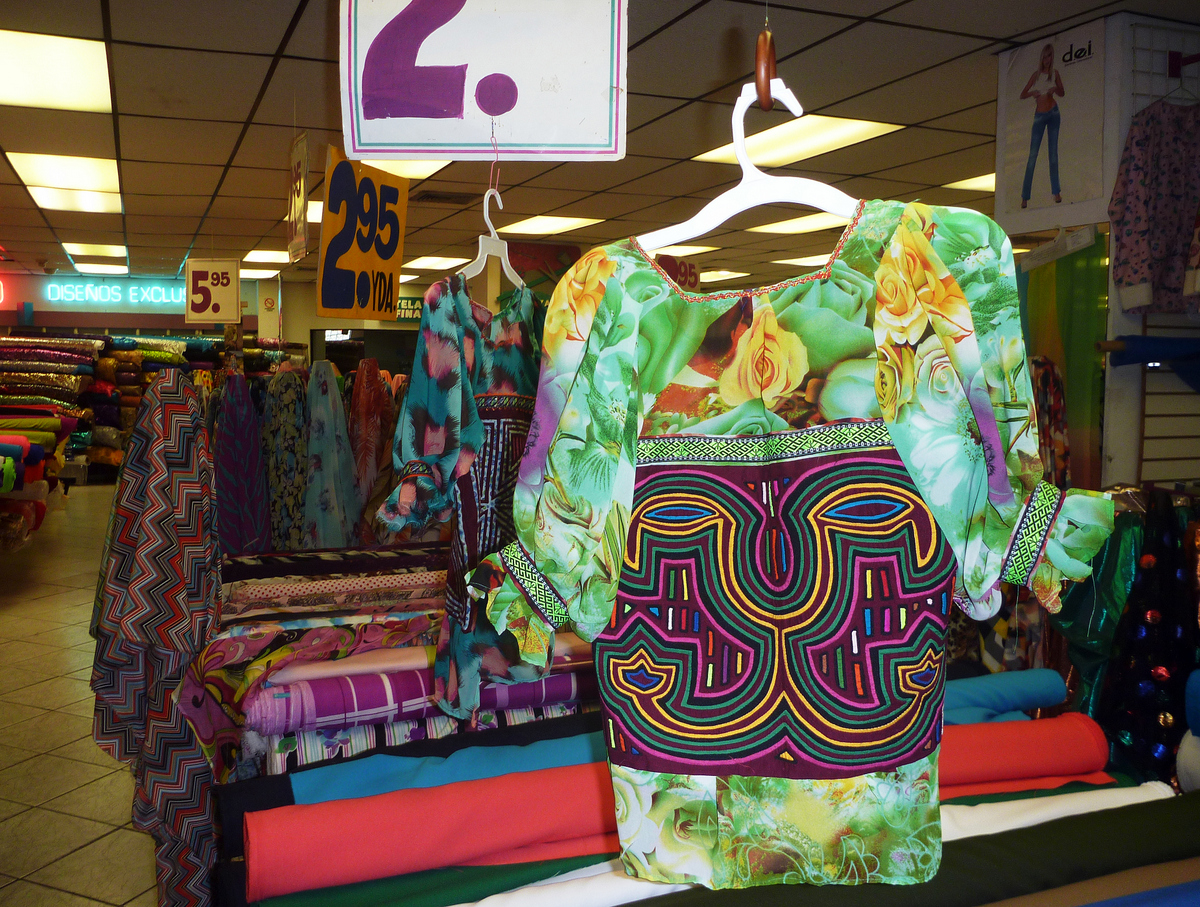
We took a taxi to the Cinco de Mayo area of Panama City and walked the length of the pedestrian shopping street. There are lots of Chinese stores selling electronics, household goods, clothes, etc., which is very reminiscent of Port of Spain in Trinidad. Our main focus was a shop called “Pico Pico”, which is a fabulous fabric shop with two floors packed with bolts of cloth. Glenys bought various colours of cotton fabric so that she can make things with the ten molas that she acquired in the San Blas islands. We also bought some grey sunbrella and Velcro for various projects on the boat.

Having walked the full length of Avenide Central to a park with a bandstand and church, we returned to Avenide Balboa and went down to the Municipal Market. This long building is split into sections – dry goods, vegetables & meat. The dry goods area had a reasonable selection of spices and the vegetable section is very good. However, the meat market has plenty of strange cuts of meat and the floor was incredibly greasy – not the cleanest place that I've been to.
We continued walking down Avenide Balboa to the fish market hoping to buy some shrimp and have lunch there, which we've heard is fantastic. Just our luck, the whole market was closed for fumigation, so we jumped into a cab and headed over to Transistmica area of town.
Our taxi driver was a maniac, swerving from lane to lane and trying to beat the traffic. As we approached the posh banking area of town, we got stuck in a traffic jam and he decided to take a side road, which was also jammed solid. He then decided to overtake a long line of stationary traffic and shot down the wrong side of the narrow, single lane street. Unfortunately, a lady in a nice, shiny car decided to do a u-turn and we ploughed into her front wing.
There was lots of shouting and screaming in rapid Spanish while they both blamed each other. We sat there for a couple of minutes watching the spectacle, then climbed out, paid the guy $3 and walked up the road going faster than the grid locked traffic. The taxi driver had given us some vague directions, but we made a few wrong turns and ended up walking for 45 minutes until we found the Transistmica area.
We had lunch in a small local restaurant, which had good wholesome food. We had a big bowl of soup followed by pork with rice & plantains for only $3.50. After lunch, we wandered around the various stores here – Abernathys (a big chandlers), two hardware stores and Riba Smith, which is an upmarket supermarket that all the Americans rave about. We’d been told that you can get all sorts of hard-to-find items there, but they didn't have mint sauce or Heinz salad cream, which Glenys is craving.
It was easy to pick up a taxi outside the supermarket and we were soon back on the boat, having survived the Las Brisas dinghy dock.
8 October 2013 Las Brisas, Panama
I checked into the morning net on VHF Channel 81 at eight o‘clock. In the “Treasures Of The Bilge” section, I asked if anyone had a short length of 1¼“ stainless steel tube because we have a slight leak on a joint in the sea water intake hose on the engine. John on “Second Star” does some welding work and told me that I could buy it from a place in Panama City, but I couldn’t be bothered – I’ll wait until we get to Ecuador.
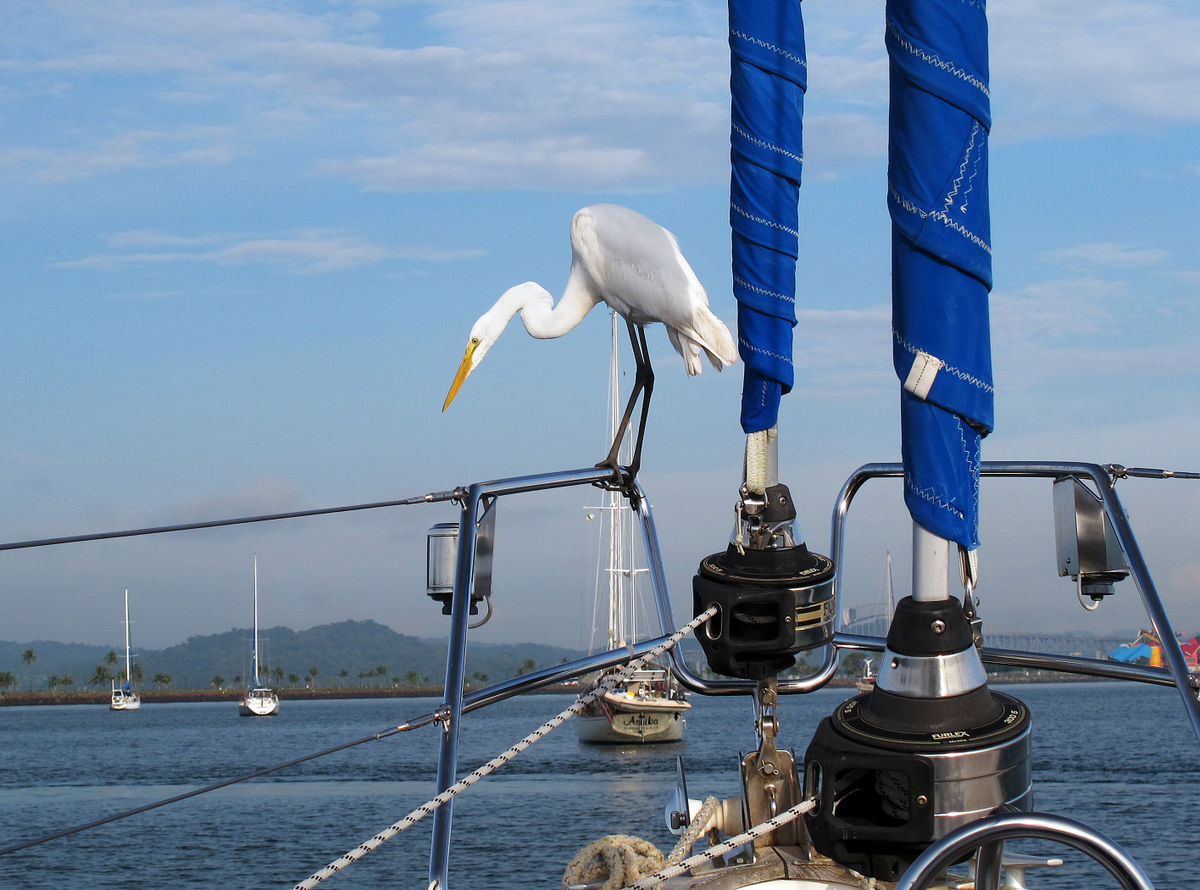
We had a pottering about day, tidying up ready to sail to Las Perlas tomorrow. I managed to get my phone to work as a modem for my laptop, so I’m now able to receive emails and access the internet as long as I have a phone connection – I’m a very happy bunny. After getting some petrol from the marina, I tidied up the deck and put the dinghy up on the davits with springs to stop it moving around while we’re (hopefully) sailing tomorrow.
In the afternoon, I swapped the battery chargers around, so that our main battery charger is wired in again. I ran the water maker for an hour to test it all and it looks good.
We invited Paul & Judy from “Grace” for sunset drinks. They are heading to Las Perlas in a couple of days and planning to go onto the Darien rivers, so we’re planning to go with them possibly with some other boats that are already in Las Perlas.
9 October 2013 Las Brisas, Panama
I woke up at three o’clock in the morning with my subconscious mind telling me that I need to sort out the leak on our sea water intake pipe. The existing bit of stainless steel tube is badly corroded and if it fails completely, we’d effectively have a 1¼“ hole in the bottom of the boat – mucho agua coming into the bilges!
On the morning net, I found that the stainless steel supplier is at the other side of town and I couldn't get a firm address out of anyone, so it would be an expensive trip in a taxi wandering around trying to find the place. I decided to have a look at the bits and pieces of spares that I keep on-board and found a perfect piece of 34mm diameter PVC tube that has a really thick 5mm wall and fitted tightly into the hose. I reckon that this is a better solution than using stainless steel again – the PVC won’t corrode and the inlet pipe doesn't get hot at all. An hour later, I had it fitted – another job off the list.
It was around ten o’clock by the time that I’d finished and the weather was horrible with low clouds and rain, so we decided to stay here for another day. It’s forty miles to Las Perlas and we’d rather leave early in the morning.
I had a go at fixing our media player, which is not reading one of our 2TB hard disk drives and refuses to output a video signal through the HDMI connector. Despite taking it all to bits and cleaning it with alcohol and WD40, it still refuses to play ball. I even defragmented the hard disk drive to no avail. I guess that I’ll have to buy another one – they only cost a $100, but how do I get my hands on one now?
Glenys found a leak in the toilet – the holding tank was half full and the contents were leaking out and flowing down behind the toilet. After ten minutes of investigation, I think that there is a leaking weld in the stainless steel tank. The stinking effluent has been dribbling down the tank down a pipe into the locker behind the heads. There’s nothing I can do about it until we get to Ecuador, so I emptied and flushed out the holding tank and put it out of commission. Glenys then took on the lovely job of cleaning up the mess.
While Glenys was cleaning the front heads, she found that the front heads shower pump wasn't draining the shower tray, so I had to look at that. I found that the pump works quite well but it wasn't priming properly. I got it working, but I’ll have to keep an eye on it.
In the evening, we watched the James Bond film “Quantum of Solace” which was filmed in Colon - the action-packed boat chase was actually filmed in Shelter Bay Marina.
10 October 2013 Las Brisas to Isla Chapera, Panama
We were up at the crack of dawn and pottered about getting ready to sail to Las Perlas. When we pulled up the anchor chain, the last ten metres and the anchor was covered in thick black mud, which took ten minutes to wash off with our sea water deck pump, so didn't actually leave until ten to seven.
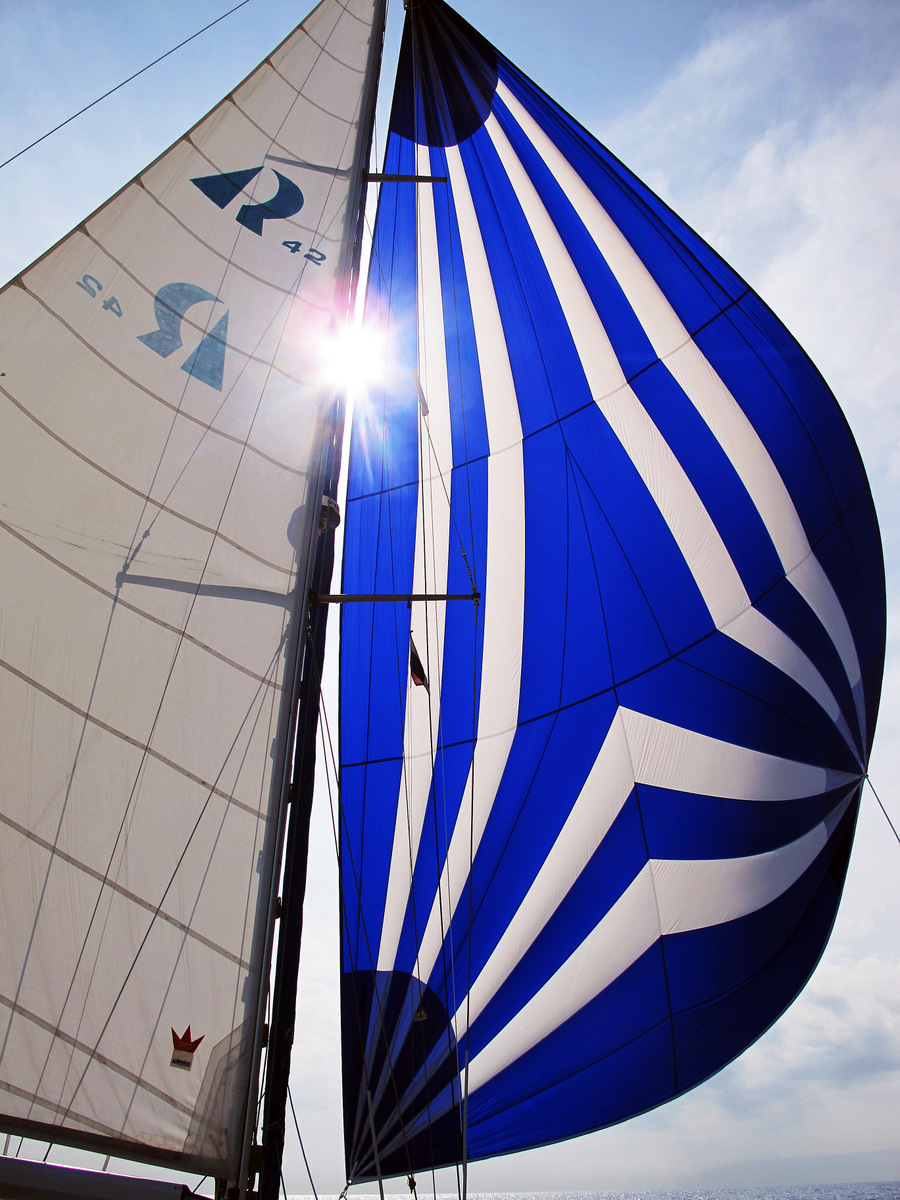
The wind was very light and from behind us, but the sea was very calm, so I dragged out our asymmetrical spinnaker. The wind was very variable and kept veering around, so I had to keep adjusting the spinnaker, which kept collapsing. After gybing it once, I had a flash of inspiration and set the sails up with the main out to port and the spinnaker out to starboard. It worked very well even without a spinnaker pole.
We had a good day’s fishing, although I lost two lures which were attached to my bird train – 60lb wire snapped straight off. I changed the line on the lure to 120lb mono filament and landed two Dorado (one 8lb and a smaller 4lb). Both fish were hooked on a squid towed behind the bird train - they ignored the surface lure on my fishing rod. There are certainly more fish in the Pacific than in the Caribbean – we actually saw a Dorado in the water streaking towards us, which we’ve never seen before.

As we sailed past the northern islands of Las Perlas, a cheeky Pelican kept trying to hitch a ride. It tried several times to land on the foredeck, but kept mistiming it and landing in the water. It was finally successful at landing on our solar panels, a nice, flat, 5ft * 5ft platform. I had to use a boat hook to “persuade” it to go away. We've had small birds land on deck before, but never a bloody huge pelican.

The wind picked up as we sailed down the eastern side of the islands, so we dropped the spinnaker and sailed on a nice reach up to the approach to the anchorage. We anchored off a beach on Isla Chapera near one other boat called “Armagh”. It’s a pleasant anchorage in a channel between two islands and the holding is very good in the sandy bottom. It’s sheltered from winds from the west, but exposed to winds from the east.
“Grace” arrived a couple of hours after us and we all ended up on “Armagh” having drinks with Steve & Patti. They’ve been cruising with “Grace” since they left the Sea of Cortez in Mexico six months ago.
11 October 2013 Isla Chapera to Isla Espiritu Santo, Panama
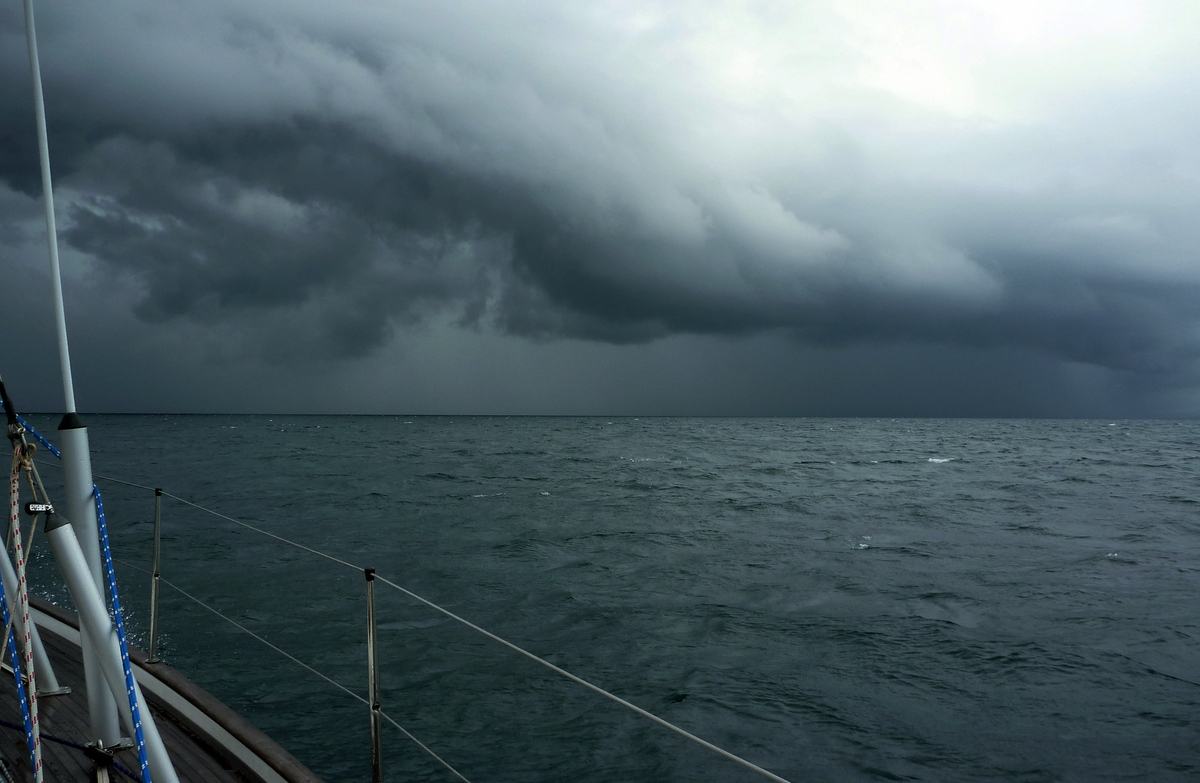
It was a bouncy night with winds coming in from the south-east. We were hoping that the wind would change, but it just got stronger. By half past ten, we had 2 to 3 foot waves pushing us towards the beach and some nasty looking black clouds upwind. It was time to go.
I had a look at the chart and decided that the nearest well-protected anchorage was Isla Espiritu Santo about 15 miles away. Unfortunately, it was directly upwind, but we had to get out. It took us ten minutes to tidy up and tell “Grace” and “Armagh” that we were leaving. I got drenched as I stood on the fore deck pulling up the anchor because the waves were now causing us to pitch heavily. Glenys made sure that she used plenty of engine power as we motored away from the nasty looking waves pounding the lee-shore.
We were now motoring directly into a 20 knot wind from the south-east. The big waves were stopping us as we crashed into them, reducing our forward speed to three knots, so we put up our sails and headed into deeper water on starboard tack. It’s amazing how much better the motion and speed is when we sail - we were soon doing six knots under sail (albeit in the wrong direction.)
The weather system hit us with driving rain, so we hunkered down and continued heading out to sea. Fifteen minutes later, the wind started to veer, so we tacked and headed more easterly towards Espiritu Santo. For the next three hours, we had lots of rain and the wind gradually died down as the weather system went over us – so we ended up motoring most of the way.
I saw a large number of Boobies diving into the water, so I put out a lure on my fishing rod. Fifteen minutes later, the reel screamed and I had a great battle for ten minutes to land a 20lb Horse Eye Jack. Glenys rustled up Fish Tortillas for lunch using some of the Dorado that we caught yesterday.

The weather was calm when we entered the anchorage at Isla Espiritu Santo. It’s a lovely place in a channel between two islands and very well protected from all directions – just what we wanted after our earlier adventures. We anchored in eight metres on a sandy bottom with very good holding.
Once settled, Glenys tidied up after our drenching while I started working on the huge Jack that I’d caught. Unfortunately, when I cut it open and started to fillet it, I found that the flesh was very, very red and laced with thick white fibres. It didn't look good to me, and I’m paranoid about ciguatera, so regrettably I decided that we shouldn't eat it. Instead, I had a fun five minutes feeding pieces to a couple of Pelicans and a Frigate Bird.
“Grace” and “Armagh” arrived half an hour after us and we invited them over for evening drinks.
12 October 2013 Isla Espiritu Santo, Panama
What a lovely peaceful night. This is a fabulous anchorage. In the morning, Chris from “Grace” spotted some whales feeding at the entrance to the anchorage, so we jumped into the dinghy to go and have a look. We found them slowly surfacing and swimming along at the other side of Isla Espiritu Santo. I think that it was a couple of big Humpback Whales, but couldn't be sure. I took loads of photos of dark blurry humps in the water from 50 metres away – they were so bad that I deleted the lot.
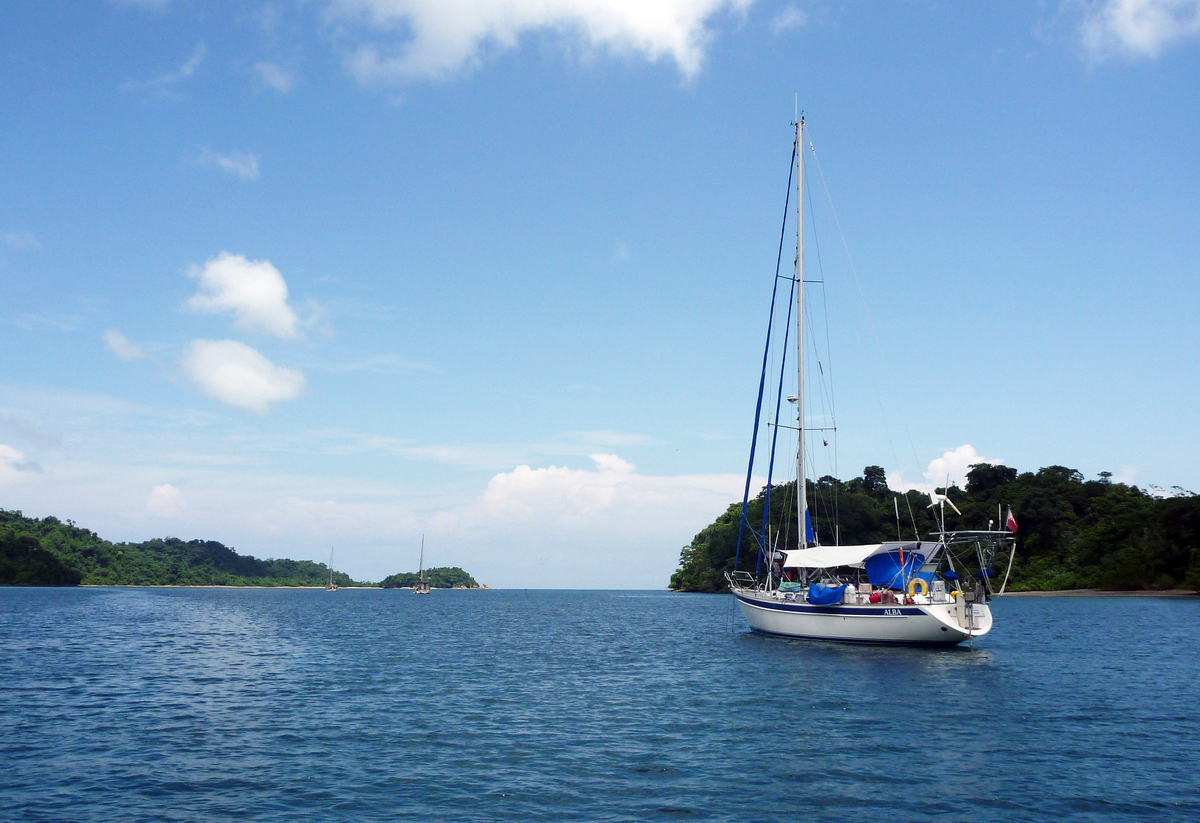
While we were out we had a motor around looking for a place to snorkel, but the visibility underwater is only about 6 feet and the bottom appeared to be just rock. However, it was a pleasant enough dinghy ride and we circumnavigating the small island - there are some stunning beaches on the sea-ward side of Isla Espiritu Santo.
In the afternoon, we worked out an itinerary for going across to the Darien region. It’s forty miles away and the tides seem to be right for us to arrive there tomorrow afternoon. Many of the rivers have shallow bars and shoaling areas, so we want to make sure that we are moving up rivers when the tide is rising. If we go aground, then the rising, four metre tide will soon lift us off. Low tide is at 1640 tomorrow, but the Rio Cucunati, where we want to go first, looks wide and at least 5 metres deep at low tide. Our plan is to leave at dawn and hopefully we’ll be at anchor late afternoon.
Andrew and Ann on “Windsong” (a couple of Brits) arrived in the anchorage and we met them on “Grace” for happy hour. They’ve been cruising in company with “Grace” for three years and are also going out to the Darien region tomorrow with “Grace”. We won’t be going to the same places as them, but will no doubt bump into them along the way somewhere. They have a small net that runs on the SSB radio at six o’clock every evening, so we should be able to keep in touch - if I can remember to turn my radio on at the correct time.
For the past four months, I've been putting up with a very painful little lump on the bottom joint of one of my fingers. It’s about the size of a grain of barley and seems to be attached to one of the tendons in my finger. When I was in the UK, I asked the doctor about it and he shrugged it off saying that it was just a little cyst and will go away. Well, the bloody little thing was getting more and more painful.
I’d heard about things called “Bible Bumps”, which are so called because they can be removed by hitting them with a bible. The weight of the bible apparently squishes the little lump. Having drunk a few beers and a couple of glasses of wine, I was feeling particularly brave this evening and decided to have a go at squishing my damn lump. Hitting it with a heavy book didn't seem very practical, so I took a big breath and squeezed it very, very hard with my fingers. It hurt like hell for about three seconds and then with a very satisfying “Phuttt!” it disappeared – magic!
13 October 2013 Isla Espiritu Santo to Rio Cucunati, Panama
We left at dawn. The sea was very calm with no wind, but our course set us heading directly into a very dark weather system. I put up the main with one reef and we motor sailed at five knots. We spotted a few slowly swimming whales a few miles from the anchorage – Humpback Whales again I guess.
This is a very productive area for fishing. By half past seven, I’d caught a nice little Tuna and a Dorado. Interestingly, both fish hit the blue & pink surface lure on my rod whereas the two Dorado that I caught the other day hit a squid lure towed behind the birds, perhaps it’s because it’s overcast today. An hour later, I caught another Tuna on my rod and discovered that the squid lure behind the birds had been snapped off again – this time with 120lb monofilament line. That’s three lures lost - I’m going to stop putting a lure on the birds until I get some strong, 200lb stainless steel wire.


We've started to pour rum into the gills of the fish, which seems to be a much cleaner way of killing fish than bashing them on the head. Both of the tuna died quietly and cleanly, but I’d gaffed the Dorado in its stomach and it caused total mayhem on the aft deck by flailing around, scattering blood and gore everywhere – it took me ages to clean it all up.
A small weather system passed over us mid-morning giving us heavy rain, but no wind – at least we had a nice refreshing shower stood on the aft deck. Just after lunch, as we approached the Golfo de San Miguel, we started to get some wind, so we gratefully turned off the engine and let out the sails. We arrived close to Isla Iguana at around two o’clock, which was a little too early to start going up the Rio Cucunati because of the tides, so we sailed over to Isla Iguana to have a look at the anchorage – it looks okay, but is very exposed to north winds.
We headed back towards the Rio Cucunati and were able to sail all the way into the river entrance before we lost the wind and had to turn the engine on again. By half past four (at low tide), we were pottering about looking for somewhere to anchor. The water depth at the first bend of the river is very deep at 10 to 20 metres and shallows very rapidly, so we gave up trying to anchor there. As we continued up the river, the depths levelled out at 5-6 metres and we were able to anchor comfortably in 4.5 metres, albeit a long way from the shore.
As we came up the river, we were invaded by hundreds of 1cm long, green flying insects with freaky red eyes, which settled down on any surface on the boat (and us). We immediately closed all the hatches and put up the mosquito screen in the companionway. As soon as we anchored, Glenys brought out the mosquito net for the cockpit and we went into full jungle mode. We had a nice peaceful evening.

14 October 2013 Rio Cucunati, Panama
Apart from the one torrential downpour in the early hours, it was a very quiet night - this is a very isolated spot. We’re anchored 300 metres from the shore and it looks like we’re in the middle of a lake because the river is so wide. There’s no one around and no habitation in sight. Today, we only saw three pangas - two going further up the river and another anchored a mile away from us fishing.
In the morning, we jumped into the dinghy and went exploring further up the river. There wasn't much to see apart from mangroves at the edge of the river and thick jungle beyond. We saw a couple of herons, but that was about all. After a couple of miles, we gave up and turned back to Alba.

This was a little disappointing. The whole reason for coming to the Darien region was to see how the indigenous Indians live and to look for wildlife. The tourist guide book says:
The Darien is where the primeval meets the present and the scenery appears much as it did a million years ago. Even today, the local Embera and Wounaan people maintain many of their traditional practices and retain generations-old knowledge of the rainforest. The area is one of the world’s richest biomes, home to Panama’s most spectacular rain forest.
Well, we've not seen any sign of indigenous Indians or wildlife so far – this river appears to be deserted. The terrain is similar to the Manamo River in the Orinoco Delta, where we went on a two week trip in 2011, but in the Manamo River we saw Indian dwellings along most of the rivers and traded with the Warao Indians every day. We hope that it will be better in the other rivers.
Not having much else to see, we spent the rest of the day on jobs. Glenys took down the bimini and repaired the zip attaching the starboard side flap and then started to make some things with her molas – the first off the production line is a placemat.
I had a look at our PSS stern gland which is making an annoying metallic “clacking” sound when we’re sailing. This critical bit of gear stops water coming into the boat from around the propeller shaft, which exits the hull through a stern tube. The PSS stern gland has a stainless steel disk fixed onto (and rotates with) the propeller shaft, and a carbon bearing attached to the stern tube with some rubber bellows – the propeller shaft goes through the middle of the bearing and the rubber bellows push the bearing against the steel disk making a water tight seal – pretty clever.
I found that the carbon bearing is almost touching the top of the propeller shaft, whereas it should have a clearance of 2.25mm all around. With a slight amount of vibration on the propeller shaft, the carbon bearing is hitting the propeller shaft making a metallic knocking noise. I suspect that either the whole engine is too high or the PSS bellows have not been centralised on the stern tube and are angled down slightly. I may have to get hauled out to sort it out properly, so as a temporary fix, I have attached a bit of thin bungee cord to the stern gland bellows to pull it up a little. It’s very Heath Robinson, but as they say, “necessity is the mother of all invention”.
15 October 2013 Rio Cucunati to La Palma, Darien, Panama
It was another nice peaceful night. It’s so isolated here that it’s boring, so we left and motored around to La Palma and anchored next to “Grace” and “Wind Song”. After lunch, we went into town, which is the administrative centre of the Darien province and has the highest population in the area. It’s nice enough little town with lots of small tiendas and is inhabited by a mixture of Latino, Afro-Caribbean and Indian people.
The town has one long street running along the edge of the river and we managed to buy the essentials that we always seem to run out of – onions, bread, potatoes, peppers, coca cola and wine. The Guarda Fronteras have a big presence here because the Darien is on the border between Colombia and Panama. We came across a confiscated panga on the side of the road with an interesting poster above it declaring, “Don’t let them fool you. Narcotic traffic is not good for you, your family or your community.”
When we arrived back at the dinghy, it had several inches of water in the bottom. Yesterday, I’d found a crack in the fibreglass hull and had tried to repair it with some Marine Epoxy. Unfortunately, the patch had cracked and we now had a ¼” hole in boat - water was pouring in, but it wasn’t life threatening. We headed back to Alba bailing out as we went along.
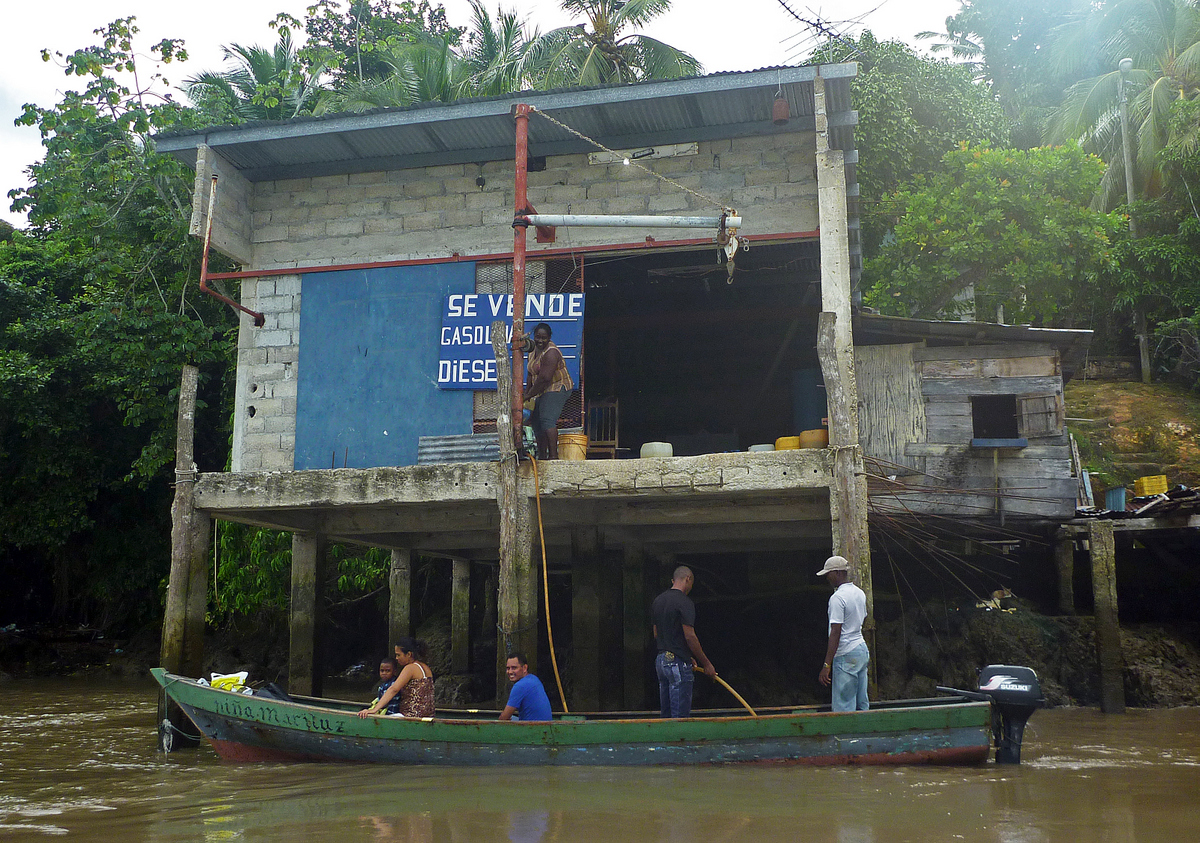
We stopped off at the fuelling station, which is a building on the side of the river. There are four metre tides here, so all of the sea front properties are built on stilts. We went alongside near low tide, so the floor of the building was three metres above us. The lady lowered one of her containers down on a rope with a hook and I poured the gasoline into our jerry can using a funnel. She then sent down a small bag into which we placed the money. Very strange, but she was a nice lady and gave us a gift of a big piece of catfish.
Back at Alba, I pulled the dinghy onto deck and put a proper patch on the inside of the hull using epoxy resin and glass fibre matting.
16 October 2013 La Palma to Rio Sabana, Darien, Panama
It was very noisy last night – the town generator is on the shore next to the anchorage and the locals had a party with loud music until the early hours. We decided that this small town is not what we've come to the Darien to see, so we moved on when the tide was rising at ten o’clock.

We motored across to the Rio Inglesia and went four miles up the river. A few fast pangas zoomed past us and we saw one small grass-roofed house, but nothing else on the way up the river. Near the end of the river, we came across Puerto Quimba, a large dock with a car park packed with about 100 four-wheel drive cars – not exactly an isolated place. It’s at the end of a side road off the Pan American highway and apparently people drive to this point to catch a water taxi across to La Palma.
We carried on a little further to the recommended anchorage, which is at a place where the river splits into a kind of delta. The water soon shallowed and the river became very narrow. It was a little too tight for our liking and as it was just around the corner from the busy water taxi port, we gave up and left.
At the mouth of the river, we turned north and headed seven miles up the Rio Sabana, anchoring near to a few islands called Isla Bella. We tried to anchor between the islands, but our anchor dragged – I guess that the river bed is scoured by the current ripping through the narrow channel. Eventually, we found a place off the main channel in 3 metres of water at low tide – it seems to be thick mud and good holding, but again we’re in the middle of the river, nearly ½ mile from the river bank.
The cruising guide tells us that there’s a Wounaan Indian village, called Puerto Lara, 6½ miles further upstream, but we believe that the river is only navigable for another few miles, so we’d have to make a long dinghy trip. In addition, the village is very close to the Pan-american Highway, so we think that it will be very touristy - we’re not sure whether we want to go there at all, never mind the risk of travelling very far in our dinghy with no other boats around to help if we have a problem.
So far, we’re very disappointed with this part of the Darien especially when compared to our trip up the Manamo River in Venezuela. In retrospect, we didn’t do enough research before we came here – we should have talked to other cruisers who have already been here and then we’d know what’s possible and what is not.
17 October 2013 Rio Sabana, Darien, Panama
It was a very peaceful night and very calm in the morning. Having seen no-one apart from a single panga in this river yesterday, we decided to stay here for the day, get on with some jobs and see if “Grace” and “Windsong” came up the river - they might have a better idea what the Puerto Lara village is like.
I sorted out the dinghy. The fibreglass patches looked fine and I gave them a light sanding just to make sure that there were no hard fibres sticking out that could puncture the inflation tubes. By the time that I’d got it back in the water, “Windsong” and “Grace” were motoring around the bend towards us.
They were accompanied by a catamaran called “Lil Explorers". Courage and Shannon came over with their six children to say hello – they've also got Courage’s mother, Barbara and his brother, Loyal to make up their massive crew of ten people. I was pleased to find out that they know much more about the Darien region. Courage had talked to people who had been further up the river to Puerto Lara – local knowledge at last!
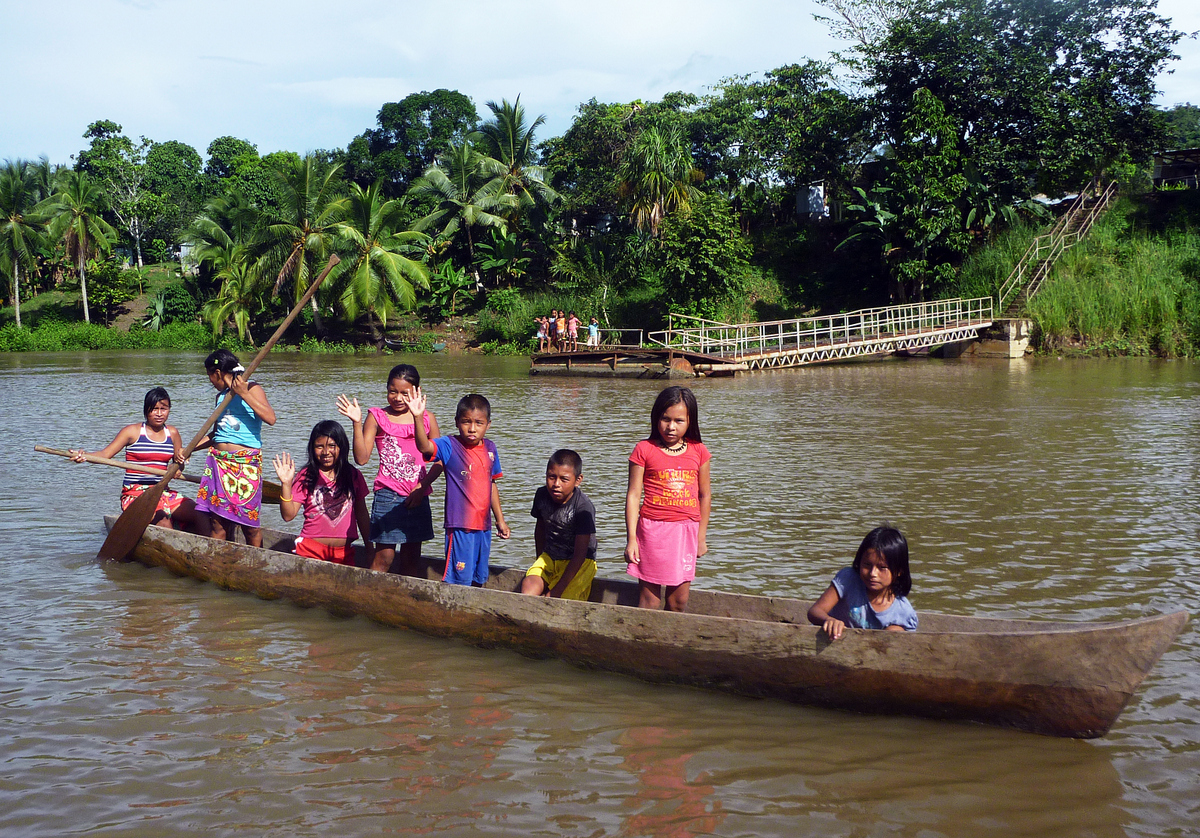
“Windsong” headed off first, motoring as far as the village and the rest of us followed in a convoy. The river was very wide to start with, but soon narrowed, went around a couple of S-bends and we all anchored in the middle of the 40 metre wide river outside of the Puerto Lara village. Within minutes, the Wounaan Indian kids were in their boats paddling out to meet us.
We all went ashore to find that the village chief was demanding $10 each to look around his village. Courage did some swift negotiation and reduced it to $5 for each adult and the children go free – I guess he was a little more motivated than us, being faced with a $100 bill. As soon as we’d paid the landing fee, the chief rang a bell and the ladies of the village all started to assemble in the central meeting hut, carrying their woven and carved goods to sell to us.
Before braving this small craft market, we wandered around the village which looked very clean and organised. The houses were wooden buildings on stilts, with a mixture of thatched and corrugated iron roofs. It all looked like it had been constructed recently - Glenys thinks that there were some bad floods a few years ago which wiped out a lot of these villages. Anyway, all the houses have electricity and most have the ubiquitous satellite dishes.
We went to the village meeting hut and looked at the fabulous woven plates and pots that the Wounaan Indians make. The bowls are very decorative and most are so tightly woven that they can hold water. Glenys was very restrained and only bought one small bowl for $20. The carvings are made from a very hard wood called “cocobola” and are very intricate and beautiful – I resisted for now…

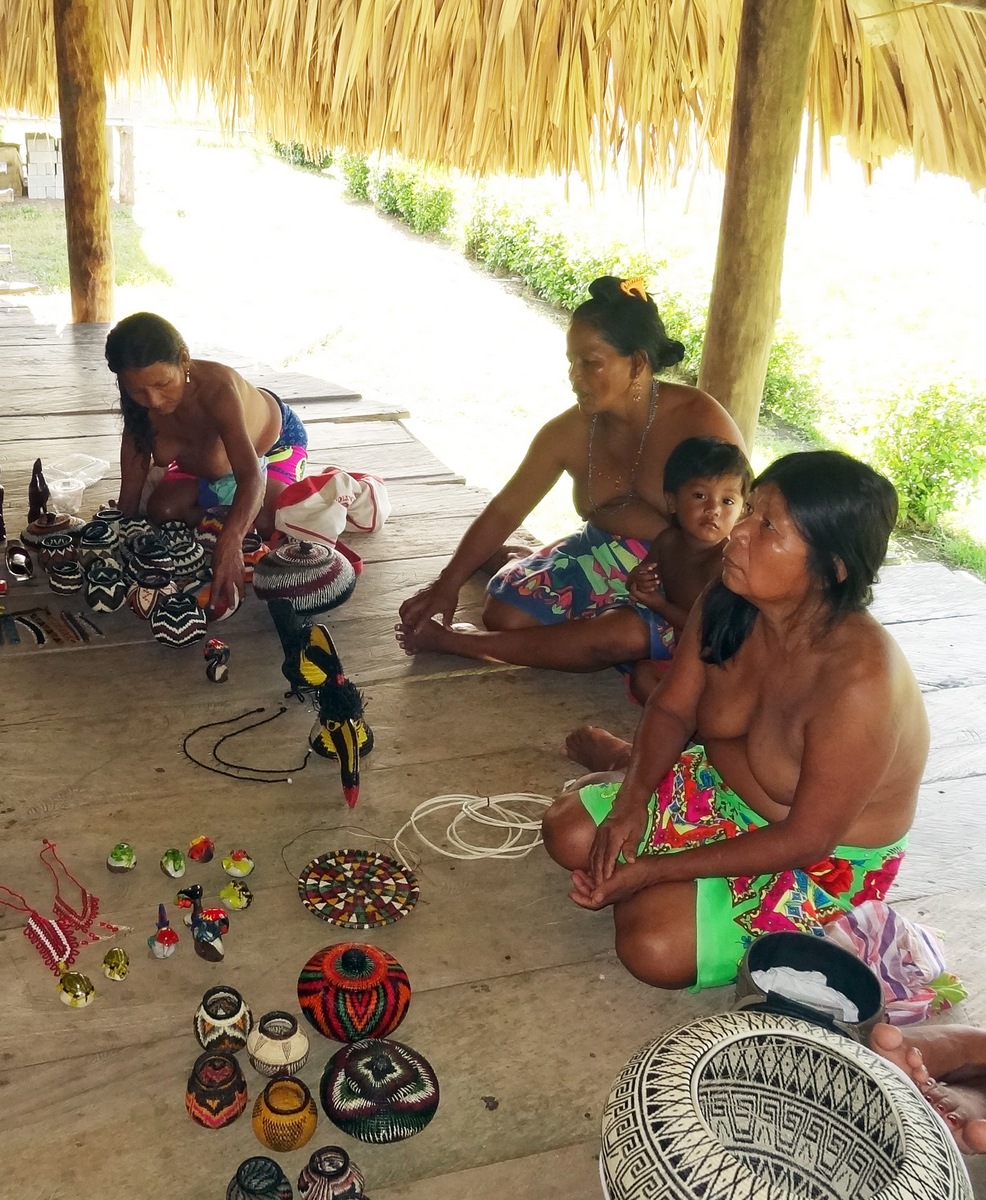
The village women all wore traditional clothing, which simply consisted of a brightly coloured wrap as a skirt and bare-breasted. I distinctly got the feeling that the village elders insist that the ladies should be topless when selling their craft work - the younger and middle aged women seemed to be inordinately self-conscious about their breasts and were continually covering them up. The older ladies didn't give a damn, I guess that the younger women are more westernised.
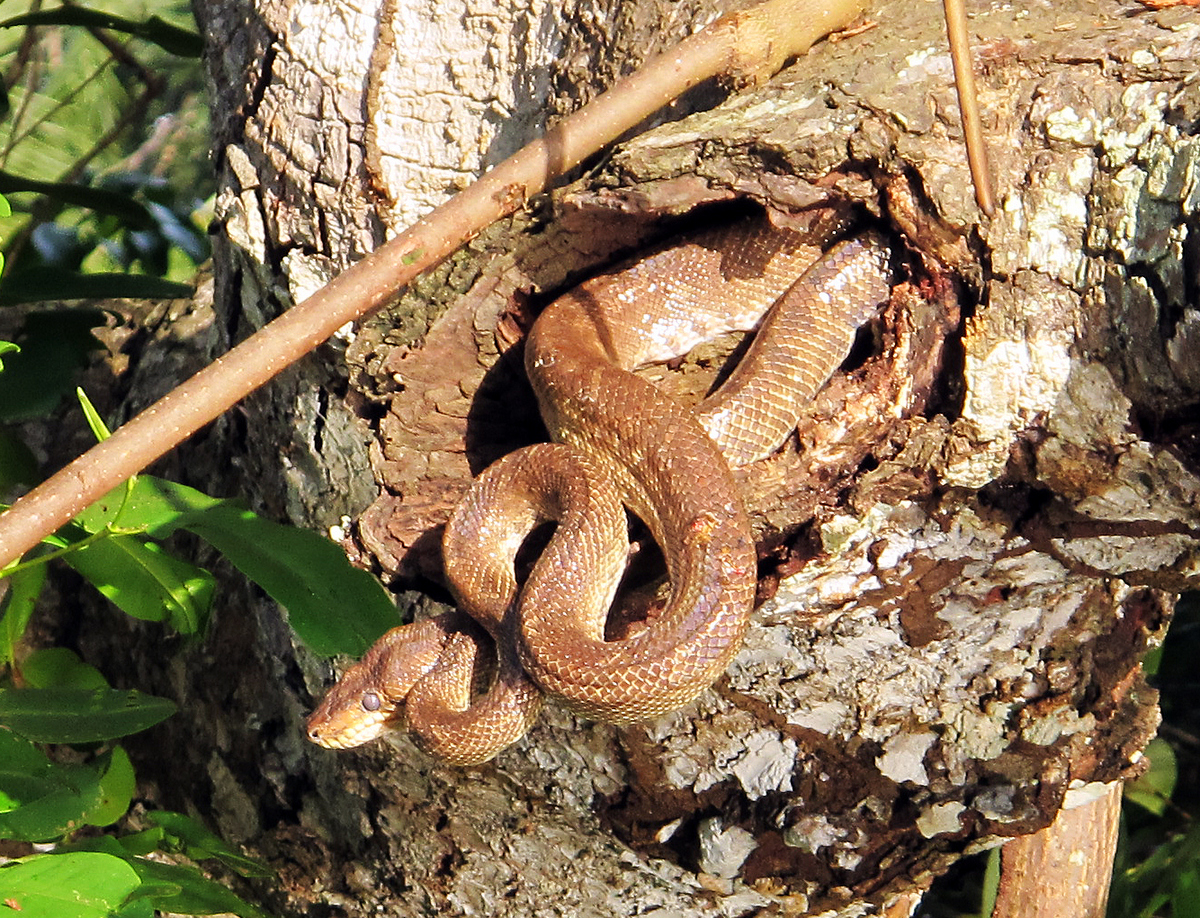
Back on the boat, I spotted a group of boys in their boats, throwing rocks at a tree at the side of the river. I grabbed our binoculars and could see that they were harassing a snake, so I jumped into our dinghy to have a closer look. The Tree Boa was wedged into a hollow in the tree, looked to be over six foot long and was very pissed off with the boys. Every time that they threw a rock which hit the tree (or the snake) it viciously struck out and the boys squealed. Eventually they hit it with a few direct blows and it dropped into the water. This caused pandemonium as they all paddled furiously away from the angry snake.
Around five o’clock, as the tide started to rip out of the river, I heard a faint rumbling from our anchor chain and discovered that we were slowly dragging. We attempted to re-anchor, but we just dragged again. It felt like the anchor was being dragged across a scoured, rocky bottom similar to our problem yesterday. We only had one hour until dark, so we made a snap decision – we’d go back down the river where it was wider. Hopefully the current wouldn't be as strong and the bottom was more likely to be mud.
We went past "Lil Explorers", who were also re-anchoring a little further downstream, and then had a very fraught 45 minutes as we motored further down the river in the fading light. We tried to anchor after a mile, but again dragged in a similar way as back at the village. Eventually, we found a spot two miles further down the Rio Sabana where we held fine.
I called "Windsong" to tell them that we'd anchored okay and found that they were also dragging their anchor and were going to come and join us. Ten minutes later, "Grace" came on the radio to say they were on their way as well. They must have both had a very worrying trip in the dark, but were safely anchored behind us by seven o'clock.
18 October 2013 Rio Sabana to Isla El Encanto, Darien, Panama
We had a good night's sleep and thankfully didn't drag our anchor. Everyone left at around eight o'clock to catch the ebbing tide and we rode the current downstream to La Palma, ten miles away. On the way, a plan was formulated for us all to go down to the Rio Sambu tomorrow. This is a very remote river, which "Lil Explorers" have recently visited and they want to go back there.
We arrived back at La Palma three hours later and went into town to buy some more bread and fresh vegetables. After lunch, we motored around to Isla El Encanto, which is only a few miles away and is a lovely peaceful anchorage - no more noisy generators for us.
With our sunset beers, Glenys produced some cheese and olives for nibbles, but for some reason, this didn’t stop my craving for salsa with tortilla chips. We’ve discovered these handy little tins of “Salsa Mexicana Casera” made by a Mexican company, La Costena and I’m convinced that they put something addictive into their recipe because I can’t stop eating it.
19 October 2013 Isla El Encanto to La Chunga, Darien, Panama
We were up at the crack of dawn. The tide was against us for half an hour until we arrived at the Boca Chica channel where the tide was ripping through at five knots and causing impressive eddies and whirlpools. Once through the narrow channel, we headed south doing 8-10 knots over the ground with the outgoing tide. Note to self, ALWAYS check the tide - trying to motor or sail against a 4 knot tidal current is a mug's game.
We motor sailed down the coast with our mainsail up. As we were approaching our destination, I noticed that the webbing loop at the tack of our main sail had chafed through and broken – rendering the sail useless. We couldn’t roll it away, so we dropped the whole thing on deck and shoved it down the front hatch into the front cabin – we’ll have to sort it out another day. At least it happened in light winds.
Our small flotilla anchored on the mud flats off the small town of Garachine at ten o'clock. I went for a trip in "Lil Explorer’s" dinghy with Loyal and Chris from "Grace" to check out the channel into the Rio Sambu. Loyal had their previous track on his iPad and I had our portable depth sounder to check the water depth. Being low tide, the depths were alarmingly shallow at less than a metre, but with four metres tidal range we should be okay.
We then had to wait for two hours for the tide to be come in. Alba has the deepest draft of the four boats and I was particularly keen to ensure that we started our approach to the river three hours after low water when the rate of tidal height change would be at its greatest. It was a long two hour wait…
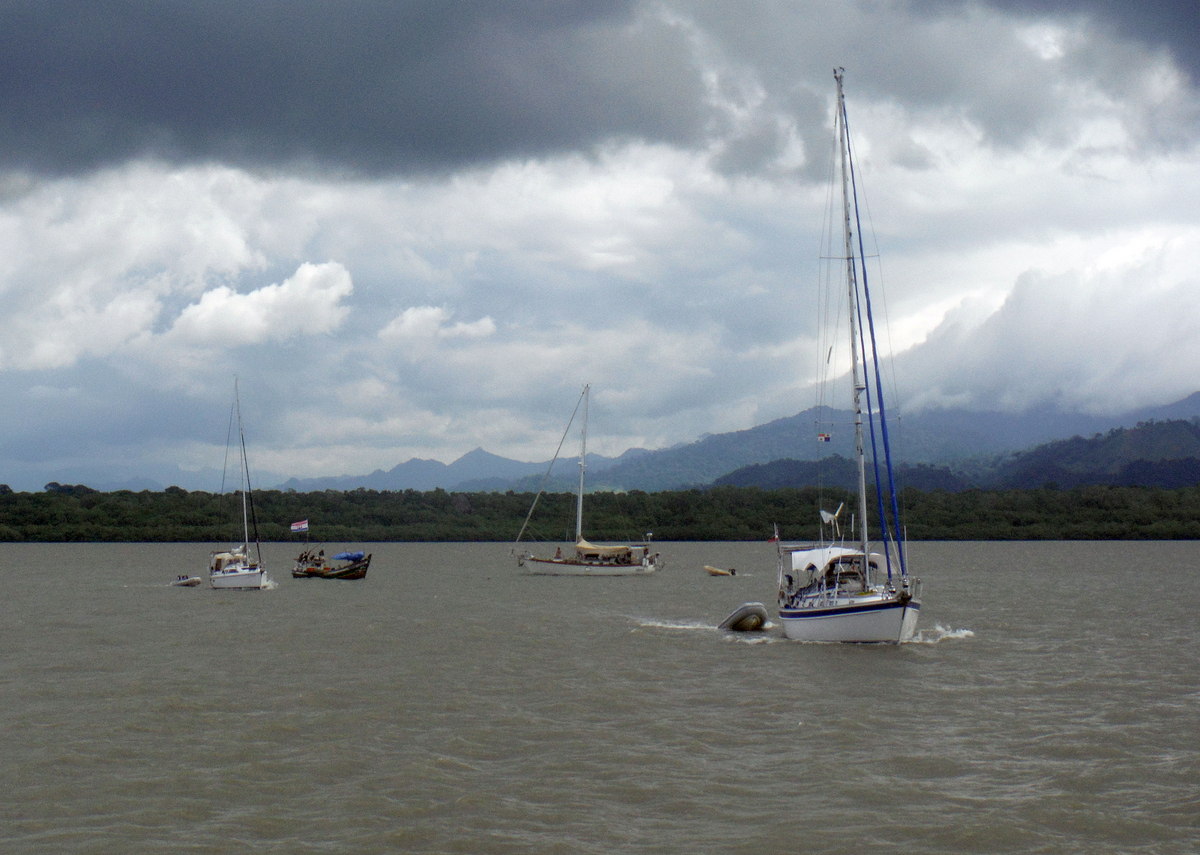
At one o'clock, our small fleet pulled anchor and motored towards the channel. "Lil Explorer" went first because they had their previous track and the shallowest draft. We went second because we had the deepest draft, so if we got through, the others would get through.
It started well until we came across a one mile long fishing net strung across the channel. A panga came zooming across to us as we approached the net and told us that we'd be okay to go around the end on the net, which was marked by a black flag. Not trusting this local knowledge at all, "Lil Explorers" launched their dinghy so that Loyal & Cassidy could check the depths with a 10 foot long boat hook.
Having managed to circumnavigate the fishing net, we went back to the channel and went along quite happily with 3-4 metres of water. We then came across another mile long net strung across the channel - obviously not many boats come this way.
This net was a little more challenging because Loyal & Cassidy found a shallow sand bar when they went to one end. There was a fishing boat at the other end, but our dinghy-based depth sounders found only "about" 7 feet around the fishing boat. As our draft is 6ft 8 inches, I was a little worried. With their 4 foot draft, "Lil Explorers" easily made it around the fishing boat and also reported seven feet. With baited breath, I inched our way around and breathed a sigh of relief when we made it around safely. The other two boats followed close behind, the fishermen must have thought that we were crazy, going so close to them. After that it was plain sailing with more than five metres of water all the way to the river entrance.
The trip up the meandering river was fabulous with depths of 7-15 metres on the outsides of the river bends. Do you remember your geography lessons about rivers with slip-off slopes on the inside of bends and river cliffs on the outside of bends? The jungle is very dense along the river banks and fish must be plentiful because we spotted lots of Ospreys, Herons and a flock of White Ibis. The river is littered with dead tree trunks and branches which float just on the surface of the water, so a sharp look out was essential. Even so we hit a couple of substantial logs – I hope we haven’t damaged the propeller.

By four o'clock, we were all anchored ten miles up the river just off the boat dock leading to the Emberá Indian village of La Chunga. The holding is fabulous, the anchor slammed into the thick mud and the anchor chain was like a solid bar when we backed the anchor in - I'll sleep well tonight. We went into full jungle mode with mosquito netting in the cockpit and we even had to burn a mosquito coil when no-see-ums started to sneak through the defences. However, it's nice to hear the sounds of the jungle only 25 metres away, especially when you're sipping a nice cold beer safe from the creepy crawlies and flying monsters.
20 October 2013 La Chunga, Darien, Panama
I was up at the crack of dawn and sat in the cockpit in the cool air, listening to the sound of jungle all around us. I took some photographs of the other boats in the river and ten minutes later “Lil Explorers” started to drag their anchor because a huge tree trunk had caught on their anchor chain – this flotsam is a bit of a problem.
We all went into village at nine o’clock. “Lil Explorer” had talked to someone from the village last night and arranged that we all go at the same time. We’re a fairly large group with eleven adults and six children, so the villagers wanted to give us a formal welcome. They don’t see many tourists up here and there’s only been one other cruising boat up this river in the past year.
There’s a substantial dinghy dock, which leads to a board walk raised five feet above the swampy jungle floor. The wooden planks on the board walk are rotten and broken in places, so we all gingerly walked on the edge of the planks where there is some support. The board walk is about two kilometres long, so it took us quite a while to walk in.
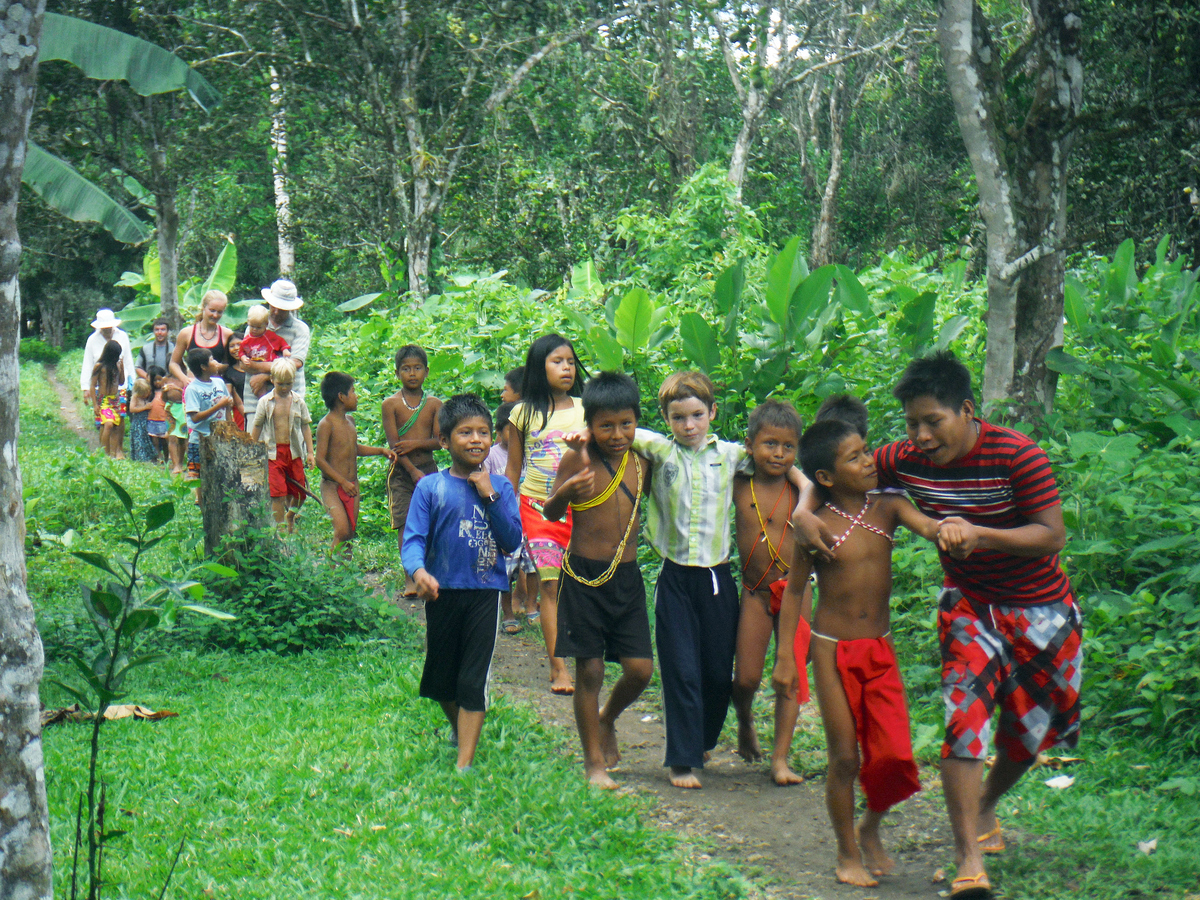
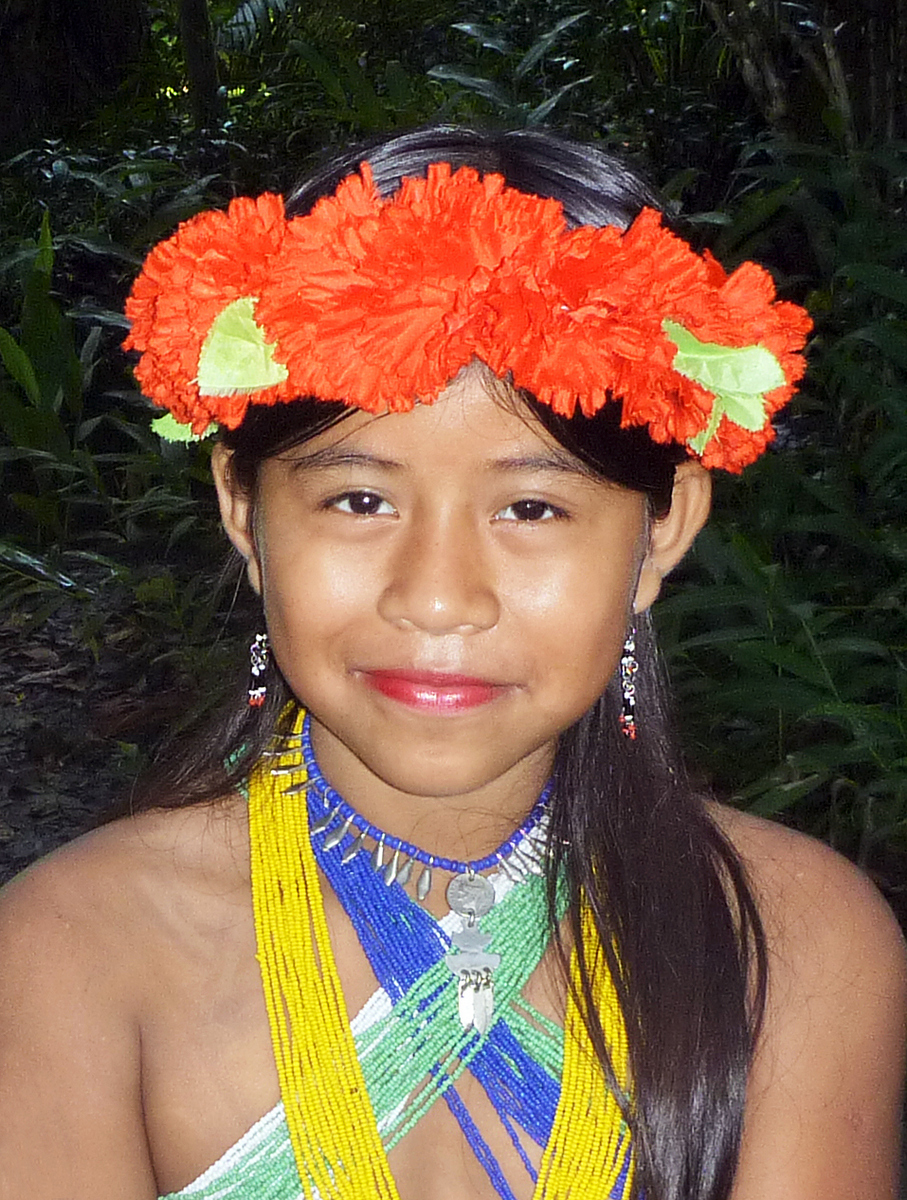
There’s a small bridge at the end of the board walk where we came across the welcoming party – a small band of four musicians playing traditional Emberá music and a group of twenty or so villagers in traditional dress. After listening to a couple of tunes, we walked another kilometre into the village itself. The kids are very friendly, spontaneously holding hands with us as we walked along the lovely path.
At the village, we were met by more villagers and a spokesman formally welcomed us giving some information about the village and the Emberá Indian culture. An American Peace Core volunteer called Charles lives in the village and acted as a translator for us, which was very useful.
The settlement was created in 1969 and is a subsistence farming community, where most of the produce is for their own use. They have been trying to promote tourism, but the village is so remote that they rarely get any visitors. Most of their cash is generated by the women making handicrafts and art and selling it to the tourist market.
Interestingly, the traditions of the Wounaan and Emberá Indians are very similar, but their language is completely different. These tribes are the famous blow-pipe wielding natives of Central America and were more aggressive than the Kuna Indians, forcing the Kuna onto a narrow strip of land on the Caribbean coast.
There is increasing pressure on the traditional way of life as the more westernised Latino Panamanians buy land and build more roads into the region. Panamanian laws also have a strong effect. When the Emberá children go to school, they have to wear school uniforms and shoes, even in the small junior school in this village. There’s a small town called Puerto Indio two miles up the river where Indian women will be arrested if they walk around bare breasted. If the Pan-American Highway is extended through to Colombia then the social pressures will increase dramatically and the Emberá culture many only last one more generation.
There was a long debate about some fees that they wanted to charge us. The village wanted $15 per boat and the local Comarca (a kind of regional council) wanted $10 for each adult. This adds up to $180 for our four boats to anchor here. The Comarca originally wanted much more, but Charles had already argued with them following “Lil Explorers” previous visit and this was the best he could do. We argued that if they charged other cruising boats this amount then they wouldn’t come.
Eventually, we agreed to give them $15 per boat and they would argue with the Comarca later. It sounds like the Comarca will probably keep most of this which is a little unfair on the village, but we’ll be buying things in the village, which will benefit them directly. As a start, we arranged for the villagers to put on a demonstration of Embera music and dancing later in the afternoon for $50 for the group.

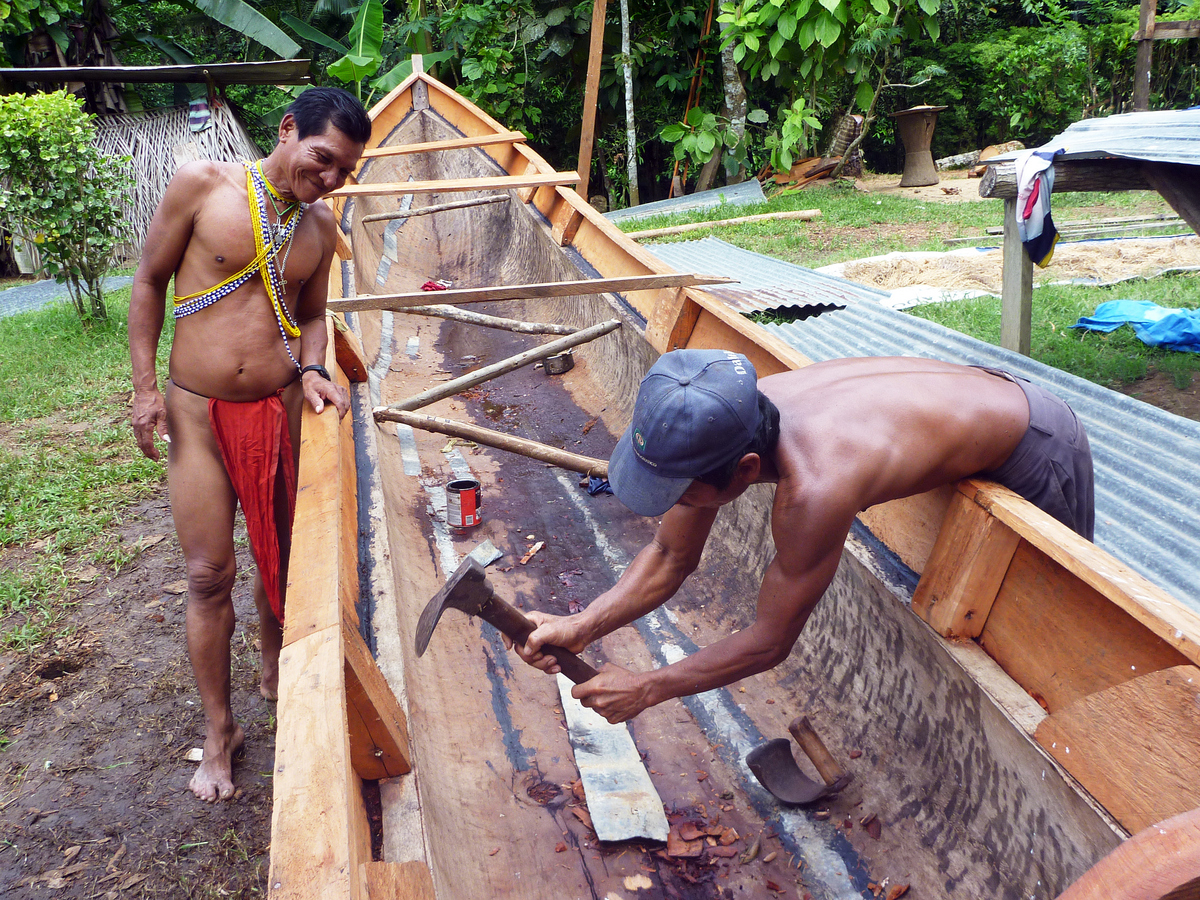
The village chief then showed us around the village, taking us to various houses and showed us one of their pangas being carved out of a tree trunk. It was a little difficult communicating with our limited Spanish, but they are a very friendly people and the children are delightful. The chief showed us some of the crops that they farm including plantains, rice, coffee and there are lots of chickens wandering around – no battery hens here. There are fruit trees scattered around the village and the chief shared a few freshly picked oranges with us.
We braved the board walk and returned back to the dinghy, where we found that the tide had gone out, but a couple of the villagers had been told to stay at the dock and watch our boats. They had made sure that our dinghies were still floating in the water and not high and dry on the thick mud, so it was relatively simple to walk down on stones and logs – not too much mud went into the dinghy.
By mid-afternoon, the tide was high enough to allow us to take our dinghy up the small tributary that leads to the village. It’s about a mile through the middle of the rainforest, dodging the inevitable logs and branches. There’s a huge tree that has fallen across the stream which proved to be a challenge to get around. The tributary is navigable two hours either side of high tide.
As we entered the tributary, a group of Embera kids were stood on the bank, shouting to us obviously wanting a lift to the village. Looking at the mud-splattered children, Glenys started off saying that we could only take four, but as I nudged up to the shore, the young boys started to leap onto the dinghy - frantic to be one of the four. Having already got five boys on board, we told the remaining three girls to get in as well – it was good fun going up the river.
Back in the village, we were met by even more villagers in traditional dress and treated to some more Embra music, which to me sounds a little like improvised jazz. Six of the ladies then showed us how they dance to their music, which is simply a very slow shuffle. They then gave a performance of two of their traditional dances which are meant to emulate things in nature around them. The first one depicting the playful movements of a small rodent was first and then they did a dance based on the action of a sugar cane press.

It was a very casual occasion, the dances were obviously not well practised and there was some good natured heckling and advice from the other ladies in the audience. The dance was interrupted by moments of laughter from the dancers – nice to see people enjoying themselves rather than some of the highly serious tourist displays that we’ve seen.
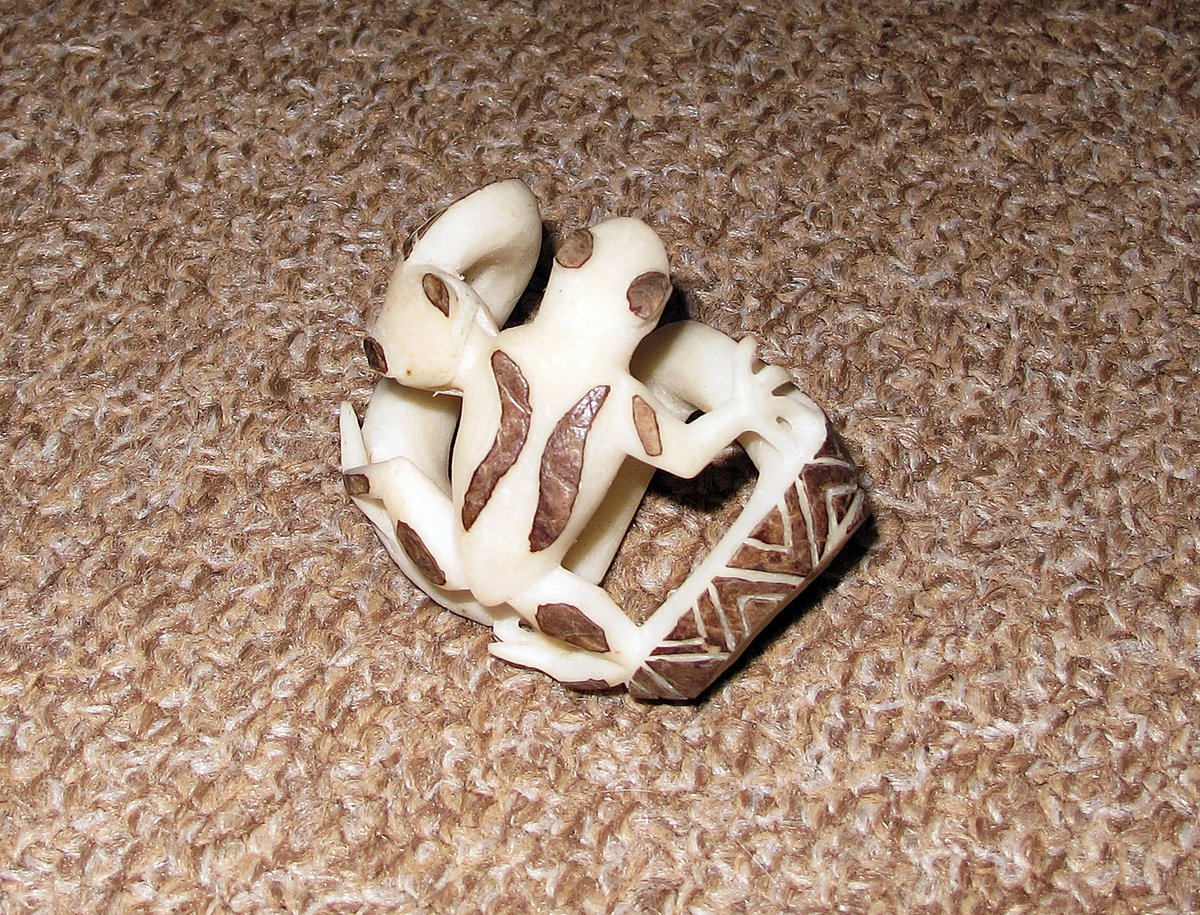
They showed us how they produce sugar cane juice in a huge hand cranked press and handed out the juice with a squeeze of lime – the only thing missing was a tot of rum. Meanwhile, the ladies brought out their handicrafts, which were very similar to the Wounaan items we’d seen in Puerto Lara a couple of days ago. Glenys bought a small Tagua Nut carving and another brightly coloured woven bowl - this one is eight inches in diameter. We were told that the natural colour of the palm leaf is almost white and the colours are made from plants found locally – the red comes from a flower and the black is made using mud.

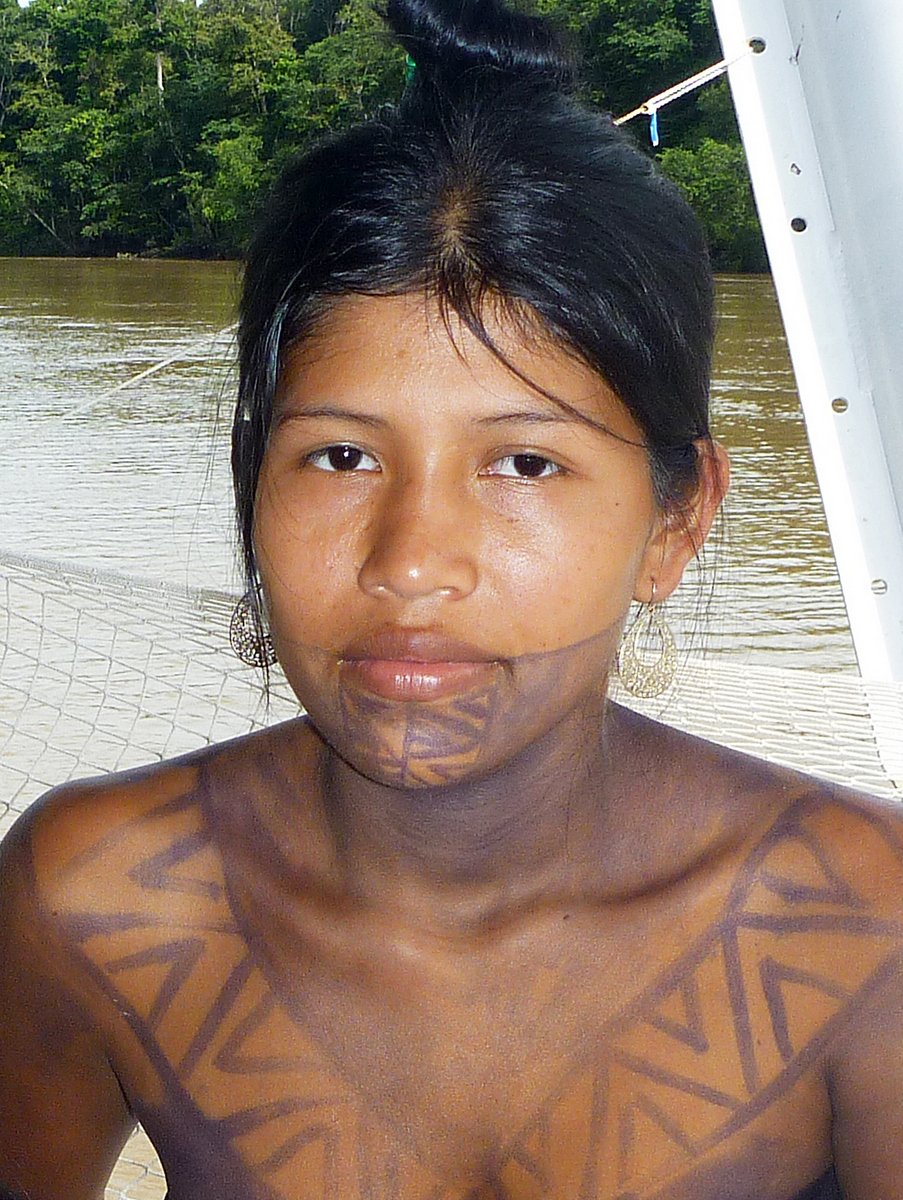
A few people had themselves painted with dye from the Jagua fruit. This is a traditional temporary tattoo which lasts about 2 weeks and is similar to henna but much, much darker. The Indians paint their bodies and faces with this dye with different patterns for weddings, funerals, etc. We’re told that the dye has some medicinal effect and also acts as an insect repellent.
We arranged for the village to make us dinner tomorrow evening for $2.50 each - they wanted to know how many meals were needed, so that they knew how many chickens to kill. We managed to make it back to the boat well before dark.
21 October 2013 La Chunga, Darien, Panama
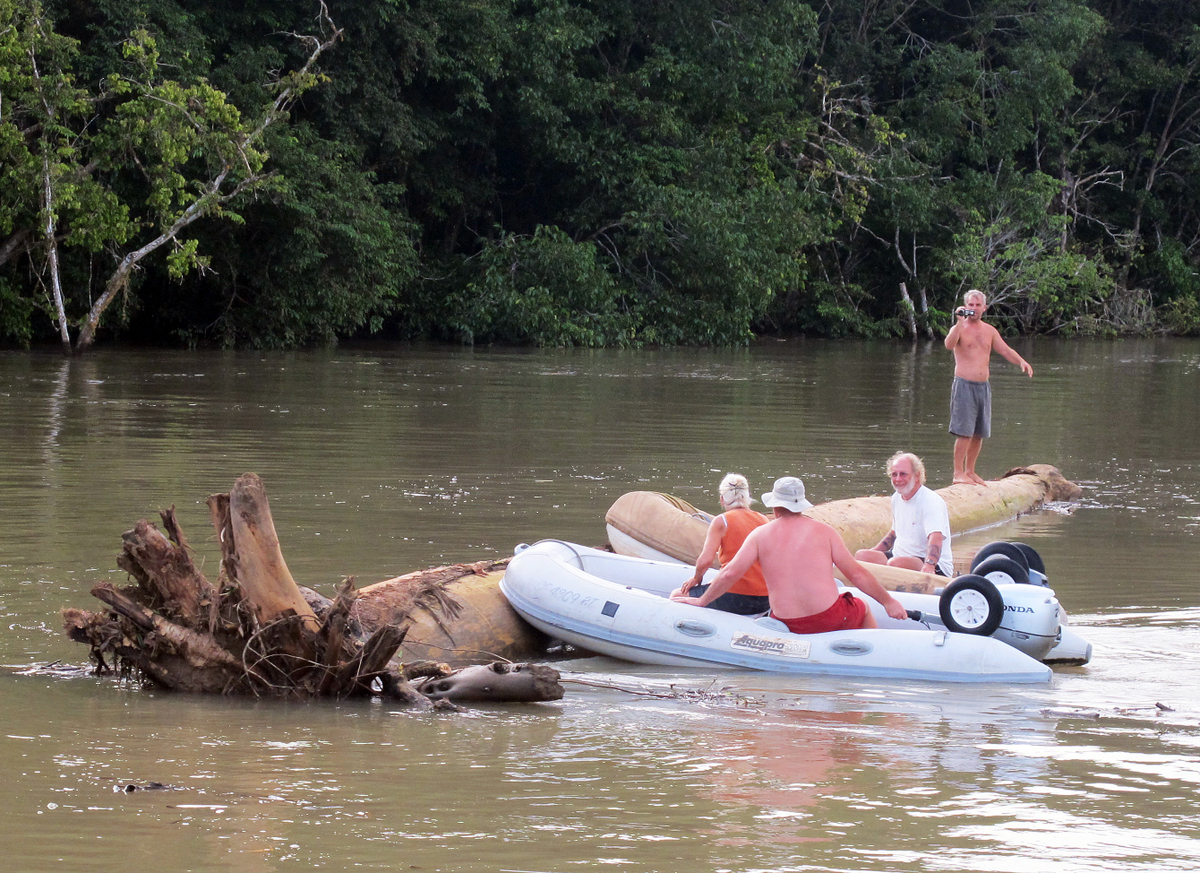
A huge tree came floating down the anchorage this morning, missing “Grace” and “Windsong”, but heading straight for Alba. “Grace” and “Lil Explorers” managed to push it aside with their dinghies and tied it to the river bank, so that it wouldn’t come back on the flooding tide. The damn thing must have been 20 metres long and 2 metres in diameter – it was big enough for people to stand on and would have caused chaos if it had snagged on someone’s anchor chain in the strong three knot current.
We got on with some jobs during the day. Glenys got out her sewing machine and replaced the webbing loop on our main sail – her Sailrite swing machine is worth its weight in gold. The pump which drains our front shower tray has stopped working – we’ve been hand bailing the water out into the sink for over a week now. I had a spare pump, so it only took an hour to change it over, I now need to service the faulty pump – two jobs off the list and another one added.
“Windsong” left at midday. Ann had stepped on a rotten plank on the boardwalk yesterday, punched through it and has badly twisted her ankle, so they’re getting out of here. If it doesn’t get any better in a few days they can then head back to Panama City to get some medical attention.
The rest of us went into the village in the late afternoon. Again, lots of the villagers came out to see us in the central meeting place. I’d printed out some photographs that I took yesterday and handed them out to various people – they liked that small gesture.
The evening meal was prepared in typical home – thatched roof, open on three sides, on stilts using a log carved with steps to get up. The cooking was done on an open fire on a big stone slab. I found it interesting how they didn’t use the flames, but kept the logs smouldering, pushing the embers beneath the pots. I guess that it’s more controllable –similar to a charcoal barbeque. The lady made some kind of chicken stew and served it with rice. It was tasty but we had some questionable bits of chicken – backs, necks, etc.
The sun had gone down by the time that we got to the dinghy, so it was a little fraught going down the small tributary.
22 October 2013 La Chunga to Punta Garachine, Darien, Panama
This was our last day in La Chunga, so “Lil Explorers” invited the villagers to come for a typical American breakfast on their 55 foot catamaran and about 10 adults and 20 kids turned up. Glenys fried up all of our remaining bacon, Ann from “Grace” produced a big pan of scrambled eggs and Shannon produced the pancakes in “Lil Explorers” galley. Everyone was well behaved and mostly sat around patiently waiting for their meal. It was a nice departing gesture.

At eleven o’clock, we left the lovely anchorage with “Grace” because we had an outgoing tide allowing us to drift down stream. We arrived at the mouth of the Rio Sambu at low tide and anchored for a couple of hours wait for the mid rising tide.
At half past two we pulled our anchors and motored out of the river to cross the mud flats. I led the way and basically reversed the route we followed coming in – the shallowest depth was 2.9m, so we got it right. Also, thankfully, there were no long, fixed nets in our way, although I had to slightly dodge a couple of fishing boats putting out nets in a 100m circle.
We had a nice 15-20 knot wind, so once we were clear of the mud flats, we put up our sails and had a cracking beat up wind. The repair to the main sail looks good. We sailed up to Punta Garachine, but the recommended anchorage looked to be too close to shore for us, so we headed further south towards some mangroves and anchored in seven metres in good holding mud. This anchorage is nice and protected from the west, but would be hell with any east in the wind. The jungle on the peninsula is interesting with huge trees sticking out of the canopy.
We’ve had an interesting ten days in the Darien region. It started off a little slow because we hadn’t done enough research of the area enough before we set out. Travelling with a group of boats worked very well in this isolated region, giving some security in the case of a breakdown or grounding and also we’ve seen other aspects of the Wounaan and Emberá cultures that we wouldn’t have seen by ourselves – the children on “Lil Explorers” were certainly great ice-breakers.
I’ve produced some navigation notes for the area which can be found in our Cruising Notes page.
23 October 2013 Punta Garachine to Isla Espiritu Santo, Las Perlas, Panama
I was woken up at half past six by the sound of voices fairly close to us. It turned out to be one of the fishing boats which lay one mile long nets in the bay. They circled us and looked suspiciously like they were planning to drop one end of their net close to where we were anchored. I didn’t fancy getting ensnared by a net, so I dragged Glenys out of bed and we left fifteen minutes later. By this time, the fishing boat had anchored just behind us and looked like they were waiting for either the tide or for us to move.
There was very little wind for the 30 mile trip back to Las Perlas, so we motored most of the way apart from a couple of hours bobbing along at 3-4 knots on a beam reach. I put out our fishing lines and had five strikes. Three Dorado managed to throw the hook by leaping out of the water; one big fish took one of my lures by snapping the 60lb monofilament line and I landed a nice 3-4ft long Dorado. Glenys made fish sandwiches for lunch – it’s nice to be back at sea.

We anchored in Isla Espiritu Santo in the early afternoon and collapsed in the heat – reading and catching up on a little sleep after our early start. “Windsong” are here and also another boat called”Eyoni”, who came over to say hello.
24 October 2013 Isla Espiritu Santo, Las Perlas, Panama
We had a quiet day, staying in one place for a change – we feel like we’ve been constantly on the move for two weeks, so it was nice to just chill out again. We ran the water maker, which we’ve not been able to do in the Darien Rivers because of the silt, then Glenys did some laundry washing some of our smalls, which have been building up for three weeks.
Ethan from “Eyoni” and Andrew from “Windsong” came over and said they were going spearfishing off the south-east side of Isla San Pedro, so I went along. This was the first time that I’ve been snorkelling in the Pacific and it was interesting. The visibility was very poor at five metres, but I still managed to see some unusual fish (to me anyway) – I spotted a large Scorpionfish of some kind and some strange looking fish that looked like grouper but with unusual patterns – I’m going to have to buy a book to identify these Pacific fish. However, the most exciting thing was hearing the eerie calls of Humpback Whales every time that I dived down.
After our lunch (Dorado sandwiches of course), the heat got to us and we had a little siesta. By four o’clock, it had cooled down enough to do a few little chores like cutting my hair which has been driving me mad for over a week. I also dived down to check that we hadn’t damaged the propeller when we hit a couple of logs going up the Rio Sambu – it’s fine.
We had a classic little conversation this evening. A squall was passing over with heavy rain and the odd roll of thunder; I was down below playing the guitar and Glenys was up in the cockpit. I wanted our iPad because I have some music scores stored on it, so I asked Glenys, “Do you have the iPad?” Her answer was “No, it’s in the oven.” Of course, where else would it be?
25 October 2013 Isla Espiritu Santo, Las Perlas, Panama
We had very quiet day in. I spent most of the day down below editing photos and catching up on my blog. There’s no internet connection or even a mobile phone signal here, so I can’t publish anything to my website, but at least it’s all ready to upload.
Glenys got out her sewing machine and was very enterprising, making some scatter cushions out of two of her molas.
26 October 2013 Isla Espiritu Santo, Las Perlas, Panama
It was another chill out day. I got it into my head that I should publish some navigation notes about the Darien region, so I spent most of the morning writing that.
The annual subscription for our satellite phone email expires in a couple of days and the provider (Ocens) wants $240 for the next year. I’ve decided to switch to a UK provider (Mailasail) who charge a little less, but include a blog page, which I can publish to using my satellite phone. I think that a blog page will be useful when we do our 3000 mile passage to the Marquesas next year.
Anyway, I decided to load the Mailasail software and after a little bit of effort got it to work and send test emails to Mailasail. Unfortunately, my laptop is now confused and the Ocens software won’t load, so I can’t download any more GRIB files to look at the weather. It’s very frustrating because we need a weather forecast, so that we can plan our passage to the western end of Panama, which will be an overnight passage.

In the afternoon, we went for a walk on the small island to the west of the anchorage and ended up walking around the whole island because it was low tide. It’s pleasant to be walking around again - we haven’t been off the boat for five days. We spotted some Agoutes - a rodent that looks like a huge brown guinea pig.
Grace and Windsong came over for farewell drinks – they’re off to Panama City tomorrow and we’re going to move on as well.
27 October 2013 Isla Espiritu Santo to Punta Cocos, Las Perlas, Panama
We were going to go to Isla Contadora to get some more provisions because we’re running out of drinks again, but we’d be heading back north and can’t be bothered, so we went down to the south end of Isla Del Rey – we feel like it’s time to start heading towards Costa Rica.
We made a valiant attempt to sail, but there was very little wind and it was veering around all the time – I’m resigned to motoring in this area. I’m starting to get a bit worried about diesel now – we’ve used up half of our tank since leaving Shelter Bay marina and there’s nowhere in Las Perlas to buy fuel. We’ve got 350 miles to go before we get to Golfito in Costa Rica and we’ve got enough fuel to motor 400 miles, so it will be a close run thing if we continue to get no wind.
I had a poor day’s fishing and only hooked one big fish, but it threw the hook by leaping dramatically out of the water - I think that it was a big Wahoo because the paint on my Cedar Plug was all torn up.
We first went to the Rio Cacique Bay, but the swell was coming straight into the bay and would have been very rolly. So we motored across to Punta Cocos which was much more protected – a little bit of swell gets around the corner, but it’s just a nice rocking motion. It’s a pleasant anchorage with some dramatic cliffs on the headland. There’s a “Servico Maritimo” base here with a very nice new dock.
28 October 2013 Punta Cocos to Isla San Jose, Las Perlas, Panama
We woke to another flat calm day and motored across to Isla San Jose. I had a good fishing day – five strikes and I landed five fish. I initially caught two small Bonito and thought that I’d try to get another Dorado or a Wahoo (which continue to elude me.) A big 15-20lb Horse Eye Jack hit the lure on my birds, but I didn't like the look of it, so I let it go. Then we must have run through a shoal of Tuna because two big 10lb Bonito hit both of my lures – took me a while to land both of them.
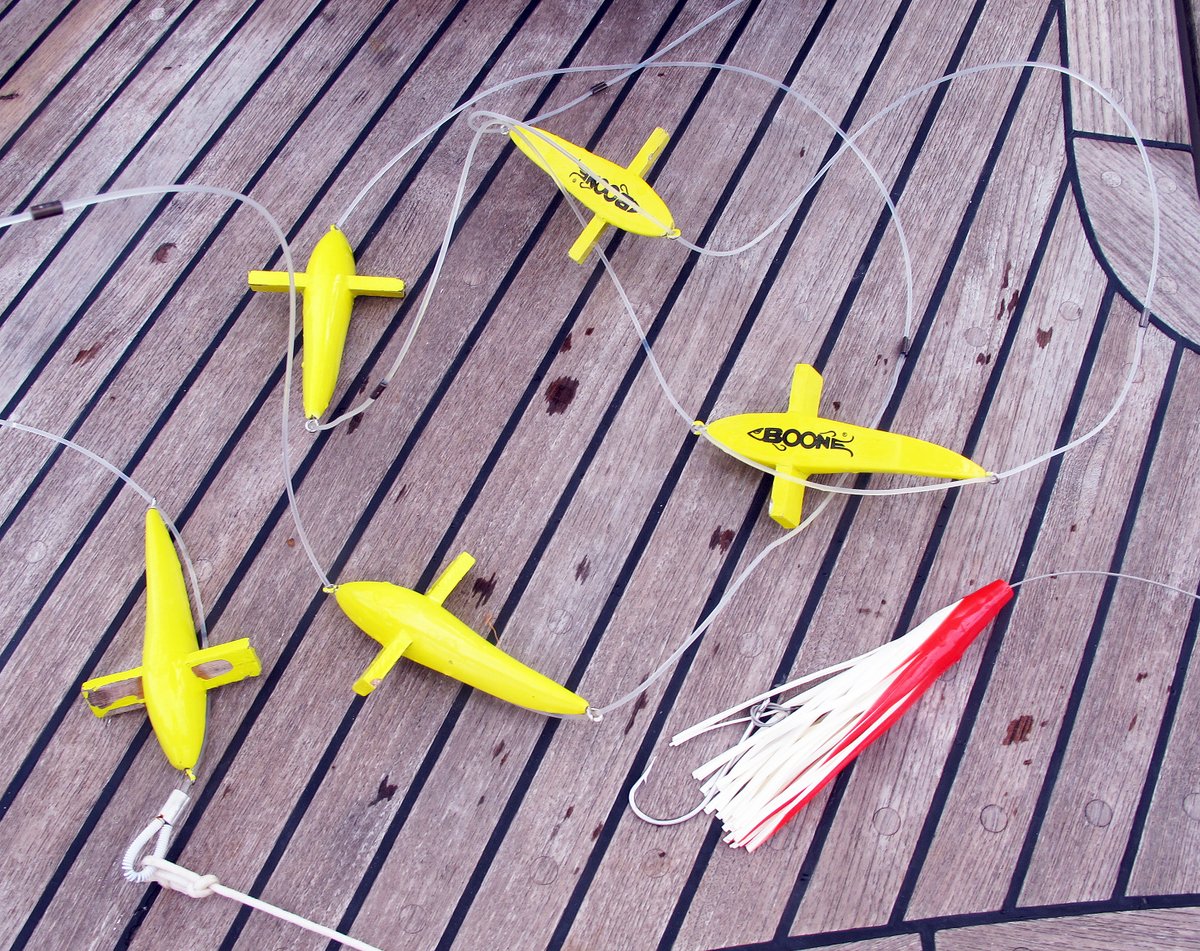
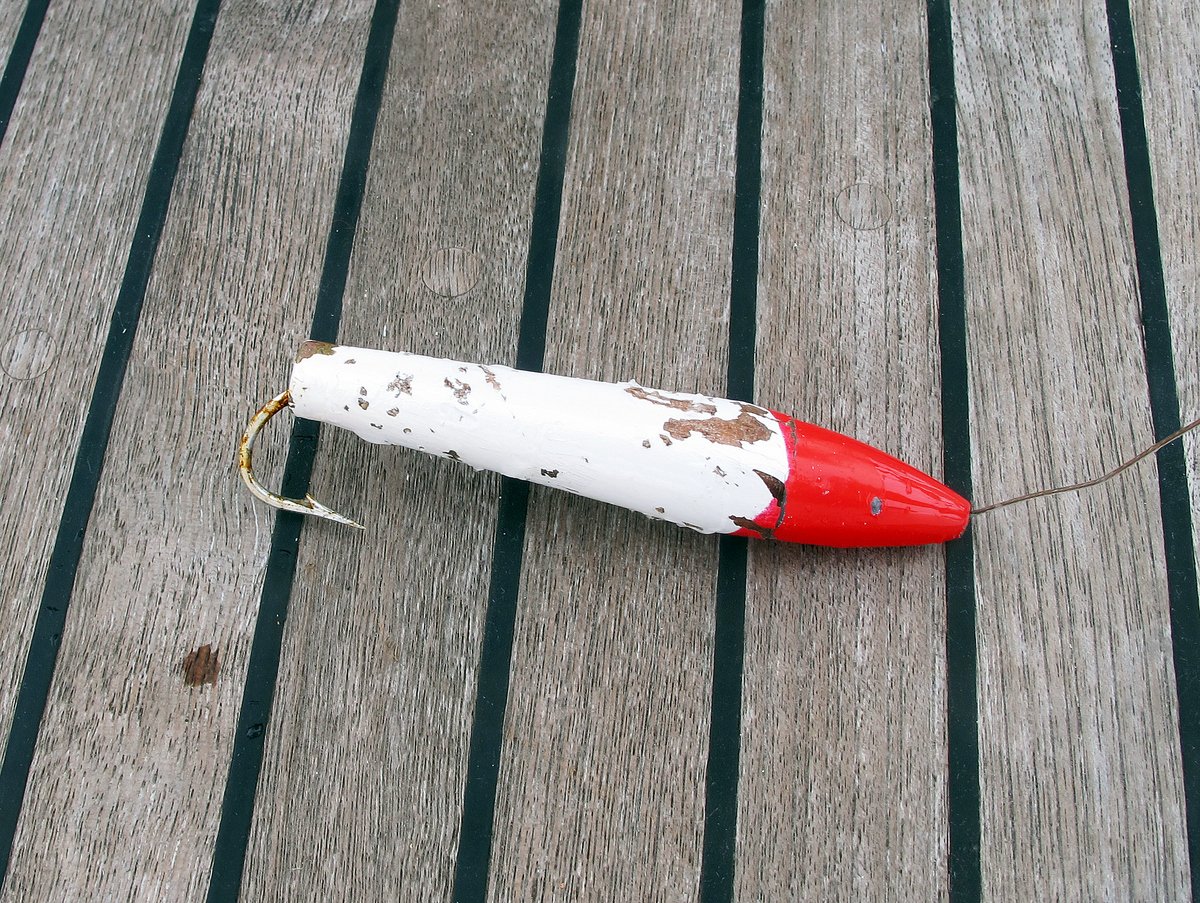
I'm having some good luck with fishing and I think that using birds is very effective. I have a train of five small Birds skipping on the water about 50 feet behind the boat with a squid lure “chasing” them. The birds are there to splash on the surface of the water to attract the attention of fish. I then have another lure attached to my fishing rod, which is trailing further behind the boat. I've started to use a Cedar Plug lure on my rod, which has proved to be very productive even though it’s just a simple torpedo-shaped piece of wood. I think that it works well because it jigs around a lot and the fish don’t have time to really look at it.

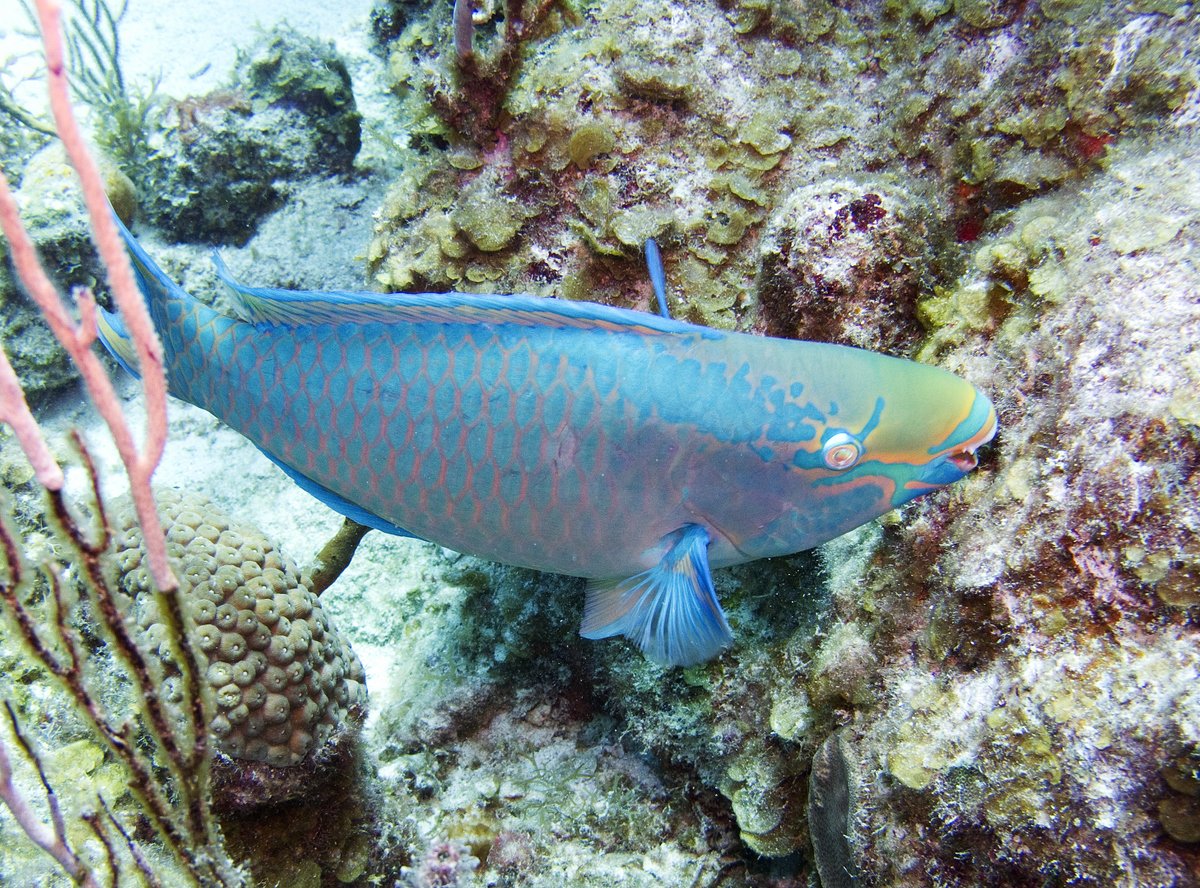
We tucked ourselves in the western corner of Ensenada Playa Grande, which is a lovely looking anchorage. There’s a long dark brown beach and lots of rocky outcrops for snorkelling. The water looked clear, so we went snorkelling on a small headland, which was good. The sea bed is mostly rock, but there is some coral around. We spotted quite a few huge Parrotfish – they’re definitely bigger than the ones in the Caribbean.
Las Perlas were named by the Spanish conquistadores because the islands produce some of the best pearls in the world. While snorkelling, I noticed a very bright shell on the sea bed, which looked to be a fragment of a pearl oyster with beautiful mother of pearl lining the inside of the shell. This gave me enough of a clue to identify the Pearl Oysters and I picked up two, but alas, there was nothing in them apart from some ¾” long baby lobster…

I managed to sort out my satellite email. After uninstalling, rebooting and reinstalling several times, I gave up on the Ocens software and emailed the sales team at Mailasail using their test account. They were very good and enabled my email account before I’d actually paid for it. Thankfully, I was then able to download a GRIB file, which shows that the wind around Peninsula de Azuero should be less than 10 knots tomorrow night. It will be against us, but at least it will be light. There’s a headland called Punta Malo (Bad Point) which gets strong currents and overfalls, so we don’t want to be going around that in heavy winds. The GRIB file shows that the weather will get worse over the next few days, so we’ve decided to head west tomorrow.
29 October 2013 Isla San Jose to Ensenada Naraja, Panama (Day 1)
The alarm went off at ten minutes to six and, five minutes later, we had a heavy shower – not a good start. We were unsure whether to go or not, so I downloaded another GRIB file, which showed that it was still going to be light winds tonight and get worse in a few days, so we tidied up and left just before seven o'clock. As we were leaving the anchorage, we saw lots of Manta Rays jumping out of the water, some doing somersaults – I must find out why they do that.
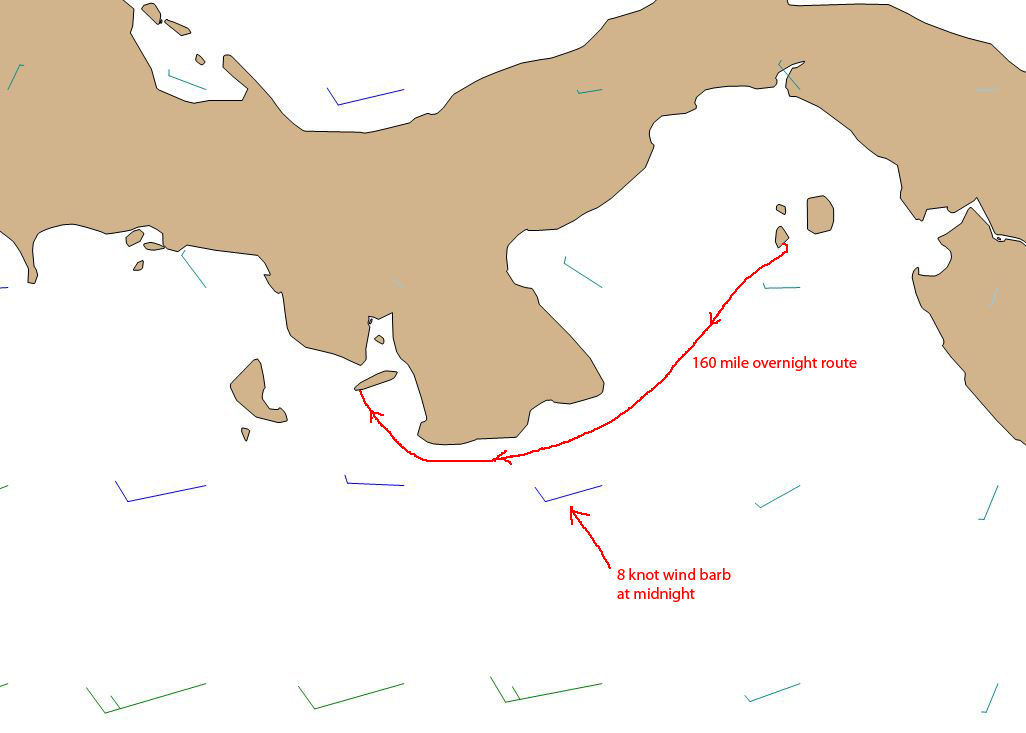
There was no wind for the first hour and it rained a few times, but gradually brightened up. We then had a pleasant 10 knot wind from the North West giving us a nice reach until one o'clock, when it dropped off again. I was feeling dynamic and pulled out our asymmetrical spinnaker out, but the wind was too light and we were only making 2-3 knots, so after ½ hour we gave up and turned on the old iron topsail.
We came across lots of Bottlenosed Dolphins who cruised in our bow wave and accompanied us for long stretches of time. We also kept catching glimpses of some fish showing a single dorsal fin sticking out of the water. It was definitely a fish with a folding fin, not a shark, but the fin didn't seem to be long enough to be a sail fish – it’s a mystery.

To continue the wild life theme, as darkness fell, we had a flock of Swallows that tried to hitch a ride. They were on our winches and cockpit spray hood and even landing on us in their desperation to rest for the night. Only two managed to ride with us all night and by morning, we found them dead on the deck. This happened to us many times over our years of sailing – why do these birds land on sailing boats and then die of exhaustion?
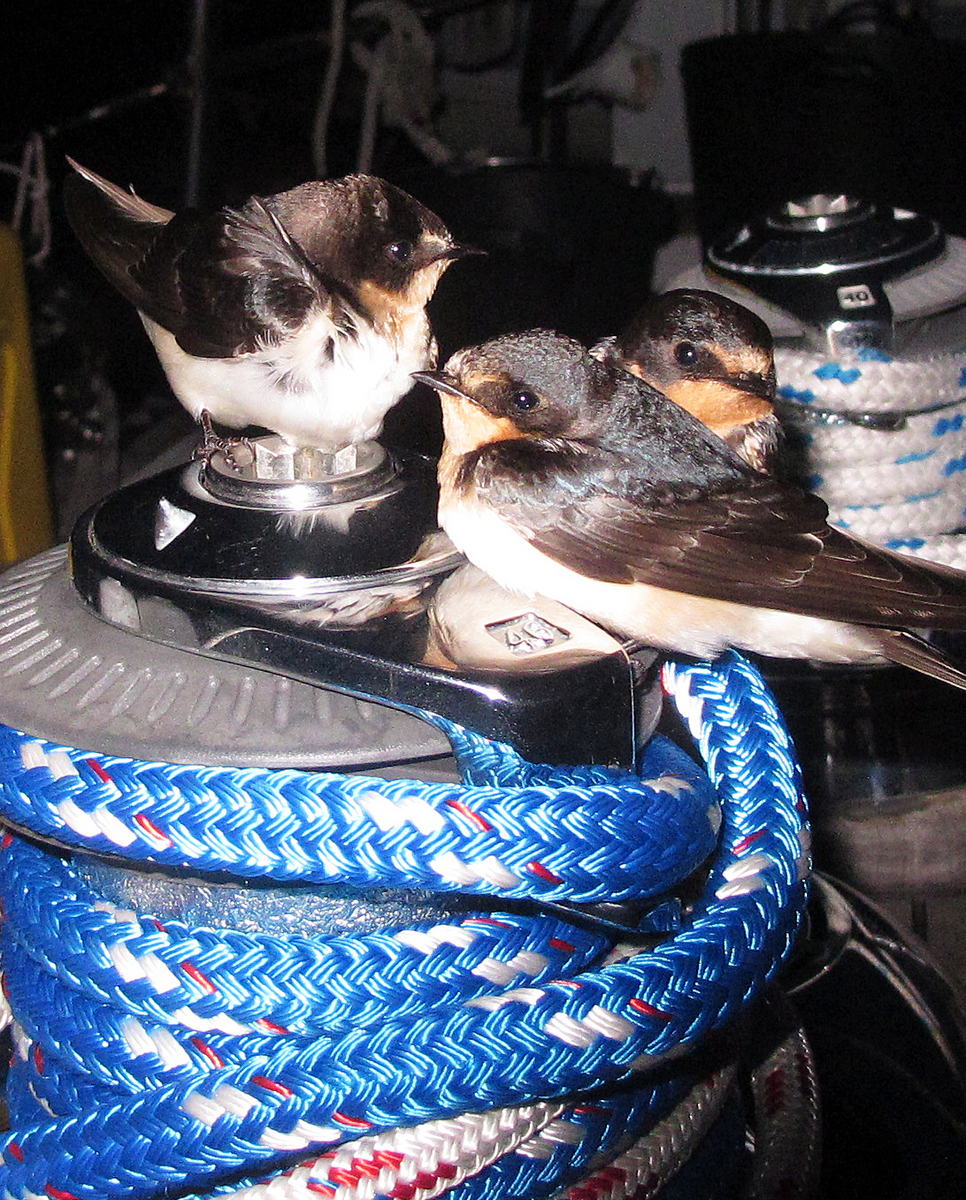
By sunset, we were twelve miles from Punta Malo and the wind had picked up to the forecast 5-10 knots from the west. An hour later, the wind had increased to 15-20 knots, giving us 20-25 knots of apparent wind on the nose. To make matters worse, the prevailing two metre swell was from the south west and we had one knot of current from the east. So that’s two metre rolling waves from the south-west, one metre wind waves from the west and current against the wind causing the seas to get very confused. It was horrible - like being in a washing machine at times, the boat would slowly pick up speed and then get stopped dead by a big wave with a huge crash.
To add to the stress of the wind and waves, it was pitch black, the sky was overcast and there were constant flashes of lightning coming from all directions, plus it kept raining with torrential downpours. After an hour of trying to motor directly west into this maelstrom, we decided that we weren't getting anywhere and turned 30 degrees to port to get some wind in the main sail. This gave us more power and we made better progress, but were now moving across the paths of the ships.
Ships? What ships? Ah yes, this is one of the major routes for ships going to or leaving the Panama Canal. They come around this peninsula and head off across the Pacific to the Far East. At any one time, we had 10 ships within 15 miles of us. It’s as busy as the English Channel, but there are no charted shipping lanes, so the ships come from all directions and are constantly calling each other on the VHF to confirm which side they are going to pass each other.

We were in the middle of this mess, with a very faint radar signature and poor visibility, so we needed to keep calling up ships to make sure that they had seen us. Thank God for AIS. We’ve always had an Automatic Identification System (AIS) receiver, but we’ve never used it in anger. All large ships carry a transmitter, which sends out an AIS message on VHF frequencies - this gives information about the ship - position, course, speed and most importantly the name of the ship.
The charting software on our laptop (OpenCPN) plots the positions of the ships and allows us to read the AIS information. OpenCPN also calculates the Closest Point of Approach (CPA) which tells us how close the ship is going to get to us. Armed with this information, we could see which ships were going to pass close to us and could call them on the VHF directly. It’s great to know the name of the ship instead of calling up “Ship at position 07 21N 079 48W”, which would be almost useless in this situation.
We were calling up a couple of ships every hour all night:
“Genco Acheron, Genco Acheron, This is Alba, Alba. Over.”
“Alba, go ahead”
“Good evening, we’re a sail boat approximately 6 miles ahead of you. Can you confirm that you’ve seen us?”
“No, we haven’t seen you, what is your position?”
“07 13 North, 080 04 West, on a heading of 210, at 4.5 knots”
Pause.
“We will make a correction to starboard and pass you on your port side.”
“Thank you. Alba out.”
It’s not quite as simple as that most of the time because there seems to be a preponderance of Slavic crew on ships and a lot of them can hardly speak any English – they sound like Chekov from Star Trek. Fortunately, they seem to have a set of standard phrases which they all use and it’s almost like a code – “Shall we go Port to Port” being a favourite.
It was a busy, miserable night.
30 October 2013 Isla San Jose to Ensenada Naranja, Panama (Day 2)
There was no respite all night and we didn’t sleep very well. Glenys had a scare on her 4 to 7 watch because she had a ship that was coming straight towards us with a potential head-on collision. She called him up on the VHF, but she couldn’t understand him. She got me out of bed and I managed to get the guy to agree to pass “Port to Port”.

At dawn, it was still pouring it down, but the wind abated a little and we were finally out of the shipping lanes heading towards Punta Mariato - still motor sailing, but finally the end was in sight. Once around the headland, the wind was kinder to us and we were able to sail for four hours, which was very pleasant after the horrible night. We anchored in Ensendad Naranja on Isla Cebaco at around four o’clock – a long, hard passage.
Ensenada Naranja is an odd anchorage. There’s a dark brown beach which looks very nice with the breaking waves caused by the swell hooking into the bay. Unfortunately, breaking waves and yachts don’t go well together, so we’re expecting a rolly night. The south-east corner of the bay is a little bit more protected from the swell, but it’s been taken by moorings and a small ship that is permanently moored here. In the winter, the bay is occupied by sport fishing boats and the ship does a roaring trade selling diesel, but now it’s very quiet.
Once we were anchored, I went over to the ship, “Cebaco Bay” and asked if they had any diesel. Yes, they do, but it’s very expensive at $6.50/US Gallon. I don’t have much choice because we’re down to a quarter of a tank, so I arranged to go alongside tomorrow and take on 50 US gallons, which is half a tank and will be enough to get us to Golfito, even if we have to motor all the way.
We were pretty knackered by now, so Glenys rustled up a quick meal of pan-fried fish with potatoes and we watched a movie before collapsing into bed.
31 October 2013 Ensenada Naranja to Bahia Honda Town, Panama
As expected, it was a very rolly night because the wind dropped and we turned sideways onto the two foot swell after the wind dropped. We weren’t that bothered because we were so tired that we passed out.
After breakfast, we went alongside the fuel ship and bought some diesel – I now have ¾ of a tank and feel much more relaxed. Having sorted ourselves out, we headed towards Bahia Honda. The weather was still very unsettled with rain showers and constant wind shifts, but again the wind was predominantly directly against us. We sailed for three hours, beating upwind in 10-20 knots, but by midday, we’d only gone a third of the way and were in danger of not getting there before dark, so we turned on the old engine again – I’m so glad that I bought some more diesel.
We arrived off the small town in Bahia Honda at around half past four. Looks like a nice little place. Edwin who runs a local bar and tienda came out to say hello and was very friendly – he told us that there are 500 people living here. Apparently, the 2nd, 3rd and 4th of November are public holidays, so we might get to go to a party.
By half past five, the sky was as black as the ace of spaces and it was coming down in stair rods – not that I like to mix my metaphors. We had a quiet night in.