
14 November 2015 Pulau Pangkor to Pulau Talang, Malaysia
It was only 14 miles to the next anchorage, so we had a leisurely start and arrived at Pulau Talang just before lunch. There was no wind and the sea was glassy calm. We anchored at 04°25.05N 100°34.54E - it’s another road-stead next to a small island, a couple of miles off shore.

It was absolutely boiling, with no wind and the sun beating down on us. We put up our big awning, which helped a little, but we had a very unpleasant afternoon unable to concentrate on anything much in the heat.
In the afternoon, the wind picked up from the SW, which put us on a lee shore and gave us an uncomfortable motion, so we scooted around the island to re-anchor at 04°25.30N 100°34.71E. The motion was much better, but it was still very hot and we were grateful when the sun went down, although it remained very humid at 80%.
15 November 2015 Pulau Talang to Pulau Jerejak, Penang
Despite the humidity, we slept okay with the fans whirring away in our aft cabin. We upped anchor at the crack of dawn, set for another 60 mile day of motoring. By midday, we had 15 knots of wind caused by passing squalls, but it was on the nose, so we had to keep on motoring.
Penang is a large island about ten miles long, connected to the coast of Malaysia by two five mile long suspension bridges. Fortunately, the clearance under the bridges is a minimum of 25 metres, more than enough to get our 20 metre mast through. We’ve encountered lots of fishermen laying nets as we've travelled up the coast, but none as cheeky as the guys setting their net across the shipping channel directly under the bridge. Fortunately, they saw us coming and left enough space fro us to get through.
We anchored off the small island of Jerejak at 05°19.06N 100°18.50E between a small fish farm and the jetty for the Jerejak Resort. The anchorage is very well protected and the holding is good in soft mud. In the late afternoon, we had a thunderstorm go over with 30 knot winds and we hardly rocked at all - at last a good anchorage.
16 November 2015 Pulau Jerejak, Penang
After a good night’s sleep, we chilled out in the morning and then went ashore to look at the Jerejak resort. It’s all a bit run down, but they have a nice swimming pool and a restaurant. They told us that we can use their little ferry to the main island of Penang (which runs every couple of hours) and then get a taxi into Georgetown. We had lunch in their restaurant which was okay at 14 ringgit for Nasi Goreng.
Jerejak Island used to be a leper colony and then became a prison island, so it has an interesting history. The lady on reception gave us a little brochure describing some walks on the island, so we decided to take the 3 km trail to the old prison. Unfortunately, after a couple of hundred metres, the path was completely overgrown. We disturbed a group of Long-tailed Macaques who screeched at us in annoyance as they moved away and a huge cloud of hungry mosquitos formed around us, so we beat a hasty retreat back to the resort grounds.


We then had a go at the Balqis trail which follows an old concrete/gravel road up past the north side of reception. It was overgrown in places, but passable. We came to a junction where the Razak Trail went off faintly to the right and the Balqis trail continued down to the left.
We followed the Balqis trail, which finished at beach on the east side of the island, where there are some very dilapidated ruins of the English prison buildings. It was all heavily overgrown and buggy, so we turned around and went back.
At the junction, we followed the Razak trail, which is marked by red paint on the trees and the occasional sign, which is lucky because it’s very overgrown. We came across the ruins of a zip line and then a couple of big trees had fallen, blocking the path. As I was skirting around the second tree, Glenys stay on the path waiting for me and was attacked by biting ants. While jumping around swatting ants, she ran into some razor grass, which put a nasty 18 inch cut on her leg.
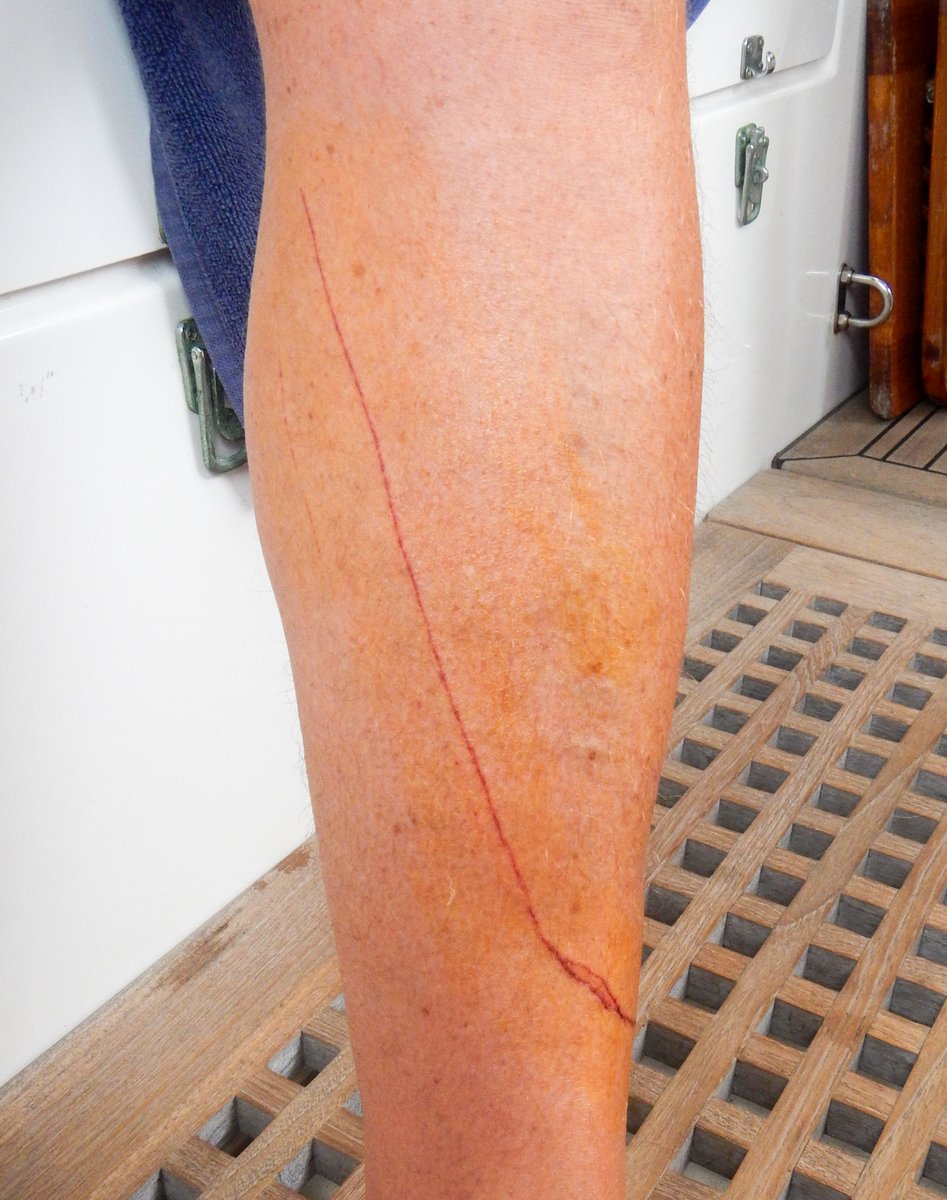
By this time, she’d had enough; we were inadequately prepared for this kind of terrain, so we turned around and went back to the boat to treat our wounds and bites. If you were dressed in long trousers and sleeves with every exposed part of your body covered in 50% DEET and armed with a sharp machete, then this would be an interesting little hike. But in shorts and flip-flops, it’s a mission.
17 November 2015 Pulau Jerejak, Penang
A couple of weeks ago, we noticed that an aluminium disk, which holds a handle on the side window of our windscreen, had broken in two. I had a go at removing and replacing it, but the screw wouldn’t move and I was reticent of applying too much force in case I broke the glass window - not a good thing to happen in the middle of nowhere.

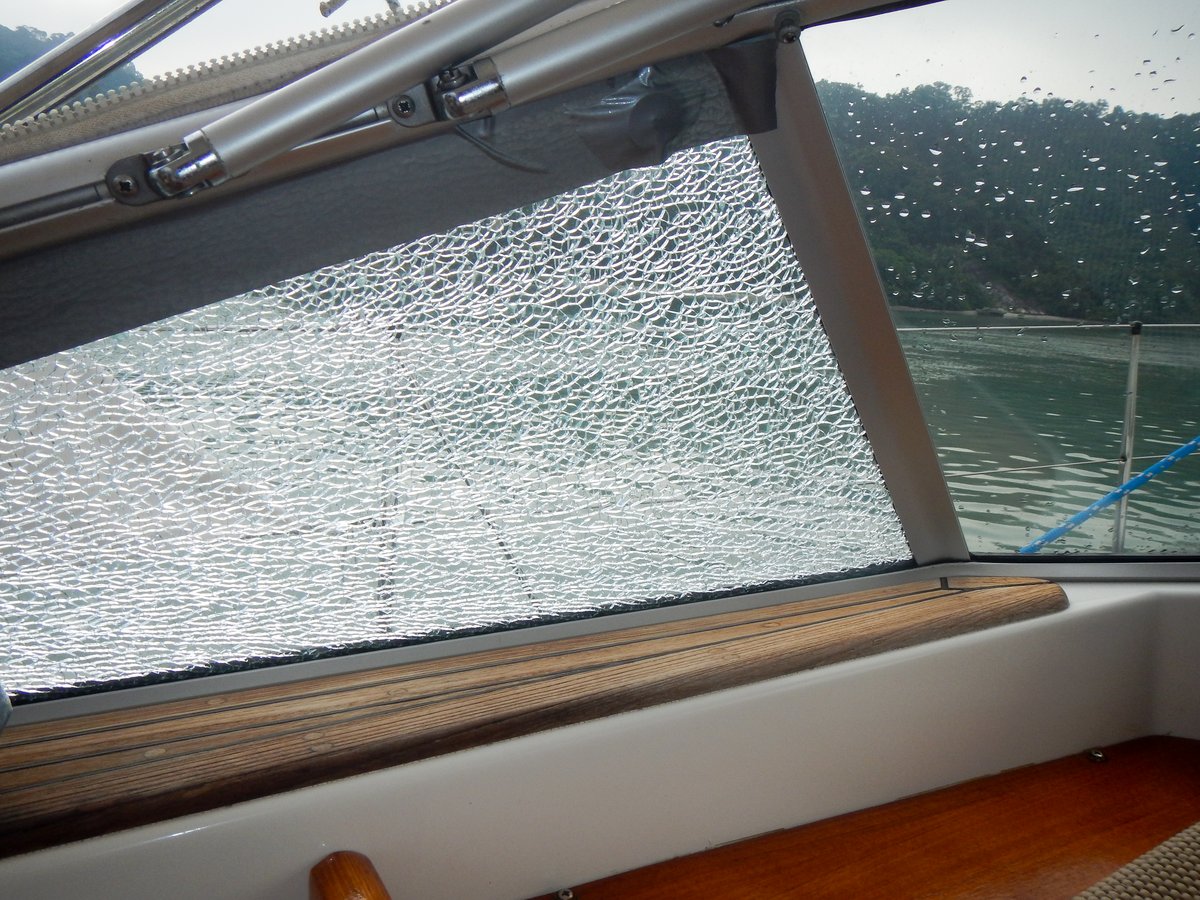
This morning, we woke to find that the window had self-destructed and the glass had cracked into small pieces. Fortunately, all the pieces were still held in place and hadn’t exploded everywhere, so I used Duct Tape to stick it all together and hope that it will survive until we get to Langkawi or Phuket, where I can get a replacement. It’s going to be a nightmare to replace it - the windscreen frame is made from aluminium and you can bet that all of the stainless steel fasteners have seized up.

We caught the 10:30 ferry across to the mainland and then took a taxi into Georgetown - 40 ringgit for the return trip on the water taxi and 30 ringgit into town (£12). I had the impression that Georgetown would be a sleepy little ex-colonial town, with a small community of Chinese people. It’s actually a huge city of 1.5 million people, high rise apartment blocks and jam-packed with cars.
We wandered around Chinatown and Little India, joining the milling herds of tourists. There’s a huge Chinese population here and the Clan Jetties were our first stop. This is a series of six wooden jetties lined with small wooden houses, which were built on stilts by Chinese immigrants in the late 1800s. Each of the jetties is owned by a single clan who lived together in close proximity. We walked down the Chew jetty, which is now a major tourist attraction with all the small houses having shops selling souvenirs.
We wandered around the streets of china town looking for street art - there’s some famous art including a bicycle fixed to a wall with a couple of kids painted as riding it. Unfortunately, a lot of the art is now in a state of decay. We made an interesting stop at Khoo Kongsi, which has a very ornate Clan House Temple set amongst an area of traditional clan houses.

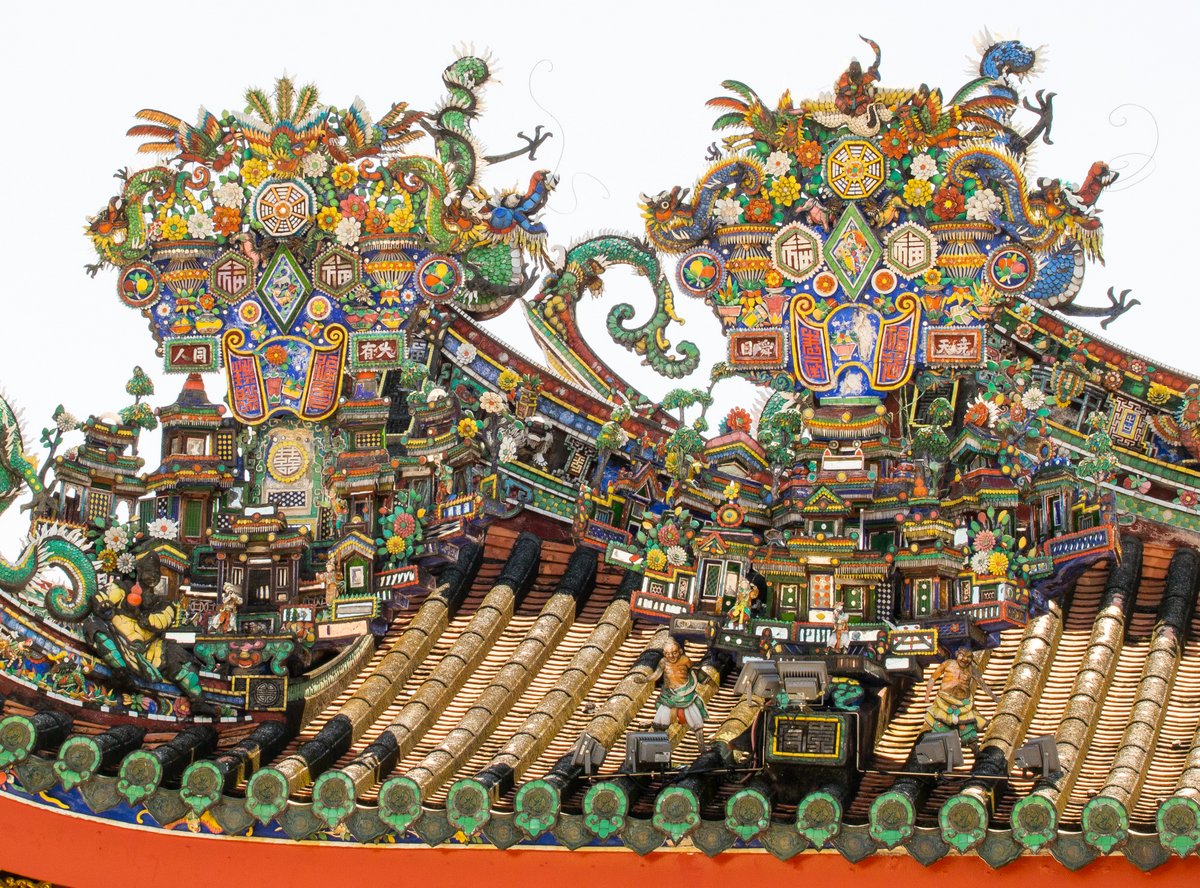

The Khoo clan were merchants from China and when they arrived in the late 1880s, they built a walled community like a village which had its own school and council. The beautiful clan temple was built in 1906 when the Khoo clan was at the height of wealth and eminence in Penang society - it was renovated in 2001.
We had lunch in Little India and then caught a bus to see two Buddhist temples. One had a very large reclining Buddha, but neither was as impressive as the Buddhist temple in Chinatown in Singapore. We've not had much contact with Buddhism, so I was fascinated to see gold leaf stuck onto what appeared to be statues of monks. There were even signs telling people not to stick gold leaf onto certain wooden statues. I found this snippet on the internet:

Gold in the form of a thin leaf is an item valued for its purity as a religious offering and for its power to placate spirits and request favours. Postage-stamp-size booklets of gold leaves are always on sale along with incense, flowers and candles at temples and shrines for use as daily offerings.
One way for Buddhists to show their respect for a person or concept is to make merit by affixing small squares of gold leaf onto images of Buddha, revered monks or other sacred objects.
Even the act of making gold leaf earns merit for individuals. Sheets of gold are pounded to .000005 of an inch. The leaves of gold are made by two poundings with wooden mallets. It takes about five hours of hammering to complete one pouch of gold leaf. Then the job passes to the delicate hands of young girls to slice up squares of 2.5 centimetres and put them on waxed paper and stacked in booklets ready to sell.
We just made it back to the Jerejak Jetty in time to catch the 16:00 ferry and we were back on the boat in time to rip open a cold beer.
18 November 2015 Pulau Jerejak to Pulau Payar
We were on our way just after dawn. We only had 35-40 miles to go, but the tides were favourable for an early start. It was interesting to go past the city of Georgetown. We made a slight detour to have a look at the Junk Anchorage, just off the end of the Chew Jetty. It looks okay, but the only place to go ashore is on the end of the Chew Jetty and it’s very rough. Although it’s more expensive to get into town, I think Jerejak is a much better option.
It was another tedious day of motoring and avoiding fishing boats laying nets along the side of the shipping lanes north of Georgetown.

We arrived at Pulau Payar Marine Park in the middle of the afternoon (06°03.91N 100°02.75E) and picked up a mooring. There are three big orange moorings available for yachts, but the one closest to the park buildings seems to be occupied by a park boat all the time. It was lovely and calm when we arrived, so we picked up the one furthest away from the docks to avoid being bounced about by boat traffic - three large passenger boats left in the late afternoon, presumably full of tourists.
I went ashore and paid the park fee of 5 ringgit per person for a day. Nobody spoke much English, but they were very friendly and there was a notice board showing ten dive sites and four snorkelling sites. I was told that there are moorings at each site. Glenys stayed on-board running the watermaker - it’s the first time since Singapore that the water has been clear enough to run it.
I went for a snorkel just off the main pier. The water had a slightly green tinge, but I had visibility of ten metres. There’s lots of coral and fish, so it was good. I played with my new macro lens - didn’t get any good photographs though, I was just experimenting. I did see a couple of Giant Groupers, who were very unconcerned by me - it shows that we’re in a national park.

As night fell, a wind picked up from the north causing short, sharp, 1-2 foot waves, which made us pitch badly. It was unpleasant down below.
19 November 2015 Pulau Payar to Kuah, Langkawi
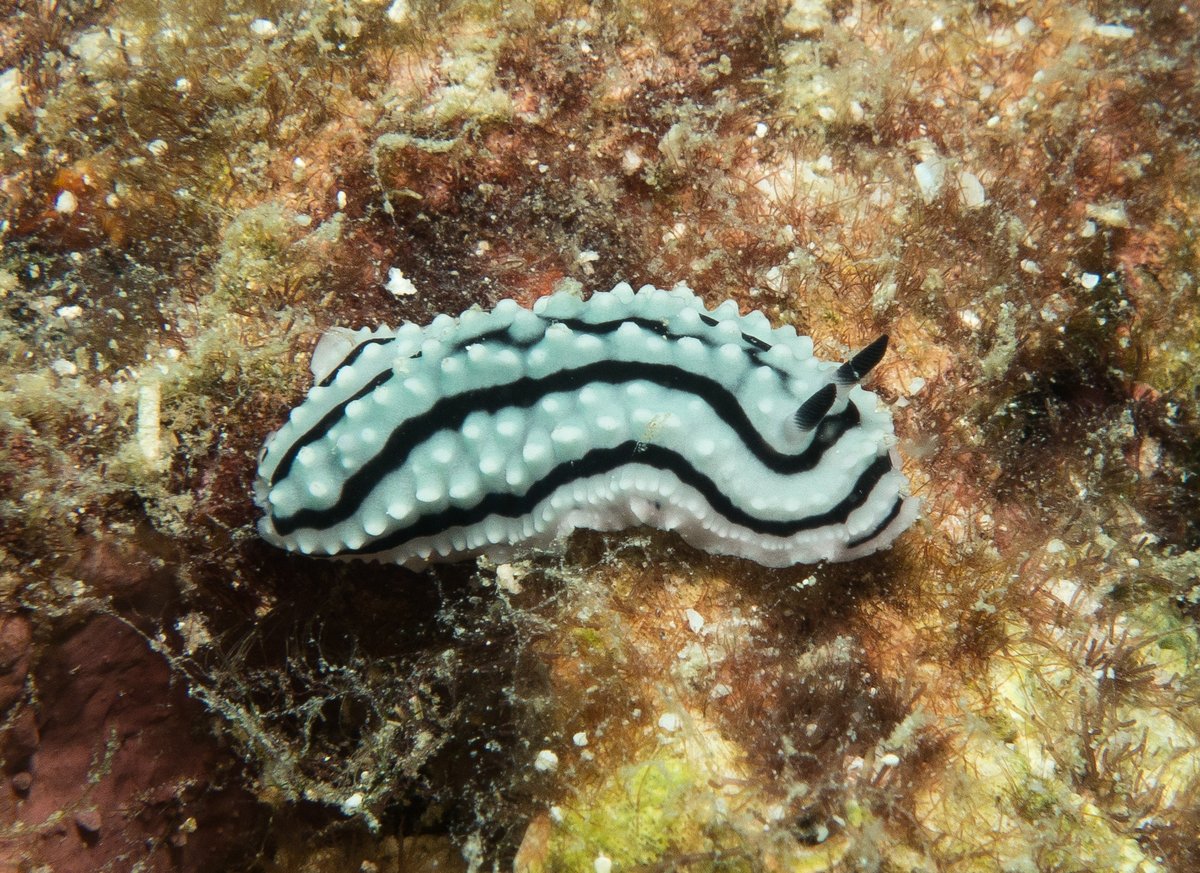
Despite the (at times violent) pitching that went on all night, we had a good night’s sleep. We ran the water maker again, to top up our tanks, then went snorkelling at a spot called the Japanese Gardens. It wasn’t world-class, but was very good after a month with no snorkelling. I played with my macro lens and took a nice close-up of the rhinophores of a small one inch long Liz's Phyllidiella.

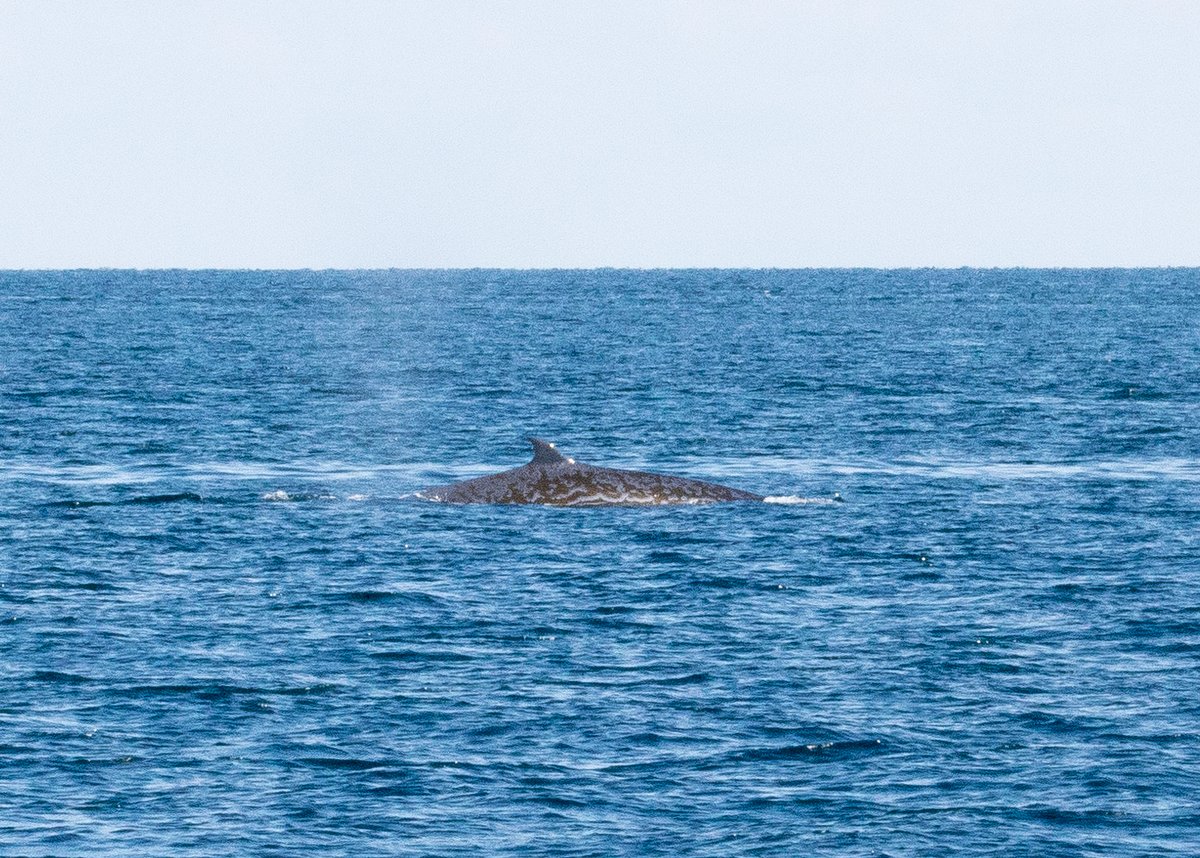
After an hour or so snorkelling, it only took ten minutes to tidy up enough to get on the move towards Langkawi. Just as we were leaving the island, I spotted a whale - not sure what it was, but I got a reasonable long distance photo with my new zoom lens.
Of course, there was no useful wind. We encountered lots of strange floats with long bamboo fronds sticking up out of the water. They were a mystery until we saw a fishing boat moored to one of them with six guys fishing with real rods - they were another type of Fish Attraction Device.
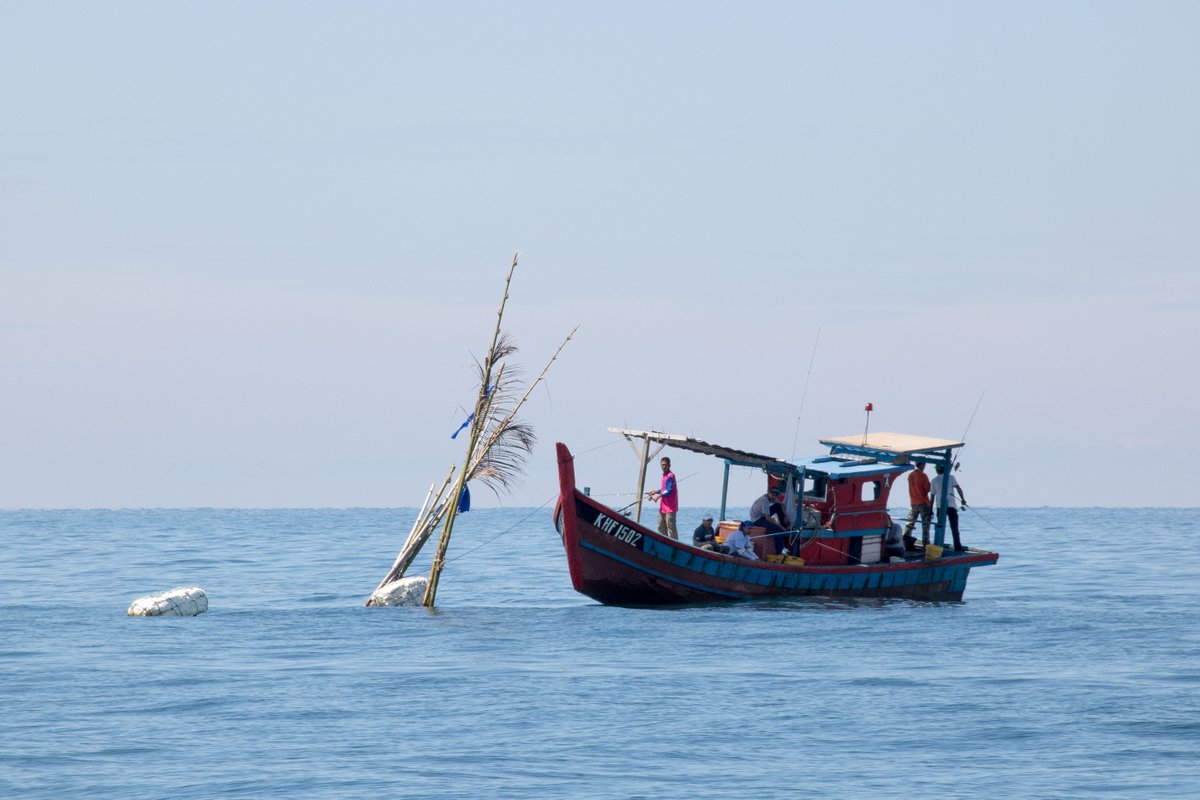
By early afternoon, we entered the Langkawi group of islands at the south west corner and then motored past various anchorages checking them out for when Craig and Kristen get here next week. The scenery is stunning with scores of small, tall islands jutting out of the water forming narrow channels, all backed by towering cliffs on the bigger island.
A couple of hours later, we anchored off the main town of Kuah (06°18.91N 099°50.62E)in five metres of water amongst a fleet of twenty or so yachts. We've finally made it to Langkawi – the Malaysian coast has been very boring with 500 miles of motoring
In the evening, there was a horrific thunderstorm with torrential rain, which has uncovered the fact that most of our side windows leak. As I write this, there’s a drip falling on the fan in front of me and spraying me with droplets of water every 10 seconds – it’s not all fun living on a boat. The good news is that our passports have been dispatched from the UK, which is much, much faster than we expected.
20 November 2015 Kuah, Langkawi
After a slow start, we zipped ashore and put our dinghy on the small ferry jetty. We then walked through the park towards the main ferry terminal. The park is very pleasant and at the end there is a huge statue of a sea eagle which is one of the main tourist attractions in Kauh.
The ferry terminal looks like an airport with duty free shops selling cameras and expensive European chocolate. We eventually found the Port Captain office on the first floor tucked away behind the doors where passengers disembark. After filling in one form we were officially cleared into Langkawi. The Malaysian Authorities want yachts to clear in and out of every port, but most cruisers get their initial clearance all the way to Langkawi.

After dropping off our papers with Customs, we walked into town, but most of it was closed because it’s Friday (a Muslim day of rest) and also some kind of holiday. We found a Chinese street restaurant and had a very good lunch. The town is a strange place being full of duty free shops selling Gucci hand bags, chocolate and posh pans. There’s quite a bit of cheap duty free booze about, but who buys it in this predominantly Muslim country?
With nothing much to do or see in town and no supermarkets open, we had to walk almost back to the ferry terminal to the Billion super-market in a shopping mall. We bought enough provisions to last us for a week and then caught a taxi back to the boat. Wine is reasonable at £4 per bottle, beer is cheap at £8 per case and liquor is very cheap at £3.50 per litre
In the evening, Dave and Brendan from “Laragh” came over for a few beers.